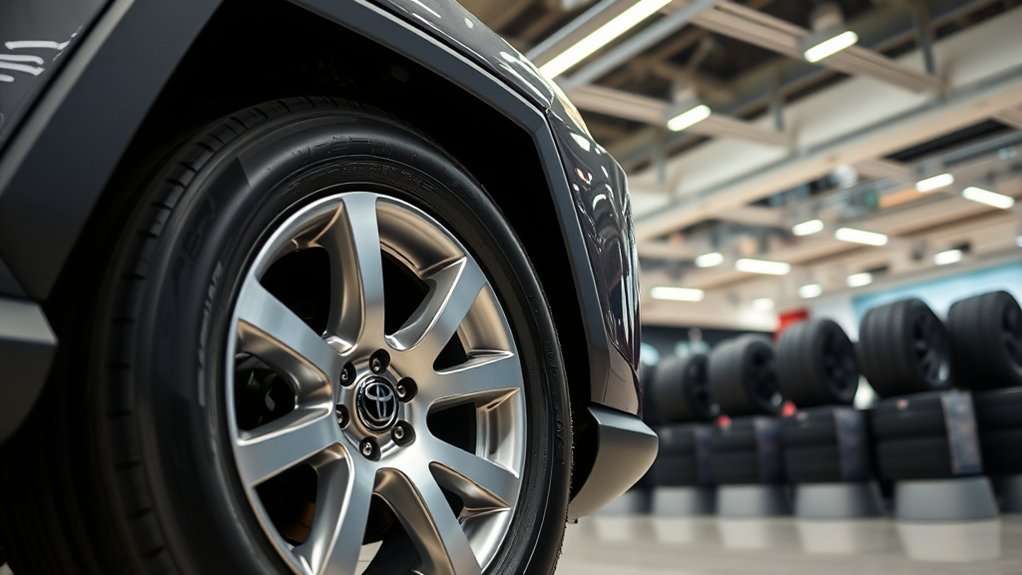
A 2026 Toyota RAV4 tire display showing 44 psi often reflects factory or shipping inflation, not the normal operating target. The correct routine reference is the driver’s door-jamb placard, typically 38 psi when the tires are cold. Pressure should be checked with an accurate gauge after the vehicle has sat for at least three hours. Excess pressure can worsen ride quality, increase wear, and affect handling. Dealer pre-delivery setup should confirm this, with further details outlined below.
Why Does a New RAV4 Show 44 PSI?
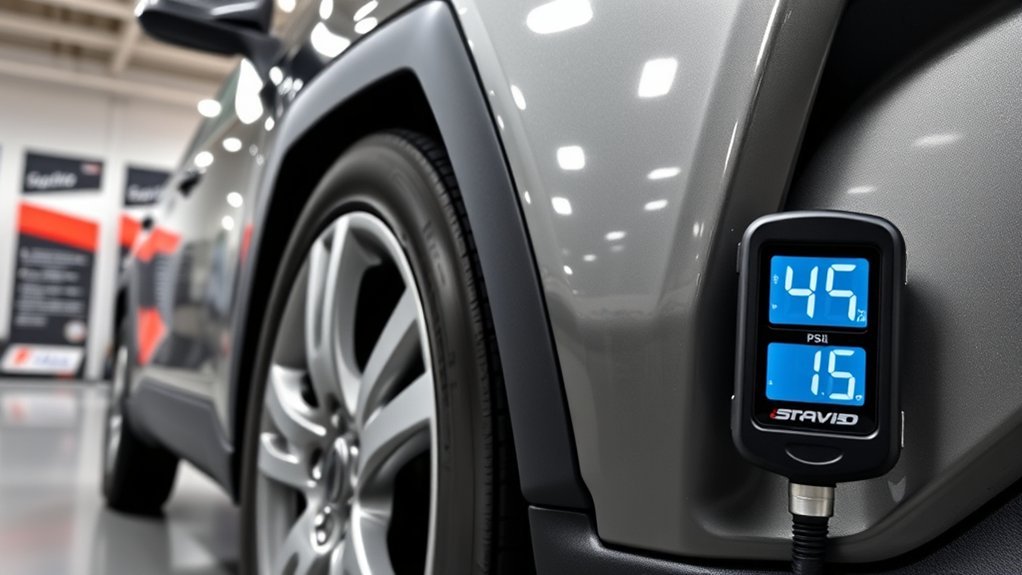
Why might a new RAV4 display 44 psi on the instrument panel when the door-jamb label specifies 38 psi? In many Toyota delivery chains, tires are inflated above the recommended tire pressure during transport and storage to reduce flat spotting. If dealer preparation does not correct that shipping inflation, the vehicle may reach the customer with readings near 44 psi.
From a technical standpoint, modest elevation above specification can occur because cold tire pressure is sometimes set slightly high, often around 2 psi over target.
However, 44 psi is materially higher than a 38 psi placard value, which introduces safety concerns about over-inflation, ride harshness, and uneven wear.
Another variable is tire specification: different sizes can require different settings, so the installed 235/60R18 tires should be matched against the vehicle placard and service information.
For buyers seeking liberation from preventable maintenance issues, dealer confirmation before departure remains the prudent immediate safeguard.
Which RAV4 Tire Pressure Number Is Correct?
When the door-jamb placard and the instrument-panel display do not match, the placard value is the correct reference for routine cold inflation. For the 2026 Toyota RAV4, that recommended tire pressure is 38 psi on the door sill tag, even if the cluster shows 44 psi. The higher reading often reflects shipping inflation, not the operating target intended for daily use.
For routine cold inflation, trust the door-jamb placard: 38 psi, not the cluster’s shipping-inflation 44 psi.
A 6 psi gap matters. Over-inflation can reduce ride compliance, alter contact patch behavior, and affect braking, steering, and tread wear.
On common 235/60R18 tires, pressure should be matched to the placard unless a different approved tire size specifies otherwise. Dealers are expected to correct shipping pressures during pre-delivery inspection, but buyers seeking independence from assumption should verify all four tires with an accurate gauge before driving.
That simple check supports the performance envelope assumed by Toyota Safety Sense, Traffic Jam Assist, and the vehicle’s calibrated chassis systems under normal conditions.
How Does the RAV4 Tire Display Work?
The RAV4 tire display uses the vehicle’s tire pressure monitoring system to present real-time PSI readings on the instrument panel for each tire.
These readouts are interpreted against the manufacturer’s recommended pressure listed on the door sill tag, with temporary differences sometimes resulting from shipping-related overinflation.
Accurate evaluation also requires distinguishing cold and warm PSI, since pressure rises during operation and cold settings are generally adjusted slightly above the stated specification.
Tire Pressure Monitoring
Most 2026 Toyota RAV4 models use a Tire Pressure Monitoring System (TPMS) that relays real-time pressure data for each tire to the instrument panel, allowing pressure discrepancies to be identified quickly.
In the New 2026 Toyota RAV, this function operates independently of Advanced Park and Drive Recorder systems, prioritizing direct safety feedback.
- The panel reports each tire’s pressure against the 38 psi reference on the door sill tag.
- A variance of about 6 psi above specification may indicate over-inflation, potentially reducing ride compliance, altering handling, and accelerating tread wear.
- When pressure drops below a safe threshold, TPMS issues a warning intended to reduce blowout risk and preserve traction.
Analytically, independent gauge verification remains advisable, since elevated readings can result from shipping inflation practices or incomplete dealer pre-delivery inspection procedures.
Display Readout Meaning
Because the 2026 Toyota RAV4 tire display reports real-time pressure values for each wheel, the instrument panel functions as a direct diagnostic interface rather than a simple warning lamp. This readout enables immediate identification of deviations in tire pressure, including potential over-inflation when a displayed 44 psi exceeds the door sill recommendation of 38 psi.
Such differences do not automatically indicate malfunction. New vehicles are often delivered with pressures set above specification to reduce flat spotting during transport.
The display thus must be interpreted against the manufacturer’s label and the installed tire size, such as 235/60R18, which can vary by trim. For buyers seeking independence from dealership assumptions, gauge accuracy remains essential.
Practical inflation tips include verifying pressures with a reliable gauge before routine driving and correcting values to match Toyota’s stated settings.
Cold Vs Warm PSI
When interpreting the 2026 RAV4 tire display, pressure values must be distinguished between cold and warm conditions. The instrument panel reports current tire inflation, so readings shift with temperature effects and operating heat. Cold pressure is measured after at least three hours parked and should align with the door-sill specification, typically 38 psi.
- Warm readings can rise 2–6 psi after driving because friction heats the air inside the tire.
- A display showing 44 psi may signal shipping or dealer pre-delivery inflation that never received proper pressure adjustments.
- Owners gain practical independence by verifying pressures with a reliable gauge and correcting them only when cold.
This approach prevents false over-inflation assumptions, supports predictable handling, and preserves safety, ride quality, and efficiency under normal use conditions daily.
How Does Tire Size Change RAV4 PSI?
Tire size can influence the recommended PSI on a 2026 RAV4, although the difference is not always large between factory-equipped options. Standard 235/60R18 tires commonly call for about 38 PSI, while larger 20-inch fitments on trims such as the XSE also often remain near 38 PSI.
Even so, tire size still introduces possible pressure variance because sidewall construction and load characteristics differ by specification.
For buyers seeking freedom from guesswork, the correct reference is the driver-side door sill tag, not assumptions based only on wheel diameter. Toyota calibrates pressure targets to support handling precision, fuel efficiency, and tire life for each approved configuration.
When changing tires, matching original specifications helps preserve intended inflation guidance and avoids preventable performance losses. This has direct safety implications, since both under-inflation and over-inflation can compromise how the RAV4 responds under load.
Confirmation by exact tire model remains essential, even when two factory sizes appear to share similar PSI figures.
How Does High PSI Affect RAV4 Ride Quality?
High PSI in a RAV4, such as 44 psi versus the recommended 38 psi, generally produces a stiffer ride because the tires absorb less of the road surface’s irregularities.
This added rigidity can also reduce traction and handling stability, particularly on wet or low-grip pavement where the contact patch may be less effective.
Over time, excessive pressure may accelerate uneven tire wear, shortening tire service life and increasing maintenance costs.
Stiffer Ride Feel
Ride compliance decreases noticeably at 44 psi compared with the recommended 38 psi, because the tires deflect less and transmit more impact energy from road imperfections into the cabin.
Reduced tire compliance limits the tire’s ability to absorb sharp edges, expansion joints, and coarse pavement, diminishing ride comfort and increasing perceived harshness.
- Higher inflation elevates road noise and vibration, making the cabin feel busier and less isolated from surface disturbances.
- Repeated harsh inputs can increase suspension impact loads, potentially accelerating wear in bushings, dampers, and related components over time.
- Correct pressure preserves the intended balance engineered into the RAV4, supporting a freer, less fatiguing daily drive without unnecessary firmness.
For buyers seeking liberation from avoidable harshness, adherence to the specified pressure remains the most rational baseline.
Handling And Traction
At 44 psi, the 2026 RAV4 typically exhibits a narrower effective contact patch than it does at the recommended 38 psi, which can reduce available grip and make handling responses less settled on wet, rough, or uneven pavement.
From a technical standpoint, higher inflation stiffens the casing and lowers tire flexibility, limiting the tread’s ability to conform to surface irregularities. That change can weaken traction performance during braking, acceleration, and mid-corner loading.
It may also sharpen initial steering response while reducing overall confidence and stability as cornering forces build. On imperfect roads, the vehicle can feel more skittish because impacts are transmitted more directly through the suspension.
Although slightly lower rolling resistance may appear beneficial, the tradeoff can constrain liberated, composed driving by compromising predictable handling dynamics and everyday control margins.
Tire Wear Risks
When tire pressure in the 2026 RAV4 rises above the recommended 38 psi, tire wear patterns typically become less uniform, with the center of the tread carrying a disproportionate share of the load. This over-inflation changes contact patch geometry, producing uneven wear and a shorter service life.
Ride isolation also declines because stiffer tires transmit more road texture and impact energy into the cabin, creating a harsher, less compliant experience.
- Reduced tread contact lowers grip, illustrating clear tire pressure effects on braking and directional stability.
- A firmer carcass absorbs fewer imperfections, so occupants experience more vibration and sharpness over rough surfaces.
- Elevated internal pressure raises blowout probability under speed or heavy cargo, intensifying safety concerns.
Regular pressure checks support freer, more efficient travel by preserving comfort, traction, and tire durability.
What Should a Dealer Set Before Delivery?
Every dealer should complete pre-delivery tire-pressure adjustment to the manufacturer specification shown on the door-sill label, which in this case is 38 psi rather than the 44 psi that may still appear on the instrument panel after transport. This reflects core dealer responsibilities during pre delivery inspection and prevents shipping inflation from dictating real-world tire pressure. Buyers seeking informed control should verify this setting before taking possession.
| Item | Shipping/Display State | Delivery Requirement |
|---|---|---|
| Target pressure | 44 psi may appear | Set to 38 psi |
| Reference source | Instrument panel reading | Door-sill label |
| Cause | Transport flat-spot prevention | Manufacturer specification |
| Responsible party | Temporary logistics condition | Dealership accountability |
| Customer action | Ask for confirmation | Verify before driving |
A completed inspection should document all four tires, and if equipped, the spare. Proper adjustment supports intended ride, handling, and braking characteristics, while confirming the vehicle is prepared for safe, compliant operation.
When Is a RAV4 Pressure Warning Serious?
A RAV4 tire-pressure warning becomes serious once the indicated pressure materially departs from the door-sill specification and remains uncorrected before driving. In technical terms, a display reading 44 psi versus a 38 psi door-tag target indicates a meaningful over-inflation condition. That gap affects contact patch behavior, traction, wear patterns, and blowout probability, so the warning light significance should not be minimized.
- Compare displayed psi with the cold-pressure specification on the driver-door sill, not with assumptions formed after transport or storage.
- Check all four tires immediately if the warning light appears; persistent over-inflation can degrade stability, braking consistency, and overall efficiency.
- Apply practical pressure safety tips and tire maintenance advice: verify cold pressures before use, recognize that shipping pressures may sit roughly 2 psi high, and correct any discrepancy promptly.
For buyers seeking liberation from avoidable risk, disciplined pressure verification is a basic safety control, not a cosmetic adjustment before any trip.
What Should You Check Before Buying a RAV4?
Before purchasing a RAV4, a buyer should verify several baseline items that materially affect safety, performance, and day-to-day usability. The tire pressure shown on the instrument panel should be compared with the door sill label. If the display reads 44 psi while the label specifies 38 psi, the vehicle may be overinflated, affecting ride compliance, grip, and tread wear.
Tire size must also be confirmed; 235/60R18 should match factory specifications so pressure guidance and chassis behavior remain accurate.
A buyer should also ask whether the dealer completed a pre delivery inspection and specifically whether tire pressures were adjusted correctly. Elevated pressures at handoff can signal incomplete preparation.
During the test drive, handling and ride quality should be assessed over mixed surfaces rather than smooth pavement alone.
Finally, cargo space deserves practical review. With up to 37.8 cubic feet available, the layout should be measured against actual transport needs and daily routines.
Frequently Asked Questions
Does Toyota RAV4 Tell You Which Tire Is Low?
Yes, the Toyota RAV4 identifies which tire is low through Pressure monitoring systems, displaying individual readings and Low tire indicators. This supports informed autonomy and safer driving, while reinforcing practical Tire maintenance tips for sustained performance.
Does the 2026 RAV4 Have a Tire Pressure Sensor?
Yes—38 psi is commonly specified, and the 2026 RAV4 includes a TPMS. Analysis highlights pressure monitoring benefits, while acknowledging sensor accuracy concerns; independent owners still benefit from tire maintenance tips and manual verification routinely.
Which RAV4 to Stay Away From?
One should avoid trims showing RAV4 reliability concerns, especially Woodland for efficiency compromises and XSE for tire-pressure inconsistencies; buyers seeking liberation may also note engine performance issues and interior quality complaints before choosing expensive higher trims.
What Are People Saying About the 2026 Toyota RAV4 Limited in Reviews?
Reviewers describe the 2026 Toyota RAV4 Limited positively: RAV4 performance reviews note responsive hybrid power, interior comfort feedback highlights upscale spaciousness, and fuel efficiency opinions praise economy, while technology, safety systems, audio, and cargo versatility support independent mobility.
Conclusion
A 2026 RAV4 XSE tire display can appear inconsistent unless shipping pressure, door-jamb specifications, tire size, ambient temperature, and dealer preparation are evaluated together. The correct reference is the manufacturer placard, not the highest number shown on delivery. Buyers should confirm cold inflation, inspect the TPMS display logic, and verify pre-delivery adjustment records. Treated carefully, tire pressure data functions like a compass: small deviations seem minor, but they can alter comfort, wear, efficiency, and safety.
