
You don’t need to charge a Toyota RAV4 Hybrid from an outlet. It’s a conventional hybrid (HEV), so it doesn’t plug in like the RAV4 Plug-in Hybrid (formerly “Prime” in the U.S.). The RAV4 Hybrid keeps its high-voltage battery charged while you drive.
Key takeaways
- No home or public charging is required for the RAV4 Hybrid (HEV).
- Regenerative braking recharges the traction battery when you slow down or brake.
- The hybrid system can also use the engine and motor-generators to maintain battery charge during driving.
- For best results, keep the traction-battery air intake vent clean and unblocked and follow Toyota’s maintenance schedule.
Common Misconceptions About Hybrid Vehicle Charging
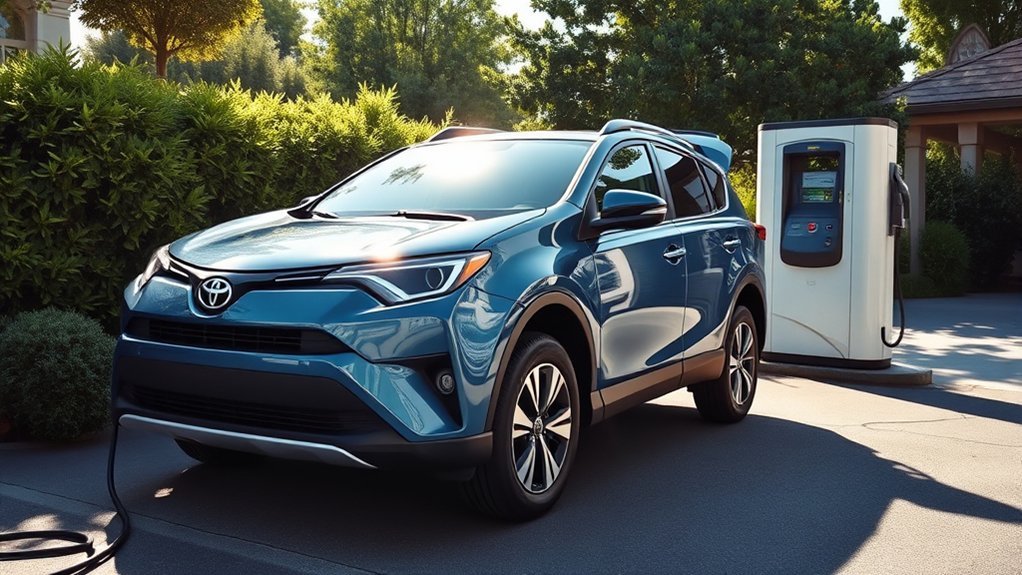
Many people hear “hybrid” and assume they must plug it in. That’s true for plug-in hybrids (PHEVs), but not for the Toyota RAV4 Hybrid. The RAV4 Hybrid charges its battery automatically while you drive.
Another myth is that hybrids are only for city driving. In practice, the RAV4 Hybrid works well in the city and on the highway. It uses gas power for steady cruising and adds electric help when it makes sense.
Battery life is another worry. Toyota backs the hybrid (HV) battery with a long warranty (model-year and region dependent). In the U.S., Toyota says that starting with the 2020 model year, the hybrid battery warranty is 10 years/150,000 miles, whichever comes first (see Toyota hybrid battery warranty (U.S.)).
Understanding the Charging Mechanism of the Toyota RAV4 Hybrid
The RAV4 Hybrid’s traction battery is managed by the car. You don’t set a charge level. You just drive.
The system does three main things:
- Uses electric power at low speeds and during gentle driving when possible.
- Recovers energy when you slow down (regenerative braking).
- Helps recharge using hybrid-system operation when extra charge is needed.
How Regenerative Braking Charges Your Hybrid
Regenerative braking is one of the main ways a RAV4 Hybrid recharges. When you slow down, the wheels can spin the electric motor as a generator (as described in the Toyota RAV4 Hybrid owner’s manual section on regenerative braking). That electricity is stored in the traction battery.
- Lift or brake: You release the accelerator or press the brake pedal.
- Generate power: The traction motor works like a generator.
- Store energy: The traction battery is recharged.
How the Gas Engine Contributes to Battery Charging

The gasoline engine can also support battery charging. For example, Toyota notes that the system may increase engine braking after you lift off the accelerator to help charge the traction battery more efficiently.
Gas Engine Functionality
Most of the time, the RAV4 Hybrid blends engine power and electric assist. If the battery needs more charge, the system can shift how it runs to build charge in the background. You don’t have to flip a switch.
Regenerative Braking Benefits
Regenerative braking recovers energy that would otherwise be lost as heat. It’s especially helpful in stop-and-go traffic. It can also reduce how much work the friction brakes do.
How to Handle a Low Hybrid Battery

If you see the battery gauge drop, don’t panic. The hybrid system is designed to protect the traction battery and keep you moving.
- Drive smoothly: Gentle acceleration and earlier braking can help regen work better.
- Expect the engine to run more: When charge is low, the vehicle may run the engine more often.
- Take warnings seriously: A low gauge is normal. A hybrid-system warning message is not. Follow the owner’s manual and get help if you see a warning.
A low battery gauge is usually routine. A warning light or message is the sign to stop and check.
Key Advantages of the Toyota RAV4 Hybrid’s Self-Charging System
- No charging stops to plan around.
- Simple ownership: fuel up and drive.
- Better efficiency from energy recovery during braking.
Plug-In vs. Traditional Hybrids: What You Should Know
If you’re choosing between a traditional hybrid and a plug-in hybrid, here’s the quick breakdown:
- RAV4 Hybrid (HEV): No external charging. The battery is charged while you drive.
- RAV4 Plug-in Hybrid / Prime (PHEV): Can charge from an external power source (like a 120V outlet or a Level 2 charger). It also has a larger battery for more electric-only driving.
- Which one fits? Pick a PHEV if you can charge often and want more electric miles. Pick an HEV if you want a “no-plug” hybrid.
Tips for Maintaining Your RAV4 Hybrid Battery Health
You don’t need special charging habits, but these simple steps help:
- Keep the traction-battery air intake vent clean and unblocked. Toyota warns that blocking the vent can limit cooling and reduce battery performance.
- Clean the vent when needed. Toyota provides a cleaning procedure if the vent gets dusty or a maintenance message appears.
- Follow scheduled maintenance. Use your Warranty & Maintenance Guide.
Frequently Asked Questions
Can I Use a Regular Power Outlet to Charge My RAV4 Hybrid?
No. The RAV4 Hybrid is not made to charge from an outlet. If you want a RAV4 that can charge from a 120V household outlet or a public charger, look for the RAV4 Plug-in Hybrid (formerly RAV4 Prime).
Does the RAV4 Hybrid Require Special Maintenance for Its Battery?
There’s no special “charging” maintenance. But Toyota does recommend keeping the traction-battery air intake vent clean and unobstructed so the battery can cool properly.
How Long Does the RAV4 Hybrid Battery Last Before Replacement?
Battery life varies. A good starting point is the warranty: in the U.S., Toyota says the hybrid battery warranty for 2020+ model-year vehicles is 10 years or 150,000 miles, whichever comes first. Outside the warranty period, some batteries last much longer, while others may need service earlier.
Can I Drive the RAV4 Hybrid Without a Functioning Battery?
If the traction battery has a fault, the vehicle may not drive normally (or may not start). That’s different from the gauge being low, which the system can usually manage. If you see a hybrid-system warning, follow the owner’s manual and have the vehicle checked.
Is the RAV4 Hybrid Battery Covered Under Warranty?
Yes. In the U.S., Toyota states that for hybrid vehicles beginning with the 2020 model year, the hybrid (HV) battery is covered for 10 years from the date of first use or 150,000 miles, whichever comes first (terms and conditions apply).
Conclusion
The Toyota RAV4 Hybrid doesn’t need to be plugged in. It recharges its traction battery while you drive, mainly through regenerative braking and hybrid-system operation. If you want to charge from a wall outlet, you’re looking for the RAV4 Plug-in Hybrid (Prime).
