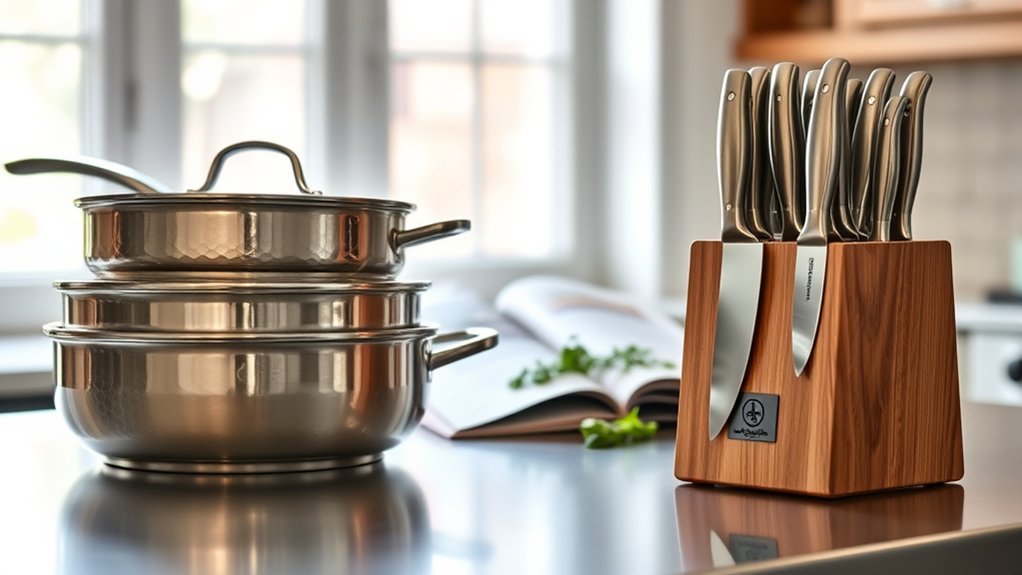
No. HexClad is not now Henckels. HexClad launched as an independent cookware brand built around hybrid stainless steel and nonstick technology, while Henckels comes from the much older Zwilling J.A. Henckels family with a broader kitchenware legacy. Confusion happens because both sell high-performance nonstick cookware with somewhat similar visual appeal. Still, they differ in ownership, materials, pricing, and cooking performance. A closer comparison shows which brand fits different kitchens, budgets, and cooking priorities best.
Are HexClad and Henckels the Same Company?
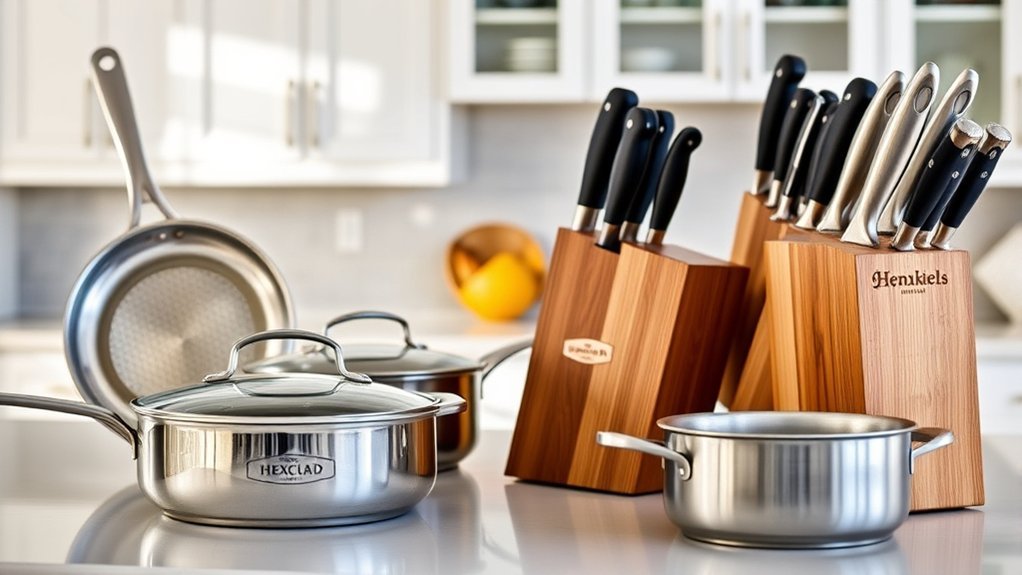
No—HexClad and Henckels are not the same company. Research on brand history shows two separate paths. Henckels belongs to the Zwilling J.A. Henckels family, a legacy name associated with kitchen tools since 1895.
HexClad emerged much later as an independent cookware brand built around proprietary hybrid technology. That distinction matters for buyers seeking freedom from marketing blur and confidence in what they purchase.
Context from product development reinforces the divide. HexClad centers its identity on cookware that combines stainless steel durability with nonstick performance, a design promoted by Gordon Ramsay and supported by more than 50,000 five-star reviews plus a lifetime warranty.
Henckels, by contrast, operates within a broader traditional kitchenware model, offering knives, cookware, stainless steel, and ceramic options. Review patterns also separate them: HexClad is often praised for heat retention and searing, while Henckels pans are recognized for lighter weight and faster heating overall.
Why Do People Confuse HexClad and Henckels?
Why are these two brands so often conflated? Early consumer comparisons began with surface design. Both HexClad and Henckels entered conversations around high-performance non-stick cookware that blends stainless steel with nonstick functionality.
To buyers seeking freedom from traditional cookware limits, those shared cookware features can appear nearly identical at first glance.
As reviews and forum discussions expanded, the confusion deepened through materials. HexClad promotes a proprietary ceramic TerraBond™ coating, while Henckels offers both PTFE-based and PTFE-free ceramic options.
Without close reading, consumers may collapse these distinctions into one category. Performance comparisons add another layer: HexClad’s thicker 3 mm construction tends to retain heat better than Henckels’ 2.4 mm build, yet both are framed as premium cooking tools.
Gordon Ramsay’s public association with HexClad also amplifies visibility, and some observers incorrectly transfer that prestige to Henckels because both brands circulate in the same culinary spaces and aspirational kitchen conversations online.
What Kind of Brand Is HexClad?
HexClad emerged as a hybrid cookware brand built around a distinctive design that combines stainless steel with a nonstick cooking surface.
As the brand developed, its identity became closely tied to performance-focused features such as effective searing, easy cleanup, and a PFAS-free TerraBond™ ceramic coating.
That profile gained broader visibility through chef Gordon Ramsay’s endorsement, which positioned HexClad as a premium modern cookware name rather than a traditional cutlery brand like Henckels.
Hybrid Cookware Identity
Although often discussed alongside premium cookware labels, the company is best understood as a hybrid cookware brand built around combining stainless steel durability, nonstick convenience, and cast iron–style searing performance in a single pan design. This hybrid cookware identity emerged as consumers sought freedom from single-purpose pans.
| Feature | Identity Signal |
|---|---|
| Steel + nonstick + searing | Hybrid positioning |
| TerraBond™ ceramic | PFAS-free surface |
| Up to 900°F | Broad cooking range |
| Lifetime warranty | Durability promise |
Research around the brand highlights a contextual evolution: first, material integration; next, safety through PFAS-free TerraBond™; then, heat tolerance reaching 900°F for grilling or searing; finally, a lifetime warranty that frames long-term value. Taken together, HexClad is positioned less as a traditional label and more as a liberating performance-focused cookware system.
Gordon Ramsay Endorsement
More recently, the brand’s identity has been amplified through the endorsement of Gordon Ramsay, whose association places its hybrid cookware within a professional-performance context. In public promotion, Ramsay points to HexClad’s searing power without sticking, framing the pans as tools that free home cooks from compromises between control and convenience.
That Gordon Ramsay endorsement builds on the brand’s earlier hybrid premise: stainless steel durability paired with nonstick ease for faster cleanup.
Research into the product line also highlights TerraBond™ ceramic nonstick coating, which is PFAS-free and aligned with current health expectations. As adoption widened, more than a million home chefs came to trust HexClad, reinforcing its culinary credibility.
Within that trajectory, Ramsay’s role supports a broader mission centered on innovation, quality, and a more liberated everyday cooking experience.
What Kind of Brand Is Henckels?
Founded in 1731, Zwilling J.A. Henckels emerged in Germany and became one of the culinary industry’s oldest enduring names. Over centuries, the company built trust through disciplined craftsmanship in knives, cookware, and kitchen tools, establishing a reputation grounded in stainless steel quality and practical innovation. That long history gives the brand authority for buyers seeking dependable tools rather than marketing myths.
Since 1731, Henckels has embodied German craftsmanship, earning lasting trust through practical innovation and dependable stainless steel quality.
In modern markets, Henckels functions as a global kitchenware brand serving both professionals and home cooks who want more control in daily cooking. Its catalog includes knives, utensils, and Henckels pans, alongside lines such as Henckels Paradigm, which highlights hybrid cooking surfaces for stronger performance.
Research into the brand consistently points to rigorous quality control, customer satisfaction policies, and lifetime warranties on many products. A hassle-free return policy further reinforces confidence.
Contextually, Henckels represents an established, reliability-first brand that blends heritage with innovation while widening access to durable kitchen essentials worldwide.
How Do HexClad and Henckels Compare at a Glance?
With Henckels established as a heritage kitchenware brand, a direct comparison with HexClad helps clarify where the two lines separate in day-to-day performance.
In material design, HexClad Cookware blends stainless steel, nonstick capability, and cast iron-like searing behavior, while Henckels Paradigm uses a hybrid surface with a greater proportion of exposed steel over coating.
In coating technology, the paths diverge further. HexClad uses its proprietary TerraBond ceramic nonstick layer, whereas Henckels relies on PTFE, with a PTFE-free version scheduled for 2025.
Performance testing then shows a split in priorities: Henckels heats faster, boiling two cups of water in 2 minutes 19 seconds, while HexClad reaches the same point in 2 minutes 30 seconds.
After boiling for 10 minutes, however, HexClad retains more heat, holding 102°F compared with Henckels at 96°F.
Both still need grease, yet HexClad’s patterned surface and easier cleanup offer more daily independence for busy cooks.
Which Brand Makes Better Hybrid Pans?
Initial comparisons in this category begin with construction: HexClad’s 3 mm body and TerraBond™ ceramic nonstick are positioned for stronger heat retention, while Henckels Paradigm’s 2.4 mm build and PTFE-based surface prioritize faster heating, with a PTFE-free ceramic option added in 2025.
In cooking tests, Henckels reached a boil sooner, but HexClad produced more even searing, framing the core tradeoff between speed and browning performance.
The discussion then turns to durability and cleanup, where both require added grease, yet HexClad’s patterned bottom simplifies washing while Henckels’ smoother steel base may reduce scratch risk.
Heat Retention Battle
How do the two brands compare when heat retention becomes the deciding factor? Early testing placed both pans on induction, where HexClad’s thicker 3 mm build warmed more deliberately yet held steadier energy.
Henckels, at 2.4 mm, responded differently, reaching a simmer in 5:30, while HexClad boiled water in 2:10 despite slower overall induction response.
- After 10 minutes of boiling, HexClad held 102°F.
- Under the same conditions, Henckels settled at 96°F.
- The thicker body gave HexClad greater thermal stability.
- That stability translated into more even cooking efficiency, especially for meats.
In sequence, the evidence points toward liberation from temperature swings: Henckels may feel quicker for lighter tasks, but HexClad delivers stronger heat retention and a steadier, more controlled cooking experience overall for cooks.
Searing And Release
That heat stability carries directly into searing and release, where the two hybrid designs begin to separate in practical use.
In comparative cooking tests, HexClad typically established an earlier advantage once proteins hit the pan, delivering a more even sear while preserving reliable release. Its TerraBond coating appears central here, supporting browning without leaving as much residue behind. That combination gives cooks more freedom to pursue searing without feeling trapped by fragile sticking points.
Henckels Paradigm, by contrast, tends to heat faster, which can shorten the path for eggs, pancakes, and other quick items.
Yet faster heating has not consistently translated into equally balanced searing across the surface. User feedback also indicates that both pans still benefit from greasing, since eggs may stick on either one without some oil present.
Durability And Cleanup
Turning to long-term use, durability and cleanup tend to favor HexClad once construction and surface design are examined together. Early comparisons begin with build: HexClad’s 3 mm body generally promises greater durability and heat stability than Henckels’ lighter 2.4 mm pans.
Research then shifts to coatings, where TerraBond™ ceramic nonstick offers PFAS-free cleanup, while Henckels splits between PTFE and ceramic choices.
- Thicker metal suggests longer freedom from warping.
- The nonstick pattern reaching the bottom eases daily washing.
- Henckels’ polished steel underside can demand more scrubbing.
- HexClad’s raised pattern may threaten glass cooktops.
Finally, customer response adds context. More than 50,000 five-star reviews highlight satisfaction with HexClad’s durability and maintenance, while Henckels remains respected but less documented.
Both still need light greasing.
How Do Their Pans Perform in Real Cooking?
In practical cooking tests, the performance gap appears early and then shifts as heat is sustained. At the start of cooking, Henckels Paradigm pans move faster, boiling two cups of water in 2 minutes 19 seconds, while HexClad reaches that point in 2 minutes 30 seconds. That quicker response reflects Henckels’ lighter 2.4 mm build, which favors speed over thermal stability.
For readers seeking liberation from marketing fog, the research suggests an early advantage in responsiveness rather than dominance.
As heat continues, however, HexClad changes the story. Its 3 mm construction helps retain more energy, holding water at 102°F after ten minutes, while Henckels falls to 96°F.
On induction, HexClad also shows steadier behavior, bringing water to a boil at 2:10, while Henckels is still simmering at 5:30.
In actual egg cooking, both pans require grease; without oil, sticking appears on both surfaces. Overall, performance depends on whether speed or stability matters more.
Is HexClad Worth the Higher Price?
Whether HexClad justifies its higher price depends on when value is measured. At purchase, the difference feels stark: HexClad often costs more than double comparable Henckels Paradigm pans, immediately challenging budget-minded buyers seeking freedom from overspending. Early comparisons consequently favor Henckels on upfront affordability.
Over time, research points to a more layered conclusion:
- Thicker 3 mm construction helps HexClad retain heat better than Henckels’ 2.4 mm build.
- TerraBond ceramic nonstick coating reaches the pan bottom, reducing cleanup frustration and routine maintenance.
- Cooking results often show steadier, more even searing for meats, though Henckels heats faster for boiling, eggs, and pancakes.
- Long-term confidence is strengthened by a lifetime warranty and more than 50,000 five-star reviews.
Chronologically, value shifts from sticker shock to performance, then to durability and satisfaction.
In that broader context, many users appear to regard HexClad as worth the premium for sustained cooking quality and easier kitchen independence overall.
Who Should Buy HexClad vs. Henckels?
Research on buyer fit first points to HexClad for home cooks focused on searing, as its thicker 3 mm construction supports stronger heat retention and steadier cooking temperatures.
In more budget-conscious kitchens, Henckels generally suits buyers who prefer a lighter pan with faster heating and easier handling.
For induction use, available comparisons place HexClad ahead because its hybrid build is better aligned with high-heat, surface-stable cooking.
Best For Home Searing
For home searing, the distinction usually becomes clear at the moment high heat meets cold protein: HexClad is the stronger fit for cooks seeking a deeper crust, steadier pan temperature, and easier release with less added grease.
Early comparisons center on initial contact: Henckels heats quickly, but HexClad holds heat more consistently once meat hits the surface.
- Cold steak meets hot steel, and confidence rises.
- Crust forms faster, with less fear of tearing.
- TerraBond™ aids release, reducing dependence on excess oil.
- Heavier construction sustains momentum through the sear.
Reported use patterns then reinforce the same conclusion. Home cooks chasing restaurant-style browning often prefer HexClad because even cooking, durability, and nonstick performance create more freedom at the stove.
Henckels remains capable, but less purpose-built for intense searing.
Better For Budget Kitchens
When price enters the decision, the comparison shifts quickly: Henckels generally becomes the more practical choice for budget kitchens because it delivers solid everyday performance at a much lower cost than HexClad.
In comparative testing, that price gap matters first, especially for buyers seeking freedom from overspending without sacrificing dependable cookware.
From there, performance context reinforces the value case. Henckels heats faster, which supports quick weeknight cooking and more efficient daily use.
Although HexClad retains heat better and excels with meat searing, budget-minded households often prioritize speed, versatility, and lower upfront investment.
Both brands still require greasing, yet Henckels offers PTFE-based nonstick options that may better satisfy cooks wanting familiar release at a lower price.
Added benefits, including longer handles and easier cleanup from a polished steel bottom, strengthen Henckels’ practical appeal.
Ideal For Induction Cooking
Induction cooking changes the comparison because the priority shifts from upfront savings to how efficiently a pan holds and manages heat over time. Early testing shows Henckels responds faster at first, a trait that suits quick weeknight tasks.
However, as research moves from initial response to sustained performance, Hexclad gains ground.
- Its 3 mm build stores more heat.
- It holds boiled water temperature longer.
- It steadies cooking for searing and even results.
- It can boil faster after the first heating phase.
Context matters here. Henckels, at 2.4 mm, favors immediacy. Hexclad favors control, consistency, and freedom from constant burner adjustments.
For induction users seeking liberation from uneven temperatures, Hexclad fits better. Those wanting only fast startup may still lean toward Henckels for simple daily use at home.
Where Should You Buy HexClad or Henckels?
Where buyers start often shapes the overall value of a HexClad or Henckels purchase. Early research usually begins with each brand’s official store. HexClad sells directly through its website, where free shipping and newsletter discounts can reduce its typically higher price. Henckels offers its own shop as well, including fast shipping on orders above $79, making entry feel simpler and less restrictive.
| Brand | Best starting point |
|---|---|
| HexClad | Official site for promotions and lifetime warranty |
| Henckels | Official shop for shipping perks and easy returns |
After that, comparison expands to Amazon and specialty kitchenware retailers, where both brands maintain strong visibility. This broader search gives buyers room to compare bundles, promotions, and availability without feeling locked into one channel. Context matters: HexClad may justify its cost through a lifetime warranty, while Henckels often appeals through bundled value and a hassle-free return policy. The most liberated purchase comes from checking every platform before committing fully.
Frequently Asked Questions
What Is Better, Henckels or Hexclad?
HexClad is generally better for performance-focused buyers; Henckels suits budget-minded cooks. Research first shows faster Henckels heating, then stronger HexClad retention. This Material Comparison indicates HexClad for induction versatility, while Henckels offers affordability, longer handles, and fewer scratch concerns.
Are Hexclad and Henckels the Same Company?
No, HexClad and Henckels are not the same company. Research shows distinct Brand Identity: Henckels built legacy cookware and knives over decades, while HexClad emerged later, advancing hybrid technology and consumer choice independently.
Why Did Hexclad Get Sued?
Coincidentally, HexClad was sued because Henckels alleged trademark infringement and unfair competition, claiming confusingly similar design and marketing. Research indicates the Lawsuit Impact centered on protecting Henckels’ longstanding reputation while HexClad asserted meaningful product differentiation.
Why Not Buy Hexclad?
One might avoid Hexclad because research shows Hexclad Quality comes with higher cost, heavier handling, required greasing, possible glass-cooktop scratching, and less familiar coating trust; contextually, these tradeoffs may free buyers to choose simpler cookware.
Conclusion
In the end, the record shows that HexClad has not become Henckels; they remain separate brands shaped by different histories, price points, and cookware goals. Early confusion grew from retail overlap and similar kitchen-category placement, but closer comparison clarifies the distinction. Like two roads diverging from the same marketplace shelf, one leads toward hybrid innovation, the other toward established value. The better choice depends on cooking habits, budget, and where long-term usefulness matters most.
