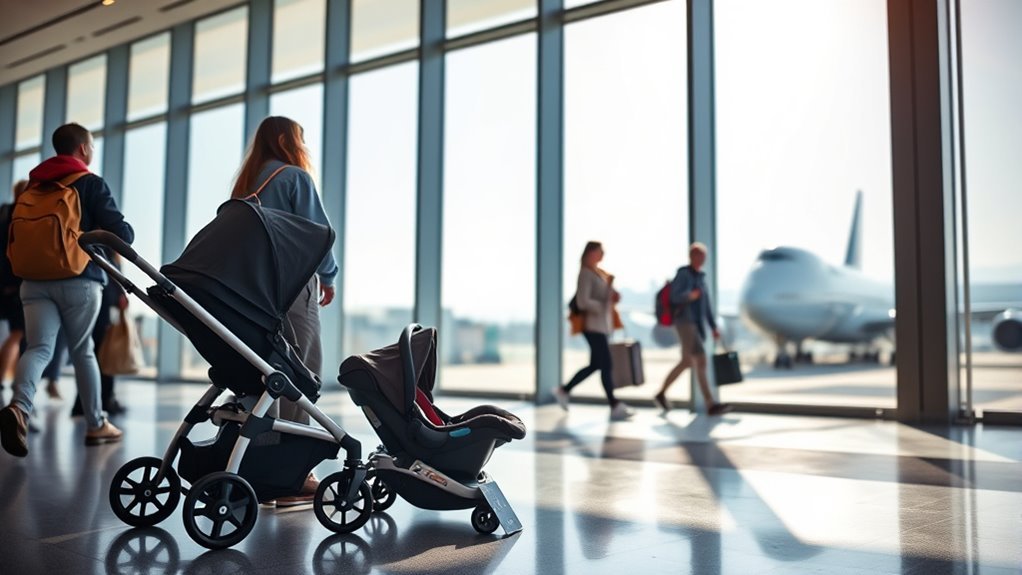
Gate checking a car seat and stroller is usually free on major airlines like American, Delta, Southwest, JetBlue, and Alaska. Budget or smaller carriers may charge fees or limit how many items can be gate checked at no cost. Oversized or heavier strollers can also face restrictions. Policies vary by airline, so travelers should confirm rules before flying. A protective bag and clear labeling help reduce damage and confusion, and more details can clarify the best choice.
Key Takeaways
- Gate-checking a car seat or stroller is usually free on major U.S. airlines.
- Budget or smaller airlines may charge fees or limit the number of gate-checked items.
- Oversized or heavy strollers, like jogging strollers, can face extra restrictions or be refused.
- Always check your airline’s current stroller and car seat policy before traveling.
- Using a protective travel bag and clear labels helps prevent damage and loss.
How Much Does Gate Checking Cost?
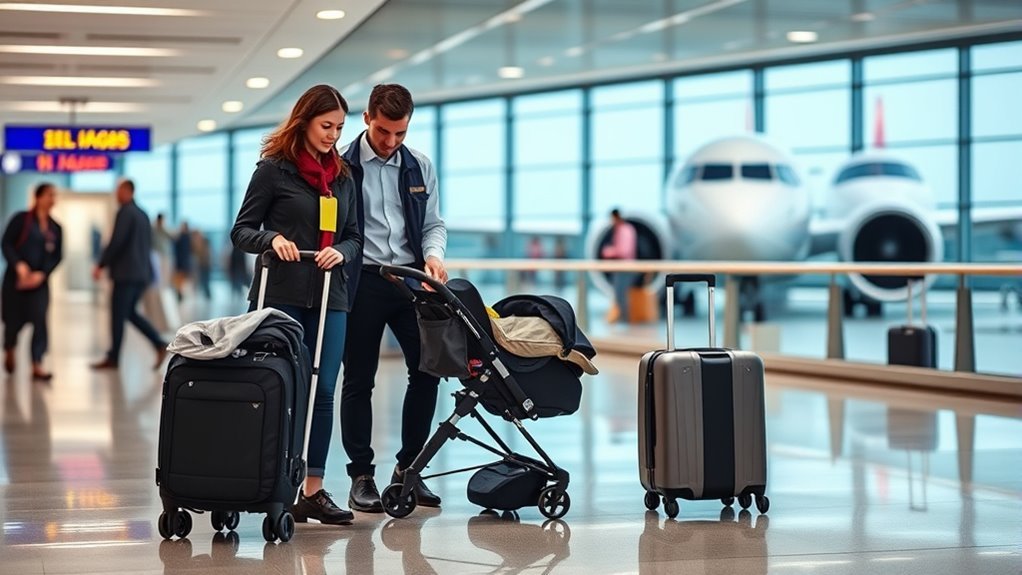
Gate checking a car seat and stroller is typically free on major airlines, since these items usually do not count toward checked baggage allowances. This makes gate check a practical option for families seeking lighter movement through the airport and fewer surprise charges.
However, the cost is not universal. Smaller airlines may allow only one item to be gate checked at no charge, while another may face a fee or a restriction based on policy. Some carriers also set weight limits for gate-checked strollers, which can exclude heavier models.
Smaller airlines may charge fees or limit gate-checked items, and some enforce stroller weight restrictions.
To reduce risk, protective travel bags are advisable for both items. They help shield against scuffs, breaks, and rough handling during gate check.
Before travel, the airline’s rules should be confirmed at booking or before departure. Clear verification prevents unexpected costs and supports a more independent, less constrained journey.
Which Airlines Gate Check Free?
Several major airlines, including American Airlines, Delta Air Lines, and Southwest Airlines, allow free gate checking of strollers and car seats.
JetBlue and Alaska Airlines also may permit it at no cost, though current policies should be confirmed before travel.
Smaller or budget airlines can have stricter rules or fees, so checking each airline’s stroller and car seat policy is important.
Airline Free Gate-Check Rules
Which airlines gate check free depends on the carrier, but major airlines such as American Airlines and Delta typically allow families to gate check both strollers and car seats at no extra cost.
Under airline free gate-check rules, a stroller and car seat can often travel through the airport in use until boarding, then be collected at the jet bridge after landing. A Travel Bag may help protect equipment during handling and keep parts together.
Smaller airlines may limit families to one free item, and some impose weight restrictions that exclude heavier strollers.
Because policies can change, travelers should confirm details directly with each airline before departure. Checking ahead preserves flexibility, reduces stress, and supports smoother movement through airports.
Stroller And Car Seat Policies
Airlines vary in how they handle stroller and car seat gate checking, though major carriers such as American Airlines and Delta typically allow both items to be gate checked free of charge and outside the standard luggage allowance.
Smaller airlines may limit free gate checking to one item, so policies should be confirmed before departure. Some carriers also impose weight limits, which can exclude oversized or heavier strollers.
Gate checking lets parents keep a stroller until boarding, reducing strain while moving through terminals and preserving mobility.
Using a stroller bag and a car seat travel bag is a practical safeguard against damage during handling.
Clear policy checks ahead of time help travelers move through airports with less friction and more independence, while avoiding surprise fees or denied gate-check requests.
What Changes Gate Check Fees?
Gate check fees often change based on airline policy, with some carriers allowing car seats and strollers at no cost while others charge for one or both items.
Weight and size limits can also affect whether the items are accepted free of charge, especially when they exceed standard dimensions.
In some cases, bag fees, handling charges, or seasonal policy changes can add unexpected costs.
Airline Policy Differences
Although many major carriers such as American and Delta let families gate check both a stroller and a car seat at no charge, smaller airlines may limit the allowance to one item or charge a fee.
These airline policy differences shape the real cost of travel, especially for a travel stroller and other child gear. Some airlines extend extra flexibility to travelers with lap infants, while others keep the rules tight and the costs less forgiving.
Because policies can change by route and carrier, checking the exact rules before departure helps families move with less stress and avoid surprise charges.
Gate checking still preserves freedom to use gear until boarding and can reduce checked-bag expenses, but the benefit depends on the airline’s specific terms and family status.
Weight And Size Limits
Weight and size rules can change whether gate checking a stroller or car seat stays free or triggers a fee. Most major airlines permit gate check without charge, yet smaller carriers may set stricter limits.
A stroller that is too long, too heavy, or unusually shaped can be treated as oversized. Many airlines use benchmarks near 50 pounds and 40 inches in length, but these numbers are not universal. Jogging strollers often run into limits, so checking measurements before travel is wise.
A car seat bag can help keep items organized, but it does not override airline rules. The practical step is simple: review the carrier’s current policy for both size and weight before leaving home, so freedom at the gate is not interrupted by avoidable surprises.
Bag And Handling Fees
What changes the cost of gate checking a car seat or stroller is often less about the gate check itself and more about the airline’s handling rules.
Airline policies can turn a free service into a paid one, especially on smaller carriers or specific routes. The main cost drivers are:
- Weight and size limits
- Bag protection requirements
- Handling fees for unprotected items
- Loyalty or membership waivers
A durable travel bag can help prevent bag handling fees when a stroller or car seat is not fully protected.
Some airlines waive charges for frequent flyers, while others charge for oversize items or extra pieces.
Because policies change often, travelers seeking more freedom should confirm the latest rules directly with the airline before departure.
How Do You Protect a Car Seat or Stroller?
A durable car seat protection bag is the most practical way to guard a car seat or stroller during gate checking, helping shield it from dirt, moisture, and rough handling. For car seats, a snug bag with sturdy seams reduces scuffs and keeps parts contained. Clear labeling helps airport staff identify the item quickly, lowering the chance of mix-ups at the gate. Airlines may set rules for approved bag styles, so reviewing policy before travel is wise.
| Protection step | Purpose | Notes |
|---|---|---|
| Durable bag | Blocks grime and weather | Choose reinforced fabric |
| Label clearly | Prevents loss | Include name and phone |
| Inspect after travel | Checks hidden damage | Look for cracks or looseness |
Community parent groups can also share practical tips. Even with protection, the item should be checked carefully afterward, because gate checking cannot guarantee freedom from structural issues.
Is Gate Check Better Than Counter Check?
In many cases, gate checking is the better option for a car seat or stroller because it is often free on major airlines and lets families keep the item until boarding.
A gate check also supports smoother movement through the airport, which can reduce stress and preserve a sense of control. By contrast, counter check may involve fees, earlier surrender, and more handling.
- Free on many major airlines.
- Stroller stays available until boarding.
- Lower exposure to damage or loss.
- Easier retrieval at arrival.
For many travelers, this makes gate check the more practical choice.
American and Delta allow gate checking for both stroller and car seat, while some smaller airlines set tighter limits. Families seeking flexibility often prefer the option that keeps essentials close and travel plans less constrained.
Should You Bring a Car Seat on the Plane?
Bringing a car seat on the plane is often the safest and most practical choice for families traveling with young children. It keeps the child securely restrained during the flight, aligning with FAA guidance that favors a child restraint system over holding a child on a lap.
The car seat also gives families a familiar setup, which the American Academy of Pediatrics and the Manufacturers Alliance for Child Passenger Safety support for safety and comfort. Because the seat stays with the traveler, it is less exposed to damage than items checked with luggage.
Many airlines allow a car seat to be brought onboard free when a child has a ticket, reducing cost and hassle. For parents seeking more control and less uncertainty, using a car seat on the plane can make travel feel more stable, calm, and manageable while preserving the child’s comfort throughout the journey and giving families a greater sense of independence.
What Airline Rules Should Parents Know?
Airline rules can affect whether gate-checking a stroller or car seat is free, limited, or subject to size and weight restrictions. Parents seeking smoother travel should verify airline rules before booking, because policies differ by carrier and route.
Major airlines such as American and Delta generally allow gate-checking both items at no extra cost, while smaller airlines may offer fewer allowances. Gate-checked items usually do not count toward luggage limits, which can preserve freedom from baggage fees.
- Confirm how many free family items are allowed.
- Check stroller weight limits and compatibility.
- Ask whether car seats and strollers are gate-checked free.
- Use a protective travel bag to reduce damage risk.
The American Academy of Pediatrics recommends a protective bag for transit. Clear airline rules let parents move through the airport with less stress and more control over what travels, what is checked, and what stays accessible.
Frequently Asked Questions
Can I Gate Check Both a Car Seat and a Stroller?
Yes, most airlines allow gate checking both a car seat and stroller. Travel Tips: confirm airline rules first, use protective bags, and keep the stroller until boarding for smoother, freer airport movement and convenience.
Does It Cost to Check a Car Seat and Stroller?
Usually no, and often yes only sometimes—airlines vary. Cost Breakdown: most major carriers gate-check a car seat and stroller free, while smaller ones may charge for oversized items, bags, or extras. Always confirm before travel.
Does a 3 Year Old Need a Ticket to Fly?
A 3 year old generally needs a ticket to fly. Child Ticketing policies usually require a paid seat for children age 2 and older, though fares vary. The airline should confirm exact rules before booking.
Can You Skip TSA Line With a Baby?
Yes, families with a baby can often use expedited TSA family lanes. Example: a parent with a stroller and bottles moves through quickly. Travel Tips: ask staff, keep items accessible, and seek priority boarding when available.
Conclusion
In the end, gate checking a car seat or stroller often remains free, but policies vary by airline and route. One useful statistic: many major U.S. carriers allow one stroller and one car seat to be checked at no charge for each child ticketed, helping families avoid added fees. Still, parents should confirm rules before flying, since size limits, liability, and handling practices differ. Planning ahead keeps travel smoother and equipment safer.
