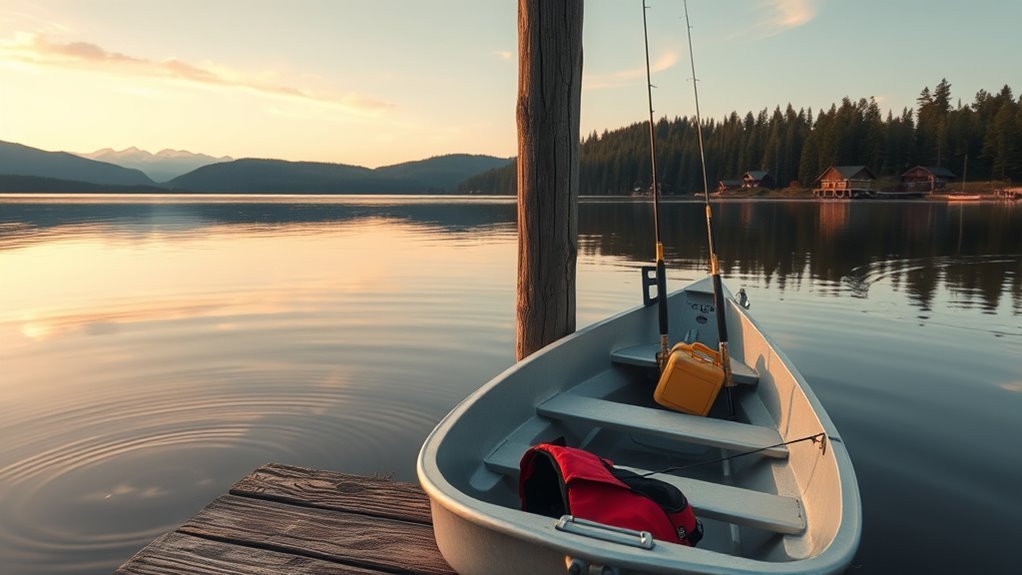
Before buying a beginner lake fishing setup, they should check local license rules, then choose a medium-action spinning rod about 5.5 to 6 feet long with a smooth 6:1 reel. A simple 4- to 12-pound monofilament line, hooks in sizes 6 to 10, and split shot or egg sinkers cover most basic needs. A small tackle box, pliers, water, snacks, and a life jacket keep the trip practical and safe. Lake maps and small boats can open better spots.
Key Takeaways
- Check local fishing license rules before buying gear; regulations vary by state, age, and lake.
- Start with a medium-action 5.5- to 6-foot spinning rod for versatile, beginner-friendly casting.
- Choose a spinning reel with 4- to 12-pound monofilament line for simple, reliable setup.
- Pack basics only: hooks, sinkers, bobbers, bait or lures, pliers, and a net.
- Use lake maps to find weed beds, logs, and depth changes that often hold fish.
What to Bring for Your First Lake Trip
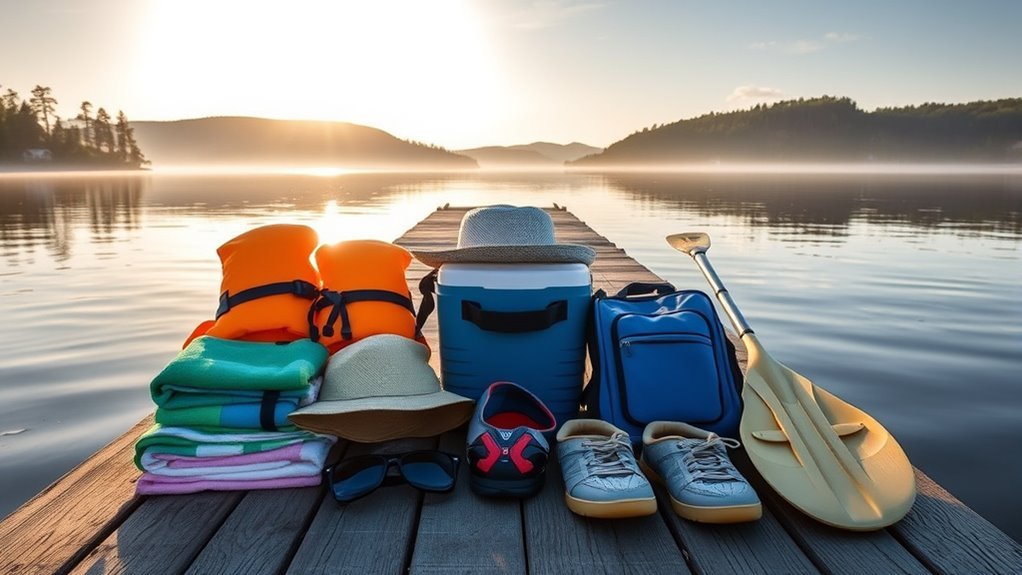
Before heading out for a first lake trip, it is important to gather the basic items needed for both fishing and safety. A valid fishing license should be checked first, since rules differ by state, age, and location.
Check your fishing license first, since rules vary by state, age, and location.
Basic gear can then be organized in a tackle box with hooks, sinkers, bobbers, and a selection of bait or lure options. A fishing rod matched to the planned setup should be paired with a reel and line suited to the water conditions.
Safety equipment matters as much as fishing supplies; life jackets should be included, especially near open water or when boating is involved.
Weather forecasts should be reviewed before departure, since wind, rain, and temperature shifts can affect comfort and safety.
Snacks and plenty of water help maintain energy and hydration during the outing.
With these items prepared, the trip can focus on learning, patience, and freedom on the water.
Choose a Beginner Lake Fishing Rod and Reel
A beginner lake fishing setup is usually easiest to manage with a medium-action spinning rod, since it offers enough flexibility for many fish species and common fishing methods.
A practical rod and reel combo supports steady control without feeling restrictive, giving the angler room to learn fishing basics with confidence and independence.
- Choose a spinning rod around 5.5 to 6 feet for accurate casting and easier handling.
- Select a spinning reel with a balanced gear ratio near 6:1 for smooth retrieval.
- Use 4- to 12-pound-test monofilament fishing line for reliable strength and flexibility.
- Test the rod and reel combo in hand; it should feel comfortable during casting and retrieval.
This setup keeps decisions simple while still offering enough range for different lake conditions.
A well-matched spinning rod and reel can reduce frustration, improve control, and make early outings more productive.
Keep Line, Hooks, and Sinkers Simple
A single main line in the 4- to 12-pound test range gives a beginner enough strength for most freshwater fishing without adding unnecessary complexity.
Hooks in sizes 6 to 10, paired with simple sinkers such as split shot or egg sinkers, cover many common setups for panfish and bass.
Keeping the tackle box to these basics, along with a bobber if needed, makes rigging easier and helps avoid confusion on the water.
Choose One Main Line
Choosing one main line keeps a beginner’s setup simple and effective, and a 12-pound test monofilament line is a practical starting point because it is versatile enough for many freshwater species.
This monofilament line is a good choice for basic fishing tackle, offering stretch, manageable handling, and dependable knot strength. A simple approach supports freedom by reducing confusion and letting skill develop naturally.
- Use one line type to learn casting and feel.
- Choose size 6-10 hooks for broad usefulness.
- Keep a few standard sinkers for easy adjustment.
- Check local regulations before buying gear.
With fewer decisions, anglers can focus on technique, observe water conditions, and adapt without unnecessary equipment or wasted expense.
Match Hooks And Sinkers
When the line is already simple, the next step is matching the hook and sinker to the fish and water conditions.
For most types of fishing in freshwater, hooks size 6 to 10 suit panfish and bass. Beginners can match hooks and sinkers by choosing split-shot or egg sinkers, since both are easy to rig and adjust.
The sinker should be heavy enough to reach depth, yet light enough to keep fish from being spooked. A 4- to 12-pound test line usually pairs best with lighter weights.
A single hook-and-sinker setup reduces tangles and keeps the system free and efficient. Keeping hooks and sinkers organized by size helps the angler switch quickly without confusion, saving time and letting the cast stay simple.
Pack a Basic Lake Fishing Tackle Box
A well-packed lake fishing tackle box gives a beginner the flexibility to handle different conditions without carrying unnecessary gear. The core tackle should include hooks in sizes 6-10, weights, bobbers, and several lures, such as crankbaits, plastic worms, and spinnerbaits.
A balanced mix of natural bait and artificial bait supports practical fishing tips, since fish may respond differently by day and season. A suitable fishing line, such as 12- to 17-pound-test monofilament, should match the rod and reel setup and remain easy for a beginner to manage.
A balanced mix of natural and artificial bait helps beginners adapt to changing fish behavior.
- Store hooks, weights, and bobbers in small compartments.
- Separate lures by type for quick access.
- Pack worms alongside artificial options.
- Add pliers and a fishing net for safer handling.
An organized tackle box reduces delays and keeps the angler ready to adapt, making each outing more independent and efficient.
Read the Lake Map Before You Fish
Studying a lake map before fishing helps a beginner locate productive areas and move with more confidence. Lake maps show weed beds, submerged logs, depths, and contours that can attract fish in freshwater fishing. They also mark public access points, which simplifies planning and entry.
| Map feature | What it shows | Why it matters |
|---|---|---|
| Weed beds | Shallow cover | Holds baitfish |
| Logs | Structure | Can attract fish |
| Depth lines | Drop-offs | Helps target bass |
| Seasonal notes | Fish movement | Improves timing |
| Access points | Entry locations | Saves travel time |
When a Small Boat Helps You Reach More Spots
Small boats can open access to remote fishing areas that are often unreachable from shore, giving anglers a better chance to fish less-pressured waters.
A small boat also supports practical freedom on a lake, because it can be launched quickly, moved with standard vehicles, and used without heavy logistics. For beginners, that means more places to explore and more control over where to spend time.
- Reach shallow coves and weed beds where fish often hold.
- Use a 17-foot Tracker aluminum bass boat for a stable, portable option.
- Reduce transportation strain with tow-friendly, lightweight rigs.
- Limit fuel and maintenance costs while covering more water.
These boats let an angler cast near structure, slip into narrow channels, and move between spots without depending on crowded docks.
The result is broader access, lower cost, and a more independent fishing routine.
Frequently Asked Questions
What Is the 80/20 Rule in Fishing?
The 80/20 rule in fishing means most catches come from a few productive spots. In lake fishing, tackle basics, fishing techniques, and equipment essentials matter less than finding weed lines, logs, and seasonal fish concentrations.
How to Fish in a Lake for Beginners?
Like tuning a bicycle before a first ride, beginner lake fishing starts with simple checks. They should choose suitable gear selection, learn basic fishing techniques, practice casting practice, and target likely lake species near cover at dawn.
What to Buy for a Fishing Beginner?
They should buy fishing gear: a medium spinning rod, reel, 8- to 12-pound line, basic lures, live bait, and a tackle box. Add a license, learn casting techniques, follow local regulations, and prioritize safety tips.
What Is the Best Bait for a Beginner Fishing Beginner?
Live bait, especially worms or minnows, is usually the best bait for a beginner fishing beginner. It pairs well with basic fishing tackle, simple casting techniques, and local regulations should always be checked before fishing.
Conclusion
A first lake trip works best with simple gear and clear expectations. A modest rod, basic tackle, and a quick look at the lake map can turn confusion into calm preparation. With a small boat, new water opens like quiet lanes across glassy surface, but shore fishing can be just as rewarding. In the end, the beginner who packs lightly and plans well steps onto the water ready, steady, and prepared.
