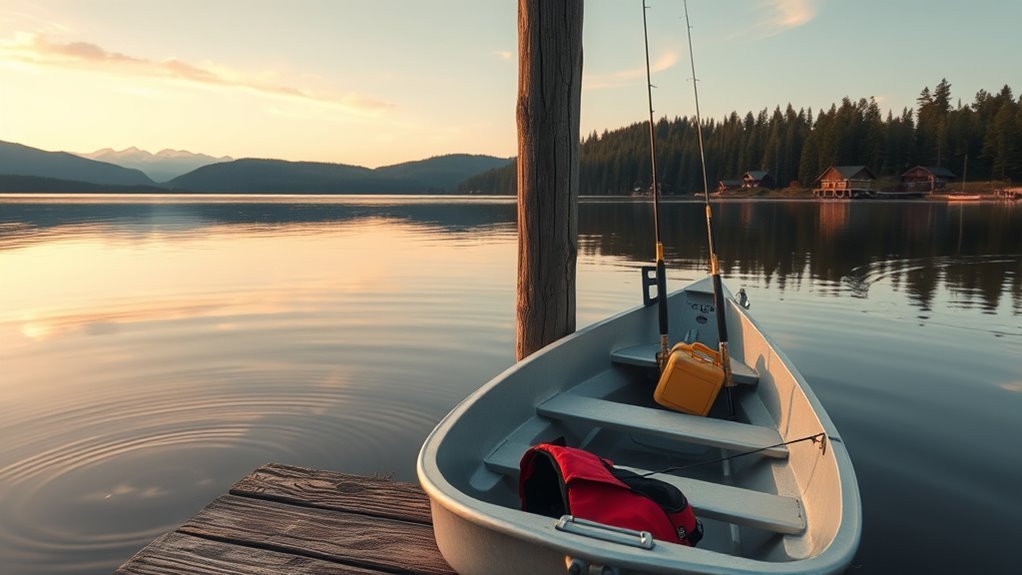
A good beginner lake fishing setup does not need expensive equipment or a large collection of lures. You can start with one spinning rod, a small tackle box, and a simple bait rig. The key is choosing gear that works together and learning where fish are likely to gather.
Quick Answer
Start with a 6–7-foot medium-power spinning combo, 8–10-pound monofilament line, size 6–10 hooks, small split-shot sinkers, bobbers, and worms. Add pliers, a landing net, and a compact tackle box. Confirm your fishing license and local rules before leaving. Shore fishing is enough for your first trip; a boat is optional.
Last checked: September 26, 2026. Dates and figures were verified against official sources.
Key Takeaways
- A shorter rod can help children or anglers fishing in tight spaces, while a longer rod offers more casting reach.
- A bobber-and-worm rig is an easy way to learn casting, bite detection, and basic fish handling.
- Check public access, depth changes, and shoreline cover before selecting your fishing spot.
- Carry only the tackle you need for your target fish rather than buying a large assortment.
- Wear a properly fitted life jacket when boating and leave the water before thunderstorms arrive.
What to Bring for Your First Lake Fishing Trip
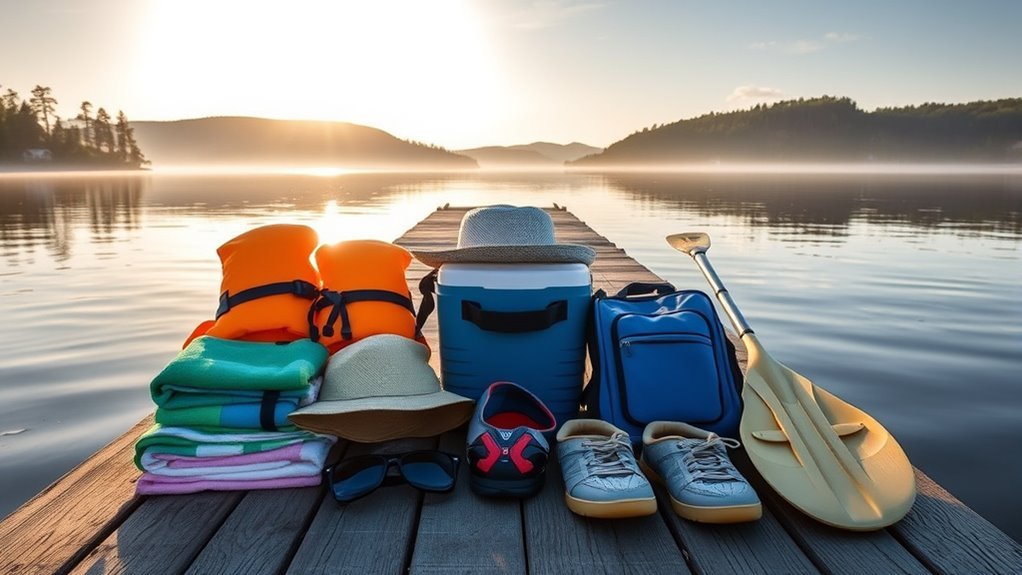
Your first lake fishing trip needs three things: suitable fishing equipment, legal access, and basic safety supplies. Preparing these before leaving gives you more time to practice once you reach the water.
Start with your fishing license and local regulations. In the United States, requirements depend on the state, your age, residency, and the water you plan to fish.
The U.S. Fish & Wildlife Service provides a state-by-state fishing license resource. Your state wildlife agency provides the applicable rules, including fishing seasons, daily limits, minimum sizes, and bait restrictions.
Check your fishing license first, since rules vary by state, age, and location.
Essential Fishing Equipment
- One spinning rod and reel combo.
- Monofilament fishing line matched to the rod and reel.
- Hooks, small sinkers, and bobbers.
- Worms or another permitted bait.
- A small selection of artificial lures.
- A compact tackle box.
- Needle-nose pliers and a line cutter.
- A rubber-coated landing net.
Safety and Personal Supplies
- A properly fitted life jacket, especially when boating or fishing near hazardous water.
- Drinking water and snacks.
- Weather-appropriate clothing and sun protection.
- A charged phone and a basic first-aid kit.
- Suitable footwear for wet or uneven ground.
- A small bag for collecting trash and discarded fishing line.
Check the weather forecast before departure. Wind, rain, and changing temperatures can affect both fishing conditions and your ability to return safely.
For a first outing, choose a public fishing pier or accessible shoreline with enough room to cast. A quiet location makes it easier to practice without dealing with boat traffic or crowded docks.
Choose a Beginner Lake Fishing Rod and Reel
A medium-power spinning rod is a versatile choice for beginners targeting common freshwater fish. A matching spinning reel is easy to learn and works with many basic bait and lure setups.
North Dakota Game and Fish recommends a 6–7-foot medium-action spinning rod with 8–10-pound monofilament line for general shore fishing.
A 5.5–6-foot rod can still work well for children, shorter anglers, or fishing locations with limited casting room.
What Rod Length, Power, and Action Should You Choose?
Rod length affects casting reach and handling. A longer rod generally helps with casting distance, while a shorter rod is easier to manage in tight spaces.
Power and action describe different rod characteristics. According to Shimano’s rod selection guidance, power describes how much force is needed to bend the rod, while action describes where it bends.
- Light or medium-light power: Useful for smaller fish, light tackle, and delicate presentations.
- Medium power: A practical general-purpose choice for panfish, bass, and other common freshwater species.
- Fast action: Bends mainly toward the tip and provides responsive handling.
- Moderate action: Bends farther down the rod and offers a more flexible feel.
Check the line and lure weight ratings printed on the rod. Your chosen line and tackle should fall within those recommendations.
What Should You Look for in a Spinning Reel?
Choose a reel that balances comfortably with your rod and retrieves line smoothly. A reel with a gear ratio near 6:1 is a reasonable option, but beginners do not need that exact ratio.
The drag system matters more. Drag allows line to leave the spool under pressure, helping prevent line breakage when a fish pulls hard.
Before buying, check that the reel handle turns smoothly, the bail opens and closes properly, and the drag adjusts without sticking.
- Hold the assembled rod and reel to check balance and comfort.
- Confirm that the reel accepts your chosen fishing line.
- Turn the handle and check for smooth operation.
- Test the drag adjustment.
- Check whether the combo includes line or needs to be spooled separately.
A ready-matched rod and reel combo removes much of the guesswork involved in choosing separate equipment.
Keep Line, Hooks, and Sinkers Simple
You do not need several line types or a large collection of terminal tackle. Start with one suitable main line, a few hook sizes, and light weights.
The U.S. Fish & Wildlife Service lists 4–12-pound monofilament line and size 6–10 hooks among its basic freshwater fishing supplies.
Choose One Main Line
For a general lake fishing setup, 8–10-pound-test monofilament provides a useful balance of strength and handling.
Monofilament has some stretch, is easy to tie, and is widely available. These qualities make it a practical line for learning basic casting and knot tying.
Choose line strength according to your intended fish and the rod’s printed rating.
- 4–6-pound line: Useful for smaller panfish and other light-tackle fishing.
- 8–10-pound line: A versatile starting point for mixed freshwater fishing.
- 12-pound line: An option when targeting larger fish or using somewhat heavier tackle, provided the rod and reel support it.
You do not need to begin with 12–17-pound line for a simple panfish setup. Heavier line should serve a specific fishing need rather than being the default.
When spooling a reel, keep the line under light tension and follow the spool-capacity markings. Avoid overfilling, which can cause loose coils and tangles.
Match Hooks and Sinkers to Your Bait
Hooks in sizes 6–10 are useful for common small freshwater bait presentations. Choose a hook that matches the bait and the mouth size of the fish you expect to catch.
Hook numbering can be confusing: within standard numbered sizes, a size 10 hook is smaller than a size 6 hook. Larger bass lures may require different hooks.
Split-shot sinkers are small weights attached directly to the line. They are useful for keeping a worm below a bobber.
Egg sinkers slide along the line and can be used in bottom-fishing rigs. You do not need both styles for your first outing.
Choose the lightest weight that allows your bait to reach the intended depth and stay in position. Excess weight can make a small bait presentation harder to manage.
How to Set Up a Simple Bobber-and-Worm Rig
A bobber rig is one of the easiest ways to begin lake fishing. The bobber suspends your bait and helps you see when a fish bites.
- Thread the line through the rod guides, starting with the guide closest to the reel.
- Tie a size 6 or 8 hook to the line using an improved clinch knot.
- Attach one or two small split-shot sinkers about 6–12 inches above the hook.
- Clip a bobber onto the line above the sinkers.
- Adjust the bobber to place the bait at your intended depth.
- Add a worm or another legal bait to the hook.
- Cast gently toward a promising fishing spot.
Watch the bobber for movement. When it goes under or moves steadily away, raise the rod to set the hook and begin reeling.
If you do not get bites, adjust the bobber to fish at a different depth. You can also move your bait closer to weeds, rocks, or other likely cover.
Pack a Basic Lake Fishing Tackle Box
A small, organized tackle box is enough for most first fishing trips. Focus on items that support the bait or lure you plan to use.
Hooks, sinkers, bobbers, and spare line should occupy the main compartments. Keep sharp hooks covered or separated to prevent injury and tangles.
A balanced mix of natural and artificial bait helps beginners adapt to changing fish behavior.
What Should Go Inside?
- Hooks in sizes 6–10 for basic bait fishing.
- A small assortment of split-shot sinkers.
- Several bobbers.
- Spare monofilament fishing line.
- Worms or another locally permitted natural bait.
- A few soft-plastic worms, spinnerbaits, or crankbaits.
- Needle-nose pliers and a line cutter.
- A small container for used line and other waste.
Artificial lures serve different purposes. Soft-plastic worms can be worked slowly near cover, spinnerbaits move through the water with rotating blades, and crankbaits imitate swimming prey.
Beginners do not need every lure style immediately. Start with natural bait and one or two artificial options.
Keep a rubber-coated fishing net nearby. It can help land fish while reducing unnecessary handling.
Pro Tip: Some libraries, wildlife agencies, fish hatcheries, and wildlife refuges offer fishing tackle loaner programs. Borrowing equipment can help you learn what feels comfortable before purchasing your own setup.
How to Handle a Fish Safely
Use your landing net when needed, then wet your hands before touching the fish. Keep the fish close to the water and avoid unnecessary handling.
Use pliers to remove the hook carefully. Watch for sharp fins, spines, and hook points.
If a fish swallows the hook deeply, do not forcefully pull it out. Cutting the line close to the mouth may be safer than causing further injury.
Before keeping any fish, confirm that it meets the applicable size and possession limits.
Read the Lake Map Before You Fish
A lake map helps you choose fishing locations before arriving. Look for public access, shoreline shape, depth contours, and areas where fish may find food or shelter.
Depth contours show changes in the lake bottom. Closely spaced lines indicate a steeper slope, while widely spaced lines indicate a more gradual change.
Some state agencies publish detailed lake information. For example, Minnesota DNR LakeFinder includes lake maps, access information, fishing regulations, surveys, and fish stocking reports.
Not every map includes submerged logs, weed beds, or seasonal fish information. Use the available map alongside what you can observe from shore.
| Map feature | What it shows | Why it matters |
|---|---|---|
| Weed beds | Vegetation and shallow cover, when mapped | Can provide shelter for baitfish and larger fish |
| Logs | Submerged wood or shoreline structure, when shown | Can attract fish seeking cover |
| Depth lines | Changes in water depth and drop-offs | Help identify areas to try at different depths |
| Seasonal notes | Available fishing reports or seasonal observations | Help explain changes in fish location and activity |
| Access points | Public shore access, piers, or boat launches | Help plan legal and practical entry |
Where Should a Beginner Cast?
Start near visible shoreline structure rather than casting blindly into open water. Weed edges, docks, fallen trees, and transitions between shallow and deeper water are useful places to investigate.
Choose a location with safe footing and enough space for your cast. Avoid crowded swimming areas and posted no-fishing zones.
Early morning and evening can be productive, particularly when fish move closer to shallow feeding areas. However, local weather, water temperature, and fish species affect the timing.
Try one location and depth first. If you receive no bites, change the bait depth or move to a different type of structure.
The commonly mentioned 80/20 rule is a useful reminder to concentrate on productive areas. It is not a guarantee that exactly 80% of fish occupy 20% of a particular lake.
When a Small Boat Helps You Reach More Spots
A small fishing boat can help you reach coves, weed beds, drop-offs, and other areas that are difficult to access from shore. However, a boat is not necessary for learning to fish.
Shore fishing avoids the additional costs and responsibilities of boat ownership, launching, storage, and maintenance.
What Kind of Small Boat Works for Lake Fishing?
Aluminum fishing boats are one option for anglers who want access to more of a lake. Their suitability depends on lake conditions, passenger capacity, intended use, and towing arrangements.
The 2026 TRACKER PRO TEAM 175 is an example of an aluminum bass boat. Manufacturer specifications list a length of 17 feet 7 inches and an average package weight of 2,235 pounds.
That package weight illustrates why a boat described as relatively small or lightweight still requires careful towing and storage planning.
Before choosing any boat, consider:
- Whether its size suits the lakes you plan to fish.
- Whether your vehicle can safely tow the complete loaded trailer.
- How many passengers and how much equipment the boat can carry.
- Where you will launch, store, and maintain it.
- Whether local registration or boater education requirements apply.
A boat can help you cast alongside submerged structure, enter suitable shallow coves, and move between fishing areas. It also adds fuel, maintenance, transport, and safety responsibilities.
What Safety Equipment Do You Need?
Every person aboard should have an appropriately sized, serviceable, U.S. Coast Guard-approved wearable life jacket.
The Coast Guard recommends wearing a life jacket whenever a recreational boat is underway. Its life jacket guidance explains fit, approval, accessibility, and appropriate use.
Check applicable state and federal requirements for additional equipment, including throwable flotation devices, navigation lights, and other required safety gear.
Warning: Do not begin a boat trip when thunderstorms threaten. If you hear thunder while fishing, stop and seek safe shelter immediately. The National Weather Service advises waiting at least 30 minutes after the last thunder before returning outdoors.
Follow the National Weather Service lightning safety guidance. A substantial enclosed building or hard-topped vehicle provides safer shelter than an open boat, dock shelter, or isolated tree.
Leave the Lake Ready for Your Next Trip
Collect discarded line, packaging, and other trash before leaving. Fishing line can injure birds and other wildlife.
Clean fishing equipment and remove visible plants or mud. If you used a boat, follow applicable clean, drain, and dry requirements.
The U.S. Fish & Wildlife Service’s Protect Your Waters guidance also explains why anglers should never release unwanted live bait into another water body.
These simple habits help protect the lake and keep your equipment organized for the next outing.
Frequently Asked Questions
What Is the 80/20 Rule in Fishing?
The 80/20 rule is a general idea that a large share of catches may come from a relatively small number of productive locations. It encourages anglers to focus on fish-holding structure, cover, and changing conditions rather than treating every part of a lake equally.
How Do You Fish in a Lake for Beginners?
Start at an accessible shoreline with a spinning rod, bobber, small hook, and worm. Cast near suitable cover, watch for bites, and adjust your bait depth if fish are not responding. Practice casting in an open area before your first trip.
What Should You Buy for a Fishing Beginner?
Buy a spinning rod and reel combo, suitable monofilament line, basic hooks, sinkers, bobbers, bait, and a compact tackle box. Add pliers, a line cutter, and a landing net. You can expand your equipment after learning which fish and fishing methods you enjoy.
What Is the Best Bait for a Beginner?
Worms are an excellent starting bait for many common freshwater fish, including panfish. Minnows can also work where permitted. Match the bait to your target species and follow local rules governing live bait, its transport, and disposal.
Do You Need a Boat to Start Lake Fishing?
No, you can learn lake fishing from a public shoreline or fishing pier. Shore fishing allows you to practice casting, bait presentation, and fish handling without the additional equipment and responsibilities of operating a boat.
Conclusion
A successful first lake trip begins with simple, well-matched equipment and a practical plan. A spinning combo, basic tackle, legal fishing access, and attention to safety are enough to get started.
Choose one accessible fishing spot, rig a bobber and worm, and practice casting before adding more equipment. As your skills improve, you can explore different lures, new fishing locations, and eventually boat fishing if it suits your needs.
Sources
- U.S. Fish & Wildlife Service — Purchase a Fishing License: State-specific fishing license information and requirements.
- U.S. Fish & Wildlife Service — A Guide to Fishing for the First Time: Beginner equipment, line and hook sizes, basic rigging, fish handling, and conservation.
- North Dakota Game and Fish — Open-Water Fishing Equipment Quick Start Guide: Rod, reel, line, and tackle recommendations for beginner shore fishing.
- Shimano — Rod Action and Power Explained: Differences between rod power and action.
- Minnesota Department of Natural Resources — LakeFinder: Lake maps, public access, surveys, and fishing information.
- U.S. Coast Guard — Life Jacket Wear: Life jacket selection, fit, accessibility, and safe use.
- National Weather Service — Lightning Safety: Thunderstorm precautions and safe shelter guidance.
- TRACKER Boats — 2026 PRO TEAM 175: Manufacturer boat dimensions and package weight.
- U.S. Fish & Wildlife Service — Protect Your Waters: Cleaning fishing equipment, preventing invasive species, and disposing of unused bait.
