If you run regularly, you have probably wondered whether a massage gun for runners is worth adding to your recovery routine. These percussion devices can loosen tight calves, ease sore hamstrings, and speed up recovery after a hard session, but timing and technique make the difference between helpful and pointless. This guide covers when to use one, which features actually matter, and how to use it without hurting yourself.
Quick Answer
Runners can use a massage gun before a run for a short 30-60 second warm-up pass per muscle group on a low setting, and after a run for 1-2 minutes per area to ease soreness and support recovery. Skip it on bones, joints, the front of the neck, varicose veins, and any bruised, cut, or freshly injured area.
Key Takeaways
- A massage gun is a helpful recovery tool for runners, not a required piece of gear.
- Use short, light passes before a run and slightly longer sessions after.
- Stall force and interchangeable heads matter more than price for most runners.
- Keep sessions to 1-2 minutes per muscle group and start on the lowest setting.
- Never use it on bones, the front of your neck, varicose veins, or an injured area.
When Should Runners Use a Massage Gun?
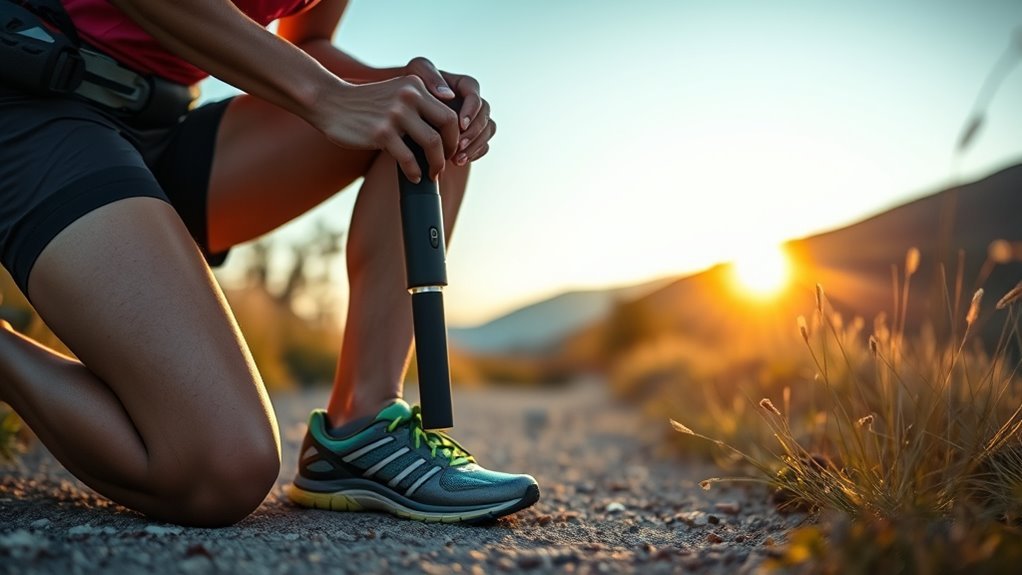
A massage gun for runners is most useful either before a run or after training, depending on the goal. The two uses call for different settings and duration.
Before a Run
Before running, a brief pass with the massage gun can raise blood flow and loosen tight muscles as part of a warm-up. Keep it short: 30 to 60 seconds per muscle group on a low speed is enough to activate tissue without fatiguing it before you even start.
After a Run
After training, a massage gun can help ease soreness, improve flexibility, and help your legs settle after hard work. Most guidance from physical therapists points to about 1-2 minutes per muscle group, moving the head steadily rather than holding it in one spot.
Used consistently as part of a broader recovery routine, alongside stretching, hydration, and sleep, it may help you feel ready for your next session sooner. It is not a substitute for rest or for treating an actual injury.
Do Runners Need a Massage Gun?
Massage guns can be a useful recovery tool for runners, but they are not strictly necessary. For some runners, they support muscle relaxation after hard sessions, especially when legs feel tight or overworked.
Affordable models, including units around $99, can provide benefits similar to premium devices for most casual runners. Many include interchangeable heads, which allow targeted treatment for different muscle groups: wider heads suit beginners, while pointier attachments give experienced users more precision.
Affordable massage guns can offer benefits similar to premium devices for everyday recovery, with interchangeable heads adding more targeted treatment.
Muscle Relief After Runs
After a run, a massage gun is often used to relieve sore, tight muscles by promoting blood circulation and easing post-exercise tension. It offers targeted pressure without booking an appointment or working around a therapist’s schedule.
- Helps reduce soreness and stiffness
- Provides focused relief for specific muscle groups
- Offers a convenient alternative to a traditional massage
Warm-Up and Recovery
Massage guns are used by runners both before and after training to support warm-up and recovery. Before a run, a short pass can loosen tight muscles and help prepare the body to work. Afterward, it can support blood flow and help reduce soreness following a hard session or race.
Which Massage Gun Features Matter?
Not every spec sheet number matters equally. For most runners, three features make the real difference: stall force, head options, and, optionally, heat or cold.
[Amazon Products Picked for You]

Dual-Port Compatibility: Designed to fit most massage guns, these attachments seamlessly connect to both 12-13mm and 18-19mm port sizes, offering versatile use across different devices

Relax, Unwind & Recover: Whether you are a cardio junkie, strength training aficionado or a 9-5 executive who can’t help but sit perched on the office chair, Olsky deep tissue massage gun is exactly what you need to iron out knots at the end of the day.
Stall Force Explained
Stall force measures how much resistance the motor can push against before it slows down or stops. A higher stall force means the gun keeps working at a consistent speed even when you press it into a dense muscle like the glutes or quads, rather than bogging down.
For most runners, a stall force in the 30-50 lb range is enough. Very high stall-force devices mainly matter for larger muscle groups or users who like firmer pressure; they are not required for basic recovery use.
Pro Tip: A stall force around 40-50 lbs covers nearly every running-recovery use case. Chasing a much higher number usually adds noise and weight, not real-world benefit, unless you specifically need deep pressure on very dense muscle.
Interchangeable Heads
Interchangeable heads shape how precisely a device can target different muscle groups. Wider, flatter heads suit large areas like quads, glutes, and calves, while smaller, pointed heads focus on tight spots and trigger points.
- Wide or ball head: broad areas like quads, glutes, and calves
- Bullet or pointed head: tight spots and trigger points
- Flat head: general use on most muscle groups
Heat and Cold Settings
Some models add heat or cold attachments. Warmth can support blood flow and loosen tissue before a run, while a cold head may feel soothing on tired muscles afterward. These features add convenience, but their effect is modest compared with the core percussion function, so they are a nice-to-have rather than a deciding factor.
How to Use a Massage Gun Safely
Safe use starts with a conservative approach, especially right after a run when muscles may already be sensitive. Start on the lowest setting, then judge comfort before increasing intensity. Keep the head moving over soft tissue rather than holding it still, and avoid pressing directly on bone.
- Start on the lowest speed and increase only if it feels comfortable.
- Keep sessions to about 1-2 minutes per muscle group, moving steadily.
- Hold the device perpendicular to the muscle and let it do the work, rather than pressing hard.
- Clean the heads regularly, especially after use on sweaty skin.
Warning: Do not use a massage gun on bony areas (shins, knees, spine), the front of your neck, varicose veins, or any bruise, cut, or acute injury. If an area is swollen, numb, or recently strained, skip it and check with a physical therapist first.
Used this way, a massage gun supports practical self-care while limiting risk and preserving mobility. It is a recovery aid, not a treatment for an actual injury.
[Amazon Products Picked for You]
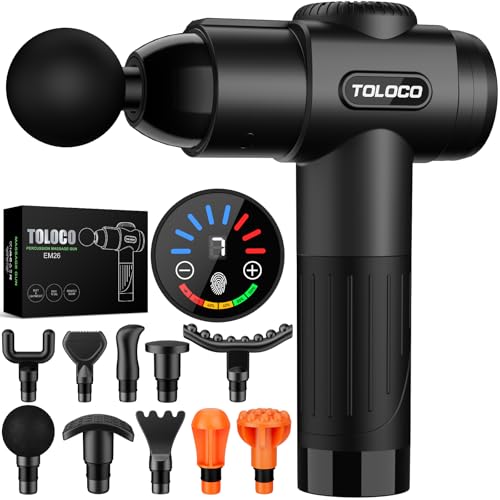
Quick Pain Relief: The TOLOCO deep tissue massage gun has a high penetration force of 12mm, up to 3200 rpm, which effectively relieve muscle fatigue and pain, and let you enjoy the comfortable experience brought by deep tissue massage gun, so as to restore the best state of your body

Quick Pain Relief: The TOLOCO deep tissue massage gun has a high penetration force of 12mm, up to 3200 rpm, which effectively relieve muscle fatigue and pain, promote blood circulation, relieve lactic acid, and let you enjoy the comfortable experience brought by deep tissue massage gun, so as to restore the best state of your body

【Professional Deep Tissue Percussion】 Experience instant back & muscle pain relief. This professional mini massage gun delivers powerful 35 lb deep tissue percussion in a compact 1.04 lb full-metal body. Ultra-quiet (35-55 dB) for office, home, or gym.
How Much Should a Runner Spend on a Massage Gun?
For most runners, the answer is less than premium price tags suggest. Entry-level models start around $99 and can deliver solid recovery support without the cost of a $300-plus device.
Affordable options often suit casual runners well, especially when reviews show similar day-to-day benefits to pricier units. Higher-end models may add extra stall force, quieter motors, or app connectivity, but those extras are not always necessary for basic post-run recovery.
A runner who trains heavily or deals with chronic tightness may still find value in spending more. The practical approach is to match the purchase to real needs, such as stall force or interchangeable heads, rather than chasing the most expensive option on the shelf.
[Amazon Products Picked for You]

[Multifunctional massage gun] The deep tissue massage gun has 8 different massage heads, each of which is aimed at different muscles. After the massage gun hits the muscles, it can promote blood circulation, decompose lactic acid, and relieve muscle soreness after exercise. In addition, the massage gun also comes with a portable carring case, which is convenient to carry and relax the muscles anytime, anywhere.

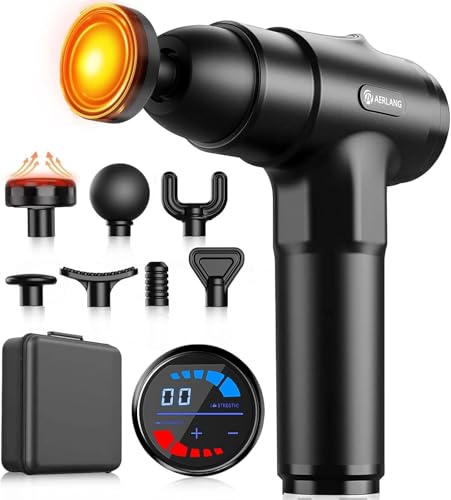
Innovative Heated Massage Head: The AERLANG portable back massage gun features a professional heated massage head (with a separate on/off switch) that uses heat to accelerate muscle relaxation, allowing you to massage sensitive areas from gentle to deep penetration. Six massage heads are also available, offering a variety of muscle group options
Frequently Asked Questions
What Is the 80/20 Rule in Running?
The 80/20 rule means about 80% of your weekly running time should be at an easy, low-intensity pace, with the remaining 20% at moderate-to-high intensity. The split is measured across your total weekly running time, not by counting individual runs.
This balance mirrors how many elite distance runners train and is meant to fix a common mistake: drifting into a “moderate” effort on days that are supposed to be easy. Over time, it can improve endurance and lower injury risk by giving your body enough easy volume to recover between harder sessions.
What Is the 10-20-30 Rule for Running?
The 10-20-30 method (also called 30-20-10) is an interval workout that cycles through 30 seconds of easy running, 20 seconds at a moderate effort, and 10 seconds at a hard sprint, repeated continuously for about 5 minutes per block.
A typical session pairs a few of these 5-minute blocks with an easy warm-up, a short recovery jog between blocks, and a cool-down. It is a time-efficient way to build both speed and endurance without long, exhausting sessions, and it adapts to different fitness levels since the “hard” effort is relative to your own pace.
How Often Should Runners Use a Massage Gun?
Most runners get good results using a massage gun after runs on training days, rather than daily on rest days. Using it once or twice on the same muscle group per day, for 1-2 minutes each session, is plenty; more frequent use does not add extra benefit and can leave tissue feeling overworked.
Can a Massage Gun Replace Stretching or Physical Therapy?
No. A massage gun is an adjunct to recovery, not a replacement for stretching, mobility work, or physical therapy when you have an actual injury. It can complement a warm-up or cool-down routine, but persistent pain, swelling, or reduced range of motion should be evaluated by a professional rather than treated at home with percussion alone.
Conclusion
For runners, the right massage gun habit is simple: a short pass before running to wake up tight muscles, and a longer session afterward to ease soreness and support recovery. With a reasonable stall force, a couple of useful heads, and a conservative approach around bones and injuries, even a budget model can do the job. Used safely and consistently, it can help you feel better, move easier, and stay ready for your next run.
Note: Massage gun use and timing recommendations above reflect general guidance from physical therapy and sports-recovery sources, not instructions tied to a specific product. Always follow the safety guidance that ships with your own device.
Sources:
- University of Utah Health – Massage Guns: How to Use Them Safely and Effectively
- Hinge Health – How to Use a Massage Gun: A Physical Therapist’s Guide
- 80/20 Endurance – Understanding Your 80/20 Run Plan
- Canadian Running Magazine – Try 30-20-10 Running to Get Fit Fast
- Lifestar Pro – Massage Gun Stall Force Guide
