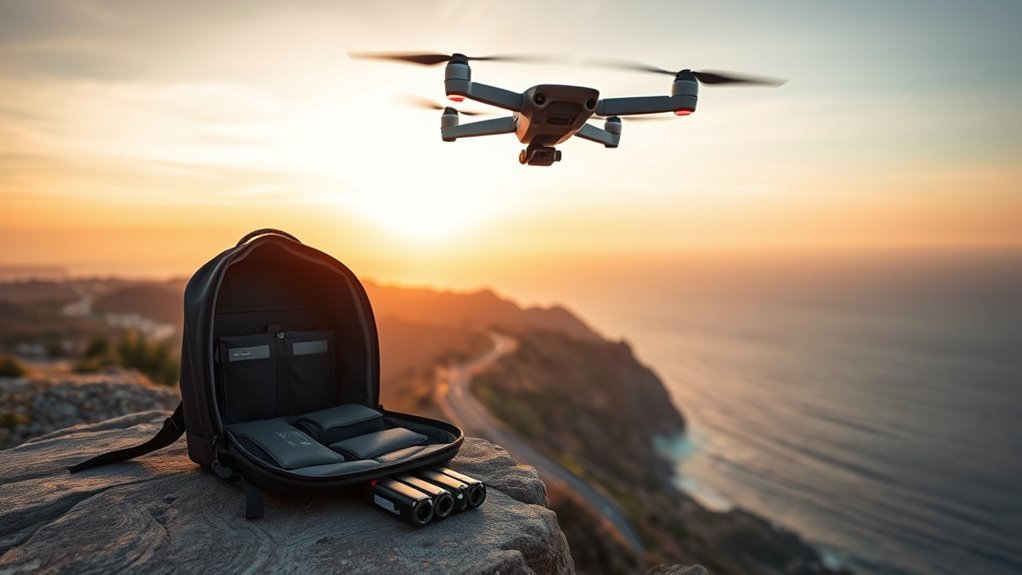
The best drones for travelling long distance are the DJI Mini 5 Pro, the DJI Air 3S and the DJI Mavic 4 Pro. For most travellers the Mini 5 Pro is the best pick. DJI lists it at 249.9 g with a 1-inch camera and up to 36 minutes of flight. The Air 3S adds a second camera and up to 45 minutes. The Mavic 4 Pro is the heavier, premium option. One US caveat: DJI’s newest drones are not officially sold in the US, so stock varies (see which DJI drones can still be bought in the US).
Key Takeaways
- DJI Mini 5 Pro: 249.9 g, 1-inch 50 MP camera, up to 36 minutes (52 minutes with the larger Plus battery, which adds weight).
- DJI Air 3S: 724 g, a 1-inch wide camera plus a 70 mm telephoto camera, up to 45 minutes.
- DJI Mavic 4 Pro: about 1,063 g, up to 51 minutes and a 4/3-inch Hasselblad main camera. Best image quality, but the heaviest.
- Pack spare batteries in your carry-on bag. Each one must be under 100 Wh unless the airline approves it.
- Check local drone rules before you fly in a new country. Range numbers do not change the line-of-sight rule.
What Makes a Great Travel Drone?
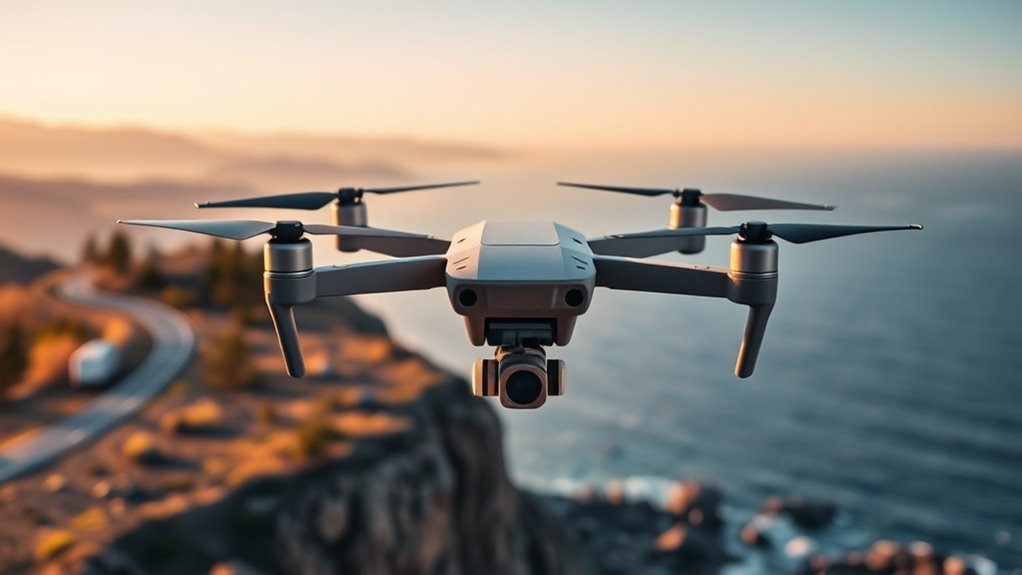
A good travel drone is small, light, easy to fly and has a camera you will be happy with. Here is what matters most:
- Weight and size. A drone under 250 g fits in a day bag. In the US, a drone under 250 g needs no registration for fun flying. Rules in other countries differ.
- Battery life. Flight times of 30 minutes or more mean fewer battery swaps. Real flights are shorter than the maximum.
- Camera. A 1-inch sensor gives sharper photos and better low-light video than the tiny sensors in toy drones.
- Safety features. Obstacle sensing helps in places you do not know.
- Easy software. A simple app with subject tracking and a return-to-home button keeps flying low-stress.
Best Drones for Travelling Long Distance
These drones balance weight, flight time and camera quality. The maximum flight times below come from the makers and were measured in ideal conditions.
| Drone | Weight | Max flight time | Cameras |
|---|---|---|---|
| DJI Mini 5 Pro | 249.9 g | 36 min (52 min with Plus battery) | 1-inch, 50 MP |
| DJI Air 3S | 724 g | 45 min | 1-inch 50 MP wide, 48 MP 70 mm tele |
| DJI Mavic 4 Pro | About 1,063 g | Up to 51 min | 4/3-inch Hasselblad, plus 70 mm and 168 mm tele |
| Potensic Atom 2 | 248 g | 32 min (about 22 min in one review) | 4K/30, 1/2-inch sensor |
Last checked: October 2026. The three DJI models were approved by the FCC before 22 December 2025, so they can still be sold in the US. Stock is thin and mostly comes from third-party sellers.
DJI Mini 5 Pro: Best Lightweight Travel Drone
The DJI Mini 5 Pro is the easiest drone to take on a long trip. It weighs 249.9 g, folds to about 157 × 95 × 68 mm without propellers, and still has a 1-inch camera.
Ultra-Light Travel Design
DJI lists the takeoff weight at 249.9 g and notes a small variation of a few grams between units. The camera sits on a 3-axis gimbal that rotates for vertical shots, and it tilts from −90° to 55°. Obstacle sensors cover the front, back, sides, top and bottom.
- Good for: carry-on packing, city breaks, hikes.
- Watch out for: a light drone is pushed around more in gusts. DJI rates wind resistance at 12 m/s (about 27 mph).
Image Quality For Travel
The 1-inch, 50 MP sensor gives sharp photos in 12 MP and 50 MP modes. Video goes up to 4K at 120 frames per second, which is enough for smooth slow motion. This is a big step up from the small sensors in most drones of this weight.
Flight Time And Portability
The standard battery gives up to 36 minutes. The larger Plus battery gives up to 52 minutes, but it adds weight. With the Plus battery fitted, the drone may no longer count as under 250 g, so check the total weight before you rely on the under-250 g rules.
- Good for: long walks and remote stops where you want to fly more than once.
- Watch out for: real flights are shorter than 36 minutes. Pack at least one spare battery.
DJI Air 3S: Best All-Around Travel Drone
The DJI Air 3S weighs 724 g. It is bigger than the Mini 5 Pro, but it has two cameras and a longer flight time of up to 45 minutes.
Travel-Friendly Design
The arms fold to about 214 × 101 × 89 mm, so it fits in a small camera bag. DJI says it senses obstacles in all directions and has a forward LiDAR sensor, which helps in low light.
- Good for: travellers who want a longer lens and longer flights.
- Watch out for: at 724 g it needs registration in the US and similar rules in many countries.
Camera Versatility
The Air 3S has a 1-inch, 50 MP wide camera and a 1/1.3-inch, 48 MP telephoto camera at 70 mm. Both record 4K video at up to 120 frames per second.
| Feature | Benefit | Use case |
|---|---|---|
| 1-inch, 50 MP wide camera | Sharp detail and good low light | Landscapes, dusk |
| 1/1.3-inch, 48 MP, 70 mm tele | Tighter framing from the same spot | Coastlines, buildings, wildlife |
| All-direction obstacle sensing | Safer flying near rocks and trees | Places you do not know |
Flight Time Advantage
DJI lists up to 45 minutes of flight and about 41 minutes of hover time. The battery is 62.5 Wh, which is under the airline limit of 100 Wh. That means more shots per battery and fewer swaps on a long day.
DJI Mavic 4 Pro: Best Premium Travel Drone
The Mavic 4 Pro is for travellers who care most about image quality. It has a 4/3-inch Hasselblad main camera, a 70 mm medium telephoto and a 168 mm telephoto. It records 6K video at 60 frames per second and flies for up to 51 minutes.
- Good for: landscape and film work on trips where weight does not matter.
- Watch out for: at about 1,063 g it is the heaviest of the three, and it needs registration in the US. Read the Wh label on the battery before you fly with it.
Flying With Drone Batteries
The FAA says spare lithium batteries must travel in your cabin bag, not in checked luggage. If a carry-on bag is checked at the gate, take the spare batteries out first and keep them with you.
- Each spare battery must be 100 Wh or less. Up to two batteries of 101 to 160 Wh are allowed with airline approval.
- Cover the battery ends with tape, a case or the original packaging.
- Do not fly with a damaged or swollen battery.
- Airlines can set stricter rules, so check yours before the trip.
| Battery | Capacity |
|---|---|
| Mini 5 Pro standard | 19.52 Wh |
| Mini 5 Pro Plus | 33.51 Wh |
| Air 3S | 62.5 Wh |
| Mavic 4 Pro | Read the Wh label on the battery |
Drone Rules When You Travel
Drone rules change from country to country. In the UK and Europe, the normal open-category limit is 120 m (400 ft) above the ground, even for light drones. Registration rules for small camera drones also differ by country. Do not assume that a drone under 250 g is exempt. Check the national aviation authority before you travel, for example the UK CAA or your destination’s authority.
- Check registration and pilot rules for each country before you leave.
- Check where you can fly. National parks, airports and cities often have extra limits.
- Keep the drone in sight. Maximum range figures, such as DJI’s 20 km FCC range for the Mini 5 Pro and Air 3S, are not the legal distance you may fly.
In the US, register drones of 250 g or more, use Remote ID, pass the free TRUST test if you fly for fun, stay below 400 ft and keep the drone in sight.
DJI Alternatives for Travel
Alternatives are limited. New models from any foreign maker cannot get FCC approval, Autel is on the Covered List, and Skydio left the consumer market in 2023. These two are still worth a look if you can find them in stock:
- Potensic Atom 2: 248 g, 4K at 30 fps, a 1/2-inch sensor and a 3-axis gimbal. It is rated for 32 minutes, and a reviewer measured about 22. It has no obstacle sensing.
- Holy Stone HS360S: 249 g with GPS and 4K video at 20 fps. It has no camera stabilization, so video looks shakier, and a reviewer measured about 15 minutes of flight.
Both give less image quality than a 1-inch drone. Check the FCC approval and the warranty before you buy.
Travel Drone Buying Tips for Long Trips
- Battery life: plan for shorter flights than the maximum and bring spare batteries.
- Weight: a drone under 250 g is easiest to pack and has the lightest rules in the US.
- Camera: a 1-inch sensor gives much better results than a small one.
- Rules: read the drone laws for every country on your route.
- Availability: in the US, check the FCC approval, the seller and the warranty before you pay.
Which Travel Drone Should You Choose?
- Most travellers: the DJI Mini 5 Pro. It is light, folds small and has a 1-inch camera.
- Travellers who want a second lens: the DJI Air 3S, with a 70 mm telephoto and up to 45 minutes of flight.
- Image-quality first: the DJI Mavic 4 Pro, if you can accept the weight.
- Tight on space or bag weight: a drone under 250 g, such as the Mini 5 Pro or Potensic Atom 2.
Frequently Asked Questions
What Is the Best Travel Drone in 2026?
For most people it is the DJI Mini 5 Pro. It weighs 249.9 g, folds small and has a 1-inch camera with up to 36 minutes of flight. In the US, availability varies because DJI does not officially sell it there.
What Are the Best Drones for Long Distance Flying?
Of the drones here, the Mavic 4 Pro has the longest flight time at up to 51 minutes. The Air 3S offers up to 45 minutes and the Mini 5 Pro up to 36 minutes. Remember that you must keep the drone in sight, so flight time matters more than maximum range.
What Is the Best Drone for Traveling?
The DJI Mini 5 Pro. It is the lightest of the three, and it fits easily in a day bag.
What Is the Farthest Flying Drone I Can Buy?
DJI lists a maximum transmission range of 20 km (FCC) for the Mini 5 Pro and Air 3S, in ideal conditions. In real use, buildings and radio noise cut that sharply. In the US and most countries you must also keep the drone in sight, so the legal distance is much shorter.
Conclusion
For long trips, the DJI Mini 5 Pro is the best pick for most people. The Air 3S suits travellers who want a second lens and longer flights, and the Mavic 4 Pro suits those who put image quality first. Pack spare batteries in your carry-on, check the rules in each country and check US stock before you buy. Last checked: October 2026.
