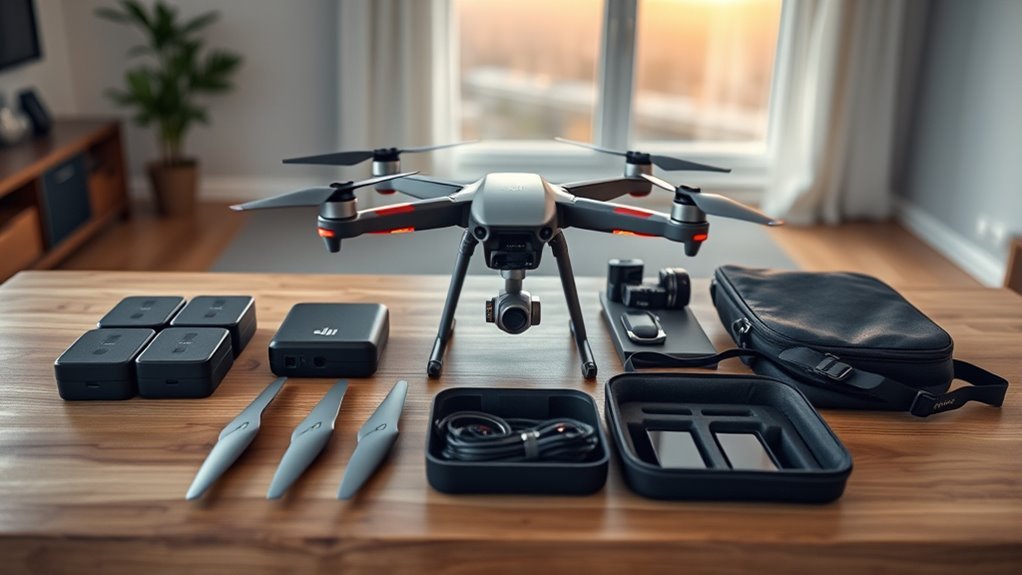
The DJI Fly More Combo is a bundle that adds extra batteries, a charging hub, a bag, and spare propellers to a DJI drone. For the Mini 4K, it means three batteries, which gives up to 93 minutes of total flight time in ideal conditions. It is worth it if you fly often or travel with your drone. If you fly rarely, the standard kit is enough. This guide uses the Mini 4K as the example. Last checked: October 2026.
What’s Inside the DJI Mini 4K Fly More Combo?
The Mini 4K Fly More Combo includes:
- The Mini 4K drone and its controller
- Three Intelligent Flight Batteries (the standard kit has one)
- A Two-Way Charging Hub, which charges the batteries one after another and can also work as a power bank
- A shoulder bag
- Spare propellers and screws
Each battery gives up to 31 minutes in ideal conditions, so three give up to 93 minutes in total. Real flights are shorter. Plan on about 25 minutes per battery once wind, 4K video, and a safety reserve are counted.
The Mini 4K weighs 246 grams, which is under the 250-gram line. In the US, you do not need to register a drone under 250 g for recreational flying. If you fly for work under Part 107, you must register it whatever its weight. Contents can vary by seller, so check the listing before you buy.
Is the DJI Fly More Combo Worth It?
For most people who fly more than once in a while, yes. The extra batteries are the real value. One battery lasts about 25 minutes, so a second and third pack let you keep flying without waiting for a recharge.
- The hub charges all three batteries without swapping cables.
- The shoulder bag keeps the drone, controller, and batteries together when you travel.
- Spare propellers save you a trip to the shop after a scrape.
- The Mini 4K records 4K video at 30 fps with a 3-axis gimbal, so the extra flight time gives you more usable footage.
Prices change often, so compare the combo with the standard kit plus two batteries and a hub bought separately. If the combo costs less than those parts, it is the better deal. If it costs more, buy only what you need.
Who Should Buy the DJI Mini 4K Fly More Combo?
The combo suits you if one or more of these apply:
- You fly regularly and want sessions longer than one battery allows.
- You shoot video or photos and do not want to stop for charging.
- You travel with the drone and want everything in one bag.
- You want a spare set of propellers on hand.
When Should You Skip the Fly More Combo?
Skip the combo if one of these sounds like you:
- You fly once in a while, in short sessions. One battery is enough.
- You already own spare batteries or a charging hub.
- You only need one extra battery. Buying it separately is simpler.
In these cases, buy the standard kit and add parts only when you need them.
Best DJI Mini 4K Bundle Alternatives
If you do not need the full combo, you have a few other routes:
| Option | Best for |
|---|---|
| Mini 4K standard kit | One battery and basic flying |
| Standard kit plus a spare battery | Pilots who need only one extra battery |
| Standard kit plus a separate hub or bag | Building your kit piece by piece |
| Mini 4 Pro or Mini 5 Pro | Obstacle sensing and stronger cameras |
The Mini 4 Pro and Mini 5 Pro also come in a Fly More Combo, and the Mini 5 Pro has a Plus version with bigger batteries. In the US, these models are sold mostly by third-party sellers. See which DJI drones are still available in the US before you buy.
Batteries are not interchangeable across every Mini model, so check that a battery is listed for your drone before you order.
Frequently Asked Questions
Can FAA Know You Flew a DJI Drone?
Sometimes. Drones that must use Remote ID broadcast their ID and location while they fly, and anyone nearby with a receiver can pick it up. That covers drones that must be registered, such as any drone flown under Part 107 and recreational drones over 250 g. A 246 g Mini 4K flown for fun does not need to be registered or broadcast Remote ID.
The FAA does not watch every flight live. The DJI Fly app and the aircraft keep flight records on your phone and the drone. Airspace rules apply to every drone. For the wider legal picture, read is DJI banned in the US.
What’s the Difference Between DJI Fly More Combo and Fly More Combo Plus?
A Plus combo comes with larger Plus batteries for longer flights. The Mini 5 Pro Fly More Combo Plus, for example, includes three Plus batteries rated for up to 52 minutes each, against 36 minutes for the standard batteries. The Plus battery raises the takeoff weight to 294 g, which is over the 250-gram line, so registration rules may apply. DJI sells the Mini 4K as a standard kit and a Fly More Combo, not as a Plus version.
Why Is DJI No Longer Selling Drones in the US?
DJI still sells drones in other markets. In the US, new models are blocked. On 22 December 2025 the FCC added all foreign-made drones and key parts to its Covered List. That stops new models from getting FCC approval, so they cannot be legally sold or imported in the US.
Models approved before that date can still be sold, and you can keep flying a drone you already own under FAA rules. For the Fly More Combo, this means US stock is whatever approved units remain, often from third-party sellers. Read is DJI banned in the US and which DJI drones are still available in the US.
Which DJI Drones Come With a Fly More Combo?
Many DJI consumer drones are sold as a standard kit and as a Fly More Combo. The Mini 4K, Mini 4 Pro, and Mini 5 Pro all have one. On these models the combo has three batteries, a charging hub, and a shoulder bag. The Mini 5 Pro combos also add ND filters. Contents differ by model and by seller, so read the in-the-box list on the product page.
Conclusion
The DJI Fly More Combo is worth it if you fly often, shoot video, or travel, because the extra batteries and hub keep you in the air longer. If you fly rarely, the standard kit does the job. Check the in-the-box list and compare prices on the day you buy.
