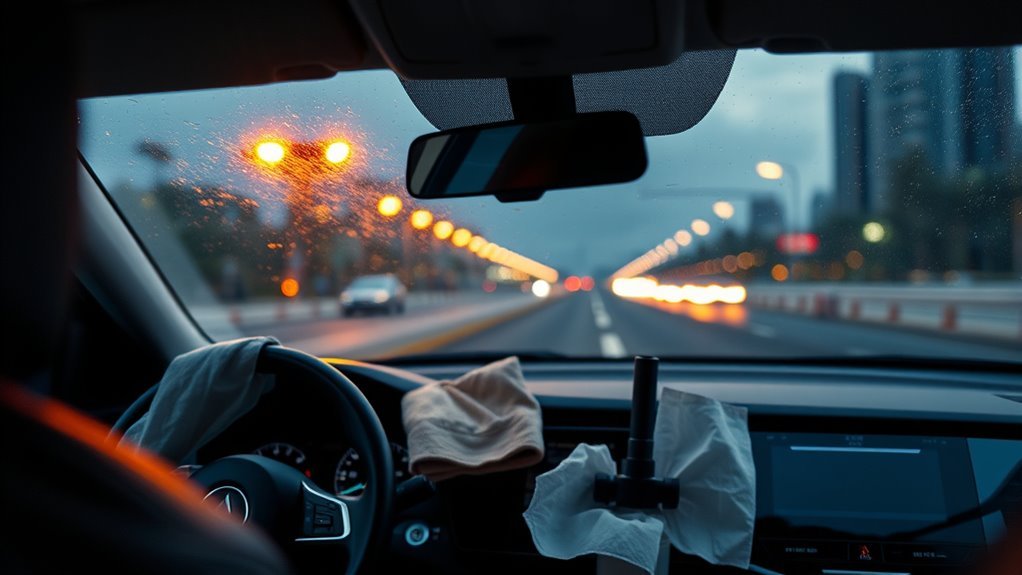
Interior windshield haze usually comes from dust, skin oils, humidity, and product residue. The best setup uses an ammonia-free, streak-free glass cleaner, two waffle-weave microfiber towels, and shaded working conditions. Spray the cleaner onto the towel, not the glass, then wipe with one towel and buff with the other. Use a detailing brush or damp microfiber for corners and seams. Avoid hot glass and paper towels. More exact techniques can improve the final finish.
Key Takeaways
- Use an ammonia-free, streak-free glass cleaner to protect tinted windows and avoid haze-causing residue.
- Spray cleaner onto a microfiber towel, not directly on the glass, to control overspray and reduce streaks.
- Clean with a two-towel method: one towel for wiping grime, another clean towel for buffing clarity.
- Work in shade or on cool glass so the cleaner does not evaporate too quickly and leave smudges.
- Detail corners with cotton swabs or a brush, then inspect from multiple angles and repeat as needed.
What Causes Interior Windshield Haze
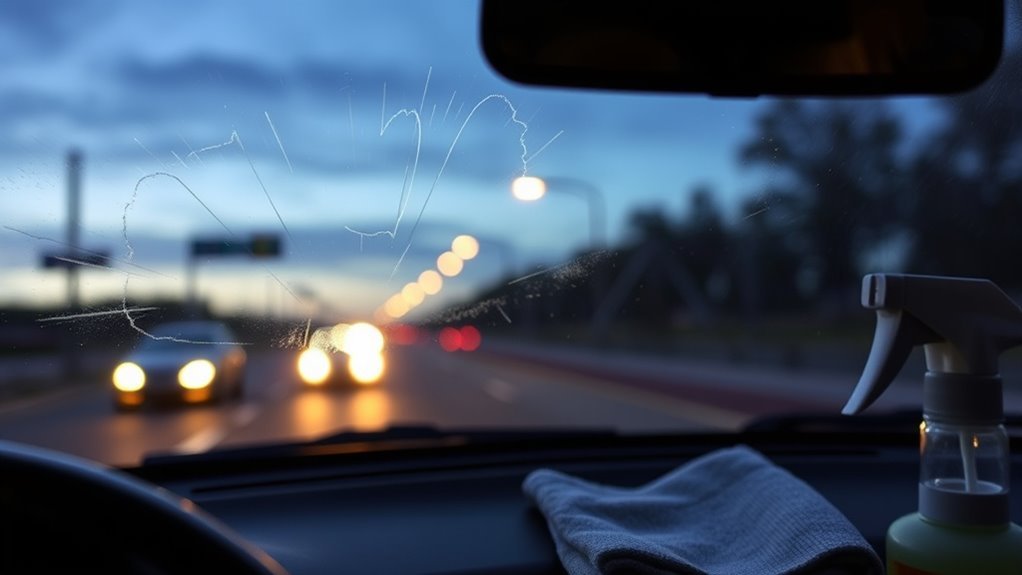
Interior windshield haze typically develops as dust, grime, and skin oils accumulate on the glass, forming a thin film over time. When humidity rises and cabin temperatures shift, condensation forms and binds that residue into a more visible veil.
Products that contain oils, including some air fresheners and household sprays, can leave additional deposits. Smoking inside the vehicle adds tar and nicotine, which adhere strongly and are difficult to remove. The result is reduced clarity, glare, and trouble playing when sunlight or headlights strike the windshield.
Regular care with an ammonia-free glass cleaner helps break down this buildup without damaging interior surfaces. A microfiber cloth can then clean the inside efficiently by lifting contaminants rather than spreading them. Frequent maintenance keeps the glass clear, preserves visibility, and supports safer driving.
For those seeking liberation from persistent haze, understanding these causes is the first practical step toward a cleaner, more open view.
Gather Your Windshield Cleaning Supplies
The essential cleaning gear includes a streak-free, ammonia-free glass cleaner and two microfiber towels.
A red waffle-weave towel can be used for cleaning, while a blue waffle-weave towel can be reserved for buffing.
For best control, the cleaner should be sprayed onto the towel rather than the glass, and the towels should be folded into thirds to expose fresh surfaces.
Essential Cleaning Gear
A proper windshield-cleaning kit starts with a streak-free, ammonia-free glass cleaner to protect tinted glass, plus two microfiber waffle-weave towels: a red one for cleaning and a blue one for buffing to a clear finish.
These tools replace paper towels, which leave lint and reduce control, especially in a new account of careful interior care. The work should begin in shade so the cleaner does not flash off before it can lift film.
For interior glass, the cleaner is sprayed onto the towel, not the windshield, to limit overspray on trim and dash surfaces. The red towel handles the initial wipe; the blue towel follows to refine clarity.
Progress is checked from multiple angles in natural light, where remaining streaks become visible and can be removed efficiently.
Choose Ammonia-Free Cleaner
Choosing an ammonia-free glass cleaner is the next step in assembling a windshield-cleaning kit, especially for vehicles with tinted windows that can be damaged by harsh chemicals.
For tinted window care, this selection preserves film integrity while still removing haze, fingerprints, and interior film. The best cleaner alternatives are streak-free formulas designed for auto glass, because they reduce residue and support effective cleaning techniques without abrasive additives.
A technician should verify the label before purchase and avoid products that list ammonia or strong solvents.
In practice, pairing the cleaner with a shaded workspace slows evaporation and improves contact time, allowing contaminants to lift cleanly.
This simple specification gives drivers control over clarity, supports durable glass surfaces, and makes maintenance more precise, efficient, and independent.
Use Two Microfiber Towels
Two waffle weave microfiber towels streamline interior windshield cleaning by separating the scrubbing and finishing stages.
A red towel should handle the initial pass, lifting dirt, film, and grime without abrading glass. The cleaner should be sprayed onto the towel, not the windshield, to control overspray and support even coverage. The towel should be folded into thirds, exposing fresh sides as contamination accumulates.
After the surface is cleared, a blue waffle weave towel should be used for buffing, removing residue and producing a streak-free sheen.
Paper towels should be avoided because they shed lint and can mark the surface. This two-towel method reflects sound towel types, disciplined cleaning techniques, and the practical microfiber benefits that help free the glass from haze.
Choose a Streak-Free Cleaner for Tint
Selecting an ammonia-free, streak-free glass cleaner is essential for tinted interior windshields, since ammonia can degrade tint over time and leave harmful residue. For tint maintenance tips, cleaner comparisons should prioritize automotive formulas, because they cut grime without attacking film. Application techniques matter too: spraying onto a microfiber towel reduces overspray and supports controlled cleaning freedom.
| Criterion | Target |
|---|---|
| Ammonia | None |
| Label | Streak-free |
| Use | Automotive glass |
| Test | Small hidden area |
A compatible product should evaporate cleanly and leave no haze, preserving visibility and tint integrity. Before broader use, a small inconspicuous test confirms the formula will not discolor or soften the film. Once verified, the cleaner can be paired with precise towel-based application to limit residue and streaking. This selection process keeps the surface protected, the view clear, and the driver unburdened by preventable tint damage.
Clean the Interior Windshield
With a streak-free, ammonia-free cleaner already selected for tint compatibility, the interior windshield can be cleaned directly using controlled technique. For liberated drivers seeking clear sightlines, the cleaner should be sprayed onto a microfiber towel rather than the glass, reducing overspray and keeping application exact.
A red waffle weave towel suits the initial wipe, while side-to-side passes lift film, dust, and road residue without scattering debris. The surface should then be buffed with a clean blue waffle weave towel or equivalent dry microfiber to restore clarity and support glass maintenance.
This sequence strengthens interior visibility by limiting smears and preserving the windshield’s optical field. Careful cleaning techniques matter most on the inside, where haze often survives routine washing.
After finishing, the work should be inspected under bright light and from several angles to detect lingering streaks or smudges. Repeating targeted correction only where needed maintains a precise, streak-free result.
Use the Two-Towel Method
The two-towel method improves interior windshield cleaning by separating the application and buffing steps for better control. A red waffle weave microfiber towel is used to carry cleaner, while a blue waffle weave towel follows to refine the surface.
The two-towel method separates cleaning and buffing for better control, using red and blue waffle weave microfiber towels.
Among microfiber types, waffle weave cloths hold solution efficiently and give measured contact on glass. Cleaner should be sprayed onto the towel, not the windshield, to limit overspray and keep the process disciplined.
Horizontal passes with the red towel remove film and dust with consistent pressure. Folding each towel into thirds provides multiple clean faces, reducing redepositing grime.
The blue towel then completes the cycle by drying and polishing the pane for a clear, professional result. Proper towel maintenance preserves absorbency and prevents contamination between uses.
With regular cleaning frequency, this method supports safe driving, better visibility, and a cleaner, more liberated cabin environment.
Remove Streaks and Residue
Streaks and residue diminish glass clarity and should be removed with a streak-free, ammonia-free glass cleaner that breaks down film without harming tinted surfaces. For controlled application, the cleaner should be sprayed onto the red waffle weave towel, not the glass, to limit overspray and keep the cabin free from excess moisture. Then, the surface can be wiped side-to-side, a practical among streak removal techniques that distributes cleaner evenly and lifts haze. The blue waffle weave towel should follow to buff away any remaining film.
| Step | Action | Result |
|---|---|---|
| 1 | Apply cleaner to towel | Even coverage |
| 2 | Wipe side-to-side | Film removal |
| 3 | Buff with dry towel | Clear finish |
| 4 | Inspect under light | Residue found |
Residue prevention tips include minimal product use and consistent buffing. Cleaning frequency recommendations depend on buildup, but regular attention preserves visibility and supports a cleaner, more liberated driving experience.
Clean Corners and Hard-to-Reach Spots
Corners and tight seams on the interior windshield often retain grime after the main glass surface has been cleaned. A detailing brush or cotton swabs can be used to lift debris from these narrow areas without missing buildup.
Effective corner cleaning techniques depend on controlled pressure and small motions that avoid scattering loosened dirt. Among detailing brush options, soft bristles and slim cotton swabs offer precision in vents, gasket lines, and the base of the glass.
A microfiber towel lightly dampened with cleaner can be folded to reach crevices and collect residue without scratching the surface. Flexible tool benefits become apparent where the glass meets the dash or pillars, since a windshield cleaning wand can access awkward angles with less strain.
For stubborn spots, letting cleaner dwell briefly helps release embedded film. The area should then be buffed with a clean blue microfiber towel to restore clarity and support a streak-free finish.
Avoid Common Windshield Cleaning Mistakes
Common interior windshield cleaning errors include working on hot glass, which can accelerate cleaner evaporation and leave residue.
A two-towel method is more effective: one microfiber towel applies and lifts soil, while a second dry towel buffs the surface to a clear finish.
Harsh chemicals should be avoided, since they can damage interior materials and reduce glass clarity.
Avoid Hot Glass
Cleaning the interior windshield while the glass is hot often causes the cleaner to flash off too quickly, which can leave streaks and an uneven finish.
Effective cleaning techniques depend on temperature effects, because warm glass accelerates evaporation and reduces working time. For better glass care, the surface should be allowed to cool before product is applied.
The cleaner should be sprayed onto a microfiber towel, not directly onto the windshield, to control coverage and prevent overspray. A side-to-side wipe pattern helps lift dirt and grime with consistent pressure.
High-quality waffle weave microfiber towels outperform paper towels by reducing lint and streaking. If haze remains, the glass should be checked under direct light and cleaned again once conditions are stable and controlled.
Use Two-Towel Method
A two-towel method improves interior windshield cleaning by separating removal and finishing tasks. One red waffle weave microfiber towel handles cleaning, while a blue waffle weave towel handles buffing, supporting microfiber towel benefits through better dirt capture and reduced redepositing.
Cleaner should be sprayed onto the towel, not the glass, to prevent overspray and dashboard damage. The glass should be wiped horizontally; this is one of the most practical effective cleaning angles because streaks appear immediately across the field.
After the first pass, the blue towel removes residue and reveals a clear surface. Towels should be folded often to expose fresh sides, which strengthens streak prevention techniques and maintains control.
This approach gives the user cleaner glass, greater visibility, and more freedom from recurring haze.
Skip Harsh Chemicals
Harsh chemicals and poor technique can undo otherwise careful interior windshield work. Ammonia-free glass cleaners are the baseline choice because they protect tinted windows while still delivering a streak-free finish.
For those seeking eco-friendly alternatives, mild DIY solutions can work if they are applied correctly and used at an appropriate cleaning frequency. Cleaner should be sprayed onto a waffle weave microfiber towel, not directly on the glass, to control coverage and reduce overspray.
Paper towels should be avoided because they can leave lint and fine scratches. The windshield should also be cleaned out of direct sunlight, since rapid evaporation encourages streaking.
After wiping, the surface should be inspected from multiple angles and under varied lighting to confirm that no smudges remain.
Frequently Asked Questions
Why Won’t the Inside of My Windshield Get Clean?
It stays dirty because oils, smoke film, and dust bond to glass, while common mistakes—ammonia cleaners, hot surfaces, poor wiping—defeat streak free techniques. Proper cleaning tools, especially microfiber, restore clarity and freedom.
How Do Detailers Clean Inside a Windshield?
Like a careful surgeon, a detailer uses streak free techniques: ammonia-free detailing products on a red towel, then a blue towel to buff. Cleaning tools work side to side, with inspections from multiple angles.
How Do You Get Rid of Haze on the Inside of a Windshield?
Haze is removed with ammonia-free glass cleaner, effective cleaning tools, and haze removal techniques: spray onto a red microfiber towel, wipe side-to-side, then buff with blue towel; avoid common cleaning mistakes like overspray and tinted-glass damage.
What Is the Best Cleaner for the Inside of My Windshield?
An ammonia-free, streak-free automotive glass cleaner is best for the inside windshield. Product comparisons favor tint-safe formulas. Proper cleaning techniques use microfiber towels, not paper. DIY solutions work if the cleaner is sprayed onto the towel.
Conclusion
To conclude, interior windshield haze usually comes from off-gassing, film buildup, and improper products. A methodical approach works best: use an ammonia-free cleaner, two lint-free towels, and controlled wiping passes. Clean edges and tight corners carefully, then inspect in direct light for residue. Avoid overspraying and dirty cloths. With the right setup, the glass can become as clear as still water, improving visibility and reducing glare during day and night driving.
