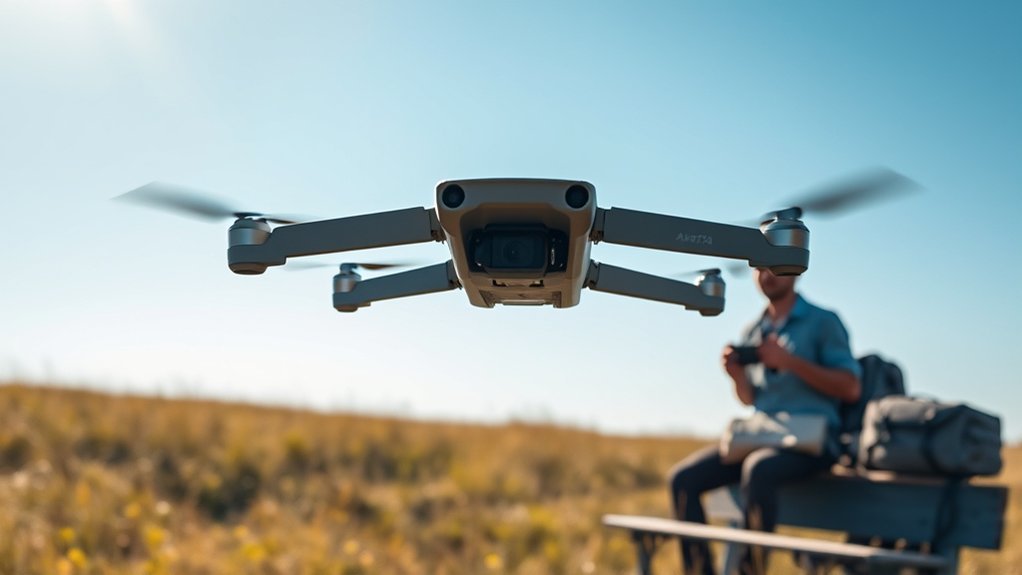
The Ameta S20 Lite is a lightweight beginner drone with brushless motors, optical-flow hovering, one-key takeoff, and two included flight batteries. Its foldable body and simple controls make it appealing for first-time pilots who want to learn without investing in an advanced camera drone.
The biggest detail to understand is its camera. Although advertised with a 4K UHD camera, the S20 Lite’s published manual lists 1080p video at 30fps and 4096 × 3072 still photos. It also lacks GPS and mechanical camera stabilization. These limits matter if you want smooth travel footage rather than casual flying and basic photography.
Quick Verdict: Ameta S20 Lite
Editorial Rating: 7/10 (Specification-based assessment)
Best for: First-time pilots, recreational flying, and simple aerial photos in calm weather.
Skip if: You need true 4K video, a stabilized gimbal, GPS, or automatic return-to-home.
Bottom line: A practical starter drone with useful flight assistance and good portability, but its camera and navigation features are limited.
Before You Buy the Ameta S20 Lite
Four Important Things to Know
- 4K does not mean 4K video: The published video specification is 1920 × 1080 at 30fps.
- No GPS return-to-home: The pilot must manage the drone’s position and recovery.
- Separate controller batteries: The remote requires three AAA batteries that are not included.
- Extra memory may be necessary: A compatible microSD card is sold separately for recording and saving full-quality media.
Jump to Review Sections
Is the Ameta S20 Lite Worth Buying?
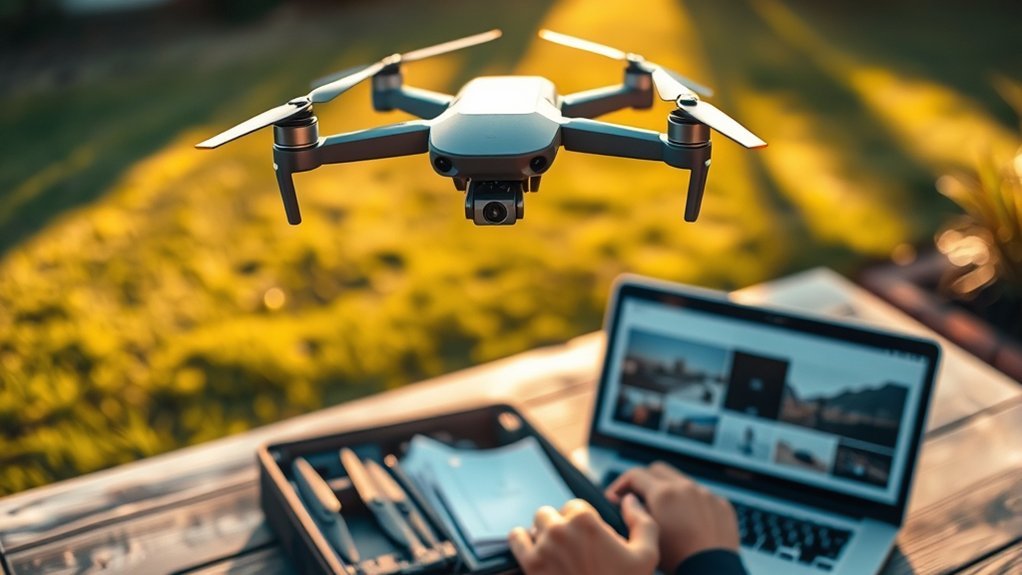
Yes, the Ameta S20 Lite is worth considering for basic recreational flying. Its most useful features are easy takeoff and landing, optical-flow assistance, brushless motors, and two flight batteries. These give beginners more opportunities to practice without needing advanced piloting skills.
It is not a strong choice for demanding aerial photography. Its absence of GPS, obstacle avoidance, and a stabilizing gimbal limits its appeal for pilots expecting advanced camera performance.
The manufacturer’s official S20 Lite product information confirms the main beginner-focused features, including the adjustable camera, optical-flow hovering, and two-battery package.
Ameta S20 Lite Specifications
The following specifications are taken from the manufacturer’s product information and published S20 Lite manual. The detailed figures refer to the DR-ATS20B documentation; buyers should confirm the manual version supplied with their particular unit.
| Specification | Ameta S20 Lite |
|---|---|
| Drone weight | Approximately 151g with battery |
| Still photos | 4096 × 3072 pixels |
| Video | 1920 × 1080 at 30fps |
| Lens adjustment | 90° tilt adjustment |
| Flight time | Up to 18 minutes per battery |
| Included batteries | Two, 1600mAh each |
| Rated controller range | Up to 200m (656ft) |
| Maximum relative flight height | 50m (164ft) |
| Charging time | Approximately 160 minutes per battery |
| Motors | Brushless |
| Position assistance | Optical flow and altitude hold |
| GPS | No |
| Mechanical gimbal | No stabilized gimbal |
| Controller power | Three AAA batteries, not included |
| Memory card support | microSD, up to 128GB in the referenced manual |
What’s in the Box?
According to the manufacturer, the standard S20 Lite package includes:
- One Ameta S20 Lite drone
- One remote controller
- Two flight batteries
- One storage bag
- One USB charging cable
- Four spare A propellers and four spare B propellers
- One screwdriver and replacement screws
- One user manual and one quick guide
The remote’s AAA batteries and a microSD card are not listed among the included accessories. Confirm the exact package contents if you are considering a different bundle.
Who Is the Ameta S20 Lite Best For?
The Ameta S20 Lite is best for beginners who value affordable flight practice more than professional camera features. It also suits recreational users who want a compact drone for occasional outings.
Best for Beginners
First-time pilots benefit from one-key takeoff and landing, slower speed settings, and hovering assistance. These features reduce the number of manual adjustments needed during an early flight.
Optical-flow positioning uses a downward-facing sensor to track movement over the ground. It can help the drone maintain position when lighting and surface conditions are suitable.
The S20 Lite is especially reasonable if your goal is learning orientation, turning, hovering, and landing before moving to a more advanced drone.
Casual Travel Flyers
The foldable frame and approximate 151g weight are useful for packing the drone in a day bag. Its included storage bag also helps keep accessories together.
However, it should be treated as a recreational flying drone rather than a serious travel camera. Wind, restricted airspace, and limited stabilization can reduce its usefulness at sightseeing locations.
Who Should Skip It?
The S20 Lite is not a good match for pilots who need reliable automated navigation or professional video capture.
- Travel videographers: Look for real 4K video recording and image stabilization.
- Long-distance pilots: Consider a GPS model with stronger navigation and recovery assistance.
- Windy-location flyers: Choose a drone with documented wind-resistance performance and appropriate positioning systems.
- Professional users: Consider models with advanced camera controls, location tracking, and support features.
Ameta S20 Lite Pros and Cons
Pros
- Beginner-friendly takeoff, landing, and flight controls
- Two included batteries with up to 36 minutes of combined rated flight time
- Lightweight, foldable design with a storage bag
- Brushless motors and optical-flow hovering assistance
- Adjustable camera angle and playful flight modes
Cons
- 1080p video rather than genuine 4K video recording
- No GPS or automatic GPS return-to-home
- No stabilized camera gimbal
- Limited suitability for windy outdoor flying
- Controller batteries and microSD card are not included
How Easy Is the Ameta S20 Lite to Fly?
The Ameta S20 Lite is designed to be easy for a new pilot to operate. The remote provides basic directional control, one-key takeoff and landing, and selectable flight speeds.
Beginner mode limits flight behavior to make practice more manageable. Altitude hold helps reduce the need for constant throttle corrections, while optical flow supports hovering when conditions allow.
These aids do not make the drone completely autonomous. You still need to watch its position, steer away from obstacles, and prepare to land when the battery gets low.
How to Set Up the Ameta S20 Lite
Follow the setup procedure in your included manual, as button layouts and firmware details can differ between revisions.
- Unfold the arms. Open the front arms and then the rear arms, following the manual’s instructions.
- Charge the flight battery. Use the supplied charging cable and a compatible USB power supply.
- Install the controller batteries. Insert three AAA batteries with the correct polarity.
- Prepare the camera. Remove the protective lens film and install a compatible microSD card if you want to save full-quality media.
- Power on the drone. Place it on a level surface and hold its power button according to the manual.
- Power on the remote. Allow the drone and controller to pair.
- Connect your phone if needed. Join the drone’s Wi-Fi network and open the AMETA Drone app for the live camera view.
- Check the area. Confirm that the propellers, controls, battery level, and surroundings are safe before takeoff.
- Begin in slow mode. Use one-key takeoff, practice hovering, and land before the battery becomes critically low.
The official Ameta Download Center provides S20 Lite manuals, app information, and setup videos.
Safety warning: Keep clear of spinning propellers. Do not fly near people, animals, roads, or obstacles. The emergency-stop function cuts the motors and may cause the drone to fall, so it should not be used as a normal landing method.
How Good Is the Ameta S20 Lite Camera?
The S20 Lite camera is suitable for basic aerial photos and casual video, but its advertised 4K designation needs explanation.
The referenced user manual lists 4096 × 3072 still-image resolution and 1920 × 1080 video at 30fps. That makes it incorrect to describe the drone as recording genuine 4K video based on these specifications.
The 90° adjustable camera angle is useful because you can point the lens forward or downward without changing the drone’s entire position.
Still Photography
The high-resolution still-image setting can be useful for daylight landscapes, outdoor scenery, and simple overhead views.
However, pixel count alone does not establish overall picture quality. Sensor size, lens sharpness, exposure, and image processing also affect the result.
For this reason, buyers should not assume that the S20 Lite delivers the same photo quality as more advanced drones simply because it advertises 4K imagery.
Video Recording
The S20 Lite records Full HD video according to the referenced manual. That is enough resolution for simple clips, but it lacks the detail and cropping flexibility of genuine 4K footage.
Its main video limitation is stabilization. Without a stabilized gimbal, changes in aircraft angle can appear directly in the recording.
What Does 5G FPV Mean?
FPV stands for first-person view. It allows you to see the drone’s camera feed on a connected phone while flying.
The S20 Lite’s advertised 5G FPV refers to a 5GHz Wi-Fi connection, not mobile 5G service. A cellular data plan is not required for that direct camera connection.
Live-video quality depends on interference, distance, phone compatibility, and the operating environment. It should not be confused with the drone’s maximum controller range.
How Stable Is S20 Lite Video Footage?
The S20 Lite is better suited to slow, controlled video shots than fast camera movements. Optical flow and altitude hold help the aircraft maintain a more consistent hover, but neither replaces a camera gimbal.
Stabilization Limits
Without mechanical image stabilization, the drone’s movements can affect the horizon and introduce visible shake. Wind, sudden turns, and abrupt acceleration can make this more noticeable.
A downward-facing optical-flow sensor also has limits. It works best when the ground has visible texture and enough light for the system to detect movement.
Real-World Footage Quality
The S20 Lite’s published hardware suggests it is more appropriate for recreational footage than polished cinematic work. We do not have independent sample footage or measured stabilization results to assign a verified real-world image-quality score.
For the best chance of usable video:
- Fly in calm conditions with plenty of light.
- Make slow turns and gradual changes in height.
- Avoid rapid direction changes while recording.
- Check the camera angle before takeoff.
- Use a compatible memory card and verify the saved recording.
These habits can reduce unwanted camera movement, although they cannot replace a stabilized camera system.
How Long Does the Ameta S20 Lite Fly?
The Ameta S20 Lite has an advertised maximum of 18 minutes per battery. With two included batteries, the total claimed flight time is 36 minutes.
That total does not mean the drone flies continuously for 36 minutes. You must land and replace the battery between sessions.
Actual flight time can be shorter because of wind, repeated climbing, speed, battery age, temperature, and the amount of power reserved for landing.
How Long Does Charging Take?
The referenced manual gives an approximate battery charging time of 160 minutes, depending on the power source and charging conditions.
The supplied USB cable is intended for charging the flight batteries. Allow the battery to cool after flying, inspect it for damage, and follow the manual’s charging instructions.
Do not charge a swollen, punctured, leaking, or otherwise damaged battery.
How Far Can the Ameta S20 Lite Fly?
The referenced S20 Lite manual specifies a maximum operating distance of 200 meters (656 feet). This differs from the 300-meter figure stated in the original article.
The same manual specifies a maximum relative flight height of 50 meters (164 feet). These are manufacturer limits, not guaranteed distances under every condition.
Trees, buildings, radio interference, terrain, and weather can reduce the usable range. The aircraft’s lightweight construction also makes it important to avoid flying far away in windy conditions.
Why Range Matters Without GPS
The S20 Lite does not provide GPS-based return-to-home. If you lose visual contact or the control link becomes unreliable, recovering the aircraft may be difficult.
Its Find Your Drone buzzer can help locate the aircraft when the drone still has battery power and a working connection to the remote. It is not a substitute for GPS tracking.
Does the S20 Lite Need FAA Registration?
In the United States, a drone weighing less than 250g can be exempt from FAA registration when flown exclusively under the recreational-flyer exception.
However, non-recreational operations under Part 107 generally require registration regardless of the drone’s low weight. Registration and Remote ID obligations depend on how the aircraft is operated.
The FAA drone registration guidance explains these distinctions.
Recreational pilots must also take the TRUST safety test, maintain visual line of sight, follow airspace restrictions, and obtain authorization for flights in controlled airspace when required.
For U.S. recreational operations, the FAA generally limits flight to 400 feet above ground level in uncontrolled Class G airspace. The S20 Lite’s own maximum height setting is lower.
See the FAA recreational-flying requirements before your first outdoor flight.
What Flight Modes Does the S20 Lite Offer?
The S20 Lite combines basic flight assistance with playful movement modes. These are useful for learning, but they should not be confused with GPS-based autonomous navigation.
Beginner and Auto Modes
- Beginner mode: Restricts flight behavior to help new users practice more safely.
- Altitude hold: Helps maintain flight height without constant manual throttle adjustment.
- Optical flow: Uses a downward-facing sensor to support position holding under suitable conditions.
- One-key takeoff and landing: Simplifies starting and ending a flight.
- Speed settings: Allow the pilot to select slower or faster response.
These functions reduce the work of basic piloting, but the pilot remains responsible for flight safety and obstacle avoidance.
Fun and Creative Modes
The S20 Lite also offers 3D flips and circle flying. Its referenced manual describes a trajectory-flight option through the companion app.
These modes can help beginners experiment after mastering basic control. However, automated movements still need an open flight area.
- 3D flips: Perform a full flip when the function is activated and the aircraft has enough battery power.
- Circle fly: Makes the aircraft fly a circular pattern around its starting position.
- Trajectory flight: Allows a route to be drawn in the app for the drone to follow without changing its flight height, according to the referenced manual.
Use these functions only after checking the available clearance and understanding how to stop the maneuver.
How Portable and Durable Is the S20 Lite?
The Ameta S20 Lite is easy to carry because it has a foldable frame and a weight of approximately 151g with the battery installed.
The included storage bag helps protect the drone while it is not in use. Fold the arms carefully, keep the propellers free of pressure, and avoid packing heavy items on top.
The body uses lightweight construction rather than rugged, impact-resistant protection. Its small size is convenient, but it should not be treated as crash-proof.
Basic Maintenance and Crash Prevention
Inspect the propellers and arms before every flight. Replace any propeller that shows cracks, bending, or other damage.
The manual identifies different A and B propellers. Install each replacement in the correct position, following the diagram and instructions supplied with the drone.
Keep the aircraft dry, store batteries safely, and inspect the camera and optical-flow sensor for dirt that could affect performance.
Best Uses for the Ameta S20 Lite
Learning Basic Drone Controls
The strongest reason to choose this model is flight practice. Its slow-speed option, altitude hold, and one-key landing make it easier to learn hovering and directional movement.
Casual Aerial Photography
The adjustable camera works for basic landscape and overhead photos in daylight. You can experiment with different angles without needing professional camera settings.
Recreational Flying in Open Areas
The two batteries and creative flight functions make it suitable for short recreational sessions in calm, permitted flying areas.
Indoor practice is possible only in a sufficiently spacious and safe environment. Keep the drone away from people, pets, breakable objects, and other hazards.
What Do Owners Report About the Ameta S20 Lite?
Public owner discussions show that not every experience is trouble-free. Some individual reports describe drifting, unexpected directional movement, and controller or phone-connection difficulties.
For example, one S20 Lite owner discussion describes an aircraft that repeatedly pulled to one side. Another owner discussion reports inconsistent remote-controller startup.
These are individual experiences, not controlled testing or proof of a defect affecting every unit. They do, however, identify sensible checks for buyers before a first flight.
Issues Worth Watching
- Unexpected drift: Check the calibration and reset instructions, then practice on a level surface in calm conditions.
- Remote startup problems: Check battery installation, battery condition, and the controller’s power procedure.
- App connection problems: Make sure the phone is connected to the drone’s Wi-Fi network and the correct app is installed.
- Wind sensitivity: Avoid using the drone in weather where its lightweight frame may struggle to maintain position.
If the aircraft repeatedly behaves unpredictably after the recommended checks, stop flying and contact the manufacturer rather than risking a flyaway.
Should You Buy the S20 Lite or S20 Pro?
The Ameta S20 Lite is the simpler choice for basic flight practice. The Ameta S20 Pro offers more advanced navigation, including GPS and automatic return-to-home.
Ameta advertises up to 50 minutes of combined flight time with the S20 Pro’s two batteries, compared with 36 minutes for the Lite. These are manufacturer maximums under favorable conditions.
The S20 Pro also supports GPS-assisted flight modes, including GPS Follow and waypoint functions. These make it more suitable for pilots who want to try planned or automated outdoor shots.
Its official product page provides the confirmed feature list.
Ameta S20 Lite vs Other Beginner Drones
If camera quality or automated features are priorities, two other relevant alternatives are the DJI Neo and Potensic ATOM.
| Drone | Video | Rated Flight Time | Main Advantage |
|---|---|---|---|
| Ameta S20 Lite | 1080p/30fps | 18 min per battery | Simple flight practice |
| Ameta S20 Pro | 4K marketed camera; check exact recording specification | Up to 50 min with two batteries | GPS and return-to-home |
| DJI Neo | 4K/30fps | Up to 18 min | Stabilized video and tracking |
| Potensic ATOM | 4K/30fps | Up to 32 min | Three-axis gimbal and GPS |
Ameta S20 Pro: Better for GPS Features
Choose the Ameta S20 Pro if automatic return-to-home and GPS-assisted flying matter more than keeping the controls and feature set simple.
Its navigation tools are particularly useful for outdoor flying, although they do not replace the need for visual line of sight or safe piloting.
DJI Neo: Better for Casual Stabilized Video
The original DJI Neo records 4K video at 30fps and offers electronic stabilization. It also provides automated subject tracking and guarded propellers.
It makes more sense for people who want short personal videos and automated shooting modes. The base package and remote-controller options should be checked before purchase.
DJI publishes the full details in its official Neo product information.
Potensic ATOM: Better for Aerial Photography
The Potensic ATOM offers a three-axis mechanical gimbal, 4K video at 30fps, and GPS-assisted navigation. Potensic rates its maximum flight time at 32 minutes per battery.
Its gimbal makes it a stronger choice for pilots who want smoother aerial video. However, its greater capability may be unnecessary if your main purpose is basic flight practice.
See the official Potensic ATOM specifications for the model’s full capabilities.
Is the Ameta S20 Lite Worth the Price?
The S20 Lite can offer good value when its price is comfortably below more capable GPS and stabilized-camera drones. Its two batteries, foldable body, and beginner-friendly controls are the strongest parts of the package.
However, the advertised 4K camera should not be used as the main reason to buy it. A buyer seeking polished video may receive more meaningful benefits from a drone with a genuine 4K recording mode and stabilization.
The better decision is to compare the total package, including camera limitations, included accessories, navigation features, and manufacturer support, rather than judging by the headline resolution alone.
How We Evaluated the Ameta S20 Lite
This review is a research-based editorial assessment. We compared the manufacturer’s feature descriptions with the S20 Lite manual, checked important technical specifications, reviewed FAA guidance, and considered publicly available owner discussions.
Our evaluation focused on five areas:
- Ease of use: Beginner controls, takeoff assistance, and flight modes.
- Camera capability: Actual recording resolution, adjustable lens, and stabilization.
- Flight performance: Published battery life, operating range, and navigation assistance.
- Practical ownership: Portability, included accessories, charging, and maintenance.
- Value: Features and limitations compared with alternative beginner drones.
The 7/10 editorial rating reflects the product’s published feature balance for casual beginners. It is not based on measured flight testing, laboratory analysis, or personal ownership.
Owner reports are treated as individual experiences rather than verified performance statistics.
Frequently Asked Questions
Does the Ameta S20 Lite Record Real 4K Video?
No. The referenced S20 Lite manual specifies video recording at 1920 × 1080 pixels and 30 frames per second. It lists 4096 × 3072 pixels for still photos. Buyers specifically looking for true 4K video should choose a model with confirmed 4K recording specifications.
How Long Does the Ameta S20 Lite Battery Last?
Ameta advertises up to 18 minutes per battery, or 36 minutes total with the two included batteries. This is the combined maximum, not one continuous flight. Real flight time depends on wind, flight speed, battery condition, temperature, and other operating conditions.
How Far Can the Ameta S20 Lite Fly?
The referenced manual gives a maximum controller operating distance of 200 meters, or approximately 656 feet. Actual usable range may be shorter because of obstacles and signal interference. Keep the drone within visual line of sight and avoid testing its maximum range unnecessarily.
Does the Ameta S20 Lite Have GPS or Return-to-Home?
No. The S20 Lite does not provide GPS positioning or automatic GPS return-to-home. It uses optical flow and altitude hold for basic hovering assistance. Its Find Your Drone buzzer may help locate the aircraft while it remains powered and connected, but it cannot fly the drone home.
Do I Need to Register the Ameta S20 Lite With the FAA?
An under-250g drone can be exempt from FAA registration when flown exclusively under the recreational-flyer exception. Non-recreational operations generally require registration regardless of weight. Recreational pilots must still follow FAA safety requirements, including the TRUST test, airspace restrictions, and visual line-of-sight rules.
What Do I Need to Know Before I Buy a Drone?
Before buying a drone, check its actual video recording resolution, stabilization, battery life, navigation features, replacement parts, and local flying rules. Also check the package contents. A light drone may be easy to carry, but that does not automatically mean it can handle wind well.
What Drone Should a Beginner Buy?
A beginner should choose a drone that matches their main goal. The Ameta S20 Lite suits basic flight practice, while models with GPS and stabilized cameras are better for more demanding outdoor filming. Prioritize simple controls, dependable support, and realistic camera specifications over marketing claims.
How Much Should a Beginner Spend on a Drone?
A beginner can start with a budget-friendly recreational drone, but the right spending level depends on the intended use. Simple models are suitable for practice, while GPS navigation and camera stabilization usually require a higher budget. Compare total ownership costs, including batteries, spare propellers, and storage accessories.
What Is the Best Drone for Beginners Under $100?
There is no single best drone under $100 for every beginner. Look for reliable basic controls, replacement parts, appropriate safety features, and clearly stated camera specifications. Product prices change, so confirm current offers before deciding whether the Ameta S20 Lite or another starter model fits that limit.
Should I Buy the Ameta S20 Lite or S20 Pro?
Choose the S20 Lite for simple recreational flying and basic practice. Choose the S20 Pro if GPS navigation, automatic return-to-home, and longer advertised combined flight time matter more. Neither model should be judged by a 4K camera label alone; compare the exact video recording and stabilization specifications.
Conclusion: Should You Buy the Ameta S20 Lite?
The Ameta S20 Lite is a reasonable entry-level drone for people who want simple controls, basic aerial photography, and enough battery capacity for repeated practice sessions. Its foldable design, optical-flow assistance, and two-battery package are the main reasons to consider it.
However, its 1080p video recording, lack of GPS, limited wind suitability, and absence of stabilized camera hardware make it less suitable for serious aerial filming.
Final verdict: Choose the Ameta S20 Lite to learn recreational flying. Consider the S20 Pro for GPS features, DJI Neo for stabilized personal video, or Potensic ATOM for more capable aerial photography.
