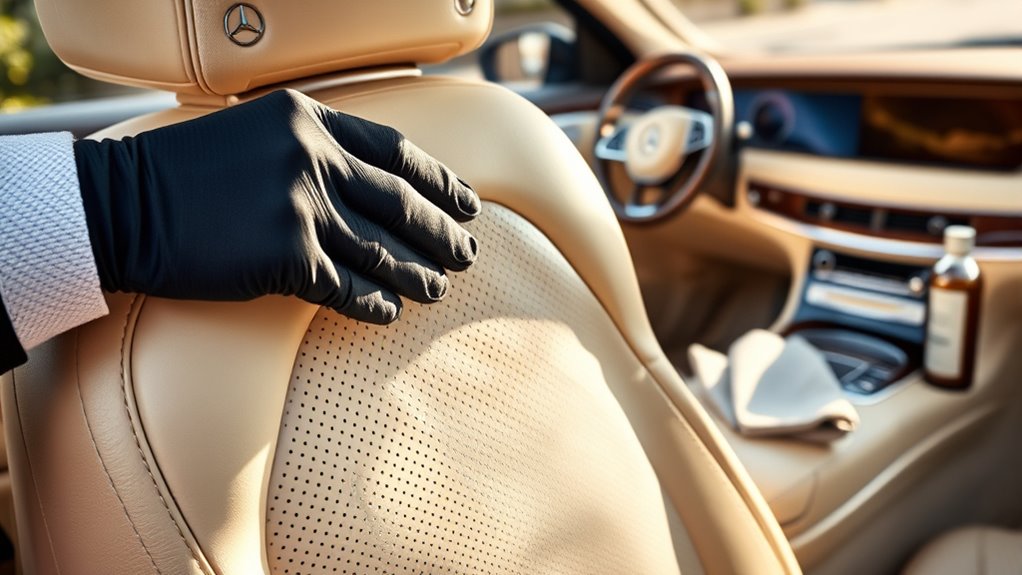
Mercedes S-Class Nappa leather should be treated with restraint. It is soft, porous, and easily damaged by harsh chemicals or heavy scrubbing. The best approach is regular vacuuming, followed by a pH-neutral leather cleaner applied sparingly with a microfiber cloth. After cleaning, a thin coat of quality conditioner helps preserve flexibility and prevent cracking. Perforated seats need extra care to avoid clogging. With the right routine, the finish stays supple, matte, and refined, and more details follow.
Key Takeaways
- Vacuum Nappa leather regularly and wipe it with a soft microfiber cloth to prevent dirt buildup and abrasion.
- Use only pH-neutral leather cleaners, testing first on a hidden spot before cleaning the whole seat.
- Clean gently with light pressure and avoid harsh scrubbing, excess water, or strong detergents.
- Condition seats with a thin layer of quality leather conditioner to preserve softness, flexibility, and prevent cracking.
- Pay extra attention to perforated areas and stubborn stains by blotting, vacuuming carefully, and using specialized leather products.
Why Mercedes Nappa Leather Needs Gentle Care
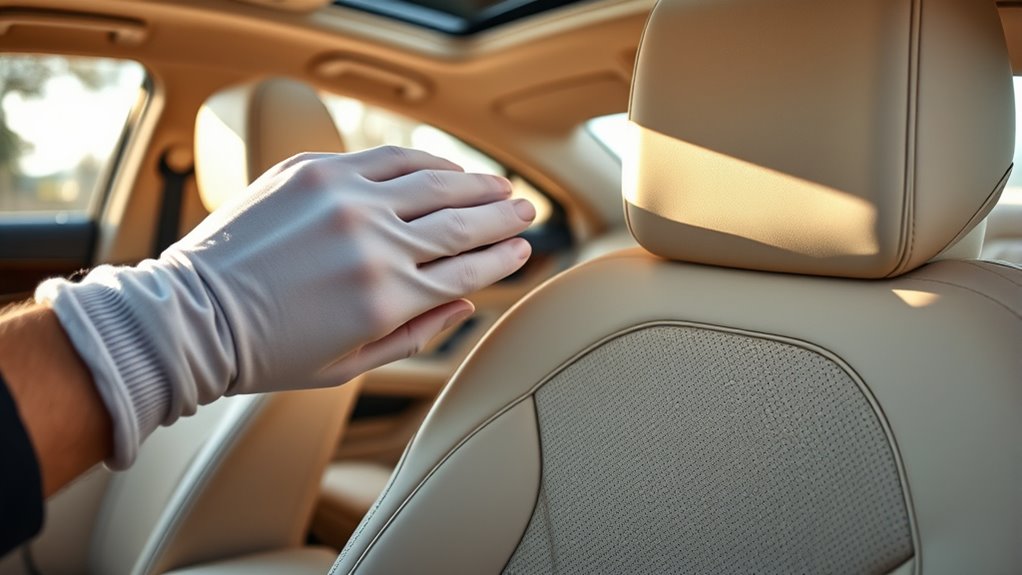
Mercedes Nappa leather in the Mercedes S Class requires gentle care because its soft, porous surface is more vulnerable to wear, staining, and moisture damage than harder-trimmed automotive materials.
This material is prized for comfort and appearance, yet its structure demands restraint, not abrasion. A pH-neutral cleaner and suitable care products help preserve the natural oils that keep Nappa leather supple and stable.
Harsh detergents, aggressive scrubbing, and excess liquid can compromise the finish and shorten service life. Ventilated seats require particular caution, since moisture can migrate into the foam beneath the hide.
Regular treatment with a leather conditioner every one to two months supports flexibility and reduces the risk of cracking. Proper maintenance also helps clean leather car seats without dulling the surface or restricting the tactile freedom that defines the cabin.
Specialized automotive leather products are consequently the practical choice for long-term protection.
How to Clean Mercedes Nappa Leather Seats
Cleaning Mercedes Nappa leather seats begins with removing loose dust and debris through regular vacuuming, since trapped particles can scratch the soft surface during maintenance.
A pH-neutral leather cleaner for automotive use supports proper leather seat care and preserves the supple feel of Nappa leather.
- Test the cleaning solution on an inconspicuous area first.
- Lightly apply the leather cleaner to a soft microfiber cloth.
- Wipe in controlled passes, using gentle agitation only.
- Dry the seat, then follow with conditioning to sustain softness.
The method should remain disciplined: never saturate the hide, never scrub aggressively, and never let residue sit in seams.
A modest amount of cleaning solution is sufficient when the surface is addressed promptly. This approach gives the cabin a clean, liberated feel while protecting the material’s finish and long-term comfort.
Best Cleaners and Conditioners for Mercedes Leather
For Mercedes leather maintenance, the best products are pH-neutral cleaners made specifically for automotive hides, such as Renny Doyle’s interior cleaner or Chemical Guys’ leather cleaner, because they remove soil without stripping the finish on Nappa leather.
A dedicated leather cleaner should be applied with a microfiber towel, using controlled pressure so the grain remains intact and free from abrasion. For more stubborn contamination, Leatherique can be used for deeper restoration and stain removal when standard cleaning is insufficient.
After cleaning, a quality conditioner such as KochChemie’s Leather Star helps preserve flexibility and moisture balance in the leather surface. A thin, even application is sufficient; excess product should be removed after roughly 20 minutes.
Regular water droplet checks help confirm protection levels, and if absorption appears, a protector like Gtechniq L1 Leather Guard AB can extend durability.
This disciplined regimen keeps Nappa resilient, refined, and ready for liberated driving comfort.
How to Condition Mercedes Nappa Leather Properly
Once the Nappa leather has been cleaned, a high-quality conditioner such as KochChemie’s Leather Star should be applied in a thin, even layer to restore moisture and preserve flexibility without overloading the finish.
Before full application, a small test spot on an inconspicuous area confirms compatibility with the protective coating on any Mercedes-Benz vehicle. This disciplined car care step should follow when owners clean the surface with pH-neutral products designed for automotive leather.
- Dispense the leather conditioner onto a foam pad.
- Spread it lightly across the seat panel.
- Let it absorb for about 20 minutes.
- Buff away excess with a microfiber towel.
Monthly or bimonthly conditioning keeps the hide supple, reduces drying, and helps prevent cracking.
The process supports long-term comfort and preserves the restrained, liberated feel expected in a properly maintained interior.
How to Care for Perforated Mercedes Seats
Perforated Mercedes seats require controlled maintenance because the holes can trap dust while also making the leather more vulnerable to excess moisture.
A pH-neutral leather cleaner should be applied sparingly with a soft microfiber cloth, allowing dirt to lift without stressing the perforations. Regular vacuuming with a brush attachment helps clear debris from the holes and keeps airflow unobstructed.
Water should never be saturated into perforated seats, since excess liquid can migrate below the surface and create odor or mildew risk.
After cleaning, a light leather conditioner may be used to preserve flexibility and the refined hand feel expected when owners care for Nappa. The product should be worked in thinly, so the perforations remain open and responsive.
For heavier buildup or periodic reset, professional cleaning provides deeper treatment without unnecessary abrasion. This method protects comfort, preserves texture, and keeps the cabin visually disciplined and free.
How to Remove Stains From Mercedes Leather
Stains on Mercedes Nappa leather should be addressed promptly with a controlled, test-first approach. A pH-neutral leather cleaner is first tested on an inconspicuous panel to confirm the finish remains intact.
Then a microfiber cloth lightly dampened with plain water is used to blot, not scrub, so the stain does not migrate across the seat. This disciplined cleaning method preserves the supple surface and keeps the cabin free of avoidable wear.
- Test cleaner on a hidden edge.
- Blot with water, then lift residue.
- Use a specialized leather cleaner for stubborn marks.
- Condition after cleaning to restore moisture.
For tougher contamination, a product such as Renny Doyle’s interior cleaner should be applied according to the label.
Afterward, the leather should be conditioned with KochChemie Leather Star to support resilience. Monthly or bimonthly cleaning and conditioning, including Mercedes-Benz service attention when needed, helps prevent set-in stains and preserves the liberated, refined character of the interior.
How to Keep Mercedes Leather Looking New
Mercedes leather retains a new appearance when it is cleaned routinely with a pH-neutral cleaner and a soft microfiber cloth, limiting dirt accumulation and surface wear.
A controlled conditioning schedule, using an automotive leather conditioner every one to two months and verified with a water droplet test, helps preserve suppleness and prevents drying or cracking.
Wear and shine are reduced by avoiding household cleaners, minimizing prolonged sun exposure, and using shade or sunshades whenever possible.
Gentle Regular Cleaning
Gentle regular cleaning preserves the appearance and durability of Mercedes S Class leather by preventing grit, oils, and moisture from accumulating on the surface.
A disciplined routine allows leather seats to remain clean, controlled, and free from abrasion. Regular vacuuming should reach seams and crevices, where debris settles and cuts into the finish.
For surface care, use a soft microfiber cloth lightly dampened with plain tap water; it lifts contamination without stressing the hide. When needed, a pH-neutral automotive cleaner can be used sparingly to avoid chemical degradation.
- Vacuum edges
- Wipe panels
- Inspect seams
- Check moisture
After cleaning, condition on a monthly cycle to preserve suppleness and maintain freedom from cracking.
Safe Conditioning Routine
Once the surface is free of dust, oils, and embedded debris, the next step is a controlled conditioning routine that maintains Nappa leather softness without overloading the finish. Before any leather conditioner is used, cleaning leather should begin with a pH-neutral leather cleaner, which removes residues that block absorption.
| Step | Action |
|---|---|
| 1 | Clean with leather cleaner |
| 2 | Apply thin conditioner layer |
| 3 | Wait 20 minutes |
| 4 | Wipe excess with microfiber |
A quality product such as KochChemie Leather Star may be applied every one to two months to maintain leather flexibility. A water droplet test on a flat panel helps verify treatment: absorption signals the need for care, while beading suggests adequate protection. Excess moisture and harsh chemicals should be avoided to preserve the polymer-coated surface and keep the cabin composed, durable, and free.
Preventing Wear And Shine
To keep Mercedes S-Class Nappa leather looking new, the surface should be cleaned regularly with a pH-neutral leather cleaner and a microfiber cloth to prevent dirt buildup and the gradual onset of shine.
Routine care preserves Nappa leather and helps it stay in condition without sacrificing the cabin’s restrained elegance.
- Wipe seats after use.
- Test water beading; if it soaks in, apply treatment.
- Condition every one to two months with Leather Star.
- Park in shade or use sunshades.
Harsh agents and excess moisture should be avoided, especially on ventilated seats, because they can damage fibers and accelerate gloss.
A disciplined clean-and-condition cycle limits abrasion, supports freedom from premature wear, and keeps the surface matte, supple, and controlled.
Frequently Asked Questions
How to Protect Nappa Leather Car Seats?
Nappa leather car seats are protected through consistent nappa leather care, gentle leather cleaning techniques, and periodic conditioner application, shielding surfaces from spills while preserving nappa leather durability. A breathable protectant helps in protecting against stains effectively.
Is Mercedes Nappa Leather Real Leather?
Yes, Mercedes Nappa leather is real leather, typically top-grain hide with minimal processing. Nappa leather characteristics include softness and breathability; Nappa leather durability is strong; proper Nappa leather care preserves finish; Nappa leather comparison favors premium tactile performance.
What Is the Best Conditioner for Nappa Leather?
KochChemie Leather Star is the best conditioner for Nappa leather. It supports leather care through pH-balanced conditioning, practical conditioning tips, and reliable product recommendations. After cleaning, it fits a maintenance routine every one to two months.
What Are the Disadvantages of Nappa Leather?
Nappa leather sounds luxurious, yet its disadvantages are practical: lower nappa leather durability, demanding nappa leather care, frequent nappa leather maintenance, and vulnerability to stains, UV cracking, and shine. Many consider nappa leather alternatives.
Conclusion
To sum up, Mercedes S-Class Nappa leather responds best to low-pH cleaners, soft microfiber application, and periodic conditioning with non-greasy protectants. Because Nappa is thinner and more open-pored than coated leather, aggressive scrubbing and silicone-heavy products can accelerate wear. One useful statistic: leather surfaces can lose up to 20% of their moisture content in a year under repeated heat and UV exposure, making regular maintenance essential. Proper care preserves suppleness, color depth, and long-term seat integrity.

