
The best Garmin Forerunner watches make running data easier to use, not harder to understand. The right model should match your training depth, display preference, battery needs and whether you need advanced GPS or maps.
For a simple running-first pick, Garmin Forerunner 55 keeps the basics clear and offers long smartwatch battery life. The Garmin Forerunner 165 is the Best value choice if you want an AMOLED touchscreen and more modern training guidance.
We checked Garmin product pages, owner manuals, current model information and recall searches, then compared the features that change a runner’s buying decision.
Best Garmin Forerunner Watches Compared
| Product | Best for | Display | GPS / maps | Smartwatch battery | Score |
|---|---|---|---|---|---|
|
Budget
|
Best for beginners | MIP display | GPS | Up to 2 weeks | 82/100 |
|
Mid-range
|
Best value | AMOLED touchscreen | All-systems GNSS | Up to 11 days | 88/100 |
|
Mid-range
|
Best training metrics | AMOLED touchscreen | Multi-band GPS | Up to 13 days | 92/100 |
|
Premium
|
Best for dedicated runners | AMOLED touchscreen | Multi-band GPS | Up to 10 days | 94/100 |
|
Premium
|
Premium pick | AMOLED touchscreen | Multi-band GPS + maps | Up to 15 days | 97/100 |
Best Garmin Forerunner Watches: Our Top Picks
1. Garmin Forerunner 55

Bottom line: The Garmin Forerunner 55 is the easiest fit if you want dependable GPS running basics, guided workouts and long battery life without a touchscreen-heavy interface.
- Display: 1.04-inch MIP, easy to read outdoors.
- GPS: GPS tracking, suited to everyday road running.
- Battery: Up to 2 weeks smartwatch, 20 hours GPS.
- Water rating: 5 ATM, suitable for swimming use.
The Forerunner 55 focuses on running essentials rather than premium hardware. Daily suggested workouts and Garmin Coach give you structure, while wrist-based heart rate, pace and distance cover the core data most new runners need.
The MIP screen is not as vivid as AMOLED, but it keeps the watch simple and contributes to strong battery life. The 37-gram weight also makes it easy to wear for sleep and all-day activity tracking.
You give up multi-band GPS, music storage and the deeper training-readiness tools found higher in the range. That trade-off is reasonable if your priority is a straightforward running watch instead of a full performance dashboard.
- Up to two weeks of smartwatch battery life
- Light 37 g design for daily wear
- Daily suggested workouts and Garmin Coach
- Physical buttons work well during runs
- No AMOLED touchscreen
- No multi-band GPS
- Fewer advanced training metrics than newer models
2. Garmin Forerunner 165

Bottom line: The Garmin Forerunner 165 is the value sweet spot if you want an AMOLED touchscreen, adaptive running plans and useful recovery context without paying for multi-band GPS.
- Display: 1.2-inch AMOLED touchscreen, bright and detailed.
- GPS: All-systems GNSS, but no multi-band mode.
- Battery: Up to 11 days smartwatch, 19 hours GPS-only.
- Water rating: 5 ATM, suitable for swimming use.
The linked model is the standard, non-Music Forerunner 165. It combines touchscreen control with Garmin’s traditional buttons, so you can swipe through daily information and still use buttons when your hands are sweaty or moving.
Garmin Coach, personalized training plans and recovery information give you more guidance than the Forerunner 55. The 43 mm case and 39 g weight also keep it compact enough for all-day wear and sleep tracking.
The main limitation is GPS depth. The 165 supports all-systems GNSS but not multi-band GPS, and the standard linked version does not provide onboard music storage. Move to the 265 if those upgrades matter more than keeping the watch simpler.
- Bright 1.2-inch AMOLED touchscreen
- Garmin Coach and adaptive training guidance
- Compact 43 mm case and 39 g weight
- Good balance of running features and simplicity
- No multi-band GPS
- Linked standard model has no onboard music storage
- No training readiness feature
3. Garmin Forerunner 265
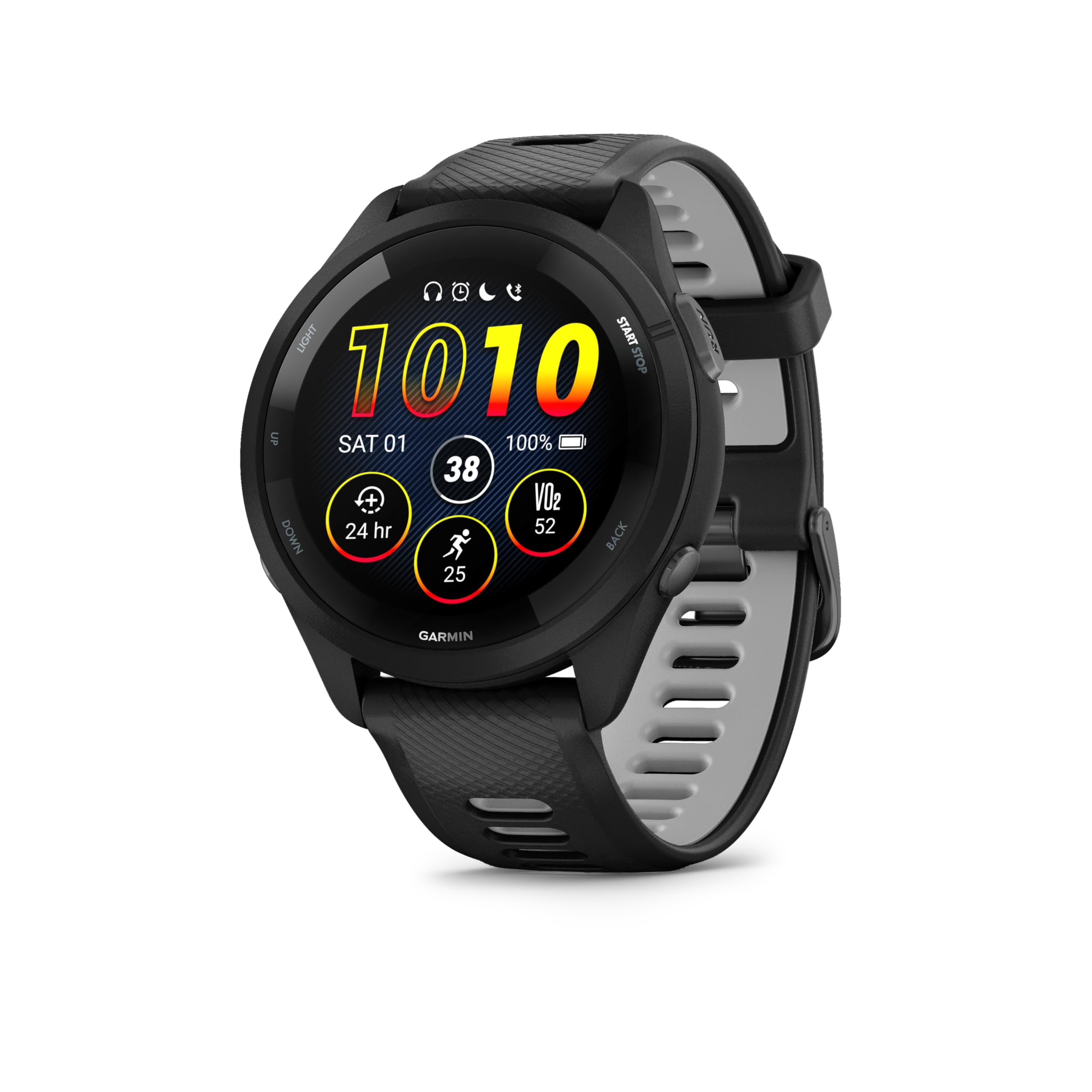
Bottom line: The Garmin Forerunner 265 is the strongest fit here for runners who want training readiness, multi-band GPS and multisport support without stepping up to the newest premium models.
- Display: 1.3-inch AMOLED touchscreen, roomy for run data.
- GPS: Multi-band GPS with SatIQ, stronger positioning options.
- Battery: Up to 13 days smartwatch, 20 hours GPS-only.
- Water rating: 5 ATM, suitable for swimming use.
The 265 adds the training tools that matter when you move from simply recording runs to planning them. Training readiness uses recovery information to help frame hard and easy days, while wrist-based running power and advanced metrics give you more context during structured sessions.
Multi-band GPS is a meaningful step up for runners who often train around tall buildings, heavy tree cover or other difficult satellite conditions. The watch also supports multisport use, making it a better fit than the 165 if cycling or swimming is part of your schedule.
Its 46 mm case is larger than the 165 and 570 42mm. It also lacks the built-in full-color maps and premium hardware of the 970, so trail navigation is not its main reason to buy.
- Multi-band GPS and SatIQ positioning
- Training readiness and advanced training metrics
- 1.3-inch AMOLED touchscreen
- Multisport support for run, bike and swim training
- Larger 46 mm case may not suit smaller wrists
- No built-in full-color maps
- More features to learn than the 55 or 165
4. Garmin Forerunner 570 42mm

Bottom line: The Garmin Forerunner 570 42mm is for dedicated runners who want current-generation training tools, multi-band GPS and calling features in a smaller case.
- Display: 1.2-inch AMOLED touchscreen, compact and bright.
- GPS: Multi-band GPS with SatIQ, built for tougher conditions.
- Battery: Up to 10 days smartwatch, 18 hours GPS-only.
- Water rating: 5 ATM, suitable for swimming use.
The exact linked ASIN is the 42 mm Slate Gray Aluminum model. It weighs 42 g and pairs a smaller case with an aluminum bezel, making it easier to wear than many performance watches if you prefer less bulk.
Training readiness, improved training status, multi-band GPS and multisport support make the 570 a strong training-first choice. Garmin also includes a speaker and microphone, so supported calls and voice features work when the watch is paired with a compatible smartphone.
The trade-off is battery and navigation. The 42 mm model is rated for up to 10 days in smartwatch mode and 18 hours in GPS-only mode, and it does not include the 970’s built-in mapping or LED flashlight.
- 42 mm case keeps the performance watch compact
- Multi-band GPS and training readiness
- Built-in speaker and microphone
- 5 ATM water rating for swim use
- Shorter smartwatch battery than the 55, 265 or 970
- No built-in full-color maps
- Premium tier can be excessive for casual runners
5. Garmin Forerunner 970

Bottom line: The Garmin Forerunner 970 is the premium choice for runners and triathletes who will use built-in maps, multi-band GPS, an LED flashlight and Garmin’s most advanced running features.
- Display: AMOLED touchscreen, paired with sapphire lens protection.
- GPS: Multi-band GPS plus built-in full-color mapping.
- Battery: Up to 15 days smartwatch, 26 hours GPS-only.
- Water rating: 5 ATM, suitable for swimming use.
The 970 adds the features that separate a premium training watch from a pure run tracker. Built-in maps can guide unfamiliar routes, while the LED flashlight adds practical visibility for early or late sessions. The sapphire lens and titanium bezel also raise the hardware quality.
Garmin includes running tolerance and supports running economy and step speed loss. Those last two metrics require compatible accessory data, including the HRM 600 for Garmin’s running-economy workflow, so factor that into your setup before buying for those features alone.
For most runners, the 970 is more watch than they need. Its value is strongest when maps, multisport training, premium materials and the expanded performance toolkit are features you will use regularly.
- Built-in full-color maps for route guidance
- Multi-band GPS and advanced training features
- Sapphire lens and titanium bezel
- Built-in LED flashlight plus speaker and microphone
- Premium tier is unnecessary for basic run tracking
- Running economy requires compatible accessory data
- More settings and metrics create a steeper learning curve
Garmin Forerunner 55 vs Garmin Forerunner 165: Is the Upgrade Worth It?
The Forerunner 55 favors simplicity and longer smartwatch battery life. The Forerunner 165 is the better upgrade if you value an AMOLED touchscreen and more modern training guidance.
- Display: the 165 moves from MIP to a 1.2-inch AMOLED touchscreen.
- Battery: the 55 lasts longer in smartwatch mode; the 165 trades some runtime for its AMOLED display.
- Training: the 165 adds a broader set of training and recovery insights.
- GPS: neither model has multi-band GPS; move to the 265 or above for that feature.
Which Garmin Forerunner Watch Should You Buy?
- Simple running guidance: get the Garmin Forerunner 55.
- AMOLED value: get the Garmin Forerunner 165.
- Multi-band GPS and training readiness: get the Garmin Forerunner 265.
- Advanced training in a smaller case: get the Garmin Forerunner 570 42mm.
- Maps and premium hardware: get the Garmin Forerunner 970.
How We Chose
- GPS capability: we compared standard GNSS, all-systems tracking and multi-band GPS because location demands vary by route.
- Training depth: we checked coaching, training readiness, multisport support and recovery tools against Garmin documentation.
- Battery and wearability: we compared manufacturer battery ratings, case sizes and weights for daily and long-session use.
- Feature trade-offs: we checked maps, music, calls, display type and accessory requirements instead of treating more features as automatically better.
- Current status and safety: we checked current product availability, exact model matches and recall searches before keeping each recommendation.
Garmin Forerunner Buying Guide
Choose MIP or AMOLED Based on How You Use the Watch
MIP is simple and power-efficient, while AMOLED gives you richer color, higher contrast and touch interaction. The Forerunner 55 is the MIP option here. The 165, 265, 570 and 970 use AMOLED displays. If screen quality matters every day, the Garmin Forerunner 165 is a sensible place to start.
Decide Whether You Need Multi-Band GPS
Multi-band GPS matters most when satellite signals are harder to read, such as around tall buildings or dense cover. The Forerunner 265, 570 and 970 include multi-band GPS. The 55 and 165 do not. If positioning options are a major priority, start with the Garmin Forerunner 265.
Match Training Metrics to Your Routine
More metrics only help when you will use them to change training. New runners may be better served by daily suggested workouts and Garmin Coach. Runners following structured blocks can make better use of training readiness, running power, multisport tools and detailed recovery context on the 265, 570 and 970.
Check Battery Life in the Mode You Actually Use
Smartwatch battery ratings do not tell the whole story. GPS, multi-band positioning, music and always-on display settings can shorten runtime. Compare the exact mode you expect to use, especially for long races. The Forerunner 970 reaches up to 26 hours in GPS-only mode, while the 570 42mm reaches up to 18 hours.
Case Size and Weight Affect Daily Comfort
Small differences matter when you wear a watch overnight. The 55 is 37 g, the 165 is 39 g, the 570 42mm is 42 g and the 265 is 47 g. If you want advanced tools but prefer a compact case, the Garmin Forerunner 570 42mm deserves a closer look.
Maps, Music and Calls Are Separate Decisions
Do not assume every AMOLED Forerunner has the same smart features. The standard 165 linked here has no onboard music storage. The 570 adds speaker and microphone support with a paired phone, while the 970 adds those features plus built-in mapping and an LED flashlight.
Water Resistance Is Consistent Across These Picks
Garmin rates all five watches in this roundup at 5 ATM. That rating supports swimming use, but it does not make every water activity appropriate. Follow Garmin’s water-rating guidance and avoid treating a 5 ATM running watch like specialized dive equipment.
Mistakes to Avoid When Buying a Garmin Forerunner Watch
- Buying by screen alone: check GPS, training tools and battery before choosing the prettiest display.
- Ignoring the exact variant: confirm case size, color and Music versus non-Music versions.
- Paying for metrics you will not use: choose the training depth that fits your actual routine.
- Assuming all advanced metrics are watch-only: check whether a chest strap or other accessory is required.
- Using smartwatch battery as race battery: compare the GPS mode that matches your event.
FAQs
Which Garmin Forerunner Should I Choose?
Choose by training depth first. The Garmin Forerunner 55 fits simple running guidance, the 165 adds AMOLED value, the 265 adds multi-band GPS and training readiness, the 570 42mm adds newer performance and calling features, and the 970 adds maps, premium materials and the deepest toolkit.
Is the Garmin Forerunner 165 Worth It Over the Forerunner 55?
Yes if you care about the display and added training guidance. The Forerunner 165 gives you a 1.2-inch AMOLED touchscreen and a more modern interface. The Forerunner 55 keeps a simpler MIP display and longer smartwatch battery life, so it remains attractive for runners who prefer straightforward controls.
Does the Garmin Forerunner 265 Have Multi-Band GPS?
Yes. Garmin lists multi-band GPS on the Forerunner 265, along with SatIQ and training readiness. That makes it a stronger fit than the 55 or 165 when you want more positioning options and deeper training metrics without moving to the newer premium 570 or 970.
Which Garmin Forerunner Has Built-In Maps?
The Garmin Forerunner 970 is the model in this roundup with built-in full-color mapping. That can matter for unfamiliar routes, travel and longer trail sessions. The 570 offers multi-band GPS but does not include the 970’s built-in mapping, so do not treat the two models as equal for navigation.
Are These Garmin Forerunner Watches Water Resistant?
Yes. Garmin rates the Forerunner 55, 165, 265, 570 and 970 at 5 ATM. That rating is suitable for swimming use under Garmin’s guidance. It does not mean the watches are dive computers, so follow the manufacturer’s water-rating limits for higher-pressure or specialized water activities.
Do Garmin Forerunner Watches Need a Phone to Track a Run?
No. These watches use built-in GPS to record outdoor runs without carrying a phone. A compatible phone is still useful for syncing with Garmin Connect, smart notifications and connected features. Calling and voice features on the 570 and 970 also depend on pairing with a compatible smartphone.
How Accurate Are Garmin GPS and Wrist Heart Rate?
They are designed to provide useful fitness and training data, but conditions and fit affect readings. Multi-band GPS on the 265, 570 and 970 adds more positioning options in challenging areas. For heart-rate-sensitive interval work, a compatible chest strap can provide a better setup than relying only on wrist measurement. These watches are not medical devices.
What Runners Prefer
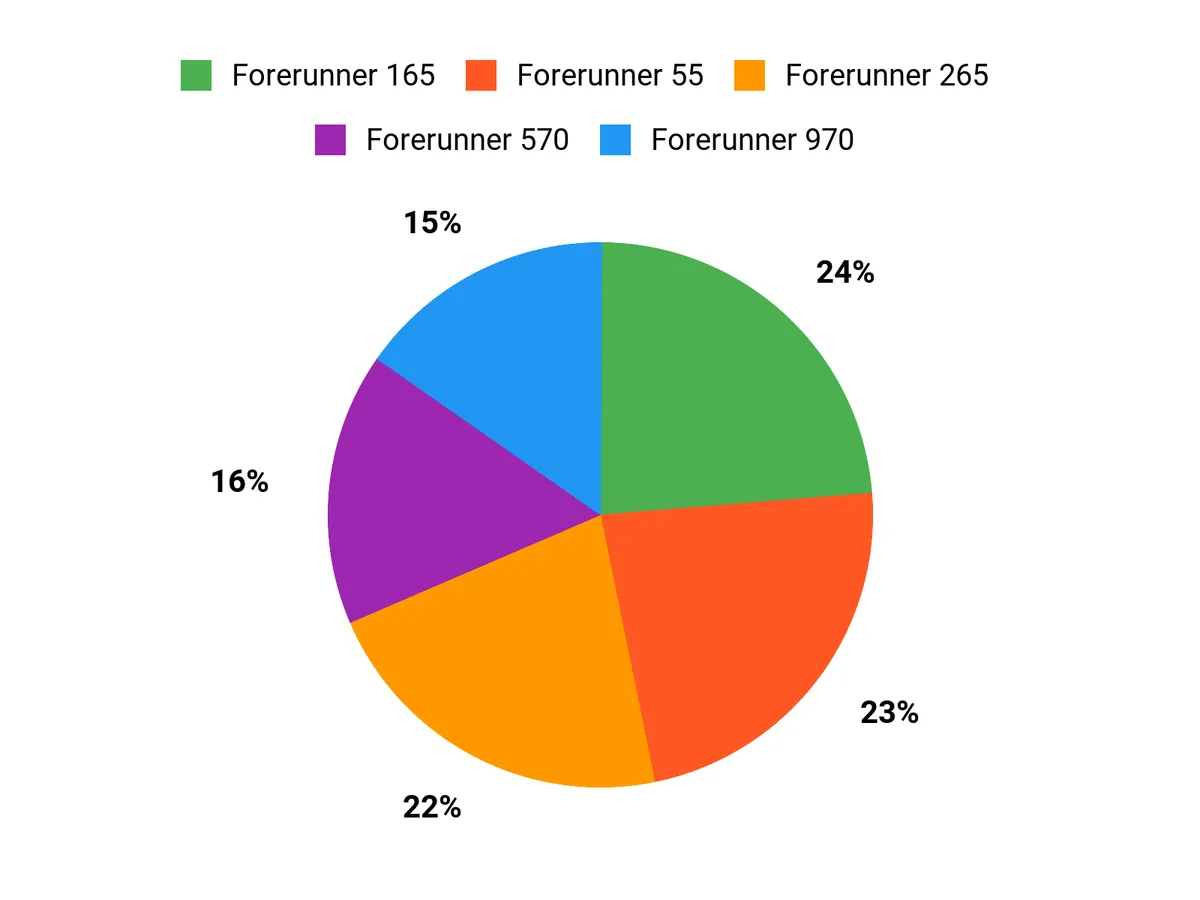
The main split is simple: lighter training needs favor the 55 and 165, while deeper performance needs point to the 265, 570 or 970. Display quality, multi-band GPS, maps and battery mode are the differences most likely to change your choice.
Best Garmin Forerunner Watches: Final Verdict
You do not need the most expensive Forerunner to train well. Start with the model whose GPS, display and training tools match what you will actually use, then pay more only for features that change your routine.
For simple running guidance, the Garmin Forerunner 55 remains the Best overall pick in this lineup. Runners who want a more modern screen and stronger training support should look closely at the Forerunner 165.
For the Best value option, see the Garmin Forerunner 165. For the Premium pick with maps and premium hardware, see the Garmin Forerunner 970.
Garmin Forerunner Product Images
The original product images are preserved here for a final visual check of the five models in this roundup.