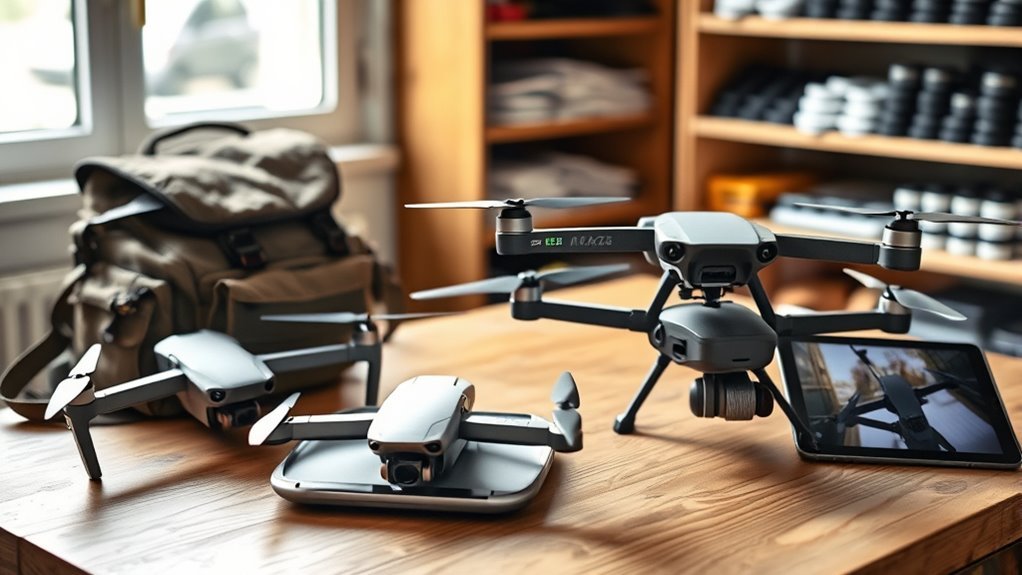
In 2026, buyers looking for drones not made in China still have options, but the list is smaller than many expect. Skydio and Parrot remain the most visible names, with models built around U.S. compliance, data security, and specialized use cases. Autel complicates the picture, since origin and manufacturing details can vary. The real question is not just which drones exist, but which ones are actually worth choosing.
What “Not Made in China” Means
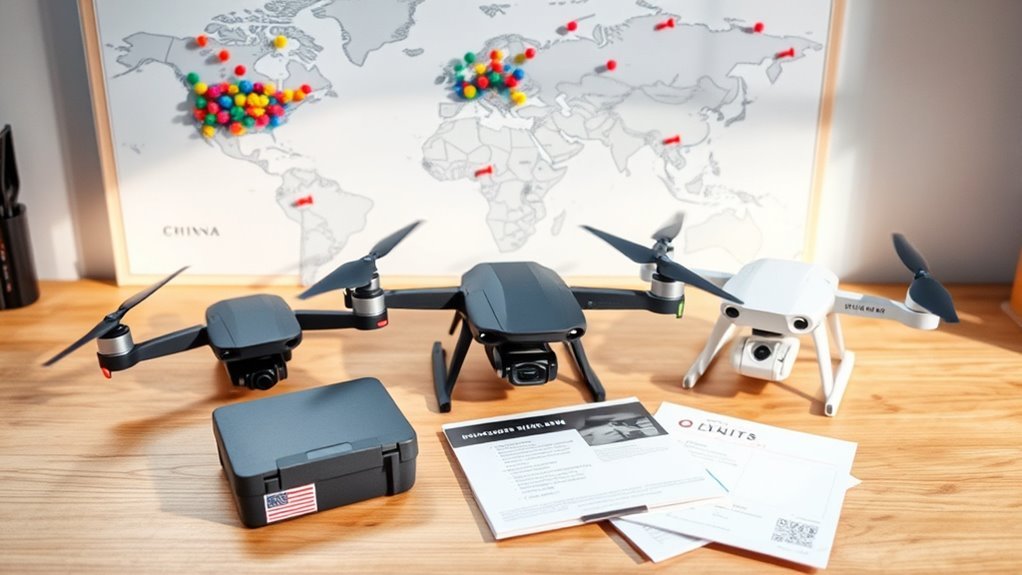
In the drone market, “not made in China” generally means the product is manufactured outside China and is intended to meet U.S. procurement rules, including NDAA requirements for government use.
For a drone, this label signals NDAA compliance, but it does not automatically prove that every part is free of Chinese sourcing. American-made claims depend on where critical components are produced and whether supply chains exclude countries treated as security risks.
NDAA compliance doesn’t guarantee every component is non-Chinese; “American-made” depends on critical parts and supply chains.
Government agencies often rely on Blue UAS listings to identify approved models that meet procurement standards and support data security.
Many commercial drone products still use globally sourced parts, so “American-made” can be more marketing than guarantee.
As scrutiny of DJI and Autel has increased, demand has shifted toward non-Chinese alternatives that can satisfy contract rules and reduce exposure.
Within this framework, the phrase is less a patriotic slogan than a procurement marker for regulated use.
Top Consumer Drones Outside China
Among consumer drones outside China, the main options include sub-250g models for easier compliance, along with American and allied brands such as Skydio, Parrot, and Yuneec.
These products vary widely in price, camera capability, autonomy, and intended use, from casual flight to professional imaging and inspection.
Before buying, it is important to verify origin, regulatory status, and the specific features that match the intended use.
Best Sub-250g Picks
Several strong sub-250g drones stand out for users who want portability without sacrificing camera quality or flight time. Among consumer drones, the Potensic Atom delivers a 4K camera and up to 32 minutes aloft; the DJI Mini 4 adds 4K/30fps and 31 minutes. | Model | Camera | Flight time |
| — | — | — |
|---|---|---|
| Potensic Atom | 4K UHD | 32 min |
| HoverAir X1 ProMax | 4K video | 11 min |
| Parrot ANAFI | 32x zoom, thermal imaging | compact |
| DJI Mini 4 | 4K/30fps | 31 min |
| Holy Stone HS720E | 4K, GPS | 26 min |
The autonomous HoverAir X1 ProMax suits quick self-shooting, while Parrot ANAFI adds thermal imaging in a compact frame. Holy Stone HS720E remains budget-friendly. These drones give practical freedom without demanding heavy registration burdens.
American And Allied Brands
For buyers seeking drones from American and allied brands, the strongest options skew toward professional and government use rather than mass-market hobby flying. An American drone such as the Skydio X10 emphasizes AI navigation for inspections and public safety, while the Parrot Anafi USA adds thermal imaging, 32x zoom, and NDAA compliance from its Massachusetts assembly.
- Freefly Alta X offers heavy-lift flexibility for professional operations.
- Inspired Flight delivers industrial drone capability with LIDAR support and U.S. manufacture.
- Teal 2 serves tactical users with secure data through AES-256 encryption.
These platforms exist to support autonomy, resilient supply chains, and freedom from single-source dependency, but they sit firmly in the premium, mission-driven category rather than the casual consumer aisle.
What To Verify Before Buying
Before buying a consumer drone outside China, buyers should verify NDAA compliance, manufacturing origin, and supply chain transparency, especially when the aircraft may be used for government or federally funded work.
They should confirm that critical components avoid restricted sourcing and that the vendor can document production locations.
Data handling capabilities matter as well; AES encryption and secure storage reduce exposure when flights serve federal agencies or critical infrastructure.
Warranty and support should be reviewed carefully, because non-Chinese drone models can vary widely in service quality.
Buyers should also study user reviews and independent performance tests to judge reliability, flight stability, and real-world efficiency.
Careful verification helps consumers select drones that support autonomy, security, and operational trust without relying on hidden foreign dependencies.
Best Drone Brands Outside China
Among the strongest drone brands outside China, Skydio, Parrot, Freefly, and Inspired Flight stand out for their specialized capabilities and professional-grade designs.
Skydio’s AI-driven X10 delivers autonomous navigation and obstacle avoidance for operators seeking less dependence on manual control.
Parrot’s Anafi USA supports public safety users with thermal imaging, dual cameras, and 32x zoom.
Freefly’s Alta X offers heavy-lift capabilities, carrying payloads up to 15.9 kg for film and industrial work.
Inspired Flight’s IF1200A LRT is NDAA-compliant, modular, and built for aerial data capture with serious lifting capacity.
- Skydio: autonomy-first professional drone
- Parrot: thermal imaging and mission versatility
- Freefly and Inspired Flight: heavy-lift platforms for demanding jobs
Yuneec also remains present through the H520, a stable commercial drone used in inspection and photogrammetry.
These brands do not replace every Chinese option, but they give buyers real non-Chinese paths toward operational independence.
Skydio vs Parrot vs Autel
Skydio, Parrot, and Autel each serve different segments of the non-Chinese drone market. Skydio emphasizes autonomous navigation, with the X10 using AI-driven obstacle avoidance for inspections and public safety work. Its pricing places it in a professional category, not a casual consumer tier.
Parrot’s Anafi USA is aimed at military and public safety users, pairing a dual-camera system with 32x zoom and thermal imaging. Its NDAA compliance and secure data handling make it attractive where data privacy matters.
Autel takes a different path, offering competitive features such as a 1-inch CMOS sensor, 6K video, and long flight time at a lower price point.
In the U.S. drone market, Skydio and Parrot are gaining traction with agencies and enterprises seeking alternatives to Chinese-made platforms. Autel remains relevant through performance and value, though its position is more consumer-facing than the other two.
How These Drones Compare With DJI
Compared with DJI, many non-Chinese drones trade lower consumer pricing for stronger NDAA compliance, tighter data security, and reduced procurement risk in government use.
Skydio and similar models often stand out for autonomous flight and obstacle avoidance, while platforms such as the eBee X and Freefly Alta X can offer longer flight times or greater payload flexibility.
In return, options like the Parrot Anafi USA may cost more, but they can add specialized features such as thermal imaging and secure communications that DJI models do not always match.
Performance Compared To DJI
Performance gaps versus DJI are narrower than they used to be, especially in specialized commercial categories where non-Chinese manufacturers focus on distinct strengths. Non-Chinese alternatives now deliver credible performance in autonomous flight, thermal work, heavy-lift, and mapping drone missions, often with stronger data storage options and USA-oriented sourcing.
- Skydio X10 matches DJI closely in obstacle avoidance and inspection performance, with a 48MP camera and 40-minute endurance.
- Freefly Alta X and Inspired Flight IF1200A LRT outperform many DJI platforms in heavy-lift commercial payloads, with LIDAR support on the latter.
- AgEagle eBee X exceeds many DJI drones in mapping range, flying up to 90 minutes and covering 500 hectares.
Parrot Anafi USA adds thermal and zoom capability for public-safety use, keeping the competitive field materially open.
Compliance, Privacy, And Value
A growing number of drones not made in China are positioned as compliance-friendly alternatives to DJI, especially for government, public-safety, and critical infrastructure users. NDAA-compliant models such as the Skydio X10 and Parrot Anafi USA align with U.S. supply chain and cybersecurity rules, while privacy features like AES-XTS encrypted SD cards improve control over data transmission.
For buyers seeking liberation from dependency, the value case rests on more than origin: American-made systems such as the Inspired Flight IF1200A LRT answer procurement concerns, and platforms like the Freefly Alta X deliver competitive price options with specialized features.
In inspections and mapping, the Elios 3 and eBee X show that non-Chinese drones can meet government applications without sacrificing operational utility, even if DJI still offers broader scale.
How to Check Country of Origin
Determining a drone’s country of origin starts with the manufacturer’s website, where production locations, sourcing practices, and compliance claims are often listed. This first check helps reveal where drones made are assembled and which parts may come from elsewhere. Clear claims about country of origin, compliance certifications, and NDAA compliance can indicate a more transparent supply chain.
Manufacturer websites often reveal drone assembly locations, sourcing practices, and compliance claims before marketing language takes over.
- Read the manufacturer’s website for factory details, component sourcing, and export regulations notes.
- Inspect product labeling on the drone, box, and manual; required disclosures often state the country of origin.
- Use inspecting third-party reviews and databases from the U.S. Department of Commerce’s Bureau of Industry and Security to confirm compliance claims.
These steps improve consumer choices without relying on marketing language. For buyers seeking liberated technology, verified information matters more than slogans.
A documented origin, backed by records and compliance evidence, gives a stronger basis for deciding which drones deserve trust in the market.
Which Non-Chinese Drone Should You Buy?
When choosing a non-Chinese drone, the best option depends on the mission profile, payload needs, and compliance requirements. For buyers seeking consumer options, the field is narrow, but several drones stand out for lawful use and operational freedom.
| Drone | Best fit |
|---|---|
| Skydio X10 | AI-powered public safety and industrial applications |
| Parrot Anafi USA | Zoom, thermal, and NDAA compliant work |
| Freefly Alta X | Heavy-lift payloads and custom missions |
| Inspired Flight IF1200A LRT | Aerial data capture and LIDAR support |
| Teal 2 | Tactical use with FLIR sensor |
Skydio X10 suits operators needing autonomous flight and resilience. Parrot Anafi USA offers a 32x zoom and thermal imaging. Freefly Alta X is the strongest lift platform. Inspired Flight IF1200A LRT is built for aerial data capture. Teal 2 is compact, U.S.-made, and NDAA compliant. For most buyers, selection should match mission first, brand second.
Frequently Asked Questions
What Are the Best Non-Chinese-Made Drones?
The best non-Chinese-made drones include Skydio X10, Parrot Anafi USA, Freefly Alta X, Inspired Flight IF1200A LRT, and Teal 2.
Best drone brands differ by use, and drone quality comparison shows strong autonomy, imaging, and compliance.
Drone price ranges vary widely.
Consumer drone reviews, drone safety regulations, drone photography tips, recreational drone uses, drone technology trends, innovative drone features, and future drone developments all favor these options.
Are Any Consumer Drones Made in the USA?
Yes—few consumer drones are made in the USA.
Like a small lighthouse in a crowded harbor, American manufacturers still exist, but domestic production remains limited.
Drone technology is shaped by consumer preferences, regulatory challenges, and market trends that favor overseas assembly.
The innovation landscape includes local startups, yet quality assurance and industry growth are stronger in commercial models than mass consumer offerings.
Liberation comes through informed choice, not abundance.
Which Country Manufactures the Best Drones?
No single country consistently manufactures the best drones. The United States leads in premium drone technology and manufacturing standards, while Europe and Israel excel in specialized systems, and Japan in niche applications.
International competition, consumer preferences, and regulatory impacts shape market trends, with innovation hubs diversifying the supply chain. Environmental considerations and future developments will likely determine which makers lead next, rather than any one nation alone.
Are There Any Drones Not Made in China?
Yes, there are drones not made in China. In 2026, drone technology from U.S. and allied innovation hubs includes Skydio, Freefly, Parrot, Inspired Flight, and Teal.
Manufacturing challenges, global supply limits, and regulatory issues shape availability, while consumer preferences and market trends favor NDAA compliance, safety standards, and data security.
Environmental impact and future developments also influence choices, giving users more freedom to select trusted, non-Chinese options.
Conclusion
In 2026, the non-Chinese drone market offers a modest but increasingly capable set of options for buyers who prefer a different supply chain. Skydio and Parrot remain the most visible names, while other brands continue to refine their offerings. These drones may not yet outshine DJI in every measure, but they provide credible alternatives with stronger emphasis on compliance, security, and origin transparency. For consumers, the field is no longer sparse; it is simply more selectively furnished.
