As an Amazon Associate I earn from qualifying purchases.
When it comes to the health of your family, clean drinking water should never feel like a guessing game. Tap water can contain contaminants such as lead, chlorine, PFAS, and microplastics, so many homeowners, renters, and small offices compare countertop systems before they commit. AquaTru and Berkey are two popular choices, but they solve the problem in very different ways.[6][11]
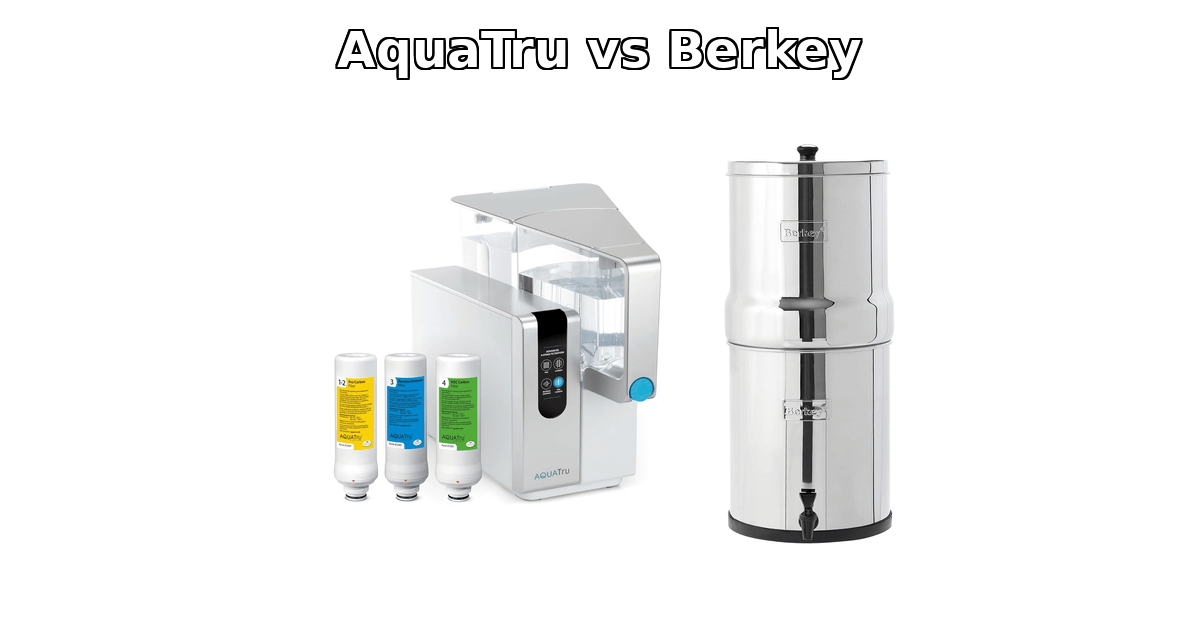
AquaTru uses powered countertop reverse osmosis with third-party certifications on applicable models. Berkey uses a gravity-fed stainless steel design that works without electricity and relies mainly on independent lab testing rather than NSF/ANSI certification. The better choice depends on whether you value certified contaminant reduction, off-grid simplicity, mineral retention, or low-touch daily use.
In this guide, you’ll compare AquaTru vs Berkey based on filtration method, certifications, contaminant reduction claims, maintenance, daily convenience, pros and cons, and practical buying considerations. You’ll also see where each system fits best, so you can choose the filter that matches your water concerns and lifestyle.
Here’s how these two countertop systems work, what they remove, where the tradeoffs show up, and which one gives you the strongest value in 2025.
Quick Answer
Choose AquaTru if you want a powered countertop reverse osmosis system with third-party certifications for many contaminant reduction claims, including PFAS on applicable models. Choose Berkey if you want a non-electric, gravity-fed stainless steel system for everyday use, outages, or off-grid settings, while understanding its NSF/ANSI certification limits.
Key Takeaways
- AquaTru is the stronger fit when certified reverse osmosis performance and PFAS reduction claims matter most.
- Berkey is the more flexible pick for power-free filtering, emergency use, cabins, RVs, and simple gravity-fed operation.
- AquaTru needs electricity, filter changes, descaling, and brine disposal, but it offers automated countertop filtration.
- Berkey has long-lasting elements and no wastewater stream, but most core elements are not NSF/ANSI certified.
- If your main concern is a specific contaminant, match the product’s verified claims to your water test results before buying.
How to Choose Between AquaTru and Berkey
To decide between AquaTru and Berkey, focus on filtration technology, independent certification, ease of use, maintenance, cost of ownership, water taste, and your local water concerns. You’ll want to know how each system removes contaminants, how much effort setup and upkeep require, and whether the system matches your budget and daily routine.
Also think about your water source. City water users may care most about chlorine taste, lead, PFAS, and disinfection byproducts. Well-water users may need testing first because no countertop filter should be chosen blindly for bacteria, nitrates, arsenic, hardness, or other local issues. If PFAS reduction is a priority, look for products certified to NSF/ANSI 53 or 58 with PFAS claims, often verified by third parties like IAPMO.[5]
Note: A countertop filter can improve drinking water quality, but it is not a substitute for testing water when you suspect lead, PFAS, bacteria, nitrates, arsenic, or other high-risk contaminants.
AquaTru Classic

When you’re caught in the AquaTru vs Berkey debate, AquaTru Classic stands out as a countertop water purifier that’s easy to set up and use without permanent plumbing. It uses a four-stage reverse osmosis process and is independently certified by IAPMO to NSF/ANSI 42, 53, 58, 401 & P473 on applicable models, covering roughly 80+ contaminants.[1][2][12]
That certification profile matters because reverse osmosis can address many dissolved contaminants that basic carbon pitchers may not reduce well. For everyday use, AquaTru is best for drinking water, cooking water, coffee, tea, pet bowls, and small-office hydration. The system is compact enough for most counters, but you still need room for the unit, the tap tank, and the clean-water tank.
Pros and Cons
| Pros | Cons |
|---|---|
| ✓ Certified to NSF/ANSI 42, 53, 58, 401 & P473 via IAPMO on applicable models[1][2] | ✗ Produces a small brine wastewater stream by design; efficiency is about 75–80% for Classic, with brine discarded after each cycle[3] |
| ✓ Simple setup with no plumbing needed | ✗ Requires periodic descaling depending on water hardness |
| ✓ Compact and countertop-friendly | ✗ Dispensing height is modest; tall bottles may need angling |
| ✓ Filter life indicators and quick twist-replace filters | ✗ Needs tank refills and emptying; slower than a plumbed under-sink RO system |
| ✓ Tested PFAS reduction claims for PFOA/PFOS under modern standards on applicable models[1][5] | ✗ Removes many dissolved minerals along with unwanted dissolved contaminants |
What People Say
People appreciate how AquaTru balances effective filtration with ease of use. The quick filter changes and automatic tank sensors make it low-touch once set up. Many users mention the compact footprint, cleaner taste, and convenience compared with bottled water. Customer service responsiveness is also mentioned positively, although customer opinions vary by retailer and model.
Health & Safety Context (At a Glance)
| Point | Details |
|---|---|
| PFAS reduction | Certified to modern PFAS test protocols, including NSF/ANSI 53/58 and P473 on applicable models. That matters because EPA’s 2024 PFAS drinking-water rule set MCLs including 4 ppt for PFOA and PFOS.[1][5][6] |
| Improves taste & odor | NSF/ANSI 42 covers chlorine taste and odor reduction, which is one reason users often notice better-tasting water.[2] |
| Microplastics | RO membranes physically reject many particles, and NSF/ANSI 401 now includes a microplastics reduction claim category. Claims remain device-specific, so check the exact model data.[5] |
Versatility
AquaTru works well for everyday drinking water, cooking, coffee, tea, and even pet water. Its compact size fits apartments, RVs, break rooms, and offices where permanent plumbing changes are not practical. Keeping a spare clean-water tank in the fridge is handy for busy days, especially if several people drink filtered water throughout the day.
Maintenance
Typical filter life varies with water quality and model. The pre-filter and VOC carbon filters are commonly listed around 600 gallons each, while the RO membrane is commonly listed around 1,200 gallons. The Classic’s efficiency means you’ll discard a small brine tank after filtration cycles. In hard-water areas, descaling helps maintain flow and protect the system.[2][3]
Innovation
AquaTru’s countertop RO design turns a traditionally plumbed system into a plug-in appliance with removable tanks, sensors, and twist-and-seal filters. That makes it useful for renters or anyone who wants reverse osmosis without drilling, faucet changes, or under-sink installation.
Brand Trust
AquaTru has third-party performance certifications via IAPMO to NSF/ANSI standards on applicable models, which are widely recognized in the U.S. water-treatment market. Certification does not mean every AquaTru model has every claim, so you should match the exact model number to the certification data before purchase.[1]
Eco Friendliness
Replacing bottled water with an at-home filter can reduce single-use plastic waste and may reduce exposure to microplastics or nanoplastics associated with some bottled waters. AquaTru does create a brine stream, but its countertop design captures that water separately for easy disposal.[11]
Why You’ll Like It
- Certified reduction of 80+ contaminants, including PFAS/PFOA/PFOS on applicable models[1][2]
- No installation or plumbing required
- Compact countertop design fits easily in most kitchens
- Filters signal when to replace; typical 600–1,200 gallon life per element set, depending on filter and water quality[2]
- Brine captured in a separate tank for easy disposal; about 75–80% efficient for Classic[3]
Rating: varies by retailer (ratings change frequently; check current listing).
Big Berkey

If you’re comparing AquaTru vs Berkey, the Big Berkey is a strong choice when you want a gravity-fed water filter that is simple, power-free, and portable. It sits on your countertop and does not need plumbing or electricity. You fill the upper chamber, and gravity moves water through the filter elements into the lower chamber.
The stainless steel build is sturdy and kitchen-friendly, and the system can also be useful during power outages, camping trips, or off-grid living. Important note: Berkey’s core Black Berkey elements are not NSF/ANSI certified; the company cites independent lab testing instead. In May 2023, the EPA issued a Stop-Sale, Use, or Removal Order to Berkey International. Litigation and availability have fluctuated since then, so check current availability in your state before buying. Some official listings exclude California and Iowa.[7][9]
Warning: Do not assume “independently tested” means the same thing as NSF/ANSI certification. If you need verified reduction for a specific contaminant, compare the exact product claim, test method, and current certification status before purchase.
Pros and Cons
| Pros | Cons |
|---|---|
| ✓ No electricity or plumbing needed; portable | ✗ Not NSF/ANSI certified; relies on independent testing |
| ✓ Long-lasting elements, up to about 3,000 gallons per element and about 6,000 gallons per pair[8] | ✗ Typical gravity flow is slower, about 1–3.5 gallons per hour depending on fill level and number of elements[13] |
| ✓ Stainless steel design with optional upgrade to metal spigot | ✗ Fluoride reduction generally requires add-on PF-2 elements, which are typically replaced around 1,000 gallons[10] |
| ✓ Simple operation suitable for everyday use | ✗ Regulatory status has been contested; confirm current availability in your region[7][9] |
What People Say
Owners often highlight better taste than tap water, simple daily use once the elements are primed, and long filter life. Common critiques include slower flow, the initial priming step, occasional maintenance, and the need to monitor current availability. Customer opinions vary, especially because user expectations differ between certified contaminant reduction, taste improvement, and emergency-use filtering.
Health & Safety Context (At a Glance)
| Point | Details |
|---|---|
| Contaminant reduction | Berkey cites extensive independent lab testing for broad contaminant reduction. However, most Berkey elements are not NSF/ANSI certified. Verify claims against current third-party data and your specific water needs. |
| Fluoride | Standard Black Berkey elements typically do not sustain fluoride reduction without the PF-2 add-on, which uses activated alumina media.[10] |
| PFAS context | Given EPA’s 2024 PFAS rule, certified claims are especially important when PFAS reduction is one of your top priorities.[6] |
Versatility
The Big Berkey serves daily drinking and cooking needs and works during outages or off-grid use. Its stainless chambers are easy to clean, and some users upgrade to a stainless spigot for durability. It can be practical for cabins, RVs, emergency kits, and homes where you want filtered water without using counter electricity.
Maintenance
You’ll need to prime filters before first use and clean the chambers periodically. Typical Black Berkey element lifespan is up to about 3,000 gallons per element. Fluoride reduction with PF-2 elements typically requires separate add-ons rated around 1,000 gallons. Flow can slow when elements need cleaning, when the upper chamber is low, or when the elements are not fully primed.[8][10]
Innovation
Berkey’s gravity-fed design aims to reduce a wide range of contaminants without pressure, pumps, plumbing, or electricity. Its appeal comes from simplicity: fewer moving parts, a large stainless reservoir, and long-life replaceable elements. The tradeoff is that broad independent testing does not carry the same weight as current NSF/ANSI certification for the core elements.
Brand Trust
Berkey is long-established in gravity filtration and has a loyal user base. However, the 2023 EPA SSURO and subsequent legal actions affected supply, claims, and messaging. For that reason, you should check current product availability, seller legitimacy, and state restrictions before buying.[7]
Eco Friendliness
Like any at-home filter, Berkey can reduce bottled-water purchases. Its long-life elements may also mean fewer replacements over time compared with short-life pitcher filters. Since it does not use electricity or create an RO brine stream, it may appeal to buyers who prioritize simple, low-energy operation.
Why You’ll Like It
- Gravity-fed system; no electricity or plumbing
- Stainless steel design is durable and kitchen-friendly
- Elements rated up to about 6,000 gallons per pair before replacement[8]
- Optional PF-2 elements for fluoride and arsenic reduction[10]
Rating: varies by retailer (ratings change frequently; check current listing).
Best Choice by Use Case
| Choose This | Best Fit |
|---|---|
| AquaTru Classic | You want certified countertop reverse osmosis, stronger dissolved-contaminant reduction, automated filtration, and verified PFAS-related claims on applicable models. |
| Big Berkey | You want a non-electric gravity system, long element life, stainless steel construction, and practical use during power outages or off-grid situations. |
| Test your water first | You use a private well, live in an older home with possible lead plumbing, or have a known local contaminant concern. |
Pro Tip: Start with your water concern, not the brand name. A certified claim for the contaminant you actually need to reduce matters more than a long general list of marketing claims.
FAQ
What Are The Main Differences Between Aquatru And Berkey Systems?
When comparing AquaTru vs Berkey, AquaTru uses a powered, four-stage RO system with third-party certifications to NSF/ANSI standards via IAPMO on applicable models, covering chlorine, lead, PFAS claims, and other contaminants. Berkey relies on a gravity-fed design with independently tested Black Berkey elements; most models are not NSF/ANSI certified. AquaTru automates filtration and includes a brine tank. Berkey is power-free and manual. If you want certified PFAS and dissolved-solids reduction with automated operation, AquaTru fits well. If you prefer a simpler, power-free option that retains more dissolved minerals, Berkey may suit you, but verify claims for the contaminants you care about.[1][2][5][6]
How Easy Are These Systems To Use And Maintain In Daily Life?
AquaTru is plug-and-play with a compact design. Fill the tap tank and let it run. You’ll replace filters periodically, such as carbon filters around 600 gallons and the RO membrane around 1,200 gallons, and descale as needed. Its 75–80% efficiency means you discard a small brine tank each cycle. Berkey is straightforward because you pour water into the upper chamber and gravity does the rest, but initial priming can take patience. Black Berkey elements can be cleaned and typically last up to about 3,000 gallons each. Fluoride reduction generally requires PF-2 add-ons rated around 1,000 gallons.[2][3][8][10]
Are There Any Practical Considerations I Should Know Before Choosing?
Counter space and power access favor AquaTru. Off-grid flexibility favors Berkey. AquaTru’s RO removes many dissolved solids but produces a small brine stream. Berkey filters more slowly and may require PF-2 add-ons for fluoride. Be aware of EPA actions affecting Berkey’s U.S. distribution in recent years and that some official product pages restrict sales in California and Iowa. If PFAS reduction is a priority, consult certified data and EPA’s 2024 PFAS rule to understand targets and test claims.[6][7][9]
Frequently Asked Questions
Is AquaTru better than Berkey?
AquaTru is better if you want certified countertop reverse osmosis and verified reduction claims for many contaminants on applicable models. Berkey is better if you want a power-free gravity system for daily use, outages, or off-grid settings. The best choice depends on your water test results and how much you value certification versus portability.
Does AquaTru remove PFAS?
Applicable AquaTru models are certified by IAPMO to standards that include PFAS-related claims, including NSF/ANSI 53, NSF/ANSI 58, and P473 references in the article sources. Always confirm the exact model and certification listing before buying because claims can vary by model.
Is Berkey NSF certified?
Most core Black Berkey elements are not NSF/ANSI certified. Berkey has relied on independent lab testing for many performance claims. That difference matters if you need standards-backed verification for a specific contaminant such as PFAS, lead, or other health-related contaminants.
Which system is better for emergencies?
Berkey is usually more practical for emergencies because it does not need electricity or plumbing. You can fill the upper chamber and let gravity filter the water. However, you still need a safe water source and should not assume any countertop filter can make every unsafe water source drinkable.
Which system has easier maintenance?
AquaTru has easier routine tracking because it uses filter indicators and twist-replace filters, but it also needs brine disposal and occasional descaling. Berkey has fewer electronic parts and long-life elements, but priming, cleaning, and slower gravity flow require more hands-on attention.
Wrapping Up
Both AquaTru and Berkey provide capable countertop water filtration, but they serve different priorities. AquaTru’s certified reverse osmosis offers stronger standards-backed reduction, including PFAS claims on applicable models, along with countertop convenience. Berkey’s gravity-fed design offers durability, long element life, and off-grid simplicity, but most core elements are not NSF/ANSI certified.
If you want the most verification for contaminant reduction, especially PFAS and dissolved solids, AquaTru is the safer choice. If you want a power-free stainless steel system for everyday water, outages, or cabins, Berkey remains appealing as long as you understand the certification and availability caveats. For the best decision, test your water first and match the filter to the contaminants you actually need to reduce.
| AquaTru Classic | Big Berkey | |
|---|---|---|
 |
|
|
| Rating | Varies by retailer (check current listing) | Varies by retailer (check current listing) |
| Highlights | Four-stage RO; certified to NSF/ANSI 42, 53, 58, 401 & P473 on applicable models.[1][2] | Gravity-fed; independent testing, not NSF/ANSI certified for most core elements; optional PF-2 for fluoride.[10] |
| Pros | Certified performance including PFAS claims on applicable models; easy countertop setup; strong taste and odor improvement.[1][2][5] | No power needed; long element life; stainless design. |
| Cons | Brine to discard; periodic descaling in hard water.[3] | Slower flow; add-on needed for fluoride; regulatory and availability caveats.[7][9] |
| Buy Now | Buy Now |
This Roundup is reader-supported. When you click through links we may earn a referral commission on qualifying purchases.
References
- AquaTru support — “Are you NSF Certified?” (IAPMO certification to NSF/ANSI standards). support.aquatruwater.com
- AquaTru spec sheet (NSF/ANSI 42, 53, 58, 401 & P473; performance data). homedepot-static.com (PDF)
- AquaTru help center — wastewater/efficiency overview (Classic about 75% efficient; discard brine each cycle). support.aquatruwater.com
- AquaTru FAQ — certifications summary and model notes. aquatruwater.com
- NSF — PFAS standard updates; microplastics claim under NSF/ANSI 401; “Total PFAS” ballot context. nsf.org
- EPA — Final PFAS National Primary Drinking Water Regulation (MCLs including 4 ppt for PFOA/PFOS). federalregister.gov
- EPA docket — Stop-Sale, Use, or Removal Order (SSURO) for Berkey International, May 8, 2023. epa.gov
- Berkey — Black Berkey element lifespan (up to about 3,000 gallons per element). support.berkeywater.com
- Big Berkey official listing — capacity and availability notes, including CA and IA restrictions on some pages. berkeywater.com
- PF-2 fluoride/arsenic reduction elements (overview and capacity). usaberkeyfilters.com
- AP News — Nanoplastic counts in bottled water (context for bottled vs filtered water). apnews.com
- AquaTru homepage (84 contaminants marketing; product family overview). aquatruwater.com
- Big Berkey system page — typical flow rates with 2–4 elements. berkeyfilterwater.com


1 thought on “AquaTru vs Berkey (2026): Which Countertop Water Filter Fits Your Home?”