Apple Messages may create separate conversations for the same people when a group shifts between iMessage and SMS, or when contact details do not match. First, check bubble colors: blue means iMessage, green means SMS. Next, confirm iMessage, MMS, and Group Messaging are enabled in Settings. Then review each contact for old numbers or email addresses. A restart or iOS update often helps too. A few simple checks usually restore one thread, with more fixes just ahead.
Check if It’s iMessage or SMS
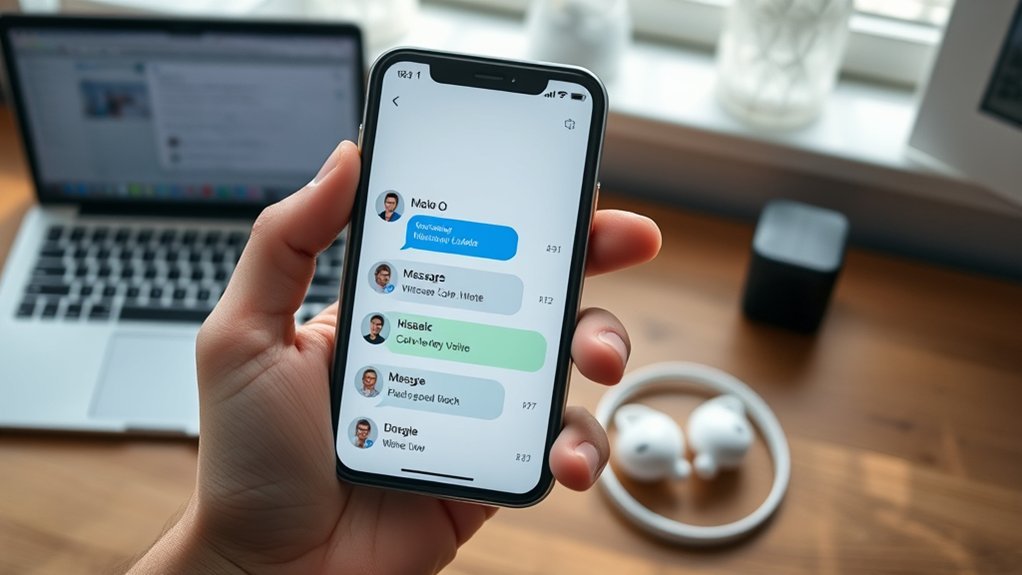
To check whether a conversation is using iMessage or SMS, a user should first look at the message bubble color. Blue bubbles signal iMessage, which travels through an internet connection. Green bubbles signal SMS, which uses the cellular network instead. This simple visual check gives immediate clarity and helps remove confusion from Apple Messages.
If more certainty is needed, a user can confirm whether the device currently has Wi-Fi or mobile data. iMessage needs internet access to send, while SMS does not. A green bubble can also mean the contact is using a non-Apple phone or has iMessage turned off.
For additional control, a user can open Settings, select Messages, and review whether iMessage is enabled. Turning that setting on or off changes how messages are sent.
Why Your Apple Messages Group Splits
A split group thread usually starts with one of three causes.
First, mixed-device groups can shift between iMessage and SMS, which may create separate conversations.
Next, changes to iMessage settings or mismatched contact addresses can prompt Apple Messages to start a new thread for the same people.
Mixed Device Threads
Many Apple Messages groups split when even one participant uses Android, because the thread can no longer stay on iMessage alone. This is the root of mixed device threads. iPhones prefer iMessage, while Android phones depend on SMS or MMS. Once one Android number enters the group, the conversation may fall back to SMS and lose its unified structure.
Step by step, the result becomes clearer. First, replies from Android participants may arrive as separate individual texts instead of one shared chat.
Next, iPhone users may answer in the wrong place without noticing. Then messages get missed, momentum drops, and the group feels fragmented.
The cleanest path is compatibility: keep everyone on iMessage or accept a full SMS group. That simple awareness helps preserve one thread and freer communication for everyone involved.
iMessage Setting Changes
Small setting changes inside Messages can split one Apple group into multiple threads without any warning. One common cause involves iMessage setting changes, especially when Group Messaging is turned off.
Then replies may leave the shared chat and arrive as separate texts, creating the illusion of duplicate conversations.
A clear reset path exists. First, check that Group Messaging remains enabled in Messages settings. Next, confirm that all participants are still using iMessage rather than SMS.
If someone leaves the group or moves to a non-iPhone device, the thread can fragment. Software updates may also quietly alter display behavior, so reviewing recent settings after an update helps restore order.
The simplest route to a unified chat is consistency: same service, stable settings, and quick verification whenever the group suddenly starts splitting again.
Contact Address Mismatches
Sometimes the split begins with nothing more than a contact mismatch. In Apple Messages, contact address mismatches can quietly fracture one group into multiple threads. One person may be saved under an old number, another under a different email. Mixed device use can deepen the divide.
| Cause | Result |
|---|---|
| Old phone number | New thread appears |
| Different saved email | Group splits |
| iPhone plus non-iPhone mix | Separate delivery paths |
| Updated contact details | Messages treated as new |
| Uniform saved info | Thread stays unified |
The path out is simple and freeing. First, each participant should compare saved numbers and emails. Next, they should update outdated details. Then, they should confirm device compatibility. When contacts match across devices, Messages is more likely to keep everyone together consistently.
Turn On MMS and Group Messaging
With MMS Messaging enabled, the device can send richer content in group texts instead of relying on basic SMS limits.
With Group Messaging enabled, replies stay together in a single thread, making communication easier to follow and less scattered.
It is also important to confirm that the cellular plan supports MMS, since unsupported plans can prevent group messages from working correctly.
If trouble continues after these settings are enabled, a quick restart of the iPhone can refresh the connection and help the changes take hold.
That step often clears minor messaging interruptions without requiring deeper changes.
Try These Quick Fixes First
A practical first step is to force close the Messages app and reopen it to clear minor glitches.
If the issue remains, restarting the iPhone can refresh system connections and restore normal message behavior.
It also helps to install the latest iOS update, since software fixes often resolve conversation and group messaging bugs.
Force Close Messages
Start by force closing Messages to clear a temporary glitch that may be splitting one contact into separate threads. This quick reset often frees the app from minor errors without changing any conversations or settings.
It is a simple first move when duplicate threads appear.
To force close Messages, open the app switcher. On iPhones with a Home button, double-tap it. On newer models, swipe up from the bottom and pause.
Find Messages, then swipe it up and off the screen. Wait a moment, then reopen the app normally. This refresh can reinitialize temporary app data and help merge conversations back into one thread.
If the issue remains after trying to force close Messages, stronger fixes may be needed to address deeper software inconsistencies within iOS later.
Restart And Update
If force closing Messages does not fix the split threads, the next quick step is a full iPhone restart. This simple reset often clears temporary glitches that make one contact appear in separate conversations.
After the phone powers back on, Messages can be checked again to see whether the threads have merged properly.
If the issue remains, the device should be updated to the latest version of iOS, since Apple often fixes messaging bugs through software patches.
Next, the network connection should be tested, because unstable service can disrupt delivery and thread organization. If needed, resetting network settings may remove deeper connectivity problems.
As a last quick measure, deleting and reinstalling Messages can clear cached data and restore order. These steps help users regain a cleaner, freer inbox experience.
Clean Up Contact Details for Everyone
Review contact details first to keep Apple Messages organized for everyone. To clean up contact details, each person should have one clear identifier, such as a phone number or email address. This prevents Apple Messages from opening duplicate threads for the same contact and restores a freer, simpler inbox experience.
Next, the user can open the Contacts app, choose an entry, tap Edit, and use Link Contacts to merge duplicates. This step consolidates scattered information into one reliable card. It also helps to review contacts after group conversations, when extra numbers or addresses often appear.
Then, contact names and numbers should be checked across all synced devices. Small inconsistencies can create separate conversations unexpectedly. Updating records everywhere keeps messaging aligned and less restrictive.
Finally, deleting outdated or unnecessary conversations removes visual clutter and makes active threads easier to manage. With regular maintenance, Apple Messages becomes calmer, clearer, and easier for everyone to trust daily.
Handle iPhone and Android Group Texts
Group conversations work most smoothly when the user understands how Apple Messages handles iPhone and Android participants. In Apple Messages, a group text with only iPhone users usually stays in one thread. Messages appear in blue bubbles because they use iMessage.
When an Android user joins, bubbles turn green for SMS, and the conversation may behave differently. A simple check can reduce confusion. First, the user can open Settings, then Messages, and confirm that group messaging is enabled.
Next, the user can notice bubble colors inside the chat. Blue suggests full iMessage features, while green signals SMS limits. Because Android phones do not support iMessage group features, replies may sometimes split or appear less consistently.
For the most cohesive group text, all participants benefit from using the same messaging platform whenever possible. This awareness gives the user more control, fewer surprises, and a clearer path toward calmer, freer communication every day with less friction.
Prevent Split Group Texts in Apple Messages
Preventing split group texts starts with one core check: the conversation works best when every participant uses iMessage. Blue-bubble chats stay unified, while mixed blue and green threads can divide. To prevent confusion, each person should connect to Wi-Fi, confirm iMessage is enabled, and verify Group Messaging remains on. This simple audit restores control and keeps replies moving in one liberated stream.
| Check | Why it matters | Action |
|---|---|---|
| iMessage on | Prevents SMS thread splits | Enable in Settings |
| Group Messaging on | Keeps everyone in one chat | Confirm for all users |
| iOS updated | Reduces bugs and odd behavior | Install latest update |
It also helps to keep the group size stable and avoid mixing iPhone and Android users when possible. If a member changes devices or settings, the thread may fragment again. A quick review of participants and settings can prevent split group texts before they start, preserving one clear conversation.
Frequently Asked Questions
Why Do I Have Two iMessage Conversations With the Same Person?
Two iMessage conversations usually appear because one thread uses a phone number, another an email, SMS fallback, or a group variation. To reduce Message Clutter, one should verify contact details, confirm iMessage status, then delete duplicates.
Why Is iMessage Splitting Group Conversations?
iMessage splits group conversations when participant devices, settings, or networks change, affecting Thread Management. One should verify everyone uses iMessage, check for updates, confirm group members remain unchanged, and restart devices to restore messaging freedom.
How to Unmerge Messages on iPhone?
To unmerge messages on iPhone, one creates a new group chat in Messages, adding contacts manually. For Message Management freedom, they should avoid old threads, then leave the merged conversation through the group info menu.
Why Do I Have Two Chats With the Same Person?
Two chats usually appear because Message Syncing theory holds partly true: differing iMessage/SMS routes, changed numbers, or device switches split threads. To regain clarity, one should verify contact details, update Messages, and restart syncing settings.
Conclusion
Separate Apple Messages threads for the same people are usually a small communication hiccup, not a serious fault. A careful check of iMessage versus SMS, MMS and Group Messaging settings, and contact details often puts things back in line. When iPhone and Android users are mixed, a little extra housekeeping may be needed. By following these steps in order, most split group texts can be quietly smoothed over and are less likely to make an encore later.
