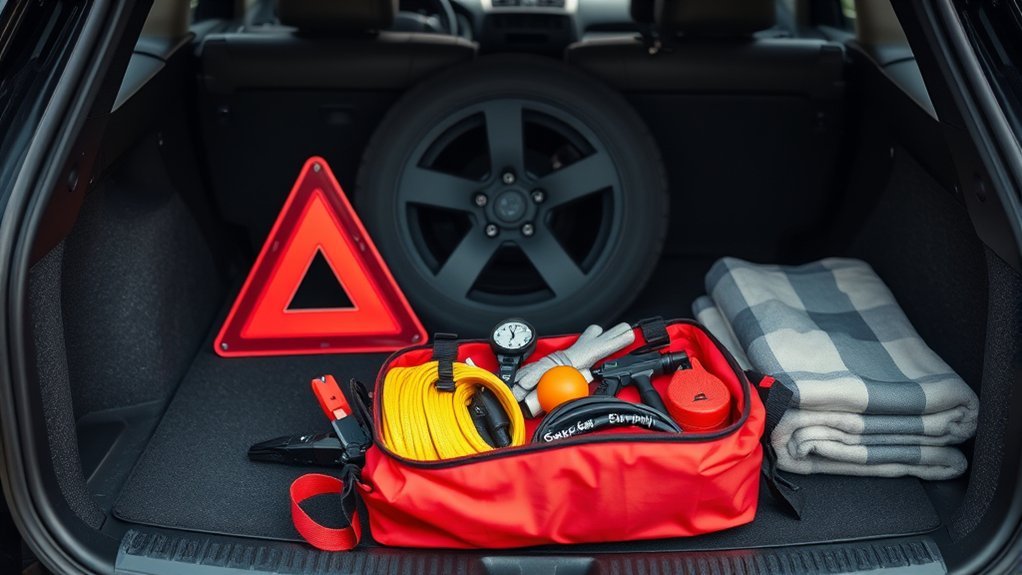
A basic auto emergency kit should cover injuries, breakdowns, visibility, and short-term survival. Core items include a first aid kit, jumper cables rated 6-gauge or lower and at least 12 feet long, a multi-tool, reflective triangles, flares, and safety vests. It should also carry non-perishable food, water, and seasonal gear such as blankets or ice scrapers. Supplies belong in a waterproof, labeled container and need checks every six months. The sections below outline smarter buying choices.
What Should an Auto Emergency Kit Include?
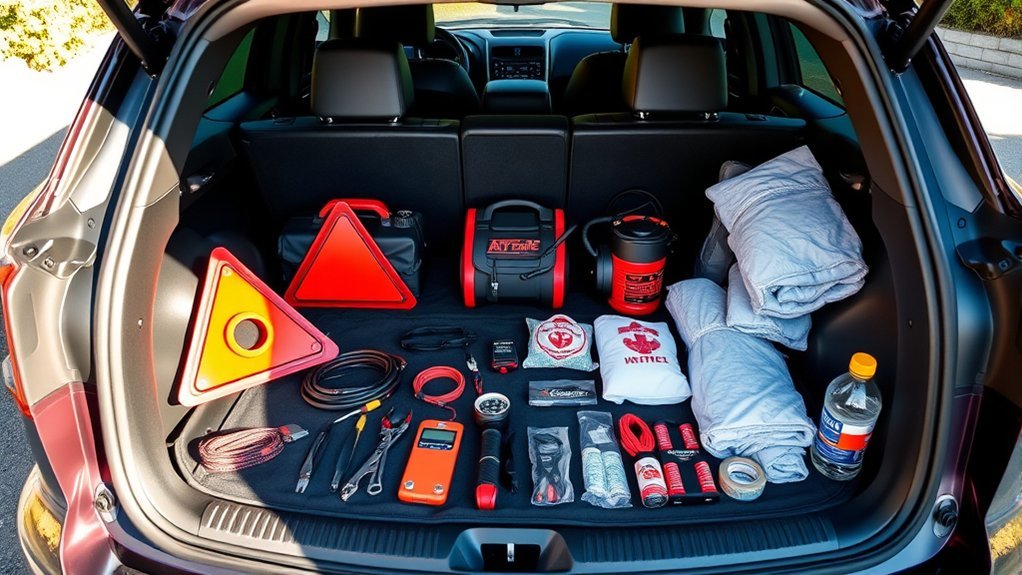
An effective auto emergency kit combines medical supplies, repair tools, visibility aids, food, water, and weather-specific gear to reduce risk during roadside incidents. A complete emergency car kit should prioritize self-sufficiency without adding unnecessary bulk.
A stocked first aid kit with bandages, antiseptic wipes, and pain relievers allows prompt response to minor injuries before they escalate. For mechanical setbacks, jumper cables and a multi-tool support basic roadside recovery and reduce dependence on immediate outside help.
Visibility equipment, including road flares or reflective triangles, helps alert approaching drivers during breakdowns, especially after dark. Sustenance matters as well: water should be packed at roughly one gallon per person per day, alongside non-perishable food such as granola bars.
Weather exposure must also be anticipated. Seasonal items should match local conditions, with an ice scraper and hand warmers for winter, or a rain poncho for wet travel. Preparedness preserves options, autonomy, and calm.
The 10 Must-Have Auto Emergency Kit Items
When a vehicle is stranded, ten core emergency kit items provide the minimum support needed to manage injury, improve visibility, address common battery failure, and sustain occupants until help arrives. A practical car emergency kit should prioritize access, reliability, and independence under stress. Core supplies include a first aid kit, jumper cables, reflective warning triangles, road flares, non-perishable food, water, a flashlight with extra batteries, work gloves, a phone charger, and basic safety tools.
| Item Group | Purpose |
|---|---|
| first aid kit | Handles minor cuts and discomfort |
| jumper cables | Restarts a weak or dead battery |
| reflective warning triangles | Alerts traffic and improves roadside visibility |
| non-perishable food and water | Supports hydration and energy during delays |
Each item reduces exposure to avoidable risk. Storage should keep critical tools reachable without unloading cargo. Food and water quantities should match likely passenger count and climate. This disciplined setup gives motorists more freedom to respond calmly, rather than wait unprepared.
Why Keep a First Aid Kit in Your Car?
Because minor injuries often occur without warning, a first aid kit in the car provides immediate treatment for cuts, abrasions, and other common roadside injuries before professional help is available. This simple resource reduces risk, limits contamination, and supports calm action during an emergency situation when delays can worsen injuries.
A well-stocked first aid kit strengthens preparedness by keeping adhesive bandages, gauze pads, antiseptic wipes, and pain relievers within reach. Access matters most in remote areas, where medical assistance may be delayed and self-reliance becomes essential. Familiarity with the kit’s contents and correct use allows a driver or passenger to respond with confidence rather than hesitation.
Maintenance is equally important. Regularly checking supplies, replacing expired items, and restocking used materials preserve readiness and effectiveness.
In practical terms, the kit protects personal freedom of movement by helping occupants manage minor harm safely until trained care becomes available. This can prevent complications and support better outcomes overall.
How to Choose Jumper Cables and Basic Tools
Although often overlooked until a breakdown occurs, jumper cables and a compact tool kit should be chosen with attention to safety, fit, and performance.
For jumper cables, a gauge of 6 or lower is preferred because thicker wire improves conductivity and helps restore a dead battery more efficiently. Length matters as well; cables measuring at least 12 feet support flexible positioning when vehicles cannot align closely. Insulated clamps with rubberized covers reduce shock risk and improve grip under stress.
For basic tools, selection should prioritize function without excess bulk. A quality multi-tool that includes pliers, screwdrivers, and a knife can address several roadside problems with minimal space.
A sturdy jack is essential, but it should be paired with a lug wrench matched to the vehicle’s lug nut size. That pairing allows a safer, faster tire change and avoids the frustration of carrying basic tools that fail when independence matters most.
What Food Should an Auto Emergency Kit Include?
What food belongs in an auto emergency kit? A well-planned supply of water and non-perishable provisions protects independence when travel stops unexpectedly. An emergency kit can help sustain a driver and passengers through delays, breakdowns, or weather-related isolation.
It should include high-energy snacks such as granola bars, nuts, and protein bars for quick calories with minimal space. Non-perishable food items like dried fruit or canned goods are also practical; choose products with long shelf lives to guarantee they remain edible.
- Granola bars can steady nerves when exhaustion and uncertainty begin to rise.
- Nuts and protein bars deliver compact strength when help feels far away.
- Canned food offers reassurance, but a can opener prevents helpless frustration.
- One gallon of water per person, for three days, guards against dangerous dehydration.
Owners should regularly check and rotate all supplies, replacing expired items promptly to preserve readiness and control.
Which Auto Emergency Kit Items Improve Visibility?
Visibility tools reduce the chance of a secondary collision when a vehicle is stranded on the roadside. A capable Emergency kit should prioritize visibility devices that warn approaching traffic early and help stranded motorists act with greater control.
Reflective triangles are essential because they create a clear hazard signal behind the vehicle in darkness or low light. Road flares provide intense visual warning, but users should follow safe handling practices because they are pyrotechnic. Safety vests improve personal visibility when inspecting damage or changing a tire near moving traffic.
A durable flashlight, ideally waterproof and packed with extra batteries, supports both seeing hazards and being seen while signaling. Emergency LED lights add flexible warning power because they can flash or remain steady, helping direct attention to the vehicle’s location.
Together, reflective triangles, road flares, a flashlight, safety vests, and emergency LED lights strengthen roadside visibility and support safer, more self-directed decisions under pressure.
What Winter Auto Emergency Kit Items Should You Add?
When winter conditions increase the risk of immobilization, an auto emergency kit should add cold-weather essentials that protect both vehicle function and personal safety.
Winter-specific items reduce dependence on chance and improve a driver’s ability to respond decisively. A shovel and ice scraper help clear packed snow and frozen glass, restoring access and visibility. Non-clumping kitty litter or sand can improve tire traction on ice, helping a stranded vehicle regain movement.
Extra warm clothing, including thermal gloves, hats, and socks, limits heat loss during delays. Hand warmers and an emergency blanket add critical insulation when exposure becomes dangerous. A flashlight with extra batteries supports nighttime visibility and signaling.
These additions should complement, not replace, a car first aid kit.
- Cold hands lose control quickly; hand warmers preserve function.
- Darkness isolates; a flashlight restores direction and visibility.
- Wet, freezing delays drain confidence; extra warm clothing protects resilience.
- Ice traps vehicles fast; tire traction aids can reopen a path.
How to Store an Auto Emergency Kit
An auto emergency kit should be stored in a durable, waterproof container and kept in an accessible location such as the trunk or backseat, where it can be reached without unloading the vehicle.
Items should be grouped by category and placed in labeled compartments to reduce delays and confusion during an emergency.
The kit should also be checked every six months, with expired or damaged supplies replaced and a checklist included to track essential items and maintenance.
Best Storage Locations
For reliable access during a roadside emergency, an auto emergency kit should be stored in the trunk or cargo area, positioned near the back seat or secured under a protective cover to limit shifting during travel. These are among the best storage locations for a car survival kit because they balance accessibility with protection.
A waterproof bag helps shield emergency supplies from moisture, grime, and preventable damage.
- Fast access can reduce panic when conditions turn hostile.
- A stable kit preserves confidence on isolated roads.
- Dry, protected gear supports self-reliance in bad weather.
- Visible placement near the rear helps freedom of movement.
Drivers should organize the kit in labeled sections so critical items are reachable without delay.
To maintain readiness, update the kit every six months and replace expired or damaged contents promptly.
Organization And Maintenance
Store the auto emergency kit in a durable, waterproof container, such as a plastic bin or heavy-duty duffel bag, to reduce exposure to moisture, dirt, and impact damage. Effective organization reduces delays when conditions become unstable and choices must remain clear. Compartmentalized pouches keep tools, medical supplies, and signaling items accessible without unnecessary searching.
The emergency kit should remain in a designated location, such as the trunk or back seat, so retrieval is immediate. Each pouch or item should carry a clear label to support quick identification during stress.
Consistent maintenance is equally necessary. A six-month check helps identify expired batteries, damaged packaging, empty water supplies, or missing tools. Owners should update contents after seasonal changes, long trips, or use, preserving readiness and greater independence on the road.
When to Replace Auto Emergency Kit Supplies
Every six months, an auto emergency kit should be inspected and refreshed to prevent critical supplies from failing when needed. This review helps replace expired food, worn first aid items, and weakened batteries before a roadside crisis strips away options.
Water containers require close inspection; any leakage, clouding, or material breakdown justifies replacement. A reliable reserve remains at least one gallon per person per day for three days.
Inspect water closely—leaks, clouding, or breakdown mean replacement; keep at least one gallon per person per day for three days.
- Expired food can turn reassurance into helpless waiting.
- Dead batteries can leave a stranded driver in darkness.
- Degraded bandages or ointments can magnify a minor injury.
- Ignoring seasonal changes can trap occupants between heat, cold, and exposure.
Used supplies should be replenished immediately, not postponed until the next inspection.
Seasonal changes also require updates: winter may demand blankets and ice scrapers, while summer supports sun protection and extra hydration. Consistent maintenance preserves readiness and protects freedom of movement under pressure and stress.
Frequently Asked Questions
What Items Should Be in a Vehicle Emergency Kit?
A vehicle emergency kit should include First aid, Essential tools, water, food, lights, visibility devices, and Personal items. Vehicle safety and Emergency preparedness improve through Kit organization, Weather considerations, and readiness for Roadside assistance during disruptions.
What Are Four Things Every Emergency Kit Should Have?
Four essentials are first aid, food supplies, water purification, and signaling devices. Since 58% of drivers feel unprepared, a multi tool, blankets warm, flashlight batteries, and roadside assistance materials further strengthen self-reliant emergency readiness.
Which 5 to 10 Items Do You Think Are Important to Be Kept in the Vehicle in Case of an Emergency?
Important vehicle items include first aid supplies, jumper cables, flashlight, water, nonperishable food, multi-tool, blanket, phone charger, warning triangles, and tire inflator—supporting car safety, roadside assistance, emergency preparedness, survival gear, vehicle maintenance, weather conditions, and personal protection.
What Are 10 Items in an Emergency Kit?
Ten items, because misfortune loves convenience: First Aid, Food Supplies, Water Purification, Flashlight Batteries, Multi tool Kit, Emergency Blanket, Road Flares, Whistle Signal, jumper cables, and reflective triangles. They support safer, more self-reliant roadside response.
Conclusion
An auto emergency kit is less a luxury than a quiet rebuttal to roadside chaos. While the unprepared motorist trusts luck, bald tires, and a dying phone battery like sacred relics, a well-built kit carries first aid, tools, light, food, water, and seasonal gear with sober purpose. Stored properly and checked regularly, these supplies turn inconvenience into manageability. The goal is not drama, but readiness: fewer surprises, lower risk, and no theatrical negotiations with a snowbank at midnight.
