
The best 4K camcorder for you depends on whether you care more about steady handheld shooting or production tools for sports, events, and streaming.
For travel, family video, and school events, the Sony FDR-AX43 is the easier handheld choice because Balanced Optical SteadyShot prioritizes stability. The Panasonic HC-X1500 adds 4K 60p, 24x optical zoom, dual SD slots, and built-in Wi-Fi streaming for more demanding work.
We verified the linked ASINs, manufacturer specifications, current listing status, safety records, and owner feedback trends before updating this comparison.
Best 4K Camcorders Compared
| Product | Best for | Maximum 4K | Optical zoom | Card slots |
|---|---|---|---|---|
|
Premium
|
Easy handheld shooting | 4K 30p | 20x | Single |
|
Premium
|
Events, sports and streaming | 4K 60p | 24x | Dual |
Best 4K Camcorder: Top Picks
| Category | Product | Best For | Main Tradeoff |
|---|---|---|---|
| Best for Easy Handheld Shooting | Sony AX43 | Travel, family video, school events, casual creators | 4K tops out at 30p, with fewer professional workflow features |
| Best for Events and Streaming | Panasonic HC-X1500 | Sports, events, worship services, long-form recording | More complex menus and a heavier body than the Sony |
Bottom line: The Sony FDR-AX43 is the better fit when you want a compact camcorder that makes handheld recording easier. Its main strengths are built-in stabilization, a useful 20x zoom, and straightforward 4K capture.
Key Specs
- Sensor: 1/2.5-inch Exmor R CMOS, compact sensor favors good lighting
- Maximum 4K: 3840 × 2160 at 30p, suitable for general 4K recording
- Optical zoom: 20x, useful reach without changing lenses
- Card slots: Single memory-card slot, simpler but without card redundancy
- Weight: About 1 lb 5.2 oz with supplied battery, easier handheld carry
Balanced Optical SteadyShot moves the lens and sensor assembly to compensate for camera movement. That makes the AX43 especially useful for travel, walking shots, family events, and other situations where you do not want to carry a separate gimbal.
The 20x ZEISS optical zoom gives you useful reach for school performances, wildlife, and distant subjects. In U.S. 60 Hz operation, XAVC S 4K reaches 30p, while Full HD offers higher frame-rate options.
The main limitation is workflow flexibility. You get one memory-card slot rather than dual-card recording, and there is no 4K 60p mode. The 1/2.5-inch sensor also benefits from good lighting, especially indoors.
When To Use It
| Situation | How It Helps |
|---|---|
| Travel and Walking Tours | The compact body and Balanced Optical SteadyShot reduce the need for a separate stabilizer. |
| Family and School Events | The 20x optical zoom helps you frame distant subjects while staying in your seat or shooting position. |
| Wildlife and Outdoor Video | The long zoom adds reach without requiring interchangeable lenses. |
| Casual Content Creation | The touch display, autofocus, stabilization, and wireless features simplify everyday recording. |
Ease Of Use
| Feature | Ease Level |
|---|---|
| Autofocus | Easy |
| Stabilization | Easy |
| Menu Navigation | Moderate |
| Professional Audio and Streaming | Limited |
What Owners Say
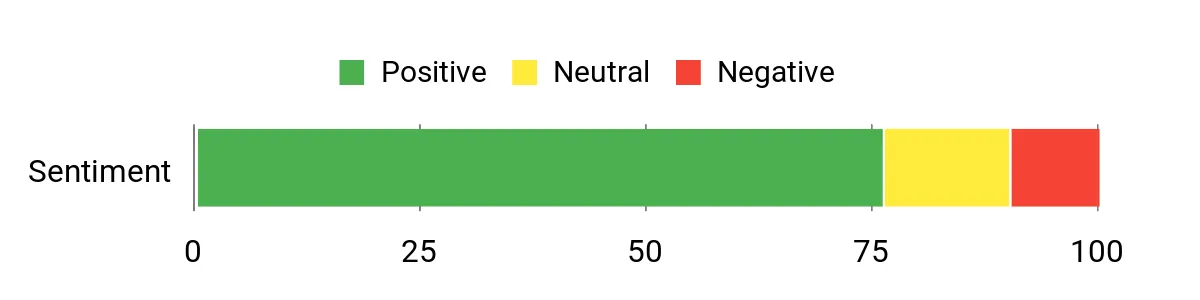
- Balanced Optical SteadyShot is designed for steadier handheld shooting.
- 20x optical zoom covers wide and distant subjects without extra lenses.
- Compact body is easier to carry for travel and family events.
- Microphone and headphone connections support a more complete audio setup.
- 4K recording tops out at 30p rather than 60p.
- Single-card recording does not provide dual-card redundancy.
- The small sensor is less forgiving in dim light.
Bottom line: The Panasonic HC-X1500 is the stronger choice for sports, ceremonies, worship services, and live production. It gives you more frame-rate, zoom, recording, and network flexibility than the Sony.
Key Specs
- Sensor: 1/2.5-inch MOS, compact sensor favors good lighting
- Maximum 4K: UHD 4K at 59.94p/50p, smoother capture for fast action
- Optical zoom: 24x, longer reach for stages and field sports
- Card slots: Dual SD slots, supports flexible multi-card recording
- Weight: About 2.65 lb shooting weight, heavier than the Sony
The HC-X1500 records UHD 4K at up to 59.94p or 50p, depending on system frequency. That extra frame rate is useful for sports and fast movement, while the 24x optical zoom gives you additional reach from fixed shooting positions.
Its two SD slots support relay, simultaneous, and background recording modes. That is useful for long events and workflows where storage flexibility matters more than keeping the camera as simple as possible.
Built-in Wi-Fi supports HD network streaming, and the full-size HDMI output works with external production gear. The body has a 3.5mm microphone input, but XLR inputs require the compatible optional VW-HU1 handle unit.
When To Use It
| Situation | How It Helps |
|---|---|
| Sports and Fast Action | 4K 60p and the 24x optical zoom help capture smoother motion and distant subjects. |
| Live Events | Wi-Fi HD streaming and HDMI output support encoders, switchers, and computers. |
| Worship Services and Schools | Long zoom, dual cards, and dedicated controls suit fixed-position or operator-led recording. |
| Documentary and Event Work | Multiple recording formats and manual controls provide more flexibility than a basic Handycam. |
Ease Of Use
| Feature | Ease Level |
|---|---|
| Menus and Setup | Moderate |
| Stabilization | Easy |
| Streaming Setup | Moderate |
| Dual-Card Management | Moderate |
What Owners Say
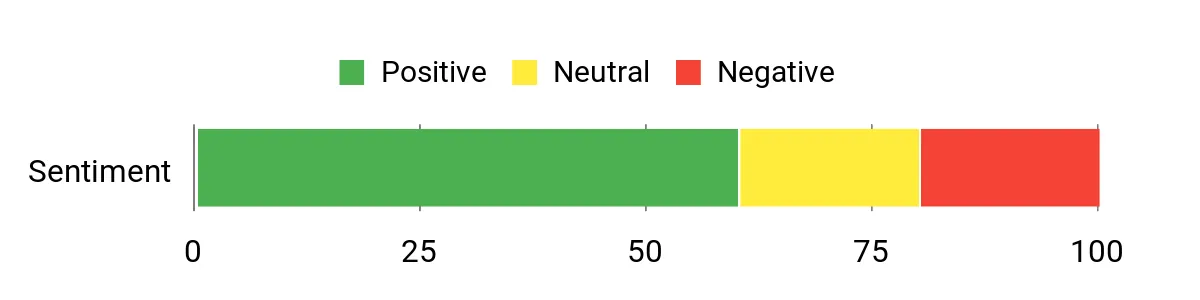
- Records UHD 4K at up to 60p for fast-moving subjects.
- 24x optical zoom provides more reach than the Sony.
- Dual SD slots support relay, simultaneous, and background recording.
- Built-in Wi-Fi supports HD network streaming.
- Full-size HDMI output suits external production equipment.
- Heavier and more complex than the Sony FDR-AX43.
- The 1/2.5-inch sensor benefits from added light indoors.
- XLR inputs require the optional compatible handle unit.
Sony AX43 vs Panasonic HC-X1500
| Product Name | Image | Maximum 4K | Optical Zoom | Approx. Weight | Special Highlights | Amazon |
|---|---|---|---|---|---|---|
| Sony FDR-AX43 UHD 4K Handycam |
 |
4K 30p | 20x | About 1 lb |
|
Check Price |
| Panasonic HC-X1500 4K Camcorder |
 |
4K 60p | 24x | About 2.65 lb with battery |
|
Check Price |
Sony FDR-AX43 vs Panasonic HC-X1500: Is the Upgrade Worth It?
The main trade-off is simplicity versus production flexibility. The Sony is lighter and built around easy handheld stabilization, while the Panasonic gives you faster 4K capture, a longer zoom, dual cards, and stronger live-production options.
- Frame rate: Sony reaches 4K 30p; Panasonic reaches 4K 60p for smoother fast action.
- Zoom: Sony provides 20x optical zoom; Panasonic extends that to 24x.
- Recording workflow: Panasonic adds dual slots with relay, simultaneous, and background recording modes.
- Handling: Sony is lighter and stabilization-focused; Panasonic adds controls and workflow features at the cost of extra weight.
Which 4K Camcorder Should You Buy?
- Travel and handheld family video: get the Sony FDR-AX43.
- Sports and fast movement: get the Panasonic HC-X1500.
- Long events and card redundancy: get the Panasonic HC-X1500.
- Simple point-and-shoot operation: get the Sony FDR-AX43.
- Built-in network streaming: get the Panasonic HC-X1500.
How We Chose
- Live product verification: We checked each linked Amazon ASIN to confirm the page still matches the model described.
- Core video features: We compared manufacturer-listed 4K frame rates, sensor type, zoom range, and stabilization.
- Production workflow: We checked card slots, audio connections, HDMI output, wireless functions, and streaming support.
- Real-world fit: We reviewed recurring owner feedback trends from non-Amazon retailer and community sources alongside manufacturer support and safety information.
How to Choose the Right 4K Camcorder
Choose Your Frame Rate
4K 30p is enough for interviews, travel, family videos, and most everyday recording. If you regularly shoot sports or other fast action, 4K 60p captures motion at twice the frame frequency and also gives you more flexibility when slowing footage in a 30p edit. For that use, the Panasonic HC-X1500 is the better fit.
Match the Zoom to Your Subject
A 20x optical zoom already gives you substantial reach for school events, wildlife, and travel. A 24x lens is more useful when you regularly work from the back of a venue or the sideline and cannot move closer. Both models avoid the need to carry interchangeable telephoto lenses.
Check Stabilization
Stabilization matters most when you walk with the camera, shoot handheld for long periods, or work near the telephoto end of the zoom. Sony’s Balanced Optical SteadyShot is the main reason to choose the Sony FDR-AX43 for casual handheld use.
Plan Your Audio
Built-in microphones are convenient, but external microphones give you more control over speech and event sound. The Sony provides stereo microphone and headphone minijacks plus a Multi Interface Shoe. The Panasonic also supports external audio, but professional XLR connections require its compatible optional handle unit.
Review Storage and Power
Match your SD cards to the recording mode listed in the camera manual. Higher-data-rate 4K modes need suitable cards, and long events require enough capacity and spare batteries. The Panasonic’s two SD slots are useful when you want relay or simultaneous recording rather than stopping to change a single card.
Check Streaming and Video Outputs
Do not treat every Wi-Fi feature as livestreaming. The Panasonic supports built-in HD network streaming and also offers HDMI output for external production gear. The Sony’s wireless features are aimed more at camera control and sharing, so a separate capture or encoding workflow is the safer choice for live production.
Think About Sensor Size and Lighting
Both cameras use relatively small 1/2.5-inch sensors. That helps keep the lens and body compact, but neither model is a substitute for a larger-sensor camera when very low light or shallow depth of field is the priority. Indoors, adding light and avoiding unnecessary gain can improve results.
Mistakes to Avoid When Buying a 4K Camcorder
- Buying by resolution alone: Compare frame rate, stabilization, zoom, audio, and card workflow too.
- Ignoring low-light needs: Small sensors work best when you can provide adequate lighting.
- Assuming XLR is included: The Panasonic needs the compatible optional handle unit for XLR inputs.
- Using the wrong SD card: Match card speed and capacity to the exact recording mode.
- Ignoring bundle details: Confirm the current seller, warranty, and included accessories before ordering.
FAQs
Which Camcorder Is Better for Beginners?
The Sony FDR-AX43 is easier for most beginners because it centers the experience on autofocus, built-in stabilization, a 20x zoom, and straightforward 4K recording. The Panasonic HC-X1500 gives you more recording formats, dual-card options, and networking features, but those added controls create a steeper learning curve for someone who mainly wants simple family or travel video.
Which One Is Better for Sports?
The Panasonic HC-X1500 is better suited to sports in this comparison because it records UHD 4K at up to 60p and has a 24x optical zoom. The higher frame rate is useful for fast motion, while the longer zoom helps when you must stay away from the field or court. Good light still matters because it uses a 1/2.5-inch sensor.
Can These Camcorders Livestream in 4K?
Do not assume either camera provides built-in 4K livestreaming. The Panasonic HC-X1500’s integrated network function supports HD streaming rather than native 4K streaming. The Sony FDR-AX43 is not designed as a direct UVC webcam-style 4K streamer. For a 4K live workflow, verify the camera’s output format and use compatible external capture or encoding equipment.
Are These Camcorders Good in Low Light?
Both can record indoors, but neither is a large-sensor low-light specialist. Each uses a relatively small 1/2.5-inch sensor, so image quality improves when you can add light and keep gain under control. If dim concerts, receptions, or night scenes are your main use, compare larger-sensor camera options before buying either model.
Does the Panasonic HC-X1500 Include XLR Inputs?
No. The Panasonic HC-X1500 body does not have built-in XLR terminals. Panasonic’s compatible optional handle unit adds two XLR audio inputs and additional controls. Include that accessory in your equipment plan if balanced professional microphones are essential. If a 3.5mm microphone connection is enough for your work, the camera can be used without the XLR handle.
What Comes With the Panasonic Starter Bundle?
The linked Amazon page is a starter bundle rather than a body-only listing. At verification time, it described the HC-X1500 with a memory card, soft case, small tripod, cleaning accessories, card reader, and memory-card wallet. Bundle sellers can revise included items, so confirm the current product title, seller, package list, condition, and warranty before purchasing.
Do I Need 4K 60p?
You do not need 4K 60p for every project. 4K 30p works well for interviews, travel, family video, presentations, and general recording. Choose 4K 60p when smoother fast movement matters or when you want more flexibility for slow-motion playback in a lower-frame-rate timeline. That is one of the Panasonic HC-X1500’s main advantages here.
Final Verdict
For most buyers seeking the best 4K camcorder for handheld travel, family, or school-event recording, the Sony FDR-AX43 is the simpler choice. Its stabilization system and 20x optical zoom cover common everyday shooting without the Panasonic’s added production complexity.
If sports, long events, or live production are the priority, the Panasonic HC-X1500 gives you 4K 60p, a 24x optical zoom, dual SD slots, and built-in HD network streaming.
For the more production-focused option, see the Panasonic HC-X1500, especially if 4K 60p, dual cards, or HD streaming are requirements.