Maybe the newest DJI models aren’t sold where you live, or you just want a different mix of price, flight time, and features. Either way, you want a camera drone that flies steadily, shoots clean 4K, and doesn’t fight you on setup.
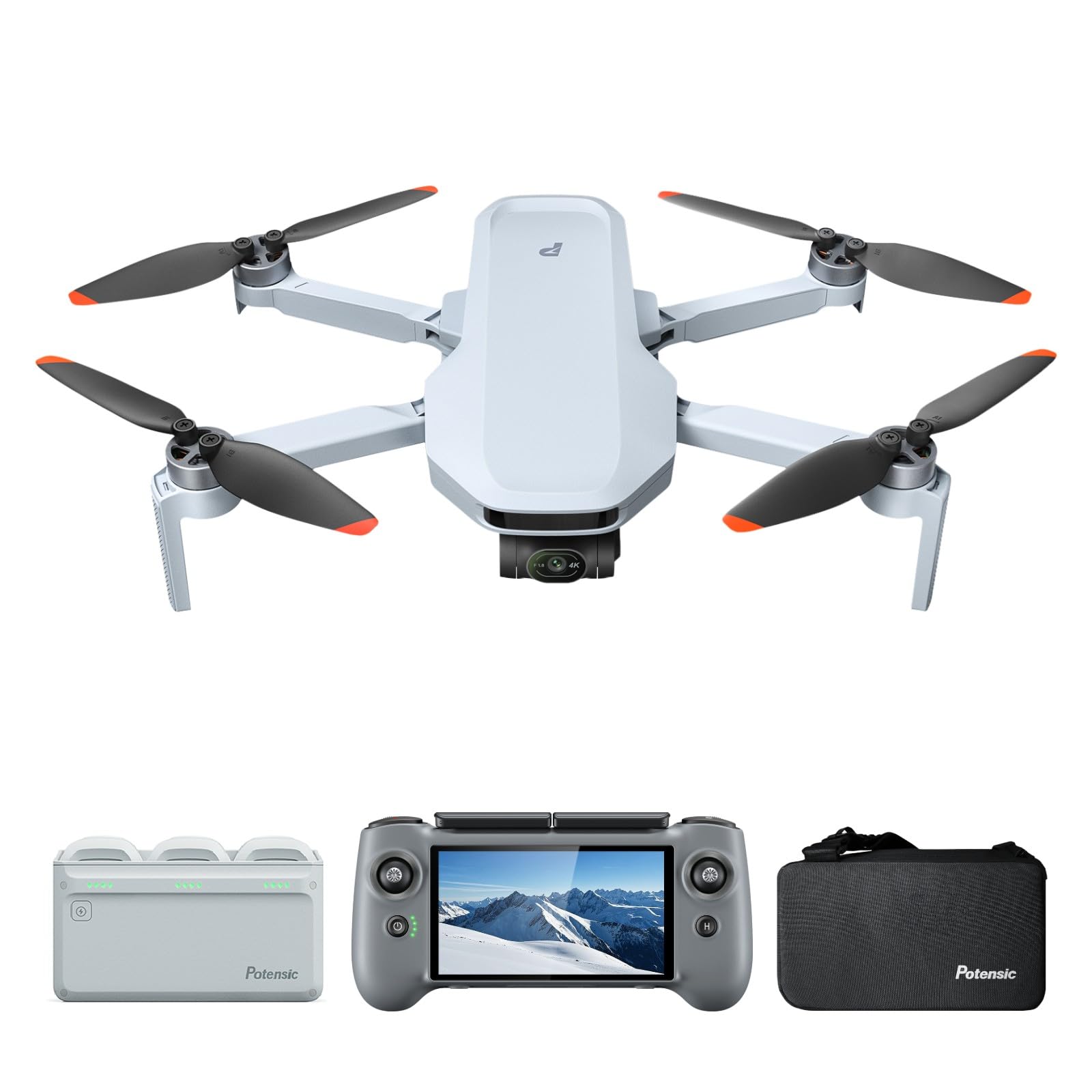
For most people, the Potensic Atom 2 is the best of the DJI alternatives. It puts a 1/2-inch Sony sensor on a 3-axis gimbal in a body under 249 g. If you want to spend less, the Potensic Atom keeps the gimbal and the light weight.
We compared every pick on manufacturer specs, independent reviews, and safety-recall records. We weighed camera hardware, stabilization, weight, flight time, and range.
Best DJI Alternatives Compared
| Product | Best for | Weight | Gimbal | Rated flight time | Score |
|---|---|---|---|---|---|
 Premium
|
Best overall | Under 249 g | 3-axis | 32 min × 3 batteries (Fly More Combo) | 94/100 |
 Mid-range
|
Best value | Under 249 g | 3-axis | 32 min × 3 batteries (Fly More Combo) | 90/100 |
 Budget
|
Best for beginners | Under 249 g | None (EIS only) | 31 min × 2 batteries | 87/100 |
 Mid-range
|
Best build quality | 357 g | 3-axis | 35 min × 2 batteries | 88/100 |
 Premium
|
Most digital zoom | 357 g | 3-axis | 35 min × 2 batteries | 86/100 |
 Premium
|
Best stability | 603 g | 3-axis + EIS | 40 min × 2 batteries | 89/100 |
|
Premium
|
Best for smooth cruise shots | 357 g | 3-axis | About 70 min total (2 batteries) | 85/100 |
| Most protected gimbal | About 550 g | 3-axis | 75 min total (3 batteries) | 84/100 | |
| Best compact power | 249 g | 3-axis | 30 min per battery | 80/100 | |
| Best for casual flyers | 249 g | Not listed | 48 min total (2 batteries) | 78/100 |
Best DJI Alternatives: Our Top Picks
1. Potensic Atom 2
Bottom line: This is the best all-round DJI alternative here: a 1/2-inch Sony sensor on a 3-axis gimbal, in a body under 249 g. Get it if you want the best image quality without registering a drone for recreational flying in the US.
- Weight: under 249 g, so no FAA registration for recreational flying
- Camera: 1/2-inch Sony sensor, 48MP photos, 4K/30fps HDR video, the largest sensor on this list
- Stabilization: 3-axis gimbal, so video stays smooth through turns and climbs
- Flight time: up to 32 min per battery, with three batteries in the Fly More Combo
- Range: up to 10 km (PixSync 4.0), for a strong link near trees and buildings
The Potensic Atom 2 takes 48MP (8K) photos and records 4K/30fps HDR video. Its 1/2-inch sensor is a step up from the original Atom’s 1/3-inch chip, so you get more detail to crop and cleaner footage as the light fades. AI Night mode raises ISO up to 25600 for scenes after dark.
For social clips, vertical shooting records in 9:16 at up to 2.7K, so you don’t have to crop later. P-Log gives you a flat color profile for grading, and 4x digital zoom helps you frame distant subjects.
AI tracking (Spotlight, Follow, Parallel) and QuickShots such as Dolly Zoom fly cinematic moves for you. The Fly More Combo adds three batteries, a charging hub, and a carry bag, so you can rotate packs through a full day of travel or a real-estate shoot.
- Largest sensor in this list (1/2-inch Sony)
- 3-axis gimbal in a body under 249 g
- Up to 10 km transmission range
- Vertical shooting, AI Night, and P-Log for creators
- Three batteries and a hub in the Fly More Combo
- No obstacle avoidance
- No built-in screen: the remote uses your phone
- Some app or firmware quirks have been reported, though updates have helped
2. Potensic Atom
Bottom line: This is the best value here: a true 3-axis gimbal, 4K/30 video, and up to 6 km range in a sub-249 g drone. Get it if you want gimbal-smooth footage and don’t need the Atom 2’s bigger sensor.
- Weight: under 249 g, so no FAA registration for recreational flying
- Camera: 1/3-inch Sony sensor, 12MP photos (JPG or RAW), 4K/30fps video, a smaller sensor than the Atom 2
- Stabilization: 3-axis gimbal, which keeps the horizon level through turns
- Flight time: up to 32 min per battery, with three batteries in the Fly More Combo
- Range: up to 6 km (PixSync 3.0), plenty for line-of-sight flying
The Potensic Atom pairs a 1/3-inch Sony sensor with a 3-axis gimbal and records 4K/30fps video and 12MP stills. The gimbal keeps footage level as you turn and climb, something electronic stabilization alone can’t fully match.
Visual tracking follows or orbits a subject, and QuickShots such as Rocket, Spiral, and Boomerang turn a few taps into a polished clip. Beginner-friendly controls make it easy to learn aerial composition, and manual settings give you room to grow.
The Fly More Combo includes three batteries and a parallel charging hub, so you can swap packs and keep shooting through longer sessions.
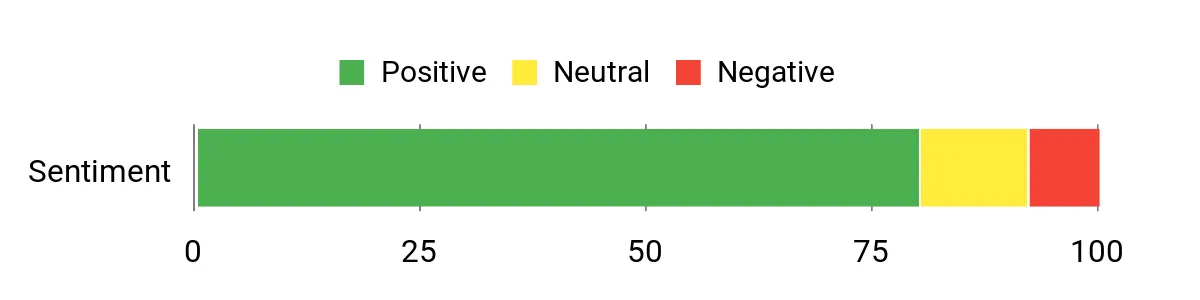
- True 3-axis gimbal under 249 g
- Up to 6 km transmission range
- Three batteries and a parallel hub in the Fly More Combo
- Visual tracking and five QuickShots modes
- Smaller 1/3-inch sensor and 12MP stills (the Atom 2 shoots 48MP)
- No built-in screen: the remote uses your phone
- Occasional app quirks have been reported, though firmware updates have helped
3. Potensic Atom SE
Bottom line: This is the easiest pick for first-time pilots: light, simple, and equipped with GPS auto return. Get it if you’re learning to fly and want steady 4K without paying for a gimbal.
- Weight: under 249 g, so no FAA registration for recreational flying
- Camera: Sony sensor, 12MP photos, 4K/30fps video, fine for daylight social clips
- Stabilization: EIS only, no mechanical gimbal, so it’s smooth in calm air and shakier in wind
- Flight time: up to 31 min per battery, 62 min with two
- Range: up to 4 km, enough for learning and casual flights
The Potensic Atom SE records 4K/30fps video and 12MP photos. It steadies footage with electronic image stabilization (Potensic calls it ShakeVanish) instead of a mechanical gimbal. In calm air the results look smooth; in strong wind, a gimbal drone holds the horizon better.
GPS, a downward vision sensor, and a TOF sensor help it hover steadily. It flies back to its takeoff point when the signal drops, the battery runs low, or you press the return button.
Follow Me, Waypoint, and Circle flight give you easy automated shots while you build your confidence.
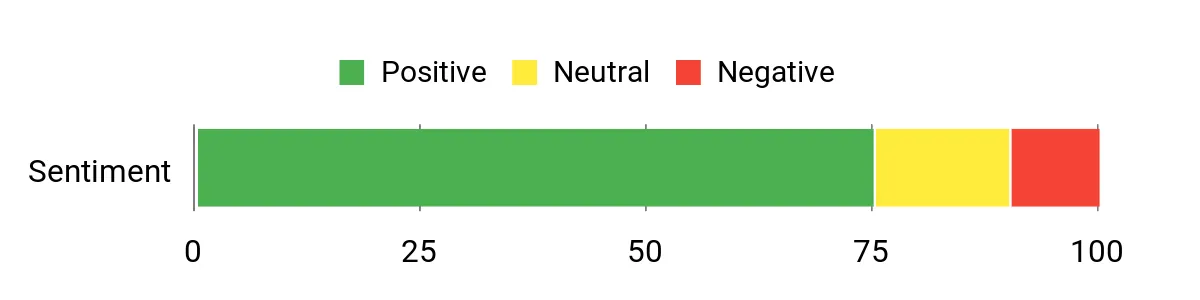
- Foldable and under 249 g
- GPS auto return plus Follow Me, Waypoint, and Circle modes
- Rated up to 62 minutes across two batteries
- Simple flight modes that make learning easy
- No mechanical gimbal, so EIS struggles in wind
- Shortest range of the three Potensic picks (4 km)
- Occasional app bugs have been reported
4. Ruko F11PRO 2
Bottom line: A solidly built 3-axis gimbal drone with two batteries rated for 70 minutes in total. Get it if you want long sessions and a sturdy airframe, and you don’t mind registering a 357 g drone.
- Weight: 357 g, so it needs FAA registration and Remote ID in the US
- Camera: 4K/30fps video and 6K photos, good detail for daylight scenes
- Stabilization: 3-axis mechanical gimbal, for steadier footage in light wind
- Flight time: up to 35 min per battery, 70 min with two
- Range: up to about 3 km (10,000 ft), fine for line-of-sight flying
The Ruko F11PRO 2 shoots 4K/30fps video and 6K stills from a camera on a 3-axis mechanical gimbal. Independent reviewers called it the best-built Ruko drone so far, though they found image quality to be its weak spot.
GPS, barometric altitude hold, and optical flow positioning keep it steady. Smart return-to-home, one-button takeoff and landing, and a beginner mode ease you in.
Two batteries, plus GPS follow and waypoint modes, make it a good fit for long practice flights and scenic shoots where you want to make several passes.
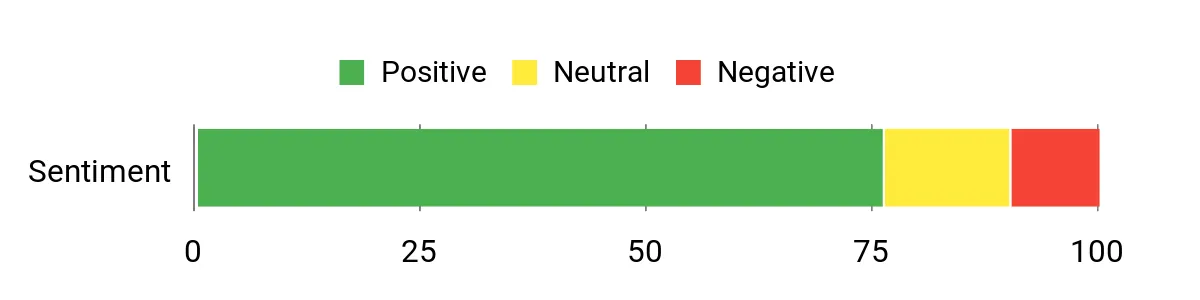
- 3-axis mechanical gimbal
- Two batteries rated for 70 minutes in total
- Solid, well-made folding design
- Beginner mode, one-button takeoff, and smart return-to-home
- 357 g, so it must be registered with the FAA
- Reviewers rated its image quality below its build quality
- No wall charger in the box
5. Bwine F7GIM
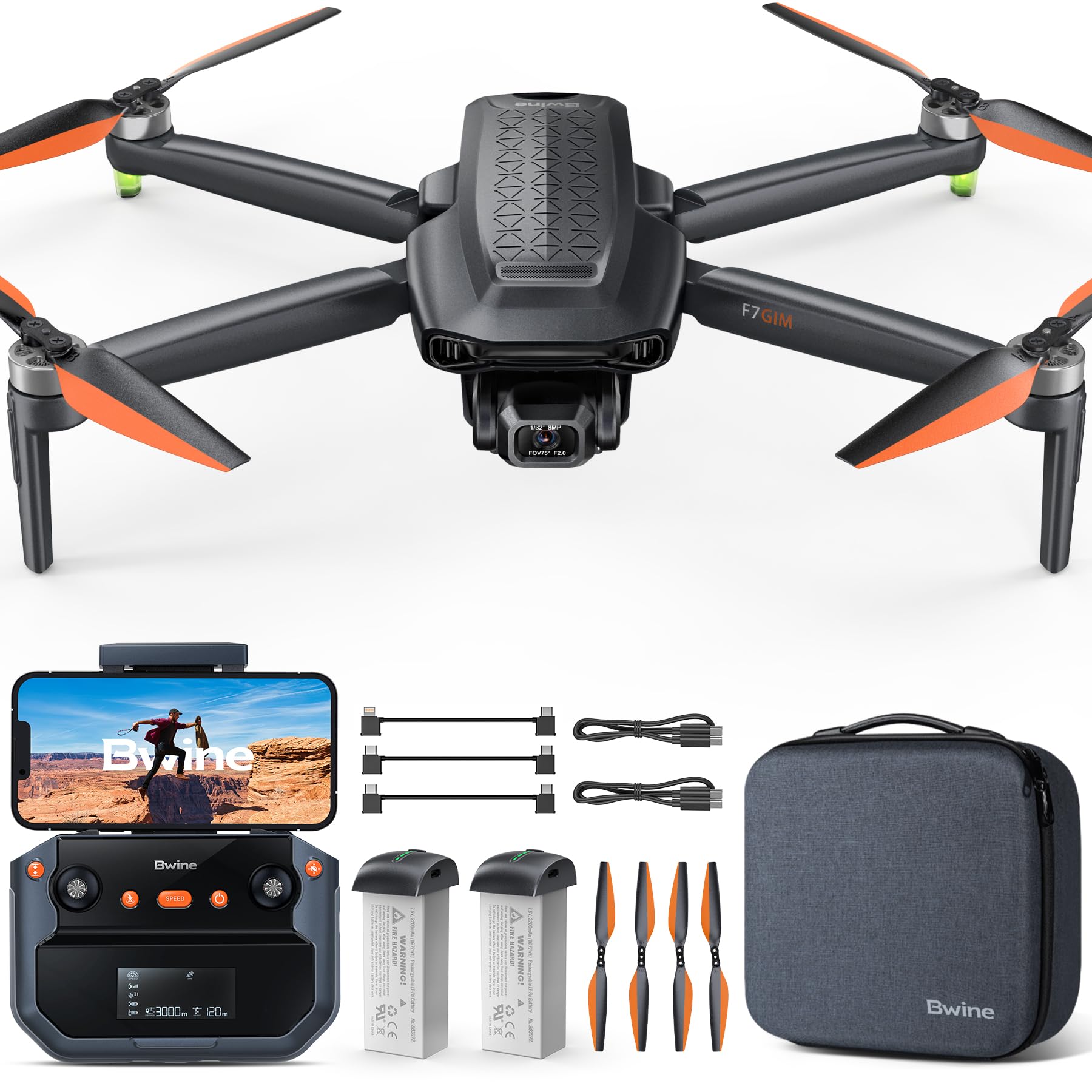
Bottom line: A 3-axis gimbal drone with the most digital zoom in this list (5x) and two batteries rated for 70 minutes. Get it for planned landscape shoots or subjects you can’t fly close to.
- Weight: 357 g, so it needs FAA registration and Remote ID in the US
- Camera: 4K/30fps video with 5x digital zoom, though detail drops as you zoom in
- Stabilization: 3-axis gimbal, for smooth video during long passes
- Flight time: up to 35 min per battery, 70 min with two
- Range: about 3 km (1.89 miles), fine for line-of-sight flying
The Bwine F7GIM records 4K/30fps video on a 3-axis gimbal. Its 5x digital zoom helps you frame wildlife or landmarks from a respectful distance. Keep in mind that digital zoom crops the image, so the further you zoom, the softer the shot.
Reviewers found its build quality hard to fault and its gimbal smooth. The camera is fully automatic, which makes it simple for beginners but limits manual control.
Each battery is rated for up to 35 minutes, but one reviewer got about 22 minutes in roughly 25 mph wind. GPS, return to home, and an adjustable return altitude add safety on longer outings.
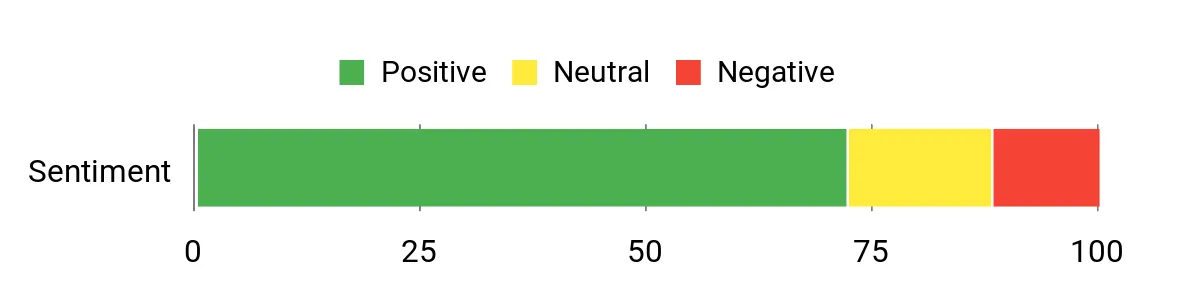
- 5x digital zoom for distant subjects
- Smooth 3-axis gimbal
- Two batteries rated for 70 minutes in total
- GPS return to home with a settable return altitude
- 357 g, so it must be registered with the FAA
- Fully automatic camera with little manual control
- Real flight time falls well short of the rating in wind
6. Holy Stone HS600D
Bottom line: The steadiest flier here, pairing a 3-axis gimbal with EIS and batteries rated for up to 40 minutes each. Get it for windier days and longer shoots, as long as you’re fine with a 603 g drone.
- Weight: 603 g, so it needs FAA registration and Remote ID in the US
- Camera: 1/2.3-inch Sony 48MP sensor, 4K/30fps video, detailed stills for property and landscapes
- Stabilization: 3-axis brushless gimbal plus EIS, for calmer footage in gusts
- Flight time: up to 40 min per battery, 80 min with two
- Range: up to 6 km in open, low-interference areas
The Holy Stone HS600D uses a 1/2.3-inch Sony sensor to record 4K/30fps video and 48MP stills. Its 3-axis brushless gimbal works together with electronic stabilization, so footage stays calm when gusts push the airframe around.
GPS, optical flow, and TOF positioning help it hover precisely and track subjects. Follow Me, Waypoint, Point of Interest, vertical shooting, and time-lapse give you plenty of automated options for events and landscapes.
Its two 3500 mAh batteries are rated for up to 40 minutes each, the longest per battery in this list. Reviewers called the camera good but not outstanding, so buy it for steadiness and airtime rather than the best image quality.
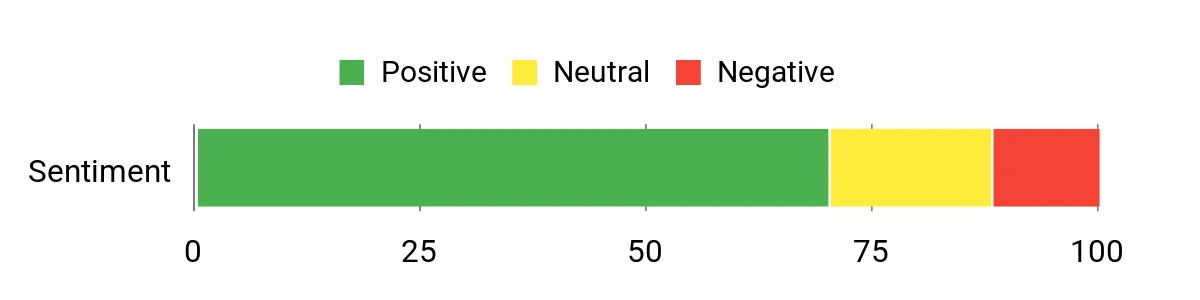
- 3-axis gimbal plus EIS for steady video in wind
- Longest rated time per battery here (40 minutes)
- GPS, optical flow, and TOF positioning
- Up to 6 km transmission range
- 603 g: bulkier, and it must be registered with the FAA
- Plastic gimbal and camera housing
- Camera quality is good rather than standout
7. Gleesfun G11Pro

Bottom line: A 3-axis brushless gimbal drone with 6K stills, Cruise Control, and two batteries rated for about 70 minutes in total. Get it if you want a complete kit for long practice and landscape sessions.
- Weight: 357 g, so it needs FAA registration and Remote ID in the US
- Camera: 1/3.2-inch sensor, 4K/30fps video, 6K photos, best suited to daylight
- Stabilization: 3-axis brushless gimbal, for smooth pans and tracking shots
- Flight time: about 70 min across two batteries
- Range: up to about 3 km (10,000 ft) via GQ2.0 digital transmission
The Gleesfun G11Pro records 4K/30fps video and 6K photos through a 1/3.2-inch sensor mounted on a 3-axis brushless gimbal. That sensor is smaller than the Atom 2’s, so it does its best work in good light.
Cruise Control holds the drone on a steady line, so long, smooth tracking shots don’t need constant stick work. Gleesfun’s GQ2.0 digital transmission keeps the live view stable out to about 3 km.
Two batteries come in the box, along with a portable bag and spare parts, so you’re ready for long field sessions from day one.
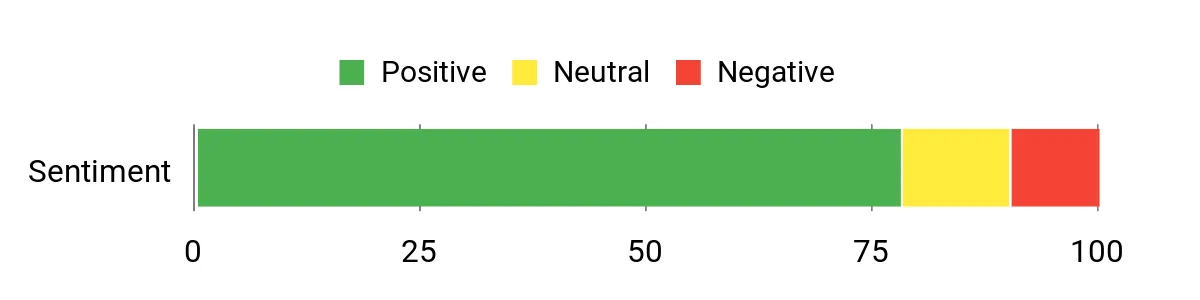
- 3-axis brushless gimbal
- 6K photos and 4K/30fps video
- Two batteries for about 70 minutes rated
- Cruise Control for smooth straight-line shots
- Portable bag and spare parts included
- 357 g, so it must be registered with the FAA
- Small 1/3.2-inch sensor limits low-light shooting
- Some app feature gaps and minor camera latency have been reported
8. Bwine F7GB2 Pro

Bottom line: A workhorse-style kit with a removable 3-axis gimbal tucked between the landing legs and three batteries rated for 75 minutes in total. Get it if endurance and a protected camera matter more to you than image quality.
- Weight: about 550 g, so it needs FAA registration and Remote ID in the US
- Camera: 4K camera with a 120° field of view and 5x digital zoom
- Stabilization: removable 3-axis gimbal, shielded by the landing legs
- Flight time: rated 75 min across three batteries
- Range: about 3 km, fine for line-of-sight passes
The Bwine F7GB2 Pro mounts its 4K camera on a 3-axis gimbal under the airframe, between the landing legs, which helps shield it during rough landings. A 120° field of view and 5x digital zoom let you go wide or punch in.
GPS auto return, follow, orbit, and waypoint modes cover repeatable passes for site checks, progress photos, and landscape runs. Three batteries in the kit mean less downtime between flights.
Be realistic about the camera, though. Independent reviews of the standard F7GB2 found 4K recorded at just 15fps with heavy processing, and real flights of about 15 to 20 minutes per battery.
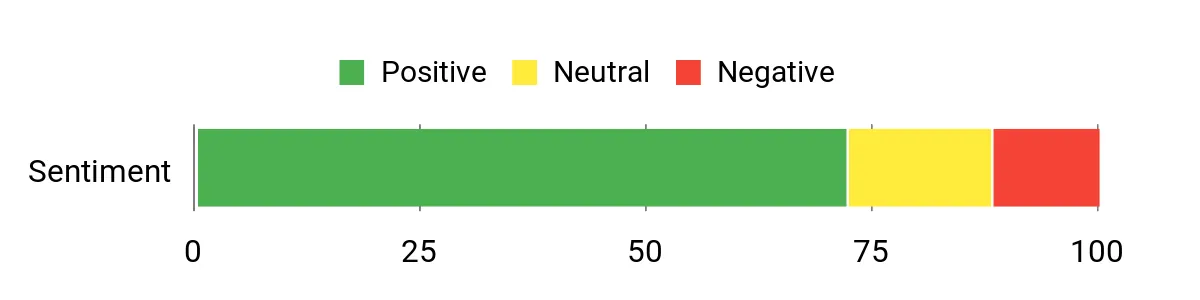
- Three batteries in the box
- Removable 3-axis gimbal protected by the landing legs
- GPS waypoint, follow, and orbit modes
- Carrying bag and spare parts included
- About 550 g: bulky, and it must be registered with the FAA
- Reviews of the standard F7GB2 found 4K at only 15fps
- Real flight time well below the rating
9. Holy Stone HS900

Bottom line: Holy Stone’s light gimbal drone: 249 g, with a 48MP Sony sensor, a 3-axis gimbal, and up to 6 km range. Get it if you want detailed stills from a drone that skips FAA registration for recreational flying.
- Weight: 249 g, so no FAA registration for recreational flying
- Camera: 1/2.3-inch Sony 48MP sensor, f/2.6 lens, 4K/30fps video
- Stabilization: 3-axis brushless gimbal, so video stays steady through turns
- Flight time: up to 30 min per battery
- Range: up to 6 km, plenty for line-of-sight flying
The Holy Stone HS900 records 4K/30fps video and 48MP photos through a 1/2.3-inch Sony sensor on a 3-axis brushless gimbal. When it launched in May 2024, reviewers rated it Holy Stone’s best drone to date, with clearly better flight performance and image quality than the brand’s earlier models.
GPS return to home, visual tracking, and Follow Me keep it predictable on quick field shoots, and transmission reaches up to 6 km.
Like most sub-250 g drones here, it has no obstacle avoidance, so take care near trees and buildings, especially in automated modes.
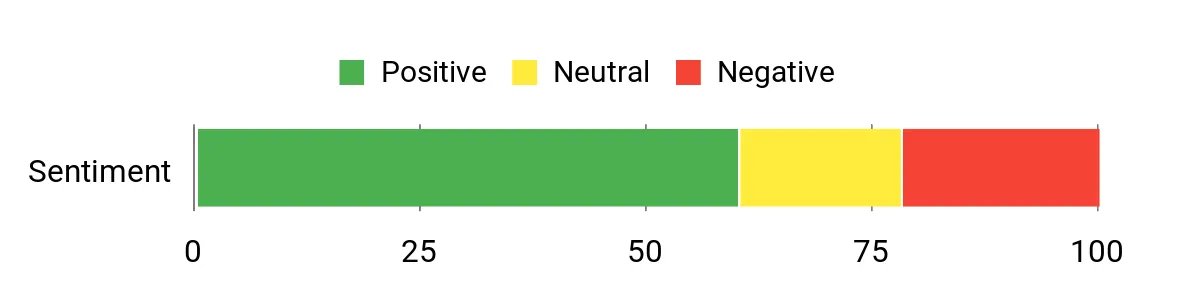
- 249 g, with no registration needed for recreational flying
- 48MP Sony sensor for detailed stills
- 3-axis brushless gimbal
- Up to 6 km transmission range
- No obstacle avoidance
- Smaller sensor than the Potensic Atom 2
- App or setup headaches have been reported by some buyers
10. Oddire 4K GPS Drone
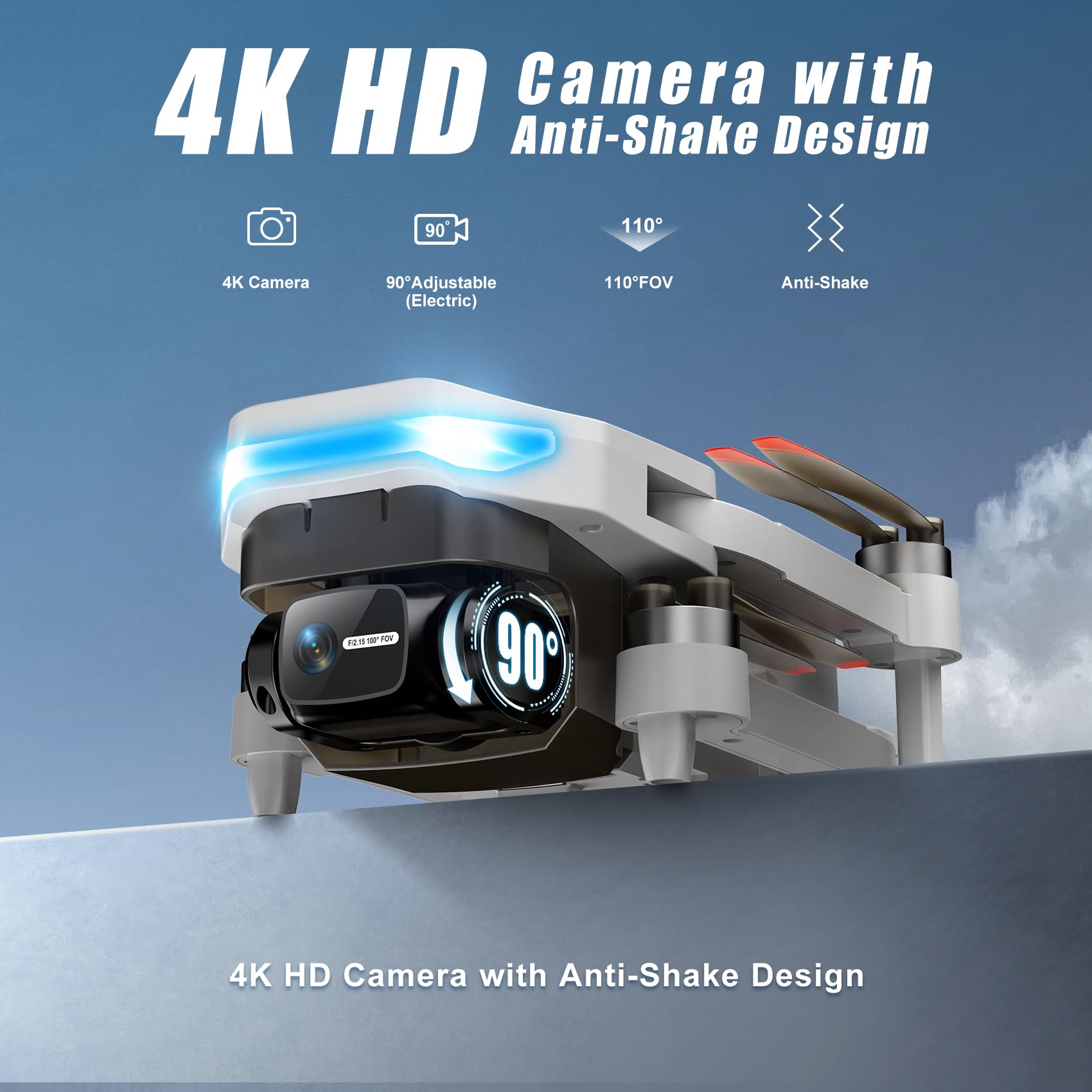
Bottom line: A simple, foldable 249 g GPS drone with gesture control and waypoint flight. Get it for family outings and quick social clips, not for pro-level footage.
- Weight: 249 g, so no FAA registration for recreational flying
- Camera: 4K camera, fine for casual photos and social clips
- Flight time: up to 48 min across two batteries
The Oddire 4K GPS Drone folds small enough for a daypack. Its brushless motors are more efficient and longer-lasting than the brushed motors in toy drones.
GPS auto return, GPS follow, orbit, and waypoint flight make shots repeatable, and gesture control lets you snap a selfie without reaching for the remote.
Its camera and range are more modest than the other picks, so think of it as a fun, easy flier for short trips rather than a creative tool.
- Light, foldable 249 g design
- GPS auto return, follow, orbit, and waypoint modes
- Gesture control for hands-free selfies
- Brushless motors and two batteries
- Camera and range are more modest than the other picks
- No mechanical gimbal listed
- Fewer published specs than the bigger brands
Potensic Atom 2 vs Potensic Atom: Is the Upgrade Worth It?
Both are sub-249 g drones with 3-axis gimbals and 32-minute batteries. The difference is the camera and the link: the Atom 2 pays you back in image quality, range, and creator tools.
- Sensor: 1/2-inch on the Atom 2 vs 1/3-inch on the Atom, so the Atom 2 is cleaner at dusk and in shade.
- Photos: 48MP vs 12MP, which gives you more room to crop and print.
- Range: up to 10 km (PixSync 4.0) vs 6 km (PixSync 3.0), for a steadier link near obstacles.
- Creator tools: vertical shooting, AI Night, and P-Log come only on the Atom 2.
Which Potensic Atom Fits You?
Choosing between the Atom 2, Atom, and Atom SE comes down to camera, stabilization, and budget. All three fold up and weigh under 249 g. The Atom 2 brings the biggest sensor, AI shooting modes, and up to 10 km range. The Atom keeps a true 3-axis gimbal for steady 4K. The Atom SE swaps the gimbal for EIS and is the most budget-friendly way to start.
Which DJI Alternative Should You Buy?
- The best camera under 249 g: get the Potensic Atom 2.
- A real gimbal for less: get the Potensic Atom.
- Learning to fly: get the Potensic Atom SE.
- Windy, open areas: get the Holy Stone HS600D.
- Framing distant subjects: get the Bwine F7GIM.
- A light Holy Stone with 48MP stills: get the Holy Stone HS900.
How We Chose
- Camera hardware: sensor size, photo resolution, and the real 4K frame rate.
- Stabilization: mechanical 3-axis gimbals ranked above EIS-only designs.
- Weight class: sub-250 g picks for easy travel; heavier picks only when they add stability or endurance.
- Flight time and range: manufacturer ratings, checked against independent reviews where available.
- Sources: manufacturer and retailer spec pages, independent drone reviews, and CPSC recall records (no recalls found for these models).
How to Choose a DJI Alternative
When you compare DJI alternatives, balance camera quality, flight time, transmission reliability, portability, and price. Look past the marketing minutes to real-world flight times, compare sensor size and stabilization for image quality, and check the weight class if portability matters to you.
Weight and Registration
Weight decides how simple ownership is. In the US, drones under 250 g flown for fun skip FAA registration and Remote ID; heavier drones need both. The sub-249 g picks here are the Atom 2, Atom, Atom SE, HS900, and Oddire. The 357 g Ruko, F7GIM, and G11Pro, the roughly 550 g F7GB2 Pro, and the 603 g HS600D all need registering. If you travel a lot, the Potensic Atom 2 is the best fit.
Gimbal vs Electronic Stabilization
A 3-axis gimbal is the biggest single upgrade for video. It physically holds the camera level, so the horizon stays put through turns and gusts. EIS is fine for calm days and casual clips. If you’ll often fly in wind, the Holy Stone HS600D pairs a gimbal with EIS.
Sensor Size and Camera
A bigger sensor gathers more light, which shows at sunrise, at sunset, and in shade. In this list, the 1/2-inch sensor (Atom 2) beats the 1/2.3-inch ones (HS600D, HS900), which beat the 1/3-inch (Atom) and 1/3.2-inch (G11Pro) sensors. Megapixels matter less than sensor size. Check the frame rate too: 4K at 30fps looks smooth, while 15fps looks choppy.
Flight Time: Rated vs Real
Rated times come from low-speed flights in calm air, so expect less in wind or cold. Compare minutes per battery, not just the kit total: a three-battery kit keeps you flying all day, but each flight lasts only as long as one pack. A charging hub lets you rotate batteries quickly.
Transmission Range
Range figures come from open, interference-free areas, and in the US you must keep the drone in sight anyway. A stronger link mostly means fewer dropouts near buildings and trees. The Atom 2’s 10 km is the strongest here; the Bwine, Ruko, and Gleesfun picks top out around 3 km.
Safety Features and Controls
GPS return-to-home is a must: it brings the drone back when the signal drops or the battery runs low. Downward and TOF sensors help with low hovers and landings. Check whether the remote holds your phone or has its own screen, and how easy the app looks, since both shape every flight.
Mistakes to Avoid When Buying DJI Alternatives
- Trusting kit totals: compare minutes per battery, and expect less in wind.
- Ignoring weight: a drone of 250 g or more needs FAA registration and Remote ID in the US.
- Assuming every 4K is equal: check the frame rate, with 30fps as the baseline.
- Skipping the gimbal: EIS-only drones look shaky in gusts.
- Buying the wrong kit: confirm the battery count and whether a charger is included.
FAQs
Are These Drones Legal to Fly?
Usually yes, but the rules depend on where you fly. In the US, recreational pilots must pass the TRUST test, keep the drone in visual line of sight, and stay out of restricted airspace. Drones under 250 g, like the Atom 2, Atom, Atom SE, HS900, and Oddire, skip FAA registration for recreational flying. Heavier models must be registered and broadcast Remote ID.
How Should You Choose Between Alternatives?
Match the drone to your top priority. Pick the Atom 2 for the best camera under 249 g, the HS600D for stability in wind, or the Atom SE if you’re learning. Then compare gimbal type, rated flight time per battery, range, and weight, and check how easy the app looks before you buy.
What Practical Tips Improve Your Experience?
Update the firmware and app before your first flight, and charge with a hub so you can rotate batteries. Before every launch, calibrate the compass if prompted, wait for a solid GPS lock, check the props for chips, and confirm the home point. Carry spare propellers and a small screwdriver for quick fixes in the field.
Can You Still Buy Non-DJI Drones in the US?
Yes, for models that were already approved. In December 2025, the FCC added foreign-made drones to its Covered List, which blocks new equipment authorizations for future models. Drones authorized before then can still be imported, sold, and flown, so existing models like these remain available. Brand-new foreign models may not reach US stores unless they qualify for an exemption.
Do You Need to Register a Drone Under 250 g?
Not for recreational flying in the US. A drone under 250 g flown purely for fun doesn’t need FAA registration or Remote ID, though you still need to pass the TRUST test and follow the rules. If you fly for any commercial purpose, you need a Part 107 certificate and must register the drone, whatever it weighs.
Is a 3-Axis Gimbal Worth It Over EIS?
For most people, yes. A 3-axis mechanical gimbal physically holds the camera level, so video stays smooth when the drone turns, climbs, or gets pushed by wind. Electronic stabilization crops and shifts the image in software, which works in calm air but struggles in gusts. The Atom SE relies on EIS alone, and the Oddire doesn’t list a gimbal.
Do These Drones Have Obstacle Avoidance?
Don’t count on it. Reviews confirm that the Atom 2, the HS900, and the standard F7GB2 have no obstacle avoidance, and we didn’t find it listed for the other picks. Some use downward sensors for steadier hovering and landing, but those won’t stop a collision. Fly in open areas, keep the drone in sight, and set the return-to-home altitude above nearby obstacles.
How Long Do Drone Batteries Really Last?
Expect less than the box says. Rated times are measured at low speed in windless conditions, so wind, cold, and fast flying all cut them. In one review, the Bwine F7GIM managed about 22 minutes in strong wind against a 35-minute rating. Watch the battery reading, start your return early, and land with a healthy reserve.
Final Verdict
The Potensic Atom 2 is the DJI alternative to beat. It has the biggest sensor here, a 3-axis gimbal, and up to 10 km range, in a body that skips FAA registration for recreational flying. Whatever you choose, match the drone to your priority: image quality, steadiness, endurance, or an easy start.
Want a real gimbal for less? The Potensic Atom is the best value, and the Holy Stone HS600D is the steadiest flier for windy days.

