You rely on more than just a charger to keep an EV useful and convenient. The right EV charging accessories can expand compatible charging options, protect cables and connectors, add useful reach, and help you understand home charging energy use.
The key is matching every accessory to the connector type, charging level, vehicle, and electrical rating you actually use. A NACS-to-J1772 adapter, J1772-to-NACS adapter, CCS adapter, extension cable, or energy monitor can solve very different problems, so compatibility comes before convenience.
Affiliate disclosure:. As an Amazon Associate I earn from qualifying purchases. This roundup is reader-supported. When you click through qualifying Amazon links, we may earn a referral commission at no additional cost to you.
Top Picks
|
Category |
Product |
Best For |
|---|---|---|
|
🏆 Best NACS-to-J1772 Adapter |
J1772 EV owners who want to use compatible Tesla/NACS AC chargers |
|
|
💡 Best 120V Plug-in Energy Meter |
Monitoring compatible 120V plug-in loads and checking household energy use |
|
|
⭐ Best 80A J1772-to-NACS Adapter |
NACS-equipped vehicles using compatible J1772 Level 1 or Level 2 AC chargers |
|
|
🚀 Best CCS1 Adapter for Compatible Tesla Vehicles |
CCS-enabled Tesla owners who want access to compatible CCS1 DC fast chargers |
|
|
🔋 Best Tesla/NACS AC Extension |
Adding 20 feet of reach to compatible Tesla/NACS AC charging equipment |
|
|
📊 Best Whole-Home Energy Monitor |
Tracking EV charging and other household circuits over time |
|
|
🛡️ Best Tesla Mobile Connector Garage Protector |
Protecting a compatible Tesla Mobile Connector cable under a garage door |
|
|
🇺🇸 Best Made-in-USA Cable Protector |
Garage-door cable protection when the cable diameter fits the selected size |
How We Picked These Accessories
We focused on accessories that solve practical EV charging problems: connector compatibility, access to additional AC or DC charging options, extra cable reach, cable protection, and energy monitoring. Because charging accessories can carry substantial current, connector direction and electrical ratings matter more than convenience features.
We also prioritized products with clearly stated specifications, compatibility information, safety documentation or protection ratings where available, and useful limitations that buyers can check before ordering. Products with confusing fitment or a mismatch between the linked item and the article description were removed rather than kept with a warning.
Before You Buy: EV Charging Compatibility Checklist
- Identify both connector directions. NACS-to-J1772 and J1772-to-NACS adapters do opposite jobs.
- Separate AC from DC charging. A Level 1/Level 2 AC adapter or extension must never be assumed to work with a DC fast charger.
- Check vehicle support. CCS adapters require compatible vehicle hardware and software, not just a physically matching connector.
- Stay within electrical ratings. Never exceed the accessory, charger, outlet, circuit, or vehicle limits.
- Inspect connections. Stop using charging hardware that becomes abnormally hot, loose, damaged, discolored, cracked, or difficult to connect.
- Use qualified help when needed. Panel-mounted energy monitors and permanent charging equipment may require installation by a licensed electrician or other qualified professional.
Lectron NACS-to-J1772 Adapter

This compact adapter solves a common connector mismatch: you drive a J1772-equipped EV but want to charge from a compatible Tesla/NACS AC source. It supports up to 48A at 240V and is intended for compatible Tesla Destination Chargers, Mobile Connectors, and Wall Connector setups.
It is especially useful for travel or shared charging locations where NACS AC charging is available but your vehicle has a J1772 inlet.
Compatibility Note
This is an AC charging adapter. It is not for Tesla Superchargers or other DC fast-charging connections. Confirm that the charging source permits third-party J1772 vehicles and that your vehicle and charger stay within the adapter’s electrical limits.
What People Say
In the source review set, common positive themes included expanded charging options, portability, and a secure connection. Some feedback also mentioned heat or fitment concerns, which makes proper insertion and electrical compatibility important.
Source Review-Set Sentiment: Generally Positive

Situational Benefits
|
Situation |
How It Helps |
|---|---|
|
Home Charging |
It can let a J1772 EV use a compatible Tesla/NACS AC wall-charging setup without replacing the charging hardware. |
|
Hotels and Destinations |
It can expand your options when a property provides compatible Tesla Destination charging but your EV uses J1772. |
|
Shared Garage |
It can make one compatible NACS AC charger more useful in a household with both NACS and J1772 vehicles. |
Who Should Buy This
Consider it if you own a J1772 EV and regularly encounter compatible Tesla/NACS AC chargers at home, hotels, workplaces, or destination charging locations.
Who Should Avoid This
Skip it if you need Supercharger access, CCS DC fast charging, or a J1772-to-NACS adapter for a NACS-equipped vehicle. Those are different products.
Key Benefits
- Connects J1772-equipped EVs to compatible Tesla/NACS AC charging sources
- Supports up to 48A at 240V
- Compact enough to keep with your normal travel charging gear
Check Product Details on Amazon
P3 Kill A Watt P4400

The Kill A Watt is a straightforward plug-in meter for understanding compatible 120V household loads. It displays measurements including volts, amps, watts, frequency, power factor, and cumulative kilowatt-hours, which makes it useful when you want real measurements instead of estimating energy use.
For EV owners, its value is mainly diagnostic and educational. It can help you understand compatible 120V equipment and other plug-in loads around a charging setup, but it is not a Level 2 EV charging meter.
Compatibility and Safety Note
The P4400 is specified for 115VAC operation, with a maximum of 125V, 15A, and 1,875VA. Do not use it on a 240V Level 2 charging circuit. For any continuous high-load application, confirm that the connected equipment’s instructions allow an inline meter and stay within every applicable electrical rating.
What People Say
The source review set emphasized simple setup, readable measurements, and usefulness for household troubleshooting. Buyers looking for smart-home logging or remote monitoring may prefer a more advanced system.
Source Review-Set Sentiment: Generally Positive

Situational Benefits
|
Situation |
How It Helps |
|---|---|
|
120V Load Checks |
You can see voltage, current, watts, and accumulated kWh for compatible plug-in equipment. |
|
Energy-Cost Estimates |
Measured kWh data gives you a better basis for estimating operating costs than relying only on nameplate wattage. |
|
Household Troubleshooting |
It can help identify unusually high power draw from compatible appliances and accessories. |
Who Should Buy This
It makes sense if you want an inexpensive, portable meter for compatible 120V household loads and basic electrical-use checks.
Who Should Avoid This
Choose another solution if you need to monitor a 240V Level 2 EV charger, a hardwired EVSE, multiple circuits, solar production, or long-term whole-home energy use.
Key Benefits
- Displays volts, amps, watts, frequency, power factor, and cumulative kWh
- Simple plug-in design for compatible 120V loads
- Useful for identifying energy-hungry household devices
Check Product Details on Amazon
LENZ J1772-to-NACS Adapter
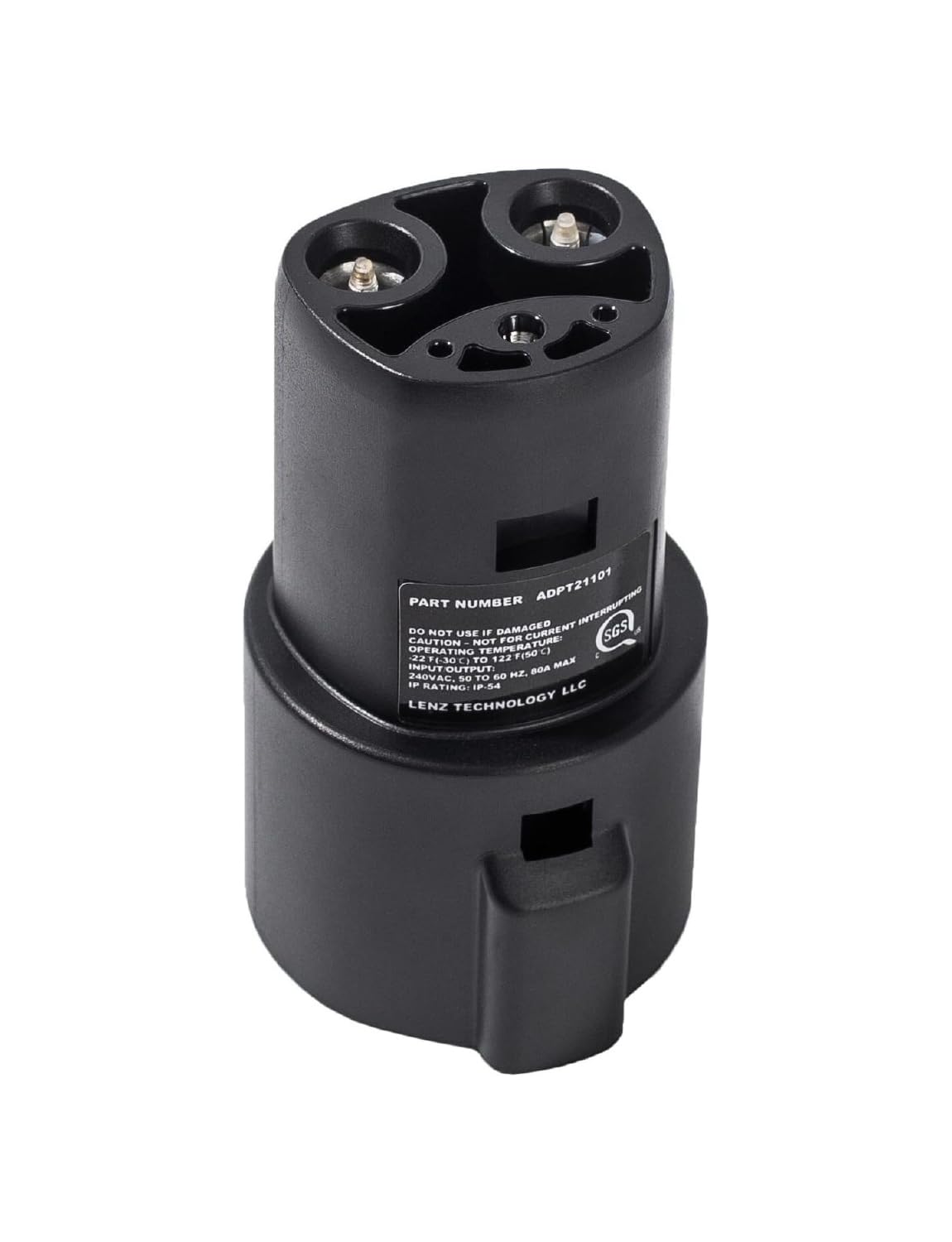
The LENZ adapter solves the opposite problem from the Lectron adapter above. It allows a compatible NACS-equipped vehicle to connect to a J1772 AC charging plug. That can be useful at workplaces, hotels, parking garages, and older public Level 2 stations where J1772 remains common.
LENZ specifies up to 80A at 240V AC, an IP54 rating, and safety testing/listing information for the adapter.
Compatibility Note
This is for AC charging only. It is not a CCS adapter and must not be used with DC fast chargers. Because NACS adoption now spans multiple vehicle brands and model years, verify your exact vehicle against the current LENZ compatibility information before ordering.
What People Say
The source review set highlighted sturdy construction, straightforward connection, and the convenience of using J1772 AC stations with a compatible NACS vehicle. As with any charging adapter, fit should be secure rather than loose or forced.
Source Review-Set Sentiment: Generally Positive

Situational Benefits
|
Situation |
How It Helps |
|---|---|
|
Workplace Charging |
It can let a compatible NACS vehicle use existing J1772 Level 2 charging equipment. |
|
Destination Charging |
Keeping the adapter in the car gives you another AC connector option when a hotel or parking location offers J1772. |
|
Mixed Charging Networks |
It reduces dependence on finding only native NACS AC connectors when compatible J1772 equipment is available. |
Who Should Buy This
It is a practical travel accessory for drivers of compatible NACS-equipped vehicles who frequently encounter J1772 Level 1 or Level 2 AC chargers.
Who Should Avoid This
Do not buy it if you need NACS-to-J1772 conversion, CCS fast charging, or Tesla Supercharger access. Verify exact vehicle support before purchase.
Key Benefits
- Connects compatible NACS-equipped vehicles to J1772 AC charging plugs
- Rated by the manufacturer for up to 80A at 240V AC
- Compact accessory for workplaces, hotels, and public Level 2 charging
Check Product Details on Amazon
Lectron CCS1-to-NACS Adapter for Compatible Tesla Vehicles

This Lectron adapter is for a different job than the AC adapters above: it connects a compatible CCS-enabled Tesla to CCS1 DC fast-charging equipment. That can add useful charging-network flexibility on road trips when a compatible CCS station is more convenient than the available alternatives.
The product is rated up to 500V and 300A, with charging advertised up to 150kW. Actual charging power depends on the vehicle, charger, battery state of charge, temperature, and other conditions.
Compatibility Note
Your Tesla must support CCS charging. Check the vehicle’s CCS adapter support information before buying. Some older vehicles may require additional hardware before a CCS adapter can work.
What People Say
The source review set highlighted the benefit of gaining access to compatible CCS charging stations, along with solid physical connection and useful travel flexibility. Compatibility errors on unsupported vehicles were the main reason to verify CCS readiness first.
Source Review-Set Sentiment: Generally Positive

Situational Benefits
|
Situation |
How It Helps |
|---|---|
|
Road Trips |
A CCS-enabled Tesla can gain another DC fast-charging option where compatible CCS1 stations are available. |
|
Network Flexibility |
More connector options can make route planning easier when charging networks vary by location. |
|
Backup Charging Option |
Keeping a compatible adapter in the vehicle can provide another option when your preferred charging site is busy or unavailable. |
Who Should Buy This
Consider it if you own a Tesla with confirmed CCS adapter support and regularly travel through areas with useful CCS1 fast-charging coverage.
Who Should Avoid This
Skip it if your Tesla does not support CCS charging or if you are looking for an AC J1772/NACS adapter. It is a DC fast-charging accessory with a specific compatibility requirement.
Key Benefits
- Adds compatible CCS1 DC fast-charging access for CCS-enabled Tesla vehicles
- Rated up to 500V and 300A
- Compact enough to carry as a road-trip charging accessory
Check Product Details on Amazon
Lectron Tesla/NACS AC Extension Cable

If a compatible Tesla/NACS AC charging cable reaches your driveway but not the vehicle’s charge port, this 20-foot extension addresses the placement problem without changing the charger location. It is rated for up to 48A at 240V AC.
This is most useful for home, destination, or temporary AC charging layouts where the installed cable is simply too short.
Critical Safety Note
This extension is not for Tesla Superchargers or other DC fast-charging stations. Use it only with compatible AC charging equipment and within its stated electrical rating. Keep connectors fully seated and stop using the cable if you notice damage, abnormal heat, looseness, discoloration, or other signs of deterioration.
What People Say
The source review set focused on the substantial extra reach, heavy construction, and usefulness in awkward parking layouts. Some users noted that handling a thicker 20-foot cable takes more storage space than a small adapter.
Source Review-Set Sentiment: Generally Positive

Situational Benefits
|
Situation |
How It Helps |
|---|---|
|
Garage Offset |
The extra 20 feet can help a compatible AC charger reach a vehicle parked farther from the wall connector. |
|
Driveway Parking |
It gives you more flexibility when the normal charging cable cannot comfortably reach the charge port. |
|
Travel |
It can be useful at rentals or destinations where compatible AC charging equipment is installed in an inconvenient position. |
Who Should Buy This
It is useful when your main problem is physical reach and you already have compatible Tesla/NACS AC charging equipment.
Who Should Avoid This
Do not buy it for Supercharger use, CCS fast charging, or as a substitute for correcting unsafe household wiring or an improperly installed EVSE.
Key Benefits
- Adds 20 feet of reach to compatible Tesla/NACS AC charging setups
- Rated for up to 48A at 240V
- Useful for garages, driveways, rentals, and awkward parking layouts
Check Product Details on Amazon
Emporia Vue 3 Home Energy Monitor
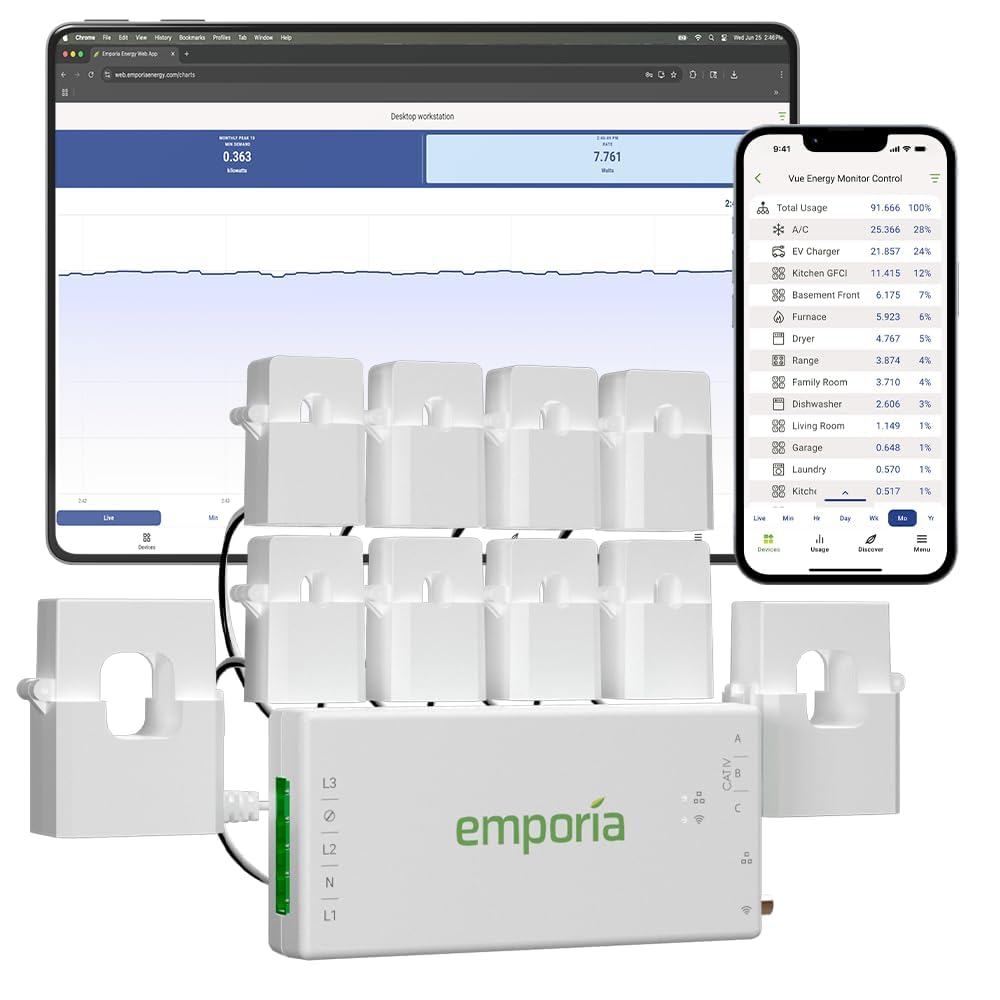
The Emporia Vue 3 is the most useful option here if your question is not “Which connector do I need?” but “How much electricity is my EV charging actually using?” The monitor installs in the electrical panel and can track whole-home usage plus selected branch circuits through current sensors.
The linked 8-sensor configuration is useful for households that want to track an EV charger alongside other major circuits such as HVAC, water heating, or solar equipment.
Installation Note
This is panel-mounted electrical equipment, not a plug-in gadget. Follow the manufacturer instructions and use a licensed electrician or other qualified professional if you are not trained and comfortable working inside an electrical panel.
What People Say
The source review set emphasized useful circuit-level data, app visibility, and the ability to understand where household electricity is going. Installation complexity is the main tradeoff compared with a simple plug-in meter.
Source Review-Set Sentiment: Generally Positive

Situational Benefits
|
Situation |
How It Helps |
|---|---|
|
Home EV Charging |
A dedicated sensor can show how much electricity the EV charging circuit uses over time. |
|
Time-of-Use Rates |
Usage data can help you compare charging schedules against your utility’s rate structure. |
|
Solar Monitoring |
Supported configurations can help track consumption and solar production or net-metering behavior. |
Who Should Buy This
Choose it if you want ongoing whole-home and circuit-level energy data rather than a one-time plug-in measurement.
Who Should Avoid This
It may be excessive if you only need a quick reading from one ordinary 120V appliance or you do not want equipment installed inside your electrical panel.
Key Benefits
- Tracks whole-home and selected circuit-level electricity use
- Useful for monitoring an EV charging circuit alongside other major loads
- App-based historical data can make charging-cost estimates easier
Check Product Details on Amazon
Spigen DuraPro

The Spigen DuraPro is designed to protect a compatible charging cable where it passes beneath a garage door. Instead of letting the door seal or edge press directly against the cable jacket, the protector creates a shaped channel around the cable.
This can be a simple solution when the vehicle parks outside but the charging equipment remains inside the garage.
Compatibility Note
Spigen’s current product information specifically identifies the Tesla Mobile Connector. Do not assume universal cable compatibility. Check your cable dimensions and the current product fitment information before ordering.
What People Say
The source review set highlighted simple setup and useful protection against repeated garage-door contact. The main limitation is that fit and door sealing can vary depending on the cable, threshold, floor, and garage-door seal.
Source Review-Set Sentiment: Generally Positive

Situational Benefits
|
Situation |
How It Helps |
|---|---|
|
Nightly Home Charging |
It helps keep a compatible cable from taking direct pressure from the garage door during repeated use. |
|
Vehicle Parked Outside |
You can route a compatible charging cable from equipment inside the garage toward a vehicle outside. |
|
Temporary Setup |
It can provide cable protection without immediately modifying the garage wall or door structure. |
Who Should Buy This
It makes the most sense for Tesla Mobile Connector users who routinely run the charging cable underneath a compatible garage door.
Who Should Avoid This
Skip it if your cable does not match the supported dimensions or if the protector prevents your garage door from closing safely and correctly.
Key Benefits
- Helps protect a compatible charging cable from garage-door pressure and abrasion
- Simple, removable design with no electrical installation
- Useful when charging a vehicle outside from equipment kept inside the garage
Check Product Details on Amazon
Cable Shield

Cable Shield is another garage-door pass-through option, using a heavy rubber body that slides over a compatible charging cable and takes the contact from the door instead of the cable jacket.
The linked Large version is designed for compatible EV charging cables and is made in the USA. The manufacturer notes that cable size matters, so measure before ordering rather than assuming every charging cord fits the same protector.
Fitment Note
The Large version is intended for cables up to roughly 0.75 inch thick. Larger cables may require another size. Depending on your garage door and floor, a small gap may remain while the protector is in place.
What People Say
The source review set highlighted sturdy construction, straightforward installation, and useful protection against repeated door contact. Tight fit on larger cables and the possibility of a visible door gap were the main limitations.
Source Review-Set Sentiment: Generally Positive

Situational Benefits
|
Situation |
How It Helps |
|---|---|
|
Nightly Home Charging |
It helps prevent the garage door from pressing directly against a compatible charging-cable jacket. |
|
Repeated Cable Routing |
A dedicated protector can reduce repeated abrasion at the same threshold location. |
|
Non-Permanent Setup |
It provides a tool-free option before considering a permanent wall pass-through or other structural change. |
Who Should Buy This
Consider it if your charging cable fits the selected Cable Shield size and regularly passes beneath a garage door.
Who Should Avoid This
Choose another approach if your cable exceeds the supported diameter, the door cannot close correctly with the protector installed, or the setup creates a trip or pinch hazard.
Key Benefits
- Protects compatible cable jackets from direct garage-door contact
- Tool-free rubber design that stays on the cable
- Made in the USA and available in size-specific versions
Check Product Details on Amazon
FAQ
How Do I Pick The Right EV Charging Adapter?
Start with the connector on the charging equipment and the inlet on your vehicle. A NACS-to-J1772 adapter lets a J1772-equipped vehicle use a compatible NACS AC source. A J1772-to-NACS adapter lets a compatible NACS-equipped vehicle use J1772 AC equipment. They are not interchangeable.
Then confirm whether you are dealing with AC Level 1/Level 2 charging or DC fast charging. Never assume an AC adapter works on a DC station simply because the connector appears related.
Can I Use An AC Charging Adapter At A Tesla Supercharger?
Not unless the specific adapter, vehicle, and charging network explicitly support that DC fast-charging use. The Lectron NACS-to-J1772 adapter, LENZ J1772-to-NACS adapter, and Lectron 20-foot extension in this roundup are AC-charging accessories and should not be treated as Supercharger adapters.
How Do I Know Whether A Tesla Supports A CCS Adapter?
Confirm CCS adapter support in the vehicle’s current system information before buying. Physical connector fit alone is not enough. Some older Tesla vehicles may need hardware changes before CCS charging is supported.
Are EV Charging Extension Cables Safe?
Use only an extension specifically designed and rated for the charging equipment involved. Stay within its voltage and current ratings, keep connectors fully seated, and never use an AC extension on a DC fast-charging station unless the manufacturer explicitly designed it for that use.
Stop charging and inspect the equipment if a connector becomes abnormally hot, loose, discolored, cracked, damaged, or difficult to insert. An extension should not be used to compensate for unsafe household wiring or an improperly installed circuit.
Can I Use The Kill A Watt With A Level 2 EV Charger?
No. The P3 P4400 Kill A Watt is a 115VAC plug-in meter with a maximum specified voltage of 125V. A typical 240V Level 2 charging circuit is outside its intended voltage range.
Should I Choose A Plug-In Meter Or A Whole-Home Energy Monitor?
Choose a plug-in meter when you want a simple reading from compatible 120V equipment. Choose a panel-mounted monitor such as the Emporia Vue 3 when you want ongoing whole-home or circuit-level information, including data from a dedicated EV charging circuit.
Do I Need An Electrician For The Emporia Vue 3?
The Vue 3 installs inside an electrical panel. If you are not trained and comfortable working around energized electrical equipment, use a licensed electrician or another qualified professional and follow the manufacturer’s installation instructions.
Will Any Garage-Door Cable Protector Fit My EV Charger?
No. Cable diameter and protector design matter. The Spigen DuraPro has specific compatibility guidance, while Cable Shield is offered in size-specific versions. Measure your cable and confirm the manufacturer’s current fitment information before ordering.
Customer Preferences
The most important buying factors are compatibility, charging type, electrical rating, and safety. First identify whether you need NACS-to-J1772, J1772-to-NACS, CCS1-to-NACS, extra AC cable reach, energy monitoring, or physical cable protection. Then compare portability, installation requirements, weather exposure, manufacturer documentation, and the limitations of each accessory.
A good charging accessory should solve one specific problem without creating another. Avoid buying based only on amperage, connector shape, or a product photo.

Wrapping Up
Start with the charging problem you actually need to solve. If you drive a J1772 EV and want access to compatible Tesla/NACS AC equipment, the Lectron NACS-to-J1772 adapter is the relevant direction. If your vehicle has a compatible NACS inlet and you want to use J1772 AC chargers, look at the LENZ adapter instead.
For a CCS-enabled Tesla, the Lectron CCS adapter can add compatible CCS1 DC fast-charging options. If reach is the problem rather than connector type, the Lectron 20-foot extension is designed for compatible Tesla/NACS AC charging and should not be used at Superchargers.
For home energy data, the Kill A Watt is the simpler 120V plug-in tool, while the Emporia Vue 3 is the more capable choice for ongoing circuit-level monitoring. And if your cable passes underneath a garage door, Spigen DuraPro or Cable Shield can help protect a properly fitted charging cable from repeated physical contact.
Final rule: verify connector direction, AC versus DC charging type, vehicle compatibility, and electrical ratings before ordering any EV charging accessory.
| Product Name | Image | Best For | Key Supported Specs | Main Limitation | Warranty / Support |
|---|---|---|---|---|---|
| Lectron NACS-to-J1772 EV Charging Adapter |
|
J1772 EVs using compatible Tesla/NACS AC charging equipment | Up to 48A, 240V AC; NACS-to-J1772; UL 2251 certification information published by manufacturer | Not for Tesla Superchargers or DC fast charging | Check current manufacturer and Amazon terms |
| P3 P4400 Kill A Watt Electricity Usage Monitor |
|
Compatible 120V plug-in energy measurements | 115VAC operating voltage; 125V max; 15A max; 1,875VA max | Not for 240V Level 2 EV charging | Check current manufacturer and Amazon terms |
| LENZ J1772-to-NACS Adapter |
|
Compatible NACS-equipped vehicles using J1772 AC chargers | Up to 80A, 240V AC; IP54; safety testing/listing information published by LENZ | AC only; exact vehicle/model-year compatibility should be confirmed | 2-year manufacturer warranty stated by LENZ |
| Lectron CCS1 Adapter for Compatible Tesla Vehicles |
|
CCS-enabled Tesla vehicles using compatible CCS1 DC fast chargers | Up to 500V, 300A; advertised charging capability up to 150kW | Vehicle must support CCS; actual charging rate varies | Check current manufacturer and Amazon terms |
| Lectron Tesla/NACS AC Charger Extension Cable |
|
Adding reach to compatible Tesla/NACS AC charging equipment | 20-foot extension; up to 48A, 240V AC | Not compatible with Tesla Superchargers or DC fast charging | Check current manufacturer and Amazon terms |
| Emporia Vue 3 Home Energy Monitor |
|
Whole-home and EV charging circuit monitoring | Linked configuration includes 8 branch-circuit sensors; supports app-based energy monitoring | Installs inside an electrical panel | 1-year manufacturer warranty |
| Spigen DuraPro Cable Garage Door Pass Protector |
|
Protecting a compatible Tesla Mobile Connector cable beneath a garage door | Physical cable protector; removable pass-through design | Do not assume universal EV-cable fit | Check current Spigen and Amazon terms |
| Cable Shield EV Cable Protector |
|
Garage-door protection for a correctly sized EV charging cable | Rubber construction; tool-free installation; Large version fits cables up to about 0.75 inch thick | Measure cable first; a small garage-door gap may remain | Check current manufacturer and Amazon terms |