Traveling with two little ones often means bringing more gear than you would like, and a double stroller can be one of the biggest items on your list. The good news is that most airlines allow strollers, but double stroller rules depend on the airline, folded size, weight, aircraft space, and whether you check it at the counter or use gate-checking procedures. A little planning before you fly can help you avoid delays, surprise rules, and stressful airport moments.
Quick Answer
Yes, you can usually bring a double stroller on an airplane, but most full-size double strollers must be gate-checked or checked at the ticket counter. Small, compact, foldable models may be accepted more easily, but airline rules vary, so measure your stroller and confirm the policy before travel.
Key Takeaways
- Most airlines allow at least one stroller per child, but double strollers are often too large for cabin storage.
- Gate-checking is the most common option for double strollers because they usually exceed standard carry-on dimensions.
- Always check your airline’s stroller size, weight, and baggage rules before you arrive at the airport.
- Use a stroller bag, remove loose accessories, and label the stroller to reduce the risk of damage or confusion.
- A baby carrier or compact travel stroller can be a helpful backup during delays, layovers, or long walks through terminals.
Common Challenges When Flying With Strollers

Flying with a double stroller can be a hassle, especially if you are not prepared for the challenges that come with it.
The biggest issue is size. Many double strollers are wider, longer, and heavier than single strollers, so they may not fit in the overhead bin or meet carry-on stroller limits. That usually means you will need to gate-check the stroller or check it at the ticket counter.
Gate-checking is convenient because you can use the stroller through most of the airport, but it also means the stroller will be handled by airline staff and stored with other checked items. This can increase the chance of scratches, bent wheels, missing cup holders, or fabric damage.
Another common problem is confusion at the airport. Some airline staff may treat a double stroller as one child item, while others may ask questions about size, weight, or whether it folds compactly. Rules can also change depending on the aircraft, airport, and available storage space.
To make the process easier, arrive early, ask about family boarding options, and confirm where you should pick up the stroller after landing. These simple travel tips can help you manage boarding while keeping your children comfortable and secure.
Pro Tip: Take a quick photo of your double stroller before checking it. If it gets damaged, the photo can help show its condition before the flight.
General Airline Policies for Strollers and Car Seats
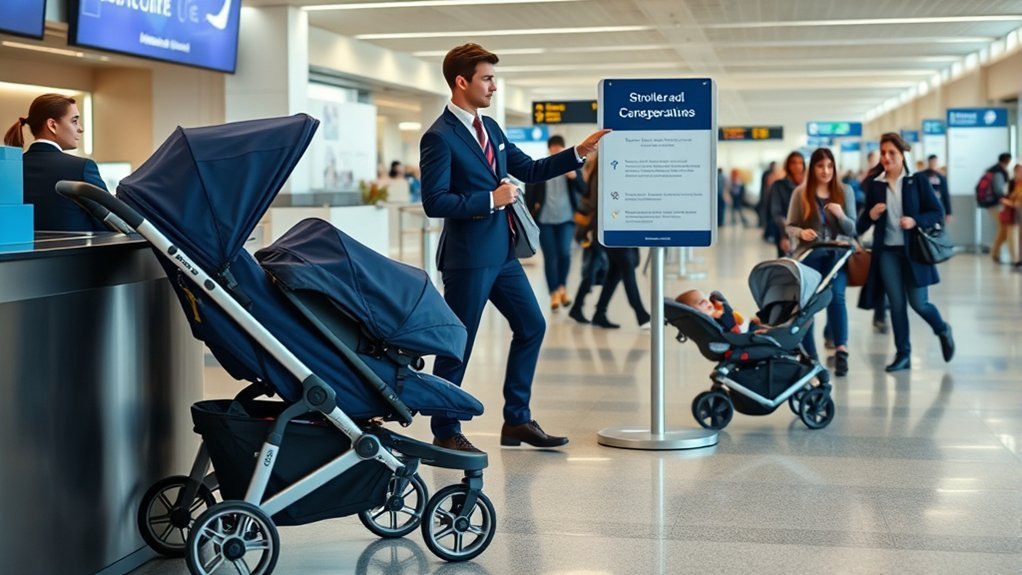
When traveling with little ones, understanding general airline policies for strollers and car seats can make your journey smoother. Most airlines allow you to check one stroller and one car seat per child for free, and these items usually do not count toward your standard baggage allowance.
However, double strollers often need to be gate-checked or checked at the ticket counter because they are larger than compact travel strollers. It is important to verify your airline’s specific policy before travel because rules can vary by carrier, route, aircraft, and airport staff instructions.
Here is a quick reference to help you plan:
| Policy Aspect | Details |
|---|---|
| Free Items | Many airlines allow one stroller and one car seat per child at no extra charge |
| Standard Carry-On Size | Often around 22 x 14 x 9 inches, but airline limits vary |
| Double Strollers | Usually allowed, but may require gate-checking or counter check-in |
| Early Arrival | Recommended so you can confirm check-in, tags, boarding, and pickup rules |
| Airline Variations | Always check the specific airline rules before your flight |
Size and Weight Considerations

Understanding size and weight rules for double strollers can make a big difference in your travel experience.
Many airlines use carry-on size limits near 22 x 14 x 9 inches, but those measurements are usually designed for standard cabin bags or very compact strollers. Most full-size double strollers exceed those dimensions when folded, which means they often need gate-checking or counter check-in.
Weight can matter too. A heavy double stroller may be harder to lift onto shuttle buses, into rideshare vehicles, through security screening, or up jet bridge ramps. Even when the airline allows the stroller, you still need to manage it while carrying diaper bags, snacks, passports, toys, and tired children.
Before flying, measure your stroller when fully folded, including wheels, trays, canopies, and handles. If removable parts stick out, take them off before checking the stroller and pack them in your carry-on or checked bag.
For easier travel, consider lightweight or umbrella-style double stroller options designed for airport use. Mastering effective folding techniques before travel can also help you move through check-in, security, and boarding with less stress.
Note: Measure the stroller yourself instead of relying only on product listings. Accessories, snack trays, wheel position, or an attached organizer can change the real folded size.
Bringing Car Seats on Board: What You Need to Know
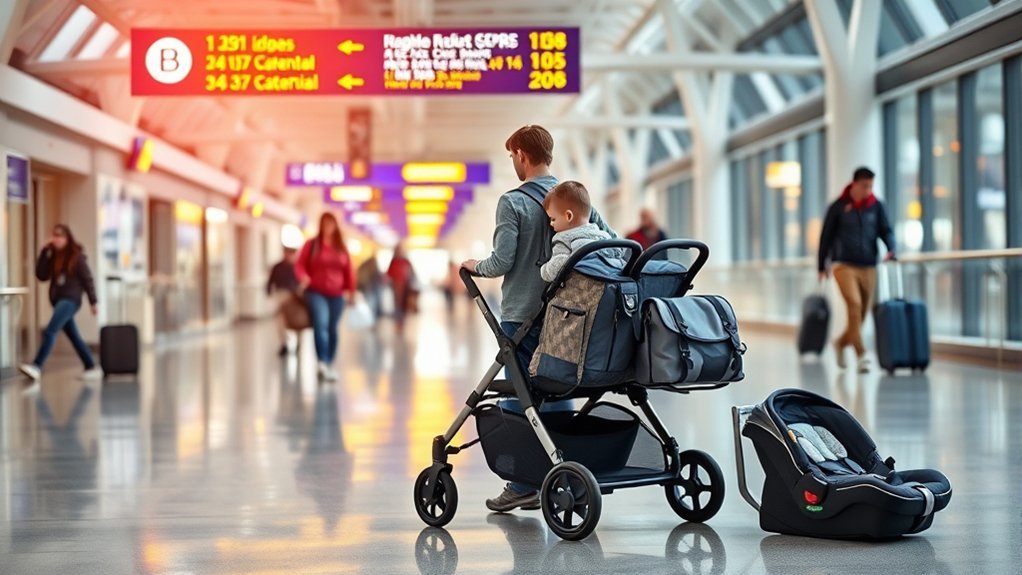
For families traveling with little ones, understanding the rules around bringing car seats on board can greatly improve your flying experience.
Most airlines require an approved child restraint system if you plan to use a car seat on the aircraft. Look for wording on the car seat label that says it is certified for use in motor vehicles and aircraft. If the seat does not have the correct label, airline staff may not allow it to be used on board.
You will usually need to install the car seat in a window seat so it does not block another passenger’s access to the aisle. Some airlines may also restrict car seats in exit rows, premium seats with airbags, or certain narrow aircraft seats.
Remember, you can often check one car seat per child for free, and this usually does not affect your baggage allowance. Still, you should verify your airline’s exact policy before flying because car seat rules can differ.
For added convenience, consider using an integrated car seat-stroller combination or a travel cart made for car seats. This can make the trip from parking lot to gate smoother and improve comfort for your family.
Warning: Do not assume every car seat can be used on a plane. Check the approval label before travel and confirm your airline’s child restraint rules before boarding day.
Size Restrictions for Strollers and Car Seats: A Comprehensive Guide
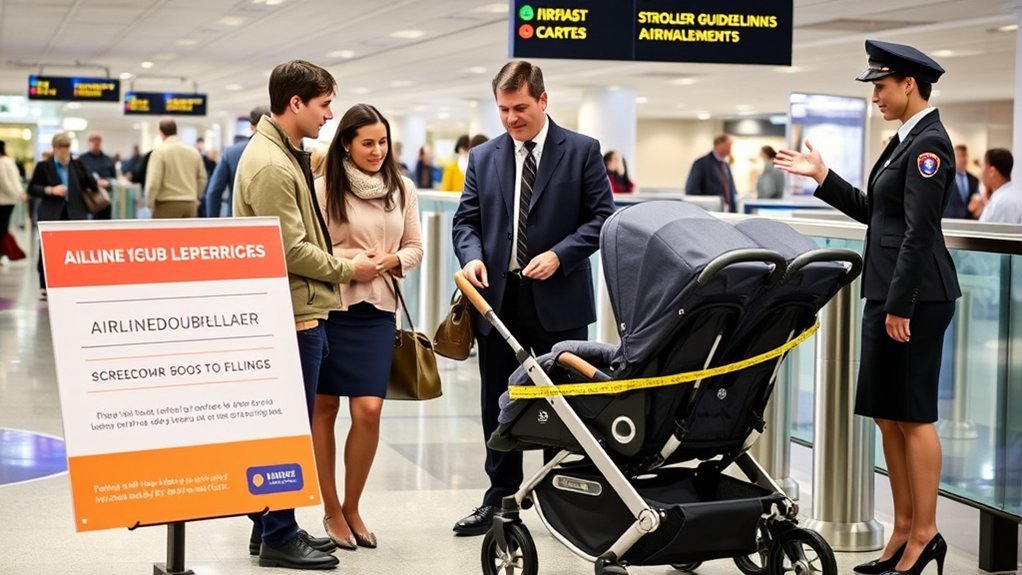
Understanding size restrictions for strollers and car seats is essential for a smooth travel experience with your little ones.
Many airlines allow standard strollers to be checked or gate-checked, while only very compact models may fit cabin storage. Double strollers are more likely to exceed carry-on limits, so you should plan for gate-checking unless your airline clearly says your model can be carried on.
Car seats are different from strollers. A car seat used on board must fit safely in the aircraft seat and meet airline requirements. Many aircraft seats are narrower than car seats used in larger vehicles, so check the car seat width before travel. A seat around 16 to 18 inches wide is often easier to manage, but exact fit depends on the aircraft and airline.
Airlines usually permit one stroller and one car seat per child free of charge, but double stroller allowances are not always written the same way. Some airlines focus on the number of child items, while others focus on size and weight.
Measuring your stroller, checking the car seat label, and confirming airline guidelines before travel can help protect your travel safety and prevent last-minute stress at the airport.
Types of Strollers Allowed by Airlines: What You Should Know
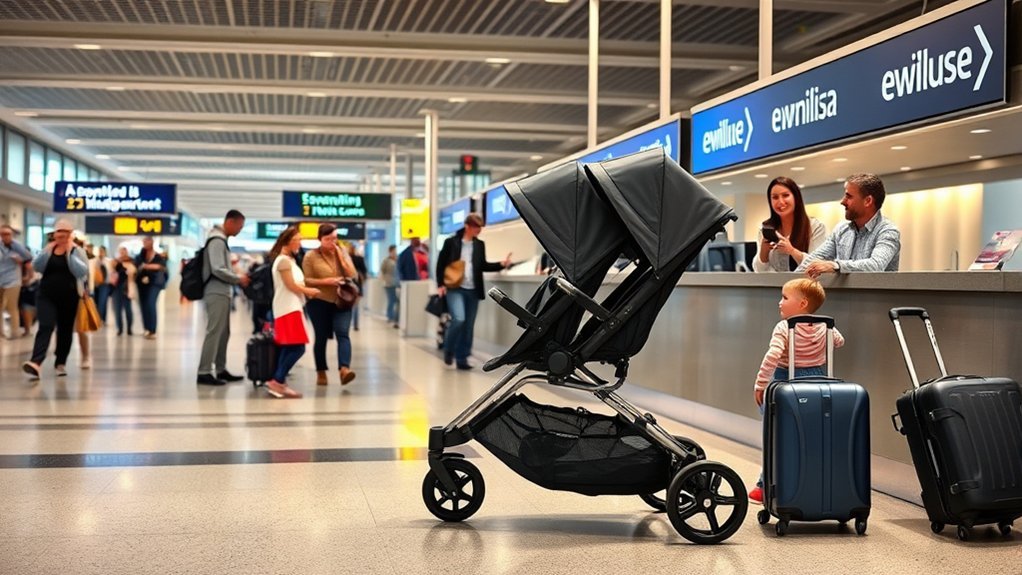
When it comes to bringing a stroller on a plane, understanding the differences between single and double strollers is essential.
Each airline has specific size limitations and policies that can impact your travel experience. Before you head to the airport, make sure you know your stroller type, folded size, weight, and the guidelines for your airline.
Single vs. Double Strollers
Traveling with children often means making choices about the right stroller, and deciding between a single and double stroller can significantly impact your journey.
Single strollers offer advantages like lightweight design and easier maneuverability, making them ideal for solo outings or crowded airports. Compact single travel strollers are also more likely to fit airline cabin limits.
However, if you have multiple children, a double stroller may feel like the best choice. It can keep both kids seated, reduce arguments over turns, and give you one place to store small travel items.
Keep in mind that double strollers have disadvantages, such as size restrictions, heavier frames, wider wheels, and more frequent gate-checking. Many airlines enforce strict guidelines around folded dimensions, so it is smart to choose a lightweight, easily foldable model when possible.
Always check your airline’s policies to help guarantee a smoother boarding process and enjoy your travel experience with less stress.
Side-by-Side vs. Tandem Double Strollers
Double strollers usually come in two main styles: side-by-side and tandem. Side-by-side strollers place both children next to each other, which can be comfortable for kids but harder to move through narrow airport lines, jet bridges, and restroom doors.
Tandem strollers place one child in front of the other. They are usually narrower, which can make airport navigation easier, but they may be longer when folded. Some tandem strollers also have removable seats, which can help when you need a more compact fold.
If you fly often, look for a double stroller that folds quickly, locks shut, stands on its own, and has fewer removable accessories. These features make gate-checking and airport handling much easier.
Size Limitations and Guidelines
Managing the size limitations and guidelines for bringing a double stroller on an airplane can be tricky, especially since each airline has its own policies.
Most airlines allow one stroller per child free of charge, but double strollers often exceed standard cabin dimensions of around 22 x 14 x 9 inches when folded. This means you may need to gate-check your stroller.
Some airlines do permit small, collapsible double strollers as carry-on or gate-checked items, but it is important to verify these details in advance.
For smoother travel preparations, always check with your airline about their specific requirements regarding weight and dimensions to avoid surprises at the airport.
Being informed helps you travel more confidently with your little ones.
Airline-Specific Policies Overview
Understanding the airline-specific policies for bringing a double stroller can save you time and headaches at the airport.
Most airlines allow one stroller per child to be checked for free, but if your double stroller exceeds size limits, you may need to gate-check it or check it at the counter.
For example, Delta may require larger strollers to be checked if they exceed carry-on-style dimensions. Southwest commonly allows stroller check-in for families and offers family boarding, which can make travel easier with children. Alaska Airlines generally accepts strollers but encourages travelers to confirm size details in advance. United also permits stroller checking, but size and weight restrictions can still apply.
Because airline rules can change, the safest step is to check your airline’s current stroller policy before leaving for the airport. Keep these travel tips in mind for smoother airline safety and less stressful family travel.
How to Prepare a Double Stroller Before Your Flight
Preparing your double stroller before you reach the airport can save time and reduce damage risk. Start by cleaning out baskets, pockets, snack trays, cup holders, toys, and loose accessories. Anything that can fall off should be removed or secured.
Next, practice folding the stroller at home. You should be able to fold it quickly while holding a child’s hand or standing in a busy gate area. If the stroller has a latch, strap, or lock that keeps it folded, make sure it works before travel day.
Add a luggage tag with your name, phone number, and email address. You can also place a second tag inside the stroller bag in case the outside tag comes off.
If you own a stroller travel bag, use it. A padded bag gives more protection, while a bright-colored bag makes the stroller easier to spot after landing. If you do not have a bag, consider using a simple gate-check bag to protect the fabric from dirt and scratches.
At a Glance
| Time Required | 10 to 20 minutes before leaving for the airport |
| Difficulty | Easy, if you practice folding the stroller in advance |
| Tools Needed | Measuring tape, luggage tag, stroller bag, and phone camera |
| Cost | Usually free to check, but a stroller travel bag may cost extra |
Gate-Checking vs. Ticket Counter Checking
When flying with a double stroller, you usually have two main options: gate-checking or checking it at the ticket counter.
Gate-checking lets you use the stroller through the airport until you reach the boarding area. This is helpful if your children get tired, if you have a long walk between terminals, or if you need storage for small items. The stroller is usually tagged at the gate and returned either at the aircraft door, jet bridge, or baggage claim, depending on the airline and airport.
Ticket counter checking means you hand over the stroller when you check your bags. This can be easier if the stroller is very large or heavy, but you will need another way to carry or guide your children through security, boarding, layovers, and arrival.
For most families, gate-checking a double stroller is the more practical choice. Still, if you have a very bulky model, a stroller bag, or a long international route with multiple aircraft changes, counter checking may reduce the amount of stroller handling you need to manage yourself.
Family Boarding Options: Making Travel Easier With Young Children
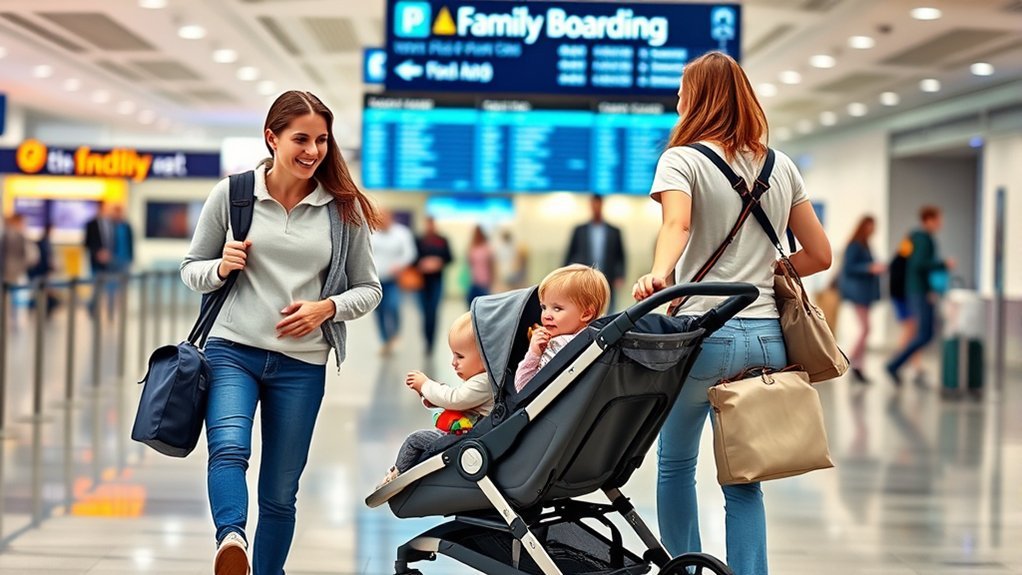
When you are flying with young children, taking advantage of family boarding options can greatly ease your travel experience.
Many airlines allow families with young children to board before general boarding or during a designated family boarding group. This gives your family a smoother and less hectic start and gives you extra time to fold the stroller, install a car seat, organize carry-ons, and settle your children.
Family boarding can give you extra time to fold your stroller, manage children safely, and get seated before the busiest part of boarding begins.
Some airlines may require you to request family boarding at check-in or at the gate, so keep that in mind. Arriving early and listening for announcements can help you make the most of these benefits.
If you are traveling with a child under 2, you may be able to use priority or family boarding, depending on the airline. These travel tips can make the journey easier with young kids.
Travel Systems for Convenient Airport Navigation: A Parent’s Perspective
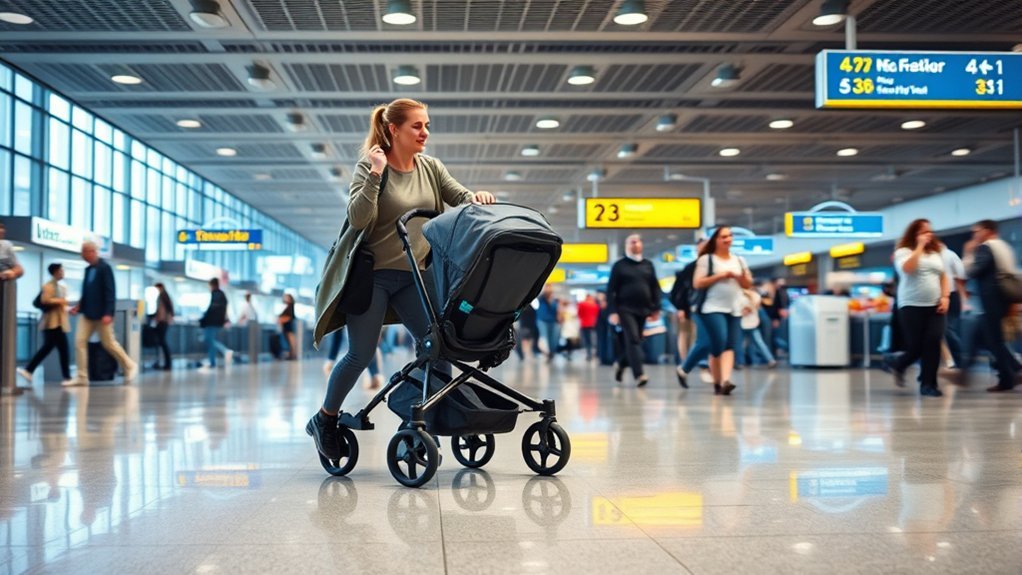
When you are managing an airport with little ones, a travel system can make all the difference.
These streamlined options can save space and provide easier transitions between your car, the airport, and the plane.
Streamlined Travel Experience
Navigating an airport with a double stroller can feel overwhelming, but using a travel system designed for convenience can make it much easier.
Here are some travel tips for a streamlined experience:
- Seamless Changes: Travel systems combining a car seat and stroller let you move from car to airport with less hassle.
- Lightweight Options: Compact strollers, such as travel-friendly lightweight models, are easier to fold, carry, and gate-check.
- Family Boarding: Take advantage of family boarding options when available so you can settle in with less pressure.
Space-Saving Design Features
Navigating an airport with little ones in tow can be challenging, but a travel system designed with space-saving features can make a big difference.
These travel systems, combining a car seat and stroller, streamline your journey from car to gate. Thanks to space-saving designs, many are lightweight and fold easily, making them easier to gate-check or store when allowed.
Their compact stroller designs allow for smoother movement through crowded terminals, security lines, and boarding areas. Plus, integrated storage compartments keep essential items like snacks and toys handy, reducing extra carry-on hassle.
If you are managing multiple children, the ability to use a travel system as a double stroller adds even more convenience, helping create a smoother travel experience.
Easy Transition Solutions
Finding your way through an airport with young children can feel overwhelming, but using a travel system that combines a car seat and stroller makes transitions smoother and more manageable.
Here are some airport navigation tips to keep in mind:
- Choose Lightweight Models: A compact system allows easier folding and carrying, which is important during quick gate changes.
- Use Gate-Check Options: Verify your airline’s stroller rules so you know whether you can gate-check your double stroller.
- Consider Backup Solutions: A baby carrier can be a lifesaver in crowded spaces, freeing your hands to manage luggage while keeping your child close.
With these strategies, airport travel becomes much easier to manage.
Backup Options During Travel Delays: Keeping Your Child Comfortable
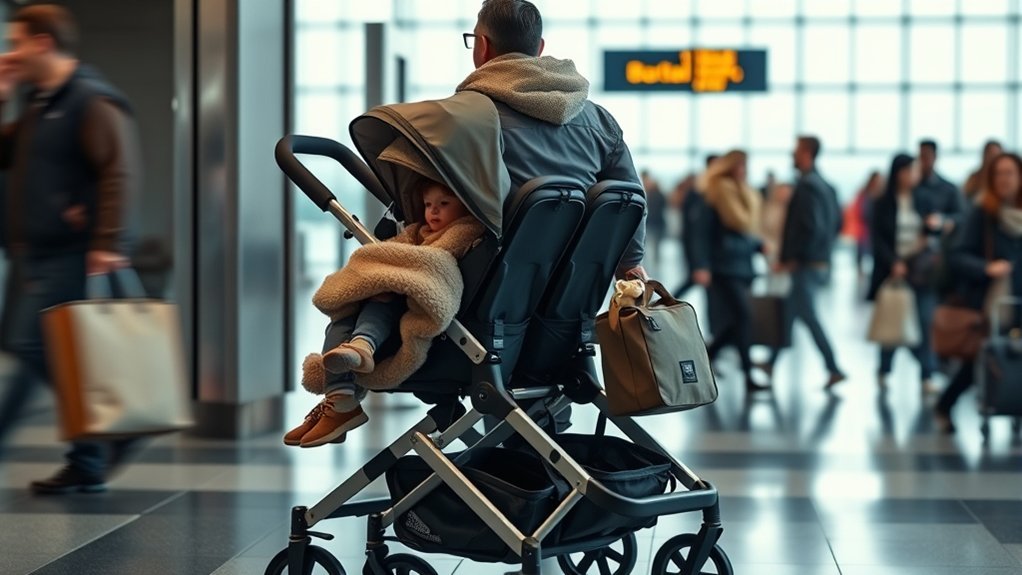
When travel delays happen, keeping your child comfortable can feel challenging, but a few smart backup options can make the experience manageable.
Lightweight baby slings or soft-structured backup carriers let you move through crowded airports hands-free while keeping your little one secure. Pack essential comfort items like snacks, toys, wipes, diapers, and a change of clothes in your hand luggage to keep your child comfortable during unexpected waits.
A wrap carrier can also help when your stroller has already been checked or when a gate area is too crowded to move around easily.
If you find yourself waiting longer than expected, consider bringing a portable blanket or small pillow for extra coziness. Familiar items, such as a stuffed animal or blanket, can ease anxiety and provide reassurance during long layovers.
For older toddlers, pack quiet activities such as sticker books, washable crayons, small puzzles, or downloaded shows with headphones. Keeping children busy can make delays feel shorter and reduce stress for everyone around you.
Examples of Airline Policies Regarding Strollers and Car Seats
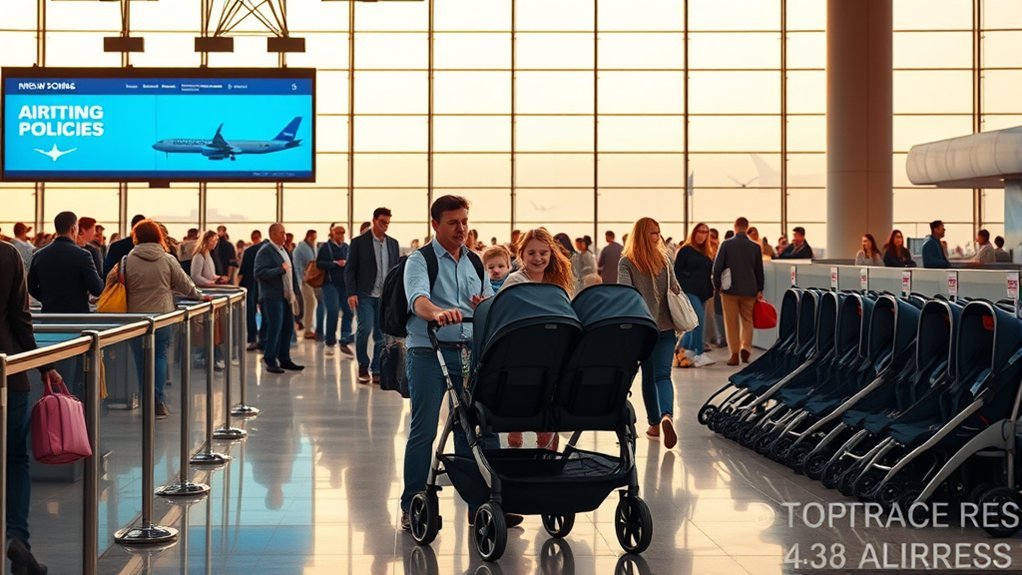
Understanding airline policies regarding strollers and car seats is essential for a smooth travel experience, especially for families with young children.
Airline stroller and car seat rules can vary by carrier, aircraft, and airport, so always confirm the current policy before you travel.
Here are some examples of airline regulations you should know:
- Delta Air Lines and United Airlines: One stroller per child is generally allowed, but double strollers may need to be checked based on size restrictions.
- Alaska Airlines: Compact strollers may be easier to manage, while larger double strollers may need to be gate-checked or checked at the counter.
- Southwest Airlines: Often offers free check-in for strollers, including double strollers, but you should still verify size limits before travel.
Always confirm your specific airline’s policy before traveling to help avoid last-minute surprises.
What to Do if Your Double Stroller Is Damaged
If your double stroller is damaged during travel, report the issue before you leave the airport whenever possible. Go to the airline baggage service desk and ask about the damage claim process.
Take clear photos of the damaged area, the gate-check tag, the baggage tag, and the whole stroller. Keep receipts if you need emergency repairs or a replacement stroller during your trip.
Airline liability rules for strollers can vary, and some airlines may treat strollers as fragile child equipment. A stroller travel bag, photos, and documentation can help you if you need to file a claim.
If your stroller is expensive or essential for your trip, consider travel insurance that covers baggage damage. Read the policy carefully because coverage limits and exclusions can differ.
Related Guides
Frequently Asked Questions
Can I use my double stroller at the airport gate?
Yes, you can usually use your double stroller at the airport gate. Most airlines allow families to use strollers through the terminal and gate-check them before boarding. Confirm the airline’s stroller policy and ask gate staff where the stroller will be returned after landing.
Are there fees for checking a double stroller?
Checking a double stroller usually does not cost extra when you are traveling with a child, but airline regulations vary. Review your airline’s current double stroller policy before your trip so you know whether it counts as a free child item or oversized baggage.
What if my stroller is damaged during travel?
If your stroller is damaged during travel, report it to the airline before leaving the airport. Take photos, keep the gate-check or baggage tag, and ask about the damage claim process. Travel insurance may also help if your policy covers stroller or baggage damage.
Can I bring a double stroller on international flights?
Yes, you can often bring a double stroller on international flights, but rules depend on the airline, route, and airport. International flights may have stricter size limits or different stroller pickup procedures, so check the policy for every airline on your itinerary.
Do airlines provide storage for strollers during layovers?
Some airlines and airports may provide stroller handling during layovers, but it is not guaranteed. Ask whether your stroller will be returned at the layover gate or sent through to your final destination. A baby carrier is a smart backup for long connections.
Should I gate-check or counter-check a double stroller?
Gate-checking is usually better if you need the stroller inside the airport. Counter-checking may be easier if your double stroller is very large, heavy, or packed in a protective travel bag. The best choice depends on your children, stroller size, and airport layout.
Can a double stroller fit in an overhead bin?
Most full-size double strollers will not fit in an overhead bin. Only very compact folding models may meet carry-on limits, and even then, approval depends on the airline and available cabin space. Plan to gate-check unless your airline confirms otherwise.
Sources
- Federal Aviation Administration — child safety and aircraft child restraint guidance
- Transportation Security Administration — airport screening guidance for traveling with children
- Delta Air Lines — children’s stroller and car seat travel information
- Southwest Airlines — family travel, stroller, and child item guidance
- United Airlines — traveling with children, strollers, and car seats
Conclusion
Bringing a double stroller on an airplane can seem intimidating, but with the right preparation, it does not have to be stressful. Most airlines allow double strollers, though larger models usually need gate-checking or counter check-in instead of cabin storage.
Before you fly, measure your stroller, check your airline’s rules, remove loose accessories, label everything, and arrive early. Travel with kids can be unpredictable, but planning ahead can turn airport chaos into a smoother, more comfortable journey for you and your little ones.