Yes, you can usually bring a stroller to the zoo. Many zoos allow personal strollers, but rules vary by location, and some indoor exhibits or attractions require stroller parking outside. A stroller can give babies, toddlers, and preschoolers a place to rest during long walks while also carrying water, snacks, diapers, sunscreen, and extra clothing. Before you go, check the zoo’s current guest-services or stroller policy, especially if you use a double stroller, stroller wagon, or oversized model.
Last updated: September 22, 2026
Quick Answer
Yes. Many zoos allow you to bring your own stroller, but individual zoo and exhibit rules still apply. Some indoor buildings require stroller parking, and stroller-wagon or oversized-stroller policies can differ. Check the zoo’s official policy before your visit. If you do not want to bring your own stroller, many zoos also offer rentals while supplies last.
Key Takeaways
- Many zoos allow personal strollers, but rules can differ by zoo and by exhibit.
- Some indoor exhibits, rides, or narrow areas require stroller parking outside.
- Strollers give young children a place to rest and provide storage for family essentials.
- Rental strollers, wagons, wheelchairs, or mobility scooters may be available, often while supplies last.
- Check double-stroller and stroller-wagon rules before arriving because wider or oversized equipment may have additional restrictions.
At a Glance
| Best For | Babies, toddlers, preschoolers, and families expecting a long day of walking |
| Best Stroller Type | Compact and maneuverable for crowded paved paths; larger-wheel or all-terrain models can be easier on rougher surfaces |
| Main Benefit | A resting place for young children plus convenient storage for essentials |
| Before You Go | Check personal-stroller rules, stroller-wagon rules, stroller parking, rental availability, terrain, and restricted exhibits |
Can You Bring a Stroller to the Zoo?
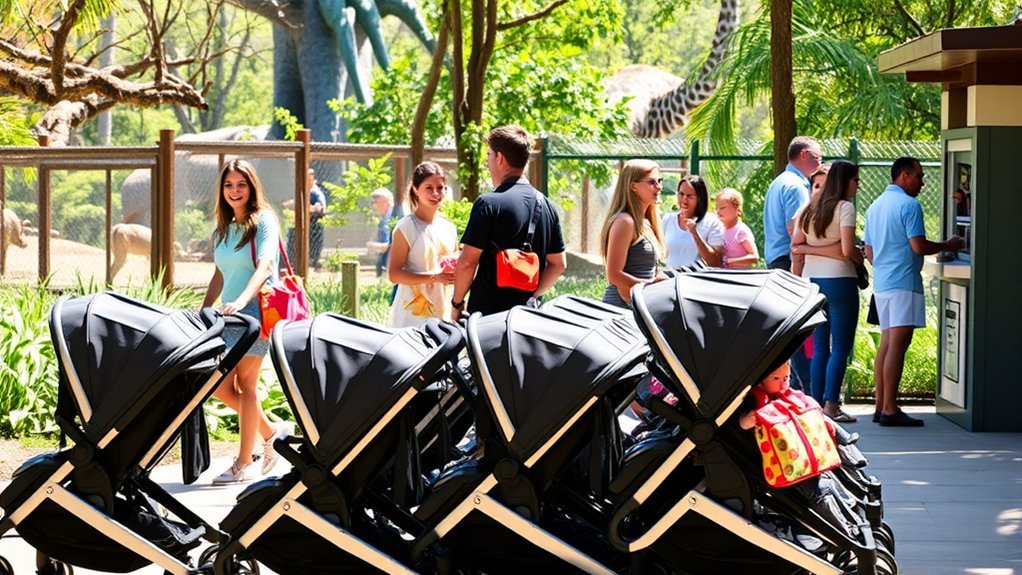
Many zoos allow visitors to bring their own strollers. For example, the San Diego Zoo Safari Park says visitors are welcome to bring their own stroller, and Henry Vilas Zoo welcomes personal strollers and wagons.
That does not mean a stroller can enter every space. The Bronx Zoo requires stroller parking at many indoor exhibits and attractions, while the Philadelphia Zoo notes that some buildings and exhibit areas are not stroller-accessible. Rules may also change for special events, crowded periods, or specific attractions.
If you prefer not to bring a stroller from home, many zoos offer rentals. Rental availability, stroller type, price, identification requirements, deposits, and return rules vary by location, and equipment is often offered while supplies last. For more rental-specific planning, see Can You Rent a Stroller at the Zoo?
| Option | Main Advantages | Main Tradeoffs |
|---|---|---|
| Bring your own stroller | Your child already knows it; you control storage, recline, canopy, and fit; availability is guaranteed | You must transport it from home, the car, hotel, or transit |
| Rent at the zoo | You can travel lighter and avoid transporting a stroller to the entrance | Inventory, stroller type, comfort, price, deposit rules, and availability vary |
Before you leave home: Check the official zoo website for personal-stroller rules, stroller-wagon restrictions, rental availability, stroller parking, and any exhibits that require you to leave the stroller outside.
Benefits of Bringing a Stroller
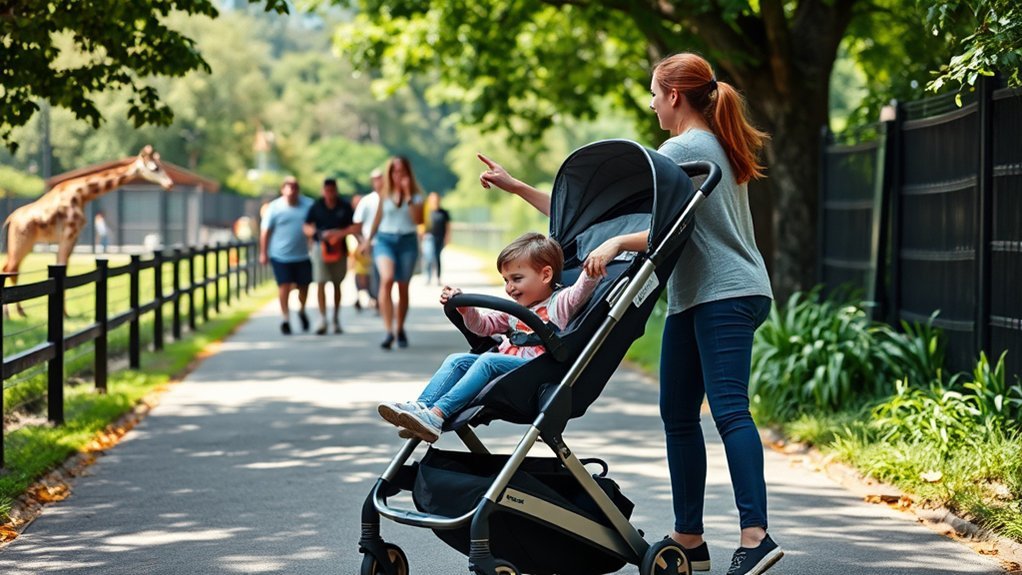
A zoo visit can involve several hours of walking, standing, waiting, and moving between habitats. A stroller gives a young child the option to walk when interested and ride when tired. It also keeps frequently used items together instead of requiring an adult to carry everything in a backpack or by hand.
A stroller can be especially useful around busy food areas, gift shops, entrances, and popular viewing spaces, where keeping a tired young child close may be easier than asking them to continue walking.
Energy Management for Kids
Even a child who normally walks well may want a break after hills, warm weather, long lines, or several hours at the zoo. A stroller lets you adjust the pace without ending the visit immediately. Younger children may also use the stroller for a nap if their stroller is suitable for sleeping and is used according to its manufacturer instructions.
| Benefit | Practical Effect |
|---|---|
| Walking Breaks | Lets a tired child ride instead of ending the visit early |
| Resting Place | Provides a familiar seat between exhibits |
| Flexible Pace | Lets the child alternate between walking and riding |
| Gear Storage | Keeps water, snacks, diapers, and clothing together |
Convenient Storage Solutions
A stroller basket can reduce how much adults need to carry, but it should stay within the stroller manufacturer’s load limits. Useful items include:
- Snacks in sealed containers
- Refillable water bottles
- Extra clothes for weather changes or spills
- Sunscreen and hats
- Small toys or books for downtime
- Diapers, wipes, hand sanitizer, and basic first-aid items
- A light blanket or weather-appropriate comfort item
Keep frequently used items easy to reach, and keep valuables in a bag that stays with you when the stroller must be parked outside an exhibit.
Pro Tip: Put heavier supplies low in the stroller basket rather than hanging heavy bags from the handle. Follow the stroller manufacturer’s storage and load limits to reduce the risk of tipping.
Zoo Layout and Walking Distance
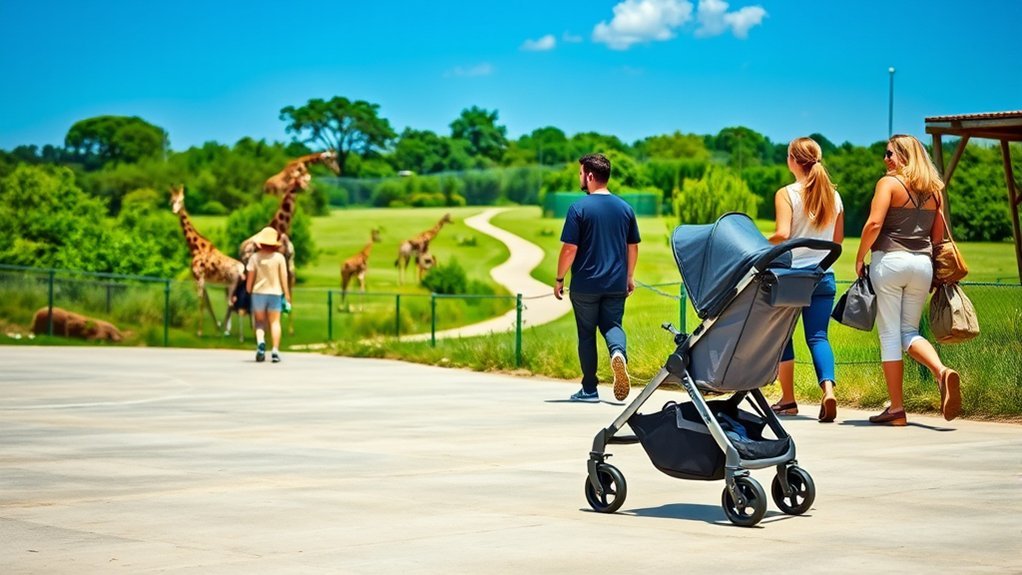
Zoo layouts vary. Some are compact and mostly level, while others include hills, long loops, outdoor trails, bridges, indoor buildings, or widely separated habitat zones. The Smithsonian’s National Zoo, for example, tells visitors that the zoo sits on a hill and recommends allowing several hours to tour it.
Before choosing a stroller, look at the zoo map and accessibility information. A lightweight stroller may be easiest in crowds and indoor transitions, while larger wheels can make rougher outdoor surfaces easier to manage.
Zoo Pathways and Trails
Do not assume every zoo path or building will have the same surface or amount of space. When reviewing the zoo map, look for:
- Paved versus gravel, dirt, or uneven outdoor routes
- Steep inclines or long downhill sections
- Narrow indoor buildings or exhibit entrances
- Areas where stroller parking is required
- Elevators or accessible routes around stairs
- Shaded rest areas and indoor cooling stops
If your zoo publishes an accessibility or mobility map, use it to plan the easiest route rather than simply following the longest exhibit loop.
How Does the Zoo Layout Affect Stroller Choice?
Instead of focusing on a generic mileage estimate, plan around the actual layout of the zoo you are visiting. The factors below usually matter more than a single distance number.
| Zoo Feature | Stroller Consideration | What to Check |
|---|---|---|
| Long walking loops | Comfort and storage become more important | Map, rest areas, shortcuts, and return routes |
| Hills or slopes | Brakes and easy steering matter more | Accessible routes and steep sections |
| Uneven outdoor paths | Larger wheels may roll more smoothly | Surface type and trail restrictions |
| Indoor or narrow exhibits | Compact width and easy parking help | Stroller-access rules and parking locations |
Planning the route before you begin can reduce unnecessary backtracking. If the zoo has required stroller-parking areas, keep a small valuables bag ready so you can take phones, wallets, keys, tickets, and other important items with you.
Choosing the Best Stroller for a Zoo Visit
The best stroller for a zoo visit depends on your child’s age, the zoo’s terrain, expected crowding, weather, and how much gear you need to carry. A compact stroller is easier to steer, park, and fold, while a stroller with larger wheels may be more comfortable on uneven outdoor routes.
Look for these useful features:
- Large canopy: Provides shade when outdoor routes have limited cover.
- Useful storage basket: Keeps water, snacks, diapers, and extra clothing together without overloading the handle.
- Easy folding system: Helpful if you need to park the stroller, use a shuttle, or load it into a vehicle.
- Reliable brakes: Especially important on slopes and whenever you stop to load or unload a child.
- Suitable seat recline: Helpful for younger children who may nap, when used according to the stroller instructions.
- Maneuverable wheels: Makes crowded viewing areas and tighter turns easier to manage.
If you have two small children, a double stroller can reduce the need to carry a tired child later in the day. Check the zoo’s policy first if the stroller is particularly wide or if you plan to enter narrow buildings or attractions.
Child-Friendly Features
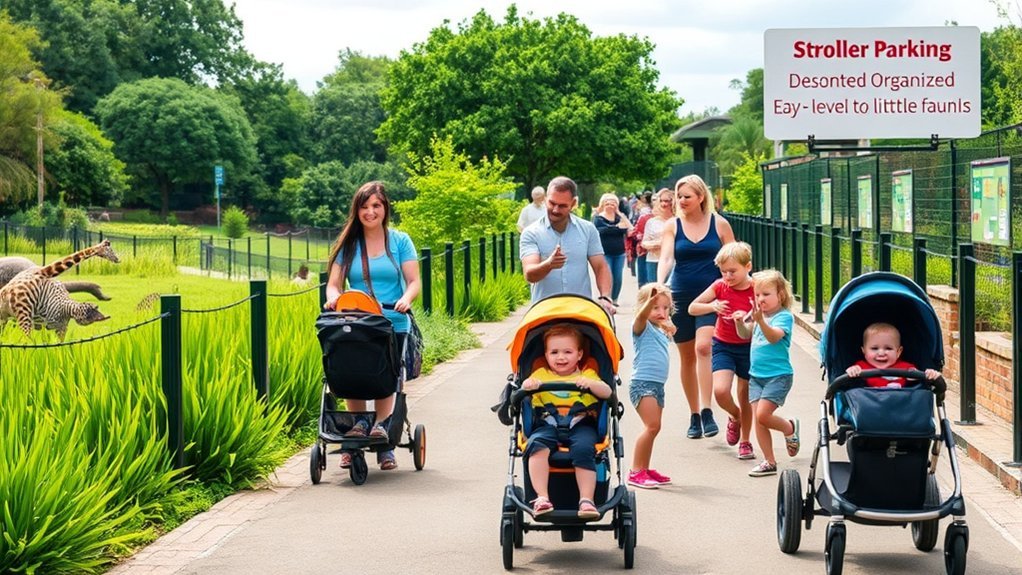
For a zoo visit, useful stroller features are the ones that solve real problems during a long outdoor day. Prioritize comfort, shade, secure seating, braking, and storage over unnecessary accessories.
- A comfortable seat gives tired children a predictable place to rest.
- A canopy can provide shade during exposed outdoor sections.
- A secure harness or restraint should be used according to the stroller manufacturer’s instructions.
- A usable basket keeps essential supplies off the handle and within reach.
- A compact turning radius makes crowded paths and viewing areas easier to navigate.
- A fold that you already know how to operate helps when the stroller must be parked or transported.
- A familiar stroller can make naps and breaks easier for children who do not settle well in rental equipment.
Choose the stroller that fits your child and the actual zoo route rather than assuming the largest or most rugged stroller is automatically better.
Safety Guidelines for Stroller Use
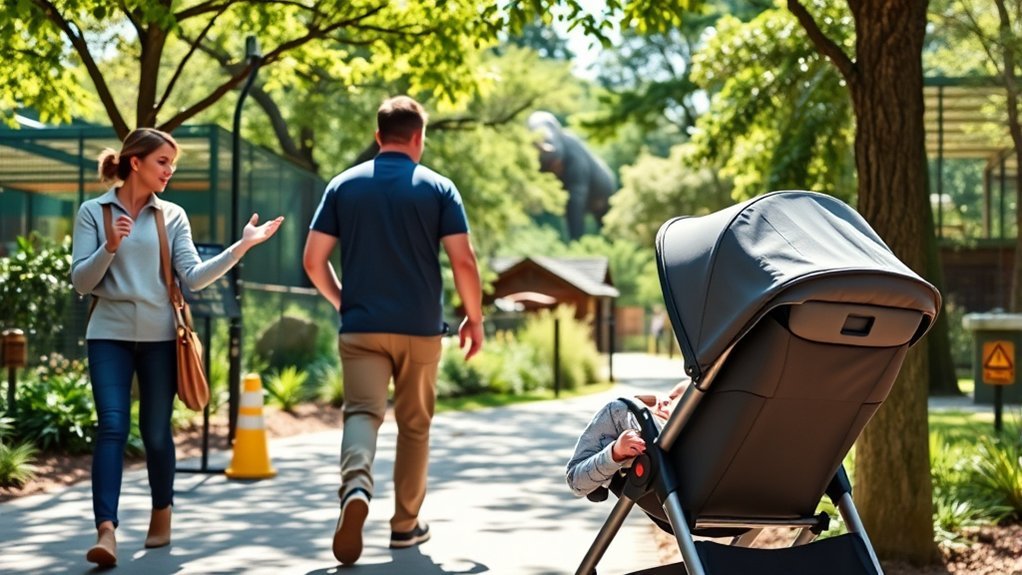
Keep the stroller on designated visitor routes and follow posted signs about stroller parking or restricted areas. Avoid blocking ramps, doorways, emergency access points, or busy viewing spaces.
Use the stroller restraint system as directed, engage the brake whenever you stop, and do not exceed the manufacturer’s passenger or storage limits. Official zoo rental rules reflect the same basic precautions: for example, Honolulu Zoo instructs renters to use the wheel lock when stopped and warns against overloading or tipping its rental strollers.
At animal exhibits, keep children behind visitor barriers and follow staff instructions. Never use a stroller to raise a child over a railing or into a restricted space.
Warning: Never leave a child unattended in a stroller. Engage the brake when stopped, especially on slopes, near water features, at food areas, or in crowded viewing locations.
Before the visit, check the stroller for working brakes, secure wheels, functional restraints, and any manufacturer limits that apply to your child or stored gear.
What to Pack in Your Zoo Stroller
A stroller is most useful when it carries the supplies you will actually need without becoming overloaded. Keep the basket organized so frequently used items are easy to reach.
- Refillable water bottles
- Easy snacks in sealed containers
- Diapers, wipes, and a changing pad if needed
- Hand sanitizer or travel wipes
- Sunscreen, hats, and sunglasses
- Light jacket or extra outfit
- Small towel or blanket
- Weather-appropriate cooling or rain items
- Zoo map, tickets, membership card, or mobile charger
- Small comfort item for younger children
Keep wallets, phones, keys, cameras, medications, and other important valuables in a small bag that goes with you. Some zoos require strollers to be parked outside particular buildings or attractions, and unattended stroller contents may be left at your own risk.
Alternative Transportation Options
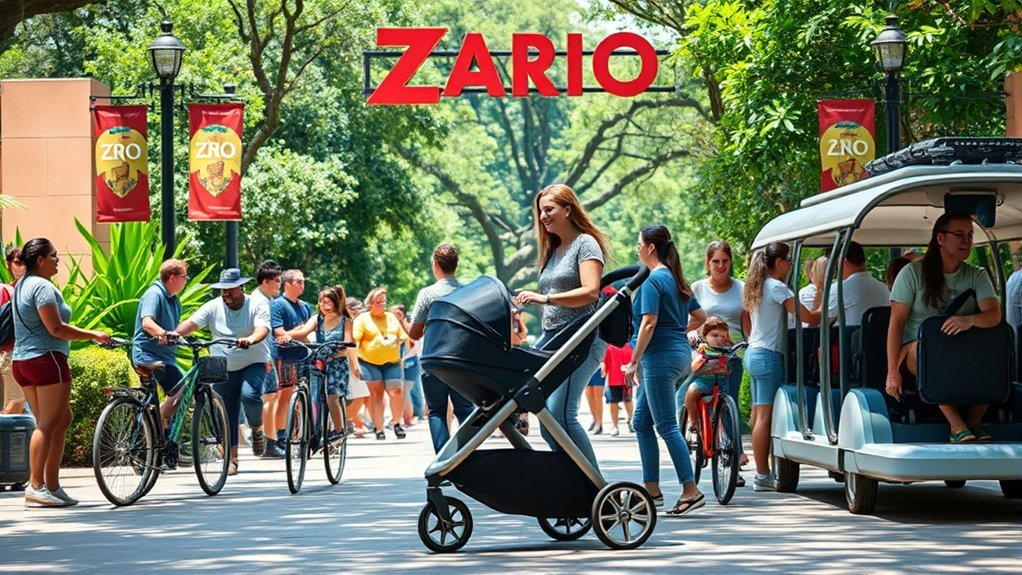
A stroller is not the only way to reduce walking or carry a tired child. Available options depend on the zoo, so check its current guest-services and accessibility pages before relying on any particular service.
- Stroller rentals: Useful if you want to travel to the zoo without your own stroller.
- Wagon rentals: Available at some zoos, subject to local rules.
- Manual wheelchairs: Offered by many larger zoos for guests who need mobility support.
- Motorized mobility devices: Available at some locations, often with age, identification, availability, or deposit requirements.
- Zoo trains, trams, or shuttles: Some zoos use these to connect distant areas, but stroller-loading rules can differ.
- Baby carrier: Can be useful for shorter periods when a stroller must be parked, provided the carrier is suitable for the child and used according to its instructions.
If a member of your group has a disability or mobility requirement, use the zoo’s official accessibility information rather than assuming a stroller rental or general visitor route will meet that need.
Accessibility and Easy Access Parking
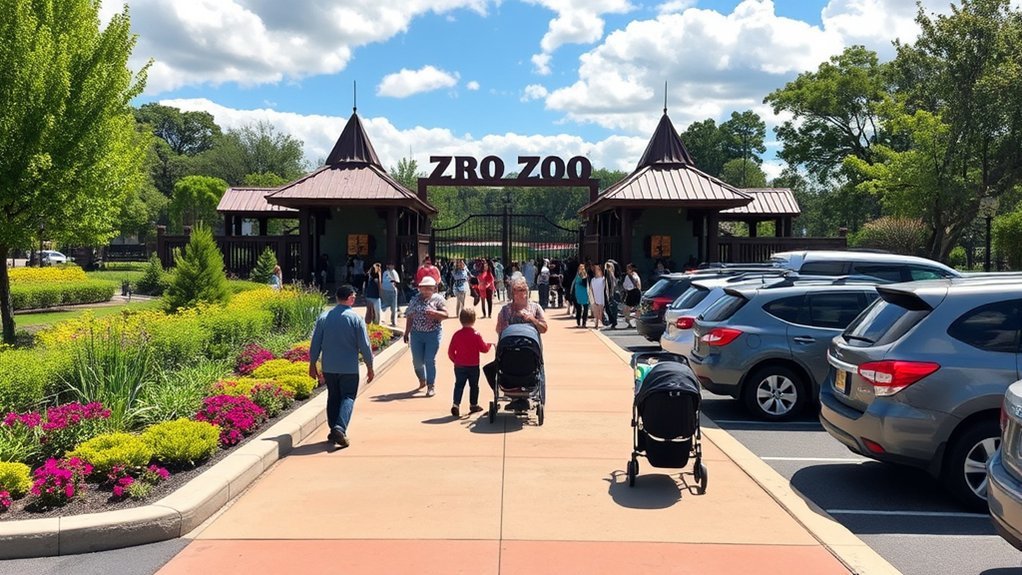
Parking, accessible routes, wheelchairs, mobility scooters, family restrooms, changing facilities, and stroller rentals vary by zoo. Check the accessibility page before your visit if anyone in your group needs a step-free route, accessible parking, mobility equipment, or additional assistance.
For example, the Smithsonian’s National Zoo accessibility information lists stroller, wagon, wheelchair, and electronic mobility-device rentals and provides details about accessible restrooms. Other zoos may offer different equipment or procedures.
Before you arrive, check whether accessible parking requires a placard, where the nearest entrance or drop-off point is, whether mobility equipment can be reserved, and whether the route you plan to use is stroller- or wheelchair-accessible.
When Is a Stroller Most Useful at the Zoo?
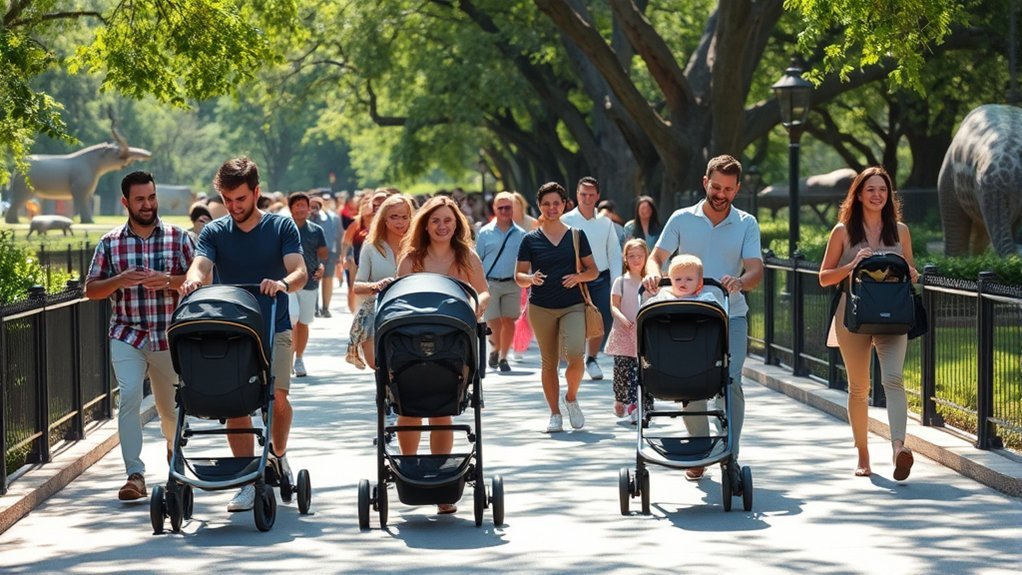
A stroller is most valuable when it solves a specific problem during your visit. You may benefit from bringing one when:
- Your baby or toddler will probably need a nap.
- Your preschooler walks well but may struggle with several hours of continuous walking.
- The zoo has hills, long loops, or widely separated exhibits.
- You need to carry diapers, water, snacks, clothing, or other child-care supplies.
- Hot weather means your child will need more frequent rest breaks.
- You are arriving from a distant parking lot or public-transport stop.
- You want a familiar seat rather than relying on rental availability.
You may be able to skip a stroller if the zoo is compact, your child comfortably walks the expected route, or you prefer a suitable baby carrier for a shorter visit. The deciding factor should be your child, the zoo layout, and the current stroller policy—not a one-size-fits-all rule.
Tips for a Smooth Zoo Visit
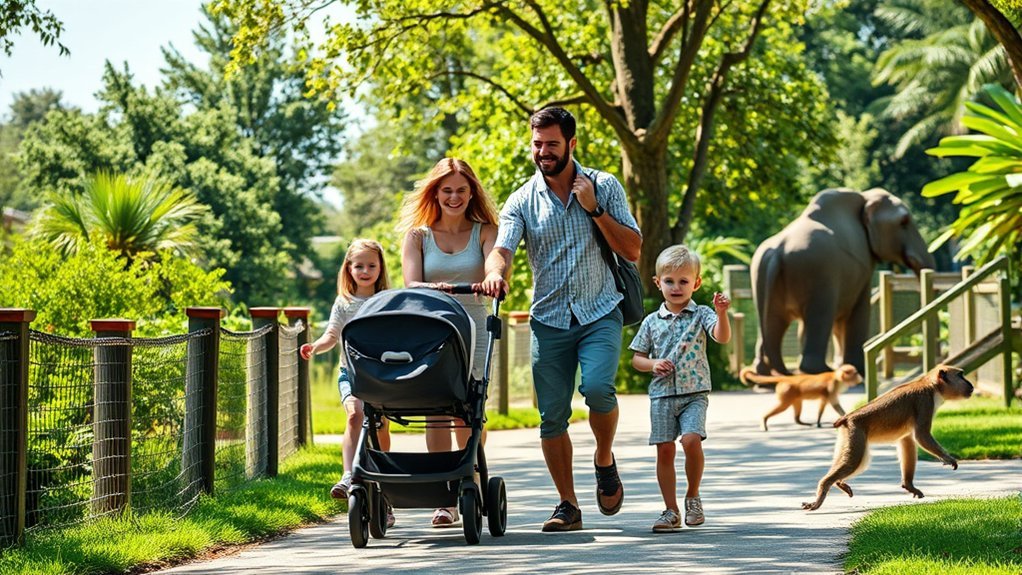
Check the zoo map and stroller policy before arriving. Identify the exhibits you care about most, any hills or long loops, stroller-parking locations, family restrooms, indoor rest stops, and the route back to the entrance.
Pack enough water, snacks, sun protection, diapers, and weather-appropriate clothing without exceeding the stroller’s storage limits. Keep valuables in a separate bag you can carry when the stroller is parked.
During the visit, let your child alternate between walking and riding when practical. If the weather is hot, consider indoor or shaded exhibits during the warmest part of the day. If your child becomes tired, shorten the route rather than trying to complete every exhibit.
Additional Guest Services
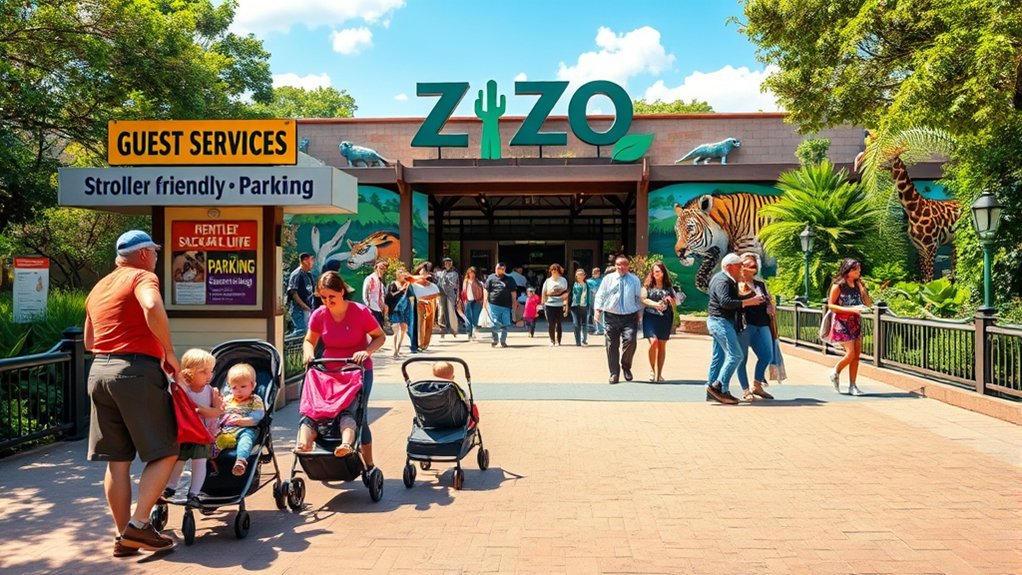
Guest services can make a family zoo visit easier, but the exact facilities vary. Check the official zoo map or visitor-services page for the services available on the day you visit.
- Stroller or wagon rentals
- Baby-changing stations
- Family restrooms
- Nursing or lactation spaces
- Accessible parking and drop-off information
- Wheelchair or mobility-device rentals
- Food stands and picnic areas
- First-aid stations or guest-services desks
Also check payment methods, reservation requirements, rental return times, and whether particular services are seasonal or available only while supplies last.
Frequently Asked Questions
Are there size restrictions for strollers at the zoo?
Some zoos or individual attractions may restrict oversized strollers, stroller wagons, or especially wide equipment. Check the official guest policy before your visit because restrictions can vary by location and exhibit.
Can I use a double stroller for my kids?
Many zoos allow double strollers, but a wide side-by-side model may be harder to move through crowded paths or narrow indoor areas. Check the zoo’s current rules and any exhibit-specific stroller restrictions before arriving.
Can I bring a stroller wagon to the zoo?
It depends on the zoo. Some zoos allow personal wagons or stroller wagons, while others may restrict them in particular buildings, attractions, or crowded areas. Check the zoo’s current wagon and stroller policy before your visit rather than assuming the same rule applies everywhere.
Are stroller parking areas available throughout the zoo?
Some zoos provide designated stroller parking near indoor exhibits, attractions, play areas, or other spaces where strollers cannot enter. Follow posted signs, keep access routes clear, and take valuables with you when leaving the stroller unattended.
Is there a fee for bringing my own stroller?
Bringing a personal stroller is generally treated differently from renting zoo equipment, but admission and stroller policies are set by each zoo. Check the current official visitor policy for your destination if you are unsure.
What types of strollers are recommended for zoo visits?
A lightweight, maneuverable stroller works well on paved and crowded routes. If the zoo has rougher outdoor paths or hills, larger wheels may be easier to push. Useful features include a canopy, storage basket, reliable brakes, secure restraints, and a fold you can operate easily.
Should I bring my stroller or rent one at the zoo?
Bring your own if you want guaranteed availability, your child sleeps better in a familiar stroller, or you need particular storage or seating features. Renting can be convenient if you want to travel light, but inventory, comfort, price, deposits, and rental rules vary by zoo.
Can I take a stroller into every zoo exhibit?
No. Some indoor exhibits, aviaries, rides, theaters, play areas, narrow paths, or animal encounters may require stroller parking outside. Follow posted signs and staff directions, and keep valuables with you when you park the stroller.
Conclusion
For most family zoo trips, bringing a stroller is a practical option when the zoo permits it. It gives younger children a place to rest, helps manage a long walking route, and keeps essential supplies together.
The important step is checking the specific zoo rather than relying on a universal rule. Review its current stroller and wagon policy, note any exhibits that require stroller parking, decide whether bringing your own or renting makes more sense, and plan your route around your child’s energy level. That preparation usually matters more than choosing any particular stroller style.