Have you ever wondered how to manage your stroller wagon while flying? Gate checking a stroller wagon can be convenient, but rules can vary by airline, aircraft, and airport staff. The key is to confirm your airline’s stroller wagon policy before travel, fold and tag the wagon correctly, remove loose accessories, and protect it from damage during handling.
Quick Answer
You can often take a collapsible stroller wagon to the gate and ask to gate check it, but approval depends on the airline’s size, weight, and baby-item rules. Fold the wagon, remove loose accessories, attach a gate-check tag, and confirm pickup instructions before boarding.
Key Takeaways
- Most airlines treat stroller wagons differently, so always check your carrier’s current size and weight rules before flying.
- Fold the stroller wagon, remove loose accessories, and keep the gate-check tag visible before leaving it at the jet bridge.
- Use a travel bag, straps, and clear ID tags to reduce the risk of scratches, lost parts, or confusion after landing.
- At TSA, remove loose items from the wagon and be ready to fold it or allow separate screening if needed.
- Ask where you will get the wagon back, because some airports return gate-checked items at the aircraft door while others send them to baggage claim.
At a Glance
| Time Required | 10 to 20 minutes before boarding to confirm, fold, tag, and prepare the stroller wagon. |
| Difficulty | Easy, as long as the wagon folds compactly and meets your airline’s rules. |
| Tools Needed | Travel bag, ID tag, velcro straps or zip ties, and a small carry-on pouch for loose parts. |
| Cost | Often free as a baby item, but oversized or heavy wagons may need to be checked at the counter depending on airline policy. |
Why Choose a Stroller Wagon for Air Travel?
When you’re maneuvering through a busy airport with tired kids in tow, choosing a stroller wagon can make the trip feel more manageable. The biggest stroller wagon benefits are space, comfort, and convenience. Many models collapse quickly, carry multiple small items, and give children a familiar place to rest during long layovers or boarding delays.
A stroller wagon can also help you keep backpacks, snacks, blankets, jackets, and travel essentials in one place. Large wheels may make it easier to move across airport floors, parking areas, and boarding lines than a basic umbrella stroller. For families with more than one child, that extra room can be a major advantage.
Safety still matters. Look for a wagon with a sturdy frame, working brakes, secure seating, and properly used harnesses. A stroller wagon should never be used as a substitute for an approved child restraint on the airplane, but it can make the airport portion of the trip much easier.
Note: A stroller wagon that works well at your local park may still be too large or heavy for gate check. Always compare the folded size and weight with your airline’s current rules before you leave for the airport.
Airline Policies on Gate-Checking Stroller Wagons
Steering through airline policies on gate-checking stroller wagons is the most important step before your trip. Many U.S. airlines allow families to check strollers or similar baby items, but stroller wagons may be handled differently from standard strollers. Some airlines accept compact folding wagons at the gate, while others may require larger wagons to be checked at the ticket counter.
For example, American Airlines has often limited gate checking to smaller strollers, while heavier or larger items may need to be checked before security. Delta Air Lines commonly treats strollers as free baby items, but the final handling can still depend on the wagon’s size and the airport process. JetBlue and Southwest Airlines are generally family-friendly with stroller and child-equipment handling, but stroller dimensions still matter. United Airlines may allow some folding wagons to be gate checked when they meet size expectations.
Because airline policies can change, do not rely only on old forum posts or social media travel stories. Visit your airline’s baggage or family travel page, then call or message customer service if the wording does not clearly mention stroller wagons. When possible, save a screenshot of the policy on your phone so you can show it politely if there is confusion at the airport.
| Airline | What to Check Before Flying | Best Move |
|---|---|---|
| American Airlines | Stroller size and weight limits for gate check. | Confirm whether your wagon must go to the counter. |
| Delta Air Lines | Baby-item and stroller handling rules. | Ask whether the folded wagon qualifies as a stroller item. |
| JetBlue | Gate-check rules and aircraft limitations. | Arrive early and request a gate-check tag before boarding. |
| Southwest Airlines | Family boarding and stroller/wagon handling. | Use family boarding when eligible and fold the wagon early. |
| United Airlines | Folding wagon and carry-on-size guidance. | Verify size rules before reaching the gate. |
Preparing Your Stroller Wagon for Travel
Before you head to the airport, make sure your stroller wagon is clean, foldable, and ready for handling. Remove loose accessories, practice folding it, and measure the folded size. This helps you avoid surprises at check-in, TSA security, and the gate.
Remove Loose Accessories
To guarantee a smooth travel experience with your stroller wagon, start by removing any loose accessories like cup holders, canopies, trays, snack holders, phone holders, and storage bags. This step is essential for damage prevention and for keeping your stroller wagon compact.
- Detach cup holders to avoid cracking, spills, or breakage.
- Remove canopies or shades that could snag during handling.
- Take off storage bags so your personal items do not get lost.
- Place small accessories in a carry-on bag where you can reach them later.
- Check the basket, seat pockets, and side pockets for toys, snacks, passports, and electronics.
Fold for Transport
Folding your stroller wagon properly is crucial for hassle-free travel. Start by detaching anything that blocks the fold, then use the manufacturer’s folding method to create the most compact shape possible. Before your travel day, practice folding and unfolding the wagon several times so you can do it quickly at the jet bridge.
If you’re using a travel bag, secure the stroller wagon inside and consider adding velcro straps to keep it from unfolding during transport. Avoid using anything that could scratch the frame or create sharp edges. Finally, make sure the airline tag is visible so baggage handlers can identify your stroller wagon easily.
Measure and Weigh the Wagon
Measure your stroller wagon after it is fully folded, not while it is open. Write down the folded length, width, height, and weight. If your airline asks about the wagon at check-in, you can answer quickly and avoid guessing. A simple luggage scale can help you check the weight at home.
Also consider the aircraft size. Smaller regional planes may have stricter handling limits, even when the airline usually allows gate checking on larger planes. If your itinerary includes a connection, check the rules for every airline and every flight segment.
Pro Tip: Take a photo of your stroller wagon before handing it over. A clear photo can help if you need to describe damage, missing accessories, or the exact model to airline staff later.
Navigating TSA Security With a Stroller Wagon
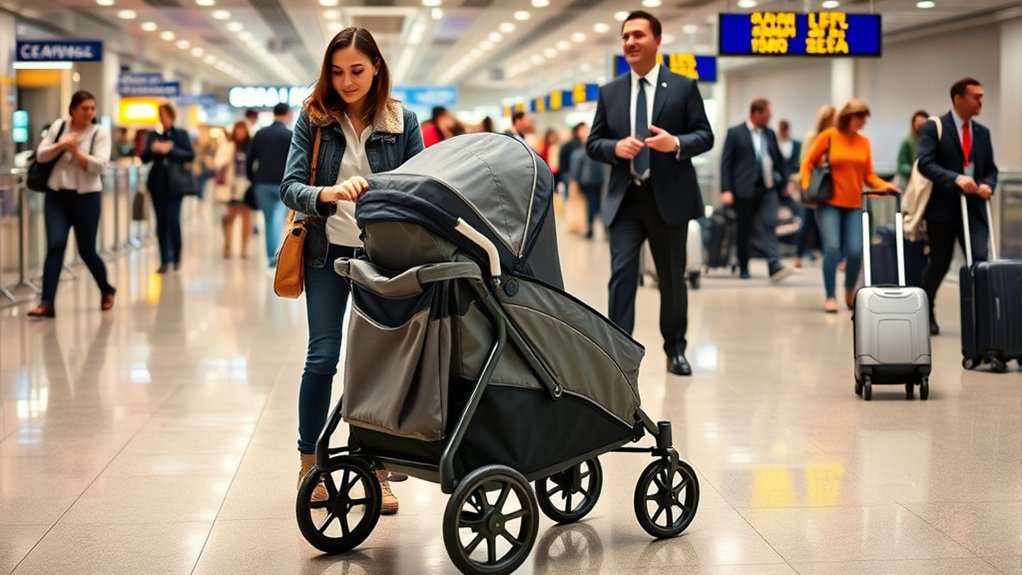
Maneuvering TSA security with a stroller wagon can feel challenging, especially with little ones in tow. The smoother you make the inspection process, the less stress you will feel in the security line.
- Fold your stroller wagon before reaching the security scanner if it is small enough to fit.
- Remove loose items like snacks, tablets, toys, blankets, and electronics from the wagon.
- Be ready to carry infants or toddlers through screening when asked.
- Declare baby bottles, formula, breast milk, toddler drinks, and medically necessary liquids to TSA officers.
- Follow officer instructions if the wagon needs separate inspection because it is too large for the scanner.
Do not pack passports, boarding passes, wallets, or medication in the stroller wagon when you are close to security. Keep those items on your body or in a carry-on bag. That way, you will not lose access to essentials if the wagon is pulled aside for extra screening.
Warning: Never leave a child seated in the stroller wagon during airport security screening unless an officer specifically tells you what to do. Follow TSA and airport staff instructions so the wagon and your child are screened safely.
Gate Check Process for Stroller Wagons
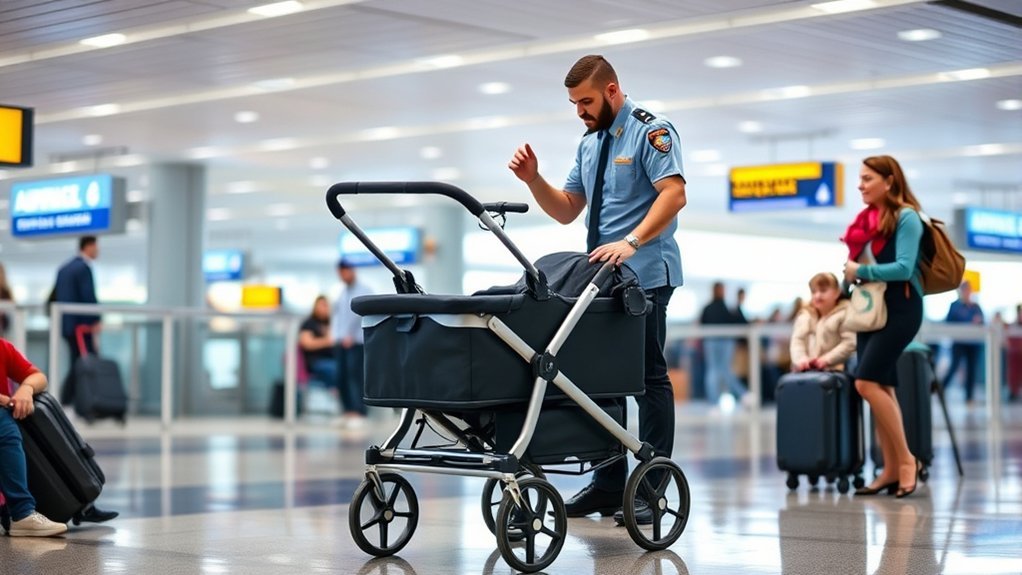
When you’re ready to gate check your stroller wagon, start by informing the airline representative at check-in or at the gate. Ask for a gate-check tag and confirm where you should leave the wagon before boarding. With the right preparation, you can move through the gate-check process with less confusion.
Gate Check Procedure Overview
To guarantee a smooth gate check experience for your stroller wagon, familiarize yourself with the process before you arrive at the airport. Here’s a quick overview:
- Inform the airline: Tell the counter or gate representative that you want to gate check your stroller wagon and ask for the correct tag.
- Check guidelines: Review the airline’s size and weight limits for stroller wagons before boarding begins.
- Prepare for boarding: Detach loose items, fold the wagon, and make sure the tag is visible.
- Use pre-boarding when available: Families may be able to board early, which gives you more time to fold and leave the wagon at the jetway.
- Confirm pickup location: Ask whether the wagon will be returned at the aircraft door, jet bridge, stroller pickup area, or baggage claim.
With these steps, you’ll appreciate the gate check benefits while maximizing your stroller wagon features.
Preparing Your Wagon
After you’ve informed the airline and reviewed the guidelines, it’s time to prepare your stroller wagon for gate check. Verify that your wagon is fully folded, and detach any loose items like cup holders to prevent damage. Familiarize yourself with the airline’s weight and size limits, especially since some airlines may require heavier or larger wagons to be checked at the counter.
Here’s a quick reference table for your preparation:
| Step | Action | Purpose |
|---|---|---|
| Inform Airline | Notify staff at check-in or the gate | Get the appropriate gate-check tag |
| Fold Wagon | Practice folding before the trip | Verify compliance and save time |
| Remove Accessories | Detach loose items | Protect stroller wagon features |
| Attach Tag | Secure the provided tag visibly | Aid identification for travel safety |
| Check Limits | Review airline size and weight limits | Avoid surprises at the gate |
Tips for a Smooth Boarding Experience
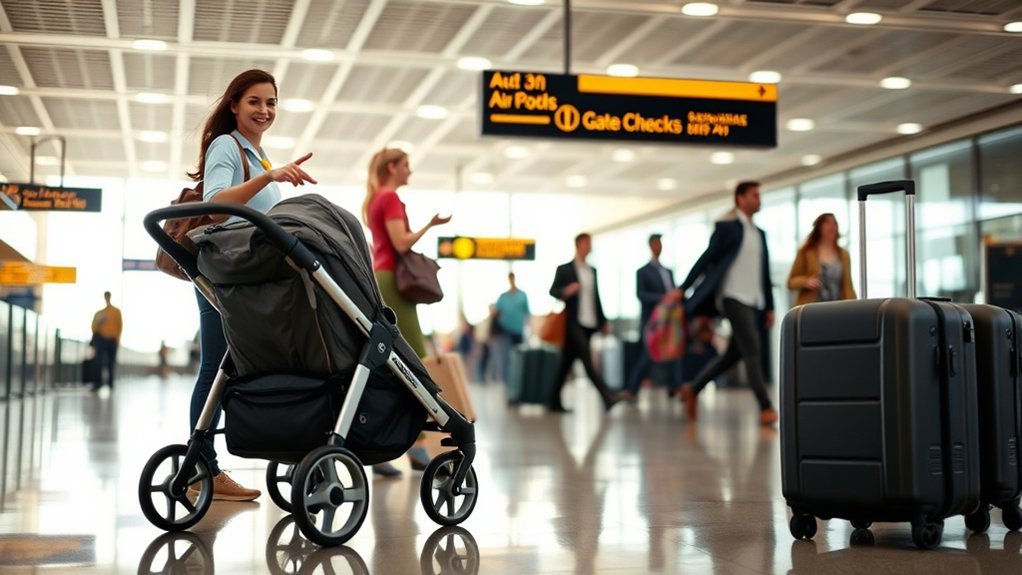
Whether you’re traveling with little ones or just enjoy the convenience of a stroller wagon, ensuring a smooth boarding experience can make all the difference. A little planning helps you keep your child calm, your gear together, and your boarding group moving.
A folded, tagged, and empty stroller wagon is easier for airline staff to handle and easier for you to recover after landing.
- Inform the airline counter or gate representative about your intent to gate check your stroller wagon.
- Ask for the tag early instead of waiting until your boarding group is called.
- Fold your stroller wagon and remove all loose items before security screening and boarding.
- Keep the tag visible when you leave the stroller wagon at the end of the jetway.
- Take advantage of family pre-boarding options when available.
- Keep one small bag with diapers, wipes, snacks, and child comfort items separate from the wagon.
- Do a final pocket check before handing the wagon over.
With these boarding strategies, your journey can feel more organized and less rushed. You will also reduce the chance of accidentally sending a toy, tablet, bottle, or travel document into the cargo hold with the stroller wagon.
Protecting Your Stroller Wagon During Transit
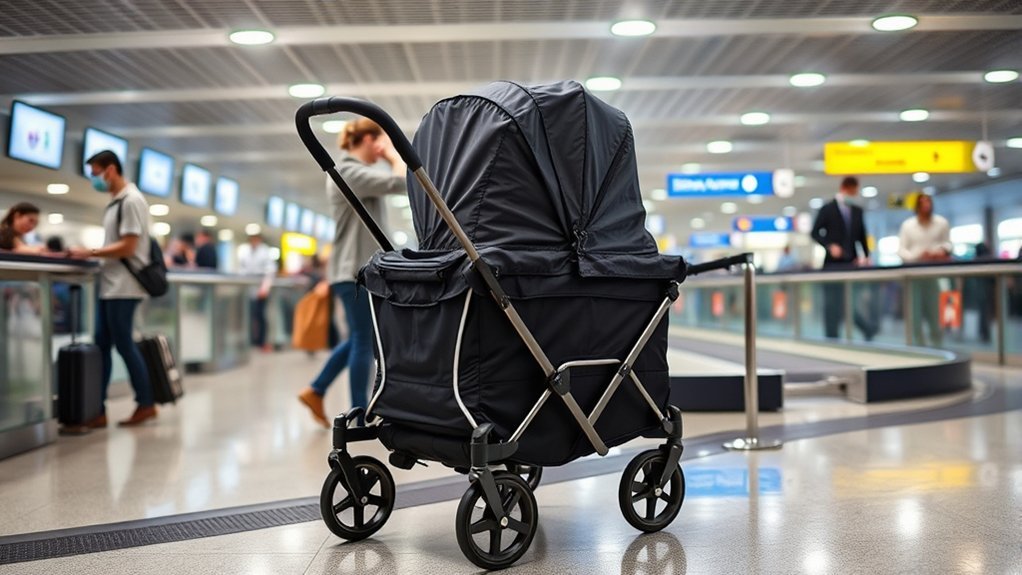
As you prepare for your journey, protecting your stroller wagon during transit is essential to keep it in good condition. Start by using a padded travel bag that can absorb minor bumps and help prevent scratches. Secure the wagon’s frame with velcro straps or soft ties to keep it from unfolding.
Clean your stroller wagon before the trip, especially the wheels. Dirty wheels can make screening or handling messier than necessary. Attach clear identification tags with your name, phone number, and email address. If you are uncomfortable putting your home address on the tag, use a phone number and email only.
Detach loose items like cup holders and canopies to prevent losses during handling.
| Action | Purpose | Recommended Item |
|---|---|---|
| Use padded travel bags | Absorb minor impacts | Padded travel bag |
| Secure frame | Prevent accidental unfolding | Zip-ties or velcro straps |
| Clean thoroughly | Avoid messy handling and extra inspection | Cleaning supplies |
| Detach loose items | Prevent losses | Carry-on pouch |
| Add ID tag | Help staff identify the wagon | Luggage tag |
What to Do After Landing
After the plane lands, do not rush away from the aircraft door until you know where your stroller wagon will be returned. Some gate-checked items come back at the jet bridge. Others may be sent to a stroller pickup area or baggage claim, especially at large airports or on international flights.
Before leaving the airport, inspect the wagon for bent frames, broken wheels, missing accessories, torn fabric, or damaged folding parts. If something is wrong, report it to the airline before you exit the baggage area. Take photos, keep your baggage tag, and ask for written instructions on how to file a claim.
Recommended Stroller Wagons for Air Travel
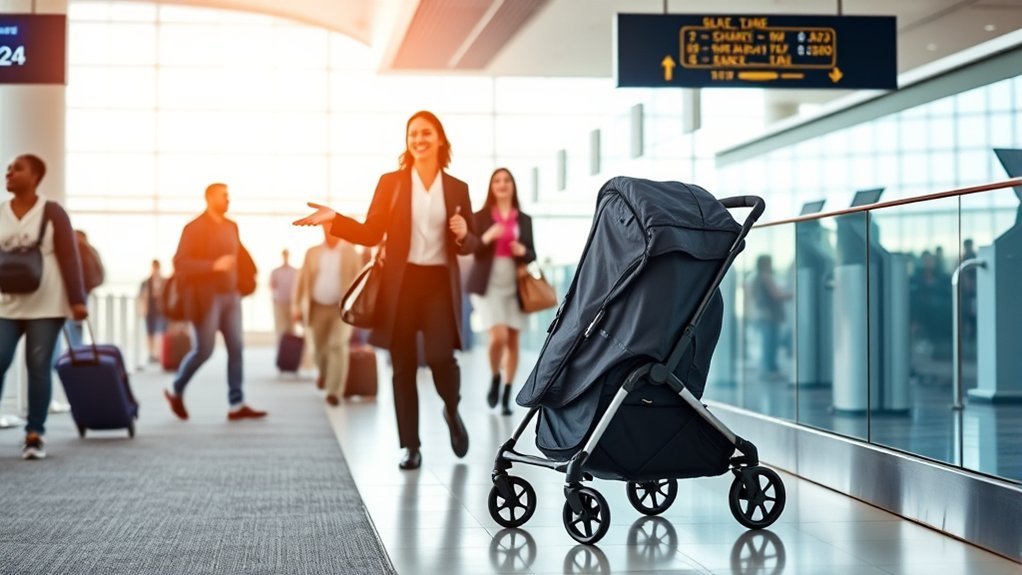
When traveling with kids, selecting the right stroller wagon for air travel can make all the difference in guaranteeing a smooth journey. The best travel-friendly wagon should fold compactly, fit your airline’s handling rules, have secure seating, and be easy to carry or roll when folded.
Choosing the right stroller wagon for air travel is less about the biggest capacity and more about the folded size, weight, durability, and ease of handling.
- Sekey 220L Collapsible Wagon: Supports up to 330 lbs and folds compactly for transport, with listed folded dimensions of 36.2 L x 22.4 W x 14.2 H.
- Sekey 48L Collapsible Wagon: Holds up to 440 lbs, offers upgraded storage, and lists folded dimensions of 47.2 L x 22.4 W x 14.2 H.
- Lightweight Design: Helps ensure you’re not weighed down during your travels, especially when moving through parking lots, check-in lines, TSA, and boarding areas.
- Easy Folding Mechanism: Helps with airline handling and makes the gate-check process less stressful.
Always check your airline’s specific policies before choosing a stroller wagon for a flight. A wagon that is excellent for road trips, parks, and theme parks may not be the easiest choice for air travel if it is heavy, bulky, or difficult to fold quickly.
Related Guides
Frequently Asked Questions
Can I gate check multiple stroller wagons at once?
Usually, you should not assume that you can gate check multiple stroller wagons at once. Airlines may limit how many child items can be checked for free or how many bulky items can be accepted at the gate. Check your airline’s stroller wagon regulations before travel.
Are there size restrictions for gate checking stroller wagons?
Yes. Most airlines have size, weight, or handling limits for large baby items. Measure your stroller wagon after folding it, then compare those dimensions with your airline’s gate-check policy. If it is too large, you may need to check it at the ticket counter.
What happens if my stroller wagon is damaged during transit?
If your stroller wagon is damaged during transit, report the damage to the airline before leaving the airport when possible. Keep your gate-check tag, take photos, and ask the airline how to file a damage claim. Travel insurance may also help depending on your policy.
Can I take my stroller wagon to the boarding gate?
In many cases, you can take a collapsible stroller wagon to the boarding gate, but it depends on your airline, the wagon’s folded size, and airport staff approval. Ask for a gate-check tag early and be ready to fold the wagon before boarding.
Do I need to label my stroller wagon before gate checking?
Yes. You should label your stroller wagon before gate checking. Use the airline’s gate-check tag and add your own luggage tag with your name, phone number, and email address. This helps airline staff identify the wagon if it is misplaced.
Will my stroller wagon be returned at the gate after landing?
Not always. Some gate-checked stroller wagons are returned at the aircraft door, while others may go to baggage claim or a special pickup area. Ask the gate agent before boarding so you know where to collect it after landing.
Should I use a travel bag for my stroller wagon?
A travel bag is a smart idea, especially for larger or more expensive stroller wagons. A padded bag can reduce scratches, keep straps contained, and make the wagon easier for baggage handlers to move.
Conclusion
Traveling with a stroller wagon can feel like maneuvering a maze, but with the right preparation, it becomes much easier. Check your airline’s policies, measure the wagon, remove loose accessories, fold it before boarding, and communicate clearly with staff. By following these steps, you’ll help keep your little one’s ride safe and sound. Every adventure begins with a single step, and yours starts with a well-packed stroller wagon ready to roll.