Jogging with a stroller can help you stay active while spending time with your child, but it is not the same as pushing a regular stroller on a walk. Your baby needs enough head and neck control, your stroller needs running-specific safety features, and your route should be smooth, predictable, and easy to manage. With the right setup, you can make stroller running safer, more comfortable, and more enjoyable for both of you.
Quick Answer
You can usually start jogging with a stroller when your baby is around 6 to 8 months old, has strong head and neck control, and your pediatrician says it is safe. Use a true jogging stroller with a five-point harness, locked front wheel, good suspension, brakes, and a wrist strap.
Key Takeaways
- Wait until your child has steady head and neck control before jogging, usually around 6 to 8 months.
- Use a dedicated jogging stroller, not a regular stroller, because running creates more speed, vibration, and turning force.
- Look for a five-point harness, locking front wheel, wrist strap, brakes, large tires, and reliable suspension.
- Start with short walk-jog intervals before increasing distance, speed, or hill work.
- Check the stroller, harness, tires, brakes, weather, and route before every run.
At a Glance
| Best Starting Age | Usually 6 to 8 months, depending on head control, stroller guidance, and pediatrician advice. |
| Difficulty | Beginner to moderate. It feels harder than regular running because you push extra weight and use one arm at a time. |
| Gear Needed | Jogging stroller, five-point harness, wrist strap, weather cover or shade, water, phone, and comfortable running shoes. |
| Best Route | Flat, familiar, low-traffic paths with smooth pavement, good visibility, and limited road crossings. |
Understanding the Right Age to Start Jogging With a Stroller
When you’re eager to hit the pavement with your little one, the first question is simple: when is it safe to jog with a stroller? Most parents should wait until their baby is at least 6 to 8 months old. At this stage, many babies have stronger head and neck control, which helps them handle the extra motion that comes from jogging.
Age alone is not enough, though. Your child should be able to hold their head steady without support, sit safely in the stroller seat as the manufacturer recommends, and remain secure in the harness without slumping forward or sideways. If your baby was premature, has medical concerns, or has delayed head control, wait for your pediatrician’s guidance before running.
Make sure your child also meets the stroller’s minimum age, height, and weight requirements. Some jogging stroller seats are not approved for running with young infants, even if the stroller can be used for walking earlier. A minimum weight such as 5 pounds may apply to some stroller modes, but that does not automatically mean the stroller is safe for jogging with a newborn.
Warning: Do not jog with a newborn in a regular stroller, car-seat-only setup, or bassinet mode unless the stroller manufacturer clearly says that setup is approved for running. Walking use and jogging use are not the same.
If you are a postpartum parent, also consider your own recovery. Start with walking, rebuild core and pelvic-floor strength gradually, and get medical clearance before returning to running. Once you are both ready, begin with short walk-jog intervals instead of a full run.
Choosing the Best Jogging Stroller for Your Needs

Choosing the right jogging stroller can make all the difference in your running experience, especially since safety and comfort are top priorities for both you and your little one. A true jogging stroller is built to handle speed, vibration, and forward momentum better than a regular stroller.
Consider these factors when selecting from different jogging stroller types:
- Weight limits: Verify the stroller accommodates your child’s current weight and future growth. Many jogging strollers support children somewhere in the 50 to 75 lb range, but every model is different.
- Age and mode approval: Check whether the stroller seat, infant insert, or car seat adapter is approved for jogging, not just walking.
- Suspension systems: Look for a stroller with reliable suspension to reduce bouncing on uneven paths.
- Wheel design: Choose large wheels and tires that match your route. Air-filled tires can ride smoothly, while foam-filled or solid tires may need less upkeep.
- Front wheel control: A locking front wheel is important for running because it helps prevent wobble at faster speeds.
- Handlebar fit: An adjustable handlebar can help taller and shorter runners keep better posture.
- Budget: Options vary widely, from budget-friendly models under $200 to high-end strollers around $1,350.
- Maneuverability: If you have two kids, consider a double jogging stroller with independent canopies, good weight balance, and enough room for both children.
Find the right fit to enjoy smoother, safer runs with your child. The best stroller is not always the most expensive one. It is the one that matches your child’s size, your running surface, your storage space, and how often you plan to use it.
Safety Features to Look for in a Jogging Stroller
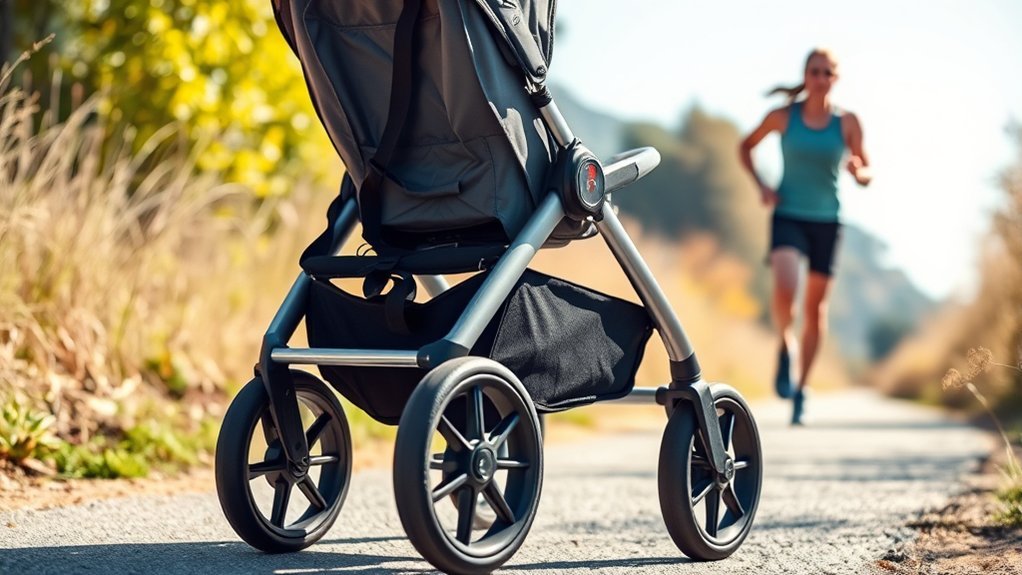
While you’re eager to hit the pavement with your little one, keeping them secure in a jogging stroller should always be your top priority. Before buying or using one, check the features that directly affect control, stability, and child comfort.
| Safety Feature | Importance | Child Safety Considerations |
|---|---|---|
| Suspension System | Absorbs impact on uneven terrain | Helps reduce harsh bouncing and improves comfort |
| Locking Front Wheel | Prevents wobbling at higher speeds | Maintains control and stability while running |
| Hand Brakes/Wrist Straps | Allows better stopping and control | Helps prevent accidental rolling, especially on slopes |
| Five-Point Harness | Keeps child secure at shoulders, waist, and between the legs | Ensures a snug, adjustable fit without restricting breathing |
Also look for a parking brake, reflective details, a sturdy frame, a large canopy, and a seat that reclines only within the stroller’s jogging-safe instructions. A storage basket is useful, but avoid loading it so heavily that it changes the stroller’s balance.
Note: Always read your stroller manual before jogging. Some strollers require the front wheel to be locked for running, and some travel-system attachments are approved for walking only.
Tips for Running With a Stroller: Technique and Comfort
Once you’ve confirmed your jogging stroller is equipped with the right safety features, it’s time to focus on how to run effectively while pushing it. Stroller running changes your stride, arm swing, and effort level, so give yourself time to adjust.
Use these tips to improve technique and comfort:
- Maintain proper running posture by keeping your shoulders relaxed, ribs stacked over your hips, and core lightly engaged.
- Grip the stroller handlebars lightly with one hand, switching sides regularly for balance.
- Keep the stroller close enough to control it, but not so close that your feet hit the rear axle or wheels.
- Shorten your stride to prevent tangling your feet with the stroller’s front wheel.
- Run at a conversational pace at first because pushing a stroller can make the same route feel harder.
- Dress your child appropriately for the weather, ensuring a snug harness that allows about two fingers under the straps.
- Conduct regular stroller maintenance checks on tires, brakes, wheel locks, frame joints, and harness for peak performance.
Pro Tip: Use one hand on the stroller and let the other arm swing naturally. Switch hands every few minutes to avoid shoulder tightness and uneven running form.
These simple adjustments can make your runs more enjoyable and safe. You do not need to run fast to get the benefits. A steady, controlled pace is usually safer and more comfortable than trying to match your pre-stroller speed.
Preparing for Your First Run With a Stroller
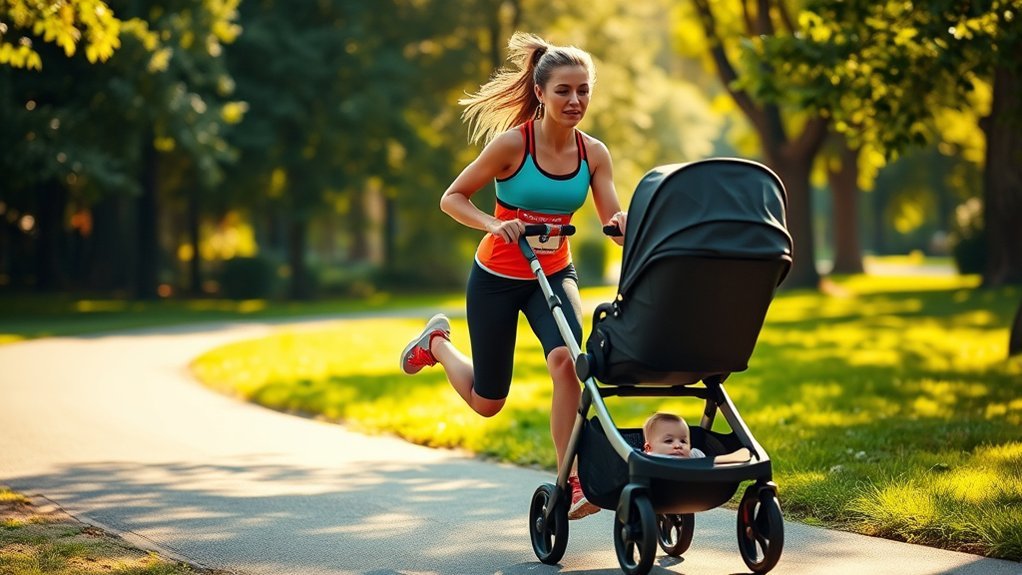
Before you hit the pavement with your stroller, confirm that your child is ready and that you’ve taken the necessary safety precautions. Make sure your little one is at least 6 to 8 months old with good head and neck control. Consult your pediatrician for medical clearance, especially if you’re postpartum or your child has special health considerations.
Invest in a dedicated jogging stroller, and choose stroller accessories that actually help safety and comfort. A weather shield, sun canopy, small blanket, water bottle, and phone can be useful. Avoid hanging heavy bags from the handlebar because they can make the stroller easier to tip.
Start with warm-up routines and short jogging intervals to ease into this new adventure. Here’s a simple checklist to help you prepare:
| What to Check | Why It Matters | Your Action |
|---|---|---|
| Child’s readiness | Safety first | Confirm head control and consult pediatrician if needed |
| Stroller features | Comfort and stability | Use a true jogging stroller with the front wheel locked |
| Route familiarity | Ease of access | Plan nearby runs on smooth, low-traffic paths |
| Weather | Babies can overheat or get cold quickly | Use shade, layers, and weather protection as needed |
| Tires and brakes | Control depends on them | Check tire pressure, brake response, and wheel locks |
How to Build Up Your Stroller Running Routine
Your first stroller run should feel easy, not like a race. Start with a 5 to 10 minute walk to warm up. Then try 30 to 60 seconds of gentle jogging followed by 1 to 2 minutes of walking. Repeat that pattern for 15 to 20 minutes and see how both you and your child feel.
Once that feels comfortable, slowly increase either the jogging time or total time outside. Do not increase speed, distance, hills, and heat exposure all at once. A slow build helps protect your body while giving your child time to adjust to the movement.
- Week 1: Walk with a few short jog intervals on flat ground.
- Week 2: Add more jogging intervals if your child stays comfortable.
- Week 3: Extend the route slightly or reduce walking breaks.
- Week 4: Add gentle hills only if your stroller control feels strong.
Pay attention to your child’s cues. If they cry, slump, seem too hot, seem too cold, or keep shifting uncomfortably, stop and check them. A good stroller run is one where both of you finish safely.
Best and Worst Places to Run With a Jogging Stroller
The right route can make stroller jogging much easier. Choose places where you can see ahead, avoid sudden stops, and keep the stroller steady.
Best routes include:
- Flat paved trails
- Wide sidewalks with few driveway crossings
- Park loops with low traffic
- Quiet neighborhood streets where you can stay alert and visible
- Smooth greenway paths with room to pass others
Avoid these routes when possible:
- Rocky trails or root-filled paths
- Steep downhill routes
- Busy roads with narrow shoulders
- Uneven sidewalks with broken pavement
- Crowded areas where you need to stop suddenly
If you are running near traffic, keep the stroller away from the curb, make eye contact with drivers at crossings, and avoid wearing headphones that block outside sound.
Weather Safety While Jogging With a Stroller
Babies and toddlers can be more sensitive to heat, cold, wind, and sun than adults. Because your child is sitting still while you are working hard, you may feel warm while they feel chilly, or you may feel fine while they overheat under a cover.
- In warm weather: Run early or late, use shade, offer fluids when age-appropriate, and avoid covering the stroller with thick blankets that trap heat.
- In cold weather: Dress your child in layers, cover hands and feet, and check their skin often. A wind cover can help, but airflow still matters.
- In sunny weather: Use the canopy, baby-safe sun protection based on age guidance, and routes with shade.
- In wet weather: Use extra caution because brakes, tires, and paths may be slippery.
Warning: Never place a heavy blanket over the stroller opening in hot weather. It can reduce airflow and cause the stroller area to heat up quickly.
Common Stroller Running Mistakes to Avoid
Many stroller-running problems come from small habits that are easy to fix. Before your next run, watch for these mistakes:
- Running with a regular stroller: Regular strollers are not built for jogging speed or repeated impact.
- Leaving the front wheel unlocked: A swiveling front wheel can wobble during a run and reduce control.
- Skipping the wrist strap: The strap adds protection if your hand slips, especially on hills.
- Overstriding: Long steps can make you kick the stroller or strain your body.
- Ignoring the child’s position: A slumped child may need repositioning, a better harness fit, or a break.
- Hanging bags on the handlebar: Extra weight on the handle can make the stroller less stable.
- Running too far too soon: Build slowly so your body and your child can adjust.
Related Guides
Frequently Asked Questions
Can I use a regular stroller for jogging?
You shouldn’t use a regular stroller for jogging. Jogging strollers are designed with running-specific features such as larger wheels, better suspension, a locking front wheel, a secure harness, and improved stability. A regular stroller may be fine for walking, but it is not built for running impact or speed.
How do I maintain my jogging stroller?
Wipe down the frame and seat regularly, remove crumbs from the harness area, check tire pressure if your stroller has air-filled tires, test the brakes, and make sure the wheels lock securely. Also inspect the wrist strap, folding joints, and harness for wear before longer runs.
What should I wear while jogging with a stroller?
Wear comfortable running clothes that allow easy movement, supportive shoes, and layers you can adjust as you warm up. Avoid clothing that catches on the handlebar. Dress your child for the weather too, remembering that they are not generating as much body heat as you are while running.
Can I run with twins in a stroller?
Yes, you can run with twins if you use a double jogging stroller designed for running and both children meet the stroller’s age, height, and weight guidelines. Use both harnesses correctly, balance the stroller load, and start with flat, easy routes because double strollers are heavier and harder to stop.
How do I handle hills while jogging with a stroller?
For uphill running, shorten your stride, lean slightly from the ankles, and push steadily without hunching your shoulders. For downhill running, slow down, keep both hands close to the handlebar when needed, use the wrist strap, and avoid steep descents until you have strong stroller control.
Should the front wheel be locked when jogging?
In most cases, yes. A locked front wheel helps prevent wobbling and improves stability while running. Some strollers have a swivel mode for walking and a locked mode for jogging, so check your stroller manual and follow the manufacturer’s instructions.
How fast should I run with a jogging stroller?
Start slower than your normal pace. Stroller running adds effort and changes your form, so a comfortable conversational pace is best at first. Increase speed only after you feel stable, your child stays comfortable, and you can control the stroller without leaning heavily on it.
Conclusion
Running with a stroller can be a rewarding way to bond with your little one, get fresh air, and stay active, but safety and comfort need to come first. Wait until your child is developmentally ready, choose a real jogging stroller, lock the front wheel when required, use the harness and wrist strap, and start with short, easy routes.
With the right setup and a patient pace, stroller jogging can become a healthy routine for both of you. Lace up your shoes, check your gear, and treat each run as a shared adventure rather than a race.
