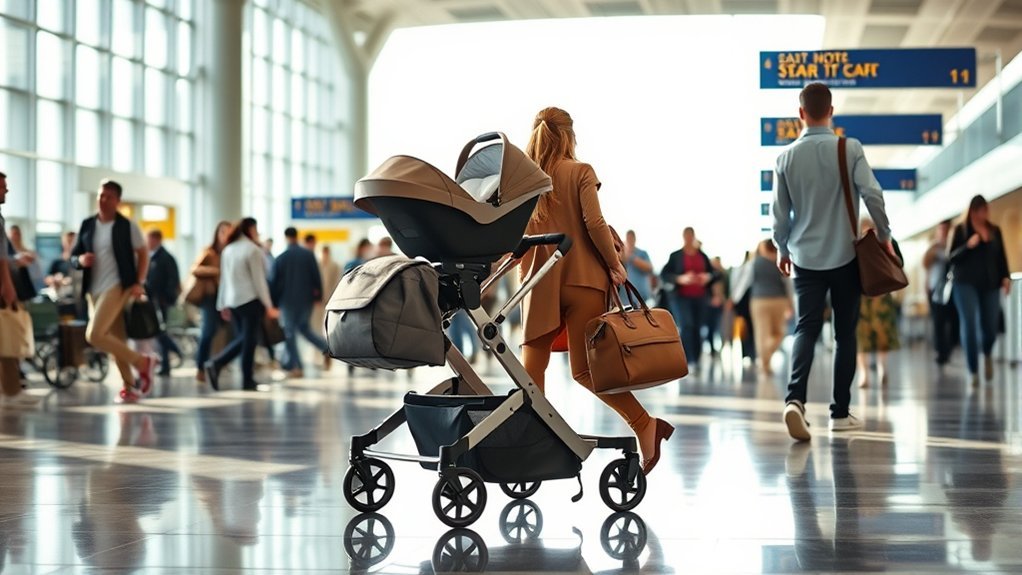
Flying with a toddler is easier when you know exactly what to do with your stroller and car seat before you reach the airport. Most major airlines let families check a stroller and car seat without counting them as regular baggage, and an FAA-approved car seat can usually be used on board if your child has a paid seat. The key is checking your airline’s rules, preparing your gear, and planning for security before travel day.
Quick Answer
Yes, you can usually fly with both a stroller and car seat. Many airlines allow one stroller and one car seat to be checked for free per child. If you buy your child a seat, you may use an FAA-approved car seat on the plane when it fits airline and aircraft rules.
Key Takeaways
- Most airlines let you check a stroller and car seat for free, but size and gate-check rules vary.
- A car seat used on the plane must be FAA-approved and should be installed in an allowed seat, usually a window seat.
- Gate-checking a stroller lets you use it through the airport until boarding.
- Formula, breast milk, toddler drinks, and baby food can go through TSA in reasonable quantities over 3.4 ounces.
- Families traveling with children who have medical needs or mobility devices can request extra TSA support before the flight.
At a Glance
| Best Airport Plan | Use the stroller until boarding, then gate-check it unless it meets carry-on stroller rules. |
| Car Seat Requirement | Use an FAA-approved car seat only if your child has a paid seat and the seat fits the aircraft. |
| Security Prep | Separate formula, breast milk, toddler drinks, and baby food from the rest of your bags. |
| Most Important Step | Confirm your airline’s stroller, car seat, and gate-check policy before you pack. |
Benefits of Flying or Traveling With a Car Seat and Stroller

When you travel with a stroller and car seat, you make the trip easier for both you and your child. A stroller helps you move through long terminals, manage bags, and keep your toddler contained during delays. Your own car seat gives your child a familiar place to sit and can help maintain safer travel once you reach your destination.
The convenience factor of having your own stroller at the airport cannot be overstated. It helps you navigate crowds, manage waiting times, and move between gates without carrying your child the whole way. A lightweight stroller also improves mobility when you arrive, especially if you plan to walk through hotels, rental car areas, theme parks, city streets, or family attractions.
Bringing your own equipment can also reduce child irritability. Rental strollers and car seats may not feel familiar, may not fit your child well, or may not meet your cleanliness expectations. Renting can also lead to availability issues, pickup delays, and extra costs. By bringing your own stroller and car seat, you keep control over fit, maintenance, and comfort throughout the trip.
Pro Tip: Choose a travel stroller that folds quickly with one hand. Airport boarding often moves fast, and a simple fold makes gate-checking much easier.
Can You Bring a Car Seat on a Plane?
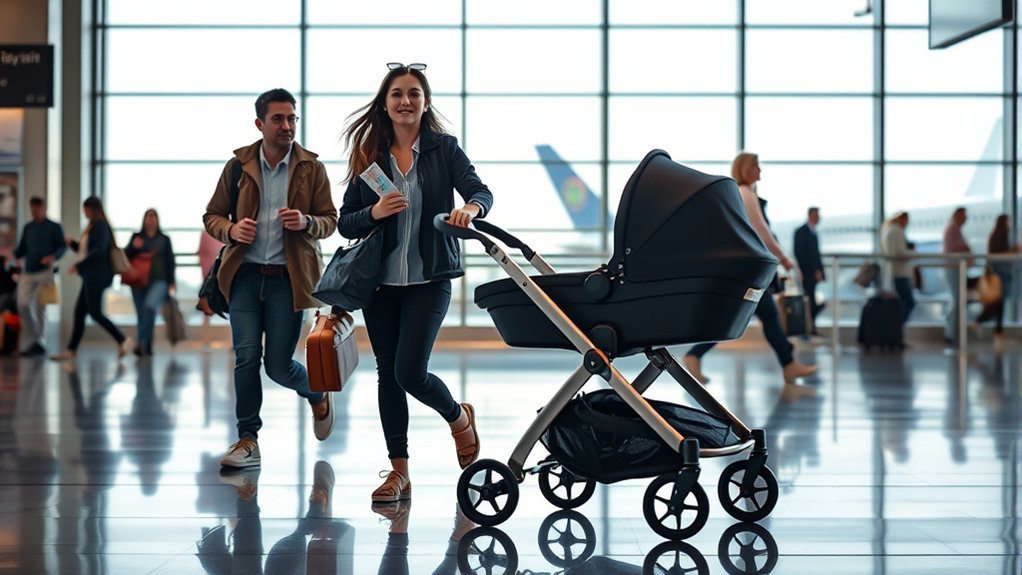
Yes, you can bring a car seat on a plane, but there are rules to follow. The car seat must be approved for aircraft use. In the United States, many approved child restraints include a label that says the restraint is certified for use in motor vehicles and aircraft. Check this label before you leave home so you are not surprised at the gate.
If you have purchased a seat for your child, you can usually secure the car seat in an allowed aircraft seat. A window seat is often preferred because the car seat will not block another passenger’s path to the aisle. Some airlines may also allow other locations depending on the aircraft layout, but exit rows and certain premium seats are not appropriate for child safety seats.
If you have not purchased a seat for your child, the car seat usually cannot be used during the flight. In that case, you may need to gate-check or counter-check it. Many airlines allow this for free, which can be helpful for families who need the car seat at their destination but do not plan to use it on board.
Warning: Do not assume every car seat fits every aircraft seat. Wide car seats, rear-facing seats, and premium cabin seats can create fit issues, so check your airline’s child restraint policy before flying.
Tips for Flying With a Car Seat and Stroller
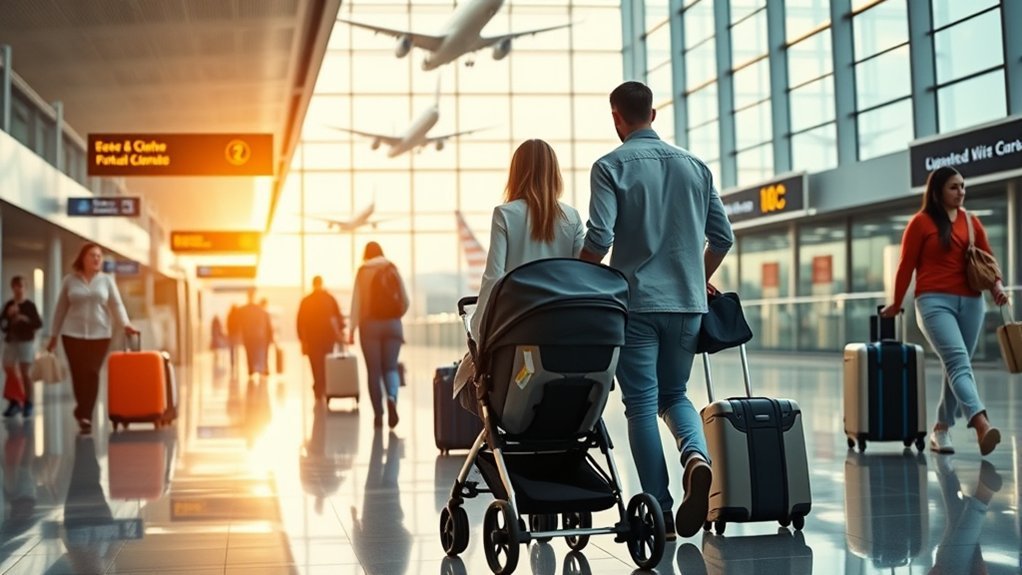
Flying with a car seat and stroller becomes less stressful when you prepare before travel day. Start by checking your airline’s family travel page, then decide what you will carry on, gate-check, or check at the ticket counter. A clear plan helps you move through check-in, security, boarding, and arrival with fewer delays.
- Check your airline’s regulations for car seats and strollers before packing.
- Remove cup holders, toys, snack trays, hooks, and loose attachments from the stroller.
- Use a padded travel bag for your car seat to help protect it from dirt and handling damage.
- Use a stroller cover or travel bag if you plan to gate-check the stroller.
- Label your checked stroller and car seat with your name, phone number, and destination.
- Verify your car seat is approved for aircraft use and review the installation instructions.
- Take a photo of your stroller and car seat before checking them in case you need to report damage.
- Keep any stroller clips, adapters, or small parts in your carry-on bag.
With these steps, you can move through the airport with more confidence and protect your child’s gear from common travel problems.
Getting Through the Airport

Maneuvering through the airport with a stroller and car seat can feel overwhelming, but a little preparation can make the process much smoother. The best approach is to keep your child comfortable, keep your documents easy to reach, and know what will happen at check-in, security, and boarding.
| Tip | Description | Benefit |
|---|---|---|
| Use a travel system | Keep your infant car seat attached to a compatible stroller when allowed. | Easier transport |
| Gate-check your stroller | Use it until boarding, then reclaim it after the flight when airline procedures allow. | Convenience for families |
| TSA PreCheck | Can speed up security for eligible travelers, though screening rules still apply. | Saves time and reduces stress |
At security, fold the stroller if TSA asks you to place it on the X-ray belt. If it does not fit, officers may inspect it separately. Remove your child from the stroller before screening unless TSA gives different instructions. Keep boarding passes, IDs, snacks, diapers, wipes, and liquids easy to reach so you are not unpacking every bag in line.
When you reach the gate, ask the gate agent for gate-check tags if you are checking the stroller or car seat there. Attach the tags clearly, fold the stroller before walking down the jet bridge, and remove small accessories so they do not get lost.
Airline Policies for Flying With a Car Seat and Stroller

When you are flying with your little one, knowing the airline policies for strollers and car seats can make a major difference. Many airlines allow you to check one stroller and one car seat for free, but rules vary by airline, aircraft, route, and stroller size. Always check the airline’s current policy before travel day.
Some airlines let compact folding strollers go in the overhead bin if they meet carry-on size rules. Others require all strollers to be checked. Larger jogging strollers, wagon-style strollers, and bulky travel systems may need to be checked at the ticket counter instead of the gate.
Free Check Policies
Traveling with little ones can be a delightful yet challenging experience, especially when you are managing strollers and car seats. Many airlines offer free check policies to make family travel easier. Here’s what you should know:
- Many major airlines, including Alaska, American, and Delta, commonly allow one stroller and one car seat to be checked for free per child.
- Frontier and United also offer free stroller check options, though exact rules can vary by stroller size and route.
- United may allow small, collapsible strollers on board when they meet carry-on requirements.
- Always confirm specific airline policies because they can change and may differ for international flights.
- Child safety seats must meet aircraft-use requirements if you plan to use them during the flight.
- Larger strollers may need to be checked at designated locations, so plan extra time at the airport.
These policies can make flying with young children easier, but they should not replace checking your own airline’s rules before departure.
Onboard Seat Requirements
After understanding the free check policies, review the onboard seat requirements for using a car seat on the plane. To use a child restraint during the flight, your child usually needs a paid seat, and the car seat must be approved for aircraft use. The approval label matters because airline staff may ask to see it.
Not all aircraft configurations support every car seat. Some premium seats, angled seats, inflatable seat belt locations, exit rows, and flatbed seats may not allow child restraints. For example, some lie-flat premium cabin seats do not allow standard safety seats because of federal or airline safety rules. If you have an open seat for a lap infant, ask the crew before placing the car seat there because airline policy may vary.
If no seat is purchased for your child, the car seat must usually be checked. Embracing these guidelines helps protect safety seat compatibility and gives your family a smoother travel experience.
Size and Weight Limits
Understanding size and weight limits for car seats and strollers is essential for a hassle-free travel experience. Each airline has its own policies, so review the rules before you leave home.
- Strollers often come with specific stroller dimensions, and compact models are easier to transport.
- Car seats must meet aircraft-use requirements if you want to use them on board.
- Many airlines allow free checking of strollers and car seats separate from baggage limits.
- Verify compatibility with your airline, especially if you are seated in premium seating.
- Some airlines restrict car seat use in certain seat types, such as flatbeds, exit rows, or seats with special airbags.
- Wagon strollers may be treated differently from standard strollers, so confirm before travel.
Note: Airline stroller and car seat rules can change. Check your airline’s official family travel policy close to your departure date, especially for international routes or connecting flights on partner airlines.
Children With Medical Conditions, Disabilities, or Mobility Aids

Maneuvering through airport security can be intimidating for families with children who have medical conditions, disabilities, or mobility aids. To ease this process, tell TSA officers about your child’s needs before screening begins. You can explain medical devices, mobility equipment, sensory needs, feeding supplies, or any support your child may need.
If your child cannot walk through the metal detector, you may be asked to carry them or follow modified screening instructions. Children with mobility aids may be able to remain with their devices while officers screen the equipment. TSA Cares offers travel assistance, and families can contact the program before a flight to ask about screening support.
Children under 12 can often keep shoes and light jackets on during screening, which may make the process less disruptive. Modified screening procedures can also reduce unnecessary stress. With preparation, you can navigate security more confidently and focus on getting your child through the airport safely and calmly.
Liquid Formula, Breast Milk, Toddler Drinks, and Baby/Toddler Food

Traveling with little ones means preparing for all their needs, including their nutritional requirements. Formula, breast milk, toddler drinks, and baby food are generally allowed through TSA in quantities greater than 3.4 ounces when they are for your child. You should separate these items from the rest of your belongings and tell the TSA officer before screening begins.
- Use clear or translucent bottles when possible to make screening easier.
- Separate formula, breast milk, toddler drinks, and baby food from other belongings at security.
- Bring ice packs, freezer packs, or cooling accessories if needed, but expect possible extra screening.
- Pack enough for the full journey, including delays, layovers, and time after landing.
- Check your airline’s policies for any additional onboard rules about heating bottles or storing food.
- Keep snacks and toddler meals in easy-to-open containers so you can feed your child quickly during delays.
Following these guidelines can help make your travel experience more stress-free, especially when your child needs a bottle, drink, or snack at the worst possible moment.
How to Protect Your Stroller and Car Seat From Damage
Strollers and car seats can be handled roughly during travel, so protection matters. A padded car seat travel bag, stroller bag, or bright gate-check bag helps keep your gear cleaner and easier to identify. It also reduces the risk of straps, wheels, buckles, and fabric catching on other luggage.
Before you check anything, remove detachable accessories. This includes cup holders, snack trays, toys, fans, rain covers, hooks, adapters, and stroller organizers. Store those items in your carry-on or checked suitcase instead. Take photos of your stroller and car seat before handing them over, especially if the gear is expensive or new.
When you land, inspect your gear before leaving the airport. Check the stroller frame, wheels, fold mechanism, harness, and car seat shell. If something is cracked, bent, missing, or unusable, report it to the airline before you exit the baggage area.
Should You Gate-Check or Counter-Check Your Stroller?
Gate-checking is usually best when you need the stroller in the airport. It lets your child ride or rest while you walk to the gate, and it gives you a place to store a diaper bag or small carry-on. This is especially helpful during long connections or delays.
Counter-checking may be better for bulky strollers, jogging strollers, double strollers, or wagon-style strollers that are hard to fold quickly. Checking a large stroller at the ticket counter can also make security easier because you will have fewer items to manage. The tradeoff is that you must carry your child or use a baby carrier through the airport.
For most families, the easiest setup is a lightweight travel stroller for the airport and a protective bag for the car seat. If your stroller is large, consider bringing a baby carrier as a backup.
Related Guides
Frequently Asked Questions
Can I use my stroller at the airport before boarding?
Yes, you can usually use your stroller at the airport before boarding. Many families use the stroller through check-in, security, and the terminal, then gate-check it before getting on the plane. Ask the gate agent for a gate-check tag before boarding starts.
What if my stroller or car seat gets damaged during travel?
If your stroller or car seat is damaged during travel, report it to the airline before leaving the airport. Take photos, keep baggage tags, and ask about the airline’s damage claim process. Travel insurance may also help, depending on your policy.
Are there size restrictions for strollers and car seats?
Yes, airlines may have size restrictions for strollers and car seats. Compact strollers are easier to gate-check or carry on when allowed, while larger strollers may need to be checked at the ticket counter. Car seats must fit safely in the aircraft seat if used on board.
Can I rent a stroller or car seat at my destination?
Yes, many destinations offer stroller and car seat rentals. Renting can lighten your load, but availability, cleanliness, fit, installation, and safety history can vary. If you rent, choose a reputable company and inspect the gear before using it.
Do airlines provide assistance for families with young children?
Many airlines provide some assistance for families with young children, such as early boarding, family seating support, or help with gate-check tags. Services vary by airline, aircraft, and airport, so check your airline’s family travel policy before departure.
Can I bring formula, breast milk, or toddler drinks through TSA?
Yes, formula, breast milk, toddler drinks, and baby food are generally allowed through TSA in reasonable quantities over 3.4 ounces. Separate them from your other items and tell the TSA officer before screening begins.
Is it better to gate-check a stroller or check it at the ticket counter?
Gate-checking is better if you need the stroller in the airport. Counter-checking may be better for large, heavy, or hard-to-fold strollers. For long terminals or layovers, gate-checking usually gives families more convenience.
Conclusion
Flying with a stroller and car seat takes planning, but it does not have to be stressful. Check your airline’s rules before you pack, confirm that your car seat is approved for aircraft use if you plan to use it on board, and decide whether gate-checking or counter-checking makes the most sense for your stroller. Keep liquids, snacks, documents, and child essentials easy to reach so security and boarding go more smoothly.
With the right setup, your stroller can make the airport easier, and your car seat can help keep your child safer and more comfortable at your destination. A little preparation before travel day can turn a chaotic airport experience into a much more manageable family trip.
Sources
- Federal Aviation Administration: Flying with Children — supports guidance on FAA-approved child restraints and safer child seating on aircraft.
- TSA: Traveling with Children — supports screening guidance for children, strollers, and family security procedures.
- TSA: Breast Milk — supports rules for breast milk, formula, toddler drinks, and related cooling accessories.
- TSA Cares — supports assistance information for travelers with disabilities, medical conditions, and special screening needs.
