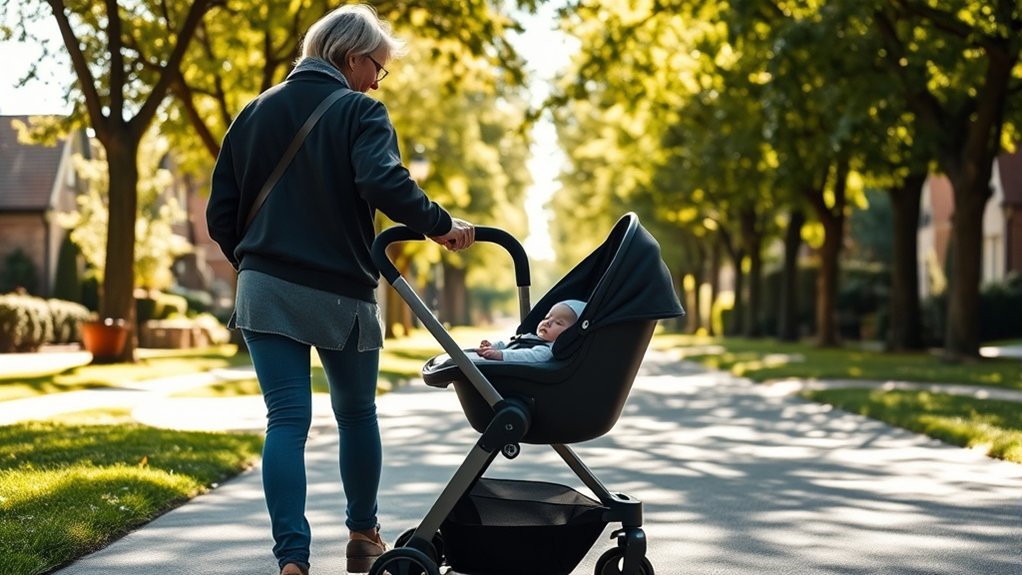
Yes, you can walk with a newborn in a car seat stroller when the infant car seat is approved for that stroller, locks securely into the frame or approved adapter, and your baby is correctly harnessed and positioned. This setup works best for transfers and brief, supervised outings. The important distinction is sleep: car seats and strollers are not routine infant sleep spaces. If your newborn falls asleep, move them to a firm, flat, non-inclined sleep surface as soon as it is safe and practical.
Last updated: September 22, 2026 — updated to clarify current safe-sleep guidance, remove the unsupported universal car-seat time limit, and add recall-check guidance.
Quick Answer
Yes. A newborn can ride in a compatible infant car seat attached to a stroller for supervised outings when the carrier is locked in correctly, the harness is snug, and the seat sits in the manufacturer-approved position. There is no universal evidence-based “two-hour stroller rule.” Keep the outing appropriate for your baby, check their position frequently, and do not use the car seat stroller as a replacement for a safe infant sleep space.
Key Takeaways
- A car seat stroller can be appropriate for a newborn when the infant car seat is specifically compatible with the stroller and locks securely into place.
- Newborns need the manufacturer-approved recline or orientation, a snug harness, and frequent checks to prevent slumping or an obstructed airway.
- There is no single evidence-based stroller time limit that makes car-seat use automatically safe; supervision and correct positioning matter throughout the outing.
- If your baby falls asleep, move them to a firm, flat, non-inclined sleep surface as soon as safe and practical rather than using the car seat for routine naps.
- For longer walks, a newborn-approved bassinet or lie-flat stroller mode may give your baby more room, but use it for sleep only if the product is specifically approved for infant sleep.
- Always follow the car seat and stroller manuals for compatibility, adapter use, weight or height limits, positioning and approved configurations.
At a Glance
| Best For | Car-to-stroller transfers, errands, appointments, and supervised walks where a compatible infant car seat is convenient. |
| Main Safety Need | Approved car-seat/stroller compatibility, secure attachment, correct positioning, a snug harness, visible face, and frequent supervision. |
| If Baby Falls Asleep | Keep the baby supervised and move them to a firm, flat, non-inclined infant sleep surface as soon as it is safe and practical. |
| Better For Longer Walks | A manufacturer-approved newborn bassinet or newborn stroller mode that gives the baby more room to lie back. Do not assume every stroller bassinet or lie-flat seat is approved for routine sleep. |
| Avoid | Jogging with a newborn, rough trails, loose fabric near the face, unapproved inserts or adapters, heavy bags on the handle, and unattended sleep in the car seat. |
Safety basis: This guide reflects current American Academy of Pediatrics safe-sleep guidance, NHTSA rear-facing car-seat fit guidance, and CPSC stroller safety and recall information. Your specific car seat and stroller manuals control compatibility, approved adapters, positioning, and size limits.
Understanding Car Seat Strollers
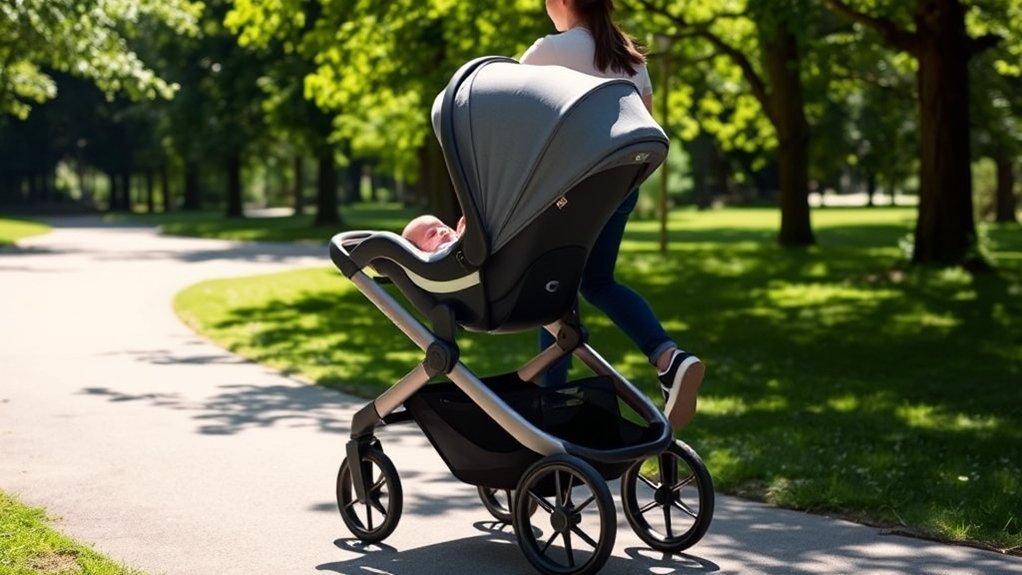
Car seat strollers offer a practical solution for parents who want simpler outings with a newborn. These strollers are designed to securely hold a compatible infant car seat, allowing you to move between the car and stroller without lifting your baby out of the harness. This setup is often called a travel system, and it can be useful after appointments, grocery trips, school pickup, or neighborhood walks.
Many stroller frames work with specific infant car seats, while others require a separate approved adapter. Car seat compatibility is the most important detail because not every car seat fits every stroller. A seat that appears to sit on the frame is not necessarily securely attached. Check both manuals and confirm that the exact car seat, stroller and adapter combination is approved.
Stroller safety is especially important for newborns. Make sure the carrier is properly attached, the stroller brake works, and your newborn is secured with the car seat harness at the correct tightness. The seat must remain in the position specified by the manufacturer so your baby receives the support intended by the system.
Note: A car seat stroller is not the same as a bassinet stroller. An infant car seat is primarily a transportation restraint. A newborn-approved bassinet can provide a flatter position during walks, but only a product specifically approved for infant sleep should be used as a routine sleep space.
Is a Car Seat Stroller Safe for a Newborn?
A compatible car seat stroller can be used for a newborn when the system is assembled and used exactly as directed. Newborns have very limited head and neck control, so newborn positioning matters throughout the walk. Your baby’s face should remain visible, and the head should not slump into a position that makes breathing difficult.
Verify that your stroller is approved for your car seat before using it. If an adapter is required, use only a compatible adapter specified by the manufacturer. Avoid aftermarket pillows, strap covers, head supports, or padding that are not approved for the car seat. Extra padding can change harness fit and alter the baby’s position.
There is no universal evidence-based number of minutes that makes car-seat-stroller use automatically safe. The American Academy of Pediatrics advises that car seats, strollers and other sitting devices should not be used as routine infant sleep spaces. If your newborn falls asleep, keep them supervised and move them to a firm, flat, non-inclined sleep surface as soon as it is safe and practical. Babies who were premature or who have breathing, muscle-tone or other medical concerns may need individualized guidance from their pediatrician.
Warning: Do not leave a newborn sleeping unattended in a car seat stroller. A car seat attached to a stroller is still a sitting device, not a substitute for a crib, bassinet or other approved infant sleep space.
When a Car Seat Stroller Makes Sense
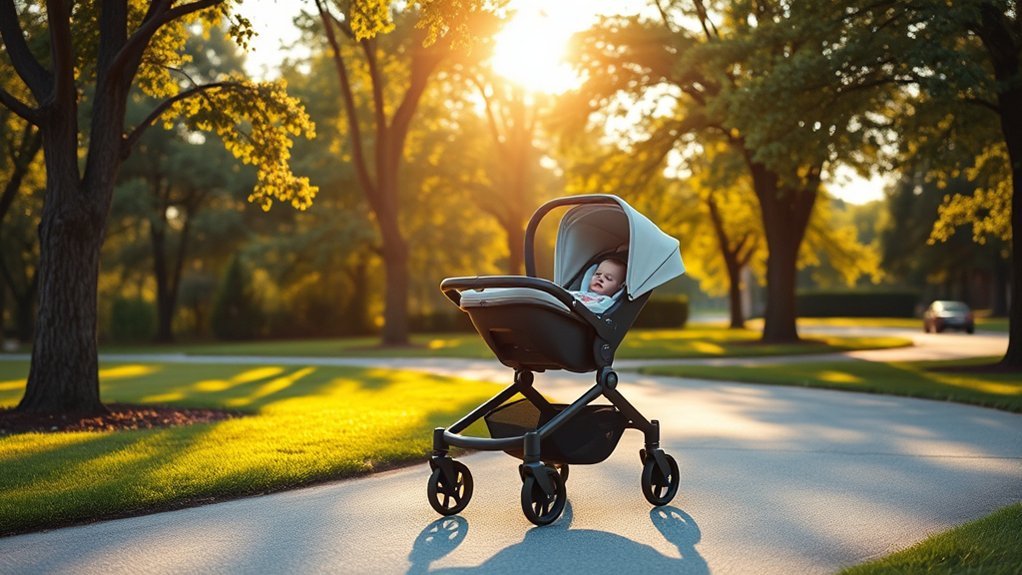
Using a car seat stroller can make transfers easier because you can move a compatible infant carrier from the vehicle to the stroller without unbuckling your newborn. This can be particularly convenient for appointments, errands, airports, parking lots, and other situations where repeatedly moving a young baby between separate seats would be awkward.
The infant car seat’s built-in harness keeps the baby restrained when fitted correctly. A snug harness can also help limit sliding and twisting. A travel system reduces the number of seating products you need to manage during a quick outing because the same infant carrier can attach to the vehicle base and an approved stroller frame.
Some stroller frames are lightweight and easy to fold, while others provide larger baskets, canopies or more substantial wheels. These convenience features are useful, but they do not replace the basics: approved compatibility, a secure lock, correct infant positioning, supervision and compliance with both product manuals.
How Do You Use a Car Seat Stroller Safely?
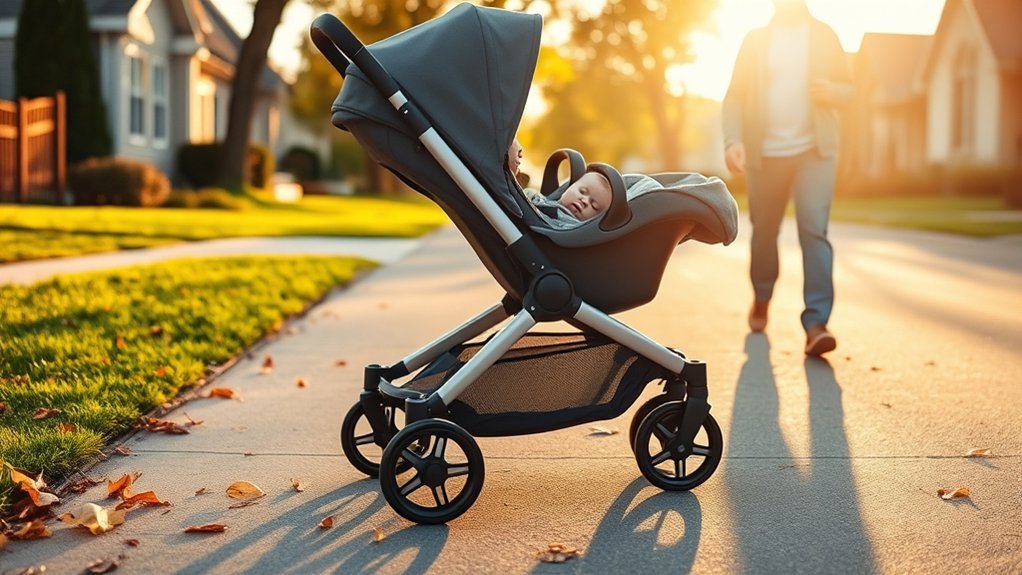
Start with the infant car seat harness. Current NHTSA guidance for a rear-facing infant seat says the straps should lie flat and pass through slots at or below the baby’s shoulders. Buckle and tighten the harness until you cannot pinch excess webbing at the shoulder, and keep the chest clip at armpit level. Bulky coats or thick clothing should not sit underneath the harness because they can create hidden slack.
Use the newborn insert only when it is supplied or approved by the car seat manufacturer and follow its instructions. Do not add aftermarket pillows or thick padding behind your baby. If your car seat manufacturer permits additional side support, follow its placement instructions exactly so it does not interfere with the harness or cover the baby’s face.
Next, follow the stroller manual for attaching the car seat or adapter. Confirm every required lock or indicator before moving. Some systems make an audible click; others have visual indicators or a manufacturer-specific attachment check. Do not rely on appearance alone. Keep the stroller on surfaces appropriate for the product, use the parking brake whenever you stop, and place bags in the intended storage basket instead of hanging heavy loads from the handle.
| Guideline | Importance |
|---|---|
| Keep car-seat-stroller use supervised | Lets you respond to slumping, overheating, distress or a change in head position |
| Use a snug infant-car-seat harness | Keeps the baby restrained and correctly positioned |
| Follow approved positioning | Maintains the orientation intended by the car seat and stroller manufacturers |
| Check exact compatibility | Prevents use of an unapproved car-seat, adapter and stroller combination |
| Use appropriate walking surfaces | Reduces instability and excessive jolting |
Newborn Positioning Check Before Every Walk
Before you leave, take a minute to check your baby’s position. Your newborn should sit fully back in the infant seat in the position specified by the manufacturer. Their nose and mouth should remain visible, and no blanket, burp cloth, canopy flap, toy or loose fabric should cover the face.
Check the harness next. For a rear-facing infant car seat, the straps should lie flat and use the appropriate slots at or below the shoulders. Buckle the harness and chest clip, then tighten the straps until you cannot pinch excess webbing at the shoulder. Keep the chest clip at armpit level. If your baby is wearing a bulky coat or thick snowsuit, remove it before buckling and place warmth over the secured harness instead.
Finally, check the stroller setup. The frame should be fully opened and locked. Attach the car seat using the exact procedure in the stroller or adapter manual, confirm all locking indicators, check that the wheels move normally, and make sure the parking brake holds the stroller securely when engaged.
Pro Tip: Use a simple “face, harness, click, brake” check before every walk: face visible, harness snug, car seat attachment confirmed, and stroller brake working.
How Long Can You Walk With a Newborn in a Car Seat Stroller?
There is no universal evidence-based stroller-walk time limit that applies to every newborn. Do not treat a two-hour countdown, or any other fixed number, as a guarantee of safety. The more useful rule is to use the infant car seat for its intended transportation role, keep your newborn supervised, follow the manuals, and avoid turning the car seat stroller into a routine nap space.
For everyday outings, choose a duration that lets you monitor your baby closely and respond promptly to feeding, diaper, temperature and comfort needs. A very young, premature or medically vulnerable infant may need different guidance, so ask your pediatrician if your baby’s circumstances affect how you should travel or walk with them.
Watch your baby’s position throughout the walk, not only at the beginning and end. Stop if the baby’s head or body shifts into a poor position, their face becomes obstructed, they appear unusually hot or cold, their color changes, or their breathing appears abnormal. If your baby falls asleep, the American Academy of Pediatrics recommends moving them to a firm, flat, non-inclined sleep surface as soon as it is safe and practical.
When Can Your Baby Move to the Regular Stroller Seat?

There is no single age at which every baby should move from an infant car seat attachment to a regular stroller seat. The correct timing depends on the stroller manufacturer’s approved age, weight, size, recline and developmental requirements.
Some stroller seats are designed for newborn use when placed in a specific reclined configuration or used with an approved newborn accessory. Other stroller seats are intended for older babies with stronger head and trunk control. Check the stroller manual before switching rather than relying on a general age such as 6 months.
You should also continue to follow the infant car seat’s own height and weight limits. Outgrowing an infant carrier does not mean a baby is ready to ride forward-facing in a vehicle; vehicle car-seat stages have separate requirements. For stroller use, choose only the configuration that your stroller manufacturer approves for your baby’s current size and development.
Is a Bassinet Better for Longer Newborn Walks?

A manufacturer-approved bassinet stroller can give a newborn more room to lie flat during a walk and may be more practical than keeping the baby in an infant car seat for an extended outing. However, a stroller attachment that looks like a bassinet is not automatically an approved infant sleep space. Check the product instructions before allowing routine sleep in it.
A stroller with a newborn-approved reclining mode can also work for walking when the manufacturer specifically permits use from birth or for your baby’s current size and development. A reclined stroller seat should not be assumed to meet safe-sleep requirements simply because it appears flat.
For a hands-free option, a baby carrier may be appropriate when it is designed for newborn use. Keep the baby’s face visible, nose and mouth unobstructed, and head supported according to the carrier instructions. Whatever option you choose, the manufacturer’s newborn-use requirements should control the setup.
What Should You Check Before Using a Car Seat Stroller?
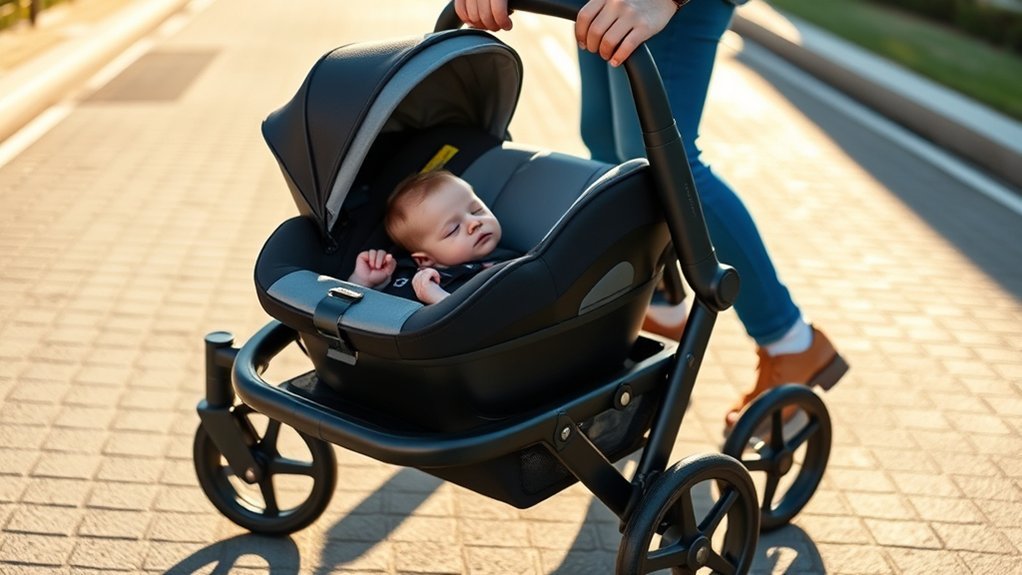
When choosing or checking a car seat stroller, prioritize the parts of the system that directly affect secure attachment and stability:
- Exact car seat compatibility: Confirm that the stroller or approved adapter supports your specific infant car seat model.
- Secure attachment system: Look for the locks, indicators or attachment checks specified by the manufacturer.
- Infant car seat harness: Use the car seat’s harness exactly as its manual directs whenever the carrier is attached to the stroller.
- Manufacturer-approved positioning: The carrier must sit in the orientation intended by the travel-system manufacturer.
- Stable wheelbase: Choose a stroller designed to remain stable during normal turns, stops and surface changes.
- Reliable parking brake: The brake should engage securely whenever the stroller is stopped.
- Sun protection with airflow: A canopy can provide shade, but it should not block your view of the baby or trap heat around the carrier.
- Low storage area: Use the stroller’s intended basket rather than hanging heavy bags from the handle, which can increase tipping risk.
How Do You Walk Safely With a Newborn in a Stroller?
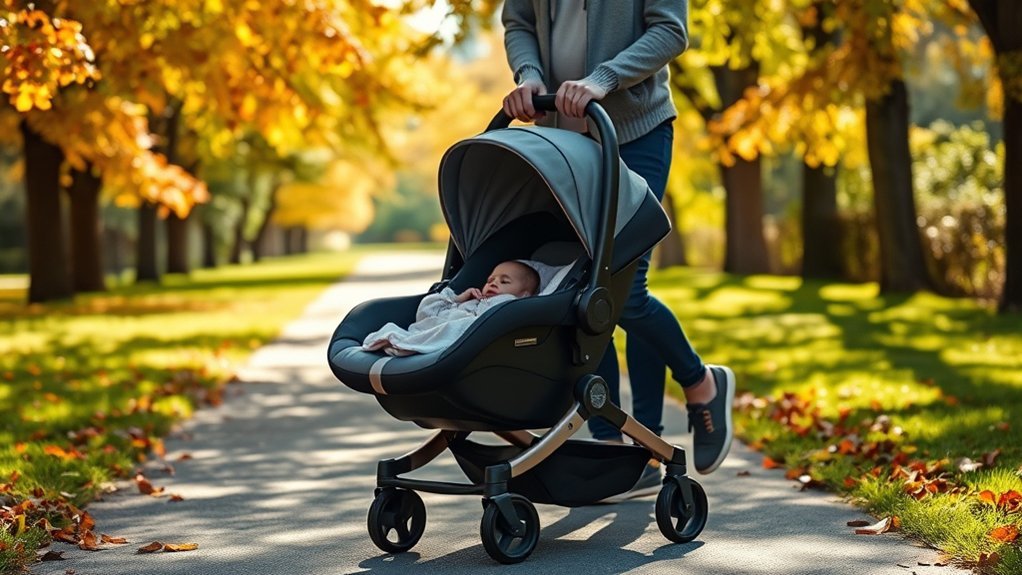
Use only a stroller mode that the manufacturer approves for your newborn, whether that is a compatible infant car seat, bassinet attachment or newborn-approved reclining stroller seat. Monitor your baby’s position during the outing, keep the harness or restraint system correctly secured, and stay within the product’s approved use conditions.
Proper Support for Newborns
Newborns have limited head and neck control, so the stroller configuration must provide the support specified for that age and size. Keep your baby’s airway area visible and avoid adding unapproved products in an attempt to create extra support.
- Use only infant inserts, adapters or support accessories approved by the relevant manufacturer.
- Secure your baby with the restraint system required for the configuration you are using.
- Verify that the stroller, infant car seat or bassinet is approved for your baby’s current size and stage.
- Keep your baby’s face visible and clear of blankets, toys and loose fabric.
- Check your baby’s position after bumps, turns, stops or any noticeable movement in the seat.
Safe Walking Practices
Before moving, make sure the baby is secured and the car seat or newborn attachment is fully locked into the stroller. Stay on surfaces appropriate for your stroller and slow down around curbs, gravel, grass or uneven pavement. A standard travel system should not be used for jogging with a newborn simply because an infant car seat can attach to its frame.
Keep your baby within view and check their position frequently. Lock the parking brake whenever you stop. If an outing will be lengthy, consider whether a newborn-approved bassinet or stroller mode gives your baby a more appropriate walking position than remaining in the infant car seat.
If the baby falls asleep, remember that supervised sleep during an outing does not turn the car seat into an approved routine sleep space. Transfer the baby to an appropriate firm, flat, non-inclined infant sleep surface as soon as safe and practical.
Weather and Clothing Safety for Newborn Walks
Weather affects how comfortable a newborn feels during a stroller outing. Dress your baby in layers that can be adjusted as conditions change. In cold weather, secure the harness first and then place appropriate warmth over it. Avoid bulky coats or thick snowsuits underneath an infant car seat harness because they can prevent a snug fit.
In warm weather, use shade and the stroller canopy without enclosing the carrier. Do not drape a thick blanket over the stroller or car seat to block the sun, because covering the opening can reduce airflow, trap heat and make it harder to see your baby.
Check your baby regularly for signs of overheating, chilling or distress. If your baby seems unusually sweaty, flushed, very sleepy, difficult to settle, or otherwise unwell, stop the outing and move to an appropriate environment. Seek medical help promptly for concerning breathing, color or responsiveness changes.
Common Mistakes to Avoid
One common mistake is assuming the car seat is locked simply because it is resting on the stroller frame. Follow the manufacturer’s attachment procedure every time and confirm every required lock or indicator. Never improvise with an adapter that is not specifically approved for the car seat and stroller combination.
Avoid placing heavy bags on the handlebar because this can increase tipping risk. Use the intended storage basket and remain within the stroller’s stated limits. Do not use a standard car-seat stroller on stairs, escalators, jogging routes or terrain that the manufacturer does not permit.
Do not loosen the harness to make your baby appear more comfortable. A loose harness can allow unwanted movement and slumping. If your newborn seems uncomfortable, stop and check positioning, diaper needs, feeding needs, clothing, temperature and harness fit instead.
Finally, check the exact stroller, infant car seat and adapter model against current CPSC recall and product-safety notices. Adapter failures and stroller defects can affect otherwise compatible-looking systems. If you are using secondhand equipment, also confirm that all required parts and instructions are present and that the car seat has not passed its manufacturer-stated expiration date.
Related Guides
Frequently Asked Questions
Can a newborn go in a stroller with a car seat?
Yes, when the infant car seat is specifically compatible with the stroller or its approved adapter, locks into place correctly, and your newborn fits within the car seat’s requirements. Keep your baby properly harnessed, visible and supervised throughout the outing.
Can I use a car seat stroller for jogging with my newborn?
No. Attaching an infant car seat to a stroller does not make the setup appropriate for jogging with a newborn. Follow the jogging stroller manufacturer’s minimum age and developmental requirements before running with your child.
How long can a newborn stay in a car seat stroller?
There is no universal evidence-based stroller time limit that applies to every newborn. Keep car-seat-stroller use supervised, check your baby’s position frequently, follow the product manuals, and avoid using the car seat as a routine sleep space. Babies with medical or developmental concerns may need individualized guidance from their pediatrician.
Is there a two-hour rule for newborns in car seat strollers?
Do not treat two hours as a universal safety guarantee for stroller use. Current safe-sleep guidance focuses on correct positioning, supervision, intended product use and moving a sleeping infant to a firm, flat, non-inclined sleep surface as soon as it is safe and practical.
Are there weight limits for newborns in car seat strollers?
Yes. The infant car seat and stroller or adapter each have manufacturer requirements. Your baby must fit within the car seat’s height and weight limits, and the stroller must specifically support that car seat and configuration. Follow whichever applicable requirement is reached first.
Can I leave the car seat in the stroller while shopping?
You can keep a compatible infant car seat attached to its approved stroller while shopping when it is securely locked in and your baby remains correctly harnessed and supervised. Do not use the setup as a routine nap location simply because your baby has fallen asleep.
What should I do if my newborn cries in the car seat stroller?
Stop in a safe place and check common needs such as feeding, diapering, temperature, clothing and positioning. Also check the harness and car-seat attachment. If your baby remains distressed or shows unusual breathing, color, alertness or other concerning symptoms, end the outing and seek appropriate medical advice.
Is a bassinet stroller safer than a car seat stroller for a newborn?
A newborn-approved bassinet can provide a flatter, roomier position for longer walks, while a car-seat stroller is particularly convenient for transfers. However, not every stroller bassinet is approved for routine infant sleep. Check the manufacturer’s instructions and use only a product specifically approved as an infant sleep space for routine sleep.
Can my newborn nap in the car seat stroller during a walk?
A newborn may fall asleep during an outing, but a car seat stroller should not become a routine sleep space. Keep your baby supervised and move them to a firm, flat, non-inclined infant sleep surface as soon as it is safe and practical.
When can a newborn use the regular stroller seat instead of the car seat?
Use the regular stroller seat only when that specific stroller’s instructions approve it for your baby’s age, size and development. Some stroller seats have a newborn-approved configuration, while others require stronger head and trunk control before use.
Conclusion
A car seat stroller can be a practical way to walk with a newborn when the infant car seat and stroller are an approved combination, the carrier is securely attached, the harness fits correctly, and your baby remains properly positioned and supervised.
Do not rely on a universal two-hour rule or use the car seat as a routine sleep space. If your baby falls asleep, transfer them to a firm, flat, non-inclined infant sleep surface as soon as it is safe and practical. For longer walks, consider a newborn-approved bassinet or stroller configuration that gives your baby more room, while still following the manufacturer’s instructions for both walking and sleep use.
