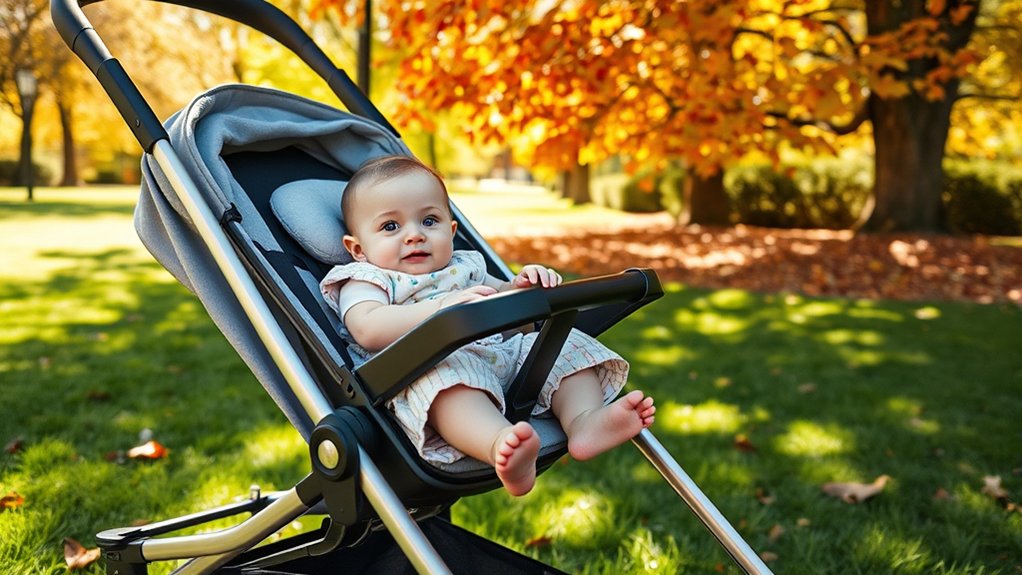
Knowing when your baby can sit in a stroller is vital for their safety and comfort. Most babies are not ready for a fully upright stroller seat right after birth. Newborns need a flat, well-supported position, while older babies can move into an upright stroller seat once they show steady head and neck control, better trunk strength, and comfort while sitting. Age gives you a helpful guide, but your baby’s milestones matter most.
Quick Answer
A baby can usually sit in a stroller seat when they have strong head and neck control, often around 4 to 6 months. For a fully upright seat, many babies are more ready around 6 months or when they can sit with good support. Newborns should ride flat in a bassinet, fully reclining seat, or infant car seat attachment.
Key Takeaways
- Newborns need a bassinet, infant car seat attachment, or fully reclining stroller seat that supports the head, neck, and airway.
- Most babies develop better head control around 3 to 4 months, but that does not always mean they are ready for a fully upright seat.
- Many babies are ready for a more upright stroller position around 6 months, especially when they can sit with good balance and less support.
- Always follow your stroller’s age, weight, recline, and harness instructions because every model has different safety limits.
- If your baby was born premature or has low muscle tone, breathing concerns, reflux, or delayed milestones, ask your pediatrician before changing stroller positions.
At a Glance
| Best Newborn Setup | Bassinet, infant car seat attachment, or a stroller seat approved for newborn use with a flat recline. |
| First Upright Signs | Steady head control, less wobbling, good trunk support, and comfort while seated. |
| Common Age Range | Around 4 to 6 months for a supported stroller seat; around 6 months or later for a fully upright position. |
| Safety Must-Have | A secure harness, locked frame, engaged brakes when parked, and a recline angle that fits your baby’s stage. |
Understanding Stroller Types for Newborns
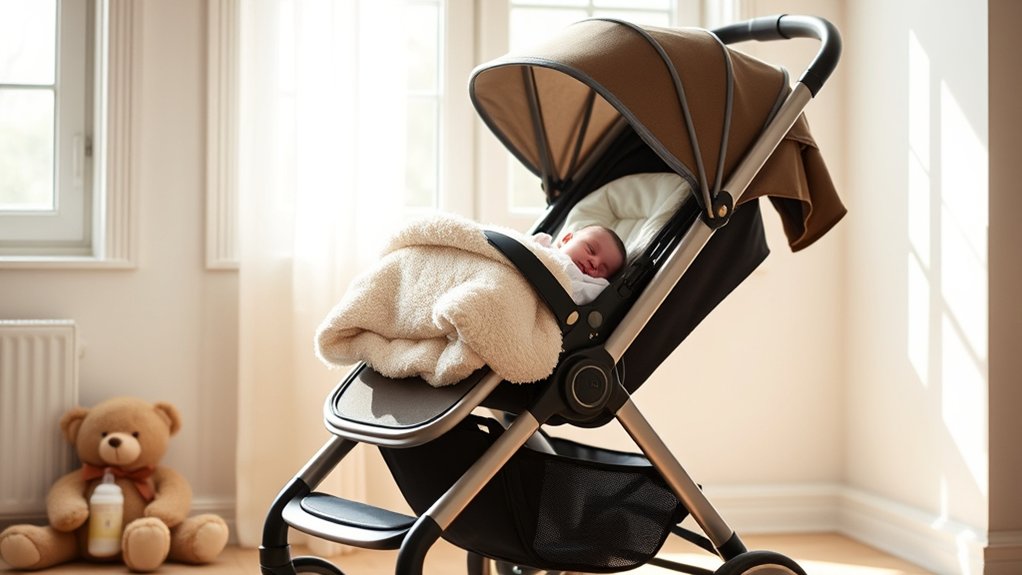
When choosing a stroller for your newborn, it’s essential to understand the types available to help protect your baby’s head, neck, spine, and airway. Newborns cannot hold their heads steady yet, so they need a stroller setup that lets them rest in a flat or near-flat position. A bassinet stroller, a stroller with a newborn-approved full recline, or a stroller that accepts an infant car seat can give your baby the support they need during early outings.
Bassinet strollers are often a strong choice for the first months because they allow your baby to lie flat. This position helps reduce head flopping and keeps your baby more comfortable during walks. Many families use a bassinet until their baby can roll, push up, or sit with support, often around 4 to 6 months. Still, each stroller has its own limits, so always check the manual for the approved age, height, weight, and developmental stage.
A travel system can also work well for short trips because it connects an infant car seat to the stroller frame. This setup is convenient when you move between the car and stroller. However, an infant car seat should not replace a safe sleep space, and your baby should not stay in it longer than needed. For longer walks, a bassinet or flat stroller seat is usually more comfortable for a newborn.
Warning: Do not place a newborn in a stroller seat that only sits upright unless the stroller manual clearly says it is safe from birth. Poor head control can let your baby’s chin fall toward the chest, which may affect breathing and comfort.
Timing for Safe Stroller Use
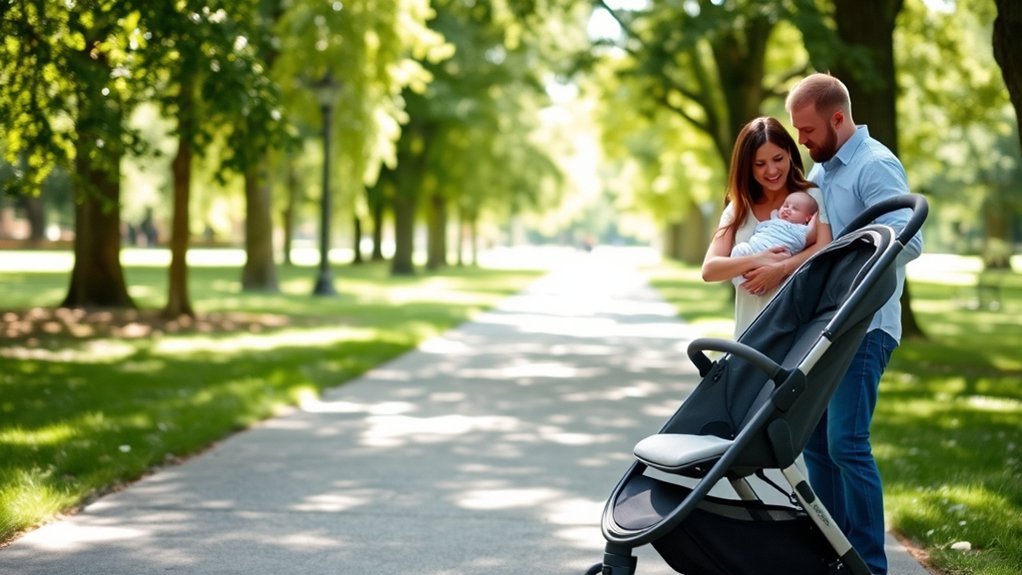
As your baby grows, monitoring their developmental milestones is essential for safe stroller use. Many babies begin to show better head control around 3 to 4 months. At this stage, some can use a stroller seat in a reclined position if the stroller allows it and your baby stays well supported. A fully upright stroller seat usually comes later, often around 6 months or when your baby can sit with good control.
Think of age as a guide, not a guarantee. One baby may look ready at 5 months, while another may need more time. Your decision should depend on your baby’s strength, posture, comfort, and your stroller’s design. If your baby slumps, slides down, fusses, looks strained, or cannot keep their head steady, return to a flatter recline and try again later.
Developmental Milestones Assessment
How can you know your baby is ready for safe stroller use? Start by checking developmental milestones. Milestone tracking matters because babies usually gain better head control before they gain strong sitting balance. Before moving to a stroller seat, make sure your baby can hold their head steady without constant support or excessive wobbling.
Independent sitting often develops between 6 to 8 months, but your baby does not need perfect independent sitting for every stroller position. A reclined seat with strong side support may work earlier if the manual allows it. For a fully upright seat, your baby should have enough trunk strength to stay aligned without folding forward or leaning hard to one side.
Regular baby assessments of postural balance, head control, and comfort are important during this transition. Watch how your baby sits on your lap, in a supported seat, and during tummy time. If they tire quickly or slump forward, they may need more time before sitting upright in the stroller.
Head Control Importance
Ensuring your baby has proper head control is a key factor in deciding when it is safe for them to sit in a stroller. Head control often improves between 3 to 4 months, and tummy time can help strengthen the neck, shoulders, and upper body. By around 6 months, many babies can hold their heads steady enough for a more upright stroller seat.
Insufficient head control can lead to safety concerns, such as airway restriction, neck strain, and poor body positioning. Your baby should be able to keep their head upright and centered for more than a few seconds. If their chin drops to their chest, their head falls backward, or they cannot recover from a side lean, keep using a flat or reclined stroller position.
Key Signs of Readiness for Sitting in a Stroller

Wondering when your baby is ready to sit in a stroller? The key signs of sitting readiness usually appear in stages. Around 3 to 4 months, your baby may show stronger head and neck control. Around 4 to 6 months, they may tolerate a supported, reclined stroller seat. Around 6 to 8 months, many babies can sit more upright with better balance.
Look for stable head movements. Your baby should be able to keep their head upright without heavy wobbling. They should also stay comfortable when supported in a seated position. If they arch, slump, cry, slide down, or seem tired quickly, they may not be ready for a more upright stroller setting.
By 6 to 8 months, true independent sitting usually becomes stronger. This is often the best time to shift from a bassinet or infant car seat attachment to a stroller seat. Your baby should maintain a sitting position without leaning heavily or relying on extra support. When in doubt, choose the more reclined setting and ask your pediatrician for advice, especially if your baby was born early or has any medical concerns.
Note: Premature babies may reach stroller milestones later based on their adjusted age. Use your baby’s development, not only their birth date, when deciding whether to move to a more upright stroller seat.
Importance of Head Control for Stroller Safety
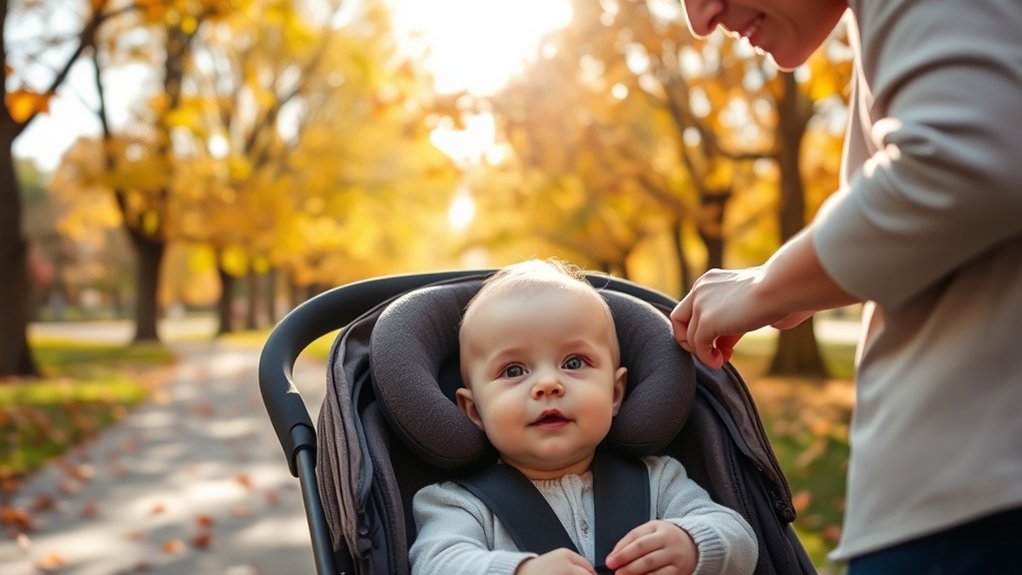
Understanding head control is essential for your baby’s safety in a stroller. Your baby’s head is heavy compared with the rest of their body, and their neck muscles need time to strengthen. Until that strength improves, an upright stroller seat can put them in a position where their head drops forward or to the side.
Head stability typically improves around 3 to 4 months, but the timeline can vary. Testing your baby’s ability to maintain head alignment is a key step before moving them into a stroller seat. You should also check their body position during the actual ride because bumps, turns, and tiredness can affect how well they hold themselves.
Head Control Development Timeline
As your baby grows, head control becomes a vital milestone for their safety in a stroller. Early newborns have limited control, so they need a flat and supported position. Around 2 to 3 months, many babies lift their heads briefly during tummy time. Around 3 to 4 months, many can hold their heads steadier when supported. Around 6 months, many show strong head and neck control for sitting and stroller use.
Adequate head control helps prevent airway restriction and neck strain when seated. You can assess your baby’s head control by observing their stability during movement and making sure their chin does not rest on their chest while sitting. Waiting for enough strength and stability is important because poor head control raises safety risks.
Testing for Head Stability
Once your baby shows signs of head control, assess their stability before placing them in an upright stroller seat. You do not need a complicated test. Watch your baby during everyday moments, such as tummy time, supported sitting, and being held upright against your chest.
Here are simple ways to gauge your baby’s head stability:
- Observe if their head remains aligned while you gently shift them from side to side.
- Check if they can hold their head steady when supported in a seated position.
- Watch for signs of discomfort, strain, slumping, or fast tiredness during these movements.
- Confirm they can maintain head control for longer periods without constant support.
- Look for a clear airway, with the chin lifted away from the chest.
If your baby cannot pass these checks comfortably, continue using a bassinet, infant car seat attachment, or deeper recline. You can try again after more tummy time, growth, and practice.
Importance of Safe Seating
Guaranteeing your baby has developed adequate head control is vital when moving to a stroller seat. Proper head control helps protect your baby from airway restriction, neck strain, and uncomfortable posture. When your baby can hold their head steady without excessive wobbling, they may be ready to shift from a bassinet or car seat attachment to a stroller seat.
Safe seating also depends on the stroller itself. A good stroller seat should support your baby’s back, shoulders, and hips. The harness should fit snugly without pressing into the neck or belly. The seat should not let your baby slide down into a curled position. Always monitor your baby closely after a position change, especially during the first few rides.
Assessing Postural Balance in Your Baby

To determine if your baby is ready for an upright stroller seat, evaluate their postural balance. This ability is important for safe stroller use because it helps your little one sit without folding forward, leaning too far, or sliding down. Many babies develop stronger balance between 6 to 8 months, though the timeline can vary.
Here are some key indicators to consider:
- Your baby can sit upright with their back supported and reasonably straight.
- Their head aligns with their spine, showing control without heavy wobbling.
- They maintain balance without excessive leaning or constant correction.
- Core strength is improving, often helped by tummy time and floor play.
- They stay relaxed and alert instead of looking strained or folded forward.
If your baby displays these traits, they are likely closer to being ready for an upright stroller seat. Poor postural balance can lead to discomfort and safety risks, so confirm they are developmentally ready before making the change. If you are unsure, start with a semi-reclined position and slowly increase the angle as your baby gets stronger.
Types of Strollers Suitable for Different Growth Stages
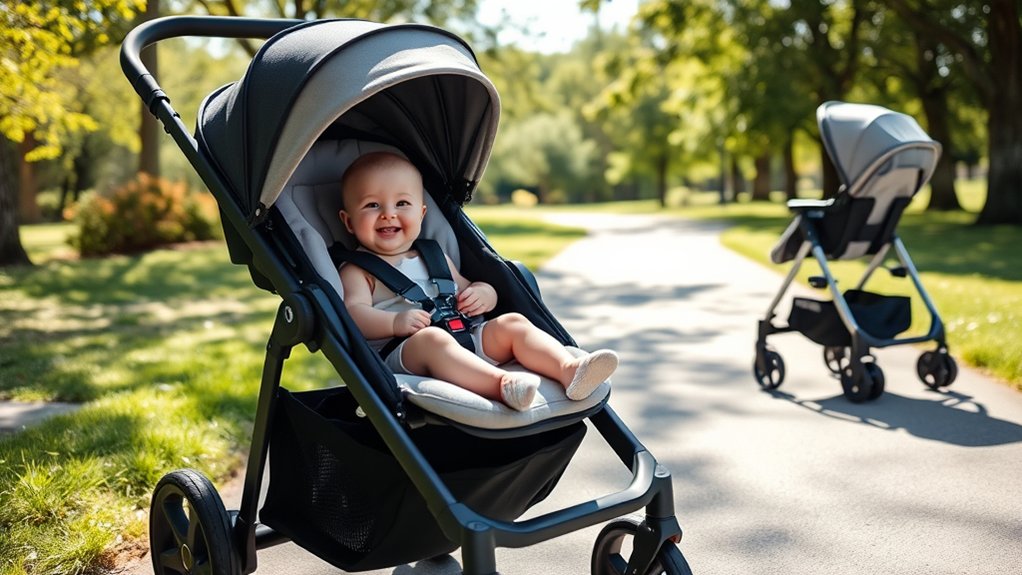
When choosing a stroller, match it to your baby’s growth stage. For infants, bassinet strollers and newborn-approved recline seats provide needed support. As your child grows into a stronger sitter, upright strollers become more suitable. Always check the manufacturer’s guidelines to verify the stroller meets your baby’s age, height, weight, and developmental needs.
Bassinet Strollers for Infants
Bassinet strollers are an excellent choice for parents who want a safe and comfortable environment for newborn outings. These strollers allow babies to lie flat, which supports better head, neck, and body alignment during walks.
Common bassinet benefits include:
- A fully flat resting surface that supports head and neck alignment.
- A roomy design that gives newborns a more natural resting position.
- Canopies that provide shade and basic sun protection for delicate skin.
- Extra padding that can improve comfort during longer walks.
- Some convertible designs that later change into a regular stroller seat.
Always check the manufacturer’s specifications for weight and height limits. Stop using the bassinet once your baby exceeds the limit or starts showing skills the manual lists as unsafe for bassinet use, such as rolling, pushing up, or sitting independently.
Upright Strollers for Toddlers
As your baby grows and begins to sit independently, typically around 6 to 8 months, it is time to consider upright strollers designed for older babies and toddlers. These strollers support better visibility, easier interaction, and more engagement during outings. They also need strong safety features because older babies move, reach, and twist more.
| Stroller Type | Key Features |
|---|---|
| Full-Size Stroller | Adjustable seats with multiple recline positions |
| Jogging Stroller | Designed for active parents; safety precautions needed |
| Modular Stroller | Versatile; shifts from bassinet to upright |
| Lightweight Stroller | Easy to carry; ideal for quick outings |
| Travel System | Combines car seat and stroller for convenience |
When choosing, prioritize stroller features like a five-point harness, a sturdy frame, a stable wheelbase, reliable brakes, and a recline range that matches your baby’s stage. For younger babies, a stroller with multiple recline positions can help you move gradually from a flat position to a more upright one.
Tips for Transitioning to Upright Stroller Use

Adjusting your baby to an upright stroller seat can be an exciting milestone, but it is essential to confirm they are ready for this change. Your baby should show strong head control, better trunk strength, and enough comfort to stay seated without slumping. Many babies reach this stage around 6 months, but some need more time.
Transitioning your baby to an upright stroller seat works best when you follow their body control, not only their age. A slower shift is safer and usually more comfortable.
To make the transition smoother, try these steps:
- Check guidelines: Read the stroller manual for height, weight, recline, and age limits.
- Start with a recline: Use a semi-reclined position before moving to fully upright.
- Use a snug insert only if approved: Some stroller accessories help with support, but only use inserts allowed by the stroller manufacturer.
- Begin with short rides: Try the upright position for a few minutes and watch your baby’s posture.
- Watch for slumping: If your baby folds forward or leans too much, return to a lower recline.
- Secure the harness: Keep the straps snug every time, even for short walks.
Pro Tip: Try the new stroller position when your baby is fed, rested, and calm. A tired or hungry baby may slump, fuss, or seem uncomfortable even if they are close to being ready.
Safety Precautions for Using a Stroller
Using an upright stroller seat opens up new experiences for your baby, but it is vital to prioritize safety while enjoying those outings. Always secure your baby with a five-point harness. A snug harness helps prevent slipping, sliding, standing, or falling from the seat.
Regularly inspect the stroller for wear and tear. Look for broken parts, loose screws, worn fabric, weak buckles, damaged wheels, or a frame that does not lock fully. When you stop or leave the stroller parked, engage the parking brake so it does not roll away. Avoid hanging heavy bags from the stroller handles because this can cause tipping and injury.
Before placing your baby inside, make sure the stroller is fully open and locked. Check that all recline, fold, wheel, and brake mechanisms are secure. Keep your baby’s fingers away from folding joints. Use the stroller on surfaces that match its design, and be extra careful on curbs, stairs, gravel, ramps, and uneven sidewalks.
Weather safety also matters. In warm weather, avoid covering the stroller with a thick blanket because it can trap heat and reduce airflow. In cold weather, dress your baby in warm layers, but keep the harness snug against their body. Bulky coats or blankets under the harness can make the fit less secure.
Recognizing Your Baby’s Preferences for Sitting
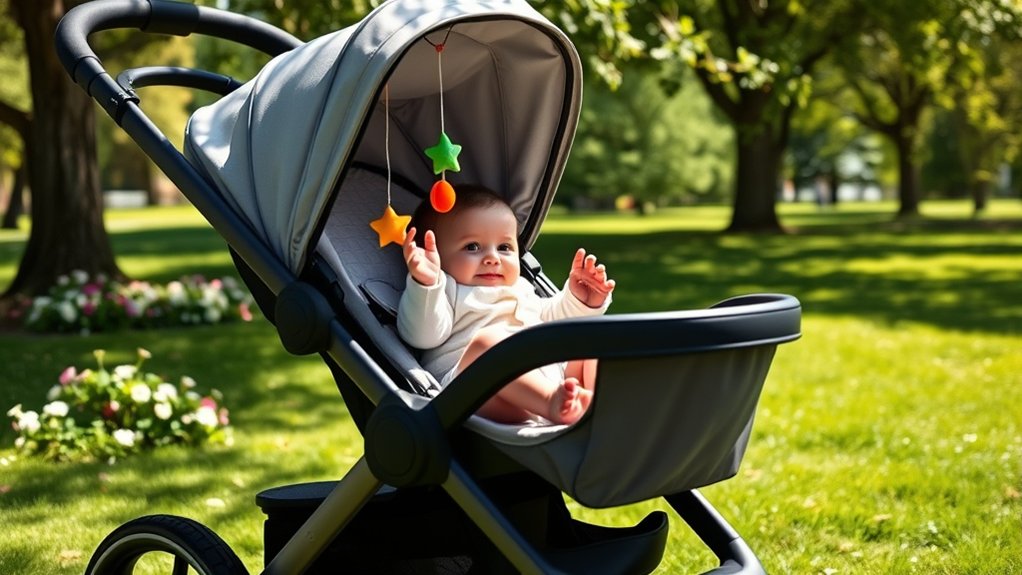
While observing your baby’s reactions during outings, you may notice signs that show their preference for sitting up in the stroller. Around six months, many babies enjoy a more upright position because they can see faces, trees, cars, and movement around them. This can support curiosity, social interaction, and engagement.
Pay attention to these cues:
- Smiling or giggling when seeing new sights.
- Reaching for objects or people around them.
- Fidgeting or appearing uncomfortable in a deeply reclining position.
- Attempting to sit up when supported.
- Turning their head to look around while staying stable and relaxed.
Recognizing these baby preferences can help you choose the right seat angle. Still, interest does not replace readiness. A baby may want to sit up before their body is fully ready. If your baby seems curious but still slumps, use a slightly reclined position so they can see more while staying supported.
Parental Experiences and Advice on Stroller Use
Many parents find that sharing their experiences with stroller use can provide valuable insight during this change. Starting with a bassinet or infant car seat attachment is common. Many families then move to a stroller seat around 4 to 6 months when the baby shows stronger head control, and they move to a more upright position around 6 months or later.
Observing your baby’s comfort is key. Some parents notice readiness as early as 5 months, while others wait until closer to 6 or 7 months. Both can be normal. A gradual transition helps you find the safest and most comfortable angle for your baby.
| Age Range | Recommendations |
|---|---|
| Birth to 4 months | Use bassinet, newborn-approved full recline, or infant car seat attachment |
| 4 to 6 months | Try a supported, reclined stroller seat only if your baby has steady head control and the stroller allows it |
| 6 months+ | Move toward a more upright seat if your baby has strong head, neck, and trunk support |
| 6 to 8 months+ | Use a fully upright seat when your baby sits well, stays aligned, and remains comfortable |
Consulting your pediatrician can offer personalized advice on developmental milestones. This is especially helpful if your baby was premature, has reflux, has low muscle tone, has breathing issues, or has delayed motor development. Gradually introducing the stroller seat while prioritizing stroller safety will help you and your baby feel more comfortable during outings.
Common Mistakes to Avoid When Moving Baby to a Stroller Seat
Even careful parents can move too quickly when their baby seems eager to sit up. Avoid these common mistakes so your baby’s stroller transition stays safer and more comfortable.
- Using age alone: A 4-month-old may have good head control, but another baby may still need a flat setup. Watch milestones, not only the calendar.
- Skipping the manual: Stroller models vary. One seat may be approved from birth, while another may require 6 months or stronger sitting skills.
- Moving straight to fully upright: A semi-reclined position often works better at first.
- Adding unapproved pillows: Extra pillows or loose supports can shift, affect positioning, or interfere with the harness.
- Ignoring slumping: If your baby’s chin drops, body curls, or head tips to the side, they need more support or a flatter recline.
- Leaving the harness loose: A loose harness can let your baby slide into an unsafe position.
When to Ask Your Pediatrician
Most babies can transition through stroller stages without problems, but some situations call for extra guidance. Ask your pediatrician if your baby was born premature, has trouble holding their head up, seems floppy or stiff, has breathing concerns, has reflux that worsens when seated, or shows delays in sitting and trunk control.
You should also ask for advice if your baby cries every time they sit in the stroller, slumps even with support, or looks uncomfortable in a position that should match their age. A pediatrician can help you decide whether your baby needs more time, a different stroller setup, or a specific positioning approach.
Related Guides
Frequently Asked Questions
Can I use a stroller for a premature baby?
Yes, you can use a stroller for a premature baby, but choose the safest position carefully. Premature babies may need to follow adjusted-age milestones, and some need more head, neck, or breathing support. Use a bassinet, newborn-approved recline, or infant car seat attachment when appropriate, and ask your pediatrician before moving to an upright seat.
What should I look for in a stroller’s harness?
Look for an adjustable five-point harness that secures your baby at the shoulders, waist, and between the legs. The straps should fit snugly without pressing into the neck or belly. A good harness helps prevent slipping, leaning, climbing, and falls during stroller rides.
How often should I take my baby out in the stroller?
You can take your baby out in the stroller several times a week if the weather, your baby’s health, and your schedule allow it. Short walks can provide fresh air, a change of scenery, and bonding time. Keep outings shorter for newborns and increase the time as your baby gets more comfortable.
Can I use a stroller during cold weather?
Yes, you can use a stroller during cold weather if your baby is dressed warmly and safely. Use layers, a hat, socks, and a stroller blanket over the harness when needed. Avoid placing bulky coats under the harness because they can make the straps too loose.
What are the best stroller accessories for comfort?
Helpful stroller accessories can include a stroller fan, weather shield, sunshade, footmuff, cup holder, snack tray, or approved seat liner. Only use accessories that fit your stroller safely and do not interfere with the harness, recline, brakes, or folding mechanism.
Can a 3-month-old sit in a stroller?
A 3-month-old may use a stroller only if the seat reclines enough and supports the head and neck well. Most 3-month-old babies are not ready for a fully upright stroller seat. Use a bassinet, infant car seat attachment, or newborn-approved recline unless your pediatrician and stroller manual support another setup.
When can my baby sit fully upright in a stroller?
Many babies can sit fully upright in a stroller around 6 months or later, once they show strong head, neck, and trunk control. Your baby should not slump forward, slide down, or lean heavily to one side. Always follow the stroller manual’s age and weight rules.
Conclusion
Knowing when your baby can sit in a stroller is like following a winding path. You need to watch the signs, not rush the milestone. Newborns need a flat, supportive setup. As your baby gains head control, postural balance, and comfort while seated, you can slowly move toward a more upright stroller position.
For many babies, a supported stroller seat becomes possible around 4 to 6 months, while a fully upright seat is often better around 6 months or later. Always check your stroller manual, use the harness correctly, and watch your baby’s posture during each ride. If you have any concerns, ask your pediatrician for guidance. With patience and awareness, you can make this transition safer, smoother, and more enjoyable for both you and your little one.

