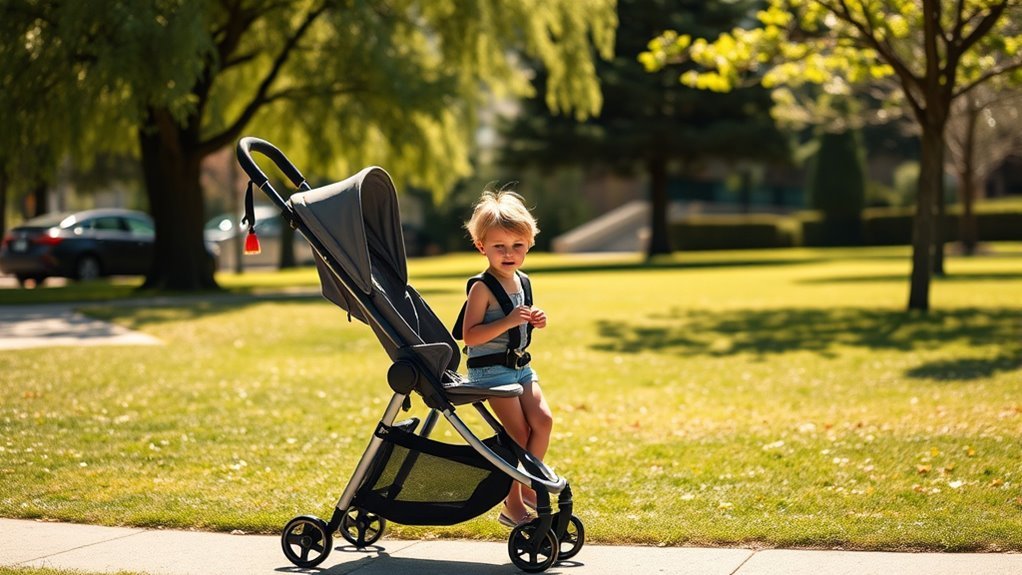
The BOB Revolution Single Stroller has a generous seat, but that does not mean it fits every taller child. If your child is 52 inches tall, the manufacturer’s height limit matters more than how spacious the seat appears. The answer also depends on whether you own an older Revolution or the newer Revolution Flex 3.0.
Quick Answer
No. A 52-inch child exceeds the documented 44-inch maximum height of the BOB Revolution Single Stroller, including the Flex 3.0. The Flex 3.0 also has a 75-pound combined child-and-luggage capacity. Meeting the weight limit does not cancel the height restriction. The Duallie is not a suitable workaround.
Key Takeaways
- The BOB Revolution Flex 3.0 has a maximum child height of 44 inches.
- Its 75-pound capacity includes the child and luggage, rather than representing an unrestricted child-only allowance.
- Older Revolution models may have different weight capacities, so identify your exact stroller before comparing specifications.
- The Revolution Flex 3.0 Duallie also has a 44-inch child height limit and a 50-pound limit per seat.
- Adjustable handlebars, suspension, and a spacious canopy do not extend the manufacturer’s child-size limits.
- For a 52-inch child who needs assisted mobility, consider equipment specifically sized for older or taller children.
Is the BOB Revolution Single Stroller Too Small for 52 Inches?
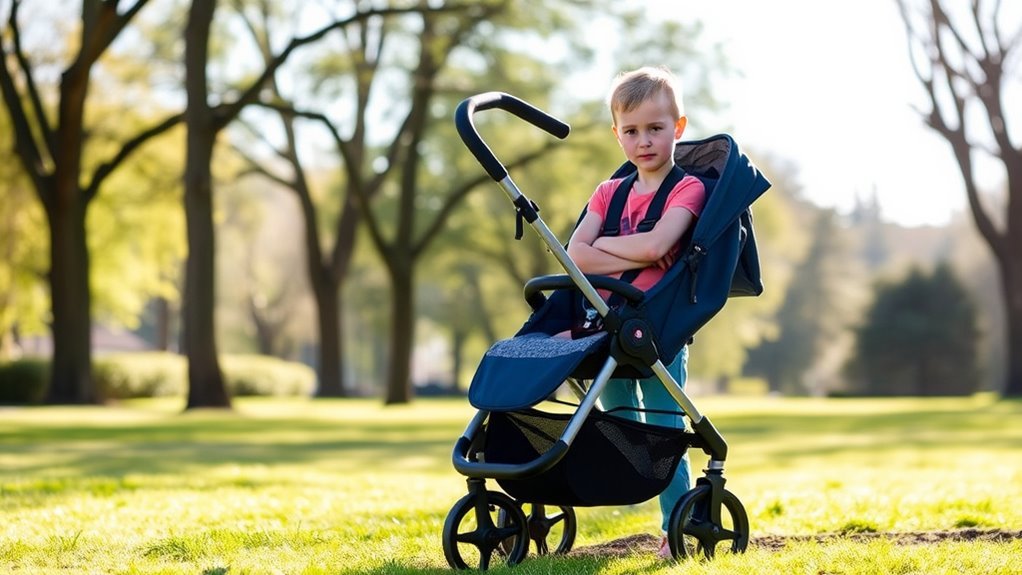
Yes. A 52-inch child is taller than the documented maximum height for the BOB Revolution Single Stroller.
The Revolution Flex 3.0 specifies a maximum child height of 44 inches (112 cm). That means a 52-inch child exceeds the limit by eight inches.
The manufacturer’s warning is not simply about comfort. Exceeding the specified height or weight can affect stroller stability and create a tipping hazard.
You can identify the correct instructions through the official BOB Gear user guides, which distinguish stroller models and provide applicable serial-number information.
A tall child might physically sit inside the seat, particularly if they have a shorter torso. However, physical fit does not establish that the stroller is approved for their height.
For a child who measures 52 inches, the appropriate next step is to choose equipment with a documented height range that includes them.
What Are the BOB Revolution Size Limits?
BOB Revolution size limits vary by model and generation. The Flex 3.0 has a 44-inch maximum child height and a 75-pound combined child-and-luggage capacity.
Older Revolution models have different weight specifications. Always use the instructions for the stroller you actually own rather than applying specifications from another generation.
Height and Weight Limits
The Revolution Flex 3.0 is designed for children within its stated size limits. Its suspension, padded seat, and adjustable handlebar help make outings more comfortable, but they do not change those limits.
BOB Gear’s official stroller comparison confirms that the Flex 3.0’s 75-pound capacity includes the child and luggage.
An older BOB Revolution SE manual lists a 70-pound maximum for the occupant and luggage combined, with a 44-inch occupant height limit. These values appear in the manufacturer’s Revolution SE instruction manual.
These specifications explain why a general claim that every BOB Revolution supports a 70-pound child is inaccurate.
Tall Child Fit
For taller children, the important measurements are overall height, seated torso height, leg length, and weight. A child may have adequate legroom but still exceed the manufacturer’s overall height limit.
The Revolution Flex 3.0 includes a padded seat, protective canopy, adjustable suspension, and air-filled tires.
These features help with ride comfort and handling. However, none makes the stroller suitable for a child who exceeds its approved height.
The adjustable handlebar changes the caregiver’s pushing position. It does not raise the seat back, increase the child’s headroom, or extend the harness range.
Height Limit vs. Weight Limit
Height and weight are separate stroller restrictions. A child must remain within both limits, not just one.
Consider a child who is 52 inches tall and weighs 64 pounds. That child is below the Flex 3.0’s 75-pound combined capacity before luggage is added, but exceeds its 44-inch height limit.
The weight allowance therefore does not make the stroller suitable.
- Height limit: Defines the maximum approved standing height of the child.
- Weight capacity: Defines how much weight the stroller may carry under the manufacturer’s specifications.
- Seat dimensions: Help determine comfort and positioning but do not override either maximum.
Do not confuse the stroller’s overall height, handlebar height, or canopy height with its approved child height.
Why a 52-Inch Child Feels Cramped
A taller child may experience restricted headroom, limited leg support, or an awkward seating position in the Revolution Single Stroller.
The exact problem depends on the child’s proportions. Two children of the same standing height can have different torso and leg lengths.
Height Limit Concerns
The main concern is that a 52-inch rider exceeds the manufacturer’s specified size range.
Possible signs of a poor fit include:
- The child’s head touches the canopy or upper frame.
- The shoulders sit above the intended harness position.
- The child must slouch to remain inside the seating area.
- The knees rise unusually high or the feet lack comfortable support.
Not every child will show all these signs. However, an apparently comfortable seating position does not remove the manufacturer’s height restriction.
Seat Room and Leg Support
Seat dimensions affect how comfortably a child can remain seated. As a child grows, the distance between the seat back, seat base, and foot area becomes more important.
The following comparison describes possible fit differences. It is not a manufacturer-approved sizing chart.
| Factor | Within approved limits | 52-inch child |
|---|---|---|
| Seat room | Assess individual fit | May be restricted |
| Leg support | Should support natural positioning | May be insufficient |
| Seat back | Should support the torso | May sit too low |
| Headroom | Should allow comfortable clearance | May be reduced |
| Overall fit | Must meet all manufacturer limits | Exceeds documented height limit |
A child’s feet do not necessarily need to sit flat against the foot area. What matters is whether their legs have suitable support without forcing an uncomfortable position.
For longer outings, an undersized seat can increase pressure at the thighs and reduce comfortable back support.
How to Check Fit at Home
You can check stroller fit by comparing the manufacturer’s specifications with your child’s measurements. If the child exceeds a published maximum, do not treat a successful test fit as permission to continue using the stroller.
For children who remain within the approved limits, use this checklist:
- Identify the model. Find the model information and serial number, then consult the matching instruction manual.
- Measure standing height. Have your child stand upright against a wall without shoes.
- Check weight. Compare the child’s weight and any luggage against the applicable capacity.
- Check headroom. With the child seated, confirm that the canopy and frame do not press against the head.
- Check the harness. Position the shoulder straps according to the manual and confirm that they fit snugly without forcing the child downward.
- Check leg support. Look for comfortable knee positioning and adequate support beneath the thighs and feet.
- Assess posture. The child should be able to sit naturally without slouching to avoid the canopy or frame.
If the child has already exceeded the manufacturer’s height limit, stop at the measurement stage and look for a correctly sized alternative.
Signs Your Child Won’t Fit Well
A stroller is becoming too small when the child’s body no longer fits its seat and restraint system comfortably. These signs can appear before the child reaches the maximum weight.
- Head contact with the canopy or frame
- Shoulder straps that cannot reach the proper position
- Persistent slouching or an unusually curled posture
- Limited space for the knees and feet
- Frequent shifting to relieve pressure
- Difficulty securing the harness correctly
Do not loosen the harness excessively to create more space. A loose harness can increase the risk of falling or sliding out.
Likewise, removing restraint components or modifying the frame is not an appropriate way to accommodate a taller passenger.
For a child who is already 52 inches tall, the published height limit alone is sufficient reason to stop using the documented Revolution models.
When a 52-Inch Child May Still Fit
A 52-inch child may physically fit inside a BOB Revolution seat, but that does not mean the stroller is approved for their size.
Children have different body proportions. A child with shorter legs and a longer torso may experience different fit problems than one with a shorter torso and longer legs.
Generous padding, air-filled tires, and adjustable suspension can make the ride feel more comfortable. They cannot compensate for exceeding the manufacturer’s height limit.
Similarly, a child who weighs 64 pounds may be below the stated combined weight capacity of a Flex 3.0, depending on luggage. That does not change the height restriction.
The distinction is simple: being able to sit inside a stroller is not the same as meeting its approved operating limits.
Best Stroller Alternatives for Taller Kids
For a 52-inch child, look for a stroller or mobility device whose published height and weight limits include the child’s measurements.
Several larger-looking conventional strollers have generous weight capacities but retain relatively low height limits. A double stroller is not automatically suitable for a taller child.
The following models illustrate why both measurements need checking.
| Stroller | Key feature | Fit considerations |
|---|---|---|
| BOB Revolution Flex 3.0 Duallie | Two individual seats | 44-inch height limit; 50 pounds per seat |
| City Mini GT | Compact folding design | Confirm the exact generation and its child-height limit |
| Thule Urban Glide 2 | Jogging design and adjustable handlebar | 44-inch height limit; 49-pound child limit |
| Baby Jogger Summit X3 | All-terrain suspension and hand-operated brake | 75-pound child capacity; confirm height and seated fit |
| Joovy Caboose Ultralight Graphite | Sit-and-stand layout for two children | 45-pound limit per seating position; not a verified 52-inch solution |
BOB’s Flex 3.0 Duallie manual specifies a 100-pound combined capacity, with a maximum of 50 pounds per child and a 44-inch height limit. Its second seat does not extend the approved height range.
The original Thule Urban Glide 2 manual specifies a 49-pound child limit and a 75-pound combined capacity. Its maximum child height is approximately 44 inches.
The Baby Jogger Summit X3 specifications state that it supports children up to 75 pounds. That higher weight allowance does not, by itself, establish suitability for a 52-inch child.
Joovy’s Caboose comparison chart lists the Ultralight Graphite’s front seat, rear seat, and standing platform at 45 pounds each.
For a child who needs a stroller because of mobility, endurance, or positioning needs, a purpose-built adaptive push chair may be appropriate. Such equipment comes in different sizes and can offer more suitable seating support.
A pediatric occupational therapist or physical therapist can help assess the child’s measurements and mobility needs before selecting equipment.
Safety and Comfort Risks for Taller Riders
Exceeding a stroller’s published height limit is a safety issue, not merely a comfort concern.
BOB Gear warns that exceeding the maximum height or weight can make the stroller unstable and cause it to tip. A child who cannot be secured correctly also faces additional restraint-related risks.
Height and Fit Limits
The BOB Revolution Single Stroller must be used within its manufacturer’s height and weight specifications.
For a taller child, particular concerns include restricted headroom, inadequate torso support, and shoulder straps that no longer sit in the intended position.
- The child’s head should not press against the frame.
- The harness should fit according to the manufacturer’s instructions.
- The child should not need to slouch to remain seated.
- Legs and feet should remain clear of the wheels.
These checks are useful for an appropriately sized stroller, but they do not replace the published limits.
Warning: Do not use a BOB Revolution beyond its specified maximum height or weight. Do not remove the harness, modify the seat, or rely on a comfortable-looking fit to override the manufacturer’s safety instructions.
Stability for Taller Kids
A child’s size and the stroller’s load distribution can affect handling and stability. Uneven terrain and quick changes in direction can create additional challenges.
BOB Gear’s official stroller safety guidance recommends locking the swivel front wheel during exercise, checking wheel attachments, and using the wrist strap.
| Factor | Safety consideration |
|---|---|
| Child height and weight | Must remain within manufacturer limits |
| Uneven terrain | Requires careful handling and appropriate wheel settings |
| Wheel attachments | Must be securely installed before use |
| Harness | Must fit securely and remain fastened |
| Wrist strap | Helps prevent separation from the stroller |
These precautions support correct stroller use. They are not a substitute for choosing a stroller that fits the child.
Comfort on Long Rides
Long outings make seat support, headroom, and leg positioning more noticeable. An undersized stroller may cause discomfort even when its suspension produces a smooth ride.
Generous padding can reduce pressure at contact points, while an appropriate recline can support a comfortable resting position during ordinary walks.
However, reclining the seat or adjusting the suspension cannot extend the approved child-height limit.
For children who still fit their stroller, regular breaks provide opportunities to stretch and change position.
For children who have outgrown it, choosing an appropriately sized seat is the more meaningful solution.
Final Verdict for a 52-Inch Child
A child measuring 52 inches exceeds the documented height limit of the BOB Revolution Single Stroller.
The larger combined weight capacity of the Flex 3.0 does not make it appropriate for that child. Nor does switching to a Duallie solve the height restriction.
| Factor | Assessment | Result |
|---|---|---|
| Height | 52 inches versus 44-inch limit | Exceeds manufacturer specification |
| Weight | Depends on child, luggage, and model | Must be checked separately |
| Comfort | Headroom and leg support may be restricted | Possible poor seating fit |
| Duallie | Same documented 44-inch height maximum | Not a height-limit workaround |
| Alternative | Equipment approved for the child’s measurements | Appropriate next step |
If the child needs assisted transport, look for a model with verified dimensions and suitable support. For ongoing mobility needs, professional fitting can help avoid purchasing another undersized stroller.
Frequently Asked Questions
Is a BOB Revolution Stroller Big Enough for a 7-Year-Old?
A BOB Revolution stroller may fit some children of that age, but age alone does not determine suitability. Check the exact model’s height and weight limits. A 7-year-old who is 52 inches tall exceeds the documented 44-inch maximum for the Revolution models discussed here.
What Is the Height Limit for a BOB Revolution Stroller?
The documented maximum child height for the Revolution Flex 3.0 and older Revolution SE is 44 inches (112 cm). Their weight capacities differ, so use the correct manual for your stroller’s model and generation.
Which BOB Stroller Is Suitable for Bigger Kids?
Suitability depends on the child’s height, weight, and seating needs. The Revolution Flex 3.0 Duallie has two seats, but each has a 50-pound child limit and the stroller retains a 44-inch height limit. It is not an appropriate alternative for a child who measures 52 inches.
At What Age Can I Use a BOB Jogging Stroller?
For the Revolution Flex 3.0, BOB recommends a compatible infant car seat and adapter for younger infants. It recommends waiting until at least 8 weeks for stroller-seat use without the infant car seat and at least 8 months before jogging or off-road use. Consult your pediatrician about your child’s readiness.
Conclusion
The BOB Revolution Single Stroller offers comfortable seating and capable suspension for children within its approved size range. However, its documented 44-inch height limit makes it unsuitable for a child measuring 52 inches.
Choose your next stroller or mobility device by its published child-height limit, weight capacity, seat dimensions, and harness fit. A larger-looking stroller or higher weight rating alone is not enough.
Sources
- BOB Gear User Guides and Product Resources: Official manuals and model identification.
- BOB Gear Stroller Comparison: Revolution Flex 3.0 combined weight capacity and product features.
- BOB Revolution SE Instruction Manual: Older Revolution height limit, weight capacity, and safety warnings.
- BOB Gear Safety Standards: Wheel locking, wrist strap, age recommendations, and safe operation.
- Thule Urban Glide 2 Instructions: Child height, child weight, and combined load limits.
- Baby Jogger Summit X3 Specifications: Child weight capacity and stroller features.
- Joovy Caboose Comparison Chart: Individual seat and standing-platform capacities.
