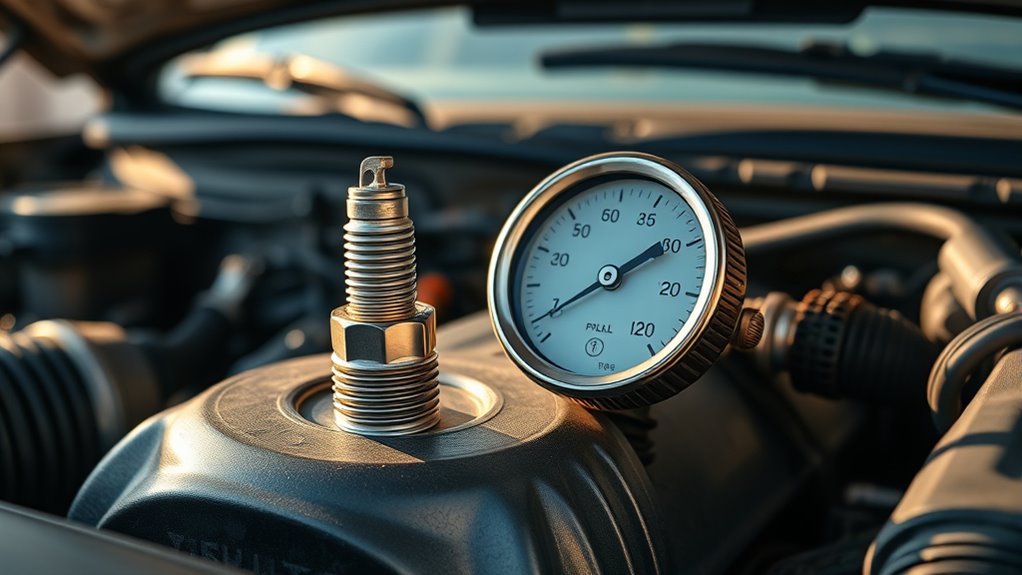
The 2006 Dakota 4.7 spark plug gap is a small measurement that makes a big difference to ignition performance. An incorrect gap can cause rough idling, hesitation, or misfires, even when the plugs are new. Before replacing them, you need the correct factory specification, compatible plugs, and a safe installation method.
Quick Answer
The factory spark plug gap for the 2006 Dodge Dakota 4.7L V8 is 0.040 inch (1.00 mm). The standard engine uses Champion RC12MCC4 nickel spark plugs, listed under Mopar part number 56028236AA. Check your engine’s emissions label before buying replacements, especially if you have the High Output version. Verify each plug’s gap and use the correct installation torque.
At a Glance
| Difficulty | DIY maintenance; some plugs require careful access around engine components. |
| Tools Needed | 5/8-inch spark plug socket, ratchet, extensions, 10 mm socket, gap gauge, torque wrench, compressed air, and safety gloves. |
Key Takeaways
Key Takeaways
- Chrysler’s 2006 specifications list a 0.040-inch gap for the 4.7L V8, while the separate 3.7L V6 specification is 0.044 inch.
- Factory-type Champion nickel plugs are the safest starting point for the standard 4.7L engine. Match replacement plugs to your exact engine.
- The 2006 maintenance schedule calls for spark plug replacement at 30,000-mile intervals.
- Never pry against the delicate center electrode of platinum or iridium plugs when adjusting the gap.
- Hand-start each plug, tighten it correctly, and inspect all ignition coil connections before starting the engine.
What Is the 2006 Dakota 4.7 Spark Plug Gap?
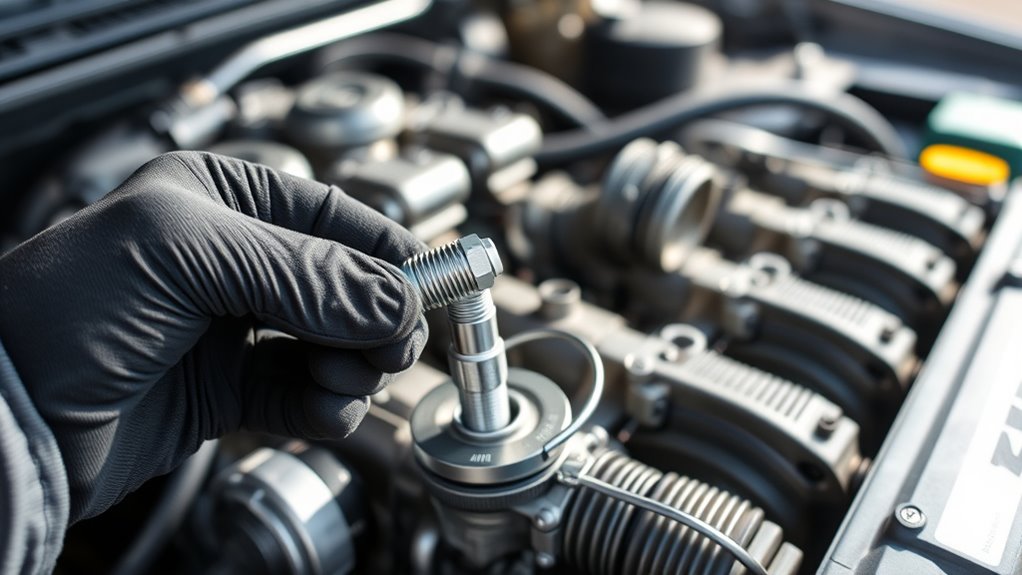
The correct factory gap for the 2006 Dodge Dakota 4.7L V8 is 0.040 inch (1.00 mm). This is the distance between the center electrode and the curved ground electrode at the end of the spark plug.
Chrysler’s 2006 Dakota TechCONNECT specifications identify Champion RC12MCC4 as the standard 4.7L plug. They also distinguish the 4.7L specification from the 3.7L V6, which uses a different plug and gap.
The gap matters because the ignition coil must generate enough voltage to send a spark across the space. If the gap is too wide, the spark may fail under load. If it is too narrow, ignition performance can suffer.
| Specification | Factory Information | What It Means |
|---|---|---|
| Engine | 4.7L V8 | Confirm the exact engine version |
| Spark plug gap | 0.040 inch (1.00 mm) | Target electrode spacing |
| Standard factory plug | Champion RC12MCC4 | Nickel-electrode design |
| Mopar part number | 56028236AA | Factory catalog reference |
| Spark plugs required | 8 | One per cylinder |
| Service torque | 20 ft-lb (27 N·m) | Confirm for the selected plug and application |
The underhood Vehicle Emission Control Information label is the final reference for the truck’s original emissions and ignition setup. This matters if the engine has been replaced or the vehicle uses a different 4.7L configuration.
The 2006 Dodge Dakota owner’s manual specifically directs owners to that label for spark plug identification.
Do not assume a 0.044-inch aftermarket plug is correct simply because it appears in an online listing for a Dodge Dakota.
Best Spark Plugs for the 2006 Dakota 4.7
For a stock 2006 Dakota with the standard 4.7L V8, the best starting point is the factory-specified Champion RC12MCC4. Compatible platinum or iridium replacements may also work, but they must match the engine’s required dimensions, heat range, and design.
The original plug uses a conventional nickel-electrode design with a copper-containing core. This is often described as a copper spark plug, although the firing surfaces are not made entirely of copper.
Before choosing a replacement, distinguish between these options:
- Champion RC12MCC4: Factory-specified nickel plug for the standard 4.7L engine. It provides the most direct match to the original specification.
- NGK iridium plugs: Some catalog-listed replacements use fine-wire iridium electrodes. Compatibility depends on the exact part number and engine version.
- Bosch platinum plugs: Certain platinum designs are available as aftermarket alternatives. Match the manufacturer’s application listing instead of choosing by electrode material alone.
- Other platinum replacements: These can offer good electrode wear resistance when their heat range, reach, and construction match the vehicle.
The 2006 Dakota was also available with a 4.7L High Output engine. Standard and High Output versions can have different original plug applications, so identify your engine before ordering.
The eighth character of the VIN can help distinguish the engine: N identifies the standard 4.7L V8, while J identifies the High Output version. Confirm this against the vehicle’s engine label and a VIN-specific parts catalog.
Do not assume an iridium or platinum upgrade automatically improves horsepower, fuel economy, or replacement intervals. The correct plug design and heat range matter more than the marketing label.
Although some premium plugs offer longer electrode life, that does not automatically extend the Dakota’s factory maintenance schedule. For 2006, the scheduled spark plug replacement interval is 30,000 miles.
Why You Should Still Check Pre-Gapped Plugs
Pre-gapped spark plugs should still be checked because their factory setting may not match your Dakota’s requirements. Packaging, shipping, and handling can also affect the ground electrode.
One spark plug part number can fit several engines with different required gaps. That is why a plug labeled pre-gapped does not automatically mean it is ready for your 4.7L V8.
NGK’s official spark plug gap guidance recommends checking the gap against the vehicle manufacturer’s specification before installation.
Look closely for these problems:
- A gap that differs from the required setting.
- A bent or damaged ground electrode.
- Cracked ceramic insulation.
- Damaged threads or an incorrect plug design.
- An electrode that does not match the manufacturer’s specified construction.
An incorrect gap can increase the voltage needed to fire a plug. This may contribute to misfires, poor acceleration, reduced fuel efficiency, or extra stress on ignition components.
A visual check also helps catch shipping damage before the plug is installed in a hard-to-reach cylinder.
How to Check Spark Plug Gap Before You Buy
Start by confirming that the replacement plug fits your exact Dakota engine. Then use an appropriate measuring tool to check whether the electrode gap matches the required setting.
You usually cannot measure a sealed plug before paying for it. Instead, verify the catalog specification before buying and inspect the actual gap before installation.
- Confirm the engine. Identify whether your truck has the standard or High Output 4.7L V8.
- Match the part number. Confirm thread size, reach, seat design, heat range, and manufacturer fitment.
- Inspect the new plug. Look for bent electrodes, damaged insulation, or loose components.
- Measure the gap. Use a suitable wire-style or pin-style gauge and check the space between the electrodes.
- Adjust only if allowed. Follow the plug manufacturer’s instructions and move only the ground electrode.
- Recheck the reading. Make sure the gap is correct and the electrodes remain properly aligned.
A wire-style gauge is particularly useful for fine-wire platinum and iridium plugs. Some electrode designs should not be adjusted with ordinary wedge-style tools.
Warning: Never pry against a fine-wire center electrode or ceramic insulator when adjusting a platinum or iridium plug. If the gap is far outside specification, return the plug or consult the manufacturer instead of forcing it into position.
A correctly measured gap should let the appropriate gauge pass through with slight, even resistance, without forcing the electrodes apart.
How to Spot Counterfeit Spark Plugs
Counterfeit spark plugs may have incorrect markings, poor electrode construction, or packaging that does not match genuine products. Comparing the part against manufacturer information helps reduce the risk of installing a fake.
Suspicious packaging alone does not prove a plug is counterfeit. Use several checks together, especially the seller’s reputation and the physical construction of the plug.
Verify Packaging Details
Start by checking the printed part number, manufacturer name, and packaging quality. Genuine products generally use consistent branding and clearly printed labels.
Look for differences between the package and the manufacturer’s current product information.
| Check | Expected | Concern |
|---|---|---|
| Logo | Clear, consistent branding | Blurry or incorrect printing |
| Seal | Packaging appropriate for the manufacturer | Unexpected damage or tampering |
| Part number | Matches verified catalog data | Missing or mismatched code |
Not every genuine spark plug package uses holograms or security seals. A missing hologram is not evidence of a counterfeit unless that specific product is supposed to have one.
Unusually low prices can raise suspicion, but price alone cannot establish authenticity.
Check Seller Source
Buying from an authorized dealer or established parts retailer is one of the simplest ways to reduce counterfeit risk. A trustworthy supplier should provide clear part-number information and a reasonable return process.
Review the seller’s history and look for repeated complaints involving incorrect packaging, poor fitment, or premature plug failure.
If the seller cannot establish the product’s source or confirm compatibility with your engine, choose another supplier.
Manufacturer guidance can also help. NGK’s counterfeit spark plug identification guide explains physical warning signs found on some fake products.
Compare Plug Markings
Inspect the markings and construction of the spark plug itself. Genuine parts generally have consistent manufacturer identification, clean finishes, and electrode shapes that match the cataloged product.
| Marking | What to Check |
|---|---|
| Logo and part number | Match the manufacturer’s catalog and packaging |
| Font and spacing | Look for inconsistent printing or smudges |
| Production markings | Compare applicable lot codes and shell markings |
| Electrode construction | Check tip shape, alignment, and finish |
Inspect the ceramic insulator, ground electrode, and metal shell. Rough finishing, unusual machining marks, or differences from verified genuine examples deserve further attention.
These checks are warning signs, not guaranteed proof. If authenticity remains uncertain, avoid installing the plugs until the supplier or manufacturer confirms them.
Tools Needed for the Spark Plug Swap
Replacing the plugs on a 2006 Dakota 4.7L V8 requires basic hand tools, a gap gauge, and a torque wrench. Extensions help reach plugs hidden behind other engine components.
Prepare the tools before removing any ignition coils. Keeping everything nearby reduces the chance of leaving a plug well open while searching for equipment.
Essential Hand Tools
A 5/8-inch spark plug socket with a retaining insert helps remove plugs from deep wells. A 10 mm socket handles common coil retaining fasteners and nearby brackets.
You will also need a ratchet, suitable extensions, and a torque wrench that can accurately tighten the replacement plugs.
| Tool | Purpose | Note |
|---|---|---|
| 10 mm socket | Remove coil and access fasteners | Avoid overtightening small bolts |
| 5/8-inch spark plug socket | Remove and install plugs | Use a retaining insert |
| Ratchet and extensions | Reach plug wells | Keep the socket aligned |
| Flat screwdriver | Help release accessible intake clamps | Avoid damaging plastic tabs |
| Air compressor | Clear debris around plugs | Wear eye protection |
| Torque wrench | Tighten plugs accurately | Follow applicable specifications |
A magnetic or rubber-retaining spark plug socket can make removal easier, especially around the rear cylinders.
Gap Checking Gear
Use a spark plug wire gauge or an appropriate precision gap tool to measure each plug. The measurement should match the specification for the engine and selected replacement.
For the factory-type standard 4.7L plug, the target is 0.040 inch.
Keep the measuring surfaces clean. Dirt or metal particles can affect the reading and potentially damage delicate electrodes.
Check every plug individually rather than measuring one and assuming the remaining plugs are identical.
Safety and Cleanup
Work only after the engine has cooled. Hot cylinder heads, spark plugs, and exhaust components can cause burns, while removing plugs from a hot engine can make thread damage more likely.
Turn the ignition off and keep the key away from the vehicle while working on the ignition system.
- Wear gloves and safety glasses.
- Keep dirt, loose bolts, and tools away from open plug wells.
- Use compressed air carefully to remove grit before opening the cylinders.
- Release coil connectors by their locking tabs, not by pulling the wires.
- Keep electrical connectors and intake openings protected from contamination.
If intake tubing or brackets block access, remove only the components necessary for the job and keep their fasteners organized.
How to Remove the Old Dakota Spark Plugs
Each of the eight spark plugs sits beneath an individual ignition coil. Remove the coil first, clean the plug well, and then unscrew the plug carefully.
The process is similar across cylinders, although some rear plugs offer less working space.
- Prepare the engine. Park on level ground, turn off the ignition, allow the engine to cool, and open the hood.
- Remove obstructing components. Loosen the necessary air intake tubing or brackets to reach the coil you are servicing.
- Clean around the coil. Blow away loose dirt before removing the coil from the cylinder head.
- Disconnect the electrical connector. Press the locking tab and gently pull the connector from the ignition coil.
- Remove the coil fastener. Use the appropriate socket, commonly 10 mm, and place the fastener somewhere safe.
- Lift out the ignition coil. Pull it straight upward with a gentle wiggle. Avoid tearing the rubber boot or its sealing O-ring.
- Clean the plug well. Blow away remaining debris before loosening the spark plug.
- Remove the spark plug. Fit the 5/8-inch spark plug socket securely and turn counterclockwise with controlled pressure.
- Inspect the old plug. Look for electrode wear, carbon deposits, cracks, oil contamination, or an unusually large gap.
- Repeat carefully. Work through all eight cylinders, keeping track of any unusual plug condition and its original cylinder position.
Oil inside a plug well can indicate a sealing issue, while heavy carbon deposits may point to combustion or ignition problems. Replacing the plug alone may not correct the cause.
Warning: If a spark plug binds, becomes unusually difficult to turn, or feels cross-threaded, stop. Forcing it can damage the cylinder head threads. A damaged plug or threaded hole may require professional repair.
A factory 2006 Chrysler spark plug service procedure for the related engine family confirms the importance of cleaning the well, starting plugs by hand, and using the specified tightening torque.
How to Install New Spark Plugs Correctly
Correct installation begins with a clean plug well, the proper replacement plug, and a verified electrode gap. Thread each new plug by hand before using a torque wrench.
For the standard 4.7L V8, factory service specifications identify 20 ft-lb (27 N·m) as the spark plug tightening torque. Confirm the applicable specification for your engine and plug before installation.
- Verify the replacement. Check the part number, heat range, dimensions, and electrode condition.
- Measure the gap. Confirm the required 0.040-inch gap for the factory-type standard 4.7L application.
- Clean the well. Remove debris that could fall into the cylinder or interfere with plug seating.
- Lower the plug carefully. Use a retaining spark plug socket so the electrode does not strike the cylinder head.
- Start the threads by hand. Turn the plug gently until it threads smoothly and seats without binding.
- Tighten to specification. Use a calibrated torque wrench and avoid excessive force.
- Inspect the coil boot. Check for cracks, damaged rubber, contamination, or a worn sealing O-ring.
- Reinstall the coil. Seat it fully over the plug, secure its retaining fastener, and reconnect the electrical connector.
- Restore removed components. Refit intake tubing, supports, and brackets before starting the engine.
Do not drop spark plugs into deep wells. An impact can bend the ground electrode or damage the ceramic insulator without leaving obvious external damage.
Be careful with thread lubricants. Many modern plated spark plugs are designed to be installed without anti-seize.
According to NGK’s installation guidance, adding anti-seize to its plated plugs can change tightening friction and increase the risk of overtorquing. Follow the selected plug manufacturer’s instructions rather than applying lubricant automatically.
Also avoid overtightening the ignition coil retaining fasteners. They are smaller than the spark plugs and use different tightening requirements.
Once everything is assembled, visually inspect the completed work before turning the ignition on.
Final Checks Before You Start the Engine
Before starting your Dakota, confirm that every ignition coil is fully seated, every electrical connector is locked, and all removed intake components are back in place.
This final inspection helps catch simple mistakes that could otherwise cause an immediate misfire or rough idle.
- Confirm all eight replacement plugs were installed correctly.
- Make sure no tools or loose fasteners remain in the engine bay.
- Check that ignition coil boots sit securely over their plugs.
- Verify that electrical connectors are fully attached.
- Inspect the air intake tubing and clamps for loose connections.
- Check that no wiring is trapped beneath a bracket or component.
Start the engine and listen for unusual noises. The engine should idle steadily without new hesitation, shaking, or warning lights.
If a misfire appears immediately after replacement, turn the engine off and recheck the coil connections and installation.
A diagnostic scanner can help identify a misfiring cylinder. Codes such as P0300 indicate random or multiple-cylinder misfires, while P0301 through P0308 identify individual cylinder misfires.
These codes do not prove the new spark plugs are defective. Ignition coils, wiring, injectors, and other engine conditions can also cause misfires.
If the engine runs normally at idle, take a careful test drive and watch for hesitation during acceleration. A persistent flashing check-engine light indicates an active misfire that can damage the catalytic converter. Avoid continued driving until the problem is corrected.
Frequently Asked Questions
What Is the Recommended Spark Plug Gap for a 4.7L Jeep Engine?
Many early Jeep 4.7L V8 applications use a 0.040-inch spark plug gap. However, the correct specification depends on the model year and engine version. Confirm the underhood emissions label and the appropriate service information rather than assuming every Jeep 4.7L uses identical plugs.
What Is the Recommended Spark Plug Gap for a Dodge 4.7L Engine?
The recommended spark plug gap for the 2006 Dodge Dakota 4.7L V8 is 0.040 inch, or approximately 1.00 mm. Other Dodge 4.7L applications can have different plug designs, especially in later model years. Use the specification for your exact vehicle rather than a general engine-family listing.
What Are the Best Spark Plugs for a 4.7L Dodge Dakota?
Champion RC12MCC4 is the factory-specified nickel spark plug for the standard 2006 Dakota 4.7L V8. Compatible NGK iridium or Bosch platinum plugs may be alternatives when the exact part number matches the engine. Always confirm fitment, heat range, and manufacturer guidance before changing plug designs.
What Is the Recommended Spark Plug Gap for a 2000 Dodge Dakota With a 4.7L Engine?
The 2000 Dodge Dakota 4.7L V8 is generally specified at a 0.040-inch spark plug gap. Factory service information identifies Champion RC12MCC4 plugs for early standard 4.7L applications. Check the vehicle’s emissions label for its original specifications before installing replacement plugs.
How Often Should Spark Plugs Be Replaced on a 2006 Dakota 4.7?
The 2006 Dakota owner’s maintenance schedule calls for spark plug replacement at 30,000-mile intervals. Do not assume that installing platinum or iridium plugs automatically changes that schedule. Earlier inspection or replacement may be needed if you notice ignition problems or damaged plugs.
What Happens if the Spark Plug Gap Is Too Wide?
An excessively wide spark plug gap increases the voltage required to fire the plug. This can contribute to misfires, hesitation, and poor acceleration, especially when the engine is under load. Recheck the electrode spacing and inspect the ignition coils if the problem continues after replacement.
Can I Install Pre-Gapped Spark Plugs Without Checking Them?
You should verify the gap even when replacement plugs arrive pre-gapped. The factory preset value may suit a different engine, and handling can damage the electrode. Use an appropriate measuring gauge, then follow the spark plug manufacturer’s instructions if an adjustment is necessary.
Conclusion
The correct 2006 Dakota 4.7 spark plug gap is 0.040 inch for the factory-specified standard V8 application. Use compatible plugs, measure the gap before installation, and tighten each plug correctly. With clean plug wells, careful coil handling, and a final ignition check, you can reduce avoidable misfires and keep your Dakota running smoothly.
Sources
- Chrysler TechCONNECT, 2006 Dakota specifications: Factory spark plug type, Mopar part number, and electrode gap.
- 2006 Dodge Dakota Owner’s Manual: Underhood emissions label reference and scheduled spark plug replacement.
- 2006 Chrysler Factory Spark Plug Service Procedure: Ignition coil removal, plug well cleaning, installation precautions, and tightening torque for the related 4.7L engine family.
- NGK Spark Plugs, Do I Need to Set the Gap?: Why pre-gapped plugs need verification and how to protect fine-wire electrodes.
- NGK Spark Plugs, Five Things You Should Know About Spark Plugs: Anti-seize precautions, electrode construction, gap measurement, and tightening practices.
- Niterra, Fake or Not?: Warning signs of counterfeit spark plugs and physical authenticity checks.

