
Choosing between a stroller and a pram comes down to your baby’s age, your daily routine, and how much support your child needs on outings. A pram gives newborns a flat, cozy place to rest, while a stroller works better once your child can sit with stronger head and neck control. Understanding the difference helps you choose safer, easier gear for walks, errands, travel, and city life.
Quick Answer
A pram is best for newborns because it usually has a flat bassinet-style seat for lying down. A stroller is better for older babies and toddlers who can sit upright with good head and neck control. Many convertible models combine both, giving you newborn support first and stroller convenience later.
Key Takeaways
- Choose a pram for a newborn who needs a flat, supportive sleep surface during walks.
- Choose a stroller once your baby can sit up with stronger head and neck control.
- Look for a stable frame, reliable brakes, a secure harness, and a seat position that suits your child’s age.
- A convertible pram-stroller can be a smart long-term choice if you want one product to cover multiple stages.
Understanding the Design and Functionality of Prams
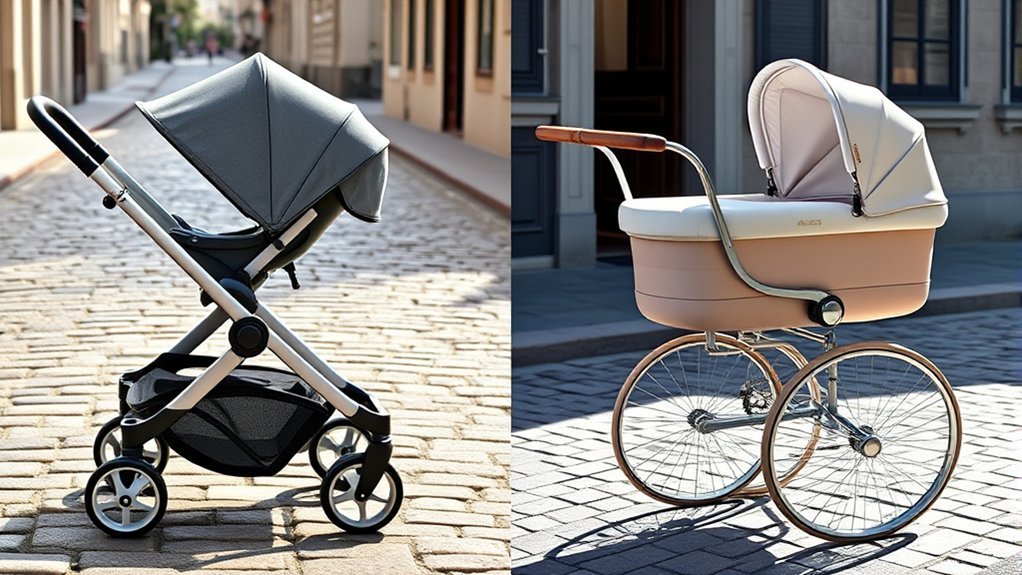
When it comes to transporting your newborn, prams stand out for their thoughtful design and functionality. A traditional pram gives your baby a flat, bassinet-style space, which is useful during the early months when babies need more support than an upright seat can provide.
Prams are most useful for newborns and young infants who cannot sit up yet. Their flat bassinet lets your baby rest more naturally during walks and short outings. This design can also make naps easier when you are outside the house.
Pram types vary, with many models featuring larger wheels and suspension systems that improve comfort on sidewalks, parks, and uneven paths. Modern prams may include adjustable canopies for sun protection, spacious storage baskets underneath, and padded interiors for added comfort.
Convertible prams are especially practical because they shift from a bassinet to a stroller seat as your child grows. This adaptability can save space and reduce the need to buy separate gear. By choosing a pram, you invest in a reliable, comfortable option for your baby’s earliest outings.
Key Features and Benefits of Strollers
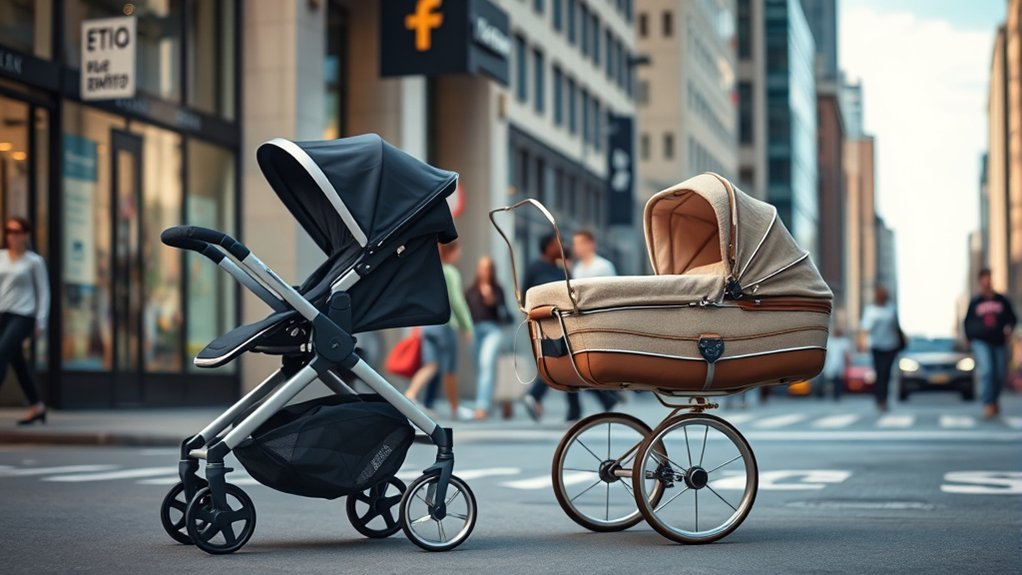
While prams are ideal for many infants, strollers are designed to accommodate your growing child, often starting around the time they can sit with steady head and neck control. One of the main stroller benefits is adjustable seating, which lets your child sit upright, recline for rest, or ride more comfortably during longer trips.
Many strollers come equipped with key safety features, such as a 5-point harness system, parking brakes, locking mechanisms, and padded seats. These features help keep your child secure during everyday outings.
Lightweight and portable, strollers often feature easy folding mechanisms, making them travel-friendly for busy parents. You’ll also find several types, including umbrella strollers, jogging strollers, double strollers, and travel system models. Each type serves a different lifestyle, from quick errands to airport travel or active outdoor routines.
The versatility of strollers extends their usefulness. Some models accept infant car seats, while others convert into multiple seating modes. Embracing a stroller means embracing freedom, flexibility, and easier movement as your child becomes more curious about the world.
Age Appropriateness: When to Use a Pram vs. a Stroller
Selecting the right time to switch from a pram to a stroller is essential for your child’s comfort and safety. Prams are ideal for newborns and young infants because they provide a flat, comfortable sleeping surface. This can be especially helpful before your baby has strong head, neck, and trunk control.
As your child grows and can sit up with better support, often around six months, a stroller becomes more practical. This change lets your baby look around, interact with surroundings, and ride in a more alert seated position.
However, using an upright stroller too early can cause discomfort if the seat does not recline enough or lacks proper support. If you want to use a stroller from birth, choose one that has a full recline or is approved by the manufacturer for newborn use. A travel system with an infant car seat may also work for short transfers, but it should not replace safe sleep guidance.
Warning: Do not place a newborn in an upright stroller seat unless the manufacturer says the model is suitable from birth. Newborns need proper head, neck, and airway support.
Many convertible prams can adapt as your child grows, offering a flat bassinet first and an upright stroller seat later. This can give you the comfort of a pram and the convenience of a stroller in one setup.
Pram vs. Stroller: Main Differences
A pram and a stroller may look similar at first, but they serve different stages of your child’s development. The biggest difference is the seating position. A pram usually lets a newborn lie flat, while a stroller usually places an older baby or toddler in a seated or semi-reclined position.
| Feature | Pram | Stroller |
| Best Age | Newborns and young infants | Babies with better sitting support and toddlers |
| Seat Position | Flat bassinet-style position | Upright or reclining seat |
| Portability | Usually bulkier | Often lighter and easier to fold |
| Best Use | Calm walks, newborn naps, early months | Errands, travel, city use, active toddlers |
Safety Considerations for Prams and Strollers
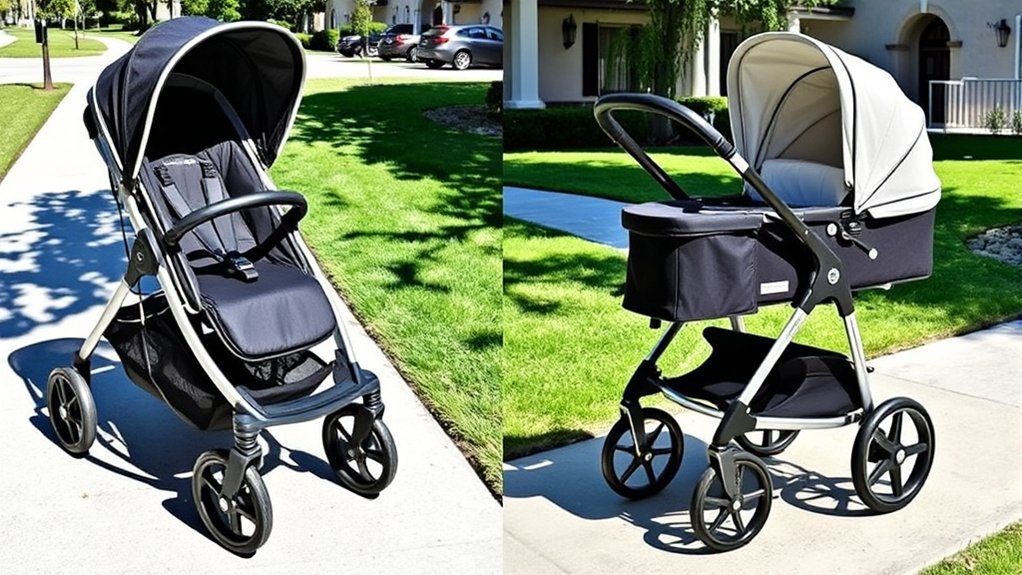
When choosing a pram or stroller, make sure it meets the relevant safety standard for your region. In the United States, look for products designed to meet stroller and carriage safety requirements such as ASTM F833 and applicable federal rules. In Europe and the UK, many products reference EN 1888. In Australia and New Zealand, you may see AS/NZS 2088.
Regular maintenance checks are also essential. A safe product can become risky if the brakes, wheels, frame, folding lock, or harness stop working properly. By prioritizing these safety considerations, you can feel more confident during daily outings with your little one.
Safety Standards Compliance
Understanding safety standards compliance helps you choose a pram or stroller that better protects your child. Look for safety certifications or compliance statements that match where you live. These standards typically address stability, strength, braking, locking, restraint systems, and labeling.
A stroller or pram should have a secure harness system to help prevent falls. Many stroller seats use a five-point harness, while bassinet-style prams may use different restraint guidance depending on the design. Always follow the product manual for the correct setup.
Also check the pram’s base and frame stability, especially if you plan to carry items in the storage basket. Never hang heavy bags from the handlebar unless the manufacturer says it is safe. Extra weight on the handle can make some models tip backward.
Regular Maintenance Checks
Regular maintenance checks help keep prams and strollers safe, comfortable, and easier to push. Conduct quick inspections before longer outings and deeper checks every few weeks.
- Wheels and Frame: Inspect for signs of wear, loose parts, cracks, bent areas, or wobbling.
- Harness System: Check that the harness is secure, properly threaded, and adjusted snugly for your child.
- Brakes: Test the brakes before every outing to prevent unintended rolling.
- Recline Adjustments: Verify that adjustments lock properly, especially for babies who need a flatter position.
- Folding Lock: Make sure the stroller or pram locks open fully before placing your child inside.
Maneuverability and Portability: Which One to Choose?

How do you choose between maneuverability and portability when selecting a stroller or a pram? Start with where you go most often. City parents may care more about folding size, stair handling, and public transport. Parents who walk through parks may value larger wheels, suspension, and a smoother ride.
Strollers are usually lighter and more compact, which helps in crowded spaces. Many have swivel front wheels for tight turns and one-hand folding systems for quick storage. Prams are often bulkier, but they may feel smoother for newborn walks because of their larger frame and cushioned bassinet.
| Feature | Stroller | Pram |
|---|---|---|
| Weight | Lightweight | Bulkier |
| Fold Mechanism | One-hand fold | Manual fold |
| Wheels | Swivel front wheels for tight spaces; lock the front wheel for rough terrain or jogging if the model allows it | Often larger wheels; may be fixed, swivel, or lockable depending on the model |
| Storage | Adjustable handles and baskets | Storage varies by model; many have under-bassinet baskets |
If you prioritize ease of movement and quick storage, a stroller is likely your best choice. However, if your focus is on comfort for your infant, consider a pram despite its portability limits.
Pro Tip: Before buying, test the fold, brake, handle height, and turning radius with one hand. These small details matter when you are holding a diaper bag or managing a tired child.
Lifestyle Factors Influencing Your Choice
When it comes to choosing between a stroller and a pram, your lifestyle plays a significant role in the decision-making process. The best choice is not only about age. It is also about your home, transport, storage space, and daily routine.
- Active Lifestyles: If you are an active parent, a lightweight stroller or jogging stroller may suit outdoor adventures and travel. Only use a jogging stroller for running when your child meets the manufacturer’s age and support guidance.
- Urban Living: In tight urban spaces, strollers offer strong maneuverability and easier folding for buses, elevators, apartments, and public transport.
- Child’s Age: Infants may benefit from the comfort of a pram, but as your child grows, a stroller becomes more practical.
- Budget Constraints: Convertible strollers that shift from pram mode to stroller mode can be a cost-effective solution for long-term use.
- Storage Space: If you live in a small apartment, measure your entryway, car trunk, and storage area before choosing a bulky pram.
- Travel Needs: If you fly often, a compact stroller may be easier to manage than a full-size pram.
Ultimately, understanding these lifestyle factors will guide you toward the right choice for your needs. Prioritize functionality, comfort, and safety so you feel fully equipped for everyday adventures.
Maintenance Tips for Prams and Strollers

Maintaining your pram or stroller is essential for your baby’s safety and comfort. Start with simple cleaning techniques. Wipe down the fabric and frame with a soft cloth to remove dust, food crumbs, and everyday grime. Check the manual before using detergents, bleach, or machine washing, since fabrics and coatings vary by model.
Regularly check the wheels and brakes for wear and tear. Remove hair, string, and debris from the wheels so they roll smoothly. If the stroller starts pulling to one side, squeaking, or shaking, inspect it before using it again.
Inspect the harness system and recline adjustments frequently. These safety accessories must work correctly and securely to keep your baby snug and protected. Store your stroller or pram in a dry place to prevent rust, mildew, and material deterioration, especially in humid areas.
Finally, always follow the manufacturer’s guidelines for cleaning and maintenance. The manual may include specific fabric care instructions, wheel care, lubricant guidance, and disassembly tips. By prioritizing these maintenance steps, you provide a more reliable and comfortable experience for both you and your baby.
Buying Checklist for Prams and Strollers
Before you buy, compare more than style and price. A good pram or stroller should match your baby’s stage, your space, and your daily movement.
- Age suitability: Check whether the model is approved for newborns, older babies, or toddlers.
- Recline: Newborns need a flat or near-flat position if the stroller is suitable from birth.
- Harness: Look for a secure harness that adjusts as your child grows.
- Brakes: Test the brake system and make sure it feels easy to engage.
- Fold: Try folding and unfolding the frame before buying, especially if you use a car or public transport.
- Weight: Choose a weight you can lift comfortably into your car or home.
- Canopy: A good canopy helps protect your child from sun, wind, and light rain.
- Storage: Make sure the basket fits your diaper bag without affecting stability.
- Cleaning: Removable, washable fabrics can make everyday use easier.
Note: Always check the product manual for weight limits, age limits, recline rules, approved accessories, and safe cleaning instructions. These details vary by brand and model.
Frequently Asked Questions
Can I use a stroller for newborns?
You can use a stroller for newborns only if it has proper newborn support, such as a flat or near-flat recline, a secure harness, and manufacturer approval for use from birth. If the seat is upright and not designed for newborns, use a pram, bassinet attachment, or approved travel system instead.
Are prams heavier than strollers?
Yes, prams are often heavier than strollers because they usually have a larger frame, bassinet-style body, bigger wheels, and extra padding. Strollers are often lighter and easier to fold, which makes them more convenient for errands, travel, and public transport.
What is the average lifespan of a stroller?
A stroller may last several years with proper care, but its useful life depends on build quality, storage, cleaning, terrain, and how often you use it. Replace or repair it sooner if the frame bends, brakes fail, wheels wobble, fabric tears badly, or the harness no longer secures your child properly.
Do prams offer better support for infants?
Yes, prams usually offer better support for newborns and young infants because they allow a flat resting position. This is helpful before your baby can sit upright with strong head and neck control. Still, you should always follow the manufacturer’s age, weight, and safe-use instructions.
Can strollers convert to car seats?
No. Strollers do not convert into car seats. Instead, a travel system lets you attach an infant car seat to a stroller, usually with adapters. This helps you move your baby from car to stroller without unbuckling them for short transfers.
Is a pram or stroller better for travel?
A stroller is usually better for travel because it is lighter, easier to fold, and simpler to carry through airports, cars, hotels, and public transport. A pram can still work well for newborns, but it may feel bulky during frequent travel.
Should I buy a pram, stroller, or convertible model?
Buy a pram if you mainly need newborn comfort, a stroller if your child can sit with support, and a convertible model if you want one setup that can grow with your baby. A convertible option often gives the best long-term value, but check weight, fold size, and storage before choosing.
Conclusion
In the journey of parenthood, choosing between a stroller and a pram is like picking the right vessel for a smooth sail. Picture yourself gliding through the park with a lightweight stroller, or cradling your little one in a cozy pram on a quiet stroll. Each option has its purpose, designed for different stages of your baby’s growth.
A pram is often the better choice for newborn comfort, while a stroller gives you more flexibility as your child grows. If you want one setup for multiple stages, a convertible model may offer the best balance. By weighing safety, age, comfort, portability, and your lifestyle, you can confidently choose the option that keeps your child comfortable and secure.
