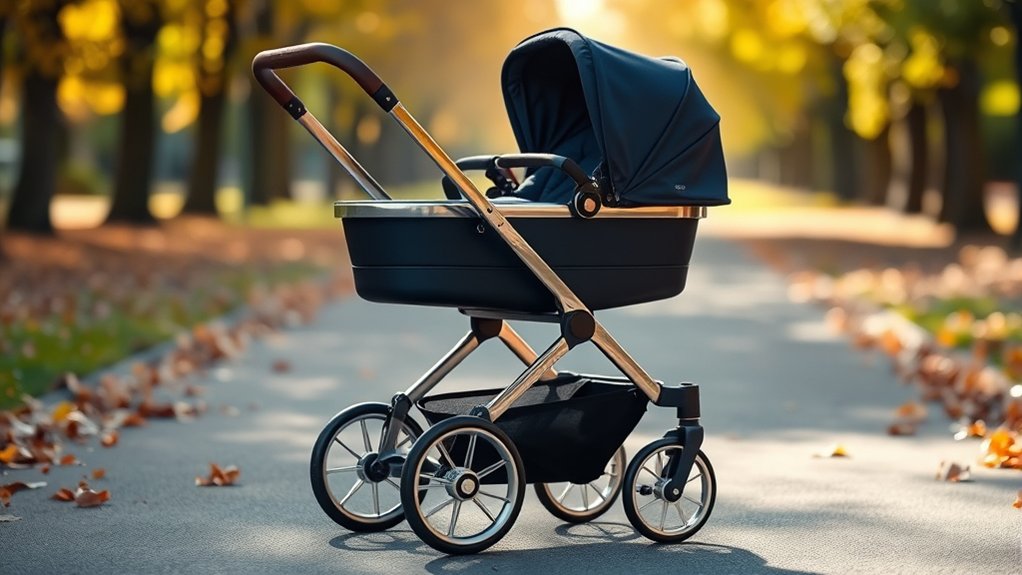
A baby pram gives newborns and young babies a flat, protected place to rest while you walk, travel, or run errands. Unlike many upright strollers, a pram focuses on early-infant comfort, sleep support, weather protection, and a smoother ride. The best choice depends on your baby’s age, your daily routine, storage space, terrain, and the safety features built into the frame.
Quick Answer
A baby pram is a wheeled baby carriage designed mainly for newborns and young infants who need to lie flat. It usually includes a bassinet-style sleeping area, protective hood, sturdy frame, suspension, and large wheels. Choose one with strong brakes, a secure harness, good ventilation, and a flat sleep surface.
Key Takeaways
- A traditional baby pram is best for newborns because it lets your baby lie flat during early development.
- Safety features matter most, including brakes, stability, harness design, ventilation, and a secure bassinet or seat attachment.
- Different pram types suit different families, from newborn prams and double prams to travel prams and all-terrain models.
- A pram should match your lifestyle, storage space, vehicle size, walking routes, and budget.
- Regular maintenance helps keep the pram safe, smooth, and reliable as your child grows.
Definition and Features of Baby Prams
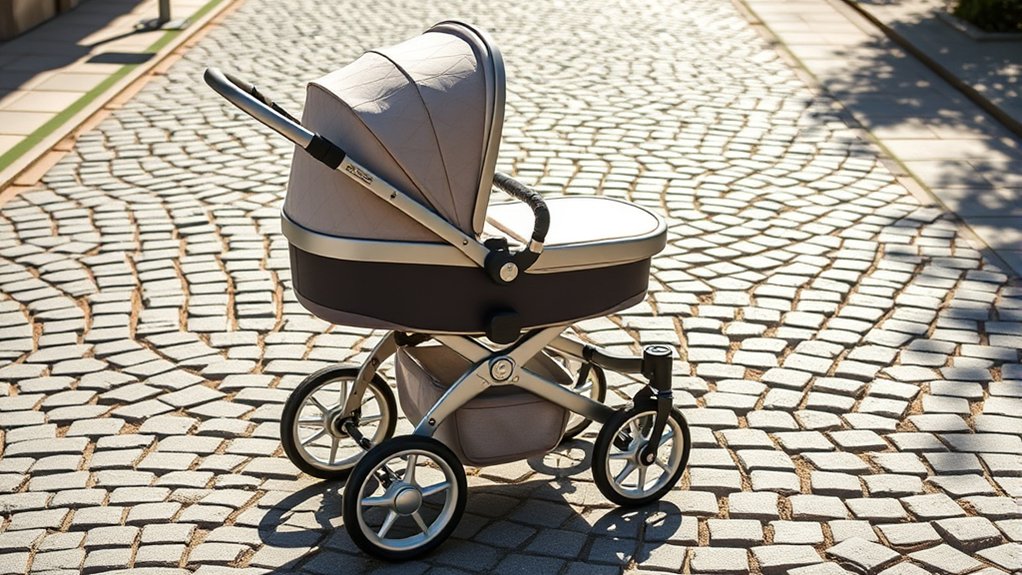
When you think about baby transportation, a baby pram stands out as a specialized option designed for the comfort and safety of newborns and infants. A classic pram has a bassinet-style body that lets your baby lie flat, which is helpful during the early months before your child can sit with steady head and neck control.
These prams usually include a spacious sleeping area, a high protective hood, padded lining, large wheels, and a stable frame. The flat position can support a more natural resting posture during supervised outings, while the hood helps shield your baby from wind, bright sun, and light rain.
Modern prams showcase design innovations that improve both function and style. Sturdy frames and large wheels can improve stability on sidewalks, parks, and uneven paths. Features like suspension systems, adjustable handles, storage baskets, removable bassinets, and washable fabrics add convenience for you while keeping your baby comfortable.
Some modern examples, like the My Babiie MB200 and MB500, show how many prams now combine luxury and practicality. These models often focus on appearance, storage, smooth handling, and comfort features. Before choosing any model, compare the weight limit, folded size, bassinet attachment, brake design, and whether the pram fits your everyday routine.
Note: The words “pram,” “stroller,” “pushchair,” and “carriage” are often used differently by region. In general, a pram usually means a lie-flat carriage for newborns, while a stroller usually means a more upright seat for older babies and toddlers.
Historical Evolution of Baby Prams

The baby pram has a long history. One commonly cited starting point is 1733, when William Kent created a wheeled infant carriage for the Duke of Devonshire’s children. Early designs were very different from today’s prams and were often made for wealthy families rather than everyday public use.
Since then, prams have changed considerably. Their design reflects changes in parenting, city life, manufacturing, safety expectations, and family mobility.
Here are three key milestones in this evolution:
- 1830s: Benjamin Potter Crandall began manufacturing baby carriages in the U.S., helping make wheeled baby transport more accessible to the public.
- Victorian Era: Queen Victoria helped popularize baby carriages, influencing their design and fashion. Many models from this period used wood, wicker, metal joints, and decorative details.
- 1920s: Design advancements led to sturdier prams with better wheels, improved frames, deeper bodies, and smoother rides for infants.
These developments improved function while also turning the baby pram into a symbol of care, comfort, and family status. Today’s prams focus less on ornament and more on practical needs such as folding, storage, braking, fabric cleaning, sun coverage, and compatibility with modern travel systems.
Types of Baby Prams
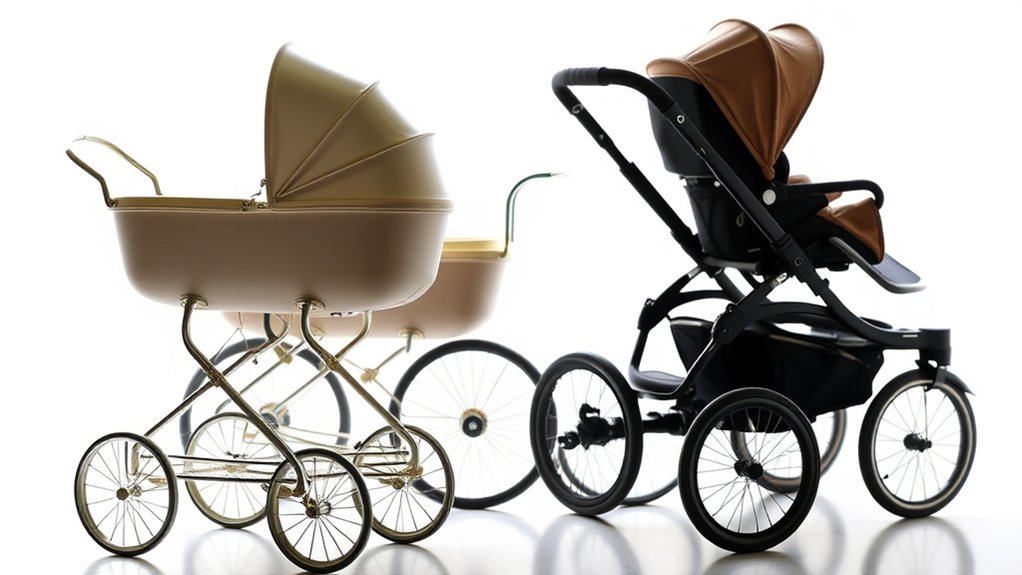
Baby prams come in various types, each designed to meet specific needs and preferences of parents and their little ones. Understanding these options helps you avoid buying a pram that looks good online but feels awkward in daily use.
Newborn prams suit infants who cannot sit unsupported. They usually provide a fully reclined or bassinet-style position, giving your baby a flat resting space for early outings.
Double prams work well if you have twins or siblings close in age. You can find side-by-side designs that give each child a similar view, or in-line designs that are narrower and easier to move through doorways.
All-terrain prams are useful for outdoor-loving families. These models often include larger wheels, stronger suspension, and puncture-resistant or puncture-proof tires for smoother movement over grass, gravel, park paths, and uneven sidewalks.
Lightweight travel prams help families who use public transport, fly often, or carry the pram up stairs. Many travel models fold compactly, though not every model fits every airline’s cabin rules. Always check the airline’s size policy before relying on overhead storage.
Combination prams provide more flexibility as your child grows. They may offer a bassinet, a toddler seat, and sometimes car seat compatibility. These prams can shift from fully reclined to semi-reclined and upright positions.
To enhance your experience, consider pram accessories for added convenience. Common accessories include rain covers, cup holders, footmuffs, mosquito nets, organizers, and extra storage baskets. Always keep up with pram maintenance for safety and longevity.
Pram vs. Stroller: What’s the Difference?
A pram and a stroller both move your child from place to place, but they are not always designed for the same stage. A pram usually focuses on newborn comfort with a flat bassinet-style setup. A stroller usually has a seated position for babies who can sit with better control.
Some modern products combine both designs. These are often called travel systems or convertible prams. They may include a bassinet for the newborn stage and a toddler seat for later use. This can save money over time, but the full system may be heavier and bulkier than a simple stroller.
Choose a pram if your main need is a lie-flat space for a newborn. Choose a stroller if your baby is older, sits well, and you want something lighter for quick trips. Choose a convertible system if you want one setup that can change as your baby grows.
Safety Considerations for Baby Prams
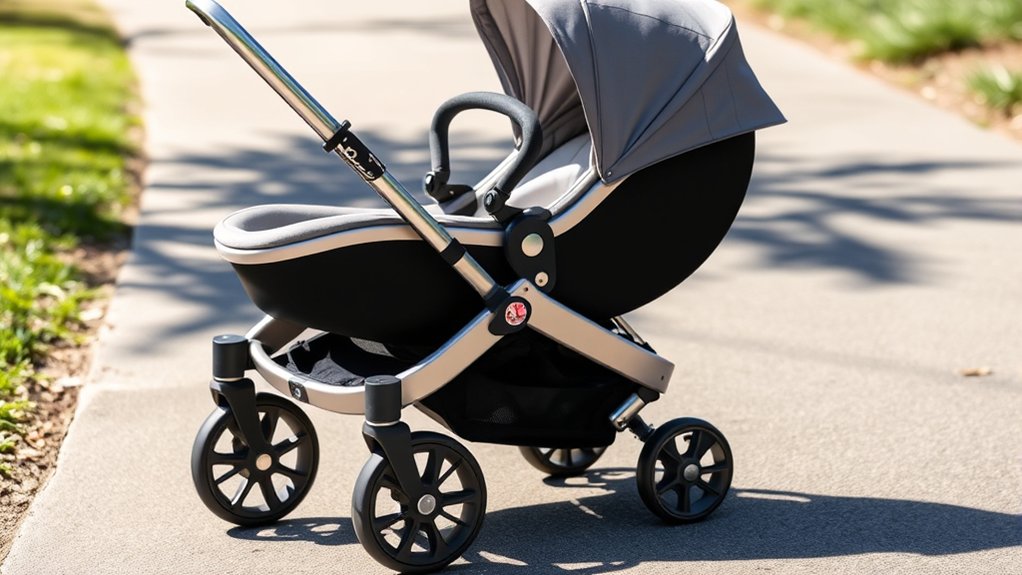
Ensuring your child’s safety while using a pram is essential, as it directly impacts their well-being during outings. A pram should feel stable, lock securely, and support your baby without loose parts or unsafe gaps.
To keep your little one secure, consider these important safety regulations and maintenance tips:
- 5-Point Harness: Always use a pram with a secure 5-point harness system when your child is in a seat position. This helps reduce the risk of accidental falls.
- Stability Matters: Choose a pram with a strong, balanced structure. This helps prevent tipping, especially when carrying additional items like bags or toys.
- Regular Checks: Conduct frequent inspections of the pram’s brakes, wheels, folding locks, frame, and harness functionality. Keeping the pram in good condition supports ongoing safety.
Never hang heavy bags from the handlebar unless the manufacturer says it is safe. Extra weight at the back can cause the pram to tip. Use the storage basket instead, and stay within the listed weight limit.
Also check that the bassinet, seat, or car seat attachment clicks fully into place before every outing. If the pram folds, make sure the frame is fully locked before placing your baby inside.
Warning: Do not leave your baby unattended in a pram. A pram is useful for supervised outings, but it should not replace a safe sleep space such as a firm, flat crib, bassinet, or approved sleep product at home.
Choosing the Right Baby Pram
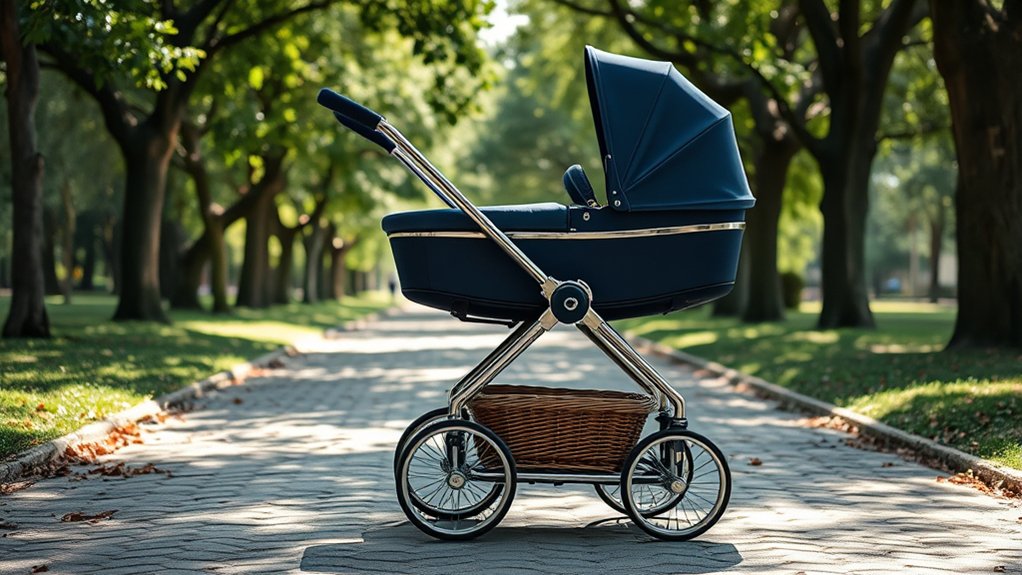
Selecting the right baby pram involves balancing safety features with practical considerations for your lifestyle. Start by ensuring the pram has a flat, spacious bed for newborns, along with good airflow, a firm base, and a secure attachment point.
Look for sturdy pram materials and large, puncture-proof wheels if you often walk on uneven sidewalks, parks, or gravel paths. If you mostly shop, drive, or use public transport, a lighter frame and compact fold may matter more than oversized wheels.
A high protective hood with an adjustable canopy can help shield your baby from bright sunlight and light weather. If the canopy claims UPF 50+ sun protection, check the product details and care instructions so you understand how the fabric performs over time.
Safety is paramount, so prioritize features like a five-point harness, safety tether strap, linked parking brake, secure wheel locks, and compliance with the safety standard that applies in your country or region. Some articles mention Australian Safety Standards such as AS/NZS 2088:2000, but newer or regional standards may apply depending on where you live and where the pram is sold. Always check the current label, manual, and product listing before buying.
Additionally, evaluate the weight and folding mechanism, especially if you live in an urban environment or plan to travel. Test whether you can fold it with one hand, lift it into your car, store it at home, and move it through narrow doors. Finally, keep your budget considerations in mind. Quality is vital, but you can find prams across various price points, from simple newborn models to premium travel systems.
Pro Tip: Before buying, measure your car trunk, hallway, elevator, and main doorway. A pram that folds well but does not fit your daily spaces can quickly become frustrating.
Baby Pram Buying Checklist
Use this checklist when comparing prams in a store or online. It helps you focus on real daily use instead of only color, brand, or style.
- Age suitability: Confirm the pram is suitable from birth if you plan to use it for a newborn.
- Flat position: Look for a bassinet or fully reclined setup for early infancy.
- Weight limit: Check the maximum child weight and any separate storage basket limit.
- Brake system: Make sure the parking brake is easy to reach and locks firmly.
- Harness: Choose a secure, adjustable harness for seated stages.
- Ventilation: Look for airflow panels, breathable fabrics, or a canopy that allows heat to escape.
- Folded size: Compare folded dimensions with your car trunk and storage space.
- Handle height: Adjustable handles can help if caregivers have different heights.
- Wheel type: Choose larger wheels for rougher paths and smaller wheels for tight indoor spaces.
- Cleaning: Removable and washable fabrics make spills and messes easier to manage.
Baby Pram Maintenance and Cleaning
Regular care keeps your pram safer and easier to use. A few simple checks can also extend its lifespan, especially if you use it every day.
- Check brakes weekly: Press and release the brake to make sure it locks and unlocks smoothly.
- Inspect wheels: Remove trapped hair, stones, dirt, and debris from the wheels and axles.
- Tighten loose parts: Look for loose screws, rattling pieces, or worn clips.
- Clean fabrics gently: Follow the care label. Use mild soap and avoid harsh chemicals near your baby’s skin.
- Dry before storage: Let the pram dry fully before folding it away to reduce odors and mildew.
- Store indoors: Keep the pram away from long-term sun, rain, and extreme heat when possible.
If you buy a second-hand pram, inspect it closely for recalls, missing parts, frame damage, weak brakes, and worn harness straps. Avoid any used pram that does not lock securely or has unclear safety labeling.
Common Mistakes to Avoid
Many pram problems come from choosing a model that does not fit your real lifestyle. Avoid these common mistakes before you buy:
- Buying only for appearance: A stylish pram still needs safe brakes, strong locks, and practical storage.
- Ignoring size: A wide pram may feel smooth outdoors but difficult in shops, buses, or small apartments.
- Choosing too much weight: Heavy frames can be tiring if you lift the pram often.
- Skipping the manual: The manual explains weight limits, approved attachments, folding locks, and cleaning instructions.
- Using unapproved accessories: Extra hooks, boards, or seat attachments can affect balance if they are not made for the pram.
Frequently Asked Questions
Can I Use a Baby Pram for Toddlers?
Yes, you can use some baby prams for toddlers if the model includes a toddler seat and supports your child’s current weight. Prioritize toddler safety by checking the harness, frame strength, seat position, and manufacturer’s age and weight limits.
How Much Do Baby Prams Typically Weigh?
Baby prams commonly weigh about 15 to 30 pounds, though compact travel models may be lighter and full travel systems may be heavier. If you need lightweight options, look for models under 20 pounds and confirm that they still meet your safety and comfort needs.
Are Baby Prams Suitable for Jogging?
Most baby prams are not suitable for jogging because they are built for walking, not running speed or impact. Use a dedicated jogging stroller that has the right wheel design, suspension, stability, handle control, and safety features for jogging.
What Materials Are Baby Prams Usually Made From?
Baby prams are usually made from lightweight aluminum or steel frames, durable fabrics, plastic fittings, foam or rubber wheels, and padded seat or bassinet materials. For safety, make sure the pram has secure harnesses, reliable brakes, and a frame that locks firmly open.
Where Can I Buy a Baby Pram?
You can buy a baby pram from online retailers like Amazon or local stores such as Target. Buying in person lets you test folding, steering, weight, brakes, and handle height. Buying online gives you more model choices, but you should read the manual, return policy, and product details carefully.
Can a Newborn Sleep in a Baby Pram Overnight?
A baby pram is best for supervised outings, not overnight sleep unless the product is specifically approved for that purpose. For regular sleep at home, use a firm, flat, approved sleep surface and follow safe sleep guidance for infants.
Is a Travel System Better Than a Standard Pram?
A travel system can be better if you want a car seat, bassinet, and stroller seat to work with one frame. A standard pram may be better if you want a simpler, smoother newborn carriage. The right choice depends on your car use, storage space, budget, and how often you walk.
Conclusion
In the journey of parenthood, a baby pram can become one of your most useful everyday tools. It gives your newborn a flat, protected place to rest while helping you move through walks, appointments, errands, and family outings with more ease.
The best pram is not simply the most stylish or expensive one. It is the one that fits your child’s stage, your home, your vehicle, your walking routes, and your comfort as a caregiver. Focus on safety, stability, ease of folding, ventilation, wheel quality, and cleaning needs before you decide.
With the right pram, you are not just pushing a vehicle. You are choosing a safer, smoother, and more practical way to carry your baby through the early months of life.

