
Cold, damp shop conditions can make auto body welding slower, especially when you are moving between thin sheet metal, patch panels, brackets, light fabrication, and occasional aluminum work. The right MIG welder helps you dial in settings faster, keep wire feeding smoothly, and match the machine to the power you actually have available.
In this guide, you will find the 7 best MIG welders for auto body shop use, including simple 120V machines, portable dual-voltage welders, multiprocess units, and heavier shop-ready models for longer repair and fabrication sessions.
This roundup is reader-supported. As an Amazon Associate, we may earn from qualifying purchases when you click through Amazon links.
Quick Verdict
If you want one dependable all-around MIG welder for a professional or serious home auto body setup, the Millermatic 211 PRO is the strongest overall pick because it combines dual-voltage flexibility, Auto-Set controls, Smooth-Start, and spool gun detection for aluminum-ready work.
If your shop handles mostly light repairs and 120V power is your limit, the Millermatic 142 is the simpler choice. If you want one machine for MIG, TIG, stick, and flux-cored welding, the Multimatic 215 or Multimatic 220 makes more sense.
Top Picks
|
Category |
Product |
Best Match |
|---|---|---|
|
🏆 Best Overall |
Daily MIG repair work with 120V/240V flexibility |
|
|
💰 Best for Home Garage |
Light panel repair from standard 120V power |
|
|
🎯 Best Multi-Process |
Small shops that want MIG, TIG, stick, and flux-cored capability |
|
|
🔰 Best TIG Package |
Buyers who want the 215 platform with TIG-focused accessories |
|
|
🚀 Best for Heavy-Duty Work |
Busier shops that need more duty cycle and output headroom |
|
|
⭐ Best Portable |
Mobile repairs and lighter dual-voltage shop use |
|
|
🏅 Best for AC/DC TIG |
Premium multiprocess welding with AC/DC TIG capability |
How We Picked These Welders
You want a machine that keeps auto body work moving through cold-weather shop conditions, so we focused on real repair-shop needs: 120V and 240V power flexibility, duty cycle at common body-shop loads, MIG and flux-cored capability, spool-gun support for aluminum, portability for mobile repairs, and control features such as Auto-Set, Smooth-Start, Quick Select drive rolls, and clear displays.
We also considered whether each welder fits a specific buyer: a home garage user, a mobile repair tech, a small shop owner, or a production-focused body shop that needs longer duty cycles and more output headroom.
Before You Buy
- For thin auto body panels: choose a machine with smooth low-end control, steady wire feed, and easy parameter adjustment.
- For aluminum work: check spool-gun compatibility and use the correct shielding gas and wire setup.
- For mobile repairs: prioritize lighter weight, dual-voltage input, and generator compatibility.
- For busy shops: look at duty cycle, cooling, drive system quality, and whether the machine can handle repeated short welds all day.
- For cold shops: store wire dry, wipe condensation off panels, shield the weld area from drafts, and let equipment stabilize before heavy use.
Best Overall: Millermatic 211 PRO
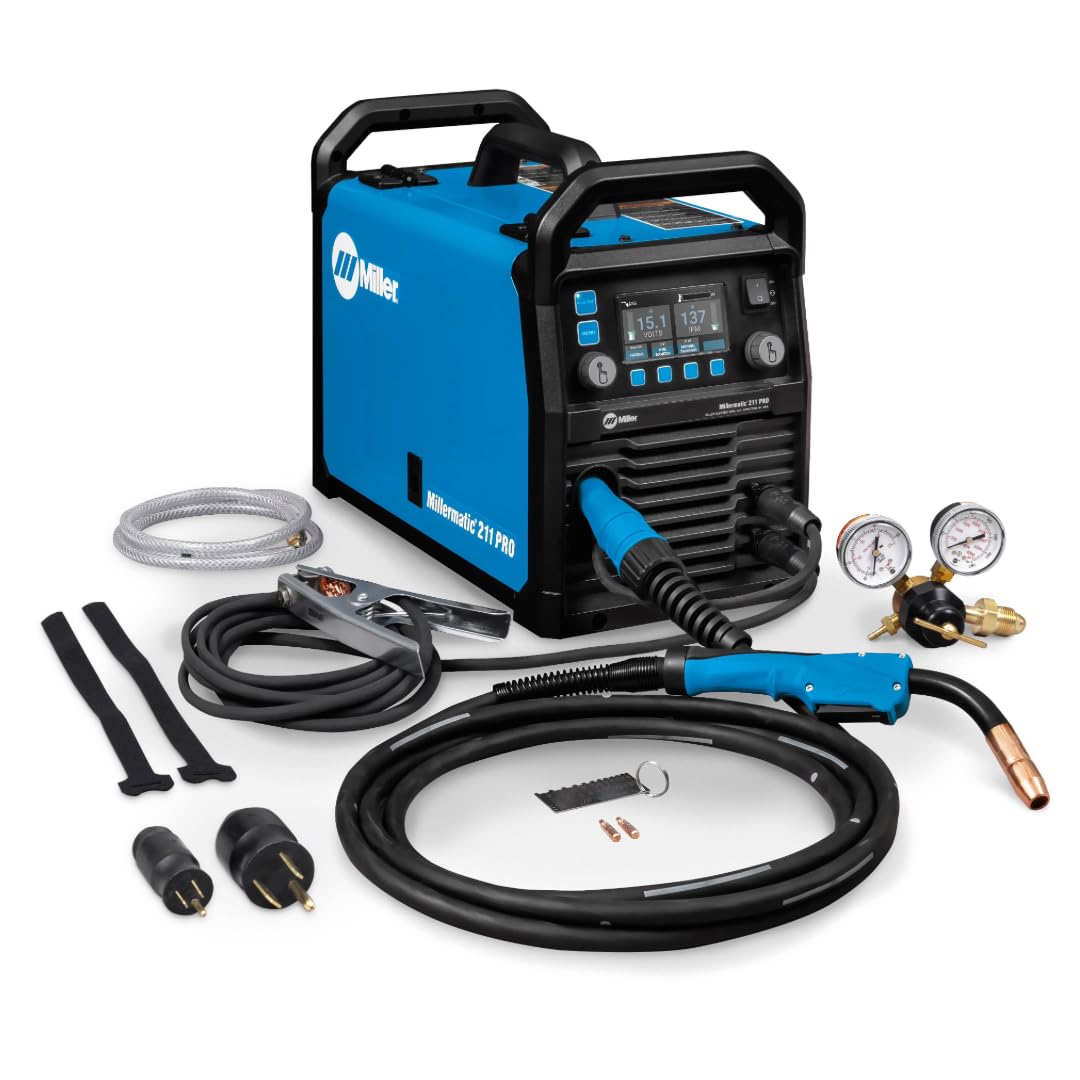
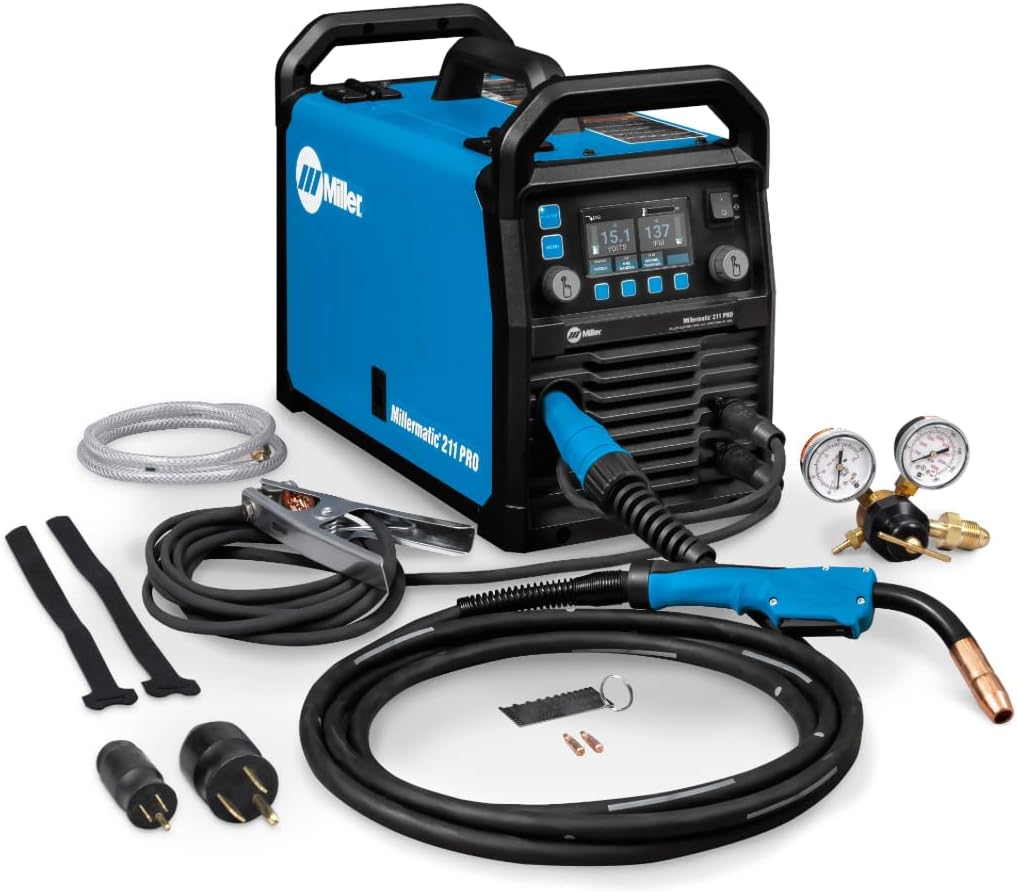
If you need a workhorse for an auto body shop this winter, the Millermatic 211 PRO is the kind of machine that helps reduce setup friction. You get Auto-Set and Smooth-Start for quicker dial-in, plus spool gun detection for easier aluminum setup when your work moves beyond standard steel panels. The MVP dual-voltage plug means you can run it on 120 V in a smaller bay or switch to 240 V for heavier jobs without tool-heavy changeovers.
At about 46 pounds, it is portable enough for moving around a shop, yet capable enough for daily repair work, panel replacement, and light fabrication. If you want a versatile MIG that handles mild steel, stainless, and aluminum-ready work while keeping controls approachable, this is the most balanced pick.
What People Say
Buyer feedback commonly highlights easy setup, smooth starts, and the convenience of dual-voltage power. The most useful themes for auto body work are consistent wire feed, approachable controls, and simpler spool-gun setup when switching to aluminum.
Overall Sentiment: Generally Positive

When It Helps
|
Situation |
How It Helps |
|---|---|
|
Cold winter shop repairs |
Smooth-Start and stable arc behavior help you start cleaner welds when you want less setup delay in a chilly bay. |
|
Aluminum body panels |
Spool gun detection helps simplify the move to aluminum work, reducing the chance of setup mistakes. |
|
On-site mobile jobs |
The MVP dual-voltage plug and roughly 46 lb weight let you work from 120 V or 240 V power and move the unit with less hassle. |
|
Fabrication and longer runs |
A sturdy drive system and Quick Select rolls support more consistent wire feed when you have repeated shop jobs lined up. |
Skill Level
Intermediate to Professional
Who Should Buy This
Choose it if you want a premium MIG-focused machine for daily auto body repairs, mixed steel work, and occasional aluminum jobs with the right spool gun setup.
Who Should Avoid This
Skip it if you only do rare light repairs and want the lowest possible upfront cost, or if you need full AC/DC TIG capability in the same unit.
Key Benefits
- Auto-Set and Smooth-Start for faster setup and cleaner arc starts
- Dual-voltage MVP plug for true plug-and-play flexibility
- Built-in spool gun detection makes aluminum work easier
- Sturdy drive system and Quick Select rolls for reliable wire feed
- Portable at about 46 pounds for shop or jobsite use
Best for Home Garage: Millermatic 142

If you want a no-nonsense, shop-ready MIG for lighter winter work, the Millermatic 142 makes life easier. You get Auto-Set, so you do not waste time dialing in voltage and wire-feed settings from scratch. Just enter the wire size and material thickness, then fine-tune if needed.
The segmented display keeps control changes clear, and the unit runs on standard 120 V power, which makes it practical for a home garage or a smaller body shop without 240 V wiring in every bay. It is portable for what it delivers at around 50 pounds, and it recognizes a spool gun automatically, so occasional aluminum work is easier to approach.
Practically, it fits routine auto body repairs, patch panels, seam welding, and light fabrication where quick setup and consistent results matter more than maximum output.
What People Say
Buyer feedback tends to focus on simple setup, a clear display, and reliable 120 V convenience. Some complaints can happen around shipping or included parts, so check the package contents as soon as it arrives.
Overall Sentiment: Generally Positive

When It Helps
|
Situation |
How It Helps |
|---|---|
|
Cold winter shop repairs |
Auto-Set and a steady arc let you get started faster when you do not want to fuss with settings in chilly, hands-on work. |
|
Aluminum body panels |
Auto spool gun detection and simple controls make switching to a spool gun less disruptive. |
|
Mobile or generator-powered jobs |
Generator compatibility and 120 V operation mean you can run it from a suitable jobsite generator or standard circuit. |
|
Tight-shop or home garage use |
At roughly 50 pounds with a compact footprint, it is easy to move around a bay or store in a smaller workspace. |
Skill Level
Beginner to Professional
Who Should Buy This
Choose it if you mainly weld thin steel panels, patch sections, and light shop projects from standard 120 V power.
Who Should Avoid This
Skip it if you need dual-voltage input, frequent heavy fabrication capacity, or a true multiprocess machine for TIG and stick work.
Key Benefits
- Auto-Set removes the guesswork for faster setup
- Segmented display makes manual tweaks straightforward
- Runs on 120 V so no special power is required
- Auto spool gun detection eases aluminum work
- Generator compatibility for mobile or remote jobs
- Portable footprint at about 50 pounds for shop mobility
Best Multi-Process: Miller Multimatic 215

If you need a single machine that handles most shop tasks, the Multimatic 215 is the kind of welder you will reach for when winter work piles up. It covers MIG, flux-cored, TIG, and stick, so you do not have to swap machines for common auto body jobs and light fabrication.
The Auto-Set Elite and Auto Spool Gun Detect reduce the guesswork, the color LCD makes adjustments easier to see, and Smooth-Start helps keep MIG starts tidier on thin panels. It is surprisingly portable at about 38 lb, and the multi-voltage plug lets you move between 120 V and 240 V outlets or run from a properly sized generator.
The package comes with useful essentials, including a gun, wire, regulator, and cables, so you can get started without hunting for every accessory separately.
What People Say
Buyer feedback often points to straightforward setup, clean welds with less adjustment time, and strong portability for a multiprocess machine. The common appeal is that one unit can cover several repair and fabrication needs in a small shop.
Overall Sentiment: Generally Positive

When It Helps
|
Situation |
How It Helps |
|---|---|
|
Cold winter shop repairs |
Auto-Set and a steady arc let you get consistent starting points quickly when you do not want to spend time fiddling with controls. |
|
Aluminum bodywork |
Auto Spool Gun Detect and easy spool-gun setup help make aluminum work less disruptive. |
|
Mobile or generator-powered jobs |
The multi-voltage plug and generator compatibility let you work from suitable 120 V, 240 V, or generator power. |
|
Light fabrication and patch panels |
Smooth-Start and precise control through the LCD help you lay down cleaner beads on thin metal and repair panels. |
Skill Level
Beginner to Professional
Who Should Buy This
Choose it if you want one compact machine for MIG repairs, flux-cored outdoor work, occasional TIG, and stick welding around a small shop.
Who Should Avoid This
Skip it if your only need is simple 120V MIG welding, because a dedicated MIG unit may be easier and less expensive.
Key Benefits
- True multiprocess capability: MIG, flux-cored, TIG and Stick in one unit
- Auto-Set Elite speeds setup for consistent starting points
- Auto Spool Gun Detect simplifies aluminum work
- Smooth-Start reduces spatter and makes MIG starts cleaner
- Multi-voltage plug for 120 V/240 V and generator compatibility
- Color LCD for easy, visible adjustments
- Compact and portable for moving between bays or jobsites
- Includes gun, feeder, regulator and basic consumables to get going
Best TIG Package: Miller Multimatic 215 with TIG Kit


If you like the Multimatic 215 platform but already know you want TIG capability in the same package, this TIG Kit version is the better fit. It still covers MIG, flux-cored, DC TIG, and stick, which means fewer tool swaps when you are repairing panels, fabricating brackets, or handling occasional precision work.
The Auto-Set Elite and Auto Spool Gun Detect cut setup time, and the color LCD makes tuning settings easier to see in a dim bay. Smooth-Start helps keep MIG starts tidy on thin metal, while the multi-voltage plug plus generator compatibility give you options when moving between 120 V and 240 V outlets.
This pick overlaps with the standard Multimatic 215, but the TIG-focused package makes more sense if you already know you want to use DC TIG alongside MIG and flux-cored welding.
What People Say
Buyer feedback usually focuses on ease of setup, versatile process coverage, and the usefulness of having TIG-related accessories in the package. A few buyers may still need extra consumables or setup pieces depending on their exact workflow.
Overall Sentiment: Generally Positive

When It Helps
|
Situation |
How It Helps |
|---|---|
|
Cold shop mornings |
Auto-Set and a steady arc help you get consistent starting points quickly when the shop is slow to warm up. |
|
Aluminum repairs |
Auto Spool Gun Detect and straightforward spool-gun setup reduce the fuss when switching to aluminum work. |
|
On-site or generator work |
The multi-voltage plug and generator compatibility give you more power-source options. |
|
Thin-panel patching |
Smooth-Start and precise control through the display help you lay down cleaner beads on thin metal with less risk of overheating the panel. |
Skill Level
Beginner to Professional
Who Should Buy This
Choose it if you want the Multimatic 215 platform and plan to use DC TIG enough that the TIG-focused package makes sense.
Who Should Avoid This
Skip it if you only need MIG welding, or if AC TIG for aluminum is a must-have feature.
Key Benefits
- One unit for MIG, flux-cored, DC TIG and Stick tasks
- Auto-Set Elite streamlines setup so you get consistent starts fast
- Auto Spool Gun Detect makes switching to aluminum less painful
- Smooth-Start reduces spatter and protects thin panels
- Multi-voltage plug for easy moves between 120 V, 240 V and generators
- Clear color LCD for straightforward adjustment and tuning
- Includes essential accessories so you can start welding sooner
- Portable enough to move between bays or bring to job sites
Best for Heavy-Duty Work: Miller Millermatic 252


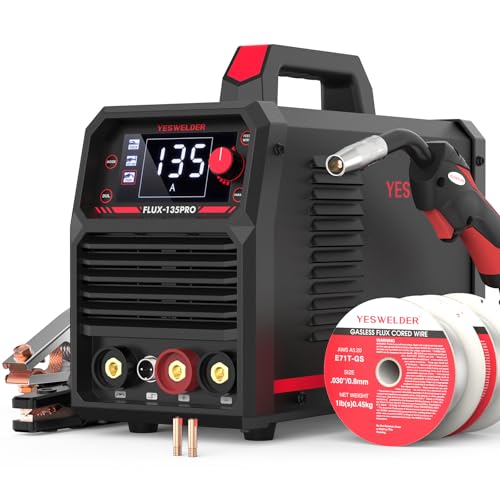
If you need a workhorse for an auto body shop that gets busy in winter, the Millermatic 252 is built for steady, heavy use. It gives more breathing room for longer runs and repeated shop jobs than the smaller portable machines in this list.
It can support mild steel and aluminum-ready work when it is paired with the right wire, gas, and setup. The wheeled frame makes it easier to move between bays even though the unit itself is substantial. This is not the lightest machine in the roundup, but that is part of the point: it is aimed at shops that need robust, repeatable performance more than grab-and-go portability.
For a shop that needs stronger output and consistent production workflow, this is the heavy-duty pick.
What People Say
Buyer feedback often points to consistent, professional-level performance and a robust build as the main strengths. The tradeoff is size and weight, so it is better for a fixed bay than a one-person portable setup.
Overall Sentiment: Generally Positive

When It Helps
|
Situation |
How It Helps |
|---|---|
|
Cold shop mornings |
A steady arc and predictable setup help you get welding quickly without spending too much time dialing settings. |
|
Repairing aluminum panels |
It supports aluminum-ready work when paired with the right spool gun, wire, shielding gas, and setup. |
|
Extended production runs |
The heavier shop design helps support longer welding sessions and repeated production-style work. |
|
Moving between bays |
The wheeled mounting makes relocating the machine around the shop practical, so you can position it closer to the workpiece. |
Skill Level
Intermediate to Professional
Who Should Buy This
Choose it if you run a busier shop and need a high-output MIG/flux-cored machine for frequent repairs and fabrication work.
Who Should Avoid This
Skip it if you need a lightweight portable welder, 120V operation, or one compact unit that also handles TIG and stick.
Key Benefits
- Higher-output design for thin panels through heavier fabrication tasks
- Better suited to longer welding runs than lightweight portable machines
- Designed to weld both mild steel and aluminum with proper setup
- Wheeled mounting makes it simpler to move within the shop
- Solid, professional-grade build that stands up to repeated use
- Works on 208/230 VAC shop power for reliable performance
- Accepts common MIG wire sizes for flexibility on materials
Best Portable: Miller Millermatic 211

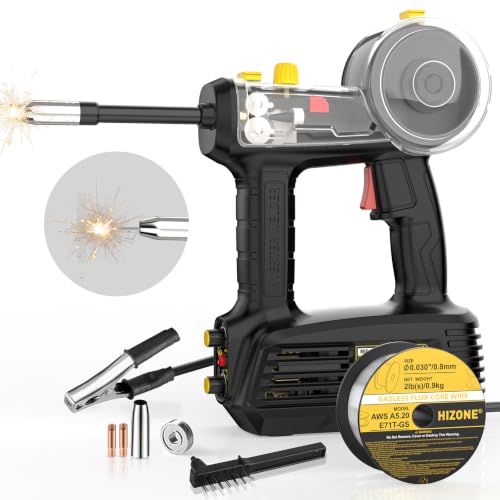


If you run an auto body shop and need a welder that handles everything from patch panels to occasional aluminum work, the Millermatic 211 is easy to recommend. You get genuine portability at about 38 lbs, plus a multi-voltage plug so you can move between 120 V and 240 V circuits or connect to a suitable generator for mobile repair work.
The Auto-Set mode and Auto Spool Gun Detect save time when you are switching jobs, and Smooth-Start helps make clean starts less frustrating on thin sheet metal. It is a versatile compact workhorse for daily shop tasks and occasional mobile jobs. Just plan to check the ground clamp, lead length, and included accessories to make sure the setup matches your workflow.
What People Say
Buyer feedback often highlights weld quality, portability, and quick setup. Practical complaints tend to involve setup details such as clamp feel, lead length, connectors, or included consumables, so it is worth checking what comes in the box before your first job.
Overall Sentiment: Generally Positive

When It Helps
|
Situation |
How It Helps |
|---|---|
|
Cold shop mornings |
Auto-Set and predictable start behavior let you get welds going fast without spending too long dialing in settings. |
|
On-the-road repairs |
At about 38 lbs and with multi-voltage capability, you can take it on mobile fixes without hauling a much larger rig. |
|
Switching to aluminum work |
You can add a spool gun, and the unit’s detection features make setup easier than many basic compact machines. |
|
Busy shop production |
Fan-On-Demand and thermal overload protection help the unit work smoothly during repeated short runs between pauses. |
Skill Level
Beginner to Professional
Who Should Buy This
Choose it if portability, 120V/240V flexibility, and quick setup matter more than maximum output.
Who Should Avoid This
Skip it if you need a fixed heavy-duty shop machine with a higher duty cycle for long production runs.
Key Benefits
- Lightweight and portable at about 38 lbs for easy moves between bays or mobile jobs
- Multi-voltage plug works on 120 V or 240 V and with larger generators
- Auto-Set and Auto Spool Gun Detect speed setup and reduce guesswork
- Smooth-Start and Fan-On-Demand help produce cleaner beads and reduce spatter
- Thermal overload protection adds a safety layer during heavy use
- Accepts a spool gun for aluminum work when you need it
Best for AC/DC TIG: Miller Multimatic 220

If you need one machine that can handle many jobs in an auto body shop, the Multimatic 220 is a sensible premium pick. It covers MIG, flux-cored, stick, and both AC/DC TIG, so you can move between patch panels, stainless repairs, and aluminum TIG work without buying several separate rigs.
The Multi-Voltage Plug makes it easier to work from 120 V or 240 V outlets or a suitably sized generator, and features like QuickTech and Auto-Set reduce the time spent changing processes. It ships with a MIG gun, TIG torch, foot control, and other basics, so it is especially appealing for a small shop that wants broad capability in one package.
For day-to-day repair work, on-the-road maintenance, and specialty jobs where AC/DC TIG matters, it is the most flexible option here.
What People Say
Buyer feedback often focuses on versatility, weld quality, dual-voltage convenience, and the included MIG/TIG kit. The main hesitation is cost and complexity, especially if your shop only needs basic steel MIG repair.
Overall Sentiment: Generally Positive

When It Helps
|
Situation |
How It Helps |
|---|---|
|
Cold shop mornings |
Auto-Set and QuickTech get you welding faster without spending ages dialing parameters. |
|
Mobile or roadside repairs |
Multi-Voltage Plug and generator compatibility give you more power-source options away from the main shop bay. |
|
Switching between metals |
Having MIG, flux-cored, stick, and AC/DC TIG in one package lets you move from steel to stainless and aluminum-focused work without changing machines. |
|
Small shop with mixed jobs |
The included MIG gun, TIG torch, and foot control mean you can tackle daily repairs and occasional specialty tasks with fewer separate purchases. |
Skill Level
Beginner to Professional
Who Should Buy This
Choose it if your shop needs MIG, flux-cored, stick, and AC/DC TIG capability in one portable multiprocess unit.
Who Should Avoid This
Skip it if your work is mostly basic steel MIG repair and you do not need TIG capability, because a simpler MIG machine may be easier to justify.
Key Benefits
- Covers MIG, flux-cored, stick and TIG (AC/DC) so one unit handles many shop tasks
- Multi-Voltage Plug lets you switch between 120 V and 240 V or use a suitable generator
- QuickTech and Auto-Set speed setup and reduce guesswork when changing processes
- Comes with MIG gun, TIG torch, foot control and other starter accessories
- Portable design so you can move it between bays or take it on mobile jobs
Which Miller Welder Should You Choose?
|
Choose This |
If You Mostly Do |
Why It Fits |
|---|---|---|
|
Millermatic 142 |
Light repairs on 120V power |
Simple MIG setup for home garages and smaller shops. |
|
Millermatic 211 |
Portable shop and mobile repair work |
Lighter dual-voltage design with useful setup features. |
|
Millermatic 211 PRO |
Daily MIG work in a serious shop |
Balanced power, portability, aluminum readiness, and easy controls. |
|
Millermatic 252 |
Longer runs and busier fabrication work |
More shop-focused output headroom than compact machines. |
|
Multimatic 215 |
MIG plus occasional TIG and stick |
Good choice when you want several welding processes in one portable unit. |
|
Multimatic 220 |
MIG plus AC/DC TIG |
Most flexible option when aluminum TIG work matters. |
Related Guides
FAQ
How Do I Choose The Right MIG Welder For My Auto Body Shop This Winter?
You should match the machine to the work you do most. If you weld thin auto-body panels and occasional aluminum, prioritize smooth low-end control, easy parameter adjustment, and spool-gun support. If you also handle thicker repairs or fabrication, prioritize higher output, a stronger drive system, and a robust duty cycle. Look for features that save time in a busy shop, including Auto-Set, spool gun detection, and a Multi-Voltage Plug (MVP) if you need to switch between 120 V and 240 V.
Pay attention to the wire feed system, drive rolls, cooling, and thermal protection. Your best choice depends on your materials, available power, portability needs, and whether you want a dedicated MIG machine or a multiprocess welder.
Can I Weld Aluminum And Thin Auto Body Panels In Cold Weather With These MIG Welders?
Yes, but you need the right setup and careful technique. For aluminum, use a spool gun or suitable aluminum feeding setup, the correct shielding gas, clean material, and dry wire storage. For thin sheet steel common in auto body work, reduce heat by controlling wire speed and voltage, use stitch or tack welding to limit burn-through, and clean the joint area before welding.
Cold shop air does not automatically ruin a weld, but condensation, moisture, drafts, and poor prep can create problems. Keep panels dry, protect the shielding gas from drafts, and let equipment stabilize if it has been stored in very cold conditions.
What Practical Tips Will Improve Winter Welds And Help Me Maintain My Welder?
Keep consumables and wire moisture-free by storing spools in a heated or sealed dry box. Change liners and contact tips regularly to prevent feeding and arc issues. Shield the weld area from drafts because wind can disturb shielding gas; use a screen when needed, and avoid excessive gas flow that creates turbulence.
Check and tighten the ground clamp, set proper drive-roll pressure for the wire diameter, and inspect the liner for bird-nesting before it becomes a bigger problem. Let a machine warm up briefly if it has been in a very cold shop, watch thermal protection indicators during heavy cycles, and use anti-spatter on nozzles to extend consumable life. Use flux-cored wire for windy outdoor repair work and gas-shielded solid wire for cleaner indoor bodywork.
Is A Multiprocess Welder Better Than A Dedicated MIG Welder For Auto Body Work?
A multiprocess welder is better if your shop regularly switches between MIG, flux-cored, TIG, and stick welding. It saves space and can reduce the need for multiple machines. A dedicated MIG welder is usually better if your main work is thin steel panels, patch jobs, and basic fabrication because it keeps the setup simpler and often gives you a more focused workflow.
What Is The Best Power Setup For A Shop MIG Welder?
For light repairs, 120 V can be enough. For thicker metal, longer sessions, or more demanding shop work, 240 V gives more headroom. A dual-voltage welder is useful because it lets you use standard outlets for light jobs and step up to 240 V when the work demands more output.
Do I Need A Spool Gun For Aluminum Auto Body Work?
For many compact MIG welders, a spool gun is the more practical way to feed soft aluminum wire because it reduces feeding problems through a long liner. Check the exact welder package and compatible spool gun before buying, because accessories and connectors can vary by model and listing.
Customers Top Picks
When choosing between the Millermatic 211 PRO, 142, and Multimatic 215, you typically decide based on workload. Choose the 211 PRO if you want the strongest all-around MIG pick, the 142 if you mostly do lighter 120V repairs, and the Multimatic 215 if you want multiprocess flexibility in one compact machine. Your final choice should come down to power, duty cycle, portability, aluminum readiness, and how often you need TIG or stick welding.

Final Recommendation
Best overall: Pick the Millermatic 211 PRO if you want a balanced shop-ready MIG welder with dual-voltage convenience, Auto-Set, Smooth-Start, and aluminum-friendly spool gun detection.
Best value for lighter work: Pick the Millermatic 142 if you want a straightforward 120V MIG for home garage repairs, patch panels, and lighter shop tasks.
Best portable pick: Pick the Millermatic 211 if you move between bays, job sites, or mobile repair work and want a lighter dual-voltage MIG.
Best for maximum flexibility: Pick the Multimatic 220 if you want one machine that covers MIG, flux-cored, stick, and AC/DC TIG.
Wrapping Up
When winter tightens schedules and shop conditions become less forgiving, the right welder can save setup time and reduce rework. If you need one reliable all-around choice, the Millermatic 211 PRO blends dual-voltage convenience, spool-gun detection for aluminum-ready work, and smart Auto-Set features to keep daily repair jobs moving.
If you mostly do small repairs or work from a home garage, the Millermatic 142 gives easy setup and strong 120V practicality. For maximum flexibility across MIG, TIG, flux-cored, and stick, choose a Multimatic model so you can switch processes without buying separate machines. Match your pick to the metal you weld most, the power you have on-site, and how mobile you need to be.
| Product | Image | Best For | Weight | Welding Processes | Multi-Voltage Plug | Amazon |
|---|---|---|---|---|---|---|
| Millermatic 211 PRO MIG Welder Machine |
 |
Best overall MIG pick for daily auto body shop use | 46 pounds |
|
Yes (120V & 240V) | Check Price |
| Millermatic® 142 MIG Welder |
 |
Best for lighter 120V home garage and shop repairs | 50 pounds |
|
No (120V only) | Check Price |
| Miller 907693 Multimatic 215 Multiprocess Welder |
 |
Best compact multiprocess pick | 38 pounds |
|
Yes (120V & 240V) | Check Price |
| Miller Multimatic 215 with TIG Kit |
 |
Best 215 package if you want TIG accessories included | 38 pounds |
|
Yes (120V & 240V) | Check Price |
| Miller Millermatic 252 Electric MIG Welder |
 |
Best for heavier shop use and longer production runs | 237 pounds |
|
No (208/230VAC only) | Check Price |
| Miller 907614 Millermatic 211 MIG Welder |
 |
Best portable dual-voltage MIG pick | 38 pounds |
|
Yes (120V & 240V) | Check Price |
| Miller 907757 Multimatic 220 AC/DC Multiprocess Welder |
 |
Best premium multiprocess pick with AC/DC TIG | 56 pounds |
|
Yes (120V & 240V) | Check Price |
This roundup is reader-supported. When you click through links, we may earn a referral commission on qualifying purchases.