
Affiliate disclosure:. As an Amazon Associate I earn from qualifying purchases. This roundup includes Amazon affiliate links. When you click through and buy, we may earn a referral commission at no extra cost to you.
Last updated: July 4, 2026. This guide focuses on MIG and multiprocess welders that make sense for auto-shop repair, small fabrication, panel work, exhaust jobs, brackets, and mobile service calls.
You need a welder that helps your shop move faster without creating rework. The right MIG or multiprocess machine can help you repair body panels, patch exhaust parts, build brackets, make small fabrication fixes, and reduce the number of jobs you send outside the shop.
In this guide, you’ll find 10 shop-ready MIG and multiprocess welders chosen for useful process coverage, portability, setup speed, and real-world shop fit. Choose the right welder and you can cut downtime, expand services, handle more repairs in-house, and match each machine to the work it actually does best.
Quick verdict: Pick the YESWELDER MIG-205DS PRO if you want the strongest all-around auto-shop option with gas MIG, flux-core, stick, lift TIG, and spool-gun aluminum support. Choose the ARCCAPTAIN MIG205MP if one machine with app presets and plasma cutting matters more than simple operation. Choose a 135A or 140A model only if you need a portable backup, starter machine, training unit, or light-duty sheet-metal welder.
- Best all-around shop pick: YESWELDER MIG-205DS PRO
- Best multiprocess workhorse: ARCCAPTAIN MIG205MP
- Best value pick: ARCCAPTAIN MIG 200A
- Best compact backup: YESWELDER FLUX-135PRO
Top Picks
|
Category |
Product |
Score |
|---|---|---|
|
🏆 Best Overall |
95/100 |
|
|
🏆 Best Multiprocess |
92/100 |
|
|
💰 Best Value |
90/100 |
|
|
⚡ Best Dual Voltage |
88/100 |
|
|
🏅 Best Mid-Range Shop Pick |
89/100 |
|
|
🎯 Best Beginner-Friendly Dual Voltage |
85/100 |
|
|
🚗 Best Portable Backup |
83/100 |
|
|
💸 Best Budget Backup |
80/100 |
|
|
🔋 Best Portable Power Balance |
84/100 |
|
|
🎒 Best Starter Kit |
78/100 |
How We Picked These Welders
You need machines that work reliably in a real repair environment. We evaluated each model by process versatility, gas MIG and flux-core capability, dual-voltage support, setup speed, portability, accessory requirements, and how well the machine fits common auto-shop tasks such as thin panel work, exhaust repair, brackets, light fabrication, mobile fixes, and occasional aluminum jobs.
We favored welders with clear controls or synergic modes that help you get consistent settings faster. We also looked at amperage range, duty-cycle expectations, input voltage, and whether each machine should be treated as a main shop welder, mid-range helper, compact backup, or starter unit.
Before you buy: Match the welder to your most common jobs, not just the highest amp number. Thin body panels need controllable heat and clean settings, while brackets, frames, and thicker repairs need more output, enough duty cycle, and stable 220/240 V power.
- For panel work: prioritize smooth wire feed, lower-amp control, small wire compatibility, and gas MIG support.
- For aluminum: choose a spool-gun-ready model and confirm the required spool gun before purchase.
- For mobile repairs: look for dual voltage, lower weight, simple setup, and easy consumable access.
- For daily shop use: favor higher output, clear warranty support, serviceable consumables, and a realistic duty cycle.

If you run a busy auto shop or need a simple backup machine, this YESWELDER is the kind of portable unit you reach for when a quick repair pops up. You get gasless flux-core MIG for small steel fixes, stick for rougher repair work, and lift TIG capability if you add the right TIG torch.
The digital display and synergic-style wire feed make setup easier than guessing with vague knobs, and the light frame helps you move it between bays. It is not the right choice for clean gas MIG bodywork or long heavy welding sessions, but for patch jobs, brackets, small fabrication, and mobile backup use, it is practical and easy to justify.
What People Say
Customers commonly praise how portable and approachable this unit feels, especially for flux-core work and quick repairs. Common complaints center on basic accessories, consumables, and the fact that this is a light-duty machine rather than a heavy shop workhorse.
Overall Sentiment: Positive

Who Should Buy This
- Mobile techs who need a small 110 V flux-core backup.
- Small garages that mostly weld mild steel brackets, tabs, and quick patches.
- Beginners who want digital controls without paying for a larger dual-voltage machine.
Who Should Avoid This
- Shops that need gas MIG for cleaner panel work.
- Anyone expecting long, continuous high-amperage welding.
- Buyers who need aluminum welding or production-level duty cycle.
Ease of Use
|
Feature |
Ease Level |
|---|---|
|
Initial setup |
Easy |
|
Digital controls and display |
Easy |
|
Wire feeding and tension |
Moderate |
|
Switching welding modes |
Moderate |
|
Transport and storage |
Easy |
Versatility
Handles gasless flux-core for fast shop repairs, stick for heavier joins, and lift TIG for finer work when paired with the needed torch. Best suited to mild steel and light fabrication rather than continuous heavy industrial use.
Key Benefits
- Multi-process capability: flux-core MIG, stick, and lift TIG capability
- Portable size for moving between bays or service calls
- Digital LED display for clearer setup
- Synergic wire-feed help for faster starting settings
- Good fit as a compact backup or light repair machine
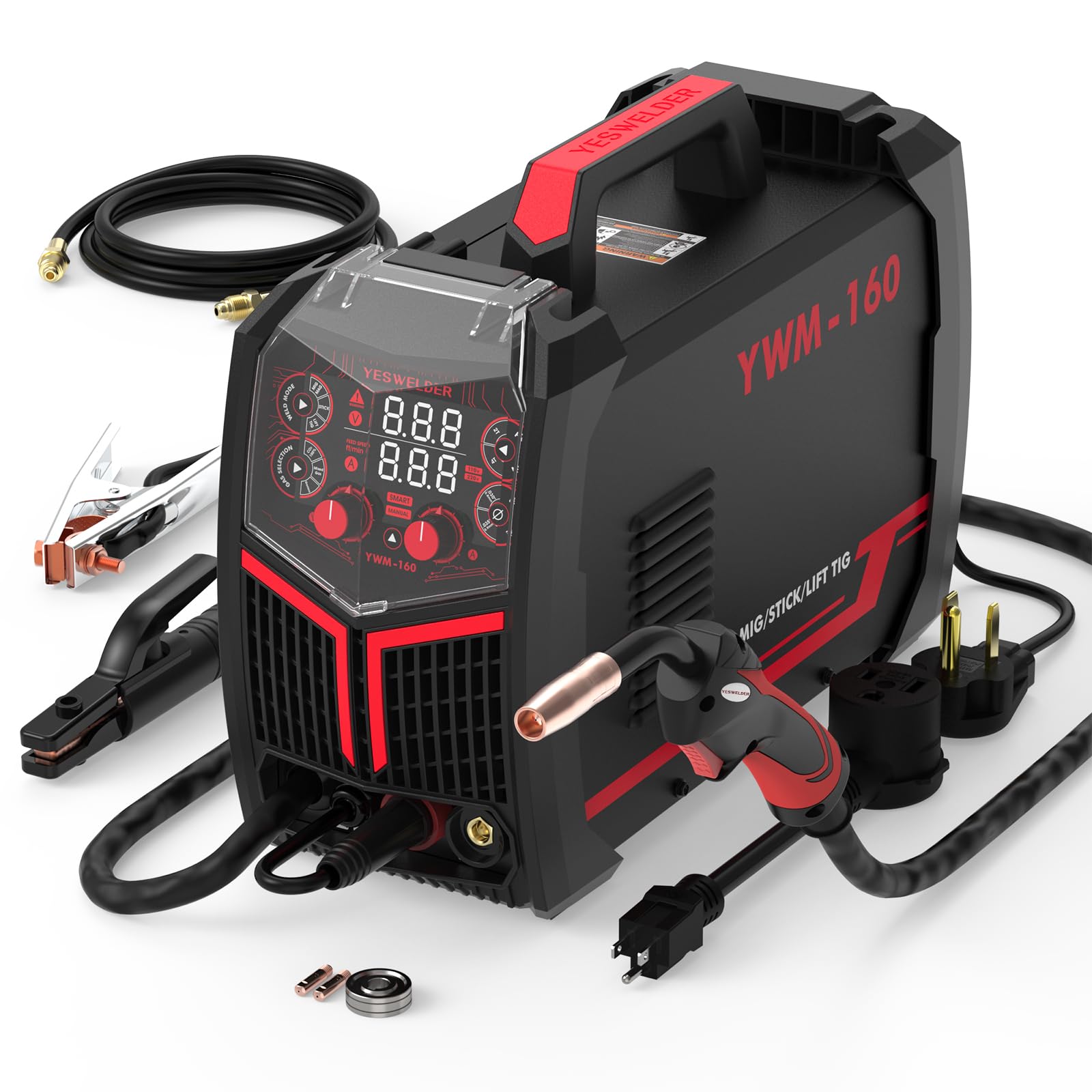
If you run an auto shop or work on cars in a garage, this YESWELDER is a useful step up from a small 110 V-only flux-core box. You get gas MIG for cleaner beads, flux-core for outdoor or quick fixes, stick for rougher repair work, and lift TIG if you add the needed torch.
The dual-voltage input gives you more flexibility. Use common 110 V power for lighter jobs or move to 220 V when you need more output. It is still a compact machine, so it is best for panels, exhaust, brackets, and small fabrication instead of long production runs.
What People Say
Reviewers often like the simple controls, synergic setup, and clear LED readout. Some users point out that heavier work is better on 220 V, and a few mention that wire quality, connectors, and setup details can affect the welding experience.
Overall Sentiment: Positive

Who Should Buy This
- Shops that want a portable dual-voltage welder for mixed light repairs.
- Garages that need gas MIG and flux-core in one compact machine.
- Users who want a clearer digital interface than basic knob-only welders.
Who Should Avoid This
- High-volume fabrication shops that need a larger duty cycle.
- Buyers who need spool-gun aluminum welding from this machine.
- Anyone who wants a machine focused only on the simplest flux-core work.
Ease of Use
|
Feature |
Ease Level |
|---|---|
|
Initial setup |
Easy |
|
Synergic or auto MIG mode |
Easy |
|
Manual fine tuning |
Moderate |
|
Wire feeding and tension |
Moderate |
|
Moving between work bays |
Easy |
Versatility
Handles gasless flux-core for quick fixes, gas MIG for cleaner beads, stick for repair work, and lift TIG with the right accessory. It is a strong fit for automotive bodywork, brackets, light fabrication, and mobile shop tasks.
Key Benefits
- 4-in-1 process coverage: flux-core, MIG, lift TIG, and stick
- Synergic control and LED display simplify setup
- 110 V/220 V dual voltage for shop or garage flexibility
- Portable form factor for moving between bays
- Better fit for regular shop use than a 110 V-only starter unit

If you run an auto shop or do regular car repairs, this YESWELDER is the most balanced pick in the list. It covers gas MIG, flux-core, spool-gun aluminum MIG, lift TIG with an added torch, and stick, so you can cover more jobs without moving between several machines.
The digital display and synergic MIG mode help you set up faster, while 110/220 V input gives you flexibility for light jobs or heavier work on proper shop power. It is still not a full industrial production welder, but for panel repairs, brackets, small fabrication, exhaust work, and occasional aluminum tasks, it is the strongest all-around choice here.
What People Say
Most buyers highlight the process range, digital display, and quick setup. Users also point out that the machine performs better on 220 V for heavier work and that aluminum welding requires the correct spool-gun setup.
Overall Sentiment: Positive

Who Should Buy This
- Auto shops that want one machine for steel, light fabrication, and occasional aluminum.
- Users who want gas MIG, flux-core, stick, and lift TIG flexibility.
- Shops that can run 220 V power for better performance on thicker material.
Who Should Avoid This
- Buyers who only need a low-cost flux-core backup.
- Shops that need a heavy industrial welder for nonstop production.
- Anyone expecting lift TIG or aluminum welding without buying the needed accessories.
Ease of Use
|
Feature |
Ease Level |
|---|---|
|
Initial setup |
Easy |
|
Synergic or auto MIG mode |
Easy |
|
Manual fine tuning |
Moderate |
|
Wire feeding and tension |
Moderate |
|
Spool-gun setup |
Moderate |
Versatility
Handles gas MIG, flux-core, spool-gun aluminum welding, lift TIG with the right torch, and stick. It is ideal for automotive bodywork, brackets, small fabrication, exhaust repairs, and mobile shop tasks where one flexible machine saves space.
Key Benefits
- True 5-in-1 capability: Gas MIG, Flux-Core, Spool-Gun Aluminum, Lift TIG, and Stick
- 200 A class output with 110 V/220 V dual voltage
- Synergic MIG mode plus manual controls for quicker setup
- Spool-gun ready for aluminum work with the right accessory
- Strong fit as the main all-around machine for many small shops
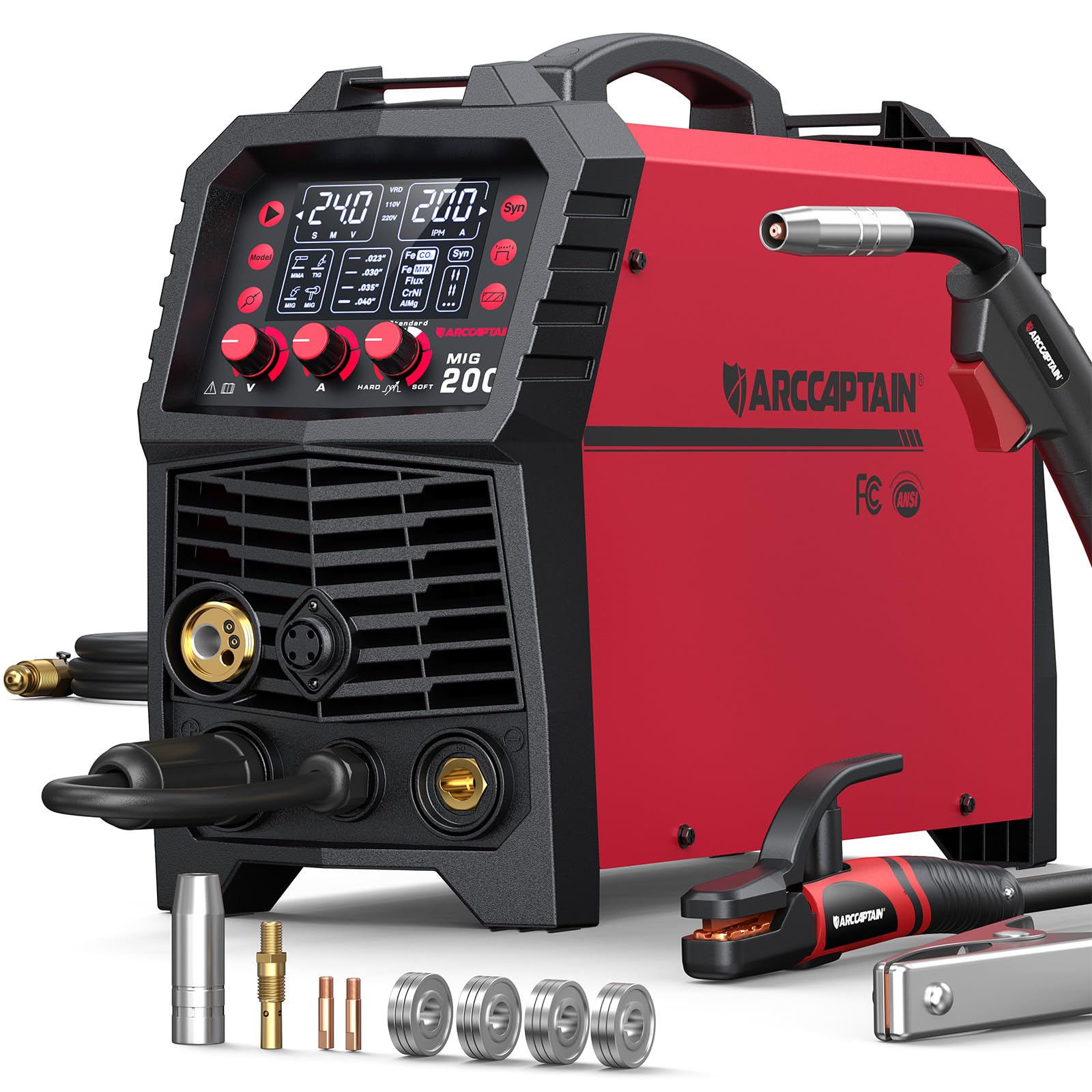
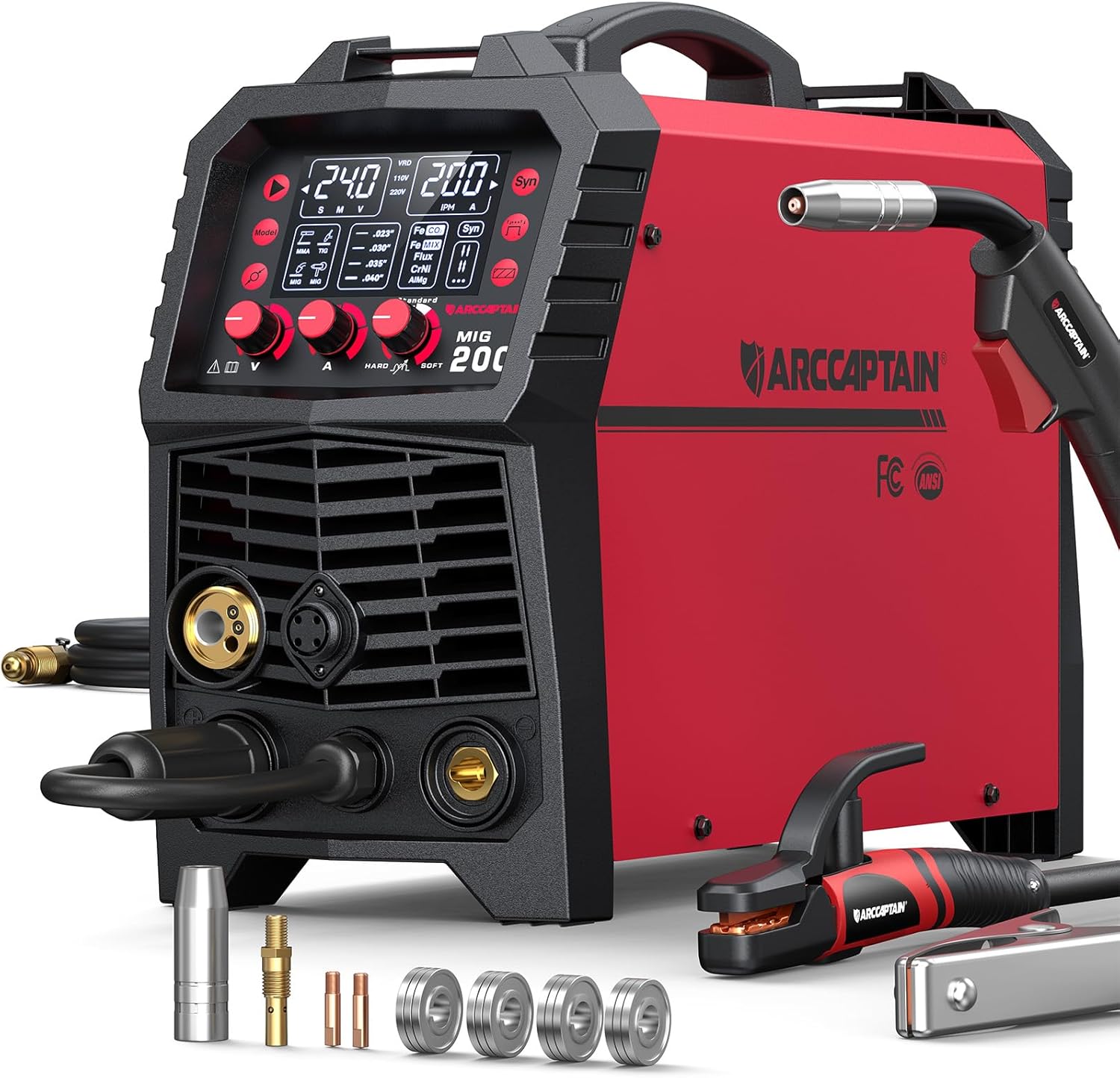
If you want one machine to cover a wide spread of shop jobs without jumping to the most expensive option, this ARCCAPTAIN 200A is a strong value choice. You can switch between gas MIG, gasless flux-core, stick, lift TIG, and spot welding, with spool-gun support when the correct accessory is added.
It is useful for panel repair, brackets, exhaust work, and light fabrication. The LED display and synergic settings reduce setup time, while 110/220 V support lets you run light jobs on common power and heavier work on stronger shop power.
What People Say
Buyers often praise the bead quality for the size, the helpful display, and the range of modes. The main cautions are that supplied accessories may feel basic and that TIG or aluminum work may require extra gear.
Overall Sentiment: Positive

Who Should Buy This
- Shops that want 200A-class capability without overbuying.
- Users who need gas MIG, flux-core, stick, and lift TIG flexibility.
- Repair techs who repeat similar jobs and benefit from repeatable settings.
Who Should Avoid This
- Buyers who want the simplest possible beginner-only machine.
- Shops needing included TIG and spool-gun accessories out of the box.
- Heavy production users who need a dedicated industrial setup.
Ease of Use
|
Feature |
Ease Level |
|---|---|
|
Initial setup |
Easy |
|
Synergic or auto MIG mode |
Easy |
|
Manual fine tuning |
Moderate |
|
Wire feeding and torch ergonomics |
Moderate |
|
Switching between 110 V and 220 V |
Moderate |
Versatility
Covers quick outdoor or dirty jobs with flux-core, cleaner shop beads with gas MIG, stick for heavier repairs, lift TIG for finer work with the right torch, and spool-gun compatibility for aluminum with the correct accessory.
Key Benefits
- 6-in-1 process coverage for broad shop use
- Synergic MIG and digital LED display for quicker setup
- 110 V/220 V dual-voltage flexibility
- Burn-back and setup adjustments for repeat work
- Strong value if you want more capability than a compact 160A unit
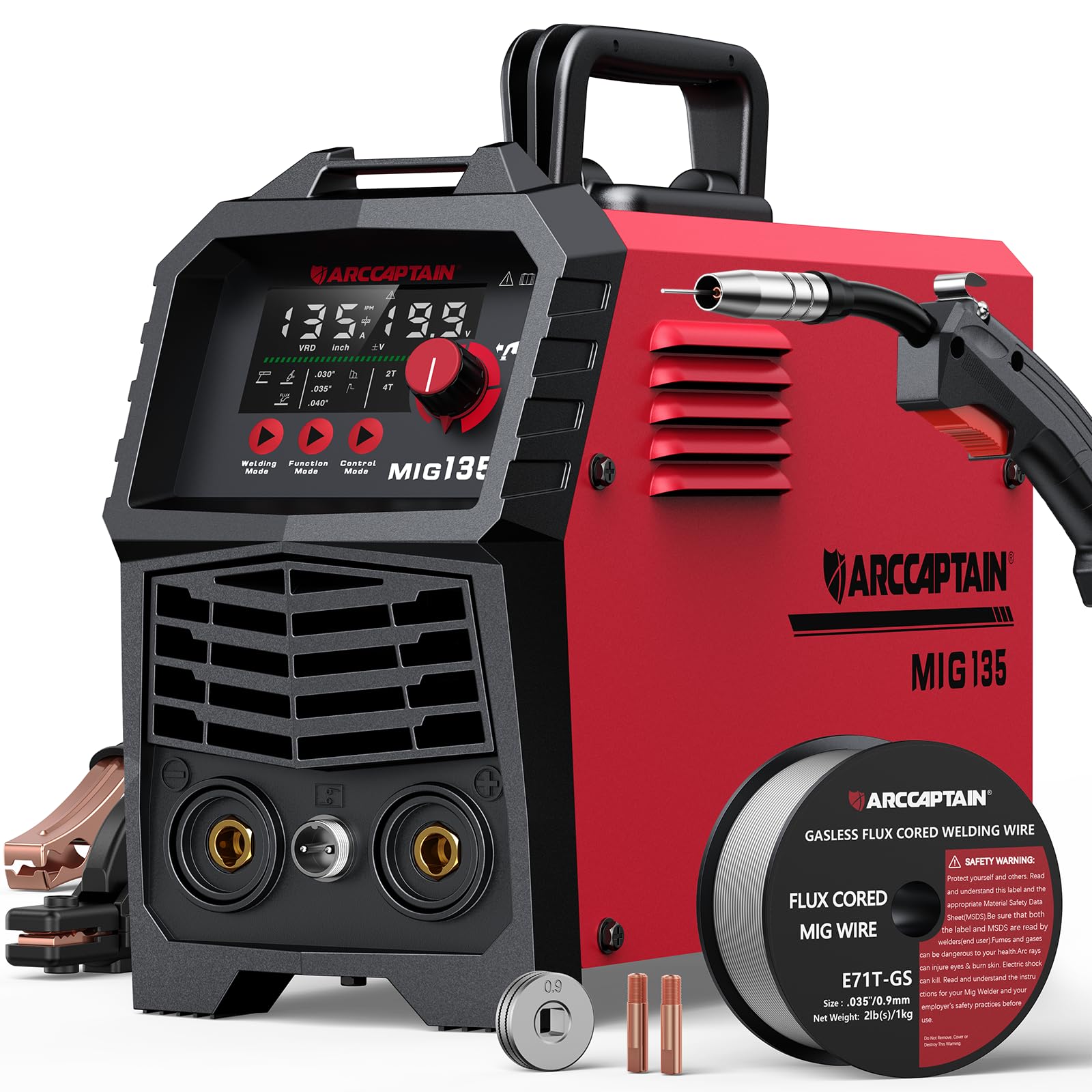
This ARCCAPTAIN 135A is a compact option for light repairs, training, and quick backup work. It is not a main high-output shop welder, but it makes sense if you need a small 110 V machine for flux-core welding, stick repairs, and occasional lift TIG with the right torch.
The large LED display and synergic presets help newer users start faster. For body-shop work, remember that gasless flux-core can create more spatter than gas MIG, so this is better for rougher patches, brackets, and utility repairs than cosmetic panel finishing.
What People Say
Users often like the portability, simple controls, and quick setup. Common cautions include basic accessories, limited output, and the need to respect the machine’s light-duty role.
Overall Sentiment: Positive

Who Should Buy This
- Shops that need a compact backup for light steel repairs.
- Beginners learning flux-core and stick basics.
- Mobile techs who need a small 110 V machine for occasional work.
Who Should Avoid This
- Shops that need gas MIG for clean panel work.
- Anyone welding thicker material regularly.
- Buyers who need aluminum support or a daily production welder.
Ease of Use
|
Feature |
Ease Level |
|---|---|
|
Initial setup |
Easy |
|
Synergic or auto MIG mode |
Easy |
|
Manual fine tuning |
Moderate |
|
Switching between welding modes |
Moderate |
|
Wire feeding and torch ergonomics |
Moderate |
Versatility
You can run flux-core for fast repairs, stick for rougher jobs, and lift TIG if you add the torch. It is useful for small auto-shop tasks, but it should be treated as a compact helper rather than a primary shop machine.
Key Benefits
- 3-in-1 capability: flux-core MIG, lift TIG, and stick welding
- Large LED display with synergic presets
- Light and portable for moving around the shop
- Manual fine-tuning for users who want more control
- Good backup choice for light-duty steel work
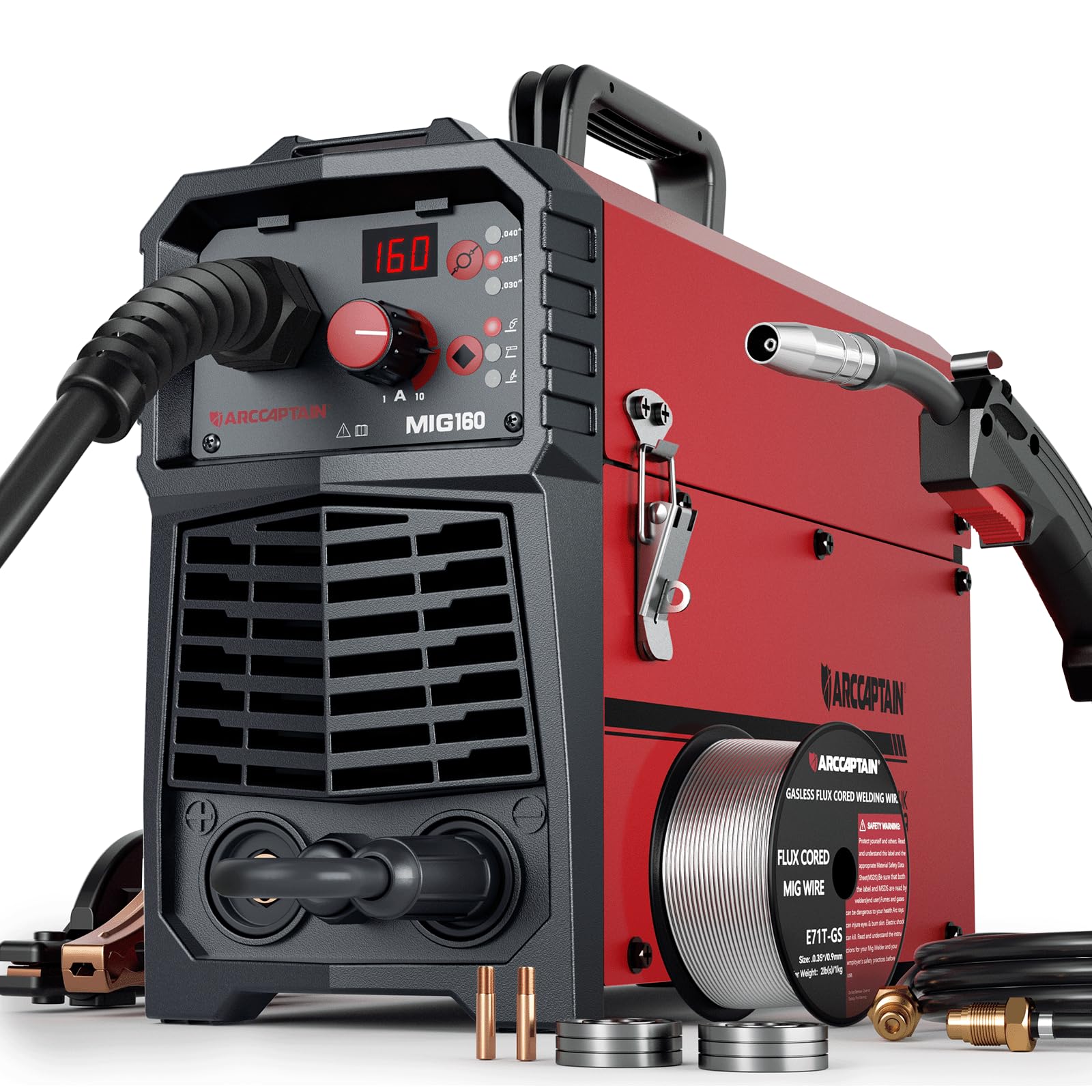
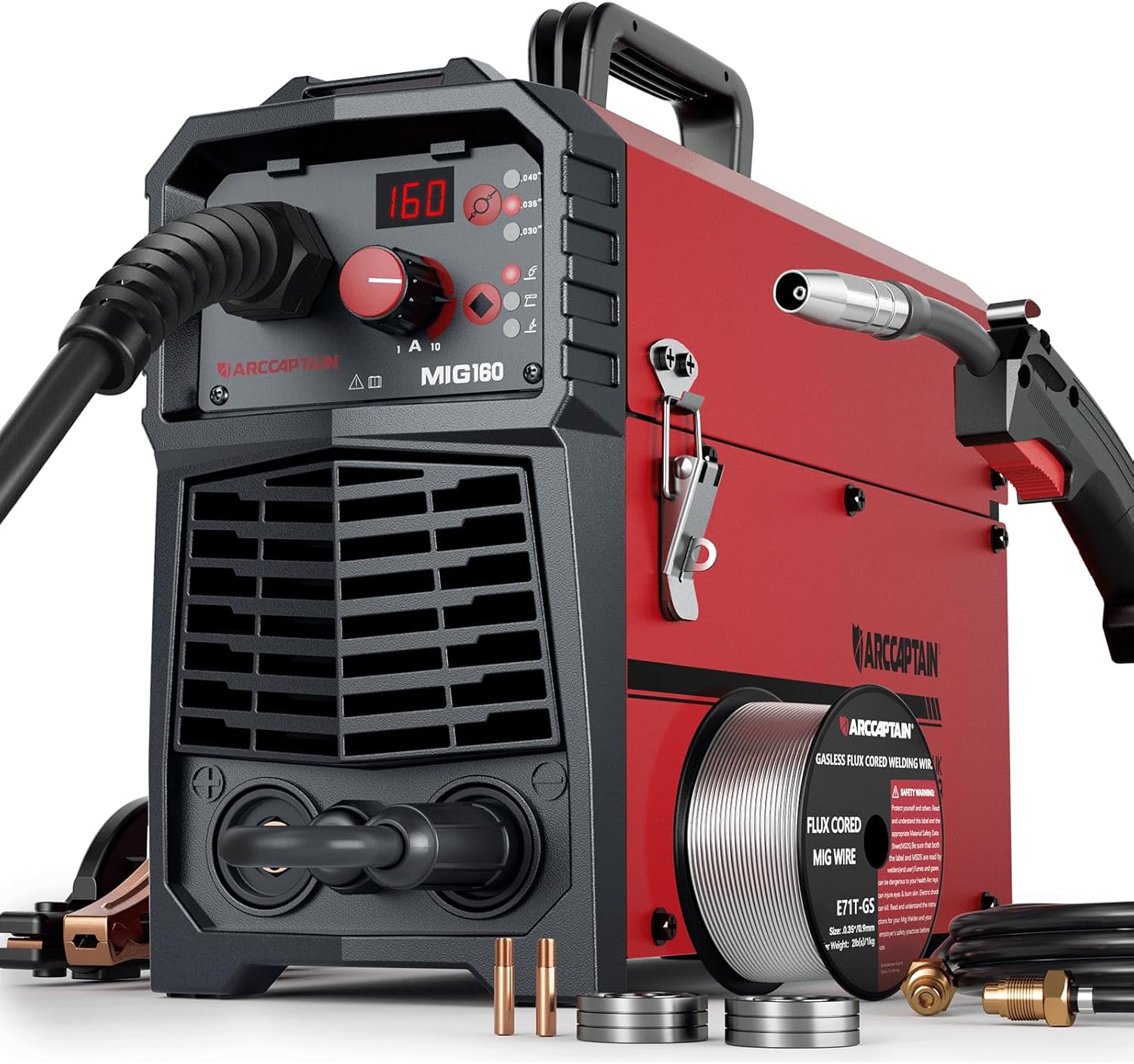
If you need a portable machine that is easier to grow with than a 110 V-only welder, the ARCCAPTAIN 160A is a practical option. It gives you gas MIG, gasless flux-core MIG, lift TIG with the right torch, and stick welding, so one unit can cover a wide range of small shop and garage jobs.
The dual-voltage design is useful for a shop that moves between outlets, while the synergic setup helps newer users reach usable settings faster. It is a smart fit for panel patches, exhaust hangers, brackets, and general repair work as long as you do not treat it like a nonstop industrial welder.
What People Say
Customers often praise the easy setup, display, and portability. The main limitations are basic accessories, the need to buy a TIG torch for lift TIG, and limited duty cycle for heavier continuous work.
Overall Sentiment: Positive

Who Should Buy This
- Beginner and intermediate users who want gas MIG and flux-core in one unit.
- Small shops that need dual-voltage portability.
- Garages doing panels, exhaust work, brackets, and light fabrication.
Who Should Avoid This
- Professional fabrication bays doing long high-output welds every day.
- Buyers who need aluminum spool-gun support.
- Anyone who wants TIG accessories included by default.
Ease of Use
|
Feature |
Ease Level |
|---|---|
|
Initial setup |
Easy |
|
Synergic or auto MIG mode |
Easy |
|
Switching between welding modes |
Moderate |
|
Wire feeding and torch ergonomics |
Moderate |
|
Long continuous heavy welding |
Hard |
Versatility
You can run flux-core for quick outdoor fixes, gas MIG for cleaner shop work, stick for repairs, and lift TIG for finer passes with the needed torch. It handles typical auto-shop tasks but remains best for portable and intermittent use.
Key Benefits
- 4-in-1 capability: gas MIG, flux-core MIG, lift TIG, and stick
- Synergic control for quicker setup
- Dual voltage for garage, shop, and mobile flexibility
- Good fit for panel repairs, exhaust work, and small fabrication
- More flexible than a compact flux-core-only unit
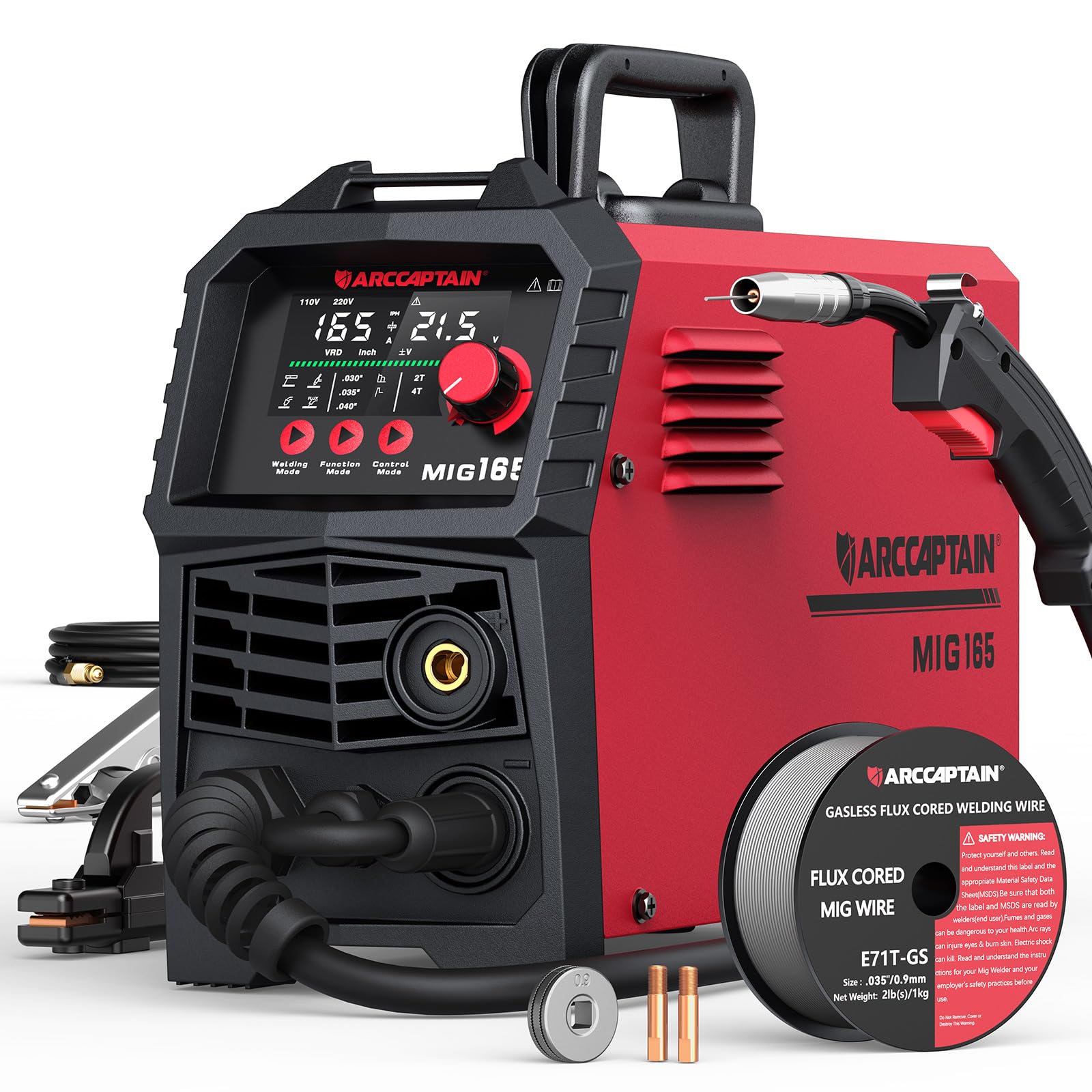
If you like the ARCCAPTAIN control layout but want a little more headroom than a 135A machine, this 165A model is a good middle ground. It covers gas MIG, flux-core, lift TIG with the proper torch, and stick, while staying portable enough to move around a shop or garage.
It makes sense for patch panels, exhaust hangers, brackets, and small-to-medium fabrication tasks. The main benefit is the balance: more useful power and dual-voltage flexibility than a small backup unit, without jumping to a heavier 200A machine.
What People Say
Customers commonly say the display and synergy presets make setup easier. They also like the portability and mode range, while noting that included accessories may be basic and heavy continuous welding is not the best use case.
Overall Sentiment: Positive

Who Should Buy This
- Small shops that want a portable dual-voltage machine with gas MIG.
- Users who want more capability than a compact 135A unit.
- Repair techs who weld panels, brackets, exhaust parts, and light fabrication pieces.
Who Should Avoid This
- Buyers who need aluminum spool-gun support.
- Shops that weld thick material for long periods every day.
- Users who only need the cheapest possible starter welder.
Ease of Use
|
Feature |
Ease Level |
|---|---|
|
Initial setup |
Easy |
|
Synergic or auto MIG mode |
Easy |
|
Switching between welding modes |
Moderate |
|
Wire feeding and torch ergonomics |
Moderate |
|
Continuous heavy welding |
Hard |
Versatility
You can run flux-core for quick outdoor fixes, switch to gas MIG for cleaner shop work, use stick for rough repairs, and add a lift TIG torch for finer passes. It is well suited to intermittent repair work rather than nonstop fabrication.
Key Benefits
- Four welding modes: gas MIG, gasless MIG, lift TIG, and stick
- Synergy presets and large LED display reduce setup guesswork
- Dual-voltage support for shop or garage power
- Portable design for moving between bays
- Balanced choice for light-to-medium auto tasks

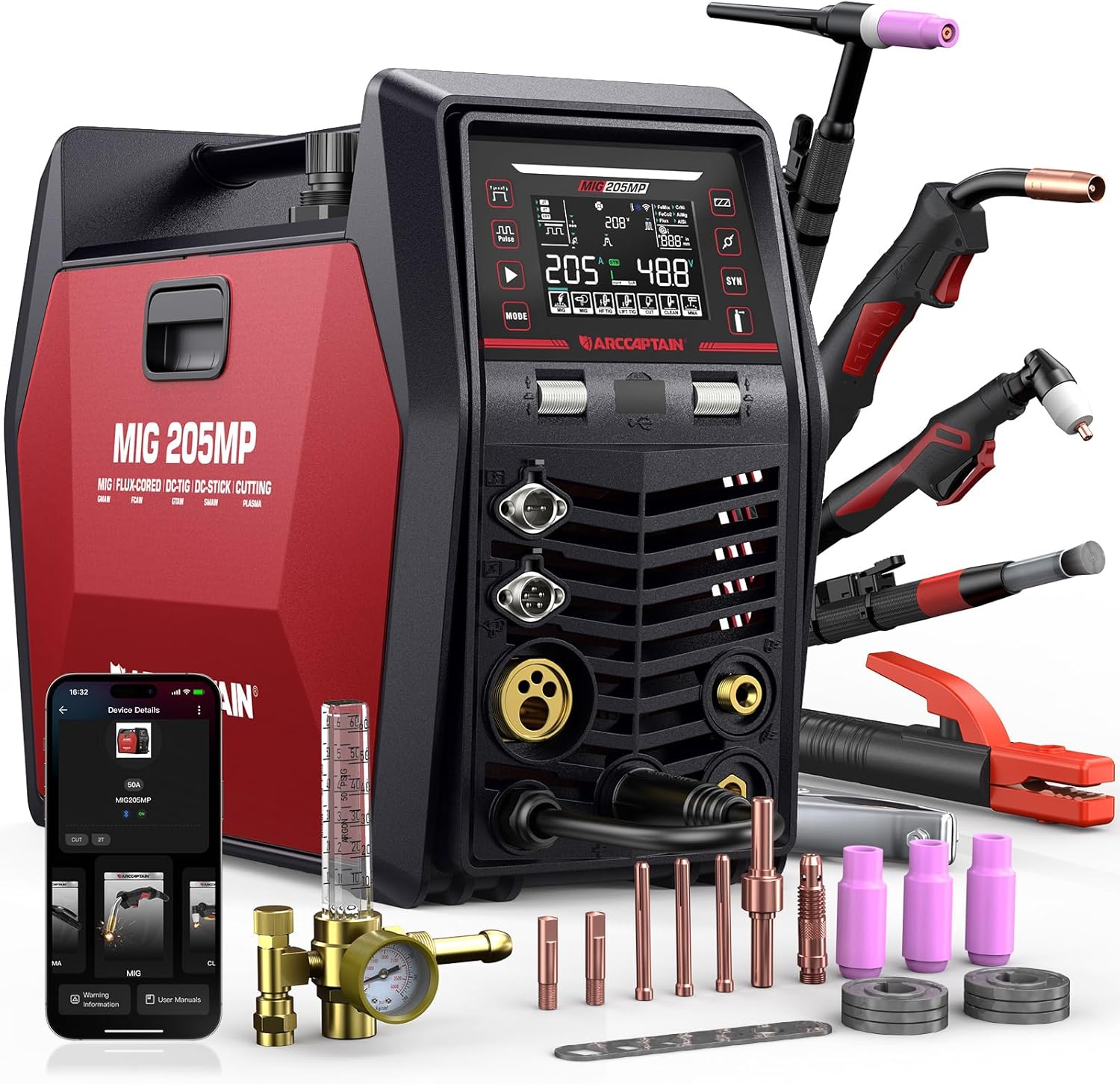
If you want one footprint to cover welding and cutting, the ARCCAPTAIN MIG205MP is the most feature-packed machine here. It combines gas MIG, gasless MIG, pulsed options, DC TIG, stick, spool-gun aluminum support, and plasma cutting, so it can handle more shop tasks without needing separate equipment.
The iControl app and large LED display help with preset management, but this is also the machine with the biggest learning curve. It makes the most sense for shops or mobile techs that will actually use the cutting, TIG, pulse, and aluminum features. If you only need simple MIG repairs, a less complex machine may be easier to live with.
What People Say
Users tend to praise the wide process range, app control, large display, and built-in cutter. The main caution is complexity: advanced settings, accessory needs, and plasma setup require more learning than a simple MIG-only machine.
Overall Sentiment: Positive

Who Should Buy This
- Shops that want MIG welding, TIG capability, stick, aluminum support, and plasma cutting in one unit.
- Mobile repair techs who value broad capability in one machine.
- Users who like app presets and are comfortable learning advanced settings.
Who Should Avoid This
- Beginners who want the simplest possible MIG setup.
- Shops that already own a separate plasma cutter and TIG machine.
- Users who do not want to manage extra accessories for advanced modes.
Ease of Use
|
Feature |
Ease Level |
|---|---|
|
Initial setup |
Easy |
|
App and preset management |
Easy |
|
Switching between welding modes |
Moderate |
|
Plasma cutter setup and use |
Moderate |
|
Advanced parameter tuning |
Hard |
Versatility
This unit covers quick outdoor fixes with flux-core, cleaner shop beads with gas MIG, finer work with DC TIG, heavier repairs with stick, aluminum with the right spool gun, and cutting for trimming panels or brackets.
Key Benefits
- Broad multiprocess capability, including MIG, flux-core, TIG, stick, and plasma cutting
- iControl app and memory presets for repeatable settings
- Large LED screen with synergy matching
- Spool-gun ready for aluminum work with the right accessory
- Built-in cutter can save time when trimming panels or brackets
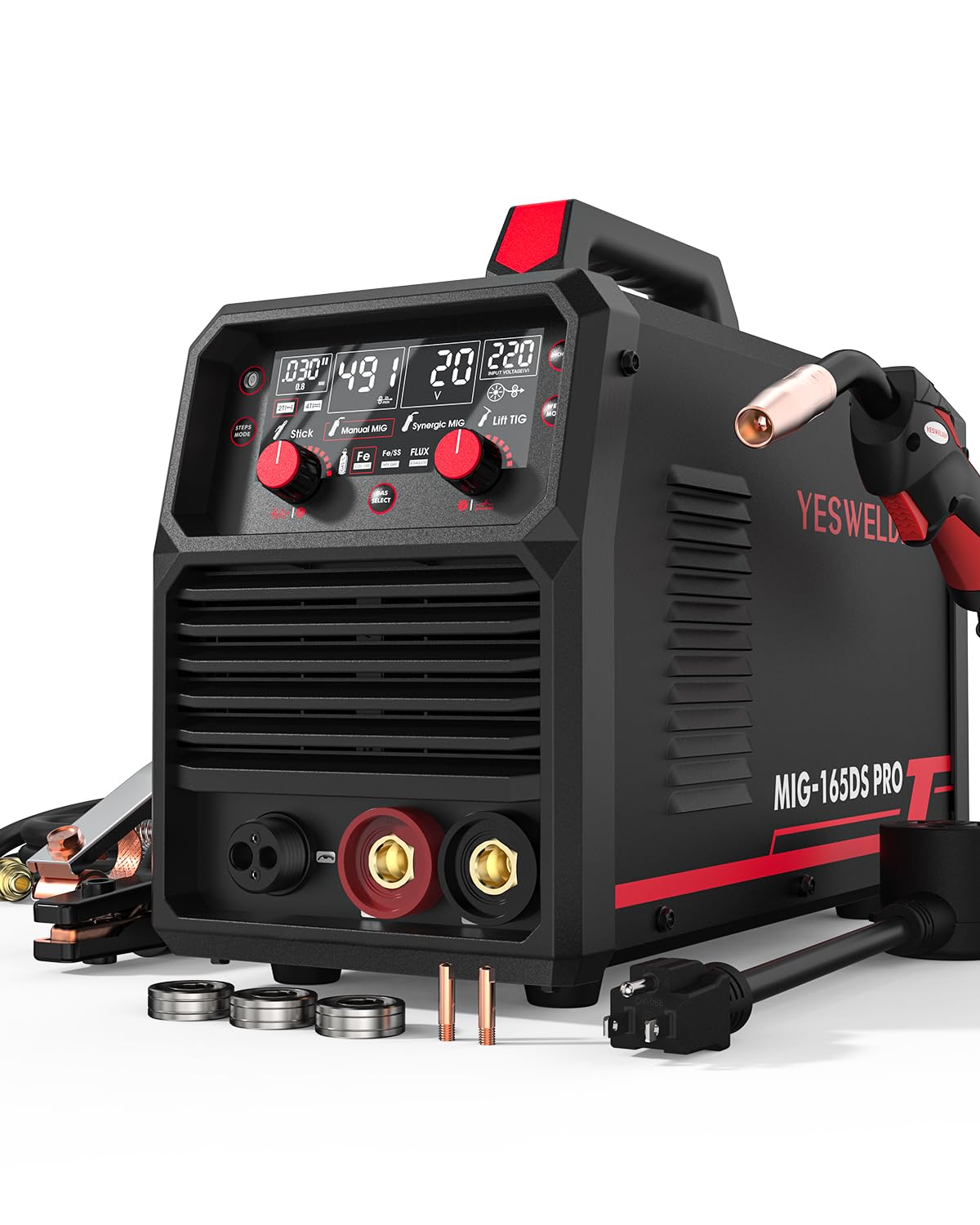
If you want a mid-range YESWELDER that sits between small portable machines and bigger 200A rigs, the MIG-165DS PRO is worth a close look. It gives you gas MIG for cleaner auto-shop beads, flux-core for outdoor or quick work, lift TIG with the right torch, and stick for repair jobs where metal prep is less perfect.
The dual-voltage input gives you more flexibility than a 110 V-only box, and the digital controls help you repeat settings for patch panels, brackets, exhaust hangers, and light fabrication. It is a practical choice if you need more capability than a basic 135A unit but do not want to jump to a heavier 200A machine.
What People Say
Buyers often like the balance of output, portability, and mode coverage. The dual-voltage setup and simple display are useful for people who want one welder for home garage work, shop repairs, and occasional heavier tasks.
Overall Sentiment: Positive

Who Should Buy This
- Small shops that want a balanced mid-range welder.
- Users who need both gas MIG and flux-core in one compact unit.
- Garages that want more headroom than a basic 135A machine.
Who Should Avoid This
- Buyers who need spool-gun aluminum support.
- Shops that need 200A-class performance for thicker work.
- Users who expect TIG accessories included with the base machine.
Ease of Use
|
Feature |
Ease Level |
|---|---|
|
Initial setup |
Easy |
|
Digital controls |
Easy |
|
Switching between MIG and stick |
Moderate |
|
Using lift TIG |
Moderate |
|
Long continuous heavy welding |
Hard |
Versatility
You can use it for gas MIG, flux-core, stick, and lift TIG with the right accessories. That makes it a good fit for body panels, small brackets, light structural repairs, exhaust work, and general shop fabrication.
Key Benefits
- 4-in-1 capability: gas MIG, flux-core MIG, lift TIG, and stick
- Dual-voltage support for garage, shop, and mobile repair flexibility
- Mid-range output that balances portability and useful shop power
- Digital controls make settings easier to repeat
- Good fit for auto body, exhaust, brackets, and light fabrication
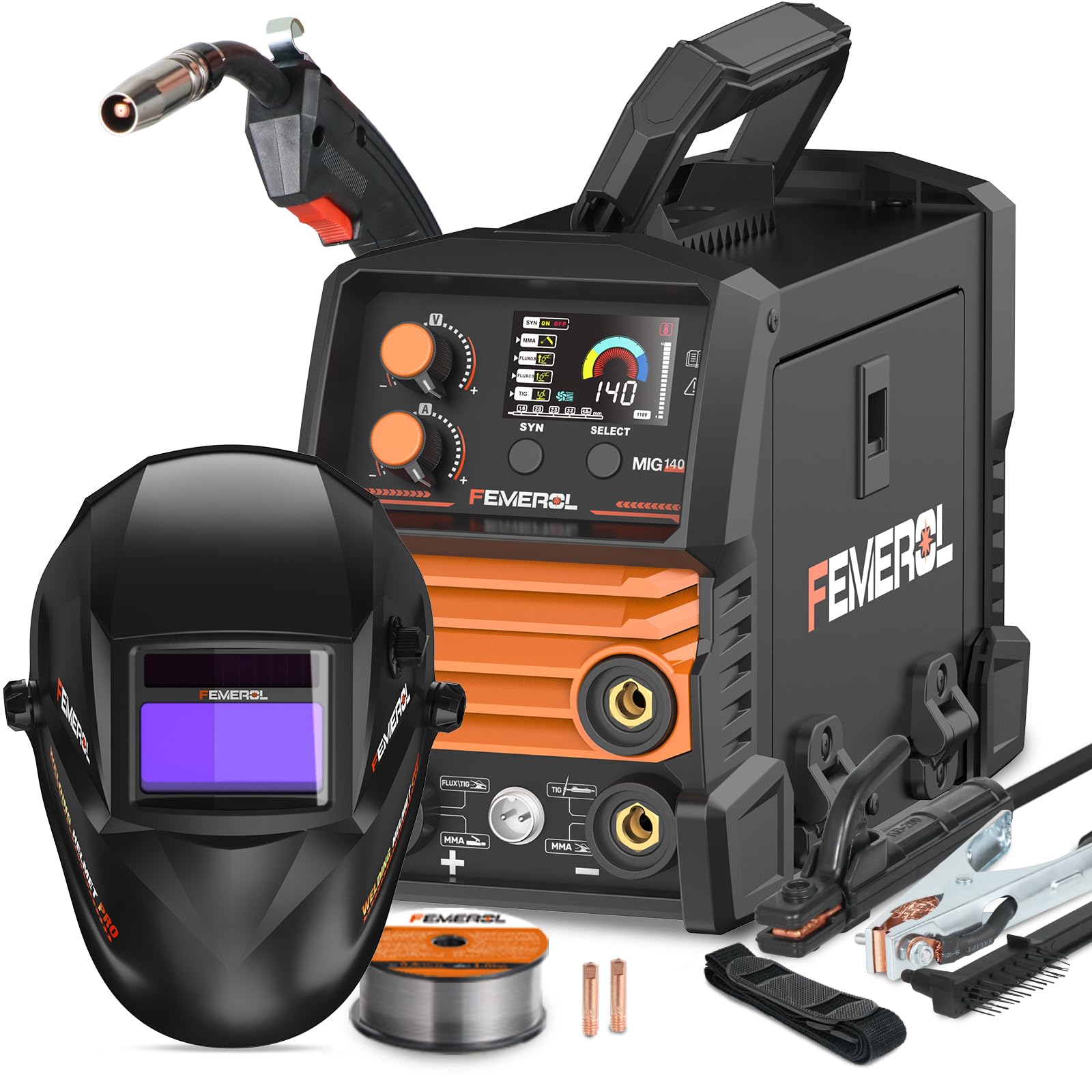
If you want a starter-friendly machine that gets a new tech or small garage welding quickly, the FEMEROL MIG140R has a lot of appeal. It focuses on gasless flux-core MIG, lift TIG with the right setup, and stick, and the included starter kit can reduce the number of extra items needed on day one.
It is best viewed as a light-duty shop helper, training machine, or backup welder rather than the centerpiece of a high-volume fabrication bay. For small brackets, thin steel, quick repairs, and practice work, the compact size and simple controls make it easy to move and easy to learn.
What People Say
Users tend to like the simple setup, light weight, and included accessories. The starter-kit angle is especially useful for beginners who do not already own a helmet or basic consumables. The main limitation is that this machine is better suited to smaller projects than heavy shop work.
Overall Sentiment: Positive

Who Should Buy This
- Beginners who want a basic starter kit with a welder and helmet.
- Small garages that need a light-duty flux-core helper.
- Shops training new users on simple repair welds and practice pieces.
Who Should Avoid This
- Professional shops needing a primary daily-use MIG welder.
- Buyers who need clean gas MIG welds on cosmetic panel work.
- Anyone welding thick material or long beads regularly.
Ease of Use
|
Feature |
Ease Level |
|---|---|
|
Initial setup |
Easy |
|
Included starter accessories |
Easy |
|
Flux-core welding |
Easy |
|
Lift TIG and stick setup |
Moderate |
|
Long continuous heavy welding |
Hard |
Versatility
This machine handles quick flux-core fixes, lift TIG with the proper setup, and stick for small repair work. It works best on light steel, brackets, small repairs, and practice pieces rather than heavy structural shop jobs.
Key Benefits
- 3-in-1 setup: flux-core MIG, lift TIG, and stick
- Synergic control and LED display for clearer adjustments
- Very portable and easy to move around the shop
- Starter kit includes useful day-one accessories
- Good fit for training, practice, and light-duty repairs
Shop safety note: Welding output, shielding gas, wire size, polarity, ventilation, PPE, grounding, and duty cycle all affect results. Check the product manual before setup, use proper eye and hand protection, keep the work area ventilated, and test settings on scrap metal before touching customer vehicles.
FAQ
How Do I Choose The Right MIG Welder For My Auto Shop?
Start with the jobs you do most. For clean body-panel work, gas MIG with small wire and good low-amp control matters more than the highest advertised output. For brackets, exhaust, and thicker repairs, look for dual voltage, enough amperage, stable wire feed, and a practical duty cycle.
If you want one machine to cover more work, choose a multiprocess welder with gas MIG, flux-core, stick, and lift TIG. If aluminum matters, confirm spool-gun compatibility and check whether the spool gun is included or sold separately.
Can I Weld Thin Car Panels Without Burning Through Them?
Yes, but you need careful heat control. Use lower amps, smaller wire, short stitch welds, and practice on scrap that matches the vehicle panel. Let the metal cool between tacks instead of running long beads.
For cosmetic bodywork, many techs prefer gas MIG with solid wire and shielding gas because it is usually cleaner and easier to control than flux-core. Flux-core is useful for outdoor work, quick repairs, and less cosmetic jobs, but it can create more spatter.
Is A 110 V Welder Enough For Auto Repair?
A 110 V welder can be enough for light steel, patch panels, brackets, and quick fixes. It is not the best choice for repeated thick-material welding or long high-output beads.
If your shop handles a wider mix of repairs, a dual-voltage welder is usually more flexible because you can run light jobs on 110/120 V and move to 220/240 V when you need more power and stability.
Do I Need A Spool Gun For Aluminum?
For many small MIG machines, a spool gun is the cleaner path for aluminum because soft aluminum wire can be harder to push through a standard MIG lead. If aluminum repairs matter, choose a spool-gun-ready welder and confirm the exact compatible spool gun before purchase.
What Maintenance, Consumables, And Safety Steps Keep Your Shop Productive?
Make regular consumable checks part of your routine. Inspect and replace contact tips, nozzles, liners, drive rollers, and ground clamps before they cause spatter, poor feed, or weak connections.
Monitor cooling and duty cycle to avoid overheating the inverter. For safety and consistent throughput, enforce PPE, ventilation, correct polarity, gas-flow checks, and a short setup checklist before each job.
What Pros Prefer
When you’re choosing between these MIG and multiprocess welders, you’re mainly weighing power, process coverage, portability, accessory needs, and how often the machine will work each day. A compact 135A or 140A unit makes sense for training, quick sheet-metal tack-ups, light brackets, and backup use. A dual-voltage 160A to 200A machine fits more regular shop tasks. A higher-output, spool-gun-ready, or plasma-capable unit is the better choice when you want one setup for steel, light aluminum work, trimming panels, and broader repair jobs.
Wrapping Up
You now have a tighter list of welders matched to real auto-shop use. If you want a single machine that covers most automotive needs, including steel, mild aluminum with the right spool gun, lift TIG, and stick, prioritize the YESWELDER MIG-205DS PRO or the ARCCAPTAIN MIG205MP.
If portability and lighter repairs matter most, the YESWELDER YWM-160, ARCCAPTAIN 160A, and ARCCAPTAIN 165A are strong mid-range choices. If you need a compact backup or starter setup, the YESWELDER 135, ARCCAPTAIN 135A, and FEMEROL 140 belong in that lighter-duty role. Match voltage, duty cycle, process coverage, and accessories to the jobs you do every week, and you’ll be much more likely to buy a welder your shop actually uses.
| Product | Image | Best Fit | Power Style | Welding Processes | Shop Note |
|---|---|---|---|---|---|
| YESWELDER 135Amp MIG Welder |
 |
Compact backup | 110 V light-duty |
|
Best for quick steel fixes, not clean gas MIG panel work. |
| YESWELDER Gas Gasless 160A Multiprocess MIG Welder |
 |
Dual-voltage compact pick | 110 V / 220 V |
|
Good step up from 110 V-only machines. |
| YESWELDER MIG-205DS PRO MIG Welder |
 |
Best all-around shop pick | 110 V / 220 V |
|
Strongest balance of process coverage, output, and shop fit. |
| ARCCAPTAIN MIG Welder, 200Amp 6 in 1 |
 |
Best value multiprocess pick | 110 V / 220 V |
|
Broad capability, but confirm needed TIG and spool-gun accessories. |
| ARCCAPTAIN 135A MIG Welder |
 |
Portable light-duty pick | 110 V light-duty |
|
Useful backup or beginner machine, not a primary shop workhorse. |
| ARCCAPTAIN 160A MIG Welder 110V 220V |
 |
Beginner-friendly dual voltage | 110 V / 220 V |
|
Good for panels, exhaust, brackets, and general light repair work. |
| ARCCAPTAIN MIG205MP MIG Welder 9 IN 1 |
 |
Best multiprocess workhorse | 120 V / 240 V |
|
Most capable, but also the most complex option here. |
| YESWELDER 165A MIG Welder |
 |
Mid-range shop pick | 110 V / 220 V |
|
Good middle ground between small backup units and 200A machines. |
| 140A 3 in 1 MIG Welder |
 |
Starter kit | 110 V light-duty |
|
Good for training and light repairs, not daily high-volume shop welding. |
Affiliate note: This roundup is reader-supported. When you click through links, we may earn a referral commission on qualifying purchases.