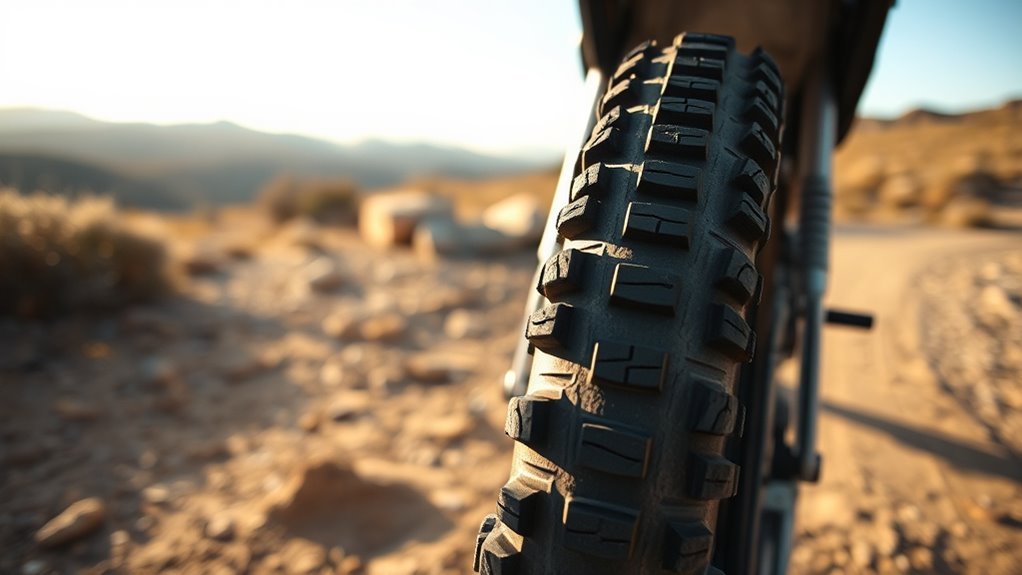
Off-road motorcycle tyres generally use reinforced sidewalls, but “stinger sidewalls” is not a standard industry term. The term appears to refer to extra-ply or high-strength carcass construction that improves cut resistance, puncture protection, and impact tolerance. This matters in rough terrain, where lower pressures and obstacle strikes can deform weaker tyres. Stronger sidewalls also improve stability and predictable steering under load. The design details behind that performance become clearer with a closer look.
Key Takeaways
- Yes, many off-road motorcycle tyres use reinforced sidewalls for added cut and puncture resistance.
- Stinger sidewalls improve durability, especially on rocks, roots, and other harsh terrain.
- They also help reduce sidewall deformation at lower pressures for better stability and control.
- Stronger sidewalls can improve predictability under load, though they may feel slightly stiffer.
- Tyre choice and pressure should match terrain, load, and manufacturer recommendations for safe performance.
What Are Stinger Sidewalls?
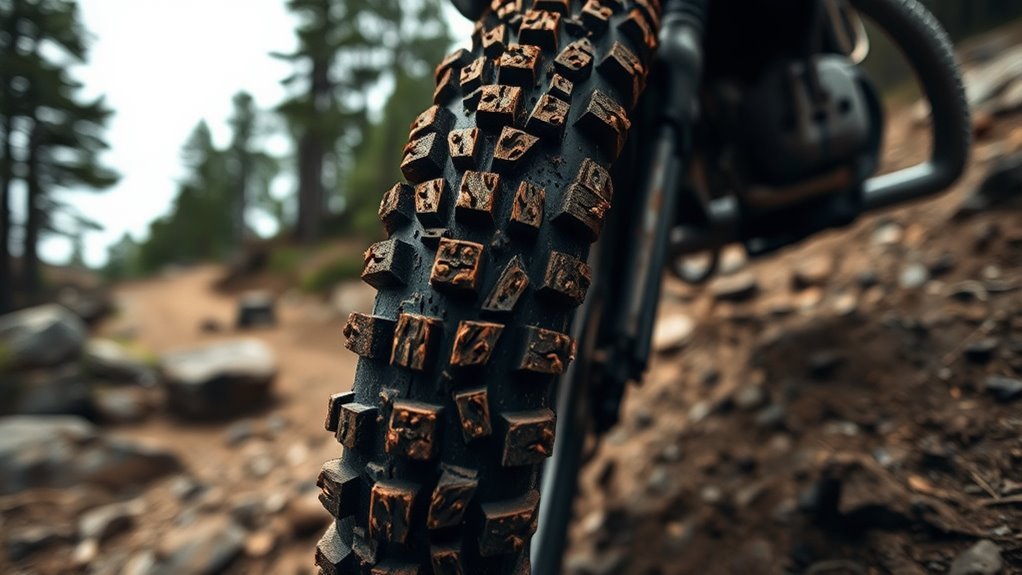
Stinger sidewalls refer to a reinforced tyre sidewall construction used in off-road motorcycle tyres to improve durability and performance on abrasive terrain.
In technical terms, stinger sidewalls combine multi-ply layering with supplementary reinforcement materials, producing higher resistance to cuts, punctures, and impact damage. This architecture supports durability in off-road conditions where rocks, roots, mud, and gravel impose repeated lateral and vertical loads.
The sidewall profile is engineered to retain enough flexibility for rider comfort while preserving stiffness for stability under load. That balance improves handling, especially when traction is limited and terrain shifts unpredictably.
By reducing deformation at the rim interface, stinger sidewalls can also lower the likelihood of pinch flats, a failure mode caused by compression between tyre and obstacle.
The result is a tyre structure that expands operational freedom across hostile terrain without sacrificing control, grip, or structural integrity.
Do Off-Road Motorcycle Tyres Use Stinger Sidewalls?
Off-road motorcycle tyres may use stinger sidewalls when increased stiffness and puncture resistance are required for harsh terrain.
Their reinforced construction addresses durability demands by limiting cut damage and preserving structural integrity under impact.
This is especially relevant at lower pressures, where the risk of pinch flats rises as the tyre compresses against rocks and roots.
Stiffer Sidewall Purpose
Stiffer sidewalls are commonly used in off-road motorcycle tyres to improve durability, impact resistance, and control on rough terrain.
In this design, stiffer sidewalls play a crucial role in limiting deformation when the tyre meets rocks, roots, and sharp edges. The controlled carcass response supports best performance by preserving shape under load, which helps reduce pinch flats and maintains predictable steering.
Stinger sidewalls also increase feedback through the chassis, giving riders clearer information during cornering on uneven trails. This added rigidity benefits aggressive riding by improving stability and line holding.
However, the same structure can transmit more vibration on pavement, so the advantage is strongest where liberation from unstable surfaces matters most: off-road.
Off-Road Durability Needs
A reinforced sidewall is often a defining feature of off-road motorcycle tyres, where resistance to cuts, impacts, and pinch flats is essential on rocky, root-filled, and uneven terrain.
In this scenario, stinger sidewalls can add extra rubber layers and a multi-ply carcass to strengthen the casing and preserve shape under load. For an adventure motorcycle, such construction supports traction and stability when the route turns hostile and freedom depends on mechanical confidence.
Their value is not decorative; it is functional, reducing failure risk in severe conditions. Riders should make sure the tyre’s construction matches the intended terrain.
Need to Know: off-road durability is achieved through stiffness, reinforcement, and controlled flex, rather than through lightweight minimalism, because rugged use demands resilience without compromise.
Pressure And Puncture Risk
Pressure management directly affects puncture risk in off-road use, but these tyres typically do not rely on stinger sidewalls; instead, they use robust multi-ply carcasses and reinforced construction to resist cuts, impacts, and pinch flats on rough terrain.
When pressure adjustments are made for traction, the contact patch expands and compliance improves, yet pinch flat risks rise if the casing lacks sufficient support. True off-road designs balance sidewall flexibility with structural strength, allowing controlled deformation without excessive collapse.
Stiffer sidewalls can reduce damage, but they may also restrict the freedom needed for terrain conformity. As a result, tyre performance depends on matching pressure to design intent, surface severity, and load.
Precise inflation practice preserves puncture resistance, maintains control, and supports liberated riding across demanding, uneven ground.
Why Off-Road Tyres Need Tough Sidewalls
Off-road motorcycle tyres rely on tough sidewalls to endure impacts, cuts, and constant flexing across rocks, roots, and ruts. Their sidewall materials are selected for impact resistance and adequate load capacity, so the carcass can carry weight without collapsing under abuse.
Reinforced, multi-ply builds add stiffness that limits deformation when wheels strike edges or descend into holes, reducing pinch flats and helping preserve tyre shape. This structural control is essential in terrain where the rider may seek freedom from prepared surfaces yet still needs predictable support.
A durable sidewall also lowers the probability of sudden failure, which is critical when remote routes offer little margin for error. By resisting abrasion and side loading, these tyres maintain a stable footprint over irregular ground.
The result is a controlled, resilient platform that enables confident movement through hostile landscapes while keeping puncture risk and structural fatigue within manageable limits.
How Sidewall Construction Affects Grip and Durability
Sidewall construction directly governs how an off-road tyre balances grip and durability under load. Reinforced construction materials limit damage from rocks, roots, and impacts, while preserving enough compliance to keep the contact patch active on irregular ground.
Reduced sidewall flex in stinger-style designs increases puncture resistance and supports traction enhancement during hard cornering and abrupt landings, because the casing holds shape instead of collapsing. Multi-ply sidewalls add resistance to pinch flats, allowing lower pressures and more confident use in loose terrain without compromising safety.
The sidewall also influences how efficiently mud and debris are shed; a well-designed profile can maintain cleaner tread interfaces, preventing grip loss. In practice, durability is not separate from adhesion: the casing geometry, ply count, and stiffness determine whether the tyre can transmit force cleanly while resisting abuse.
That balance gives riders a freer, more controlled line through hostile terrain, with fewer interruptions from damage or instability.
Off-Road Tyres vs Street Tyres: What Changes?
Compared with street tyres, off-road motorcycle tyres are built around a different set of priorities: a multi-ply carcass for puncture resistance, more flexible impact-absorbing sidewalls, and deep, widely spaced knobs for traction in mud, sand, and gravel.
This architecture changes three essentials:
- Puncture defense — thicker carcass layers improve resistance to rocks and sharp debris.
- Compliance — flexible sidewalls absorb impacts and preserve control over uneven ground.
- Terrain adaptability — aggressive tread design maintains grip performance where pavement-oriented tyres lose authority.
Street tyres, by contrast, use stiffer sidewalls and lower-profile tread patterns to favour speed stability, noise reduction, and even wear on asphalt.
The trade-off is clear: off-road tyres may feel less refined on tar and can wear faster there, yet they deliver greater freedom when the route turns broken, loose, or unpredictable.
In technical terms, their value lies in matching construction to the harshest terrain expected.
Why Tread Pattern Doesn’t Tell the Full Story
Although a deep, aggressive tread may suggest strong off-road capability, it reveals only part of the tyre’s performance profile. Tread design limitations are clear: lugs primarily influence off road traction, grip, and self-cleaning, yet they say little about structural resilience. True freedom in rough terrain depends on the carcass and sidewall performance, which govern impact resistance, cut protection, flex control, and heat management. A multi-ply carcass often provides added puncture resistance, but this advantage is not visible in the pattern alone.
| Feature | Function |
|---|---|
| Tread blocks | Grip and debris shedding |
| Multi-ply carcass | Puncture resistance |
| Sidewall construction | Impact and cut durability |
| Overall architecture | Safety and control |
Therefore, evaluation must extend beyond the surface. The tread may promise traction, but only the combination of tread and reinforced sidewalls determines whether a tyre can handle demanding terrain with reliability and composure.
Why Tyre Pressure Matters Off Road
Tyre pressure is another variable that shapes off-road performance just as strongly as tread and carcass design. On uneven ground, tyre pressure directly governs contact patch size, traction, and steering response, making it central to grip enhancement and a measured safety balance.
Lower pressures can let the tyre conform to rocks, ruts, and loose soil, but excessive deflation increases sidewall flex, heat build-up, and the likelihood of pinch flats or structural damage. It can also allow tyre de-beading, creating sudden deflation and loss of control.
- Reduced pressure improves contact on rough terrain.
- Over-deflation raises damage and overheating risk.
- Correct pressure supports stable handling and rider freedom.
The manufacturer’s recommended tyre pressure remains the baseline because it limits premature wear while preserving control. Understanding terrain-specific pressure needs enables confident, precise riding without sacrificing durability or liberation.
How to Choose the Right Off-Road Tyres
Selection of off-road tyres should begin with the most severe terrain expected, since tread geometry and knob spacing must be matched to sand, gravel, mud, or mixed surfaces rather than to marketing claims.
Carcass construction is the next critical factor, with multi-ply designs and reinforced sidewalls offering greater puncture and impact resistance under harsh use.
Inflation must then be set to the manufacturer’s recommended pressure to maintain structural integrity and reduce the risk of tyre failure in demanding conditions.
Terrain Difficulty First
When the terrain becomes the primary variable, the tyre choice should be matched to the most demanding surface the motorcycle will encounter.
For terrain types, the analysis should begin with sand, gravel, mud, or mixed rock, because tread geometry must support forward drive and self-cleaning.
Rider experience matters, since a seasoned rider may accept a sharper, more specialized pattern, while a cautious one may prefer broader versatility.
Tyre brands differ in compound and tread spacing, so comparison should be systematic.
- Select the tyre for the worst segment.
- Verify deep, spaced lugs for evacuation.
- Expect faster wear on pavement, but preserve control off-road.
The objective is liberation through traction, not compromise through convenience.
Carcass Strength Matters
Carcass strength determines how well an off-road tyre survives impact, cut, and pinch damage under load. Multi-ply carcass materials increase puncture resistance and reinforce durability across hostile terrain.
In technical terms, stronger sidewall technology supports the tyre structure, helping it resist deformation when rocks, roots, and edges strike from below. Higher impact resistance gives the rider greater freedom to traverse rough lines without the tyre collapsing into a vulnerable shape.
A robust carcass is not merely defensive; it preserves traction and stability in rocky trails and muddy paths alike. Selection should reflect the demands of the route, since terrain severity determines whether a softer or stiffer design delivers the most effective balance of control, safety, and liberated movement.
Match Pressure Safely
Tyre pressure must be matched to the tyre’s construction and the riding load, because off-road performance depends on both impact resistance and controlled deformation. Stiffer sidewalls tolerate abuse, yet the chosen tyre pressure still determines whether the contact patch remains stable or collapses under rock strikes.
- Lower pressures increase traction, but raise pinch flats risk and can distort the casing.
- Manufacturer values reflect testing; they protect against overheating and structural failure.
- Load rating and speed capability must align with the ride to preserve safety and freedom.
When pressure is correctly set, handling sharpens, stability improves, and the machine tracks rough ground with less fatigue. The liberated rider gains control without sacrificing durability, using pressure as a precision tool rather than a guess.
Frequently Asked Questions
What Tire Has the Most Aggressive Sidewall?
Michelin Starcross 5 and Dunlop Geomax MX33 are viewed as having the most aggressive sidewalls, maximizing tire durability, traction control, and performance metrics in extreme terrain. Their multi-ply construction delivers superior impact resistance and liberation from compromise.
What Is the 12 Second Rule on a Motorcycle?
Like a buffer, it means maintaining 12 seconds of separation from traffic ahead. This interval supports braking techniques, cornering skills, and tire maintenance, giving a rider time to assess hazards, choose lines, and remain free.
Are Thicker Sidewalls Better?
Thicker sidewalls are often better for sidewall durability in harsh riding conditions, but they can reduce tire performance by adding weight and stiffness. The ideal choice depends on terrain, pressure management, and desired handling freedom.
What Does 69 Mean on a Motorcycle Tire?
69 denotes the tire’s load index, a small Atlas for capacity: it supports 325 kg at specified tire pressure. Riders should match load capacity with speed rating, tread patterns, and age for safer, freer travel.
Conclusion
To summarize, off-road motorcycle tyres generally do not use “stinger” sidewalls in the narrow, specialized sense associated with some other tyre types. Instead, they rely on reinforced carcass and sidewall designs that balance impact resistance, flex, and traction under low pressure. The construction is more a layered shield than a single hard barrier. As the analysis shows, tread matters, but sidewall engineering remains the hidden architecture of off-road performance, durability, and control.
