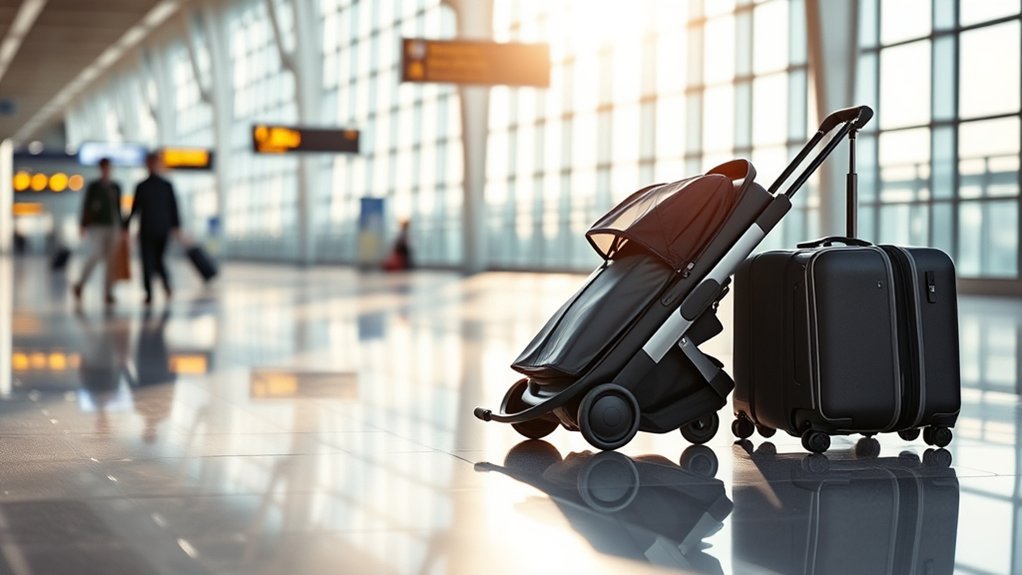
Traveling with a baby or toddler gets easier when you know what your stroller can and cannot do at the airport. A travel stroller may count as a carry-on only when it fits your airline’s cabin baggage size rules and the crew allows it onboard. In many cases, you can bring the stroller through the airport and gate-check it for free instead.
Quick Answer
A travel stroller usually does not automatically count as a carry-on. Some compact, foldable strollers may fit in the overhead bin and be accepted as cabin baggage, but airline rules vary. Most airlines let you gate-check a stroller for free, so confirm your airline’s stroller policy before flying.
Key Takeaways
- A stroller counts as a carry-on only if your airline accepts it in the cabin and it fits the size limits.
- Most airlines allow free gate-checking for strollers, even when they do not allow stroller carry-ons.
- Compact, one-hand-fold strollers are easier to move through security, boarding lines, and airplane aisles.
- Always remove loose items, accessories, and valuables before checking or gate-checking your stroller.
- Check your airline’s current stroller rules before each trip because size and weight limits can change.
Airline Policies on Strollers
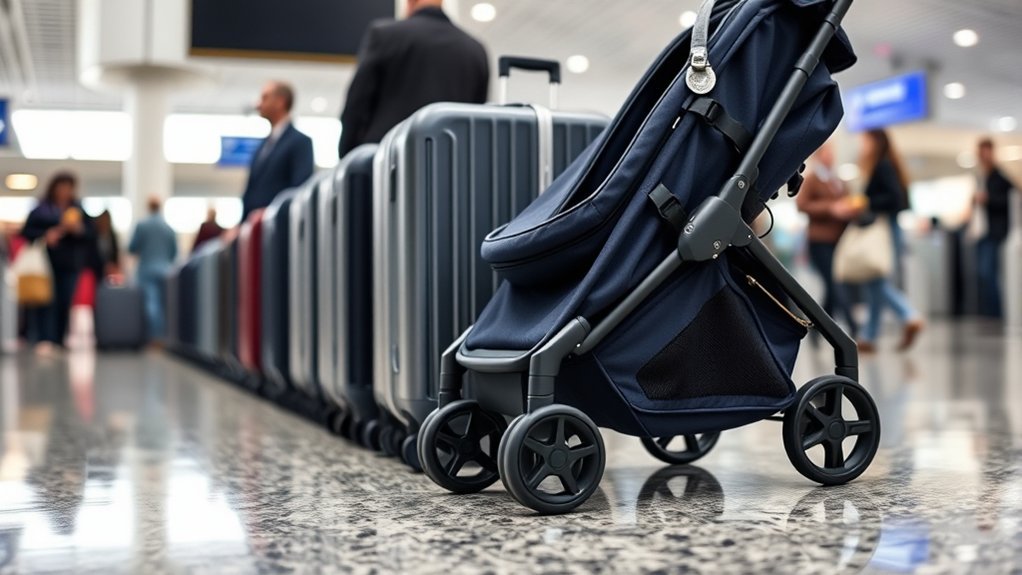
When traveling with little ones, understanding airline policies on strollers can save you time and stress. Most airlines let you check strollers for free or gate-check them without adding to your standard baggage allowance. However, stroller regulations vary by carrier, aircraft, route, and airport procedure.
Some airlines allow a compact stroller in the cabin if it folds small enough for the overhead bin. Others require all strollers to be checked at the gate or ticket counter, even if the stroller is lightweight. For example, Air Canada generally allows one stroller per child at no extra cost, while Delta Airlines commonly allows free stroller gate-checking. Some international airlines may require the stroller to be foldable and compact before they accept it at the gate.
Korean Air and other carriers may use strict size rules for cabin baggage or checked baby items, so do not rely only on the stroller’s “airplane-friendly” marketing label. To avoid surprises at the airport, always confirm individual airline policies before your journey. Check the airline’s family travel page, carry-on baggage page, and stroller policy page before you pack.
Note: “Carry-on approved” usually means the stroller may fit many overhead bins, not that every airline must accept it in the cabin.
Does a Travel Stroller Count as a Carry-On?
A travel stroller may count as a carry-on when you bring it into the cabin and place it in the overhead bin. If your airline treats it as your carry-on item, you may still be allowed one personal item, such as a diaper bag, depending on the airline’s policy.
In many cases, though, a stroller is handled separately from your normal carry-on allowance. Airlines often let parents use the stroller through the airport and then gate-check it before boarding. This is why two families flying with similar strollers can have different experiences on different airlines.
The safest approach is to measure your stroller after folding it. Compare the folded length, width, and height with your airline’s carry-on size limits. If it is larger than those limits, plan to gate-check it instead of carrying it onboard.
Preparing for Security Screening
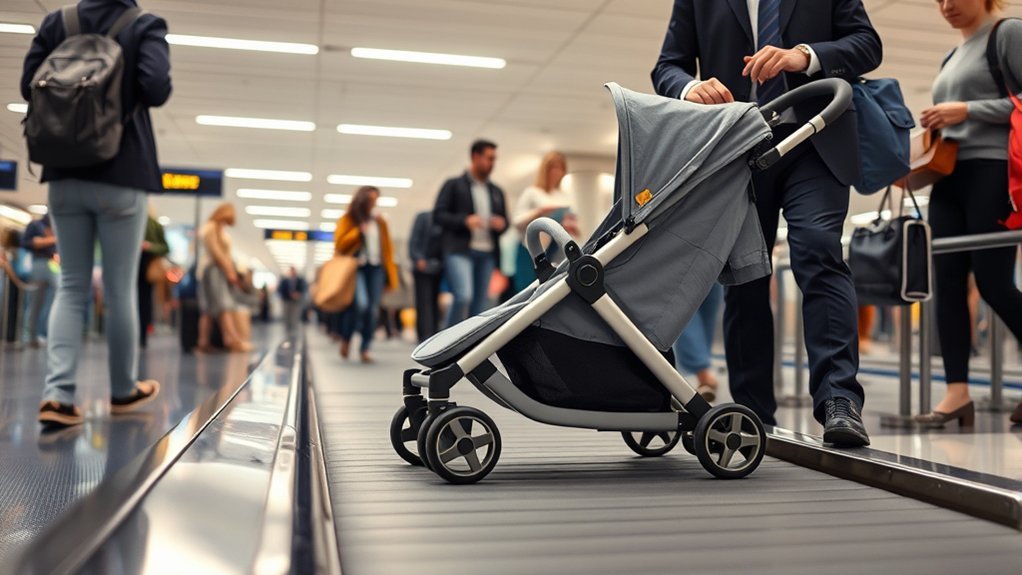
As you prepare for your journey, moving through the security screening process with your travel stroller requires a bit of planning. Start with stroller preparation by removing your child and any belongings before reaching the checkpoint. This helps keep the line moving and makes the screening easier.
Next, fold your stroller and place it on the X-ray belt if it fits. If it does not fit through the X-ray machine, security officers may perform a visual inspection or manual screening. Remove loose toys, blankets, snack cups, stroller fans, and organizer bags before the stroller is screened.
Remember those security tips: tell TSA agents or airport security officers about baby liquids, formula, breast milk, puree pouches, or other necessary items that may need separate screening. To speed up the process, keep baby food and liquids together in an easy-to-reach part of your diaper bag. And if you need help, ask the security staff before you start folding or lifting the stroller.
Warning: Never leave your baby in the stroller while it goes through security screening. Remove your child first, then fold and screen the stroller.
Benefits of Using a Compact Stroller
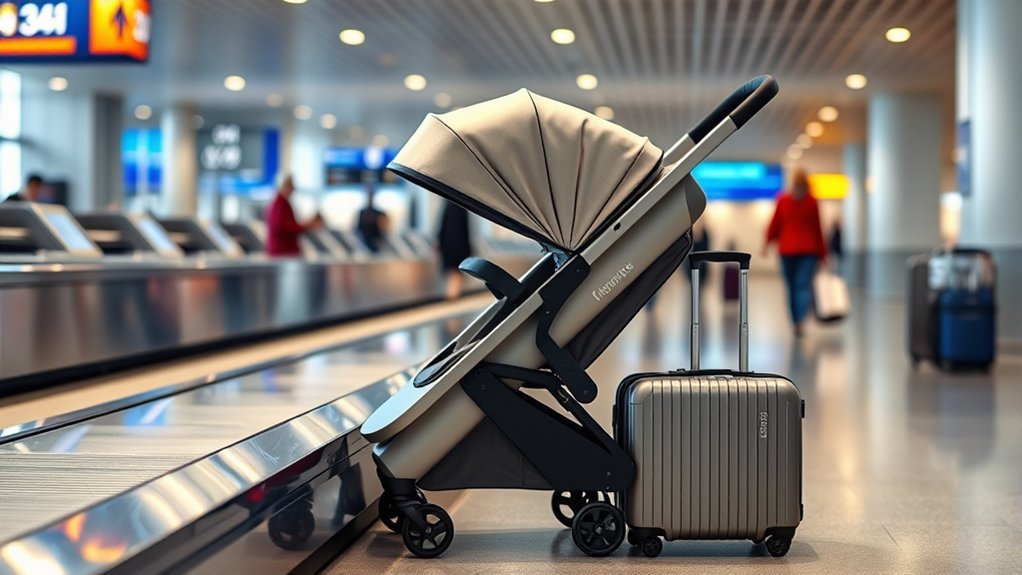
Choosing a compact stroller can transform your travel experience, especially in busy airports. These lightweight and portable strollers make it easier to move through crowded terminals, narrow boarding lanes, elevators, and shuttle buses.
Most compact strollers fold quickly, and many models include a one-hand fold. That feature helps when you are holding your baby, managing passports, or carrying a diaper bag. A smaller fold also makes the stroller easier to store in a car trunk, hotel room, or airport lounge.
Many airlines may permit compact strollers as carry-ons when they fit the airline’s size restrictions, but approval is never guaranteed. Plus, features like smooth ride suspension, reclining seats, sun canopies, and storage baskets can keep your baby more comfortable during long travel days. With the right compact design, moving through tight airplane aisles and crowded terminals becomes much easier.
Protecting Your Stroller During Travel
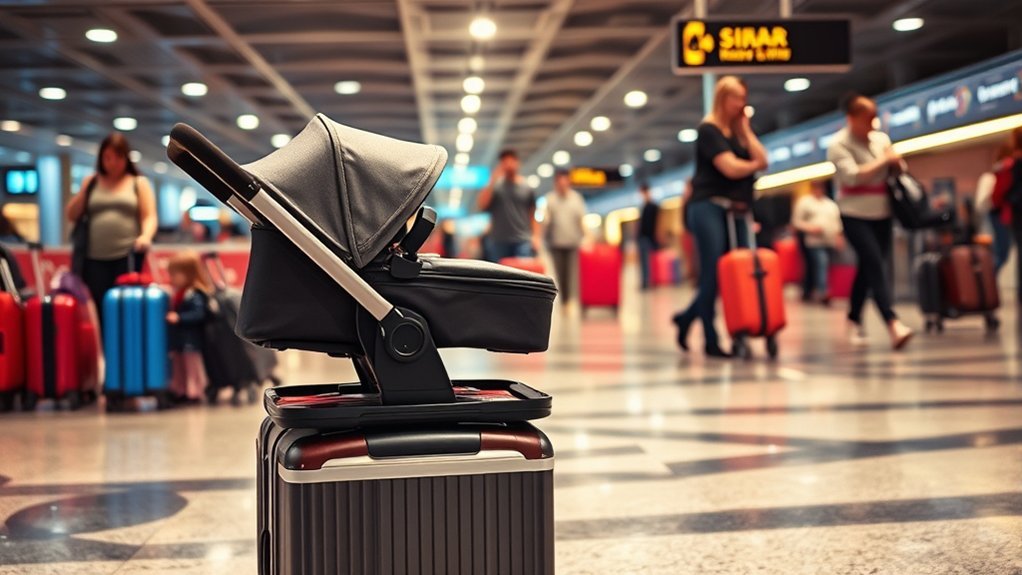
Traveling with a compact stroller can enhance your journey, but it is just as important to protect it during transit. To help keep your stroller in good shape, use a durable stroller bag designed for transport. A travel bag can reduce scratches, dirt, and damage from rough handling.
For extra protection, consider wrapping fragile parts with bubble wrap or using soft padding around wheels, handles, and exposed joints. Before checking the stroller, remove accessories like cup holders, snack trays, stroller hooks, fans, rain covers, and detachable hoods. These smaller parts can break or get lost more easily than the stroller frame.
Opting to check your stroller at the gate rather than the ticket counter can minimize handling because the stroller usually travels a shorter distance through the baggage system. Still, gate-checking does not guarantee damage-free handling, so photograph the stroller before handing it over. Keep receipts and model details handy in case you need to report damage.
Pro Tip: Attach a luggage tag with your name, phone number, and email to both the stroller frame and the travel bag.
Options for Gate Checking
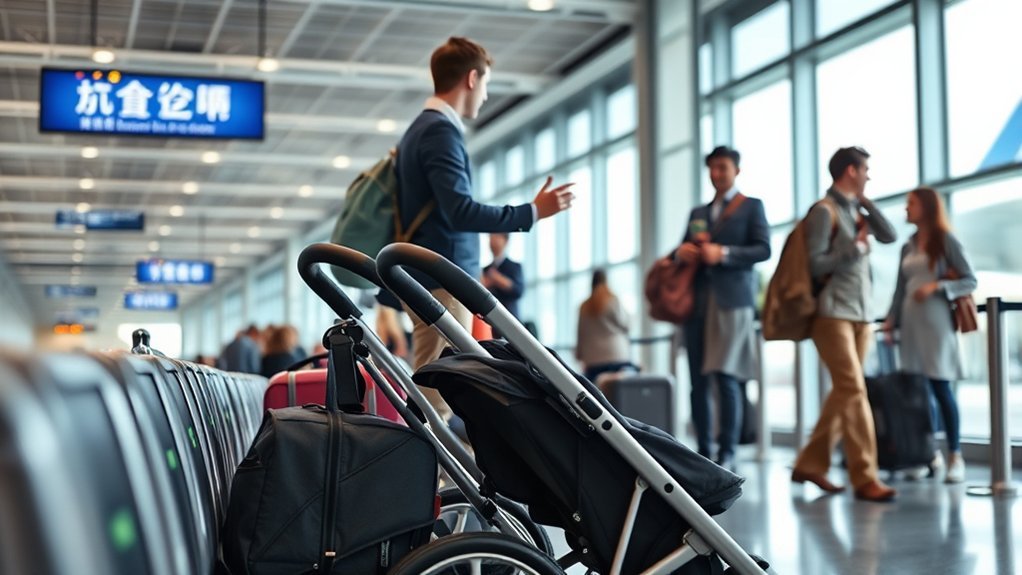
How do you make travel easier with your stroller? Consider gate checking. Many airlines offer this service free of charge, allowing you to use your stroller through the airport and check it near the aircraft door before boarding.
In many airports, a gate-checked stroller is returned near the aircraft door, jet bridge, or baggage claim area after arrival. The exact pickup spot depends on the airline, airport, aircraft size, and destination rules. Ask the gate agent where you should expect to collect it before you board.
Be aware of stroller size and weight restrictions. Checking these details with your airline beforehand can save you headaches. Small, collapsible strollers are usually easier to gate-check than bulky full-size models. Gate-checking also gives you peace of mind because your child can ride in the stroller until boarding begins.
Ticket Counter Checking vs. Gate Checking
You usually have two stroller-checking options: ticket counter checking or gate checking. Ticket counter checking means you hand over the stroller when you check your luggage. This can be helpful if the stroller is large, heavy, or not needed inside the airport.
Gate checking lets you keep the stroller until boarding. This is often the better option for babies, toddlers, long security lines, long layovers, or airport walks. The tradeoff is that you must fold the stroller at the gate and wait for it after arrival.
If your stroller is expensive or delicate, gate checking may reduce some handling, but it still travels in the aircraft hold. A stroller bag, luggage tag, and quick photo before handoff can make the process safer and easier.
Recommended Travel Strollers
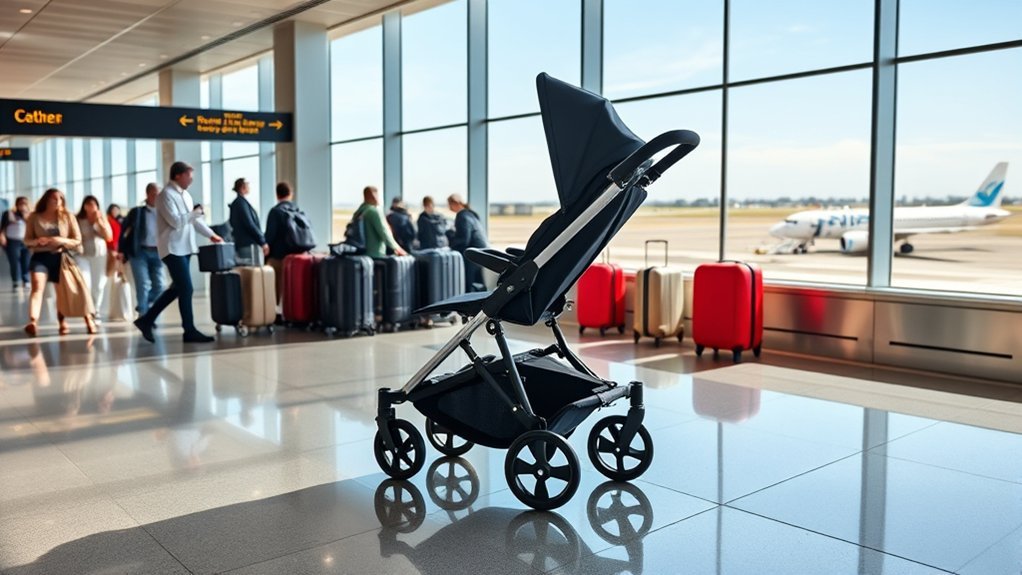
When it comes to selecting the perfect travel stroller, look for one that combines convenience, lightweight design, and compact folding capabilities. The TernX Carry On is one example of a compact travel stroller, with folded dimensions of 22 x 14 x 9 inches and a weight of about 17 lbs. Those measurements make it easier to compare with many airline carry-on limits, but you should still confirm the rule with your specific airline.
Consider lightweight options under 15 lbs if you want effortless maneuverability through busy airports. Look for travel stroller features like one-hand fold mechanisms, a carry strap, a travel bag, a reclining seat, a sun canopy, and lockable wheels. These features make airport movement, boarding, and storage easier.
Prioritizing stroller weight, folded size, and compact design will improve your travel experience. Also check whether the stroller is suitable for your child’s age, height, and weight. A stroller that folds small but does not support your child comfortably will not make your trip easier.
What to Check Before You Fly
Before your trip, check five details: your airline’s stroller policy, the folded stroller size, the stroller weight, the gate-check process, and your arrival airport’s pickup rules. These details can prevent confusion at check-in, security, and boarding.
Measure your stroller after folding it, including wheels and handles. Some strollers look compact but exceed carry-on limits because of one side handle, large rear wheels, or an attached bumper bar. Write the folded dimensions on your phone so you can quickly compare them at the airport.
You should also check whether your stroller has a lithium battery, built-in fan, electronic brake, or power feature. Battery-powered accessories may need to follow separate airline rules, so remove them or pack them according to the airline’s battery policy.
What to Bring for Your Baby on a Plane

As you prepare for your flight, packing the right essentials for your baby can make a big difference. Start with baby food, formula, breast milk, water, and any necessary drinks. Keep these items easy to reach because they may need separate screening.
Do not forget ice packs, gel teethers, bibs, burp cloths, and comfort items. A well-stocked diaper bag is vital and may be treated as your personal item, depending on the airline. Check your airline’s specific policies before packing extra bags.
Include extra diapers, wipes, diaper cream, a changing pad, plastic bags, and a change of clothes for both your baby and yourself. Spills and diaper leaks are common during travel days. Finally, consider a collapsible stroller that meets size requirements, making your airport experience easier from check-in to landing.
Related Guides
Frequently Asked Questions
Can I Bring Additional Items With My Travel Stroller?
Yes, you can bring additional items with your travel stroller, but remove them before security screening or gate-checking. Loose toys, cup holders, stroller organizers, blankets, and bags can fall off or delay screening. Keep important items in your diaper bag instead.
How Do I Fold My Stroller for Travel?
Check your stroller manual before your trip and practice folding it at home. Most travel strollers use a button, lever, or one-hand fold system. Remove accessories first, lock the frame after folding, and use the carry strap or travel bag if your stroller includes one.
Are There Stroller Weight Limits for Airlines?
Yes, some airlines have stroller weight limits, especially for cabin storage or certain checked baby items. Lightweight strollers are easier to carry, fold, and lift into overhead bins, but you should always check your airline’s current policy before flying.
Can I Use My Stroller During Layovers?
Yes, you can usually use your stroller during layovers if it is returned to you after the first flight. If your stroller is checked through to your final destination, you may not have it during the layover. Ask the gate agent before boarding.
What if My Stroller Gets Damaged During Travel?
If your stroller gets damaged during travel, report it to the airline before leaving the airport. Take clear photos, keep baggage tags, and save receipts or proof of purchase. Some families also consider stroller insurance or travel insurance for added protection.
Is a Diaper Bag Counted Separately From a Stroller?
A diaper bag may count as a personal item, a child-related item, or part of your carry-on allowance, depending on the airline. Your stroller may be handled separately if it is gate-checked. Always check your airline’s family baggage rules before packing.
Can I Take a Stroller Into the Airplane Cabin?
You may be able to take a compact stroller into the airplane cabin if it folds small enough and your airline allows it. The final decision can depend on aircraft storage space, crew instructions, and the airline’s carry-on policy.
Conclusion
A travel stroller can make flying with a baby much easier, but it does not always count as a standard carry-on. Some compact strollers fit overhead bins, while others must be gate-checked or checked at the ticket counter. The best choice depends on your stroller’s folded size, your airline’s rules, and how much help you need inside the airport.
Before your trip, measure your stroller, review the airline’s stroller policy, pack a protective travel bag, and remove loose accessories. With the right preparation, you can move through security, boarding, layovers, and arrival with less stress and more confidence.
