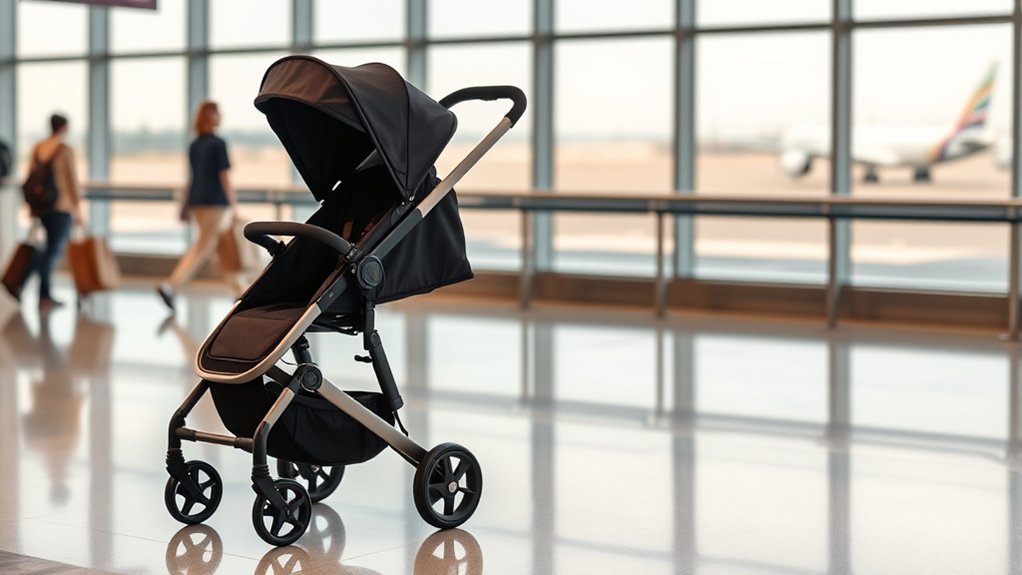
Choosing the right stroller for a flight can make airport days much easier. The best option is usually a lightweight, compact stroller that folds quickly, fits your airline’s size rules, and can handle gate-checking if cabin storage is not available. Because stroller rules vary by airline, always check your carrier’s current policy before you fly.
Quick Answer
Most airlines allow compact, fully collapsible strollers on flights, either as cabin baggage if they meet carry-on dimensions or as free gate-checked baby equipment. Ultra-compact models such as the Babyzen YOYO2, Cybex Libelle, Joolz Aer+, and Ergobaby Metro+ are popular choices because they fold small and travel well.
Key Takeaways
- A compact stroller is more likely to fit airline carry-on or overhead-bin limits.
- Gate-checking lets you use your stroller through the airport and pick it up near the aircraft door or baggage area.
- Airline rules differ, so check your exact carrier before booking or packing.
- Look for a stroller under 15 pounds with a one-hand fold, strong lock, and travel bag.
- Remove accessories before checking the stroller to reduce the risk of damage or lost parts.
Which Strollers Are Allowed in Flight?
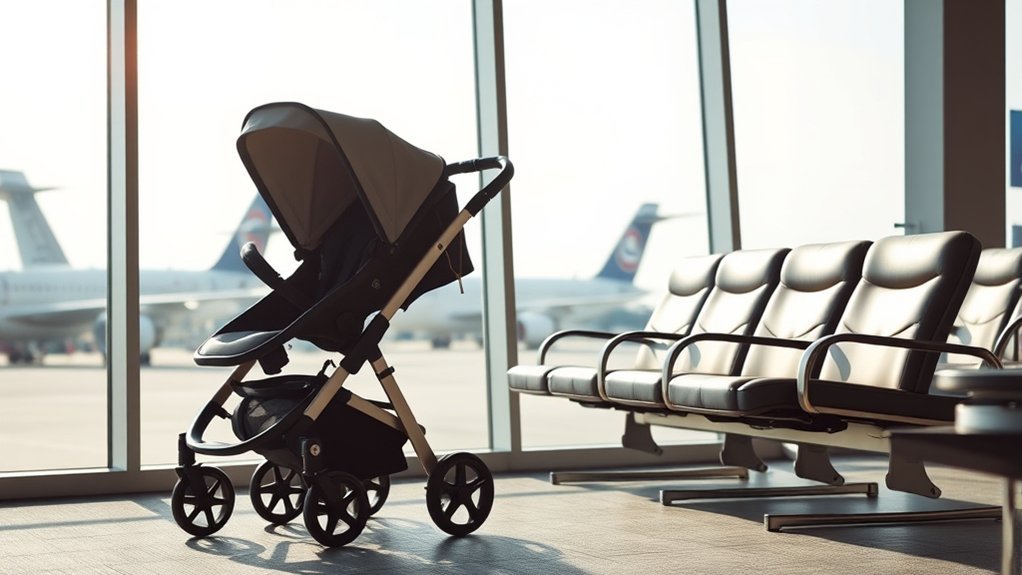
Most airlines allow strollers on flights, but the way you bring one depends on its size, weight, fold, and the airline’s own policy. In general, the easiest stroller to travel with is a lightweight, fully collapsible model that folds small enough for cabin storage or quick gate-checking.
For cabin use, many parents choose compact travel strollers that fold close to standard carry-on size. Models like the Babyzen YOYO2, Cybex Libelle, Joolz Aer+, and Ergobaby Metro+ are popular because they fold tightly and move well through airports. Some airlines may allow these in the overhead bin if space is available, while others still require gate-checking.
You may also see references to IATA-style carry-on size guidance, often around 22 inches long, 18 inches wide, and 10 inches deep. However, this is not a universal stroller rule for every airline. Treat it as a helpful size target, not a guarantee. Your airline’s published policy always matters most.
Note: Even if your stroller fits common carry-on dimensions, cabin approval can depend on aircraft size, overhead-bin space, boarding staff, and your ticket class. Be ready to gate-check it if needed.
Options for Taking a Stroller on a Plane
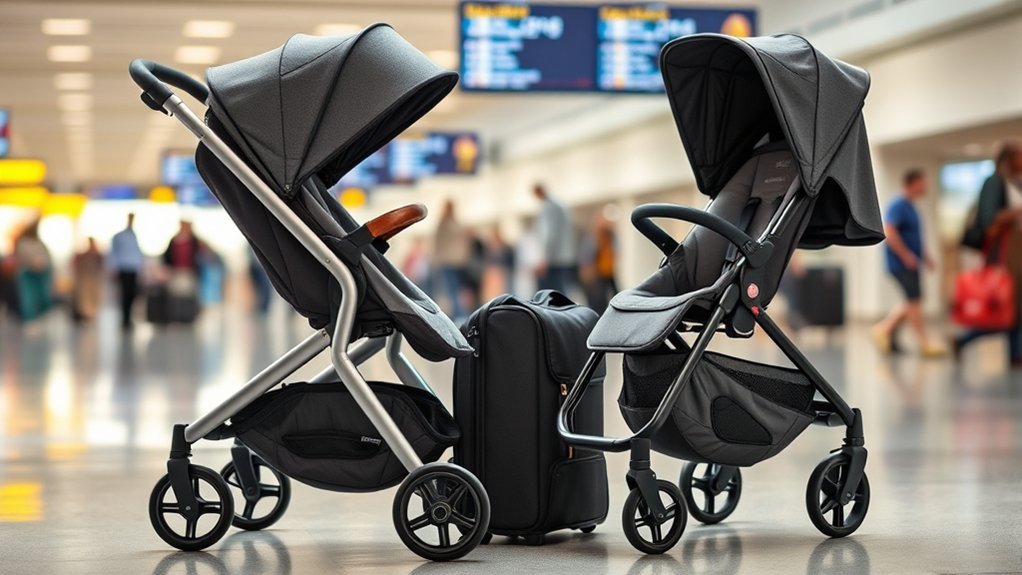
When you’re packing for a flight, knowing your stroller options can make the whole trip less stressful. You usually have three choices: carry it on board, gate-check it, or check it at the ticket counter. The best choice depends on your stroller, your child’s age, your route, and your airline’s rules.
At a Glance
| Best Stroller Type | Lightweight, compact, fully collapsible travel stroller |
| Best Weight Range | Under 15 pounds is easiest for airport handling |
| Best Airport Option | Gate-checking if your stroller is too large for the cabin |
| Before You Fly | Check airline stroller size, weight, and check-in rules |
Carry-On Stroller Options
If your stroller folds small enough, your airline may treat it like a carry-on item. This works best with ultra-compact travel strollers, especially models designed for overhead-bin storage. A stroller around 22 x 14 x 9 inches when folded is more likely to meet standard carry-on limits, though some airlines allow slightly different dimensions.
Carry-on stroller use is convenient because you keep the stroller with you after landing. You do not have to wait at the aircraft door, jet bridge, or baggage claim. This can be helpful when you have a tired toddler, a tight connection, or a long walk through the terminal.
Still, cabin space is never guaranteed. If the overhead bins are full or the aircraft is small, airline staff may ask you to gate-check the stroller even if it folds compactly.
Gate Check Procedures
Gate-checking is the most common option for parents flying with a stroller. It lets you use the stroller through the airport, security line, and boarding area. Then you hand it to airline staff near the aircraft door before boarding.
As you prepare for your flight, keep these stroller handling tips in mind:
- Tell airline staff you want to gate-check your stroller and request a gate-check tag.
- Fold your stroller to its smallest size before handing it over.
- Remove cup holders, snack trays, toys, hooks, organizers, and loose accessories.
- Use a stroller travel bag if you want extra protection from dirt and scratches.
- Ask where you will receive the stroller after landing, because pickup locations can vary.
Mastering gate-check etiquette helps protect your stroller and keeps boarding smoother. It also gives you more freedom in the terminal because your child can ride until the last practical moment.
Checking a Stroller at the Ticket Counter
Ticket-counter check-in may be the better choice for larger, heavier, or non-collapsible strollers. Full-size strollers, double strollers, jogging strollers, and travel systems often take up too much space for the cabin or gate area.
The downside is simple: you will not have the stroller between check-in and arrival. If your child still needs frequent rest, consider using a baby carrier in the airport. For long connections, ask whether your airline or airport offers stroller pickup at the gate, but do not assume it will be available.
Warning: Never leave loose items in a stroller before checking it. Blankets, toys, rain covers, cup holders, and organizers can fall off during handling.
Key Considerations for Travel Strollers
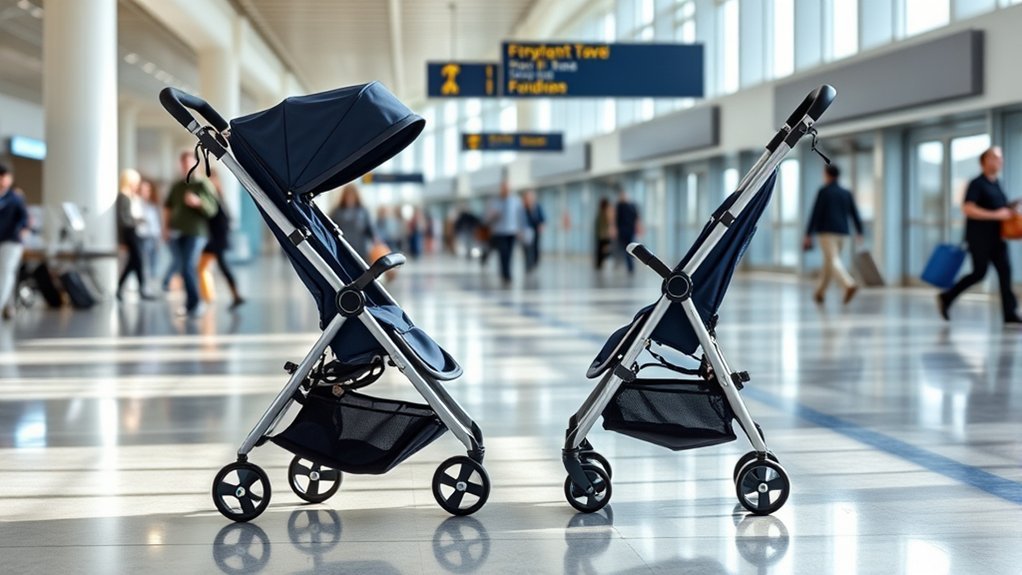
When you’re choosing a travel stroller, weight is one of the biggest factors. Aim for a model under 15 pounds if you want easier lifting, folding, and carrying. You’ll also want a reliable compact folding mechanism, a secure fold lock, a strong frame, and enough comfort for your child during long travel days.
Stroller Weight Limitations
Traveling with a stroller can be a game changer, especially when you keep weight limitations in mind. Lightweight options improve travel convenience and make it easier to handle security lines, escalators, buses, shuttles, and tight aircraft aisles.
Here are the most useful weight guidelines to keep in mind:
- Strollers under 15 pounds are usually easiest for one adult to carry.
- Strollers around 10 to 15 pounds often work well for quick trips and city travel.
- Strollers over 20 pounds may be harder to gate-check, lift, or carry during delays.
- Double strollers and jogging strollers may need ticket-counter checking on some airlines.
Before you fly, check your specific airline’s policy on stroller weight and size. Some airlines focus more on dimensions, while others mention both size and weight.
Compact Folding Mechanisms
Finding the right stroller for your travels is about more than weight. Compact folding mechanisms play a major role in convenience and usability. Look for a stroller that folds quickly, locks shut, and does not pop open while you carry it.
A one-hand fold is especially helpful when you are holding your child, managing luggage, or moving through security. Models like the Babyzen YOYO2 and Joolz Aer+ are known for travel-friendly folds that fit many airport situations.
A well-designed folding mechanism should also let the stroller stand independently when folded. That small detail can help when you are at check-in, waiting at the gate, or trying to keep your hands free.
Airline-Specific Policies
Before you head to the airport, it’s essential to check the specific stroller policies of your airline. Airline regulations can vary widely, and the same stroller may be handled differently by different carriers.
Common airline policy points include:
- Whether a compact stroller counts as carry-on baggage.
- Whether strollers can be gate-checked for free.
- Whether larger strollers must be checked at the ticket counter.
- Where you pick up the stroller after landing.
- Whether car seats, bassinets, or travel systems follow separate rules.
Researching these stroller sizes and policies ahead of time helps you avoid surprises and gives you a smoother start to your trip.
Child Age and Comfort
Your child’s age matters when choosing a flight-friendly stroller. A newborn or younger baby may need a stroller with a near-flat recline, strong head support, and car-seat compatibility. A toddler may need a taller seat back, stronger harness, better canopy, and more legroom.
Do not choose a stroller based on folded size alone. If the seat is too shallow, the canopy is too small, or the recline does not fit your child’s needs, the stroller may feel frustrating during a long travel day.
Storage and Accessories
Travel strollers usually have smaller baskets than full-size strollers. That is normal, but you still need enough room for diapers, wipes, snacks, and a light jacket. Avoid hanging heavy bags from the handlebar, since that can make the stroller tip backward.
Useful stroller accessories for flights include a travel bag, rain cover, small stroller fan, and clip-on pouch. Remove these before checking the stroller unless they fit securely inside the travel bag.
Pro Tip: Take a quick photo of your stroller before you hand it over at the gate. If it gets damaged, the photo can help when you report the issue to the airline.
Recommended Travel Strollers to Buy Now

When it comes to choosing the perfect travel stroller, several standout options make airports and flights easier. The right pick depends on your child’s age, your budget, how often you fly, and whether you care more about cabin storage, comfort, or durability.
Babyzen YOYO2
The Babyzen YOYO2 is one of the most recognized compact travel strollers. It folds small, carries easily, and is often used by parents who want a stroller that can fit in tight spaces. Its folded size is commonly listed around 20 x 17 x 7 inches, making it a strong choice for frequent flyers.
Choose this stroller if you want a premium compact model with wide travel recognition. Skip it if you need a larger basket, a lower price, or a roomier stroller for a bigger toddler.
Cybex Libelle
The Cybex Libelle is another ultra-compact option. Its folded dimensions are often listed around 18.9 x 12.6 x 7.9 inches, which makes it appealing for overhead-bin goals and small storage spaces. It works well for older babies and toddlers who do not need a full recline.
The main tradeoff is comfort. Because it folds so small, you may get less canopy coverage and less plush seating than with larger travel strollers.
Joolz Aer+
The Joolz Aer+ is a strong pick if you want a comfortable seat, a quick one-hand fold, and a high seat back. Its folded size is often listed around 21 x 17.7 x 8.5 inches, so it stays competitive with other premium travel strollers.
Pick this if comfort matters as much as compact size. It is a good fit for parents who travel often but still want a stroller that feels sturdy for daily use.
Ergobaby Metro+
The Ergobaby Metro+ is useful for families who want more comfort and a deeper recline. It can be a smart choice for younger babies when used according to the manufacturer’s age and weight guidance. The seat padding feels more substantial than many ultra-light options.
Choose it if your child naps in the stroller often. Skip it if your top priority is the absolute smallest folded size.
ZOE Stroller
The ZOE Stroller offers spacious seating and a one-handed fold, which can help when you are traveling with an active toddler. Its folded size is often listed around 22 x 19 x 10 inches, so it may be better for gate-checking than guaranteed cabin use.
Choose this stroller if you want a lightweight ride with more room. Check your airline carefully before assuming it will fit overhead-bin requirements.
Airline-Specific Stroller Policies
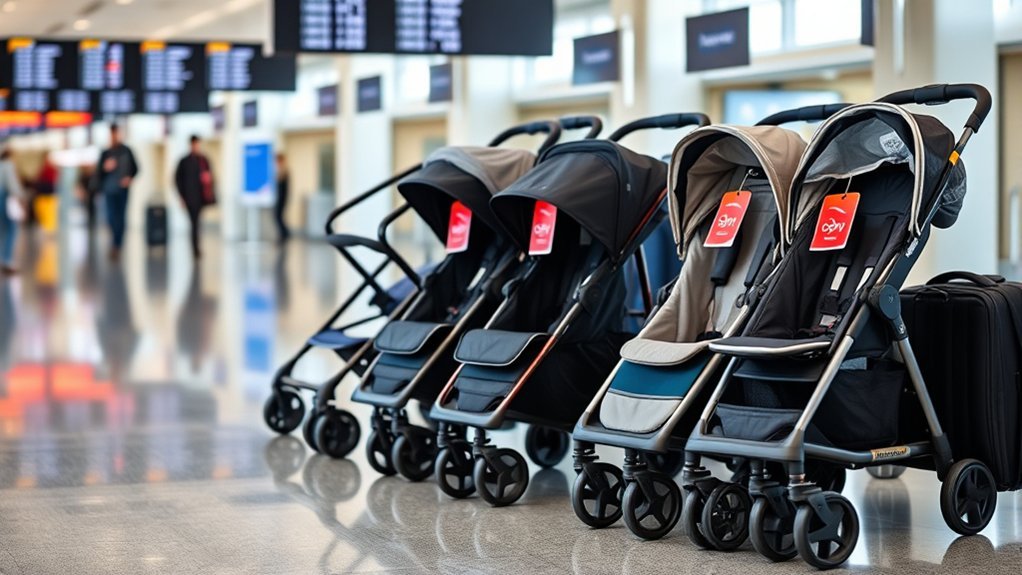
Maneuvering airline stroller policies can feel overwhelming because each airline has its own rules. Some carriers allow compact strollers in the cabin when they meet carry-on limits. Others ask you to gate-check strollers, even small ones. Larger strollers may need to be checked at the ticket counter.
Here’s a practical overview of common stroller policies by airline type:
- American Airlines: Typically allows one stroller per passenger and may allow free gate-checking for smaller strollers, while larger ones may need counter check-in.
- Delta Air Lines: Commonly allows strollers to be checked for free at the gate, ticket counter, or curbside where available.
- United Airlines: Usually allows foldable strollers to be checked at the gate, while non-collapsible strollers may need to be checked earlier.
- British Airways: Often allows fully collapsible strollers and other child equipment, but pickup location can depend on airport handling.
- Air Canada: May allow small collapsible strollers near the gate or cabin depending on size and space.
- KLM: Often permits small collapsible strollers up to the aircraft door, with gate-checking when cabin space is not available.
These examples are useful for planning, but they should not replace your airline’s current policy. Always check the airline website or contact customer support before your flight, especially if you are flying internationally or changing carriers during a connection.
Tips for Traveling With a Stroller

Traveling with a stroller can feel challenging, but the right strategy makes the experience smoother for you and your child. Start by checking your airline’s specific stroller policies, since size and weight rules can differ.
Use these tips before and during your airport trip:
- Practice folding and unfolding the stroller before travel day.
- Label your stroller with your name, phone number, and email address.
- Use a stroller travel bag for gate-checking or counter check-in.
- Remove loose accessories before handing the stroller to airline staff.
- Keep essentials in a separate diaper bag, not in the stroller basket.
- Ask where the stroller will be returned after landing.
- Bring a baby carrier if you have a long connection or need both hands free.
A one-hand folding mechanism is a game changer, especially when you are managing luggage and children at the same time. Prioritize stroller safety by checking the brakes, harness, frame lock, and wheels before each trip.
How to Protect Your Stroller From Damage
Air travel can be rough on baby gear, especially when strollers are loaded with luggage and other checked items. A few simple steps can reduce the risk of scratches, bent parts, and missing accessories.
- Use a padded stroller travel bag when possible.
- Fold the stroller completely and lock the frame before handing it over.
- Take off snack trays, cup holders, rain covers, and stroller hooks.
- Keep the gate-check tag or baggage receipt until you get the stroller back.
- Inspect the stroller before leaving the airport.
If you notice damage, report it to the airline before you leave the airport. Claims are usually easier to start while you are still near the baggage service desk.
Common Stroller Travel Mistakes to Avoid
A stroller can make flying with children easier, but small mistakes can create big problems at the airport. Avoid assuming that every airline follows the same rules. Also avoid packing important items in the stroller basket, since you may have to hand the stroller over suddenly.
Another common mistake is choosing a stroller only because it folds small. A compact fold helps, but your child still needs comfort, shade, and a safe harness. The best travel stroller balances folded size with real-life usability.
Finally, do not wait until boarding to ask about gate-checking. Speak with the gate agent early, get your tag, and confirm where to leave the stroller.
Frequently Asked Questions
Can I bring a stroller for twins on a plane?
Yes, you can bring a twin stroller on a plane, but many twin strollers are too wide or heavy for cabin storage. Most airlines will ask you to gate-check or counter-check it. Choose a lightweight double stroller, fold it fully, and confirm your airline’s policy before you travel.
What is the weight limit for strollers on flights?
Stroller weight limits vary by airline. Many compact travel strollers under 15 to 20 pounds are easier to carry, gate-check, or store. Larger strollers may still be accepted, but they may need to be checked at the ticket counter instead of carried on board.
Are there additional fees for bringing a stroller?
Most airlines do not charge extra for a stroller when you are traveling with a child, especially if you gate-check it or check it as baby equipment. Still, policies can differ by airline, route, and fare type, so check your carrier before your flight.
Can I use my stroller during layovers?
Yes, you can usually use your stroller during layovers if it is returned to you at the gate or aircraft door. If the stroller is sent to baggage claim or checked through to your final destination, you may not have access to it during the connection.
How do I clean my stroller after air travel?
After air travel, wipe the stroller frame, handlebar, tray, and wheels with a damp cloth or baby-safe disinfecting wipe. Remove washable fabric parts if the manufacturer allows it. Check the wheels for debris, let everything dry fully, and inspect the brakes before using it again.
Can I take a stroller through airport security?
Yes, you can usually take a stroller through airport security. You may need to fold it and place it on the scanner belt if it fits. If it is too large, security staff may inspect it separately.
Is a stroller better than a baby carrier for flying?
A stroller is better for long airport walks, naps, and carrying small items. A baby carrier is better when you need both hands free or when your stroller is checked. Many parents bring both for flexibility.
Conclusion
Selecting the right stroller for air travel can make your journey smoother and more enjoyable. The best flight-friendly stroller is lightweight, compact, easy to fold, and accepted by your airline’s current policy. Models like the Babyzen YOYO2, Cybex Libelle, Joolz Aer+, Ergobaby Metro+, and ZOE Stroller can all work well, depending on your child’s needs and your travel style.
Before your trip, check your airline’s stroller rules, remove loose accessories, label your stroller, and decide whether you want to carry it on, gate-check it, or check it at the counter. With a little planning, you can move through the airport with less stress and keep your little one more comfortable from check-in to arrival.
Sources
- American Airlines traveling with children policy — stroller and child equipment guidance.
- Delta children and infant baggage policy — stroller and child item check guidance.
- United Airlines traveling with children policy — stroller handling and family travel rules.
- British Airways family baggage policy — pushchair and child equipment information.
- Canadian Air Transport Security Authority guidance for travelling with children — stroller screening and airport security guidance.