As of September 22, 2026, a Toyota RAV4 Prime or RAV4 Plug-in Hybrid acquired after September 30, 2025, does not qualify for the federal New Clean Vehicle Credit, Previously-Owned Clean Vehicle Credit, or Qualified Commercial Clean Vehicle Credit. Older transactions may still qualify under the rules that applied when the vehicle was acquired.
Last updated: September 22, 2026 — reviewed against current IRS, Toyota, Arizona DOT, SRP, and APS guidance.
Quick Answer
No federal clean-vehicle tax credit is available for a Toyota RAV4 Prime or RAV4 Plug-in Hybrid acquired after September 30, 2025. Some older new, used, or leased transactions may still qualify under the rules that applied at the time. Two different rules are easy to confuse: current purchases fail because the federal clean-vehicle programs ended for later acquisitions, while many new 2023–2025 RAV4 Prime models also failed the former consumer credit because final assembly occurred outside North America.
Key Takeaways
- Federal new, previously owned, and commercial clean-vehicle credits are unavailable for vehicles acquired after September 30, 2025.
- New RAV4 Prime and RAV4 Plug-in Hybrid models generally failed the former 2023–2025 consumer credit because their final assembly was outside North America.
- Some qualifying 2021–2022 new purchases, used purchases completed by the 2025 cutoff, or older lessor-owned transactions may still be reviewed under historical rules.
- Arizona’s former single-occupant clean-vehicle HOV exception has expired. Do not treat the state’s former reduced alternative-fuel VLT as a RAV4 Prime plug-in-hybrid benefit; utility charging programs may still provide savings.
Warning: This article provides general tax information, not personal tax advice. Before filing or amending a return, verify your transaction with the IRS and a qualified tax professional.
Does the RAV4 Prime Qualify for a Federal Tax Credit in 2026?
No. If you acquire a Toyota RAV4 Prime or RAV4 Plug-in Hybrid after September 30, 2025, you cannot claim a federal clean-vehicle credit for that transaction. The IRS states that the New Clean Vehicle Credit, Previously-Owned Clean Vehicle Credit, and Qualified Commercial Clean Vehicle Credit are unavailable for vehicles acquired after September 30, 2025.
For the 2025 cutoff, the IRS treats a vehicle as acquired when the buyer enters into a binding written contract and makes a payment. Taking possession after September 30, 2025, did not automatically disqualify an otherwise eligible transaction if the binding contract and payment were completed by the deadline.
However, meeting the acquisition deadline did not make every RAV4 Prime eligible. The vehicle, buyer, dealer, sale, and documentation also had to meet the rules that applied to that transaction.
Two different reasons for “no”: A RAV4 Prime acquired after September 30, 2025 fails because the federal clean-vehicle credits ended for later acquisitions. A new RAV4 Prime acquired during much of the 2023–2025 program generally failed the consumer New Clean Vehicle Credit for a different reason: its final assembly was outside North America. A change in 2026 model-year power, range, assembly, or battery sourcing cannot restore a credit for a vehicle acquired after the federal cutoff.
If another article says a RAV4 Prime purchased today qualifies for a $7,500 federal clean-vehicle credit, check the article’s date and IRS source. That answer is no longer current for acquisitions after September 30, 2025.
For a purchase made today, the answer is no: the federal clean-vehicle credit is no longer available for a newly acquired RAV4 Prime or RAV4 Plug-in Hybrid.
What Makes the RAV4 Prime Unique?
The RAV4 Prime is a plug-in hybrid SUV that can drive on battery power for shorter trips and switch to gasoline-electric hybrid operation when the battery’s usable charge runs low. This provides electric commuting capability without limiting longer trips to charging stops.
Toyota renamed the model RAV4 Plug-in Hybrid beginning with model year 2025. Toyota lists the 2025 RAV4 Plug-in Hybrid with an approximately 18.1-kWh lithium-ion battery, up to 42 miles of electric driving range, and 302 net combined horsepower.
Those specifications make the vehicle a plug-in hybrid, but plug-in capability alone never guaranteed a federal tax credit. Final assembly, vehicle certification, acquisition date, buyer income, sale price, dealer reporting, and other requirements also applied.
Why Did New RAV4 Prime Models Fail the Former 2023–2025 Consumer Credit Rules?
After August 16, 2022, a new clean vehicle generally needed final assembly in North America to qualify for the federal consumer New Clean Vehicle Credit. Toyota’s U.S. fleet guide identifies the 2025 RAV4 Plug-in Hybrid as assembled in Aichi, Japan.
That assembly location prevented recent new RAV4 Prime and RAV4 Plug-in Hybrid models from qualifying under the former consumer new-vehicle credit, even when the battery capacity, vehicle price, and buyer income appeared to meet other limits.
The IRS and FuelEconomy.gov vehicle lists were the controlling starting points. A buyer also needed the required seller report for transactions subject to dealer reporting.
| Transaction | General Federal Result |
|---|---|
| RAV4 Prime or RAV4 Plug-in Hybrid acquired after September 30, 2025 | No federal new, previously owned, or commercial clean-vehicle credit for that acquisition. |
| New RAV4 Prime acquired during 2023 through September 30, 2025 | Generally not eligible for the consumer New Clean Vehicle Credit because final assembly was outside North America. |
| Qualifying used RAV4 Prime acquired by September 30, 2025 | May have qualified for 30% of the sale price, up to $4,000, if every used-credit requirement was met. |
| New RAV4 Prime purchased before August 16, 2022, including qualifying transition-rule contracts | May have qualified under the pre-Inflation Reduction Act rules, subject to Toyota’s manufacturer phaseout and the rules for the applicable transaction. |
| Ordinary new RAV4 Prime purchase after August 16, 2022 through December 31, 2022 | Generally failed the new North American final-assembly requirement because the RAV4 Prime was assembled in Japan, unless the transaction qualified for the statutory transition rule. |
| Leased RAV4 Prime under older federal rules | The lessee could not personally claim a credit belonging to the vehicle owner. The lessor’s applicable federal credit pathway depended on the transaction date. |
Former Income Limits for New-Vehicle Buyers
Under the federal new-vehicle rules that applied through September 30, 2025, a buyer’s modified adjusted gross income could not exceed:
- $300,000 for married couples filing jointly and surviving spouses.
- $225,000 for heads of household.
- $150,000 for other filers.
A buyer could generally use modified adjusted gross income from the delivery year or the preceding year, whichever was lower. These limits are now relevant only when reviewing a transaction completed under the former program.
Former Income Limits for Used-Vehicle Buyers
A qualifying used clean vehicle had lower income limits:
- $150,000 for married couples filing jointly and surviving spouses.
- $112,500 for heads of household.
- $75,000 for other filers.
For a vehicle acquired by September 30, 2025, the IRS used clean-vehicle rules also required a sale price of $25,000 or less, a model year at least two years earlier than the purchase year, a qualifying buyer, and a sale through a licensed dealer. The credit equaled 30% of the sale price, up to $4,000.
How Did Leasing Affect Eligibility?
A person leasing a RAV4 Prime could not claim a federal vehicle credit that belonged to the vehicle owner. For lessor-owned vehicles acquired during the 2023 through September 30, 2025 period, an eligible leasing company may have qualified under the Qualified Commercial Clean Vehicle Credit rules. Pre-2023 lease transactions followed the earlier federal credit rules applicable to the vehicle owner.
A lessor could choose to reflect some or all of an available federal benefit in the lease price, but federal law did not require the company to pass a specific amount to the customer. Lessees should review the capitalized cost, incentives, and lease disclosures rather than assuming a $7,500 customer tax credit was automatically included.
Battery and Vehicle Requirements Under the Former Credit
During the 2023–2025 new-vehicle program, a plug-in vehicle needed a battery capacity of at least 7 kWh, a gross vehicle weight rating below 14,000 pounds, final assembly in North America, and certification by a qualified manufacturer.
The vehicle also needed to remain below the applicable MSRP limit. The former cap for an SUV was $80,000. Optional equipment added by a dealer did not necessarily change MSRP, but the exact vehicle classification and manufacturer-listed MSRP still mattered.
For vehicles placed in service after April 17, 2023, the maximum $7,500 credit was divided into two $3,750 portions:
- One portion depended on the applicable critical-mineral requirement.
- The other depended on the applicable battery-component requirement.
The required percentages changed by year. A buyer could not calculate eligibility simply by looking at battery size or assuming that a stated percentage applied to every model year. The IRS eligibility result for the specific vehicle and VIN was more reliable.
Note: The RAV4 Prime’s battery was large enough to clear the former minimum-capacity rule. Its main obstacle under the recent consumer new-vehicle program was final assembly outside North America.
When Could an Older RAV4 Prime Purchase Have Qualified?
New 2021–2022 RAV4 Prime Purchases
The IRS list for vehicles purchased in 2022 or earlier shows a maximum RAV4 Prime credit of $7,500 through September 30, 2022, followed by Toyota’s manufacturer-phaseout amount of $3,750 for October through December 2022.
Those dollar amounts did not guarantee eligibility for every late-2022 purchase. For ordinary purchases after August 16, 2022, a separate North American final-assembly requirement also applied. Because the RAV4 Prime was assembled in Japan, that requirement generally prevented eligibility for a non-transition purchase even if the IRS manufacturer phaseout table still displayed a dollar amount.
A transition rule applied to certain taxpayers who purchased or entered into a binding written contract after December 31, 2021 and before August 16, 2022 but took possession later. The IRS allowed qualifying taxpayers to apply the pre-August-16 rules to those transactions.
Qualifying Used Purchases Completed by September 30, 2025
A used RAV4 Prime may have qualified under the former used clean-vehicle program when every requirement was met. The vehicle needed to be purchased from a licensed dealer for no more than $25,000, satisfy the model-year requirement, and meet the rule limiting the credit to the first qualifying transfer after August 16, 2022.
The dealer also needed to submit the required information to the IRS. A direct private-party sale did not qualify; the transaction had to satisfy the federal dealer-sale and reporting requirements.
Lease Transactions Completed Before the Cutoff
For a qualifying lessor-owned vehicle acquired during the 2023 through September 30, 2025 period, the leasing company may have qualified for a commercial clean-vehicle credit. This did not give the lessee a personal tax credit, and it did not guarantee a $7,500 lease discount. Earlier leases should be reviewed under the federal rules that applied during their tax year.
How to Claim a Legacy RAV4 Prime Credit
You cannot create eligibility for a new 2026 acquisition by filing Form 8936. These steps apply only when reviewing a transaction that occurred under the former rules.
- Identify the transaction date. Confirm when you signed a binding contract, made a payment, and took possession.
- Identify the transaction type. Determine whether the vehicle was new, used, leased, or purchased for qualified business use.
- Check the rules for that date. Requirements differed before August 16, 2022, during the remainder of 2022, and from 2023 through September 30, 2025.
- Verify the exact vehicle. Review the VIN, model year, final-assembly location, IRS eligibility result, and seller report when one was required.
- Collect your records. Keep the purchase agreement, payment records, bill of sale, VIN, delivery documents, accepted time-of-sale report, and any credit-transfer paperwork.
- Use the correct tax-year forms. Use the Form 8936 revision for the tax year being claimed. For 2023 and later clean-vehicle claims, the IRS form package generally uses a separate Schedule A (Form 8936) for each vehicle. Earlier tax years used earlier versions of Form 8936.
- Review amendment deadlines. Consult the IRS or a tax professional before trying to amend an older return because refund-claim and filing deadlines may apply.
Pro Tip: For a 2024 or 2025 transaction, locate the accepted IRS time-of-sale report before preparing the return. The IRS states that a required time-of-sale report must have been successfully submitted for the transaction to qualify.
Important Dates for RAV4 Prime Tax-Credit Eligibility
Key Federal Dates
- Before August 16, 2022: The pre-Inflation Reduction Act rules generally applied. A special transition rule protected certain taxpayers who purchased or entered into a binding written contract after December 31, 2021 and before August 16, 2022 but took possession later.
- August 17 through December 31, 2022: Ordinary new-vehicle purchases also had to meet the North American final-assembly requirement. Toyota’s manufacturer phaseout still affected the dollar amount otherwise available, but that phaseout table did not override the assembly requirement.
- January 1, 2023 through September 30, 2025: New, previously owned, and commercial clean-vehicle programs operated under revised rules. New RAV4 Prime models generally failed the consumer new-vehicle final-assembly requirement, although qualifying used or lessor-owned transactions followed different rules.
- After September 30, 2025: The federal new, previously owned, and commercial clean-vehicle credits are unavailable for vehicles acquired after the cutoff.
What Counted as Acquisition at the 2025 Cutoff?
For the September 30, 2025 cutoff, the IRS treats a vehicle as acquired when the buyer enters into a binding written contract and makes a payment. IRS guidance explains that a nominal down payment or a vehicle trade-in may count as a payment for this cutoff rule.
A vehicle acquired by the deadline could be placed in service later, but it still needed to meet every applicable vehicle, taxpayer, dealer, and reporting requirement. A reservation without a binding purchase obligation was not automatically enough.
Arizona Incentives for RAV4 Prime Owners
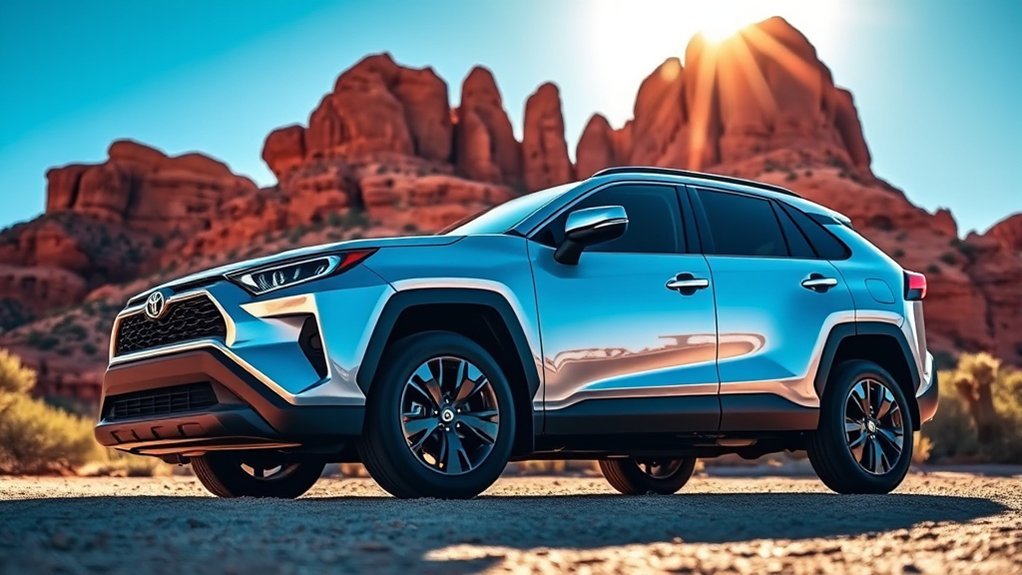
Arizona’s former single-occupant HOV exceptions for vehicles with qualifying Alternative Fuel or Energy Efficient plates ended on September 30, 2025. ADOT now requires those vehicles to follow the ordinary HOV occupancy rules during restricted periods.
Do not treat Arizona’s former reduced alternative-fuel Vehicle License Tax as a RAV4 Prime incentive. Arizona historically distinguished alternative-fuel vehicles from plug-in hybrids, and ADOT stated that the standard Arizona Vehicle License Tax applied to plug-in hybrid electric vehicles.
Utility programs may still reduce charging costs:
- Salt River Project: Eligible residential customers can review SRP’s Level 2 EV charger rebate. SRP currently advertises savings of up to $250 on qualifying smart Level 2 chargers, subject to program terms and availability.
- Arizona Public Service: Eligible customers can review APS SmartCharge and EV charging options. APS currently states that SmartCharge is full and provides a waitlist for interested customers.
- Time-of-use rates: Some utility plans offer lower rates during off-peak charging periods, but actual savings depend on the customer’s rate plan and household energy use.
Utility rebates, rewards, rate plans, and enrollment availability can change or close. Confirm current eligibility before purchasing charging equipment or relying on an advertised incentive.
Common RAV4 Prime Tax-Credit Mistakes
- Assuming every plug-in hybrid qualifies: Vehicle type was only one requirement. Assembly, certification, date, price, and reporting also mattered.
- Confusing today’s cutoff with the former assembly rule: Post-September-30, 2025 acquisitions fail because the federal programs ended for later acquisitions. Many new 2023–2025 RAV4 Prime transactions failed for the separate North American final-assembly requirement.
- Checking income but not the model: Being under an income limit did not make an ineligible vehicle qualify.
- Using battery capacity as the answer: A battery above 7 kWh met only one former requirement.
- Claiming a lease credit personally: A lessee could not claim a vehicle-owner credit that belonged to the lessor.
- Ignoring dealer reporting: A qualifying 2024 or 2025 sale generally needed a successfully submitted time-of-sale report.
- Using today’s Form 8936 package for every old tax year: Historical claims should use the form revision and instructions applicable to that tax year.
- Using expired Arizona benefits: The single-occupant clean-vehicle HOV exception ended in 2025, and the reduced alternative-fuel VLT should not be treated as a RAV4 Prime plug-in-hybrid incentive.
How to Verify Your Exact Transaction
Start with the IRS clean-vehicle credit page. Select the rules for the year and type of transaction rather than relying on a current dealership advertisement or an old eligibility article.
For an older purchase, compare the contract date, payment date, delivery date, model year, VIN, final-assembly location, buyer income, sale price, dealer status, accepted IRS report, and rules in effect for that tax year. A single failed requirement can prevent the credit.
If the dealership transferred a credit at the point of sale, you must still file the required Form 8936 package for the delivery year. Incorrect income information or an ineligible transaction can result in repayment when you file.
Related Guides
Frequently Asked Questions
Does the Toyota RAV4 Prime qualify for a federal tax credit in 2026?
No. Federal new, previously owned, and commercial clean-vehicle credits are unavailable for vehicles acquired after September 30, 2025. A RAV4 Prime or RAV4 Plug-in Hybrid acquired in 2026 does not qualify for those credits.
Why didn’t new RAV4 Prime models qualify under the 2023–2025 consumer credit?
The former New Clean Vehicle Credit required final assembly in North America. RAV4 Prime and RAV4 Plug-in Hybrid models were assembled in Japan, so recent new models generally failed that requirement even if other income, price, or battery conditions appeared to fit.
What if I signed for the vehicle by September 30, 2025 but took delivery later?
A later delivery did not automatically eliminate eligibility. IRS guidance allows acquisition by the cutoff to be shown with a binding written contract and a payment made on or before September 30, 2025. The transaction still had to satisfy every other applicable vehicle, taxpayer, dealer, and reporting rule.
Can I claim a credit for a 2021 or 2022 RAV4 Prime?
Possibly. Some 2021–2022 purchases qualified under the older federal rules. Eligibility depends on the purchase, contract and delivery dates, Toyota’s manufacturer phaseout, the August 16, 2022 transition rule, final assembly, and the tax rules that applied for the relevant year.
Can a used RAV4 Prime qualify for the $4,000 credit now?
Not when acquired after September 30, 2025. A qualifying used purchase completed by that date may have received 30% of the sale price, up to $4,000, if the price, model age, buyer income, dealer sale, qualifying-transfer, and reporting requirements were satisfied.
Does leasing a RAV4 Prime create a tax credit for the driver?
No. The lessee did not own the vehicle and could not personally claim a federal vehicle credit belonging to the owner. For qualifying 2023 through September 30, 2025 lessor-owned transactions, the leasing company may have used the commercial clean-vehicle rules and could choose whether to reflect an incentive in the lease.
Can I combine Arizona incentives with an older federal credit?
A qualifying taxpayer could generally use a separate utility incentive alongside a federal credit when each program’s rules allowed it. Arizona’s former single-occupant clean-vehicle HOV exception has expired, while SRP and APS may still offer charging rebates, rewards, or rate-plan savings subject to current program terms.
What documents are needed for a legacy RAV4 Prime credit?
Keep the binding purchase contract, payment evidence, bill of sale, VIN, delivery record, dealer information, accepted time-of-sale report when required, and any credit-transfer documents. Use the Form 8936 revision required for the tax year being claimed; 2023-and-later clean-vehicle claims generally also use Schedule A (Form 8936).
Do vehicle modifications change tax-credit eligibility?
Ordinary modifications made after purchase generally do not turn an ineligible RAV4 Prime into an eligible vehicle. Federal eligibility was based primarily on the certified vehicle, transaction, buyer, seller, acquisition date, and placed-in-service rules that applied at the time.
Conclusion
A Toyota RAV4 Prime or RAV4 Plug-in Hybrid acquired after September 30, 2025 does not qualify for the former federal new, previously owned, or commercial clean-vehicle credits. New RAV4 Prime models during the 2023–2025 consumer-credit period also generally failed the separate North American final-assembly requirement.
Older transactions deserve a date-specific review. A qualifying 2021–2022 new purchase, used purchase completed by the 2025 cutoff, or older lessor-owned transaction may have followed different rules. Verify the contract and payment dates, delivery date, VIN, ownership structure, dealer report, and tax-year-specific forms before claiming or amending a credit.
Sources
- IRS Clean Vehicle Tax Credits — September 30, 2025 acquisition cutoff and current clean-vehicle credit guidance.
- IRS New Clean Vehicle Credit — former income, MSRP, assembly, vehicle, and seller-reporting requirements.
- IRS Used Clean Vehicle Credit — former $4,000 maximum, $25,000 sale-price cap, income limits, dealer requirements, and qualifying-transfer rules.
- IRS Vehicles Purchased in 2022 or Before — RAV4 Prime credit amounts, Toyota manufacturer phaseout, and post-August-16 final-assembly requirement.
- IRS New Clean Vehicle Timing FAQs — August 16, 2022 transition rule and final-assembly timing.
- IRS Form 8936 — current Form 8936 and Schedule A requirements; prior-year revisions should be used for historical claims.
- Toyota 2025 RAV4 Plug-in Hybrid — model-name change, EV range, and power specifications.
- Toyota RAV4 Plug-in Hybrid Specifications — 2025 battery-capacity specification.
- Toyota Fleet Guide — 2025 RAV4 Plug-in Hybrid assembly location.
- Arizona Department of Transportation HOV Rules — expiration of the single-occupant clean-vehicle HOV exception.
- Arizona DOT Plug-in Hybrid Plate Guidance — distinction between plug-in hybrid Energy Efficient plates and reduced alternative-fuel VLT.
- Salt River Project EV Charger Programs — current Level 2 charger incentives.
- Arizona Public Service EV Programs — current SmartCharge status and charging programs.
