
A Garmin inReach device gives you a way to message, share your location and trigger an interactive SOS when cellular coverage disappears. The hard part is choosing between a tiny communicator, a messaging-first device and a full GPS handheld.
For most people who want a compact safety device, Garmin inReach Mini 2 is the strongest all-around pick because it weighs 3.5 ounces, supports two-way satellite messaging and adds TracBack routing. If you want a lower-cost messaging-first option with longer battery life, Garmin inReach Messenger is the value pick.
We compared Garmin specifications, current model support, battery modes, communication features, mapping capability and safety functions. We did not add hands-on test claims or Amazon review data.
Garmin inReach Devices Compared
| Product | Best for | Weight | Battery life | Display | Score |
|---|---|---|---|---|---|
|
Mid-range
|
Best overall | 3.5 oz (100 g) | Up to 14 days at 10-minute tracking | 0.9 x 0.9 in | 92/100 |
|
Budget
|
Best value | 4 oz (113.9 g) | Up to 28 days at 10-minute messaging/tracking | 1.08 in diagonal | 86/100 |
|
Mid-range
|
Best for photo and voice messaging | 4.1 oz (117.2 g) | Up to 25 days at 10-minute low-power messaging | 1.08 in diagonal | 90/100 |
|
Premium
|
Best for navigation | 8.1 oz (230 g) | Up to 165 hours with 10-minute inReach tracking | 3 in diagonal | 88/100 |
|
Premium
|
Best rugged all-in-one | 14.5 oz (410 g) | Up to 18 hours in GPS or 10-minute tracking mode | 5 in diagonal | 84/100 |
Garmin inReach Devices: Our Top Picks
1. Garmin inReach Mini 2

Bottom line: Garmin inReach Mini 2 is the best fit here if you want a lightweight satellite communicator that can stay clipped to your pack or body. It keeps the core inReach safety features while adding simple backtracking tools without the bulk of a mapping handheld.
Key specs
- Weight: 3.5 oz (100 g), light enough for everyday carry
- Battery life: Up to 14 days at 10-minute tracking, suited to multi-day trips
- Water rating: IPX7, built for wet outdoor use
- Display: 0.9 x 0.9 in, compact monochrome screen
The Mini 2 is designed around communication rather than full-screen navigation. With an active inReach plan, you can send and receive messages, share your location and trigger an interactive SOS through Garmin Response when cell service is unavailable.
For route support, TracBack can guide you back along your recorded path, and the digital compass gives heading information even when you are standing still. Pairing with Garmin Explore moves trip planning and detailed map viewing to your phone, where the larger screen is easier to use.
Its main trade-off is the small display. It works well for status information and simple navigation prompts, but it is not a substitute for a color mapping handheld if you want to study terrain directly on the device.
Sentiment Snapshot
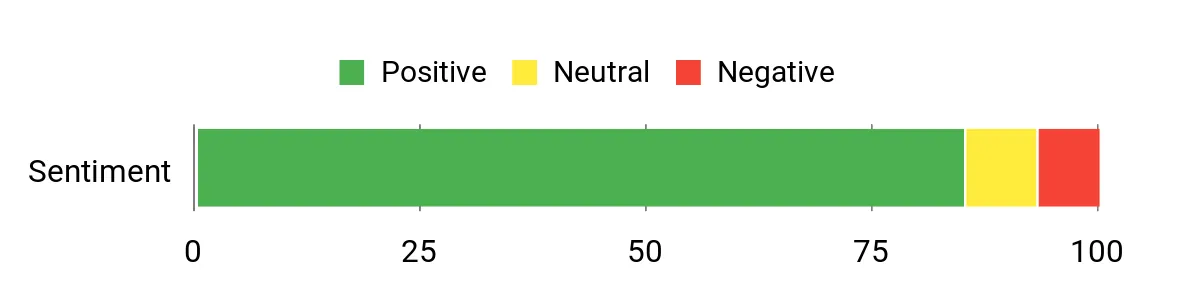
- Very low 3.5-ounce carry weight
- Up to 14 days at a 10-minute tracking interval in full-sky conditions
- Interactive SOS, two-way messaging and location sharing
- TracBack routing and digital compass
- Small display limits on-device map detail
- Photo and voice messaging are not supported
- Satellite messaging and SOS require an active inReach plan
2. Garmin inReach Messenger
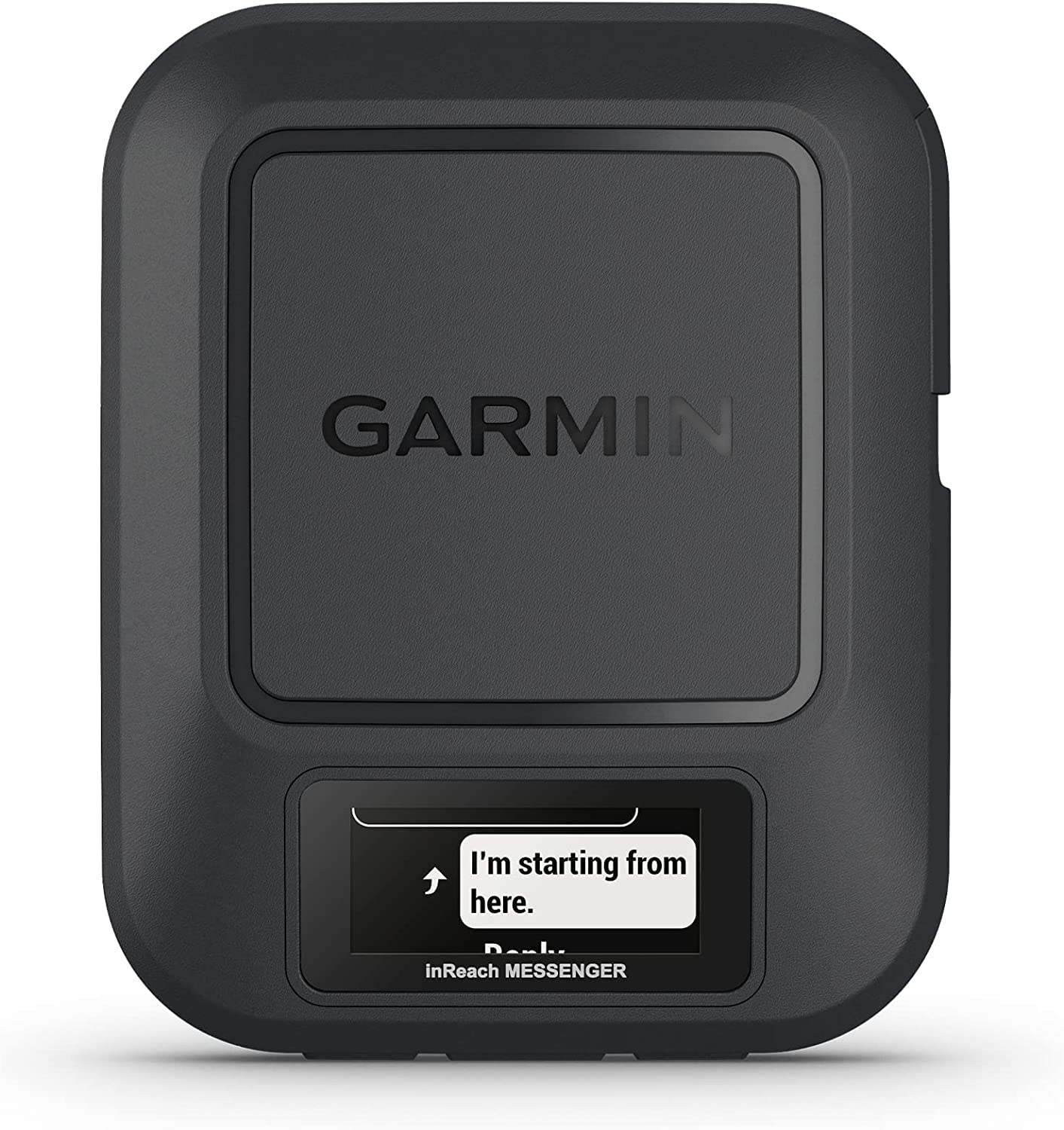
Bottom line: Garmin inReach Messenger is the best value when your priority is dependable text communication and long battery life rather than detailed on-device maps. It is especially useful for road trips, remote work and group travel where regular check-ins matter.
Key specs
- Weight: 4 oz (113.9 g), still easy to carry in a pocket or pack
- Battery life: Up to 28 days at 10-minute messaging/tracking, longest standard interval here
- Water rating: IPX7, handles incidental water exposure
- Display: 1.08 in diagonal, status-focused monochrome screen
The Messenger uses the Garmin Messenger app to make longer conversations easier on a phone. When your paired phone has connectivity, Garmin can route messages over Wi-Fi or cellular; when those networks disappear, the system can use the Iridium satellite network with an active plan.
Garmin also includes Safety Charging. If your phone battery dies, the Messenger can provide enough emergency power to help you use the paired phone for custom messaging. That makes the device practical for multi-day outings where the phone is still your main typing screen.
This model is not a full mapping handheld. The compact display is best for confirmations, basic controls and short information, so choose the GPSMAP 67i if detailed maps and route work on the device are central to your trip.
Sentiment Snapshot
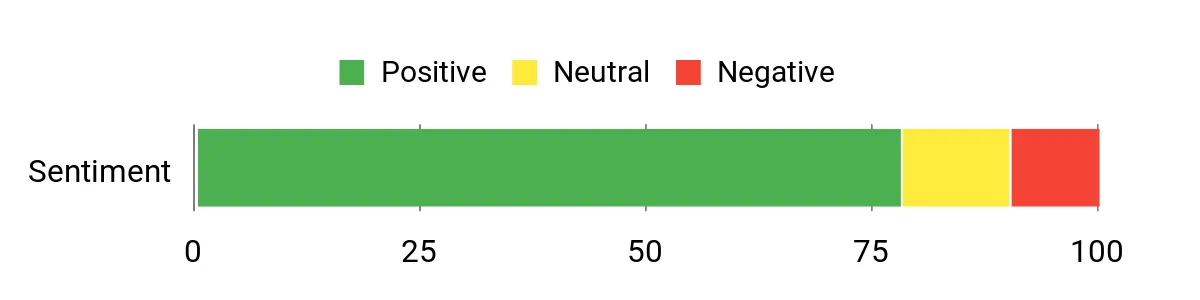
- Up to 28 days at a 10-minute message or location interval with full sky view
- Safety Charging can provide emergency power to a paired phone
- Automatic use of Wi-Fi, cellular or satellite through Garmin Messenger
- Compact 4-ounce body with IPX7 water rating
- Small monochrome display is not designed for detailed mapping
- Standard Messenger does not send photo or voice messages
- Satellite messaging and SOS require an active inReach plan
3. Garmin inReach Messenger Plus

Bottom line: Garmin inReach Messenger Plus is the strongest choice in this group when text alone is not enough. It adds photo and voice messaging so you can share more context from remote locations while keeping a compact communicator form factor.
Key specs
- Weight: 4.1 oz (117.2 g), only slightly heavier than Messenger
- Battery life: Up to 25 days at 10-minute low-power messaging, made for extended trips
- Water rating: IPX7, suited to outdoor exposure
- Display: 1.08 in diagonal, compact monochrome status screen
Messenger Plus can exchange text, photo and voice messages beyond cellular coverage when used with an active plan and the Garmin Messenger ecosystem. That richer communication can be useful when a picture or voice note explains trail, weather or equipment conditions faster than a text description.
Like the standard Messenger, it can use Wi-Fi or cellular through a paired phone when those networks are available, then use satellite communication outside coverage. It also supports Safety Charging, so the communicator can help revive a depleted phone when you need the app for messaging.
The trade-off is that the device itself still has a small monochrome screen and is communication-focused. If you need topo maps, route inspection and navigation directly on a handheld, the GPSMAP 67i or Montana 750i is a better match.
Sentiment Snapshot
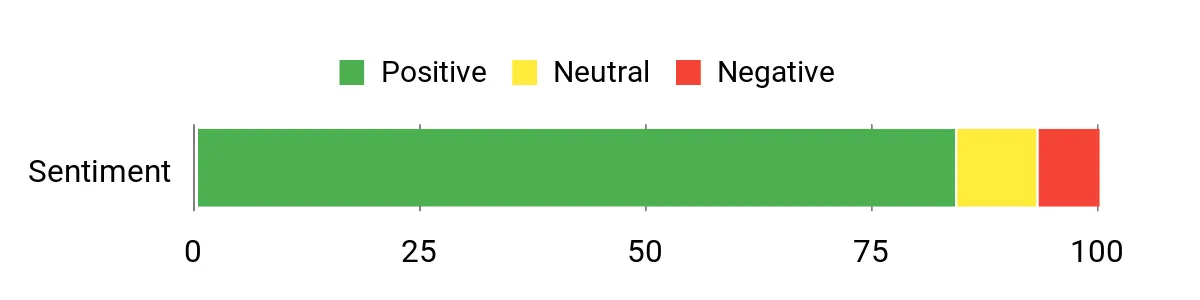
- Supports text, photo and voice messages beyond cell coverage
- Up to 25 days at 10-minute low-power messaging with full sky view
- Safety Charging for a depleted paired phone
- Compact 4.1-ounce body with IPX7 water rating
- Small display is not intended for detailed map navigation
- Media messaging depends on the Garmin Messenger workflow
- Satellite communication requires an active inReach plan
4. Garmin GPSMAP 67i

Bottom line: Garmin GPSMAP 67i is the pick when navigation is as important as off-grid communication. It combines a 3-inch color display, preloaded TopoActive maps, multi-band GNSS and inReach messaging in one button-operated handheld.
Key specs
- Weight: 8.1 oz (230 g), heavier but still backpack-friendly
- Battery life: Up to 165 hours with 10-minute inReach tracking, strong for long navigation days
- Water rating: IPX7, ready for rain and splashes
- Display: 3 in diagonal, larger color map view
The GPSMAP 67i is built for people who want to navigate without relying on a phone screen. Multi-band GNSS and multi-GNSS support help the handheld calculate position, while preloaded TopoActive maps and downloadable mapping options give you more route context than a communicator-only device.
With inReach activated, the same handheld can send two-way messages, share location and trigger an interactive SOS. Garmin rates it for up to 165 hours with inReach enabled and a 10-minute tracking interval, while expedition modes can extend battery life further when you do not need full-time high-detail operation.
The catch is size and interface. At 8.1 ounces it is more than twice the weight of the Mini 2, and it uses physical buttons instead of a touchscreen. That can be a plus with gloves, but it takes more menu learning than a simple communicator.
Sentiment Snapshot
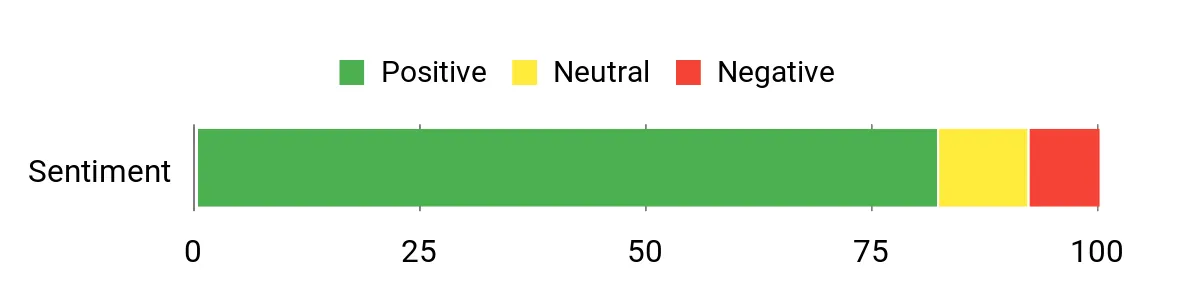
- 3-inch color display with preloaded TopoActive maps
- Multi-band GNSS and multi-GNSS positioning support
- Up to 165 hours with 10-minute inReach tracking
- Combines navigation, two-way messaging and interactive SOS
- Heavier than Mini 2 and Messenger models
- Button-driven interface has more menus to learn
- Satellite messaging and SOS still require an active inReach plan
5. Garmin Montana 750i

Bottom line: Garmin Montana 750i is the large-screen option for vehicle use, field work and users who prefer a glove-friendly touchscreen. It combines a 5-inch display, routable maps, an 8-megapixel camera and inReach communication in a rugged handheld.
Key specs
- Weight: 14.5 oz (410 g), best suited to packs or vehicles
- Battery life: Up to 18 hours in GPS or 10-minute tracking mode, shorter than the smaller communicators
- Water rating: IPX7, designed for wet field conditions
- Display: 5 in diagonal, biggest map view in this roundup
The Montana 750i is easier to read when you want a large map on the device. Its dual-orientation touchscreen works with gloves, and preloaded mapping supports both trail and road-oriented use. The built-in 8-megapixel camera can geotag photos, which can help document locations during field work or long trips.
Integrated inReach adds two-way satellite messaging, location sharing and interactive SOS with an active plan. The 750i also supports Wi-Fi, Bluetooth and ANT+ connections, plus sensors such as a barometric altimeter and three-axis compass.
The key correction is weight: Garmin lists 14.5 ounces with the included lithium-ion battery pack, not about 1.6 pounds. It is still the heaviest device here, and its standard GPS battery rating is much shorter than the compact communicators, so it makes the most sense when screen size and all-in-one navigation matter more than ultralight carry.
Sentiment Snapshot
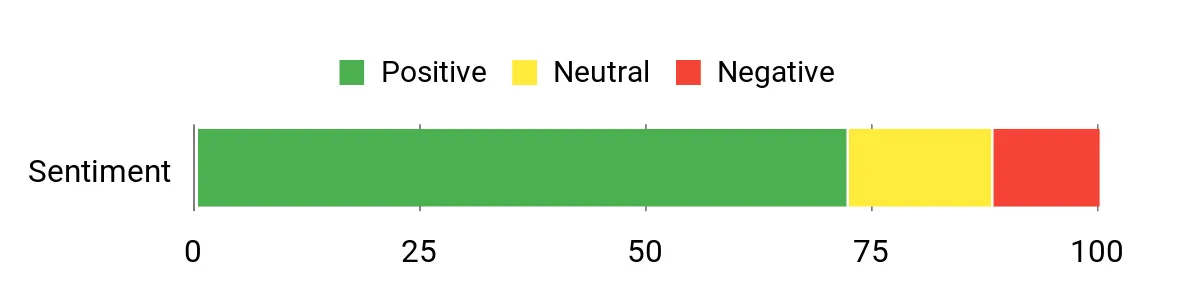
- Large 5-inch glove-friendly color touchscreen
- Built-in 8-megapixel camera with geotagging
- Routable maps plus inReach messaging and interactive SOS
- IPX7 rating and MIL-STD-810 testing for thermal, shock, water and vibration
- 14.5-ounce weight is much higher than compact communicators
- Up to 18 hours in standard GPS or 10-minute tracking mode
- Large body is less convenient for ultralight hiking
Garmin inReach Mini 2 vs Garmin inReach Messenger: Is the Upgrade Worth It?
These two are close in size but optimized differently. The Mini 2 favors wearable carry and simple navigation support, while the Messenger favors longer battery life, phone-assisted messaging and Safety Charging.
- Weight: Mini 2 is 3.5 ounces; Messenger is 4 ounces.
- Battery: Messenger reaches up to 28 days at a 10-minute interval; Mini 2 reaches up to 14 days under its standard 10-minute tracking conditions.
- Navigation: Mini 2 emphasizes TracBack and compass use in a hiking-oriented form factor.
- Phone backup: Messenger adds Safety Charging for a depleted paired phone.
Which Garmin inReach Device Should You Buy?
- Lowest carry weight: get the Garmin inReach Mini 2.
- Best messaging value: get the Garmin inReach Messenger.
- Photo and voice updates: get the Garmin inReach Messenger Plus.
- Detailed handheld maps: get the Garmin GPSMAP 67i.
- Large touchscreen and camera: get the Garmin Montana 750i.
How We Chose
- Communication: We checked two-way messaging, location sharing, interactive SOS and media features against Garmin documentation.
- Battery modes: We compared manufacturer ratings using the stated tracking or messaging intervals instead of treating every battery mode as equivalent.
- Navigation: We separated communicator-first devices from handhelds with preloaded maps, larger displays and multi-band positioning.
- Carry and durability: We compared official weight, display size and water rating because those differences affect hiking, riding and vehicle use.
- Freshness and safety: We checked current Garmin support, newer generations and public recall sources. No product was removed without positive evidence.
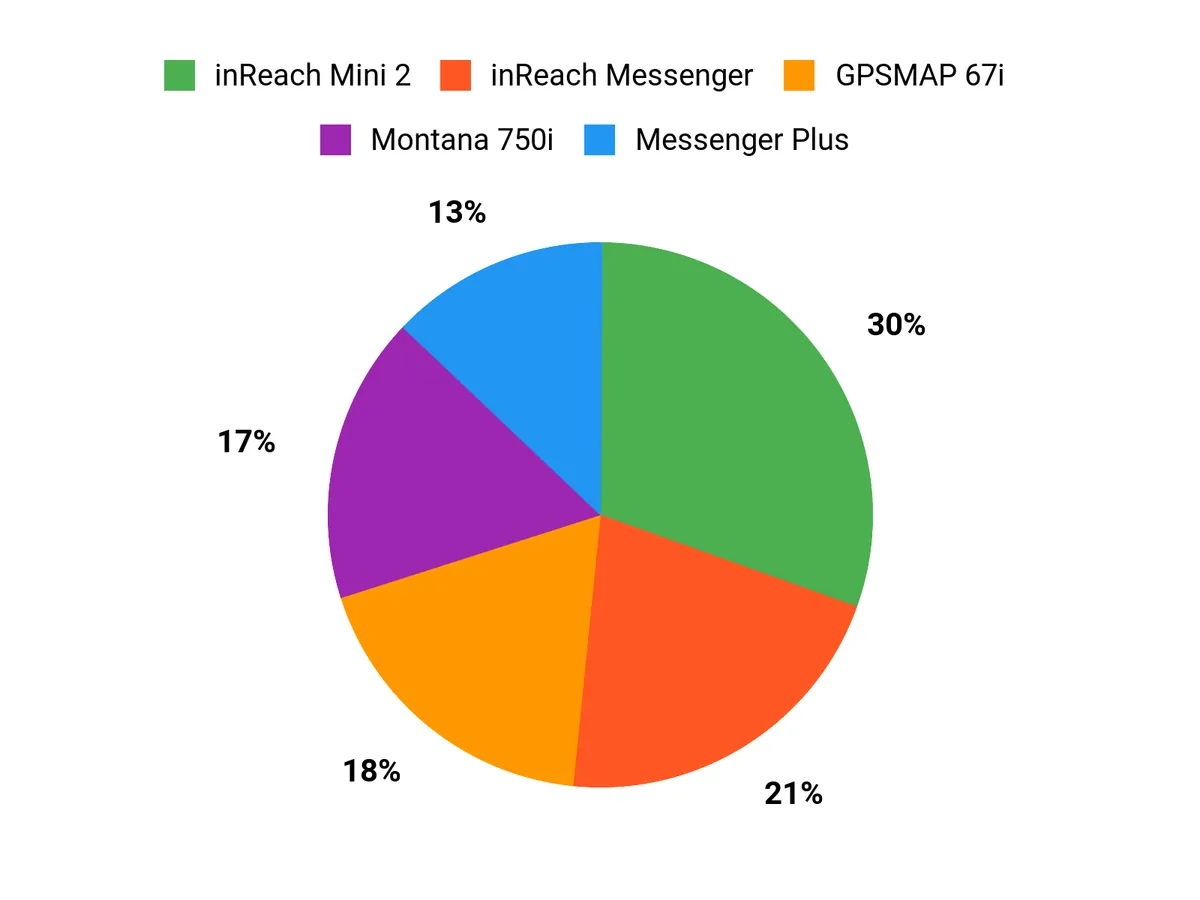
Customer Preferences
Most buyers can narrow this list by deciding whether communication or navigation comes first. The Mini 2 and Messenger models keep weight low, Messenger Plus adds richer media, and the GPSMAP 67i and Montana 750i put more mapping capability on the device itself.
Battery ratings also need context. Garmin publishes different estimates for tracking intervals, power modes and sky conditions, so compare the mode you will actually use rather than a single headline number.
How to Choose a Garmin inReach Device
Choose Communication First or Navigation First
If your phone already handles maps and you mainly need an emergency communication layer, a compact communicator such as the Garmin inReach Mini 2 or Garmin inReach Messenger keeps weight and complexity down. If you want maps, routes and position data directly on the handheld, the Garmin GPSMAP 67i gives you a much larger color navigation interface.
Match Battery Mode to Your Trip
Battery claims are not directly interchangeable. A 10-minute tracking interval, a low-power messaging mode and an expedition mode use the device differently. For multi-day hiking, look at the rating tied to the tracking interval you plan to use. For vehicle travel with regular charging access, display size and navigation features may matter more than the maximum endurance figure.
Decide Whether Photo and Voice Messaging Matter
Text is enough for routine check-ins and location updates, which keeps the Garmin inReach Messenger simple. If you want to send a scene, equipment issue or spoken update from beyond cellular coverage, the Garmin inReach Messenger Plus is the only linked communicator in this roundup built around photo and voice messaging.
Consider Screen Size and Input
Small communicators are easier to wear, but their displays are meant for status and simple controls. The Garmin GPSMAP 67i uses a 3-inch color screen with physical buttons, while the Garmin Montana 750i moves to a 5-inch glove-friendly touchscreen. Pick the interface you can operate comfortably in rain, cold or while wearing gloves.
Plan for the Subscription
An active inReach plan is required for satellite messaging and interactive SOS on these devices. Navigation functions on mapping handhelds can still work without an inReach subscription, but the satellite communication features do not. Check the current Garmin plan structure and local satellite-device rules before a trip, then send test messages while you still have time to troubleshoot.
Mistakes to Avoid When Buying a Satellite Communicator
- Comparing unlike battery modes: Use the same tracking interval and sky assumptions when possible.
- Buying more screen than you need: A large GPS handheld adds weight if your phone already handles navigation.
- Assuming SOS works without activation: Confirm your inReach plan is active before leaving coverage.
- Skipping a practice session: Pair the app, send test messages and learn the SOS controls before the trip.
- Ignoring local rules: Some jurisdictions regulate or prohibit satellite communication devices.
FAQs
Do Garmin inReach devices need a subscription?
Yes. An active inReach satellite plan is required for satellite messaging and interactive SOS on the devices in this roundup. A mapping handheld such as the GPSMAP 67i can still perform its normal GPS navigation functions without an inReach plan, but its satellite communication features remain unavailable until the service is activated.
Does Garmin inReach work without cell service?
Yes. With an active plan and a usable view of the sky, inReach devices can use the Iridium satellite network for supported messaging, location sharing and interactive SOS outside cellular coverage. A paired phone can make typing and app features easier, but the satellite link does not depend on a nearby cell tower.
Which Garmin inReach is best for hiking?
For hikers who want low weight and a simple safety communicator, the Garmin inReach Mini 2 is the strongest fit in this lineup. It weighs 3.5 ounces, supports two-way messaging and interactive SOS, and includes TracBack routing. Choose the GPSMAP 67i instead if detailed on-device topo maps are more important than minimizing pack weight.
Can Garmin inReach send photos and voice messages?
The Garmin inReach Messenger Plus supports text, photo and voice messaging through Garmin’s supported messaging workflow with an active satellite plan. The standard inReach Messenger and inReach Mini 2 are focused on text communication. If richer remote updates matter, Messenger Plus is the relevant model among the five linked products here.
Can I use the GPSMAP 67i without an inReach subscription?
Yes. Garmin states that the GPSMAP 67i can be used as a GPS handheld without an inReach subscription. You can use its non-inReach navigation functions, maps and other supported handheld features, but two-way satellite messaging, location communication and interactive SOS require an active inReach plan.
How long does an inReach battery last?
It depends on the model, tracking interval, power mode, sky view and enabled features. In this roundup, Garmin rates the Mini 2 up to 14 days at a 10-minute tracking interval, Messenger up to 28 days at a 10-minute interval, and GPSMAP 67i up to 165 hours with 10-minute inReach tracking.
What should I do before relying on inReach for a remote trip?
Activate the correct plan, update the device software, pair the required Garmin app, and send test messages outdoors with a clear view of the sky. Learn how the SOS control works without triggering a real emergency. Also check local laws, because some jurisdictions regulate or prohibit satellite communication devices.
Final Verdict
Among these linked Garmin inReach devices, the Garmin inReach Mini 2 gives the best balance of low carry weight, two-way satellite communication and simple route-back support. It is easy to keep with you, which matters because an emergency communicator only helps when it is actually on the trip.
Choose a larger handheld when navigation is the main job, or a Messenger model when longer battery life and phone-assisted communication matter more than on-device maps.
For a lower-cost communication-first option, see the Garmin inReach Messenger. For richer remote updates, see the Garmin inReach Messenger Plus.
Product Gallery
