
The Fire HD 10 13th Gen has no official GFLOPS rating from Amazon. Based on its 2GHz octa-core processor, real-world estimates place it around 16 to 30 GFLOPS. That range is enough for streaming, browsing, eBooks, and casual apps, but it is not built for heavy gaming or demanding multitasking. RAM, storage, and app load all affect performance more than raw FLOPS, and the details below show how it compares in everyday use.
Key Takeaways
- Amazon does not publish an official GFLOPS rating for the Fire HD 10 13th Gen.
- Estimated performance is roughly 16 to 30 GFLOPS based on comparable 2GHz octa-core chips.
- Geekbench and AnTuTu are better real-world indicators than GFLOPS for comparing this tablet.
- The Fire HD 10 13th Gen handles streaming, reading, and casual apps smoothly, but heavy gaming can lag.
- With 4GB RAM and limited 32GB storage, it is best suited for everyday media use, not demanding workloads.
How Much Gflops Does the Fire HD 10 13th Gen Have?
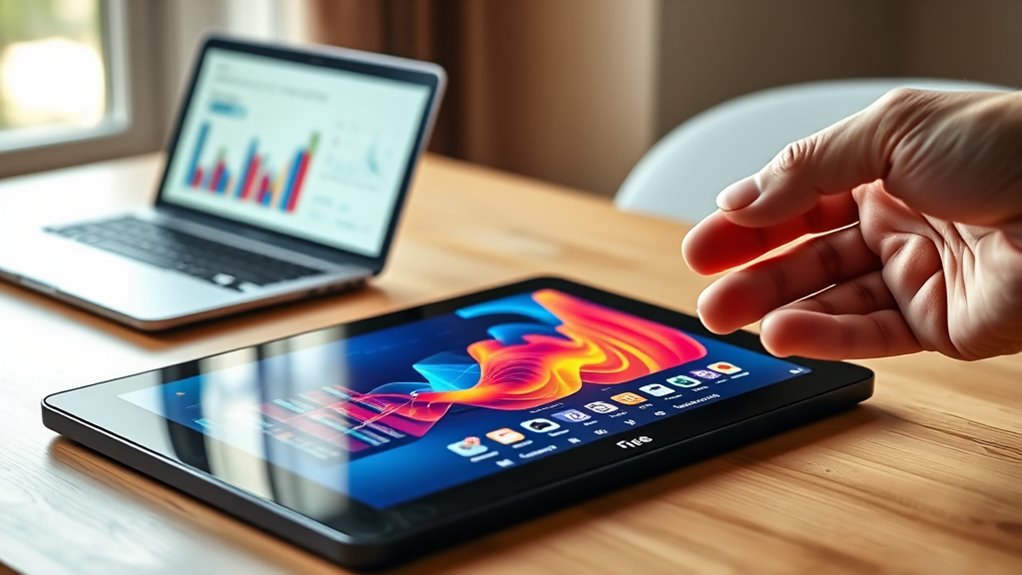
The Fire HD 10 13th Gen does not have an officially published GFLOPS rating from Amazon, but its 2GHz octa-core processor suggests modest floating-point performance for a tablet in its class.
Exact figures are not disclosed, so estimates depend on outside testing and the processor architecture behind the Fire HD 10 tablet. Comparable octa-core chips often land in the 16 to 30 GFLOPS range under favorable conditions, though real results vary.
This device is built mainly for media, reading, and casual tasks, not heavy computation, so Amazon places little emphasis on a precise GFLOPS number.
For users seeking digital autonomy, the key point is practical capacity rather than marketing gloss: the tablet is adequate for everyday use, while battery life and responsiveness matter more than raw computation.
Anyone needing exact measurements should consult third-party benchmarks, which offer the clearest view of performance and help separate claims from reality.
Fire HD 10 13th Gen Specs That Affect Performance
The Fire HD 10 13th Gen’s 2GHz octa-core processor and 4GB of RAM are the main hardware factors shaping its speed and multitasking ability.
Its 10.1-inch FHD display supports clear media use, while the 13-hour battery helps sustain longer sessions.
A 32GB storage limit may also affect performance when apps and files become more demanding.
Processor And RAM
Powered by a 2GHz octa-core processor and 4GB of RAM, the Fire HD 10 13th Gen offers a noticeable step up in everyday responsiveness for browsing, streaming, and light multitasking.
Its processor distributes work efficiently, while the RAM helps keep apps open and movement smooth. This combination gives the tablet solid performance for casual use and everyday media freedom.
- Octa-core design supports efficient task handling
- 4GB RAM improves app stability
- Better responsiveness than earlier models
- Suited to light multitasking and media use
- 32GB storage may limit performance with many apps
Display And Battery
With a 10.1-inch Full HD display at 1920 x 1200, the Fire HD 10 13th Gen delivers sharp visuals that make streaming, reading, and browsing feel more engaging. Its display supports clear text and vibrant media, while the 2GHz octa-core processor helps keep movement smooth. The battery is built for long sessions, offering about 13 hours of use and a four-hour recharge time, which gives users more freedom away from outlets. Local storage is limited to 32GB, so media choices may need discipline.
| Spec | Detail | Impact |
|---|---|---|
| display | 10.1-inch FHD | Sharp visuals |
| battery | 13 hours | Extended use |
| Fire HD | 32GB storage | Limited local storage |
What the Fire HD 10 13th Gen Handles Smoothly
Thanks to its 2GHz octa-core processor and 4GB of RAM, the Fire HD 10 13th Gen handles everyday tasks smoothly, including app switching, web browsing, and social media use.
Powered by a 2GHz octa-core processor and 4GB of RAM, it handles everyday tasks with smooth ease.
For a Fire user seeking practical freedom, this new Fire HD tablet stays responsive during routine activity and light entertainment. Its 10.1-inch FHD display keeps text sharp and video clear, supporting reading and streaming with ease.
The device is well suited to casual use that values simplicity, comfort, and steady performance.
- Quick app launches
- Smooth multitasking
- Clear video playback
- Comfortable eBook reading
- Reliable social browsing
The tablet also maintains dependable performance during longer sessions, helped by its efficient battery life.
That balance makes it a sensible choice for people who want a device that handles common tasks without friction.
Where the Fire HD 10 13th Gen Starts to Lag
Despite its solid everyday performance, the Fire HD 10 13th Gen begins to slow down under heavier demands. Its 2GHz octa-core chip handles basic tasks, yet intensive multitasking exposes limits in this Fire tablet. With only 4GB of RAM, switching among apps or many browser tabs can reduce responsiveness, and demanding software may hesitate before loading.
| Pressure point | Effect |
|---|---|
| Heavy multitasking | Slower app switching |
| Graphics-heavy games | Noticeable lag |
| 32GB storage limit | Less room for large apps |
| Nearly full memory | Slower performance or crashes |
This pattern shows that the device is built for casual media use, not sustained strain. When storage fills, the absence of expandable space can worsen performance, because the system has less room to operate smoothly. For users seeking digital freedom, that constraint matters. The tablet remains capable, but its limits appear quickly when workloads grow, especially in graphics-intensive or memory-hungry situations.
How Fire HD 10 Performance Compares With Similar Tablets
Against similarly priced tablets, the Fire HD 10 (13th Gen) holds its own with a 2GHz octa-core processor and 4GB of RAM, both of which improve everyday responsiveness and multitasking over older Fire models.
Its HD 10.1-inch FHD screen gives crisp visuals that compare well with the Samsung Galaxy Tab A7, while the new model’s 13-hour battery life supports longer, freer media use than many rivals, including the Lenovo Tab P11.
- Smooth performance for reading, streaming, and casual games
- Better multitasking than the prior 3GB version
- Sharp HD display suited to everyday viewing
- Strong battery endurance for on-the-go use
- Competitive value, despite limited storage flexibility
In practical terms, the tablet suits users seeking affordable access without unnecessary constraint.
It is not built to dominate premium benchmarks, but it delivers balanced performance for its class. For many, that balance is enough to make the device a credible alternative in the budget tablet field.
Why Amazon Doesn’t Publish Official Gflops Numbers
Amazon does not publish official GFLOPS numbers for the Fire HD 10 13th Gen because such benchmarks can vary widely and do not always reflect everyday use.
The focus stays on hardware choices and marketing that highlight practical performance, including battery life, app responsiveness, and media playback.
This approach keeps attention on real-world performance metrics rather than raw computational power.
Benchmark Variability
Official GFLOPS numbers for the Fire HD 10 are not published by Amazon, leaving its raw floating-point performance open to interpretation rather than direct specification.
For Amazon’s Fire, this gap means users must judge capability through varied tests, not a fixed claim. Benchmark results can shift with software settings, thermal throttling, background activity, and the exact task being measured.
A media-focused tablet may appear stronger in light workloads than in compute-heavy trials, while HDMI port use does not alter that uncertainty.
- Third-party tools rarely match exactly
- Test conditions change measured output
- Background processes can skew results
- Heat can reduce sustained performance
- Task choice affects reported GFLOPS
Hardware Over Marketing
Rather than publishing GFLOPS figures, Amazon frames the Fire HD 10 around practical features that matter more to casual buyers, such as battery life, display quality, and everyday responsiveness.
This approach reflects marketing strategies built around User Experience, not technical spectacle. The tablet’s 2GHz octa-core processor suggests solid capability, yet that number alone cannot define GFLOPS without standardized testing.
For most consumers, raw computational data offers little guidance, especially when device comparisons can become misleading.
Amazon consequently emphasizes consumer preferences that favor simple, useful specifications over obscure hardware metrics.
Real-World Performance Metrics
Performance on the Fire HD 10 (13th Gen) is best understood through everyday use rather than through a single GFLOPS figure. Amazon withholds official numbers because its priority is user experience, not abstract scoring.
The 2GHz octa-core processor supports smooth media playback, basic multitasking, and responsive app launches, yet that strength resists conversion into one headline metric. Real-world evaluation depends on tasks that matter:
- video streaming quality
- app responsiveness
- multitasking stability
- battery-friendly efficiency
- practical user reviews
Third-party benchmarks can inform performance expectations, but they rarely capture how the tablet behaves in ordinary use. This omission reflects Amazon’s strategy: present a device built for accessible media consumption, where liberation from technical noise comes through clear, usable performance rather than speculative benchmarks.
Fire HD 10 13th Gen for Streaming, Reading, and Browsing
The Fire HD 10 13th Gen is well suited for everyday streaming, reading, and browsing, thanks to its 2GHz octa-core processor and 10.1-inch FHD touchscreen. This hardware supports smooth streaming quality for video playback, while the bright display improves the reading experience for ebooks, articles, and documents.
The tablet also delivers responsive browsing speed for web pages, email, and light multitasking, helping users move through content with less friction. Its roughly 13-hour battery life supports long sessions, making it practical for travel, work breaks, or relaxed evenings away from a charger.
The durable build adds confidence for family use, including homes where children share devices. For casual media consumption, the Fire HD 10 offers a balanced, accessible experience that favors comfort, clarity, and dependable day-to-day use over unnecessary complexity.
Fire HD 10 13th Gen Storage and RAM Options
With a modest 32 GB of internal storage and no expandable storage option, the Fire HD 10 13th Gen is aimed at users whose needs center on streaming, browsing, and basic app use rather than large media libraries.
Its storage limitations are clear, especially when compared with earlier generations that offered 64 GB. Yet the 32 GB baseline remains workable for lighter use and supports a more streamlined device profile.
RAM comparison also matters here: buyers can choose between 3 GB and 4 GB, with the higher tier offering a welcome improvement for multitasking and smoother everyday operation.
- 32 GB suits casual media consumption
- No microSD expansion narrows flexibility
- 3 GB RAM fits basic tasks
- 4 GB RAM better serves heavier app use
- Storage needs should guide purchase decisions
For users seeking freedom from clutter, the model rewards restraint and careful app management while keeping costs and complexity lower overall.
Better Ways to Measure Fire HD 10 Performance
Geekbench and AnTuTu provide more useful comparisons than GFLOPS alone because they reflect broader CPU and system performance on the Fire HD 10 13th Gen.
They help show how the tablet’s 2GHz octa-core processor and 4GB of RAM handle everyday tasks under real conditions.
Real-world app speed, including loading times and playback responsiveness, gives the clearest picture of how fast the device actually feels in use.
Geekbench And AnTuTu
Rather than relying on Gflops alone, Fire HD 10 performance is better understood through Geekbench and AnTuTu scores. A Geekbench overview shows the 13th Gen tablet’s 2GHz octa-core processor delivering mid-1,000s in Geekbench 5 multi-core results, a solid sign of balanced compute power.
An AnTuTu comparison often places it near 100,000, with graphics results revealing enough strength for casual gaming and media playback. These benchmarks provide performance insights that help compare the tablet with similar models, especially for users seeking practical efficiency rather than abstract numbers.
- Geekbench: CPU-focused measure
- AnTuTu: broader system assessment
- Mid-tier positioning: competitive context
- GPU emphasis: useful visual workload signal
- Benchmark scores: clearer than Gflops
Real-World App Speed
Real-world app speed is a more practical way to judge the Fire HD 10 13th Gen than GFLOPS alone. Its 2GHz octa-core processor and 4GB of RAM help support quicker app launches, smoother scrolling, and steadier performance in everyday use.
These app responsiveness factors matter more than abstract compute numbers when comparing how the tablet handles video streaming, reading, and light productivity. Multitasking efficiency also improves, since multiple apps can stay active with less lag than earlier models.
The 10.1-inch FHD touchscreen adds clarity to media playback, while about 13 hours of battery life supports extended sessions without constant charging.
For user experience metrics, responsiveness, load time, and consistency offer a truer measure of freedom in practice.
Is the Fire HD 10 13th Gen Worth It?
For most buyers, the Fire HD 10 (13th Gen) looks worth considering if the goal is an affordable tablet for streaming, reading, and casual browsing. Its 2GHz octa-core processor and 4GB of RAM support a smoother user experience than earlier budget models, while the 10.1-inch FHD display and 13-hour battery life make long sessions practical.
At $155, it offers respectable value for people who want dependable basics without paying for premium power.
At $155, it delivers solid value for dependable everyday use without the premium price tag.
- Strong for media and light multitasking
- Better responsiveness than older Fire tablets
- Battery life supports all-day use
- Limited 32GB storage may constrain apps
- Expansion is unavailable, reducing flexibility
User reviews generally favor its price-to-performance balance, though storage limits remain a common complaint.
Compared with other tablet alternatives, it suits freedom from high costs more than freedom for heavy workloads. For those needing simple, portable access, it is a sensible choice.
Frequently Asked Questions
What Year Is Fire HD 10 13TH Generation?
The Fire HD 10 13th generation is from 2023. In tablet comparisons, performance benchmarks, and user reviews, it is noted for modest improvements, reflecting Amazon’s focus on accessible, reliable media use and user freedom.
What Is the Storage Capacity of the Fire HD 10?
The Fire HD 10 has 32GB of internal storage, with no expandable option. Its storage options suit casual use, but performance comparison and user reviews suggest heavier media users may need more capacity.
What Processor Does the Fire HD 10 Have?
It uses a 2GHz octa-core processor, a tiny workhorse pretending to be a powerhouse. Its processor performance suits media and browsing, lags in tablet comparisons, and offers modest gaming capabilities for freedom-seeking users.
Is the Fire HD 10 Worth Buying?
Yes, the Fire HD 10 is worth buying for many users, especially after tablet performance, user reviews, and price comparison are considered. It offers solid everyday value, though those seeking greater freedom may prefer alternatives.
Conclusion
In the end, the Fire HD 10 13th Gen is less a speed demon than a steady workhorse: enough for streaming, reading, browsing, and light multitasking, but not built for demanding games or heavy creative tasks. Its exact GFLOPS matter less than its real-world feel, which is smooth for everyday use and modest under pressure. For buyers seeking value over raw power, it remains a practical choice—proof that performance is not only about numbers.

