A North Carolina fishing license is not one-size-fits-all, because the state separates inland and coastal fishing privileges, so the license you think covers everything might not. If you fish both freshwater and saltwater, compare the Inland, Coastal, and Unified options before you buy. This guide explains who needs a license, the current short-term, annual, and lifetime prices, free or reduced-fee exceptions, and where to buy, renew, or replace your North Carolina fishing license.
Quick Answer
In North Carolina, anglers age 16 and older generally need a fishing license to fish in public inland or coastal waters. Choose an Inland license for freshwater, a Coastal Recreational license for saltwater, or a Unified license if you plan to fish both.
Do you need a fishing license in NC? Yes, anglers aged 16 and older must purchase a license to fish in public inland or coastal waters. Residents and non-residents can choose between Inland, Coastal, or Unified licenses, with annual fees starting at $19 for residents.
Key Takeaways
- Age Rule: Anglers 16 and older need a license to fish in public waters; kids under 16 fish for free.
- Two Main Water Types: Inland licenses cover freshwater, while Coastal Recreational licenses cover saltwater.
- Best All-Around Option: A Unified license covers both inland and coastal recreational fishing privileges.
- Free Fishing Day: Fishing is free for everyone on July 4th.
- Senior Perks: North Carolina residents age 70 and older may qualify for significantly discounted lifetime licenses.
Who Needs a North Carolina Fishing License and Who Doesn’t
Wondering whether you need a North Carolina fishing license? If you’re 16 or older and plan to fish in public waters, you generally need a valid license before you cast.
That rule applies to residents and non-residents. It can also apply when an adult is actively helping someone fish, such as baiting hooks, setting lines, landing fish, or handling fishing gear. Even if you are helping a child, you should make sure the adult who is fishing or assisting is properly licensed.
Kids under 16 can fish without a license, which makes it easier for families to introduce young anglers to lakes, rivers, piers, beaches, and other public waters without extra paperwork.
You also don’t need a license for private ponds located on privately owned land, so you can cast freely on your own property when the pond is not connected to public waters.
No license is required for fishing in private ponds on your own land, but public waters usually require the right license once you are 16 or older.
Two special exceptions are especially useful to know. First, you may be covered when fishing aboard a properly licensed saltwater charter boat, because the charter’s license can cover passengers. Second, North Carolina offers a free fishing day on July 4th, when everyone can fish without purchasing a license.
Warning: A license exception does not remove size limits, creel limits, seasons, bait rules, or gear restrictions. Always follow the current inland or coastal fishing regulations for the water you are fishing.
Knowing who needs a fishing license helps you avoid fines and keeps your trip simple. Before you go, confirm whether you are fishing public or private water and whether the spot falls under inland or coastal rules.
Types of NC Fishing Licenses and What They Cover
Because North Carolina separates freshwater and saltwater regulations, you’ll choose from Inland, Coastal Recreational, or Unified fishing licenses. The right choice depends on where you plan to fish, not just where you live.
Inland Fishing License
An Inland fishing license is the freshwater option. It is the license to consider for many lakes, rivers, reservoirs, streams, and stocked trout waters. The article’s listed inland license coverage includes the Public Mountain Trout Waters privilege, which matters if you plan to fish designated trout waters in western North Carolina.
Coastal Recreational Fishing License
A Coastal Recreational Fishing License covers saltwater recreational fishing along the coast, in sounds, and in many estuarine waters. Coastal rules can differ from inland rules, including species limits, seasons, and harvest rules, so do not assume a freshwater license covers saltwater fishing.
Unified Inland and Coastal License
A Unified Inland and Coastal Recreational Fishing License combines inland and coastal privileges. This is usually the cleanest option if you fish both freshwater and saltwater during the same year.
Pro Tip: If your trip includes rivers near the coast, brackish water, sounds, or a mix of freshwater and saltwater stops, check the water classification before buying. When in doubt, a Unified license can prevent buying the wrong coverage.
You can select short-term, annual, or lifetime types to match how often you fish. Residents can also choose lifetime options, including Unified Lifetime coverage, when they want one long-term permit instead of renewing every year.
Special licenses and waivers may exist if you rely on fishing for subsistence, meet certain income-based qualifications, are a qualifying senior, have a qualifying disability, or are a qualifying veteran. These options help make fishing access more affordable.
Choose the license that lets you fish where you want, when you want, while staying compliant with NC Wildlife Resources Commission regulations.
North Carolina Fishing License Costs: Short-Term, Annual, and Lifetime Rates

You’ll find short-term, annual, and lifetime options to match how often you fish and where you plan to go. Prices vary by license type, residency, and whether you need inland, coastal, or combined coverage.
Short-term choices include 10-day Inland ($11 residents, $28 non-residents) and 10-day Coastal ($8 residents, $14 non-residents). These are useful for visitors, vacation trips, weekend fishing plans, or occasional anglers who do not need a full year of access.
Annual licenses cover one year for inland ($30 residents, $54 non-residents) or coastal ($19 residents, $38 non-residents). Residents can buy a unified inland/coastal annual license for $49 if they want both freshwater and saltwater privileges in one license.
At a Glance
| 10-Day Inland | $11 resident / $28 non-resident |
| 10-Day Coastal | $8 resident / $14 non-resident |
| Annual Inland | $30 resident / $54 non-resident |
| Annual Coastal | $19 resident / $38 non-resident |
| Resident Annual Unified | $49 for inland and coastal coverage |
| Resident Lifetime | $315 extensive inland or $567 unified inland/coastal |
| Resident Senior Lifetime | $19 for eligible residents age 70 and older |
- Short-term: quick, affordable access for visitors or brief trips.
- Annual licenses: best if you fish regularly and want convenience without committing to a lifetime license.
- Lifetime licenses: one-time investment for long-term access; listed resident options include $315 extensive inland or $567 unified inland/coastal.
- Senior lifetime option: eligible North Carolina residents age 70 and older can qualify for a discounted $19 lifetime license.
These figures help you decide based on fishing frequency, residency, water type, and long-term value. If you only fish once on vacation, a 10-day license may be enough. If you fish often across inland and coastal waters, the annual Unified license may be the better fit.
Note: The fees above reflect the schedule that took effect on July 1, 2024. License fees can change. Before buying, confirm the current price through the official North Carolina Wildlife Resources Commission or Go Outdoors North Carolina purchase system.
Free, Reduced-Fee, and Special-Eligibility Licenses
If you qualify under income, age, disability, veteran status, or caregiving criteria, North Carolina offers free or reduced-fee fishing licenses so you can still fish inland and along the coast without the usual cost barrier.
You may qualify for a Free Unified Lifetime Fishing License if you are legally blind or live in an adult care home. Residents who receive Medicaid, food stamps, or Work First Family Assistance may also qualify for free licenses or one-year fee waivers that cover inland and coastal waters.
If you have a qualifying physical disability or are a qualifying veteran, discounted Unified Lifetime licenses may be available, though processing fees may apply. Seniors who are North Carolina residents age 70 or older can obtain a discounted $19 lifetime license when they meet eligibility requirements.
There’s also a Subsistence Unified Inland/Coastal Recreational Fishing License Waiver for qualifying residents at no cost. These free, reduced-fee, and special-eligibility options remove financial barriers so fishing remains accessible for food, recreation, and family time.
Documents You May Need
Depending on the license type, you may need proof of North Carolina residency, a valid picture ID, proof of age, benefit-program documentation, disability documentation, veteran documentation, or paperwork from a county Department of Social Services. Requirements can vary by program, so check the official application instructions before applying.
Pro Tip: If you may qualify for a free or reduced-fee license, gather your proof documents before starting the application. That can help avoid delays or repeat trips.
Where and How to Buy or Replace Your North Carolina Fishing License
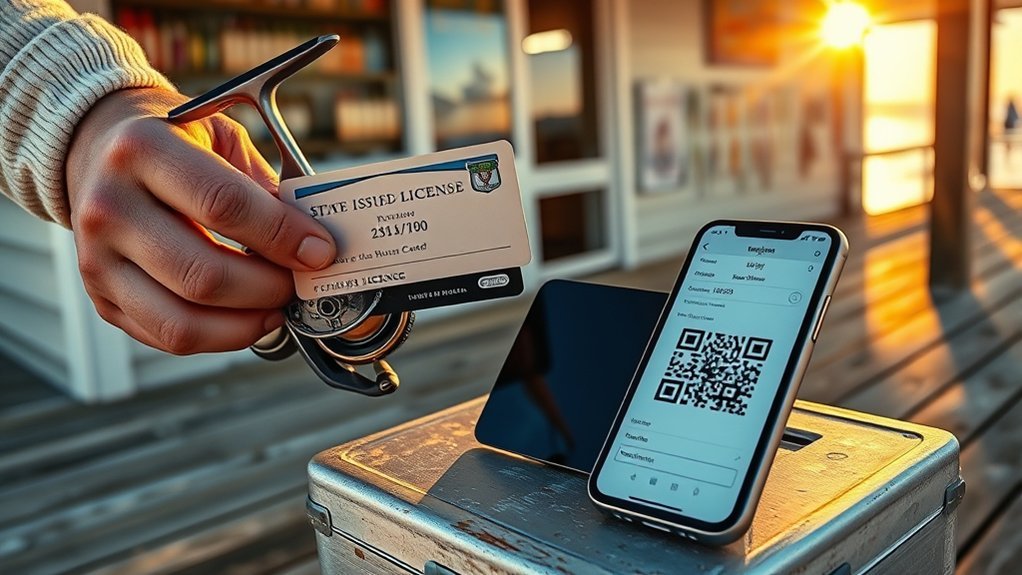
Wondering where to buy or replace your North Carolina fishing license? You’ve got several options that keep access to public waters simple and practical.
Buy online at gooutdoorsnorthcarolina.com (there’s a $2 transaction fee), call 888-248-6834 during business hours, or visit registered vendors like tackle shops and Walmart for instant issuance.
If you lose your license, replace it for $5. Renewals require a valid picture ID; you don’t need a Social Security number to get a license if you have your WRC customer number handy.
- Online: fast, 24/7 access, small $2 fee, and useful if you want to plan before your trip.
- Phone: call 888-248-6834 during business hours for help and purchase support.
- In-person: get a license instantly at public vendors such as tackle shops or Walmart if you need it right away.
Before You Buy
Have your identification ready, decide whether you need inland, coastal, or unified coverage, and confirm whether you qualify as a resident or non-resident. If you are buying for a child, remember that anglers under 16 do not need a recreational fishing license.
After You Buy
Keep your license accessible while fishing. A digital copy may be convenient, but it is still smart to save your confirmation details and protect any printed receipt. If your license is lost or damaged, request a replacement before your next trip.
Choose the method that fits your schedule. Keep ID handy for renewals, protect your replacement receipt, and stay connected to public resources that preserve your right to fish.
Frequently Asked Questions
How much is a senior citizen fishing license in NC?
A senior citizen lifetime fishing license in NC costs $19 for eligible residents aged 70 or older. Coverage depends on the license type selected, and you must meet the age and residency requirements to qualify.
What type of fishing license do I need in NC?
You need an Inland fishing license for freshwater fishing, a Coastal Recreational license for saltwater fishing, or a Unified license for both. Always check whether your fishing spot is designated as inland or coastal water before casting.
How do I get a free fishing license in NC?
You may qualify for a free fishing license if you meet certain eligibility criteria, such as receiving Medicaid, SNAP, or Work First assistance, being legally blind, or living in an adult care home. Contact your county Department of Social Services or visit the NC Wildlife website for application guidance.
At what age do you no longer need a fishing license in North Carolina?
There is no upper age where the license requirement completely disappears. You do not need a license only if you are under 16. Once you turn 16, you generally need a license to fish in public waters, although residents age 70 and older may qualify for a discounted lifetime license.
Can I fish for free in North Carolina on July 4th?
Yes. North Carolina has a free fishing day on July 4th, when everyone can fish without buying a recreational fishing license. Other fishing rules still apply, including size limits, possession limits, seasons, and gear restrictions.
Do I need both inland and coastal fishing licenses in NC?
You need the license that matches the waters you fish. If you fish only freshwater, an Inland license may be enough. If you fish only saltwater, choose a Coastal Recreational license. If you fish both, a Unified license is usually the simplest option.
Conclusion
You’ll spend as little as $11 for a 10-day inland pass or choose a $49 resident annual inland/coastal combo, but cost and coverage vary by trip length, residency, and water type. For a weekend bank cast, a short-term license may be enough. For a season of surf, river, lake, and trout fishing, an annual or Unified option may make more sense.
Before you buy, decide where you will fish, confirm whether the water is inland or coastal, and check whether you qualify for a discount, waiver, or senior lifetime option. Then buy online, by phone, or through a registered vendor so you are legal, prepared, and ready to enjoy North Carolina’s public waters.
Sources
- North Carolina Wildlife Resources Commission — official fishing license rules, license types, exemptions, and regulations.
- Go Outdoors North Carolina — official online license purchase, renewal, and replacement system.
- NC Department of Environmental Quality: Recreational Fishing Licenses — coastal and unified license fees (effective July 1, 2024), exemptions, and subsistence waivers.