
Toyota Tacoma tire pressure should be set to the cold PSI printed on your truck’s Tire and Loading Information Label, not to one universal number. Toyota’s own specifications show why: the recommended pressure can change with model year, tire size, and equipment. This guide explains how to find the right PSI, check it correctly, handle warm tires, respond to the TPMS light, and troubleshoot repeated pressure loss.
Last updated: September 11, 2026 — safety and TPMS guidance rechecked against Toyota, NHTSA, FuelEconomy.gov, and federal TPMS requirements.
Quick Answer
Check your Toyota Tacoma’s tire pressure at least once a month when the tires are cold. Inflate each tire to the front or rear PSI printed on the driver-side Tire and Loading Information Label. Do not use a generic Tacoma PSI range or the maximum pressure molded into the tire sidewall.
Key Takeaways
- Use the pressure on your Tacoma’s driver-door placard, not a universal 32–36 PSI estimate.
- Measure pressure before driving or after the truck has been parked for at least three hours.
- Check every month, before long trips, and before carrying a heavy payload or towing.
- A steady TPMS light usually calls for a pressure check; a flashing-then-steady light can indicate a system malfunction.
- Repeated pressure loss may point to a puncture, valve leak, bead leak, or damaged wheel.
At a Glance
| Time Required | About 5–10 minutes |
| Difficulty | Easy |
| Tools Needed | Accurate tire-pressure gauge and, when needed, an air compressor |
| Cost | No added cost when you already have a gauge and access to compressed air |
What Tire Pressure Should a Toyota Tacoma Use?

The correct Toyota Tacoma tire pressure is the cold PSI shown on the Tire and Loading Information Label. You will normally find this label on the driver-side door jamb or door edge. It lists the original tire size and the recommended pressure for the front and rear tires.
Why Does Tacoma Tire Pressure Vary?
Toyota’s official 2024 Tacoma specifications show why a single PSI answer is unreliable. Different factory tire packages use different cold pressures even within the same model year.
| 2024 Tacoma Tire Size | Toyota Cold Pressure Example |
|---|---|
| 245/70R17 110T | 35 PSI |
| 265/70R17 115T | 30 PSI |
| 265/65R18 114T | 32 PSI |
These are verified examples, not targets for every Tacoma. Use your truck’s placard for the final setting. For a field-by-field explanation of that label, see our Tacoma tire pressure placard guide.
Do not assume that all four tires use the same setting. Some vehicles specify different front and rear pressures. You should also recheck the label after buying a used truck because the installed tires may differ from the original specification.
Note: The number molded into a tire’s sidewall is generally its maximum cold inflation pressure for the tire, not the recommended everyday pressure for your Tacoma. Use the vehicle placard unless Toyota or a qualified tire professional has approved a different setup.
If the placard is damaged or unreadable, check the owner’s manual for your exact model year through the Toyota Manuals and Warranties portal. Avoid relying on a generic online PSI chart.
Why Correct Tire Pressure Matters
Inflation pressure affects how the tire supports the truck’s weight and keeps its tread in contact with the road. A properly inflated tire can provide more predictable steering, braking, tread wear, and heat control.
Underinflation allows the tire to flex more than intended. That extra flex creates heat and rolling resistance and may damage the tire internally. Overinflation can reduce the effective contact area, make the ride harsher, and leave the tire more vulnerable to impact damage.
NHTSA reports that 511 people died in tire-related crashes in the United States during 2024, reinforcing the value of routine tire inspections and correct inflation.
The National Highway Traffic Safety Administration recommends checking all tires, including the spare when provided, at least once a month while they are cold.
How to Check Your Toyota Tacoma’s Tire Pressure
- Park the truck and let the tires cool. Check before driving or after the Tacoma has been parked for at least three hours.
- Read the vehicle placard. Record the specified cold PSI for the front and rear tires.
- Inspect each tire. Look for cuts, bulges, exposed cords, embedded objects, sidewall damage, or an obviously low tire.
- Remove the valve cap. Keep it in a safe place so dirt and moisture do not enter the valve afterward.
- Press the gauge firmly onto the valve stem. A brief hiss is normal, but continued hissing means the gauge is not seated correctly.
- Read the pressure twice. Remove and reconnect the gauge to confirm the measurement.
- Add or release air as needed. Work in short bursts and stop when the gauge matches the placard pressure.
- Recheck and replace the valve cap. Repeat the process for every road tire and check the spare separately.
Warning: Do not continue driving on a tire with a bulge, exposed cords, severe cracking, rapid pressure loss, or visible structural damage. Install the spare when it is safe to do so or arrange roadside assistance.
What If the Tires Are Warm?
Driving heats the tires and raises their measured pressure. A warm reading may therefore be higher than the cold specification even when the tire was correctly inflated before the trip.
Do not automatically release air from a warm tire just to bring it down to the placard’s cold PSI. If a warm tire measures low, NHTSA advises adding air to the vehicle manufacturer’s recommended cold placard pressure as a temporary step, then rechecking and fine-tuning the pressure after the tire has cooled.
When Should You Check the Pressure?
| When to Check | Why It Matters |
|---|---|
| At least once a month | Catches gradual air loss before it becomes severe |
| Before a long trip | Confirms the tires are ready for sustained driving |
| Before towing or carrying a heavy payload | Proper inflation is especially important under added load |
| After a major temperature change | Ambient temperature affects measured tire pressure |
| When the TPMS light appears | One or more tires may be significantly underinflated |
| After a pothole or curb impact | An impact may damage the tire, wheel, bead, or valve |
A visual check is useful, but it cannot replace a gauge. Radial tires may look normal even when their pressure is low.
Signs of Underinflated Tires and Their Effects
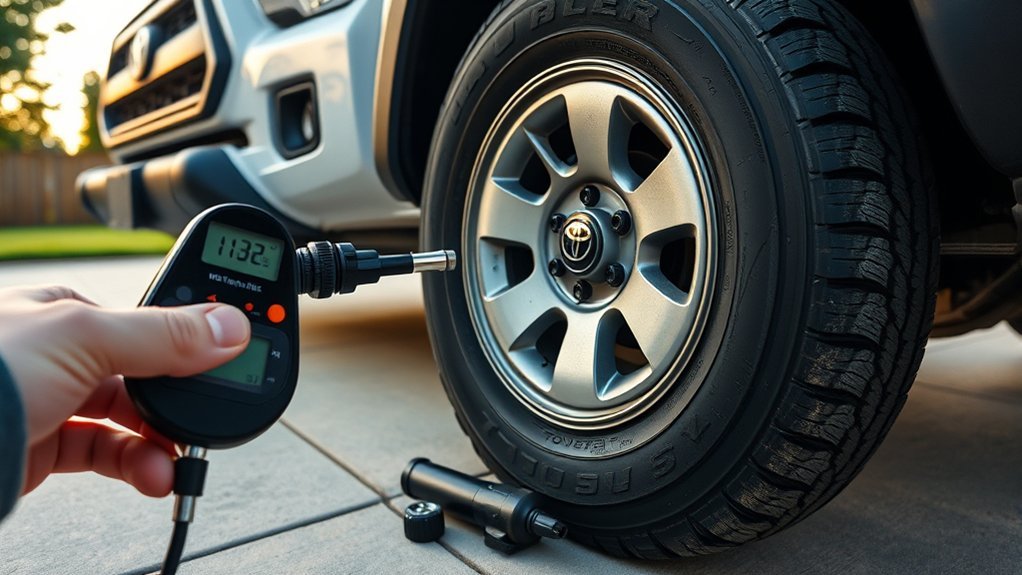
A low tire may look flatter near the road, but smaller pressure losses are difficult to identify by sight. Other clues include a steady TPMS light, sluggish steering response, pulling, excessive shoulder wear, or one tire repeatedly reading lower than the others.
Reduced Fuel Efficiency
Underinflated tires create more rolling resistance, so the engine must use additional energy to move the truck. According to FuelEconomy.gov, gas mileage can fall by about 0.2% for each 1 PSI reduction in the average pressure of all tires.
Correcting improperly inflated tires may improve fuel economy, but the result depends on how low the tires were, the truck, the load, the route, and driving conditions. Avoid promises of a fixed MPG gain.
Increased Tire Wear
When pressure is too low, the tire bends and flexes more with each rotation. The tread shoulders may wear faster, and excess heat can weaken the tire’s internal structure. Severe or prolonged underinflation can cause damage that adding air will not reverse.
If a tire has been driven while nearly flat, have it removed and inspected internally by a qualified tire technician before returning it to service.
Compromised Vehicle Handling
Low pressure can make steering feel slow or vague and may reduce stability during turns or emergency maneuvers. It can also affect braking response, especially when the truck is loaded or the road is wet.
Pulling to one side can have several causes, including unequal tire pressure, alignment problems, brake drag, or tire damage. Start by checking all four pressures against the placard.
Risks of Overinflated Tires
An overinflated tire may produce a harsher ride because it cannot absorb bumps as effectively. Excess pressure may also concentrate wear toward the center of the tread and increase sensitivity to potholes, rocks, and sharp impacts.
Release air gradually through the valve stem and recheck with a gauge. Stop at the Tacoma’s specified cold pressure. Do not lower pressure below the placard value in an attempt to soften the ride.
Essential Tire-Pressure Tools
Choosing a Tire-Pressure Gauge
Digital, dial, and pencil-style gauges can all work when they are accurate and used correctly. Choose one that is easy to read, covers the pressure range needed by your truck and spare, and gives consistent repeat measurements.
| Gauge Type | Advantages | Considerations |
|---|---|---|
| Digital | Clear display and easy nighttime reading | Requires a working battery |
| Dial | Easy to read and often includes a bleed valve | Can be damaged by drops or impacts |
| Pencil | Compact and requires no battery | Small markings can be harder to read |
| Heavy-duty or high-range | Useful for higher-pressure spare or light-truck tires | Confirm that the scale is precise near your normal PSI |
Pro Tip: Keep one dependable gauge in the Tacoma and use it consistently. If two gauges disagree by several PSI, compare them with a known accurate shop gauge before trusting either one.
Using a Portable Air Compressor
A portable compressor lets you correct low pressure at home, at a trailhead, or during a trip. Connect the hose securely, add air in short bursts, and verify the result with your separate gauge.
Do not intentionally inflate four PSI above the placard value as a routine method. Built-in compressor gauges can vary, so stop frequently and confirm the pressure manually.
Year-Round Tire-Pressure Maintenance
Ambient temperature changes can raise or lower pressure even when no puncture exists. Check the tires after major weather changes, but always make the final adjustment when the tires are cold.
- Check all road tires and the spare every month.
- Inspect the valve stems and replace missing valve caps.
- Look for nails, screws, sidewall cuts, cracking, and uneven wear.
- Follow the rotation interval and pattern in your model-year maintenance guide.
- Have alignment checked if the truck pulls, the steering wheel sits off-center, or wear develops on one edge.
- Check pressure before towing, hauling, or taking a long highway trip.
Towing and Carrying Payload
Added weight increases the load carried by the tires. Before towing or loading the bed, verify cold pressure, tire condition, load rating, payload capacity, and axle limits. Do not exceed the truck’s ratings or inflate a tire beyond its approved limits.
Use Toyota’s instructions for your exact model and equipment. A heavier load does not automatically justify inflating every tire to the maximum number on its sidewall.
Airing Down for Off-Road Driving
Some drivers temporarily reduce pressure for specific low-speed off-road conditions. The safe amount depends on the tire construction, wheel, load, terrain, speed, and risk of losing the tire bead.
Do not use a generic airing-down number. Drive slowly, avoid sharp steering inputs, and reinflate to the vehicle’s road specification before returning to normal or highway speeds. Seek guidance from the tire manufacturer or an experienced off-road tire professional when you are unsure.
How to Respond to the TPMS Light
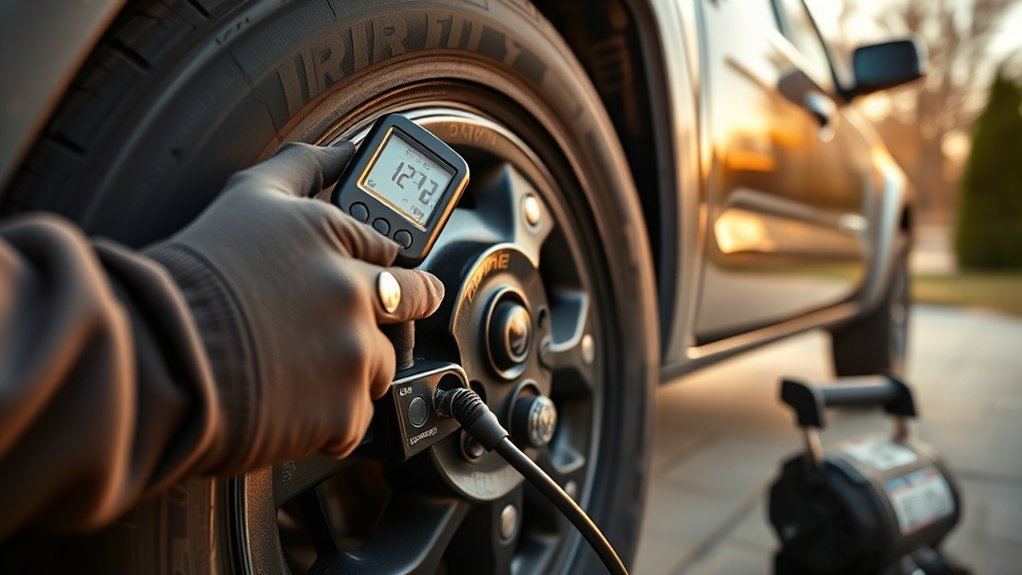
Your Tacoma’s Tire Pressure Monitoring System is a warning aid, not a replacement for monthly checks. Federal standards require TPMS to warn of significant underinflation, so a tire can be below its ideal pressure before the warning appears.
Under Federal Motor Vehicle Safety Standard No. 138, the low-pressure warning must illuminate by the time one or more monitored tires reaches 25% below the vehicle manufacturer’s recommended cold pressure, or the applicable minimum threshold in the standard, whichever is higher. In practical terms, TPMS is a safety warning threshold, not a precision target for everyday inflation.
| Warning Behavior | Likely Meaning | What to Do |
|---|---|---|
| Steady light | One or more monitored tires may be significantly underinflated | Stop safely, inspect the tires, measure each one, and correct the pressure |
| Flashes for about one minute, then stays on | The TPMS may have a malfunction | Check pressure manually and arrange diagnosis if the pattern returns |
| Comes on during cold weather, then disappears | Cold conditions may have lowered a borderline tire enough to trigger the warning | Check and adjust all tires when cold rather than waiting for warmer weather |
| Returns soon after inflation | A leak, sensor fault, or incorrect initialization may be present | Recheck pressure and have the tire or TPMS inspected |
How to Reset the TPMS Light After Adjusting Pressure
Start by correcting the cause of the warning. Do not reset or initialize the system while a tire is still low because the system could learn an incorrect reference value.
Why Do Tacoma TPMS Reset Steps Vary by Model Year?
Toyota changed the initialization controls across Tacoma generations. For example, Toyota’s 2019 Tacoma quick-reference guide uses a physical SET button followed by a drive cycle, while the 2024 guide routes initialization through the multi-information display under Vehicle Settings and TPWS settings. Use these only as examples of the change in design; follow the manual for your exact year and equipment.
| Verified Toyota Example | Initialization Method |
|---|---|
| 2019 Tacoma quick-reference guide | Ignition on, hold the SET button until the indicator blinks three times, then drive at about 25 mph or more for about 10 minutes. |
| 2024 Tacoma quick-reference guide | Use the multi-information display: Vehicle Settings → TPWS Setting → Tire Pressure Setting, then follow the on-screen initialization choice. |
- Park on a safe, level surface and let the tires cool.
- Inflate the front and rear tires to the exact placard specifications.
- Inspect for punctures or damage if any tire was unusually low.
- Start the truck and check whether the warning remains.
- Drive normally for the distance or time specified in your model-year owner’s manual.
- If your Tacoma manual calls for initialization, use the physical control or vehicle-settings menu described for that year.
- If the warning flashes, returns, or remains on despite correct pressure, arrange TPMS diagnosis.
Do not assume that every Tacoma requires driving above 50 mph, holding a button until three flashes appear, or using a switch beneath the steering wheel. Those instructions apply only when the manual for the specific truck says they do.
When Sensor Registration May Be Needed
TPMS sensor IDs may need to be registered after installing new sensors, changing certain wheel sets, or replacing TPMS components. This process can require a scan or activation tool rather than a dashboard reset.
A tire shop or Toyota service facility can test sensor communication, battery condition, identification, and wheel compatibility.
Is the Spare Tire Monitored?
Do not assume the spare is included in the dashboard TPMS display or warning system. Monitoring varies by vehicle and system design. Check the spare manually every month and confirm the correct pressure in the owner’s manual or label provided for the spare.
Why Does a Tire Keep Losing Pressure?
A tire that repeatedly needs air should be inspected rather than continually topped off. Common causes include:
- A nail, screw, or other tread puncture.
- A leaking valve core or damaged valve stem.
- Corrosion or debris where the tire bead seals against the wheel.
- A bent, cracked, or damaged wheel.
- Damage from driving while severely underinflated.
- A previous repair that is leaking.
- Normal seasonal pressure changes combined with an already low setting.
Record the pressure and date each time you add air. A pattern helps a technician distinguish a steady leak from weather-related changes.
Regular Maintenance for Tacoma Tires
Pressure checks work best as part of a complete tire-maintenance routine. Inspect the tread at the same time you check inflation. Replace tires when they reach the legal or manufacturer-specified wear limit, show structural damage, or are no longer suitable for their service conditions.
Rotate the tires according to the Toyota maintenance guide and the tire manufacturer’s instructions. Rotation may not be appropriate when the front and rear sizes differ, the tires are directional, or the wheel setup has special restrictions.
Have the wheels balanced if the truck vibrates at speed. Arrange an alignment inspection if it pulls on a level road, the steering wheel is off-center, or the tread wears unevenly. Pressure correction alone will not repair an alignment, balance, suspension, or damaged-tire problem.
Related Guides
Frequently Asked Questions
What PSI should Toyota Tacoma tires be?
Use the cold PSI printed on your Tacoma’s Tire and Loading Information Label. There is no universal number: Toyota’s 2024 specifications alone include road-tire examples of 30, 32, and 35 PSI depending on the factory tire package.
Why is my Toyota Tacoma tire-pressure light on when the tires look fine?
A tire can be low without looking flat. Check all tires with a gauge when cold. If they match the placard and the light remains on, the system may need time to update, model-specific initialization, or diagnosis for a sensor or communication fault.
Why should I check tire pressure every month?
Tires can gradually lose air, and temperature changes can alter their readings. Monthly checks can identify small losses before they affect handling, tread wear, heat buildup, or fuel use.
Is 35 PSI too high for a Toyota Tacoma?
Thirty-five PSI is correct only when it matches the cold-pressure value on your Tacoma’s Tire and Loading Information Label or approved owner’s-manual instructions. It may be too high or too low for another Tacoma configuration.
Why does my Toyota TPMS light flash and then stay on?
A light that flashes for roughly one minute and then remains illuminated generally indicates a TPMS malfunction. Check the tire pressures manually and have the system inspected if the pattern returns at startup.
Should I inflate my Tacoma tires to the PSI printed on the sidewall?
No. The sidewall number is generally the tire’s maximum cold inflation pressure, not the truck’s normal target. Use the driver-door placard or approved instructions for your exact tire and vehicle setup.
Why does the TPMS light return after I add air?
The tire may have a puncture, valve leak, bead leak, or wheel damage. The system may also need model-specific initialization, or a sensor may be failing. Recheck the cold pressures and arrange an inspection if any tire loses air again.
Conclusion
Your Tacoma’s correct tire pressure comes from its vehicle placard, not a universal PSI range. Check every tire monthly while cold, inspect for damage, and correct pressure before towing, hauling, or taking a long trip.
Treat a steady TPMS light as a reason to check the tires promptly. Treat a flashing-then-steady warning as a possible system malfunction. When pressure repeatedly drops or a reset does not work, diagnose the tire or TPMS instead of repeatedly clearing the warning.
Sources
- Toyota Manuals and Warranties — model-year-specific owner’s manuals and vehicle instructions
- Toyota 2024 Tacoma Maintenance Data — verified factory tire sizes and cold-pressure examples
- NHTSA TireWise — tire-pressure checks, cold-tire guidance, maintenance, and safety information
- FuelEconomy.gov: Keeping Your Vehicle in Shape — fuel-economy effects of underinflated tires
- 49 CFR §571.138 — federal TPMS warning, malfunction, and owner-information requirements
