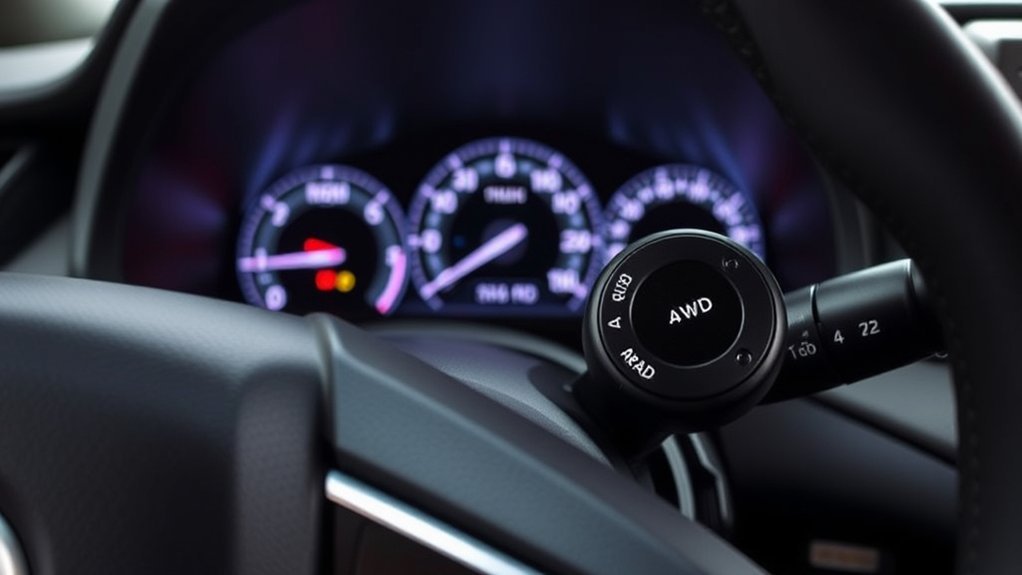
Toyota has used several drivetrain names across different RAV4 generations, including 4WD, AWD, Dynamic Torque Control AWD, Dynamic Torque Vectoring AWD, and Electronic On-Demand AWD. The quickest way to identify your vehicle is to check its factory specifications by VIN. Dashboard displays and underbody components can then help you understand how its system operates.
Quick Answer
Enter your RAV4’s 17-digit VIN in Toyota’s vehicle-specification lookup to confirm whether it is FWD, AWD, or an older 4WD-labeled model. An AWD badge or dashboard torque display can provide a quick clue, but a missing driveshaft does not prove the vehicle is FWD because hybrid AWD models use a separate rear electric motor.
Key Takeaways
- The factory specification associated with the VIN is more reliable than badges, buttons, or a visual guess.
- Modern RAV4 AWD works automatically; Snow, Trail, and Multi-Terrain Select modes adjust vehicle controls but do not install or manually activate AWD.
- Gas-powered mechanical AWD models normally have a rear driveshaft and differential, while hybrid and plug-in hybrid AWD models may drive the rear axle with an electric motor.
- An AWD or 4WD Lock indicator confirms that a temporary lock mode is selected on an equipped older model; it does not mean the RAV4 has truck-style low-range 4WD.
At a Glance
| Time Required | 5–10 minutes |
| Difficulty | Easy |
| Tools Needed | Your VIN, owner’s manual, and an optional flashlight |
| Cost | $0 |
Common Misconceptions About RAV4 AWD and 4WD
The first common mistake is treating two different questions as though they are the same:
- Was this RAV4 built with AWD or a 4WD-labeled drivetrain?
- Is the vehicle sending power to the rear wheels at this exact moment?
A vehicle can be AWD-equipped even when its display shows little or no rear-wheel torque during steady cruising. Modern systems vary torque automatically according to acceleration, steering, wheel slip, vehicle speed, and driving conditions.
The second mistake is assuming that every vehicle called “4WD” has a selectable low-range transfer case. Older RAV4 manuals sometimes use the term 4WD for an active torque-control system, but that does not make the RAV4 equivalent to a body-on-frame off-road vehicle with low-range gearing and manual locking hubs.
A drive-mode dial is also not conclusive proof of AWD. Normal, Eco, and Sport modes may control throttle response, steering feel, or transmission behavior. AWD-specific controls are more likely to be labeled Snow, Mud & Sand, Rock & Dirt, Trail, AWD Lock, or 4WD Lock, depending on the year and powertrain.
The most reliable first check is the factory specification tied to the VIN—not the badge, mode dial, or presence of a mechanical driveshaft.
Understanding AWD and 4WD: Key Differences by Model Year
The terminology printed in a RAV4 manual depends on the generation, country, powertrain, and equipment package. Use the following table as a general U.S.-market guide, then verify the exact vehicle by VIN and owner’s manual.
| Model or Period | Common Terminology | What to Know |
|---|---|---|
| 1996–2005 models | 4WD terminology varies | Configurations and controls vary by year, transmission, and market. Use the exact manual rather than applying newer AWD instructions. |
| 2006–2012 models | Active Torque Control 4WD | Equipped models may have a 4WD Lock switch for low-speed traction on loose surfaces. Cancellation speed and operating limits vary by year. |
| 2013–2018 gas models | Dynamic Torque Control AWD | AWD operates automatically. Some models include an AWD Lock switch intended for wheelspin on loose or unpaved surfaces. |
| 2019–2025 gas models | Dynamic Torque Control AWD or Dynamic Torque Vectoring AWD | FWD and AWD versions were offered. AWD is automatic; Snow and Multi-Terrain Select functions vary by grade. |
| Hybrid and Plug-in Hybrid models through 2025 | Electronic On-Demand AWD | A separate rear electric motor supplies rear-wheel torque when needed. There may be no mechanical driveshaft between the front and rear axles. |
| 2026 U.S. models | Hybrid FWD or AWD; Plug-in Hybrid AWD | Toyota moved the U.S. RAV4 lineup to HEV and PHEV powertrains. Drivetrain availability depends on grade. See Toyota’s current RAV4 specifications. |
Dashboard Indicators for AWD and 4WD Engagement

Dashboard indicators can tell you which mode is selected or where torque is being sent, but the display varies substantially by year.
- AWD Lock or 4WD Lock indicator: On an equipped older RAV4, this confirms that the temporary lock function has been selected. It is not a general “AWD is available” light.
- AWD operation-status or torque-distribution display: On supported models, bars or graphics show how much drive force is being sent toward the rear axle. Toyota’s digital manual describes the display as showing the drive status of each wheel.
- Hybrid Energy Monitor: This shows power flow among the engine, electric motors, traction battery, and wheels. On an AWD hybrid, rear-motor activity may be visible, but the general Energy Monitor should not replace a VIN check.
- Snow, Mud & Sand, Rock & Dirt, or Trail indicator: This confirms that a driving aid is selected. It does not mean the vehicle has changed from FWD to AWD.
- AWD warning message: A malfunction or overheat message is different from a normal mode indicator and requires the action stated in the owner’s manual.
Note: Normal automatic AWD operation may occur without a dedicated dashboard light. Use the AWD operation-status display, if equipped, to observe changing torque distribution.
How to Use AWD, 4WD Lock, and Drive-Mode Settings
On a modern AWD-equipped RAV4, you do not need to activate AWD before driving. The vehicle monitors conditions and adjusts rear-wheel torque automatically. Driver-selectable controls such as Snow, Multi-Terrain Select, and Trail Mode change how several systems respond to the surface.
Activating an Older 4WD or AWD Lock Mode
This procedure applies only when your RAV4 has a factory 4WD Lock or AWD Lock switch:
- Confirm the switch and operating instructions in the manual for your exact model year.
- Use the lock function only under the conditions listed by Toyota, normally low-speed wheelspin on a loose, snowy, sandy, gravel, or unpaved surface.
- Press the lock switch and confirm that the matching lock indicator illuminates.
- Drive smoothly and avoid unnecessary tire spin.
- Cancel lock mode once the vehicle regains traction. Some systems cancel automatically above a specified speed.
For example, Toyota’s 2018 RAV4 Quick Reference Guide says AWD Lock should be used only when wheelspin occurs on loose or unpaved surfaces. The 2007 RAV4 Owner’s Manual states that its 4WD Lock mode cancels automatically above 25 mph. Always follow the manual that belongs to your vehicle.
Warning: Do not use an older AWD or 4WD Lock mode continuously on dry pavement unless the owner’s manual specifically permits it. Drivetrain binding, excess heat, tire wear, or component damage may result. Normal automatic AWD, however, is designed for ordinary paved-road use.
Using Modern Automatic All-Wheel Drive
Modern RAV4 AWD is ready whenever the vehicle is on and no system fault is present. Select a supporting mode only when the road surface calls for it.
| Mode | Typical Application | What It Does |
|---|---|---|
| Normal | Everyday paved-road driving | Allows the vehicle to manage traction and rear torque automatically. |
| Snow | Snow-covered or slippery roads | Adjusts response to help reduce wheelspin; available only on certain AWD versions. |
| Mud & Sand | Muddy, sandy, rough, or dirty surfaces | Optimizes drive force, braking control, and steering feel on equipped gas AWD models. |
| Rock & Dirt | Very uneven dirt or forest roads | Changes vehicle controls for rough, low-speed surfaces. |
| Trail | Bumpy or loose trails on equipped hybrid models | Coordinates AWD, brake, and drive-force control to help maintain progress. |
| AWD/4WD Lock | Low-speed wheelspin on loose surfaces in equipped older models | Temporarily increases or fixes front-to-rear torque distribution within system limits. |
Toyota’s 2024 RAV4 Quick Reference Guide identifies Snow and Multi-Terrain Select as functions for equipped AWD vehicles and Trail Mode as a hybrid control that coordinates AWD, braking, and drive force.
Pro Tip: Select the terrain mode before substantial wheelspin begins. Smooth accelerator input usually gives the traction-control and AWD systems more opportunity to work than repeatedly flooring the accelerator.
What to Look For to Identify AWD or 4WD Features
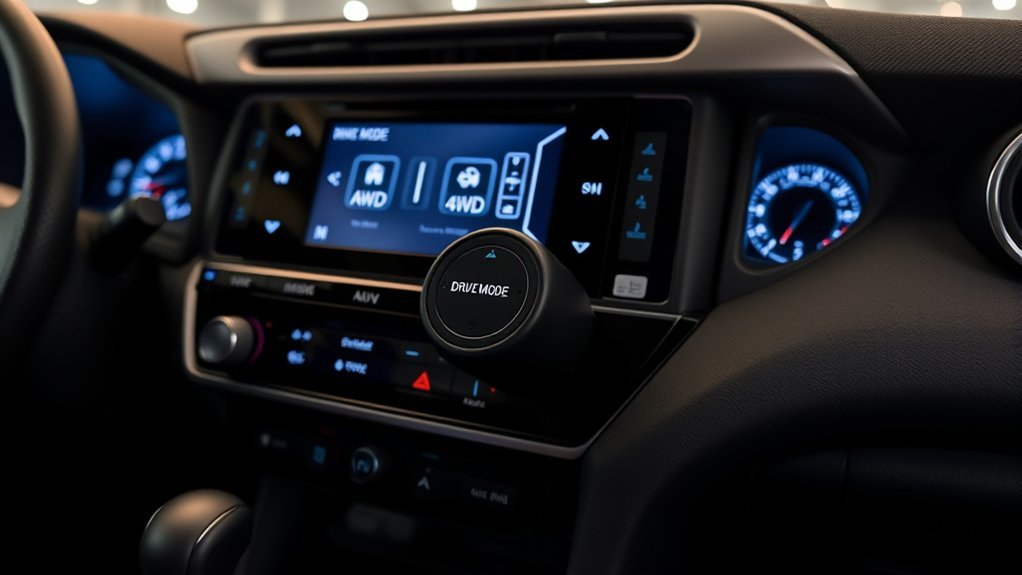
Use the following checks in order, beginning with the method least likely to be affected by missing badges, replacement parts, or model-year differences.
- Look up the VIN: Enter the 17-digit VIN in Toyota’s Vehicle Specification tool. The VIN is visible through the lower driver-side windshield and on the driver-door label.
- Check the original window sticker, sales record, or owner portal: Look for FWD, AWD, all-wheel drive, four-wheel drive, or a drivetrain option description.
- Read the correct owner’s manual: Search the index for AWD, 4WD, AWD Lock, 4WD Lock, Snow, Multi-Terrain Select, or Trail Mode.
- Inspect exterior badges: An AWD or AWD-i emblem may be a useful clue, but badges can be removed, replaced, or vary by market.
- Use the dashboard display: An AWD operation-status screen is stronger evidence than a generic Eco/Sport drive-mode control.
- Inspect the rear drivetrain only if necessary: Mechanical AWD and electric AWD use different hardware.
Drive Shaft Presence Check
On a gas-powered RAV4 with mechanical AWD, a propeller shaft generally runs toward a rear differential. A comparable FWD model does not have a rear drive assembly that receives engine torque.
Hybrid and Plug-in Hybrid AWD models are different. Toyota’s Electronic On-Demand AWD uses a separate rear-mounted electric motor to power the rear wheels when needed. Because that rear motor is not mechanically driven by the front powertrain, an AWD hybrid may have no conventional front-to-rear driveshaft. Toyota explains this arrangement in its RAV4 Plug-in Hybrid technical overview.
Warning: Do not crawl beneath a vehicle supported only by its emergency jack. Perform a visual check from outside the vehicle with a flashlight, or have a qualified technician place it on an approved lift.
Energy Monitor and AWD Operation Indicators
If your RAV4 provides an AWD operation-status display, select it with the steering-wheel controls and observe it while driving in a safe area. Rear-drive bars or arrows may increase during acceleration, cornering, uphill travel, or reduced traction.
On a hybrid, the Energy Monitor may also show a rear motor driving the rear wheels. However, an energy-flow graphic primarily explains hybrid-system operation. A VIN record or a dedicated AWD operation-status display is more reliable for proving that the vehicle was built with AWD—especially now that some 2026 RAV4 Hybrid grades are available with FWD.
Toyota’s digital RAV4 manual describes a torque-distribution display that shows the drive status of the wheels in multiple steps.
Differential and Rear Drive-Unit Identification
A mechanical AWD RAV4 normally has a rear differential connected to a driveshaft. Depending on grade and year, the vehicle may use Dynamic Torque Control AWD or Dynamic Torque Vectoring AWD. A hybrid AWD RAV4 instead has an electric rear drive unit containing the rear motor and associated gearing.
Do not rely on the following as universal RAV4 tests:
- Limited-slip differential: Not every RAV4 AWD system uses the same differential design.
- Locking hubs: These are not a normal RAV4 drivetrain-identification feature.
- Low-range lever: RAV4 lock and terrain modes are not the same as a truck-style low-range transfer case.
- Towing capacity: Capacity varies by year, grade, powertrain, equipment, and market. It does not reliably identify FWD versus AWD.
How the Energy Monitor and AWD Display Help You Understand the System
The display can help you see why automatic AWD does not feel like a permanently locked four-wheel-drive system. During light, steady cruising, the vehicle may reduce or stop rear-wheel torque to improve efficiency. When you accelerate, turn, climb, or encounter reduced traction, the system may increase rear torque.
Typical display behavior includes:
- Front wheels only during steady cruising: This can be normal and does not mean AWD has been disabled.
- Front and rear torque during acceleration: The system may engage the rear axle proactively, before obvious wheelspin occurs.
- Changing left-to-right rear torque: Certain Dynamic Torque Vectoring AWD models can vary rear-wheel torque according to conditions.
- Rear electric-motor flow on a hybrid: This indicates that the electric rear drive unit is contributing torque.
- No rear indication while parked or idling: This is normally inconclusive because the system may not request rear drive under those conditions.
Do not create wheelspin or drive aggressively merely to make the display move. The screen is an operating aid, not a complete diagnostic test.
Note: The illustration may show commanded or estimated drive force rather than a laboratory measurement of wheel torque. Display design and menu location vary by instrument cluster.
Troubleshooting AWD and 4WD Issues in Your RAV4
If the RAV4 has poor traction, displays an AWD warning, or does not appear to send torque rearward, work through these checks:
- Confirm the drivetrain by VIN. Do this before diagnosing an AWD system that may not be installed.
- Read the complete warning message. Distinguish a normal mode indicator from a malfunction, overheat, or temporary 2WD-mode message.
- Check all four tires. Confirm that the tires are the approved size and that pressure matches the driver-door placard. Large differences in wear, size, or rolling circumference can interfere with AWD operation.
- Allow an overheated system to cool. Stop in a safe place and follow the message displayed by the vehicle. Avoid continued wheelspin.
- Restart only after conditions are safe. A temporary message may clear after cooling, but a recurring warning needs diagnosis.
- Inspect for physical symptoms. Note clunks, grinding, vibration, fluid leakage, tire binding, or warning lights.
- Have diagnostic trouble codes read. A Toyota dealer or properly equipped repair facility can check AWD control, wheel-speed sensors, rear coupling operation, and hybrid rear-motor faults.
If an AWD warning remains illuminated, the lock indicator flashes abnormally, or the vehicle makes drivetrain noise, do not treat an online forum suggestion as a substitute for the owner’s manual and a fault-code diagnosis.
Optimizing RAV4 Performance in Different Conditions
Use the least aggressive mode that matches the surface. Normal automatic AWD is appropriate for most driving, while specialized modes should be reserved for their intended terrain.
| Condition | Recommended Setting | Reason |
|---|---|---|
| Dry pavement | Normal automatic AWD | Lets the vehicle manage traction and efficiency without unnecessary lock mode. |
| Rain or light snow | Normal or Snow, if equipped | Supports smoother response and reduced wheelspin. |
| Mud or sand | Mud & Sand, if equipped | Optimizes drive force and brake control for loose surfaces. |
| Rocky or deeply rutted dirt | Rock & Dirt, if equipped | Adjusts response for very uneven terrain. |
| Bumpy hybrid trail | Trail Mode, if equipped | Coordinates AWD, brake control, and drive force. |
| Wheelspin on a loose surface in an older model | AWD or 4WD Lock, if equipped and permitted | Temporarily increases front-to-rear coupling at low speed. |
| Steep descent | Downhill Assist Control, if equipped | Helps maintain a controlled low speed without continuous brake-pedal input. |
AWD cannot compensate for unsuitable tires or excessive speed. It can improve the ability to accelerate on a slippery surface, but it does not eliminate the need for safe following distances or shorten the physical braking distance available from the tires and road.
For consistent operation, maintain the specified tire pressures and use four tires of the approved size, similar tread depth, and comparable construction. Consult the manual before replacing only one or two tires on an AWD vehicle.
Related Guides
Frequently Asked Questions
Can I switch between AWD and 4WD while driving?
A RAV4 normally has one installed drivetrain, so you do not switch the vehicle itself between AWD and 4WD. You may be able to select Snow, Trail, Multi-Terrain Select, or an older lock mode while moving, but the permitted speed and conditions depend on the model year. Follow the exact owner’s manual.
Does my RAV4 automatically use AWD in slippery conditions?
Yes, when the RAV4 is AWD-equipped and the system is operating normally. The vehicle can increase rear-wheel torque during acceleration, cornering, or reduced traction. It may also reduce rear torque during steady cruising, so a front-only display at that moment is not automatically a fault.
What should I do if the AWD or 4WD Lock indicator does not turn on?
First confirm that your specific model has a lock switch. Many modern RAV4s use automatic AWD without a lock indicator. If a lock-equipped model does not respond under the conditions permitted by its manual, or the indicator flashes abnormally, stop using the function and have the warning system checked.
Is it safe to drive an AWD RAV4 on dry roads?
Yes. Normal automatic AWD is intended for everyday driving, including dry pavement. The restriction applies to certain temporary AWD or 4WD Lock modes on older vehicles, which should not be left engaged on high-traction pavement unless the manual expressly allows it.
How does tire pressure affect RAV4 AWD performance?
Incorrect pressure reduces available grip and changes a tire’s effective rolling size. Large differences in tire size, tread wear, or pressure can also confuse wheel-speed comparisons and place additional stress on a mechanical AWD system. Use the pressures on the driver-door placard and keep all four tires appropriately matched.
How can I tell from the VIN whether my RAV4 is AWD?
Locate the 17-digit VIN at the lower driver-side windshield or on the driver-door label. Enter it in Toyota’s Vehicle Specification tool and review the drivetrain and factory-equipment information. This is normally more dependable than decoding individual VIN characters yourself.
Why does my AWD RAV4 Hybrid have no front-to-rear driveshaft?
Electronic On-Demand AWD uses a separate electric motor at the rear axle. The rear motor can drive the rear wheels without a mechanical driveshaft connected to the front powertrain. Look for the rear electric drive unit or verify the drivetrain by VIN instead.
Conclusion
To determine whether a Toyota RAV4 is AWD, FWD, or an older 4WD-labeled model, start with the factory specification tied to its VIN. Use badges, dashboard displays, and rear-drive hardware only as supporting evidence.
Remember that modern AWD operates automatically. Snow, Trail, Multi-Terrain Select, and older lock controls change how an equipped system responds; they do not switch the vehicle between two different drivetrains. A gas AWD model may have a mechanical rear driveshaft, while an AWD hybrid may use a separate rear electric motor without one.
Once you have confirmed the model year and drivetrain, follow that vehicle’s owner’s manual for mode selection, speed limits, tire requirements, warning messages, and safe operation.
Sources
- 2026 Toyota RAV4 — current U.S. powertrain and drivetrain availability.
- Toyota: 2025 RAV4 Plug-in Hybrid Powertrain — Electronic On-Demand AWD and the separate rear-mounted electric motor.
- 2024 Toyota RAV4 Quick Reference Guide — Snow, Multi-Terrain Select, Trail Mode, and drive-mode controls.
- 2018 Toyota RAV4 Quick Reference Guide — AWD Lock operation and surface restrictions.
- 2007 Toyota RAV4 Owner’s Manual — Active Torque Control 4WD Lock behavior, cancellation speed, and warnings.
- Toyota Vehicle Specification Lookup — VIN-based factory vehicle and equipment information.
