Making pancakes from scratch is simple, budget-friendly, and more satisfying than using a boxed mix. With everyday ingredients like flour, eggs, milk, baking powder, sugar, salt, and melted butter, you can make warm, fluffy pancakes with golden edges and a soft center in about 20 minutes.
Quick Answer
To make pancakes from scratch, whisk the dry ingredients, mix the wet ingredients separately, then combine gently until the batter is slightly lumpy. Pour the batter onto a hot, lightly greased pan, cook until bubbles form and the edges set, flip once, and serve warm.
To make pancakes from scratch, whisk flour, sugar, baking powder and salt, then add milk, egg and melted butter until just combined. Spoon the batter onto a heated, greased pan, cook until bubbles form, flip once, and serve warm with your favorite toppings.
Key Takeaways
- Homemade pancakes use simple pantry ingredients plus a non-stick pan, whisk, measuring tools, and spatula.
- Mix wet and dry ingredients separately, then combine gently; a few small lumps help pancakes stay tender and fluffy.
- Cook pancakes over medium heat, flip once when bubbles set, and avoid pressing them down with the spatula.
- Store leftovers in the fridge for about 3–4 days or freeze them for around 1–2 months for quick breakfasts later.
At a Glance
| Time Required | About 20–25 minutes from mixing to serving |
| Difficulty | Easy, beginner-friendly |
| Tools Needed | Mixing bowls, whisk, measuring cups and spoons, non-stick skillet or griddle, spatula, ladle or measuring cup |
| Cost | Low; usually only a few dollars per batch if you already have basic pantry staples |
Ingredients and tools for pancakes from scratch
Who doesn’t love a stack of warm, fluffy pancakes for breakfast? Pancakes made from scratch taste better than store-bought mixes and let you control every ingredient. This recipe is straightforward and uses common kitchen staples like flour, eggs, milk, baking powder, sugar, salt, and butter.
Basic ingredients
Making pancakes from scratch is simple, quick, and easy to customize. The key to soft pancakes is using the right balance of flour, liquid, fat, eggs, and leavening. These basics are the building blocks of a good pancake batter:
- Flour: All-purpose flour works best because it gives pancakes enough structure without making them too dense.
- Milk: Whole milk adds richness, but almond, soy, or oat milk also work well if you need a dairy-free option.
- Eggs: Eggs bind the batter and help create a soft, fluffy texture.
- Baking powder: This leavening agent helps the pancakes rise and become light and airy.
- Salt: A small pinch of salt balances the sweetness and boosts the overall flavor.
- Sugar: A little sugar adds gentle sweetness and helps the pancakes brown nicely.
- Butter: Melted butter adds richness and moisture to the batter and can also be used to grease the pan.
Optional add-ins
Once you’ve mastered the basic batter, you can add simple mix-ins for more flavor and texture. Add-ins work best when they are folded in gently after the batter is mixed, or sprinkled onto each pancake right after pouring the batter into the pan.
- Vanilla extract: Adds a warm aroma and deeper flavor.
- Fruit: Fresh berries, sliced bananas, or grated apple bring natural sweetness and freshness.
- Chocolate chips: Ideal for anyone with a sweet tooth and especially fun for kids.
- Nuts: Chopped walnuts or pecans add crunch and extra richness.
- Spices: Cinnamon, nutmeg, or a pinch of cardamom give your pancakes a cozy twist.
Note: If you add juicy fruit, keep the pieces small and avoid overloading the batter. Too much fruit can make pancakes cook unevenly or turn soggy in the middle.
Essential tools
To whip up a batch of fluffy pancakes, you only need a few key tools. A medium-size mixing bowl holds your batter, and a whisk or spatula helps you combine ingredients without over-mixing. A non-stick skillet or griddle ensures even cooking and helps prevent sticking, while a non-metal spatula makes flipping easier.
Nice-to-have gadgets
You can make great pancakes with the basics, but a few extras make the process even smoother. A set of measuring cups and spoons keeps your proportions accurate. A ladle or pancake dispenser helps you pour consistent portions. A cooling rack prevents pancakes from getting soggy, and a sifter for flour can add extra lightness to the batter.
Step-by-step: how to make pancakes from scratch
Preparing the batter
Preparing the batter is the most important step. Start by measuring flour, sugar, baking powder, and salt into a bowl. Precision matters, so use proper measuring cups and spoons. Spoon flour into the cup and level it with a knife instead of scooping directly from the bag, which can pack in too much flour and make pancakes heavy.
In a separate bowl, whisk together the eggs, milk, and melted butter. Combining the wet ingredients first helps them mix evenly into the dry ingredients. Make a well in the center of the dry mixture, pour in the wet mixture, and gently fold everything together until just combined. A few small lumps are fine and help keep your pancakes tender.
Pro Tip: Stop mixing as soon as you no longer see dry streaks of flour. Over-mixing develops gluten, which can make pancakes chewy instead of soft.
Resting the batter
Letting pancake batter rest for 5–10 minutes gives the flour time to hydrate and lets the baking powder start working. This short rest can help pancakes cook up softer and fluffier. If the batter thickens too much while it rests, stir in a small splash of milk until it becomes thick but pourable again.
Cooking the pancakes
Heat a non-stick pan or griddle over medium heat. If the pan is too hot, the outside will burn before the inside cooks. If it is too cool, the pancakes can turn pale, dry, or tough. A good test is to flick a couple of drops of water onto the surface. If they sizzle and evaporate, the pan is ready.
Lightly grease the pan with butter or oil. Use a ladle or measuring cup to pour the batter into the center of the pan so it spreads into a circle. For evenly sized pancakes, use the same amount of batter each time. A 1/4-cup scoop is a good size for standard pancakes.
Warning: Do not leave a hot skillet or griddle unattended, especially when cooking with butter or oil. Keep pan handles turned inward and move cooked pancakes away from the heat source.
Flipping the pancakes
Watch for bubbles forming on the surface of the pancake and for the edges to look set. This usually takes 2–3 minutes. Gently slide a wide, flat spatula under the pancake and lift the edge to check for a golden-brown underside.
When the bottom is golden, flip the pancake in one smooth motion. Cook the second side for another 1–2 minutes until it is also golden brown and the center feels set. Don’t worry if the first pancake isn’t perfect; the pan often needs that first one to settle into the right temperature.
Serving suggestions
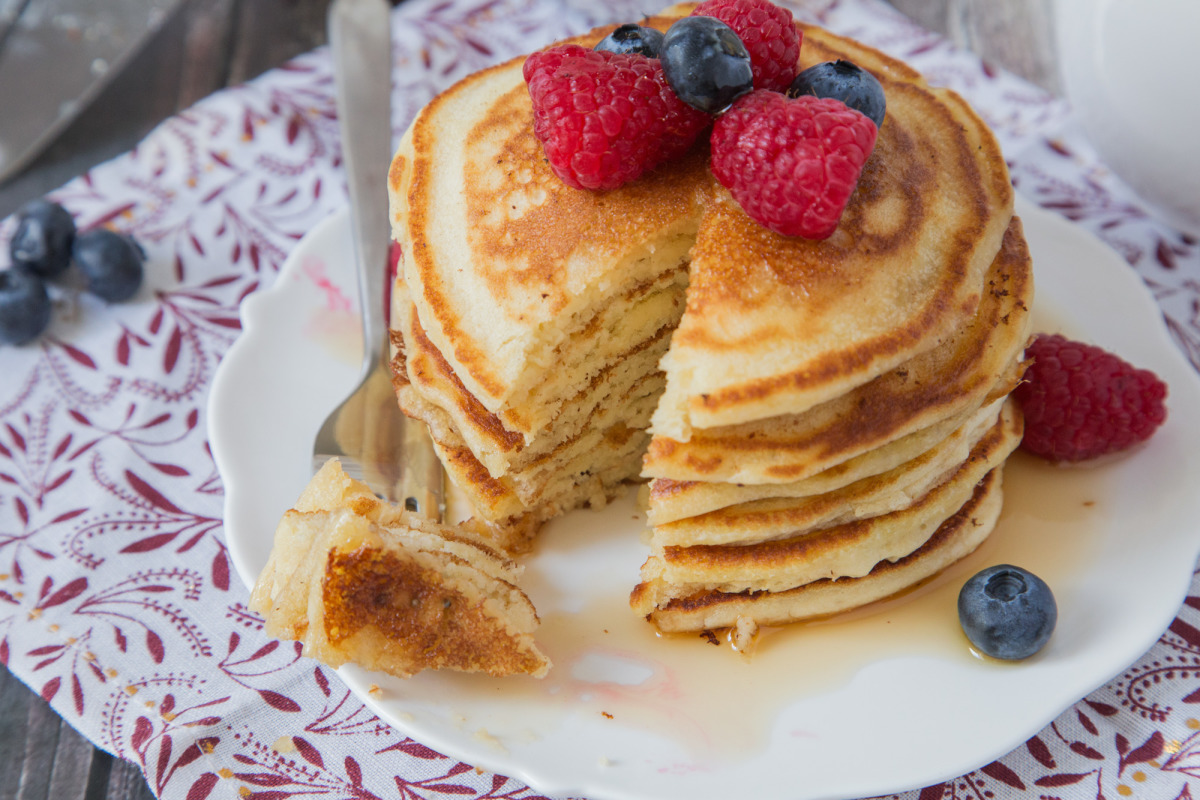
Once your pancakes are cooked, it’s time for toppings. Classic options include warm maple syrup and a pat of butter. Fresh berries, sliced bananas, or other fruit add color and brightness. A dollop of whipped cream can turn your stack into a dessert-like treat.
You can also experiment with creative twists. Try crispy bacon and a fried egg on top for a savory version, or spread peanut butter or almond butter between layers for extra protein. Yogurt and granola make a lighter, crunchy option that still feels indulgent.
Troubleshooting common issues
If your batter is too thick, the pancakes may come out dense and heavy. Add a splash of milk and stir gently. If it is too runny, sprinkle in a little more flour. The batter should flow off the spoon in a thick but pourable stream.
Lumps in the batter often come from flour that isn’t fully incorporated. Sifting flour before mixing helps, as does whisking the dry ingredients thoroughly. Avoid over-mixing once you add the wet ingredients, or the pancakes can turn tough.
Sticking or burning usually means the pan is either not greased enough or too hot. Make sure your skillet is lightly coated with butter or oil and keep the heat at medium. Adjust heat as you go if pancakes are browning too quickly.
Why pancakes turn flat, dense, or rubbery
Flat pancakes often happen when the baking powder is old, the batter is over-mixed, or the pan is not hot enough. Dense pancakes can also come from too much flour, so measure carefully and avoid packing flour into the measuring cup. Rubbery pancakes usually mean the batter was stirred too much after the wet and dry ingredients were combined.
How to keep pancakes warm
If you are cooking a large batch, place finished pancakes on a baking sheet in a low oven while the rest cook. Keep them in a single layer when possible so they do not steam each other and turn soft. A cooling rack set over a baking sheet also helps air move around the pancakes so the edges stay better.
Storing and reheating pancakes
If you have leftovers, let pancakes cool completely, then stack them with pieces of parchment paper in between. Store them in an airtight container or zip-top bag in the refrigerator. For best quality and food safety, aim to eat refrigerated pancakes within about 3–4 days.
For longer storage, freeze the pancakes in a single layer on a baking sheet, then move them to a freezer bag or container once frozen. Properly wrapped pancakes keep good quality for around 1–2 months. Reheat them in the toaster, oven, or microwave until warmed through and enjoy a quick, homemade breakfast any day of the week.
Glossary
- Leavening agent
- An ingredient, such as baking powder, that releases gas into batter so pancakes rise and become light and fluffy.
- Batter
- A pourable mixture of flour, liquid, and other ingredients used to make pancakes, waffles, and similar foods.
- Griddle
- A flat cooking surface, often cast iron or non-stick, used to cook pancakes, eggs, and other breakfast foods evenly.
Related Guides
Frequently Asked Questions
What ingredients do you need to make pancakes from scratch?
You’ll need all-purpose flour, baking powder, sugar, salt, milk, eggs, and melted butter. These simple pantry ingredients combine into a thick, pourable batter that cooks into fluffy, golden pancakes.
How do you make a simple 3 ingredient pancake?
For a quick version, whisk together 1 cup flour, 1 cup milk, and 1 egg until just combined. Pour the batter onto a hot, greased pan, cook until bubbles form, flip, and cook until golden. The texture will be simpler than pancakes made with baking powder, sugar, salt, and butter.
What are the basic steps to make pancakes?
Mix dry ingredients in one bowl and wet ingredients in another, then gently combine. Pour the batter onto a hot, greased pan, cook until bubbles set on top, flip once, and cook until both sides are golden brown.
How can you make pancakes extra fluffy?
Use fresh baking powder, measure flour carefully, avoid over-mixing, and let the batter rest for a few minutes before cooking. Cooking over medium heat and flipping only once also helps pancakes stay tall and fluffy.
Why are my pancakes sticking to the pan?
Pancakes usually stick when the pan is not hot enough, the surface is not lightly greased, or the pan has worn non-stick coating. Preheat the pan over medium heat, add a thin layer of butter or oil, and wait until the first side is set before flipping.
How long do homemade pancakes last in the fridge?
When cooled and stored in an airtight container, homemade pancakes generally keep good quality for about 3–4 days in the refrigerator. Discard them sooner if they smell off, feel slimy, or show any signs of mold.
Can you freeze pancakes and reheat them later?
Yes. Cool pancakes completely, freeze them in a single layer, then transfer them to a freezer bag. They keep best for about 1–2 months. Reheat straight from frozen in the toaster, oven, or microwave until hot.
Sources
- FoodSafety.gov cold food storage chart — supports safe refrigerator storage guidance for cooked leftovers.
- USDA FSIS leftovers and food safety — supports cooling, storing, and reheating leftover foods safely.
- King Arthur Baking flour measuring guide — supports spoon-and-level flour measuring for better texture.
- King Arthur Baking pancake tips — supports practical pancake mixing and cooking guidance.