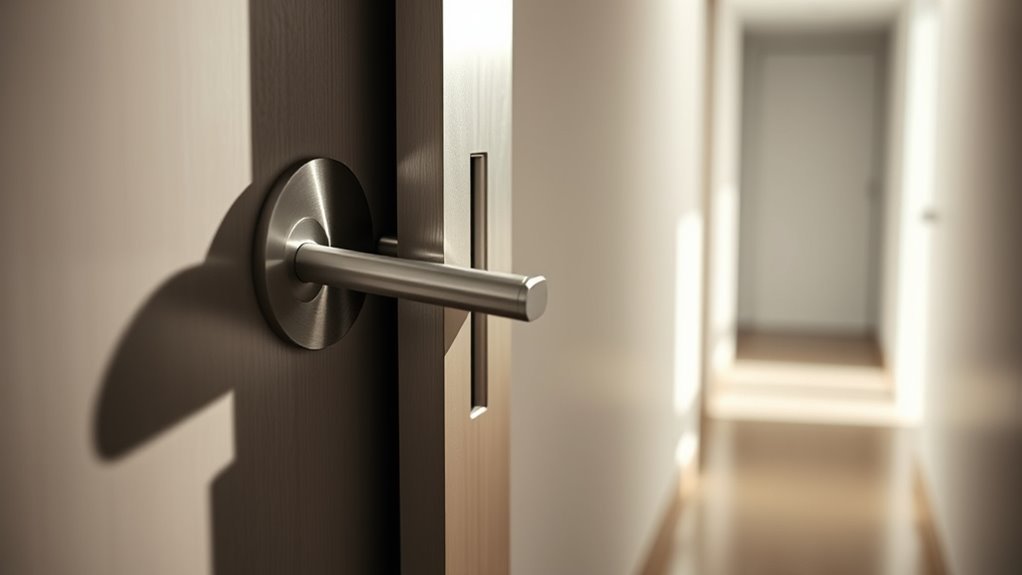
A door pinch guard is a simple safety device that keeps a compatible swinging door from closing completely, helping reduce the chance that small fingers are caught at the closing edge. Soft foam versions install without tools or adhesive and can also reduce door-slamming noise. However, they do not automatically protect the hinge-side gap, which is a separate and important pinch point. Choosing the right type of guard, positioning it correctly, and checking it regularly are essential for safer use around children and pets.
Quick Answer
A foam door pinch guard fits over the closing edge of a compatible hinged door and keeps the door slightly open so it cannot slam fully shut. It can reduce closing-edge finger pinches and noise, but it does not cover the hinge gap. Use a dedicated hinge-side finger guard where that hazard also needs protection.
Key Takeaways
- A soft foam door pinch guard keeps a compatible swinging door from fully closing and can reduce closing-edge finger injuries and door slams.
- A foam edge guard is not the same as a hinge-side finger guard; protect both areas when the hinge gap is accessible to young children.
- Installation is usually tool-free, but fit varies by door thickness, shape, guard design, and placement.
- Do not use an ordinary foam guard to defeat a required fire door, security door, or other door that must reliably close and latch.
- Inspect the guard regularly and replace it if it becomes torn, permanently compressed, hardened, or loose.
What Is a Door Pinch Guard?
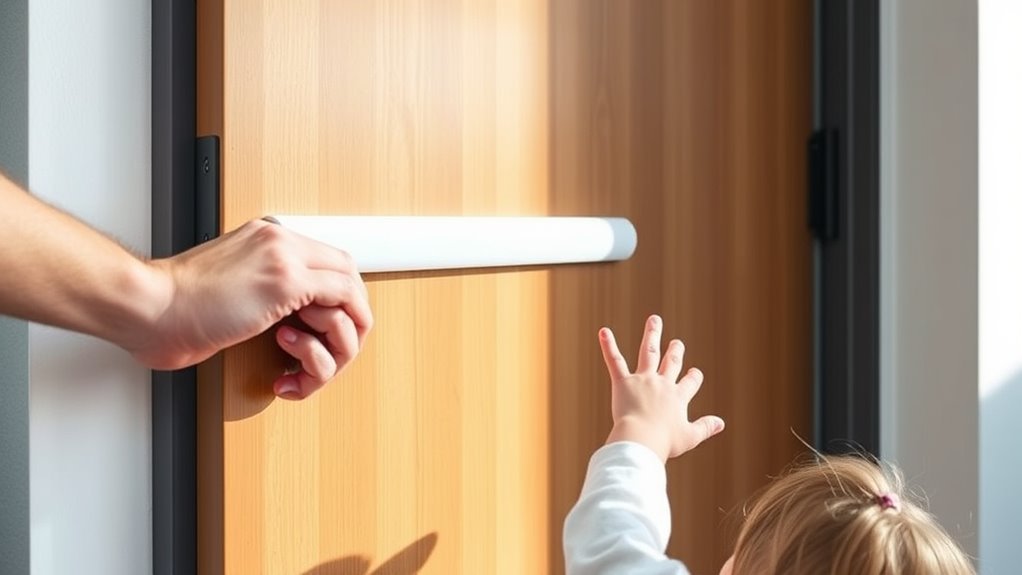
A door pinch guard is a safety device designed to reduce the risk of fingers being trapped as a door closes. The simple foam style usually slides over the free or closing edge of a swinging door and prevents the door from reaching the fully closed position.
A foam door pinch guard reduces one important closing hazard by keeping the door ajar, but hinge-side protection requires a different type of guard.
The soft material also cushions impact, so the device can function as a door slam stopper and may reduce repeated banging against the frame. Because common foam models do not require permanent hardware, they can usually be removed and repositioned when needed.
Some foam guards are sold individually, while others come in multipacks. For example, a commonly listed six-piece foam model is approximately 3.9 × 3.9 × 0.7 inches. Those dimensions and package quantities are product-specific rather than universal, so measure the door and check the manufacturer’s specifications before buying or installing a guard.
Most importantly, a foam guard should be treated as one layer of childproofing rather than complete door protection. A child can still place fingers near hinges, underneath a door, or around other moving components.
Why Kids Get Finger Pinches at Doors
Young children commonly explore doors with their hands and may not recognize how quickly a closing door can trap a finger. Another child or adult may also move the door without realizing that a small hand is resting on the edge or near the hinges.
Door-related crush injuries can be more serious than a brief pinch. The American Academy of Pediatrics explains that a crushed fingertip can involve the skin, nail bed, underlying bone, and growth plate.
A hospital study published in 2015 found that crushing by a door accounted for 33% and 41% of pediatric finger injuries in two study periods. Among those door-crush injuries, approximately 63% to 64% occurred on the hinge side. The numbers describe that hospital population rather than every household, but they show why the hinge area deserves specific attention.
That distinction matters because the free edge and hinge side create different hazards. A foam guard placed on the free edge can keep the door from fully closing, while a long hinge-side finger guard covers or shields the changing gap around the hinges.
Warning: Do not assume a foam door stopper makes the entire doorway finger-safe. If a child can reach the hinge gap, use an appropriate hinge-side guard as well and continue supervising young children around moving doors.
How a Door Pinch Guard Works
A foam door pinch guard works by physically preventing a compatible hinged door from reaching the fully closed position. The flexible opening in the foam grips the door edge, while the body of the guard contacts the frame before the door can latch.
| Feature | Function | Practical Result |
|---|---|---|
| Soft foam | Compresses when the door meets the frame | Cushions impact and reduces slamming |
| Partial closure | Prevents the latch edge from fully closing | Leaves a controlled opening |
| Removable design | Slides on and off without permanent hardware | Can be repositioned on compatible doors |
| Separate hinge protection | Covers or shields the hinge-side gap | Addresses a hazard a foam edge guard alone may not cover |
The foam may also help prevent a child or pet from accidentally allowing an interior door to latch shut. That can be useful in selected rooms, but preventing closure is not appropriate for every doorway.
Note: A pinch guard is not a substitute for a childproof lock when the goal is to prevent access to stairs, pools, garages, chemicals, medicines, exterior exits, or other hazardous areas.
Where to Use Pinch Guards at Home
Foam pinch guards are best suited to compatible interior swinging doors where preventing full closure will not create another safety or security problem. Bedrooms, playrooms, and other frequently used interior spaces are common examples.
- Interior room doors: A common application when children frequently move between rooms and the door does not need to latch for safety, fire protection, or security.
- Selected doors near play areas: Useful where repeated slamming or accidental closing creates a predictable closing-edge pinch risk.
- Doors accessible to pets: A guard can keep some interior doors slightly open, provided that doing so does not expose children or pets to another hazard.
- Cabinets: A full-size door-edge foam guard is usually not the best solution. Small cabinet doors typically need purpose-designed cabinet locks, hinge protection, or soft-close hardware.
- Sliding doors: Use safety equipment intended specifically for sliding tracks and shear points rather than assuming a swinging-door foam guard will work.
- Garage doors, powered doors, and gates: These have different crushing, entrapment, sensing, and mechanical hazards and require appropriate purpose-designed safety systems.
- Basement or utility-room doors: A guard may be suitable only if keeping that particular door partly open does not give a child access to stairs, tools, chemicals, equipment, or other hazards.
Choose locations based on the actual risk at each doorway rather than putting the same type of guard everywhere.
Warning: Do not use a basic foam pinch guard to hold open or interfere with a fire-rated or required self-closing door. Fire doors and other required self-closing doors must be able to close and latch as designed. Also avoid compromising exterior-door security.
How to Install a Pinch Guard
Installation is usually simple, but placement matters. The soft foam guard should fit securely over the free or closing edge of the door, not inside the hinge mechanism.
At a Glance
| Time Required | About 1–2 minutes for a basic foam guard |
| Difficulty | Easy |
| Tools Needed | Usually none for a slip-on foam model |
| Cost | Varies by brand, material, size, and pack quantity |
- Check the door first. Confirm that it is an appropriate interior hinged door and that keeping it partly open will not defeat fire protection, security, privacy, or another safety function.
- Inspect the guard. Do not use foam that is torn, cracked, unusually hard, permanently flattened, or otherwise damaged.
- Open the door. Give yourself room to fit the guard without placing fingers between the door and frame.
- Press the guard onto the closing edge. It should fit snugly enough that normal movement does not make it fall off.
- Position it above a young child’s easy reach when practical. This helps reduce tampering or removal.
- Close the door slowly by hand. Verify that the guard contacts the frame and leaves enough space to prevent full closure without tearing or being forced off.
- Check the hinge side separately. If children’s fingers can enter that gap, install a purpose-designed hinge-side finger guard according to its instructions.
- Recheck the installation regularly. Frequent door movement can shift a removable foam device over time.
Pro Tip: After installation, operate the door slowly from several normal opening positions while watching the guard. A secure guard should remain seated and consistently prevent full closure without being crushed out of position.
Best Features in a Door Pinch Guard
A useful door pinch guard should combine soft material, secure fit, simple installation, and enough resilience to withstand repeated door movement. The best design depends on the exact doorway and the hazard you are trying to control.
Finger-Safe Foam Design
Soft foam provides the main cushioning function of a basic edge-mounted guard. It allows the device to compress when the door moves toward the frame while maintaining enough thickness to stop complete closure.
For the six-piece foam model commonly listed with dimensions of about 3.9 × 3.9 × 0.7 inches, the compact profile is intended for standard household door use. Other brands and styles can differ substantially, so those measurements should not be treated as a universal standard.
- Soft edges: reduce hard contact with the frame.
- Resilient material: helps the guard return to shape after compression.
- Secure slot: helps the guard remain on a compatible door edge.
- Removable design: allows repositioning without permanent alteration to the door.
Foam should still be inspected regularly. A guard that has become brittle, torn, heavily compressed, or loose may no longer maintain the intended gap.
Easy Fit Installation
Easy-fit foam guards require no screws or tools when used as designed. Align the opening in the foam with the closing edge of the door, press it securely into place, and test the door slowly.
| Feature | Practical Effect |
|---|---|
| Slip-on placement | Fast setup on compatible doors |
| Tool-free design | No permanent installation for basic foam models |
| Soft foam | Cushions contact with the frame |
| Reusable construction | Can usually be removed and repositioned |
| Compact size | Low visual impact |
The fit should be secure rather than merely convenient. If the guard repeatedly falls off, slides along the edge, or becomes severely crushed, use a better-fitting replacement or a different safety design instead of assuming all foam guards will fit the same door.
Stops Door Slams
A correctly fitted foam guard can reduce door slamming because its body meets the frame before the latch edge reaches the fully closed position. The foam absorbs some of the impact, which may also reduce noise and repeated contact between the door and frame.
- It prevents full closure while correctly positioned.
- The foam cushions some closing impact.
- Reusable models can be moved among compatible interior doors when needed.
This is useful for reducing one type of closing-edge hazard, but the door remains a moving object. Children should still be taught to keep hands away from both the closing edge and hinges.
Closing-Edge vs. Hinge-Side Protection
The most important distinction in door finger safety is the difference between the closing edge and the hinge side.
| Door Area | Typical Hazard | Typical Protection |
|---|---|---|
| Closing/latch edge | Finger caught as door meets frame | Foam pinch guard or suitable door stop |
| Hinge side | Finger trapped as hinge gap narrows | Purpose-designed hinge/finger guard |
| Under door | Toe or finger contact beneath moving door | Appropriate clearance and door-specific protection |
Research shows why this matters. In a pediatric hospital study, the hinge side was involved in roughly two-thirds of the door-crush injuries examined. A foam guard on the opposite edge should therefore not be described as complete finger protection.
Common Pinch Guard Problems and Fixes
Pinch guards may perform poorly when they are the wrong size, placed incorrectly, worn out, or used on a door for which they were not designed.
Guard Keeps Slipping Off
First check that the foam opening matches the door thickness and that the guard is fully seated. Try a different vertical position if permitted by the product instructions.
If it repeatedly slips off during ordinary use, replace it with a correctly sized model or a different design. Avoid adding improvised screws, staples, tape, glue, or other fastening hardware unless the guard manufacturer specifically instructs you to do so.
Door Still Closes Too Far
Make sure the guard is thick enough and that it contacts the frame before the latch engages. A guard that has become permanently compressed may need replacement.
Foam Is Cracked or Hard
Material fatigue can reduce cushioning and retention. Replace guards that crack, tear, harden, crumble, or remain flattened after the door is opened.
Child Keeps Removing the Guard
When the design and door allow it, position the guard higher on the closing edge so a young child cannot easily reach it. Continue to inspect it because removable products can still shift.
The Hinge Gap Is Still Accessible
This is expected because an edge-mounted foam guard does not cover the hinges. Add an appropriate hinge-side finger guard if the hinge gap is a realistic child-access hazard.
The Door Must Close Automatically
Do not use an ordinary foam guard if the door is required to self-close and latch for fire protection or another safety function. According to NFPA fire-door inspection guidance, auxiliary hardware should not interfere with required door operation.
What to Do if a Child’s Finger Is Caught in a Door
Even with guards installed, injuries can still occur. After a finger is crushed, check the child and the injured finger carefully.
- For minor swelling, use a cold pack wrapped in cloth for short periods.
- If there is a small superficial wound, gently clean it and cover it with a clean dressing.
- Seek prompt medical care for severe pain, significant swelling, a deep or gaping wound, an abnormal finger position, loss of normal movement or sensation, major nail-bed damage, or suspected fracture.
- Urgent evaluation is appropriate when bleeding will not stop with direct pressure or any part of the fingertip is severely crushed or amputated.
The American Academy of Pediatrics notes that fingertip crush injuries can damage the nail bed as well as underlying bone and growth structures, so a severe-looking injury should not be dismissed as a simple pinch.
Frequently Asked Questions
What Is a Door Monkey?
Door Monkey is a different type of child-safety device from a simple foam stopper. According to the manufacturer, it clamps to an interior door and engages the door-frame stop so the door remains slightly cracked rather than fully closing. It can be operated from either side and can also be configured for pinch-guard use.
Does a Foam Door Pinch Guard Protect the Hinge Side?
Not by itself. A foam guard on the closing edge prevents the door from fully shutting, but fingers can still enter the hinge-side gap. Use a purpose-designed hinge or finger guard when that area is accessible to children.
Where Should a Foam Pinch Guard Be Placed?
Place it securely on the free or closing edge of a compatible swinging door. When practical, position it high enough that a young child cannot easily remove it. Test the door slowly after installation to make sure the guard stays in place and prevents full closure.
Can I Use a Pinch Guard on a Fire Door?
Do not use a basic foam guard to stop a fire-rated or otherwise required self-closing door from closing and latching. Those doors need to operate as designed. Use only safety hardware that is approved for that particular door and application.
What Is the Physics Behind Opening a Door?
A door rotates around its hinges. The turning effect, called torque, depends on the applied force and its distance from the hinge axis. Applying the same force farther from the hinges produces more torque, which is why a handle is normally positioned near the opposite edge of the door.
What Is the Door Latch Thing Called?
The part that projects from the door edge into the strike plate is generally called the latch bolt. A door latch assembly may use a spring latch, dead latch, deadbolt, or another mechanism depending on the type of door and lock.
Why Is It Easier to Open a Door by Pushing a Long Way From the Hinge?
Pushing farther from the hinge produces more torque for the same amount of force. That greater leverage makes the door easier to rotate, which is why pushing near the handle is more effective than pushing close to the hinges.
Conclusion
A long skinny foam door pinch guard can be a practical, low-cost way to reduce closing-edge finger pinches and door slams on compatible interior hinged doors. It works by keeping the door partly open rather than allowing the latch edge to close completely.
The key limitation is equally important: a basic foam guard does not cover the hinge-side gap. Pediatric research has repeatedly identified door crushing as an important cause of childhood finger injury, with the hinge side accounting for a large share of door-crush cases in several studied populations. For better protection, match the safety device to the specific pinch point, install it correctly, inspect it regularly, and never interfere with a door that must close and latch for fire protection or security.
Sources
- PubMed — Mechanism and epidemiology of paediatric finger injuries — supports data on door-crush injuries, hinge-side involvement, fractures, and serious fingertip injuries.
- PubMed — Fingertip trauma in children from doors — supports the severity and frequency of door-related fingertip trauma in the studied pediatric population.
- American Academy of Pediatrics — Fingertip Injuries — supports child fingertip injury mechanisms and medical considerations after a crush injury.
- Door Monkey — Official Product Information — supports the description of how the named Door Monkey device operates.
- National Fire Protection Association — NFPA 80 Inspection Checklist for Swinging Doors — supports guidance that required door hardware must not prevent proper closing and latching.