
Winter is when many garage projects finally move from the “later” list to the workbench, and a reliable plasma cutter can turn slow grinding or cutoff-wheel work into faster, cleaner cuts. This guide compares LOTOS plasma cutters for different DIY and small-shop needs, including compact 110V options, stronger 220V machines, CNC-ready cutters, and combo cutter/welder units. Focus on the buying details that matter most: cutting capacity, input power, pilot-arc convenience, CNC readiness, portability, air setup, consumable availability, and honest limits. Pick the right tool and you’ll save time, reduce cleanup, and choose a cutter that actually fits your projects and power setup.
Affiliate disclosure:. As an Amazon Associate I earn from qualifying purchases. This roundup is reader-supported. When you click through Amazon links, we may earn a referral commission on qualifying purchases at no extra cost to you.
Top Picks
|
Category |
Product |
Best For |
|---|---|---|
|
🏆 Best for CNC |
CNC tables, THC output, and repeatable cuts |
|
|
🚀 Best Heavy-Duty Cuts |
Strong manual cutting without prioritizing CNC |
|
|
🎯 Best Portable Power |
Garage projects, repairs, and flexible dual-voltage use |
|
|
💰 Best Budget Upgrade |
DIYers who want more cut capacity than a 35A unit |
|
|
🔰 Best Digital Controls |
Pilot-arc cutting with simple setup controls |
|
|
🔧 Best 3-in-1 Combo |
Cutting plus TIG and stick welding in one unit |
|
|
💼 Best Farm/Shop Combo |
Basic combo work when pilot arc is not required |
|
|
🎨 Best CNC Ready |
Smaller CNC tables and light-shop automation |
|
|
🔋 Best Heavy Gauge |
Thicker plate and 220V shop setups |
|
|
⭐ Best Entry-Level |
Thin sheet metal and occasional home projects |
Quick Verdict
If you want the most flexible DIY setup, start with a dual-voltage pilot-arc model. The LOTOS LTP6300DCNC is the strongest fit for CNC users, the LTP6300D is the better pick when you want similar cutting power without focusing on CNC automation, and the LTP5800D is a practical middle-ground cutter for garage and light-shop work. Choose the LT3500 only for thinner sheet-metal tasks, and consider the LTPDC2000D or CT520D when you also need TIG and stick welding in the same machine.
How We Picked
You want a plasma cutter that fits your workshop and projects, so these picks were evaluated on the things that affect day-to-day work. Key factors include cutting capacity, clean cut versus severance rating, output current, duty-cycle expectations, CNC/THC support, pilot-arc or non-touch start, dual-voltage flexibility, portability, torch and ground lead length, consumable availability, air requirements, and manufacturer support.
Value also matters. For DIY work, a machine that gives you consistent, usable cuts on the metal you actually handle is usually better than buying the highest amp number and then discovering your circuit, compressor, or duty cycle cannot keep up.
Before You Buy
- Match the cutter to your metal thickness. A 35A unit is better for thin sheet and small brackets, while 55A to 75A machines make more sense for thicker plate.
- Check your power first. Many models run best on 220V or 240V, even when they also support 110V or 120V.
- Plan your air setup. Clean, dry air helps reduce rough cuts, short consumable life, and inconsistent arc performance.
- Decide whether CNC matters. Pay for CNC/THC features only if you plan to connect the cutter to a plasma table.
- Budget for consumables. Tips, nozzles, electrodes, cups, and drag-cut accessories can affect long-term ownership cost.
Safety and Setup Note
Plasma cutting needs proper eye and skin protection, dry compressed air, correct grounding, and a circuit that matches the machine’s draw. Avoid improvised adapters, undersized extension cords, damp air lines, and cutting near flammable materials. If you are unsure about a 240V outlet, breaker size, or plug conversion, have a qualified electrician check it before you run the cutter.
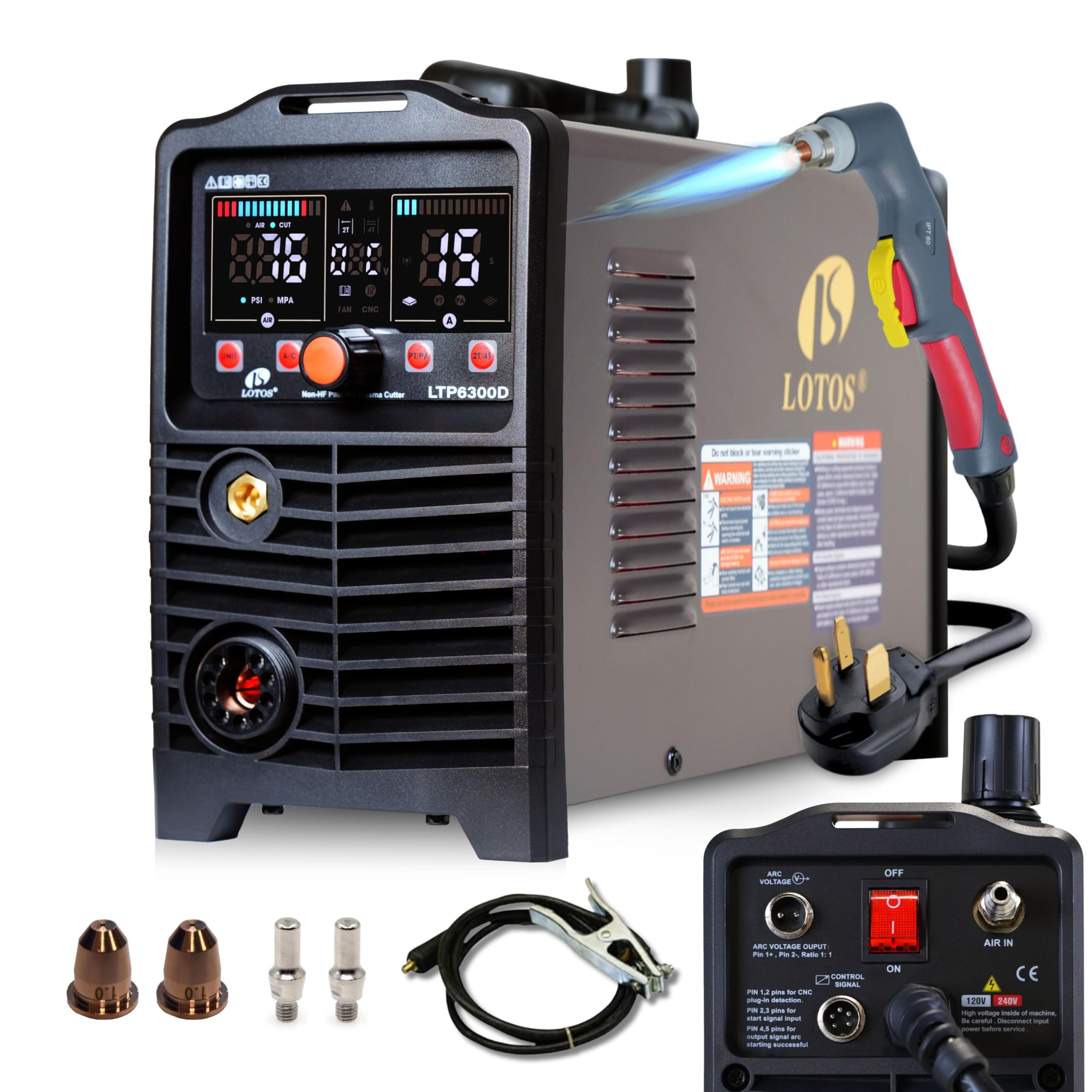
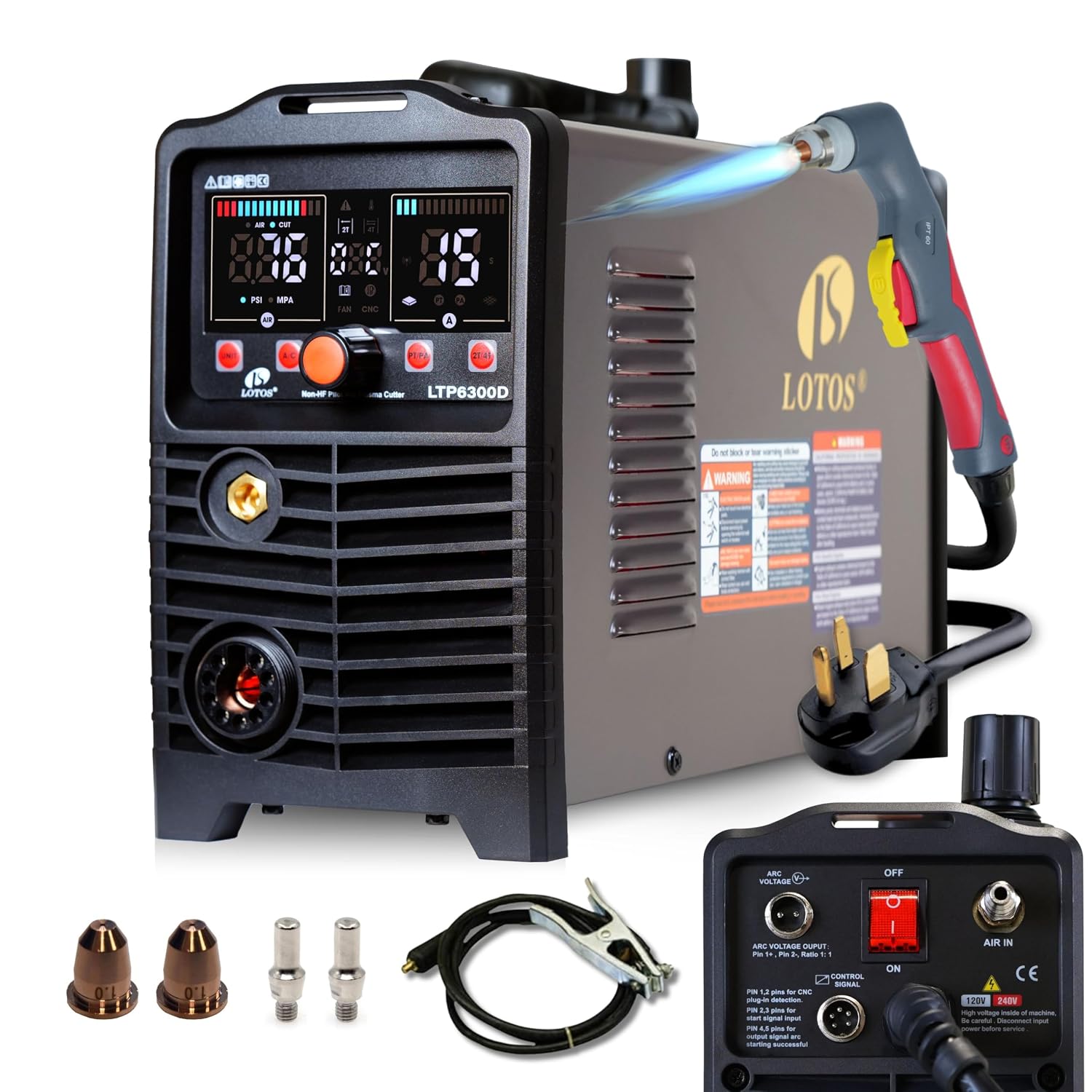
You get a capable 63A plasma cutter that makes the most sense if you plan to use a CNC table or want that upgrade path open. The CNC/THC-ready interface helps with automated cutting, while the non-HF pilot arc is useful around electronics and helps start on painted, rusty, or expanded metal. The drag-cut option is handy when you trace templates or cut freehand shapes.
For winter garage work, this fits trailer repairs, metal signs, brackets, HVAC sheet, patch panels, and small-shop fabrication. It still needs clean, dry air and a strong electrical setup, so do not buy it assuming a weak compressor or light-duty circuit will deliver its best performance.
What People Say
Buyers tend to focus on the cutting power, cleaner starts, and CNC-ready convenience. The common caution is setup-related: you need proper air pressure, dry air, compatible consumables, and the right breaker for steady results.
Overall Sentiment: Positive

Where You Can Use It
Use it for CNC table cutting, metal artwork, patch panels, trailer work, maintenance brackets, and small fabrication jobs. The THC output is the main reason to choose this over a manual-only cutter.
Built To Last
The machine is designed for more serious hobby and small-shop use, but longevity depends heavily on clean air, correct pressure, proper grounding, and replacing consumables before cut quality drops.
Why You’ll Like It
- 63A output for thicker cuts when your power and air setup can support it
- Non-HF pilot arc for cleaner starts around CNC electronics
- CNC and THC-ready interface for automated cutting setups
- Drag-cut capability for template tracing and freehand work
- Dual-voltage design for more shop flexibility
Who should buy this: Choose it if you want a CNC-ready LOTOS cutter with enough output for thicker DIY and small-shop materials.
Who should avoid this: Skip it if you only cut thin sheet metal or do not have the air and electrical setup to support a 63A machine.
Check Product Details on Amazon
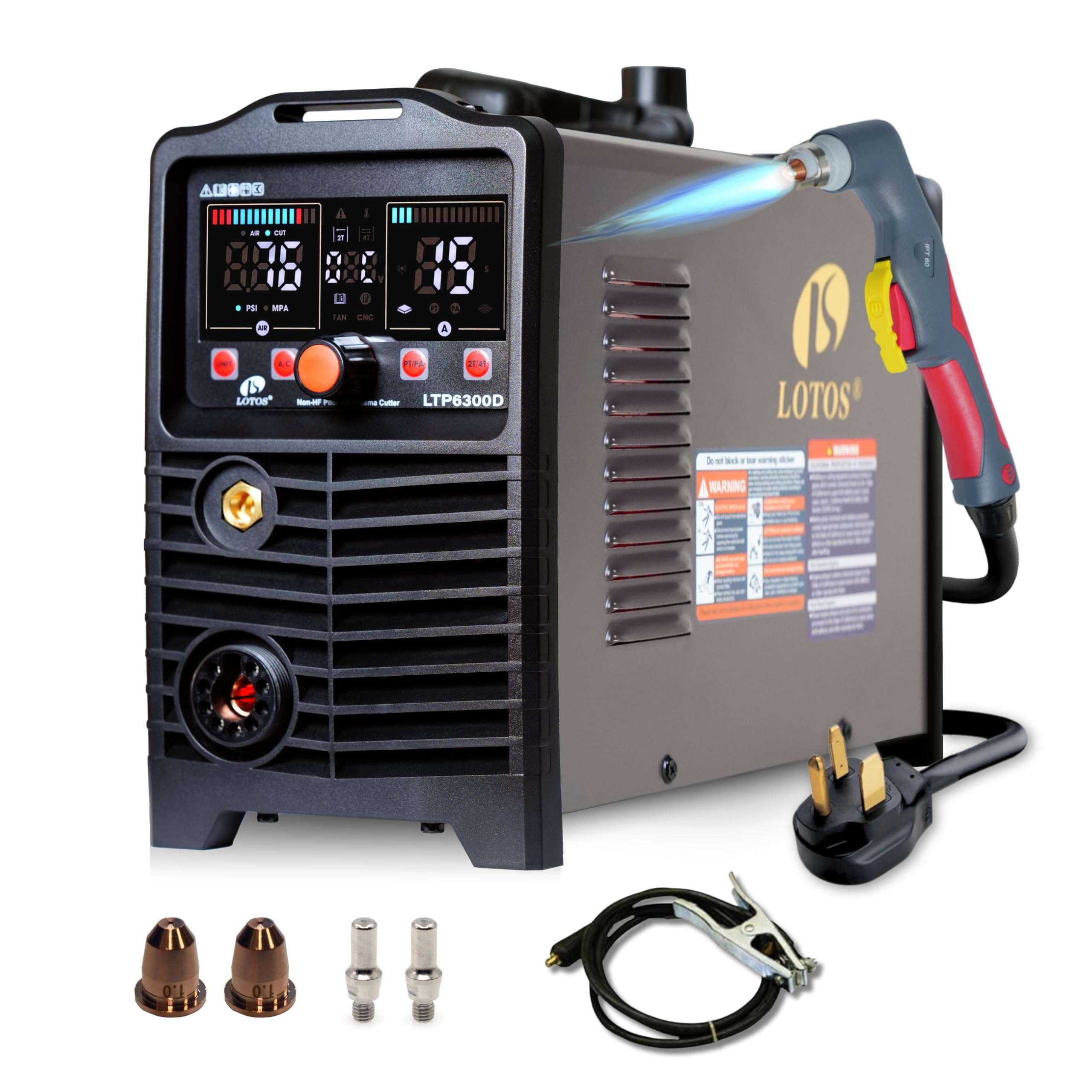
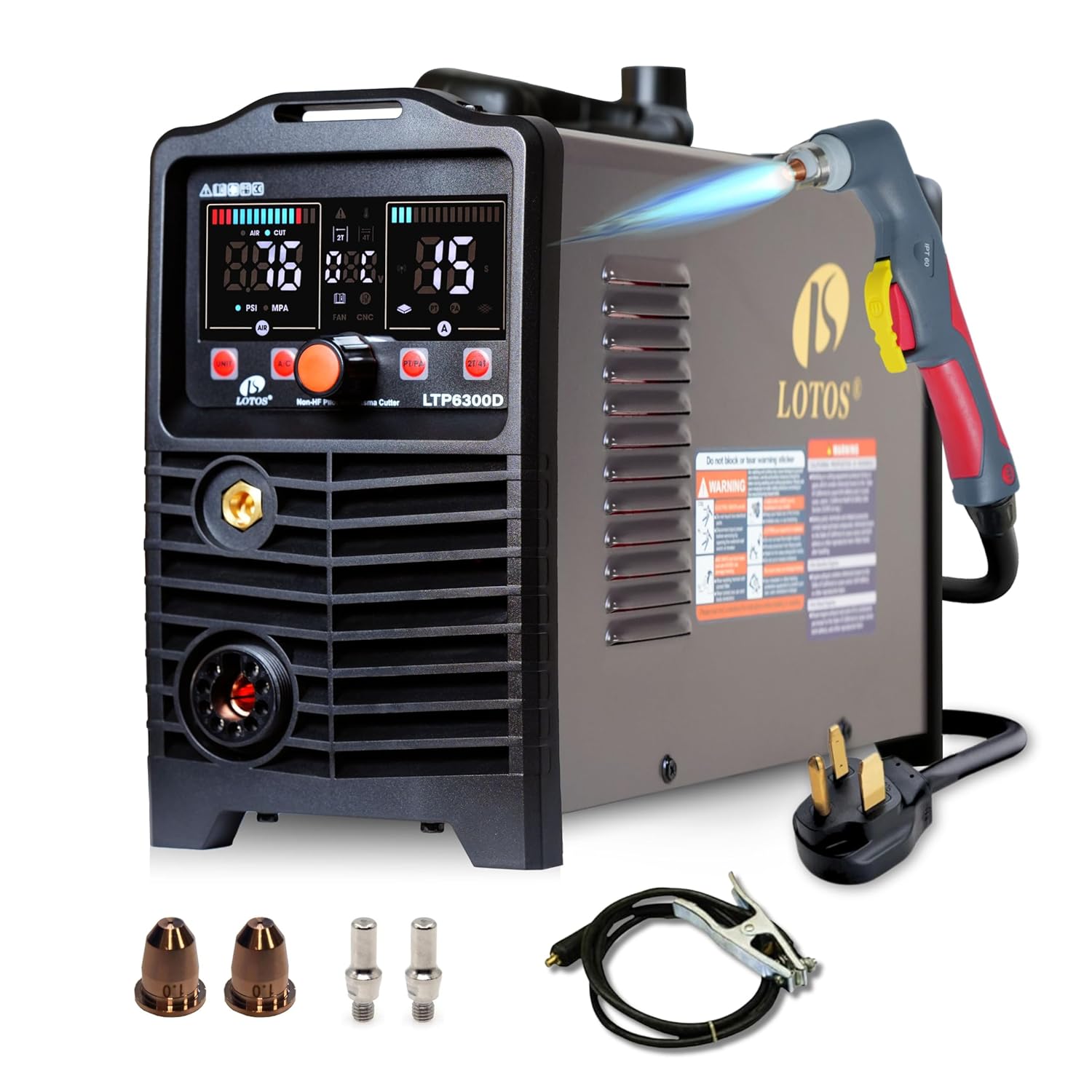
The LTP6300D is the better fit when you want the strong 63A platform but do not need to make CNC automation the main reason for buying. It gives you pilot-arc starting, drag-cut capability, and dual-voltage flexibility for a wide mix of repairs and fabrication work.
Use it for trailer repairs, patch panels, metal art, brackets, fence work, HVAC ducting, and thicker garage projects. It is still a serious electrical and air-demand tool, so the cutter will perform best when your compressor, breaker, and ground connection are set up correctly.
What People Say
Common praise centers on cutting power, pilot-arc starts on imperfect metal, and the convenience of drag cutting. Setup complaints usually come back to air quality, consumable wear, short leads, or needing the right circuit for sustained work.
Overall Sentiment: Positive

Where You Can Use It
This cutter works well for quick repairs, shaped cuts, metal signs, bracket fabrication, farm fixes, and thicker steel when you have 220V/240V available.
Built To Last
It should hold up best when used with clean, dry air and properly matched consumables. Keep spare tips and electrodes ready so one worn part does not stop a weekend project.
Why You’ll Like It
- 63A output for confident cuts on thicker materials
- Non-HF pilot arc for painted, rusty, or uneven surfaces
- Drag-cut ready for templates and freehand shapes
- Dual-voltage 110/220V design for different shop setups
- CNC-friendly features if you later move toward automation
Who should buy this: Choose it if you want strong cutting power but do not need the CNC-focused model as your first choice.
Who should avoid this: Skip it if your work is mostly thin sheet metal and you want the lightest, simplest machine possible.
Check Product Details on Amazon
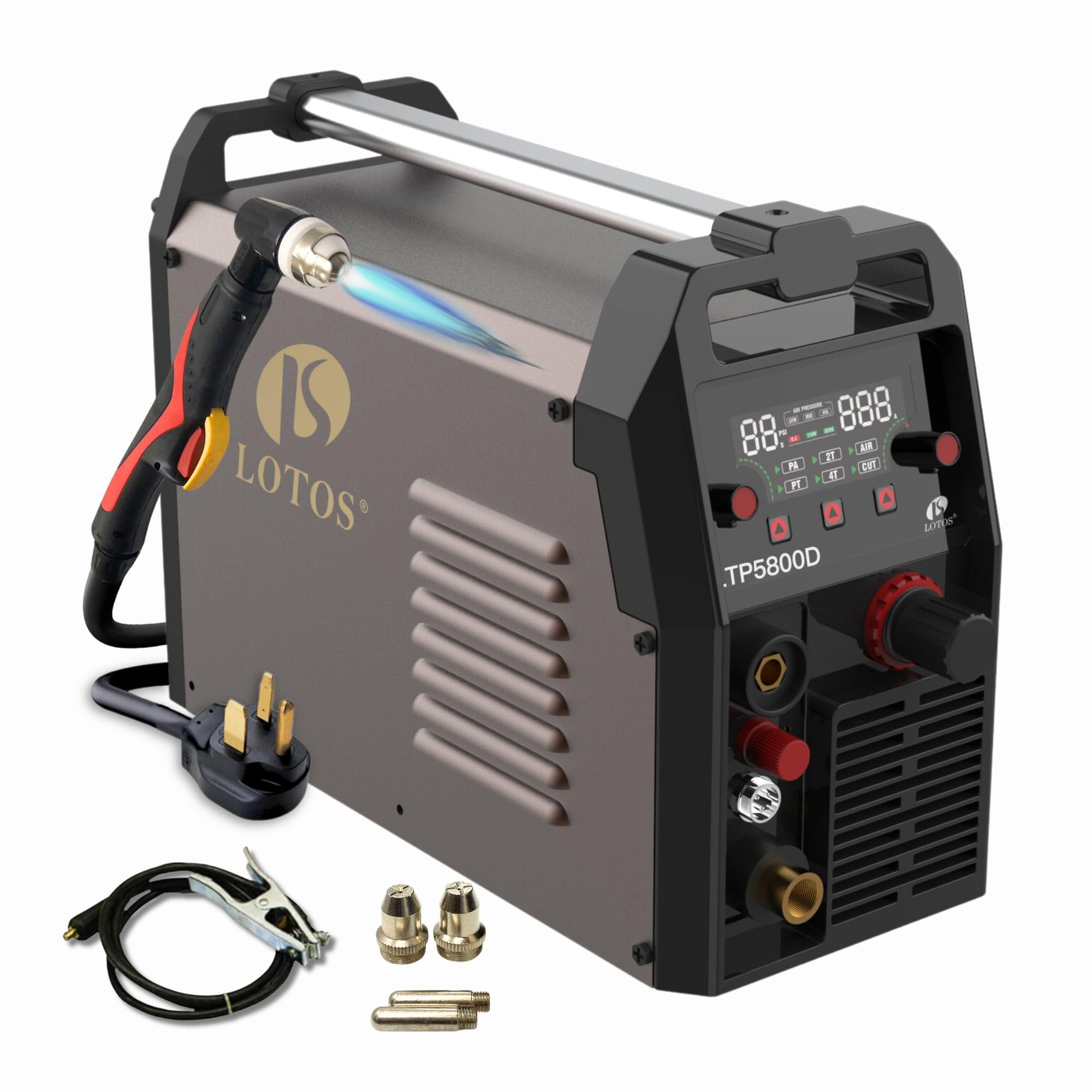
Think of this as the practical middle-ground cutter for hands-on DIY and tougher garage jobs. You get a 58A output with a non-touch pilot arc, so you can start on painted or rusty metal with less torch fuss, plus dual-voltage flexibility for thinner work on 110V and stronger performance on 220V.
The LED-style control panel and front regulator make pilot-arc time, post-flow, and air-pressure setup easier than older or more basic units. It is a good match for patch panels, trailer fixes, metal art, HVAC repairs, and seasonal fabrication when you want enough power without jumping straight to a larger 63A or 75A machine.
What People Say
Buyers often like the pilot-arc convenience, the simple controls, and the balance between portability and output. Some still note that leads can feel short and that keeping spare consumables on hand is smart.
Overall Sentiment: Positive

Where You Can Use It
This one covers quick home fixes, auto-body patchwork, metal art, farm and ranch jobs, and light fabrication. Run it on lower voltage for thinner panels and switch to higher voltage when you need more cutting ability.
Built To Last
Routine maintenance matters. Use dry air, keep the ground clamp clean, replace worn tips before they damage cut quality, and store consumables where you can find them during a project.
Why You’ll Like It
- 58A output for stronger DIY cutting when powered correctly
- Non-touch pilot arc starts on painted or rusty surfaces with less nozzle wear
- Dual-voltage 110/220V flexibility for home and shop outlets
- LED controls and front regulator make setup easier
- Portable package for garage and light-shop projects
Who should buy this: Choose it if you want a capable pilot-arc cutter that is easier to justify than the biggest CNC-ready options.
Who should avoid this: Skip it if you need regular 1-inch clean cuts or plan to run long production-style sessions.
Check Product Details on Amazon

You get a portable 50A cutter that is geared toward garage DIYers who want real cutting power without moving into the higher-output models. Run it on 120V for lighter panels or switch to 240V when you need better performance on thicker material.
The front-mounted regulator and pre-installed air filter make setup more straightforward. It is a practical choice for everyday repairs, metal art, trailer and fence fixes, and weekend builds where you want a clear upgrade over grinders, cutoff wheels, or a smaller entry-level cutter.
What People Say
Buyers usually appreciate the balance of power, portability, and cost. Common notes include the importance of using a strong enough circuit, keeping spares nearby, and upgrading leads or clamps if the stock reach feels limiting.
Overall Sentiment: Positive

Where You Can Use It
This one covers shop fixes, auto-body patching, metal art, farm and fence repairs, and heavier DIY fabrication when you switch to higher voltage. Use 120V for thinner sheet or small jobs and 240V when you need deeper cuts.
Built To Last
The machine should perform best when you keep air dry, maintain the torch, and avoid pushing the duty cycle too hard. Consumables are wear items, so treat them as part of the operating cost.
Why You’ll Like It
- 50A output for a useful step up from entry-level cutters
- Pilot-arc friendly design for painted or rusty surfaces
- Dual-voltage 120/240V flexibility for home and shop outlets
- Front-mounted regulator and air filter for quicker setup
- Portable design for garage and weekend use
Who should buy this: Choose it if you want a cost-conscious LOTOS cutter with more capability than a thin-sheet-only model.
Who should avoid this: Skip it if you need CNC controls or regularly cut thick plate at the upper end of the range.
Check Product Details on Amazon
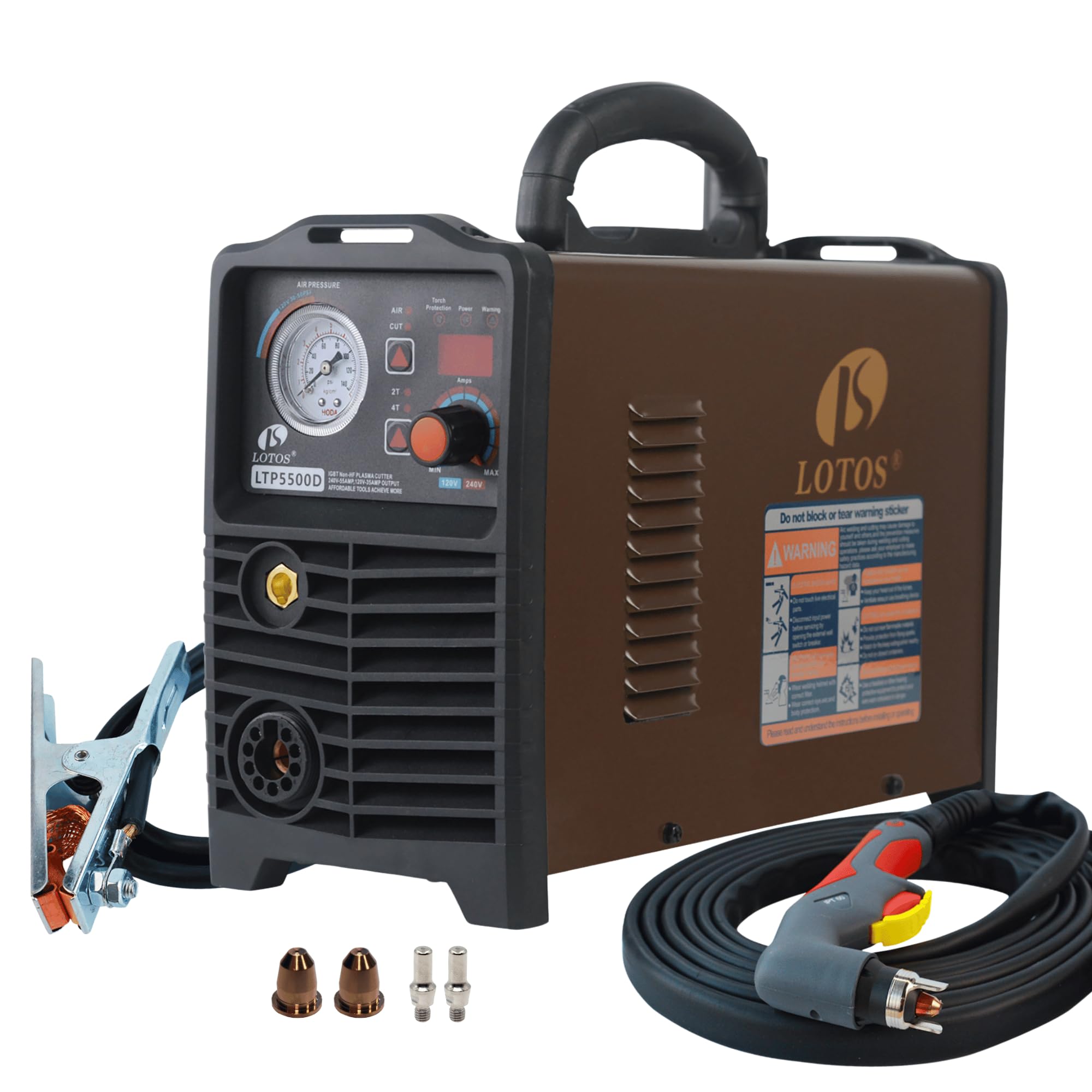
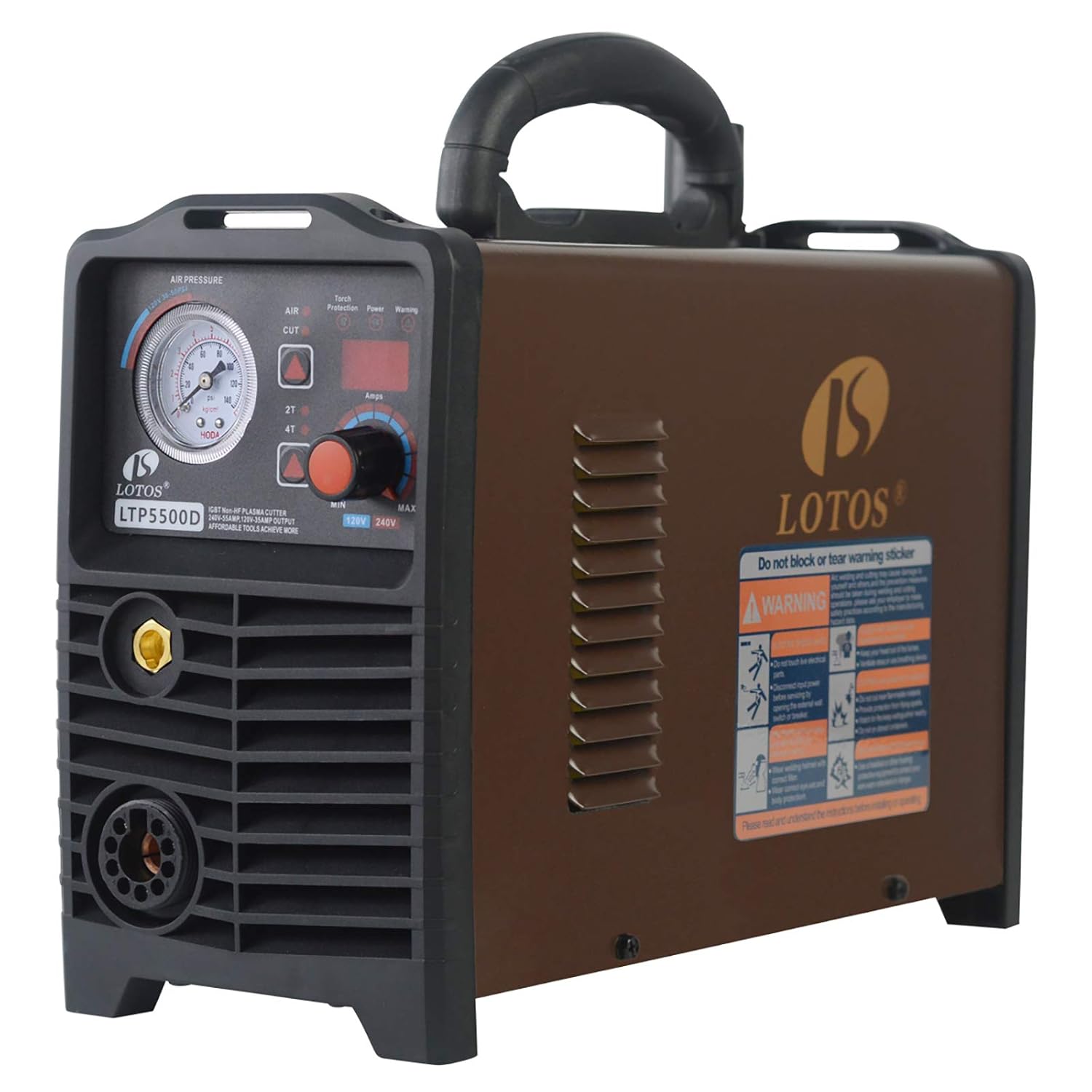
You get a compact, pilot-arc plasma cutter for garage DIYers who want stronger cutting ability with quick setup. It runs on household or shop voltage ranges and gives you a 55A platform for thicker work when you have adequate power behind it.
The non-HF blowback start and pilot arc help when the surface is painted, rusty, or uneven. The pre-fitted NPT plug plus air filter/regulator can make compressor hookup faster, which helps when you want to spend more time cutting and less time sorting fittings.
What People Say
Buyers tend to praise reliable cutting on higher voltage and the convenience of pilot arc. Common cautions include short power or ground leads, consumable planning, and the occasional quality-control issue on arrival.
Overall Sentiment: Positive

Where You Can Use It
This cutter covers everyday shop fixes, auto-body patching, metal art, light farm work, and teardown jobs. Run it on lower voltage for thin sheet and switch to the higher range when you need deeper cuts.
Built To Last
It should hold up best for hobbyists and light commercial users who use clean, dry air, keep the torch consumables fresh, and avoid treating it like an industrial production cutter.
Why You’ll Like It
- 55A output for capable DIY cutting on suitable power
- Non-HF blowback pilot arc for painted or uneven surfaces
- Dual-voltage flexibility for home outlets or shop power
- Pre-installed NPT 1/4″ plug and air filter/regulator for faster setup
- Compact design that is easy to move around the shop
- 2T/4T torch function and inverter technology for stable arcs
Who should buy this: Choose it if you want a compact pilot-arc cutter with easier controls and solid garage capability.
Who should avoid this: Skip it if CNC output is a must, because the CNC-specific models are better suited to that job.
Check Product Details on Amazon

This is the pick if you want to cut, TIG weld, and stick weld without storing three separate machines. The non-touch pilot arc is useful for cutting painted or rough metal, while the 200A TIG/stick capability gives you extra repair options for hobby, trailer, camper, and light-farm work.
It is happiest on 240V for heavier work, but can be used on lower voltage for lighter projects. Since it combines several jobs in one box, it is best for mixed-task owners who value convenience more than maximum dedicated performance in every single mode.
What People Say
Buyers like the convenience of having cutting, TIG, and stick welding in one unit. The common tradeoffs are shorter stock leads, a duty cycle that should be respected, and occasional quality-control concerns that make support and returns worth checking before purchase.
Overall Sentiment: Positive

Where You Can Use It
This machine is useful for garage repairs, trailer and camper work, metal art, light farm maintenance, and teardown jobs. The combo design lets you cut parts and then weld repairs without swapping to a completely different machine.
Built To Last
Expect the longest service life when you use dry air for plasma cutting, keep spare consumables ready, avoid overheating the unit, and treat the TIG and stick functions as light-shop tools rather than heavy industrial replacements.
Why You’ll Like It
- Three functions in one unit: pilot-arc plasma cutter plus 200A TIG and stick welding
- Pilot-arc non-touch torch cuts painted, rusty, or uneven surfaces with less fuss
- Pre-installed NPT air connection and regulator speed setup with a compressor
- Portable design you can move around the shop or take to the field
- 200A welding capability for many DIY and light repair tasks
- Updated electronics compared with earlier versions
Who should buy this: Choose it if you need one machine for cutting and occasional TIG or stick welding.
Who should avoid this: Skip it if you already own welders and only want the strongest dedicated plasma cutter for the money.
Check Product Details on Amazon

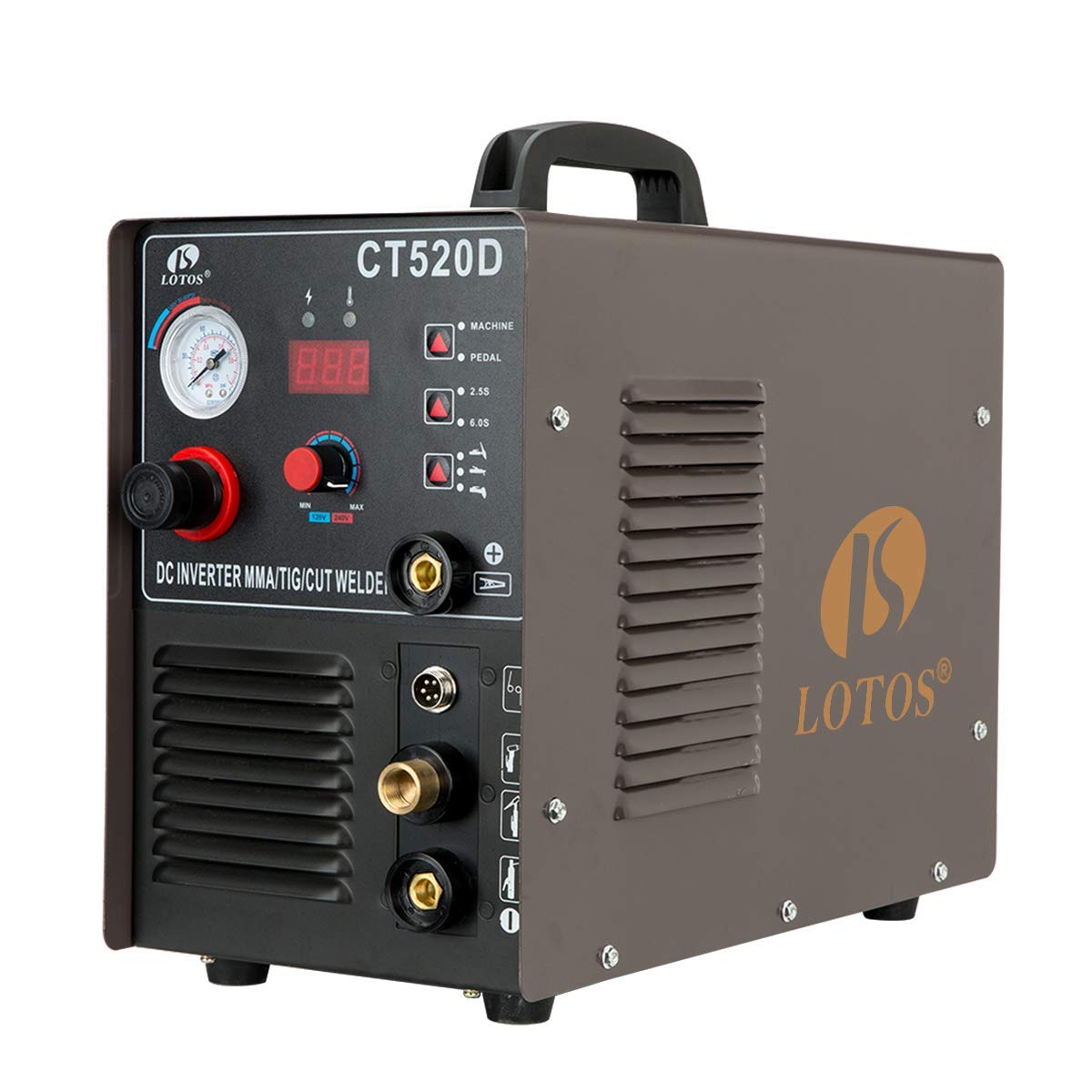
The CT520D gives you a compact, grab-and-go machine that cuts and welds without needing three separate tools. It is useful for trailer repairs, camper mods, small farm fixes, metal art, and seasonal garage work.
The main limitation is important: this version is listed as a without-pilot-arc variant. That means it is not as convenient on rusty, painted, or expanded metal as the pilot-arc LTPDC2000D. It still fits the roundup because it is a LOTOS plasma cutter/welder combo, but it is the simpler combo choice.
What People Say
Users commonly like the multi-function convenience and the stronger performance on 240V. Frequent downsides include short cables, modest continuous-duty expectations, and the need to keep consumables ready.
Overall Sentiment: Positive

Where You Can Use It
This unit covers trailer repairs, camper mods, small farm fixes, metal art projects, and seasonal garage work. Use lower amps and 120V for thin sheet metal and switch to 240V when you need better welding or cutting performance.
Built To Last
For most hobbyists and light-professional users, it should hold up best when you respect its duty cycle, keep dry air flowing, and treat consumables as normal replacement parts.
Why You’ll Like It
- Three-in-one capability: plasma cutter plus 200A TIG and stick welding
- Pre-installed air filter/regulator and torches make setup faster
- Portable design with a handle for shop or field use
- Better cutting power on 240V while still usable on 120V for lighter work
- Compact footprint that can replace multiple machines for occasional users
Who should buy this: Choose it if you want a simple combo unit and do not need pilot-arc cutting.
Who should avoid this: Skip it if you often cut rusty, painted, or expanded metal, because a pilot-arc model will be more forgiving.
Check Product Details on Amazon

This is a compact CNC-ready plasma cutter for hobbyists and light shop users who do not need the heavier 63A or 75A CNC models. It uses a non-high-frequency blowback pilot arc, which is helpful when working near CNC electronics, and the THC output makes table integration more practical.
Use it for garage projects, small plasma-table builds, brackets, metal art, and routine repairs. Run it on lower voltage for thin sheet and higher voltage when you need deeper cuts.
What People Say
Buyers tend to like the cutting power, CNC compatibility, pilot arc, THC output, and long torch lead. Main cautions include consumable availability, air setup, and occasional electrical or quality-control issues.
Overall Sentiment: Positive

Where You Can Use It
This machine covers typical DIY scenarios: tinkering in the garage, cutting parts for a plasma table, fabricating brackets, making garden art, and handling light farm or trailer repairs.
Built To Last
For most hobbyists, it should hold up well with proper air pressure, dry air, and routine consumable replacement. Check consumable compatibility before you depend on it for a larger project.
Why You’ll Like It
- CNC-friendly non-HF blowback pilot arc helps avoid electronic interference
- THC signal output for easier plasma table integration
- Dual-voltage operation adapts to home or shop power
- 16 ft blowback torch with Euro-style connector for flexible reach
- Pre-installed NPT 1/4″ air quick-connect and filter/regulator for fast setup
- 20-55A output for common DIY plate thicknesses
- Portable design for garage or mobile-table use
Who should buy this: Choose it if you want CNC compatibility in a more compact and manageable package.
Who should avoid this: Skip it if you need frequent thick-plate cutting or want the strongest CNC-ready LOTOS model.
Check Product Details on Amazon

You get a portable, CNC-ready plasma cutter built for hobbyists and small shops that need more cutting power than the smaller CNC models. It uses a blowback non-HF pilot arc, supports THC torch-height output, and is aimed at heavier DIY cutting on a proper 220V/240V setup.
It is a good choice for building or upgrading a plasma table, cutting metal signs, trimming bracketry, and tackling thicker repair jobs. The tradeoff is that it needs a stronger shop setup and is more machine than many occasional users need.
What People Say
Buyers often praise the cutting power and CNC compatibility, especially the pilot arc, THC output, and longer torch. Common cautions include power requirements, consumable sourcing, and occasional quality-control or electrical issues.
Overall Sentiment: Positive

Where You Can Use It
This unit handles heavier DIY winter jobs: trimming bracketry, cutting parts for a plasma table, making metal signs, and tackling light farm or trailer repairs where the extra output is useful.
Built To Last
It should perform best when maintained with correct air pressure, dry air, fresh consumables, and a circuit that can support the machine. Confirm consumable availability before you rely on it for production-style work.
Why You’ll Like It
- CNC-friendly non-HF blowback pilot arc helps reduce interference with control electronics
- THC output for easier integration with plasma tables
- 20-75A output for heavier cutting tasks
- 16 ft blowback torch with Euro-style central connector for reach
- Pre-installed NPT 1/4″ air quick-connect and filter/regulator for fast setup
- IGBT inverter technology for efficient power delivery
- Portable form factor for a higher-output CNC-ready cutter
Who should buy this: Choose it if you have 220V/240V shop power and need a CNC-ready cutter for heavier materials.
Who should avoid this: Skip it if you only need a lightweight garage cutter for thin material.
Check Product Details on Amazon

You get a compact, easy-to-set-up plasma cutter aimed at hobbyists and weekend fabricators. It runs on common 110V/120V power and includes a pre-installed air filter/regulator with an NPT quick connector, so setup is simple once you have a suitable air compressor.
It is best for sheet metal, small brackets, metal art, light repairs, and occasional home projects. It is not the right machine if you expect frequent thick-plate cuts, long duty cycles, or CNC-ready features.
What People Say
Customers often praise the portability, simple setup, and value for hobby use. The main limitation is expected: thicker material requires slower passes, better power, and more patience than a higher-amp machine.
Overall Sentiment: Positive

Where You Can Use It
This is a go-to for weekend projects: cutting sheet metal for repairs, trimming trailer brackets, making signs or metal art, and fabricating small parts. If you plan to cut thicker sections often, step up to a stronger model.
Built To Last
Most owners should treat it like a light shop tool: keep air pressure right, swap consumables as they wear, and do not expect industrial duty cycles.
Why You’ll Like It
- 35A output on 110V/120V for common DIY cutting tasks
- Pre-installed air filter and regulator with NPT quick connector
- Compact and portable enough for a small garage
- Uses common PT-31 consumables
- Good for thinner metals and light fabrication
- Simple controls for new plasma cutter users
Who should buy this: Choose it if you mostly cut thinner material and want a low-hassle entry point.
Who should avoid this: Skip it if you want pilot-arc convenience for rusty metal, CNC features, or strong thick-plate performance.
Check Product Details on Amazon
FAQ
How Do I Choose The Right Plasma Cutter For DIY Winter Projects?
Start with the thickness and type of metal you plan to cut. Thin sheet metal and small brackets can fit a 35A to 50A unit, while thicker plate and regular shop fabrication usually call for 55A to 75A. If you move between household and shop power, look for dual-voltage models. If you plan to use a plasma table, prioritize CNC/THC compatibility and non-HF pilot-arc design.
Check clean-cut and severance ratings separately. Clean cut is the more useful everyday number, while severance tells you the upper limit when cut quality may be rougher. Also compare torch length, ground lead length, air requirements, duty cycle, consumables, and whether the regulator is easy to access.
What Power And Air Setup Do You Need For Consistent, Clean Cuts?
You need a reliable power source and steady, dry compressed air. Many mid-to-high-amp models perform best on a dedicated 240V circuit, even when they can also run on 110V or 120V at reduced output. For thicker metal or longer runs, expect to need higher airflow, a moisture trap or dryer, and a clean ground connection.
If you plug into 240V, make sure the outlet type, plug, breaker, and cord are properly matched. Avoid makeshift adapters and undersized extension cords. When cutting near a machine’s upper range, take breaks so the duty cycle does not force a thermal shutdown.
How Do You Maximize Consumable Life And Keep Cuts Clean?
Your technique and setup matter as much as the machine. Keep the torch standoff consistent, clean the spot where you attach the ground clamp, use the correct air pressure for the tip size, and choose the right consumables for drag cutting or standoff cutting. Dry air helps prevent rough cuts and premature tip wear.
Inspect hoses and fittings for leaks, replace worn nozzles and electrodes promptly, avoid forcing slow thick cuts through a small machine, and keep spare consumables in the shop before you start a long project.
Do You Need Pilot Arc?
Pilot arc is worth paying for if you cut painted, rusty, dirty, uneven, or expanded metal. It lets the arc start without direct tip contact, which can reduce frustration and help preserve consumables. If you only cut clean, thin sheet metal, a basic non-pilot-arc cutter can still work, but it will be less forgiving.
Is A Cutter/Welder Combo Worth It?
A combo unit is worth considering if you want one machine for cutting plus occasional TIG or stick welding. It saves space and can make mixed repair projects easier. A dedicated cutter is usually better if plasma cutting is your main job, while a dedicated welder is better if welding performance matters more than all-in-one convenience.
What Buyers Prefer
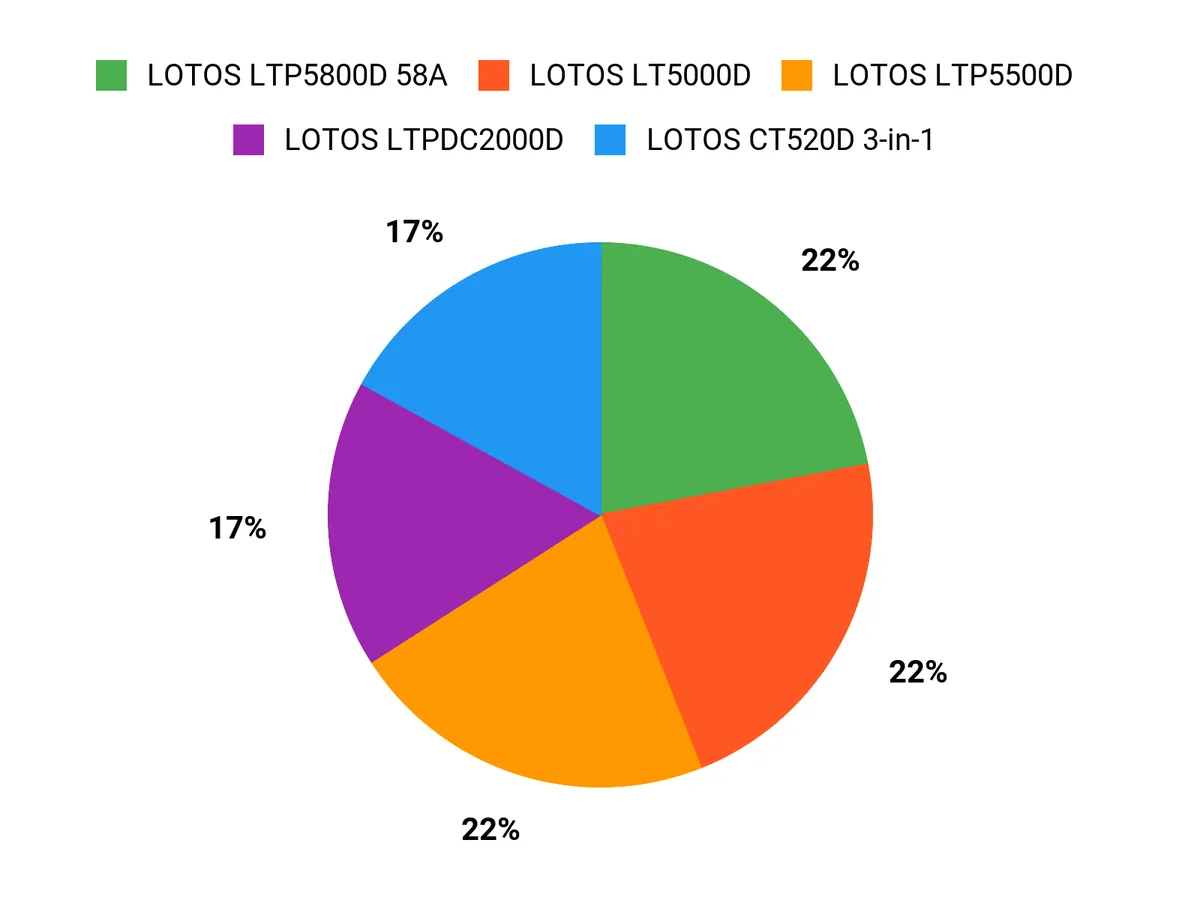
When choosing between the LOTOS LTP6300DCNC, LTP6300D 63A, and LTP5800D 58A, you’re mostly deciding how much cutting capacity you need and whether CNC automation matters. The LTP6300DCNC appeals if you want precision and repeatability, the LTP6300D is strong for manual cutting, and the LTP5800D balances power, controls, portability, and price for typical DIY jobs.
If you want an all-in-one repair tool, the LTPDC2000D gives you pilot-arc cutting plus TIG and stick welding, while the CT520D is a simpler combo option without pilot arc. If you only work on thin material, the LT3500 keeps the setup lighter and more affordable.
Wrapping Up
Choosing a LOTOS plasma cutter comes down to matching the tool to your projects, power, air compressor, and future plans. If you plan to run a CNC table or want tight, repeatable parts, pick a CNC-enabled unit. If you want raw cutting power for thicker steel, focus on higher amp machines, duty cycle, and the circuit they require.
For occasional home use, a compact 35A to 50A unit can be a big upgrade over grinders at a modest cost. For mixed repair work, a combo cutter/welder can save bench space. Before you buy, compare power requirements, air needs, torch reach, consumable availability, and the type of metal you actually cut most often.
Final Recommendation
Pick the LTP6300DCNC if CNC capability is your priority. Pick the LTP6300D if you want strong manual cutting. Pick the LTP5800D if you want a balanced garage cutter. Pick the LTPDC2000D if you want plasma cutting plus TIG and stick welding. Pick the LT3500 only if your projects are mostly thin metal and occasional home use.
| Product | Image | Best For | Cutting Capacity | Weight | Voltage |
|---|---|---|---|---|---|
| LOTOS LTP6300DCNC 63AMP Non-Touch Pilot Arc CNC Enabled Plasma Cutter |
 |
CNC tables and THC output | 3/4″ clean cut; 1″ severance | 22.3 Pounds | 110V/220V |
| LOTOS LTP6300D 63AMP Non-Touch Pilot Arc Plasma Cutter |
 |
Heavy-duty manual cutting | 3/4″ clean cut; 1″ severance | 21.4 Pounds | 110V/220V |
| LOTOS LTP5800D 58A Plasma Cutter |
 |
Portable garage power | 5/8″ clean cut; 3/4″ severance | 20.6 Pounds | 110V/220V |
| LOTOS LTP5000D Plasma Cutter |
 |
Budget 50A upgrade | 5/8″ clean cut; 3/4″ severance | 21.45 Pounds | 120V/240V |
| Lotos Supreme LTP5500D Non-Touch Pilot Arc Digital Plasma Cutter |
 |
Digital controls and pilot arc | 3/4″ clean cut | 21.9 Pounds | 110V/220V |
| LOTOS LTPDC2000D Plasma Cutter TIG Stick Welder Combo |
 |
3-in-1 cutting and welding | 5/8″ clean cut; 3/4″ severance | 35.75 Pounds | 110V/220V |
| LOTOS CT520D 50 AMP Air Plasma Cutter |
 |
Basic cutter/welder combo | 5/8″ clean cut | 33.1 Pounds | 110V/220V |
| LOTOS LTP5500DCNC CNC Enabled Plasma Cutter |
 |
Smaller CNC-ready setups | 3/5″ clean cut; 5/8″ severance | Check listing details | 110V/220V |
| Lotos Supreme LTP7500CNC Non-Touch Pilot Arc CNC Enabled Digital Plasma Cutter |
|
Heavier CNC cutting | 1″ clean cut | 40.85 Pounds | 220V |
| Lotos LT3500 35 Amp Air Plasma Cutter |
 |
Entry-level thin metal work | 2/5″ clean cut | 17.51 Pounds | 110V |
This roundup is reader-supported. When you click through links we may earn a referral commission on qualifying purchases.