
Your trailer projects demand tools that are precise, portable and reliable. You need a plasma cutter that can trim brackets, repair rails, cut patch panels and handle custom mounts without taking over your whole garage or trailer workspace. This guide compares portable plasma cutters and one multi-process cutter/welder combo so you can match the machine to your power source, air supply and project thickness. The right pick can help you cut cleaner, reduce grinding time and stay mobile while keeping your setup realistic for DIY trailer work.
This roundup is reader-supported. When you click through links, we may earn a referral commission on qualifying purchases. As an Amazon Associate I earn from qualifying purchases.
Top Picks
|
Category |
Product |
Best For |
|---|---|---|
|
🏆 Best Overall |
Pilot arc trailer repairs |
|
|
🎒 Best Portable |
Light garage and field cuts |
|
|
💰 Best Value |
Budget-friendly pilot arc use |
|
|
🚀 Best App Control |
Remote setting adjustments |
|
|
💼 Best Jobsite Pick |
Non-HF pilot arc cutting |
|
|
🔰 Best Beginner Friendly |
Easy setup and display visibility |
|
|
⚡ Best Power |
Thicker trailer brackets |
|
|
🎛️ Best Advanced Features |
Expanded metal and rust removal modes |
|
|
🏅 Best All-In-One |
Cutting plus welding in one unit |
Quick Verdict
Choose the ARCCAPTAIN CUT55 if you want the strongest balance of pilot arc convenience, dual-voltage flexibility and trailer-friendly portability. Choose the ARCCAPTAIN CUT50 if you want the lightest, simplest cutter for common brackets and sheet metal. Choose the PUWU CT-418 PRO only if you also need welding functions and are comfortable managing a more complex multi-process setup.
How We Picked These Cutters
You want a cutter that matches the realities of trailer work: limited space, varying power access, intermittent compressor capacity and parts that are easy to replace. We prioritized cutting capability, start type, portability, dual-voltage support, included accessories, air hookup, value for the price and features that save time, such as pilot arc, post-flow control, visible displays and app control. We also looked for models that make sense for brackets, rails, patch panels, hinge mounts, utility trailer repairs and small fabrication jobs rather than large industrial plate work.
Before You Buy
- Check your power: 120V is convenient for lighter work, while 240V usually gives cleaner performance on thicker steel.
- Check your air supply: plasma cutters need clean, dry compressed air. A moisture trap or dryer helps protect consumables.
- Match the machine to the material: use clean-cut ratings for routine work and treat max-cut ratings as occasional upper limits.
- Plan for consumables: tips, electrodes, cups and swirl rings wear faster when you cut dirty, painted or rusty metal.
- Use proper protection: wear eye, hand and skin protection, keep sparks away from fuel, wiring and tires, and disconnect trailer batteries when needed.
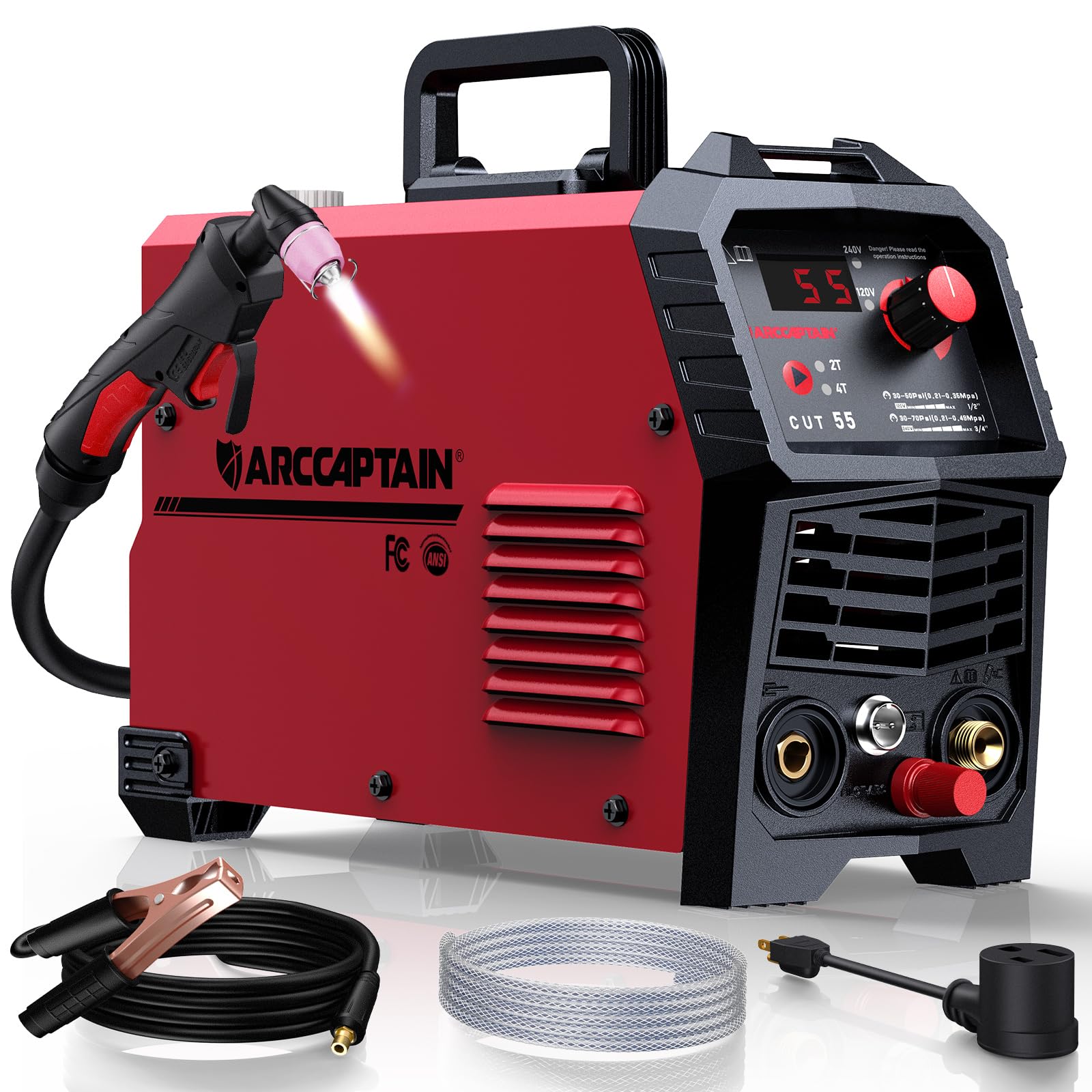
This is the sort of compact cutter you grab when a trailer job needs tidy, repeatable cuts without lugging a full-size machine. You get dual-voltage flexibility, a non-touch pilot arc that helps with painted or rusty surfaces, and built-in air regulation so setup does not eat your afternoon.
It is portable enough to carry between the garage and the trailer, has 2T/4T modes for comfort on longer cuts, and makes sense for brackets, tubing and most trailer sheet steel when paired with a capable air supply.
What People Say
Buyer feedback commonly points to simple setup, clean cutting on 240V and the usefulness of the pilot arc. The most repeated caveat is that performance depends heavily on dry air, steady pressure and fresh consumables.
Overall Sentiment: Positive

DIY Guide
Clamp the workpiece securely, choose the correct voltage for your outlet and set amperage to match material thickness. Use the pilot arc for painted or rusty surfaces, test on scrap to fine-tune speed, and let post-flow cool the torch before setting it down.
Keep a moisture trap and a spare set of tips and electrodes nearby. For longer cuts, 4T mode can reduce hand fatigue, while 2T mode is better for short controlled cuts.
Durability
The iron chassis and inverter electronics are built for regular shop and jobsite handling, but consumables wear fastest. Clean, dry air and proper post-flow help extend torch life.
Avoid switching voltages while the unit is still running, treat torch connections carefully and do a quick bench test before starting a major trailer repair.
Key Benefits
- Non-touch pilot arc helps start cuts on painted or rusty trailer metal
- Dual 120/240V support works with shop power or stronger 240V circuits
- Built-in air regulation simplifies setup
- 2T/4T modes reduce finger strain on longer cuts
- Portable design with shoulder-strap-friendly handling
Who Should Buy This
Buy this if you want a balanced trailer repair cutter for brackets, rails, patch panels and garage fabrication. Avoid it if you need industrial-duty cutting on thick plate all day.

This is the kind of plasma cutter you reach for when a trailer job needs clean cuts without hauling a larger rig. You get 110/220V flexibility, a readable LED display and built-in regulation that keeps setup straightforward.
It is light enough to move between jobs and works well for common trailer tasks such as trimming brackets, cutting tubing and cleaning up sheet metal patches. It is best for lighter work rather than repeated heavy plate cutting.
What People Say
Most positive feedback focuses on portability, easy setup and value for DIY cutting. The main limitation is air supply: weak compressors, moisture and worn tips can quickly reduce cut quality.
Overall Sentiment: Positive

DIY Guide
Secure panels before cutting, set voltage and amperage for the material thickness, and use scrap steel to confirm your travel speed. Keep the torch steady and avoid rushing through corners or tabs.
A compressor that can maintain steady airflow matters more than tank size alone. Add a dryer or moisture trap between the compressor and cutter for cleaner cuts and longer consumable life.
Durability
The iron chassis and IGBT electronics are suited to garage and light jobsite use. The torch parts, tips and electrodes are the parts most likely to wear first.
Use proper post-flow, keep the regulator clean and replace consumables when the kerf widens or the arc becomes unstable.
Key Benefits
- Dual 110/220V support for home or on-site power
- Large LED display makes settings easier to read
- Built-in regulator and PT31 torch simplify setup
- Lightweight design is easy to carry between trailer tasks
- Good fit for brackets, tubing and trailer sheet metal
Who Should Buy This
Buy this if you want a simple, portable cutter for weekend trailer repairs. Avoid it if most of your work involves thick frame plate or sustained production cutting.
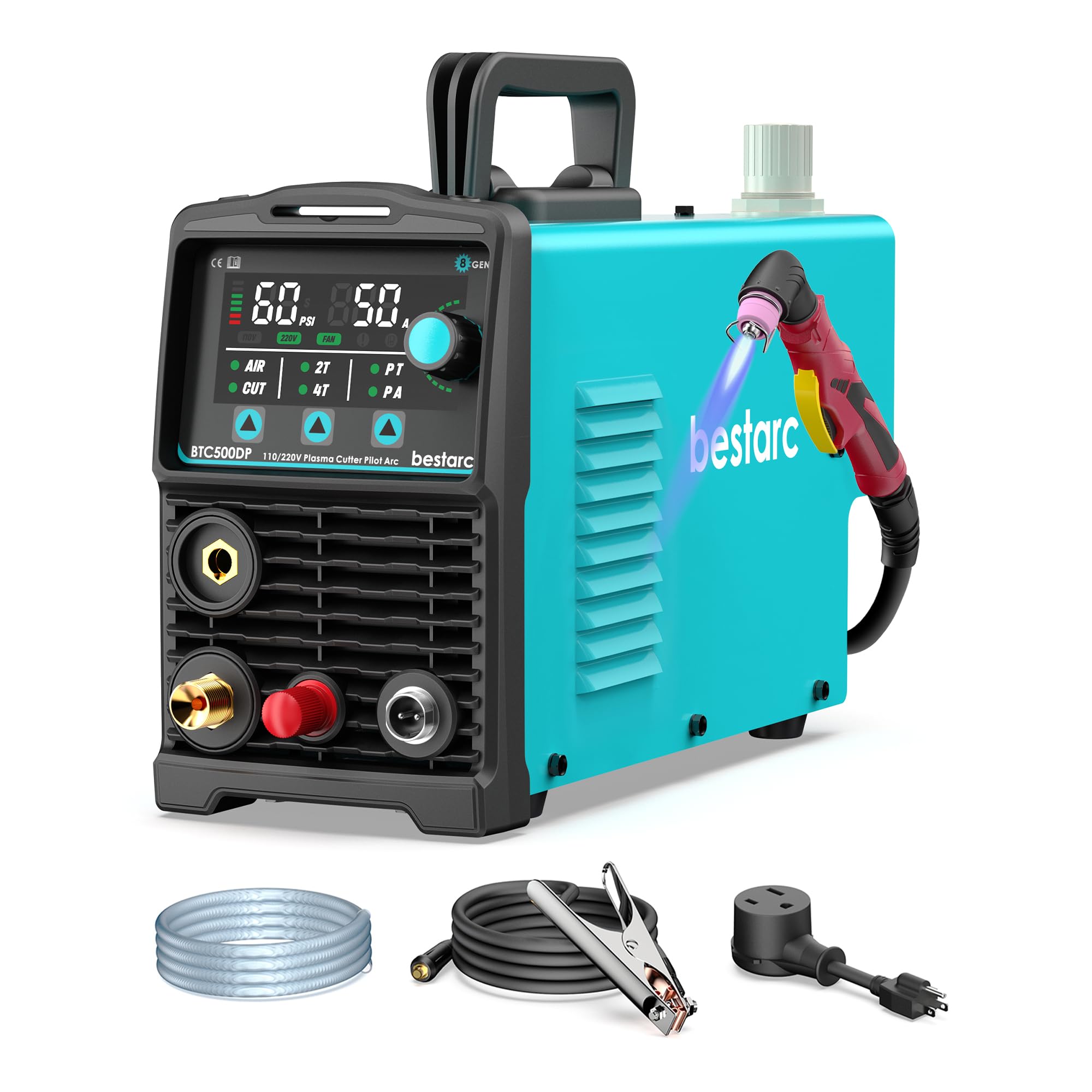
If you work on trailers, this machine makes routine fixes and one-off fabrications feel straightforward. You can plug into 110V for quick yard jobs or switch to 220V when you need more cutting headroom.
The pilot arc helps you start on painted or slightly rusty panels without dragging the tip, while the LED display and air sensor help you tune pressure and current before the real cut.
What People Say
Buyers often praise the cutting power for the size, the clear display and the air sensor. A smaller group flags early setup issues, so it is smart to inspect fittings and test the machine before a planned repair day.
Overall Sentiment: Positive

DIY Guide
Pick 110V for convenience and 220V for thicker sections. Use the LED display and air sensor to dial in pressure and current, then run a few scrap cuts before touching the trailer part.
Use 2T for short cuts and 4T for longer continuous cuts. Keep dry air, spare consumables and a basic fitting kit close by.
Durability
The iron chassis and inverter design are built for workshop use, while thermal and overload protections help during heavier sessions. Consumables still wear fastest, especially on dirty or painted metal.
Check for air leaks on arrival and keep fittings snug to reduce downtime during trailer repairs.
Key Benefits
- Pilot arc supports non-touch starts on painted or rusted metal
- Dual 110/220V operation for light or heavier work
- Large LED display shows cutting settings clearly
- Built-in air sensor helps with setup
- 2T/4T and post-flow control help on longer cuts
Who Should Buy This
Buy this if you want strong DIY features at a value-focused price. Avoid it if you prefer the simplest possible control layout.
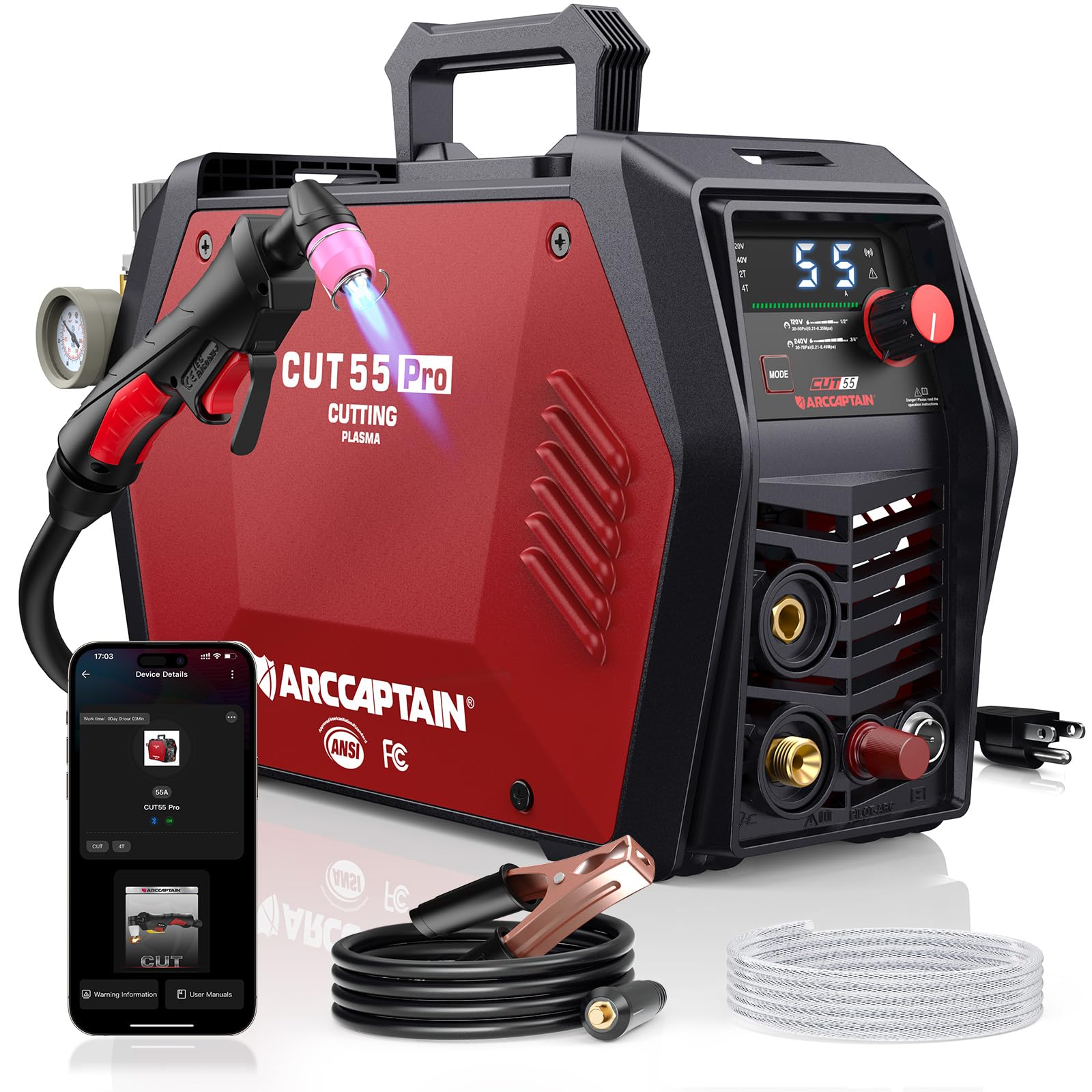
If you work on trailers, this compact cutter is useful when you need neat, repeatable cuts without dragging a shop rig across the floor. It runs on 120V or 240V, starts with a non-touch pilot arc and adds app control for quick adjustments.
The large LED display, built-in regulator and 2T/4T modes make it easier to work around awkward trailer angles. It is especially appealing if you regularly switch between light patch panels and thicker bracket work.
What People Say
Feedback often highlights real-world cutting performance, portability and the convenience of app and LED controls. The most common complaints involve air fittings, compressor requirements and occasional setup hiccups.
Overall Sentiment: Positive

DIY Guide
Clamp the piece solidly, pick the right voltage for your outlet and set amperage for the thickness. Use pilot arc on painted or rusty panels and run scrap cuts to dial in travel speed.
If the supplied fitting feels awkward, consider a short whip hose or compatible quick-connect fitting. Keep spare nozzles and electrodes ready so a worn tip does not stop the job.
Durability
The iron chassis and IGBT inverter are built for jobsite-style handling, and smart fan cooling helps manage heat. As with any plasma cutter, clean air and timely consumable replacement matter.
Be gentle with torch connections and avoid switching voltage while the machine is running.
Key Benefits
- Non-touch pilot arc for painted or rusty surfaces
- Dual 120/240V support for shop or jobsite power
- App control and large LED display for convenient adjustments
- Built-in air regulator and filter help stabilize cutting
- 2T/4T modes reduce fatigue during longer cuts
Who Should Buy This
Buy this if you like tech-assisted controls and often adjust settings while moving around the workpiece. Avoid it if you prefer a simpler machine with fewer digital features.

If you are working on trailers, this is the kind of compact cutter that handles bracket trimming, hinge repairs, rail adjustments and patch panels without feeling oversized. The non-touch pilot arc helps when paint or surface rust would slow a drag-tip cutter.
The large LED makes air pressure and amp checks easier, while built-in protections and trigger modes help during longer cuts. Pair it with dry air and a steady ground for the best results.
What People Say
Customers commonly praise the cut quality, pilot arc and digital readout. Typical complaints focus on fittings, connector setup and the need for dry, adequate compressor air.
Overall Sentiment: Positive

DIY Guide
Use 110V for convenience and 220V for deeper cuts. Start with scrap, adjust amperage and travel speed, and keep your air dry and filtered.
Use the pilot arc for painted or rusty surfaces and allow post-flow to cool the torch. If the supplied hose fitting is not ideal for your compressor setup, use a compatible quick-connect solution.
Durability
The steel chassis and inverter electronics are suited to jobsite handling, and the cooling and protection systems help prevent overheating. Tips and electrodes will still need regular replacement.
Moisture in the air line can cause poor starts or rough cuts, so air quality is a key durability factor.
Key Benefits
- Non-touch pilot arc for painted or rusty surfaces
- Dual 110/220V compatibility for jobsite or shop outlets
- Large LED digital display for quick status checks
- PT/2T/4T modes help with different cutting styles
- Built-in protections support safer shop use
Who Should Buy This
Buy this if you want a jobsite-friendly cutter with non-HF pilot arc features. Avoid it if you need a very lightweight machine for frequent carrying.
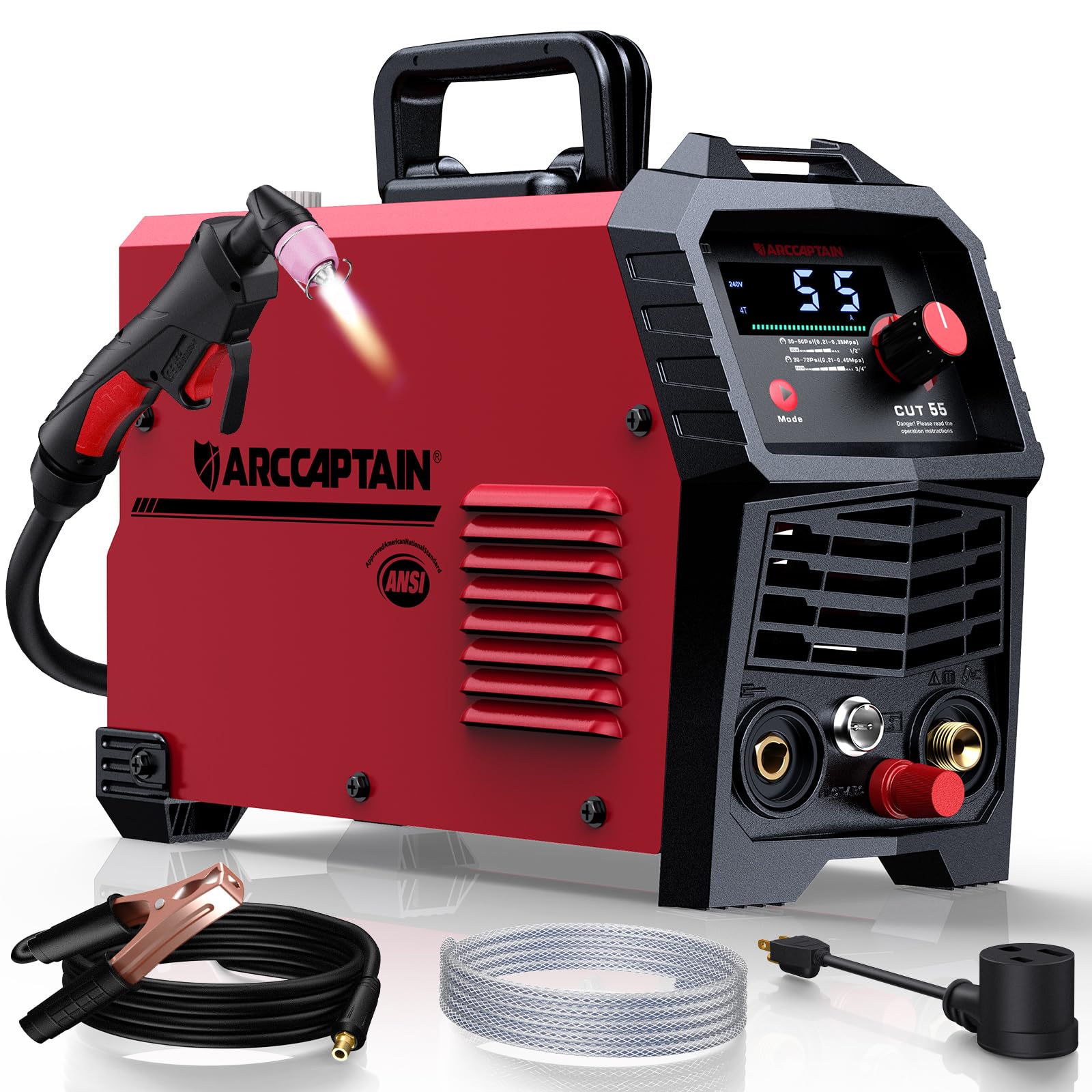
This compact machine makes repair work and small fabrications feel easier. Run it on 120V for quick jobs around the shop or switch to 240V when you need more cutting power.
The front LED display and air sensor help you tune pressure and current, while the non-touch pilot arc helps you start on painted or slightly rusty panels. It is a practical pick for brackets, patch panels, mounting racks and general trailer repair.
What People Say
Review themes include strong cutting power for the size, easy setup and helpful display visibility. Some buyers report air-hose or early quality-control issues, so test it before a major job.
Overall Sentiment: Positive

DIY Guide
Use 120V when mobility matters and 240V for thicker plate. Start with dry, filtered air and run scrap cuts to find the right current and travel speed.
Use 2T for short cuts and 4T for continuous cutting. Keep spare consumables, check hose fittings on arrival and make sure your ground is clean.
Durability
The iron chassis and inverter design are suited to workshop use, and thermal and overload protections help during heavier runs. Tips and electrodes wear fastest.
Inspect fittings and test the machine before a big trailer repair so you can solve small setup issues early.
Key Benefits
- Non-touch pilot arc for starting on painted or rusty metal
- Dual 120/240V operation for lighter or thicker cuts
- Large LED display supports easier tuning
- Built-in air sensor and rear quick-connect regulator
- 2T/4T trigger modes and adjustable post-flow
Who Should Buy This
Buy this if you want a beginner-friendly pilot-arc cutter with a clear display. Avoid it if you already know you need heavier production capacity.
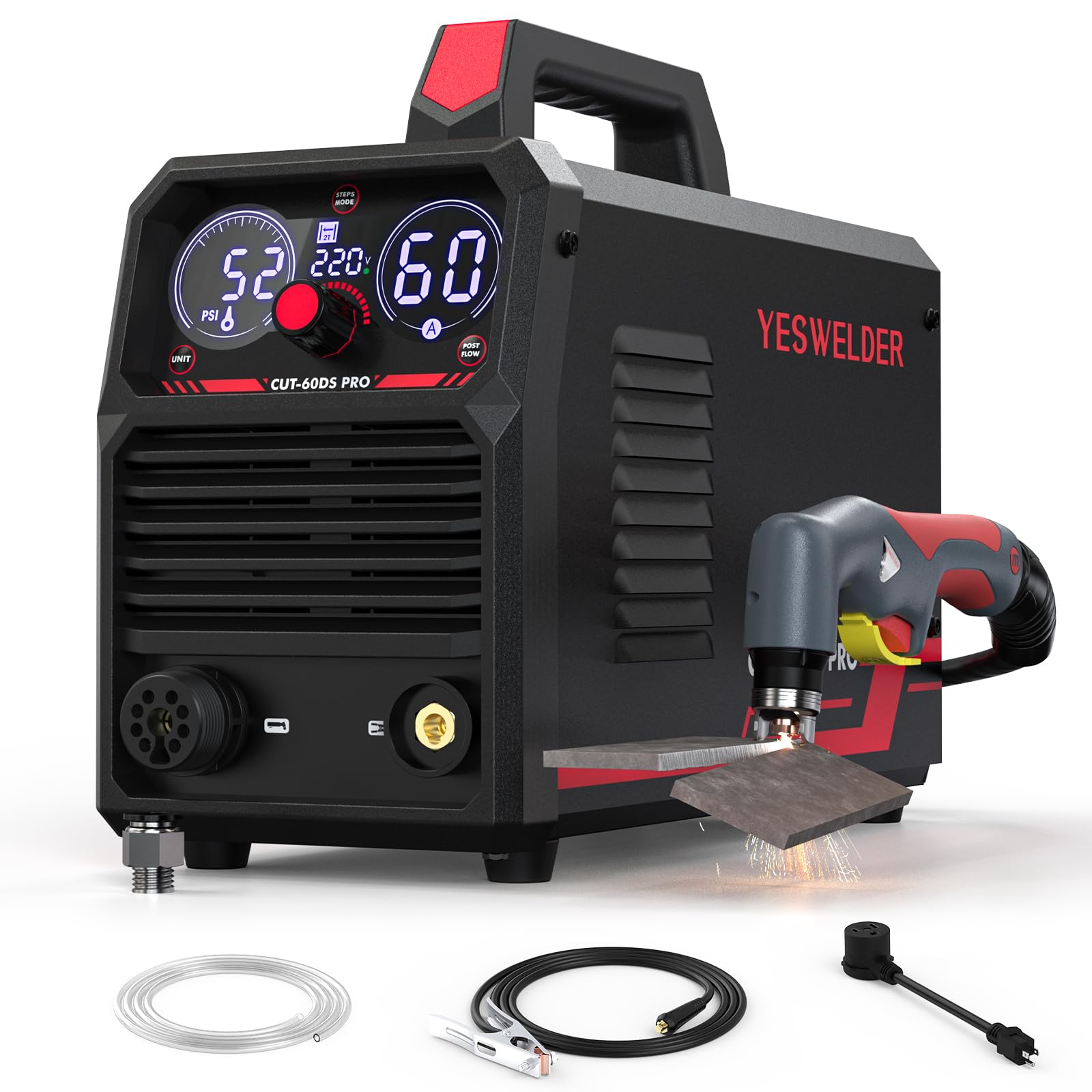
This unit balances power and portability for trailer work. You can run it on 110V for quick on-vehicle fixes or switch to 220V when you need deeper, cleaner cuts through thicker plate.
The non-touch pilot arc helps on painted or slightly rusty panels, and the front display keeps pressure, current and status information visible while you tune the cut. It is a better fit for larger repairs than the lightest 50A units, but still portable enough for a small shop.
What People Say
Buyers tend to praise the power, clean cuts and digital readout. Common cautions include checking fittings, keeping consumables stocked and inspecting the unit when it arrives.
Overall Sentiment: Positive

DIY Guide
Use 110V for quick mobile work and 220V for thicker steel. Start with dry, filtered air, run two or three scrap cuts and watch the edge quality before cutting your trailer part.
Use the pilot arc for painted or rusty panels, but clean heavy rust and paint when possible. Keep a steady standoff, a firm ground clamp and spare tips nearby.
Durability
The metal chassis and thermal protections make it feel workshop-ready. Nozzles, electrodes and swirl rings will wear with regular cutting, especially if the air supply is wet.
Bench test the cutter, confirm fittings and keep a small repair kit with hose fittings and consumables.
Key Benefits
- Non-touch pilot arc for painted, rusty or rough surfaces
- Dual 110/220V operation for light jobs or thicker cuts
- Digital display for easier setup and troubleshooting
- 2T/4T trigger modes and post-flow adjustment
- Blow-back start system helps reduce electrical interference
Who Should Buy This
Buy this if you often cut thicker brackets, frame tabs or heavier mounting plates. Avoid it if portability is more important than cutting headroom.
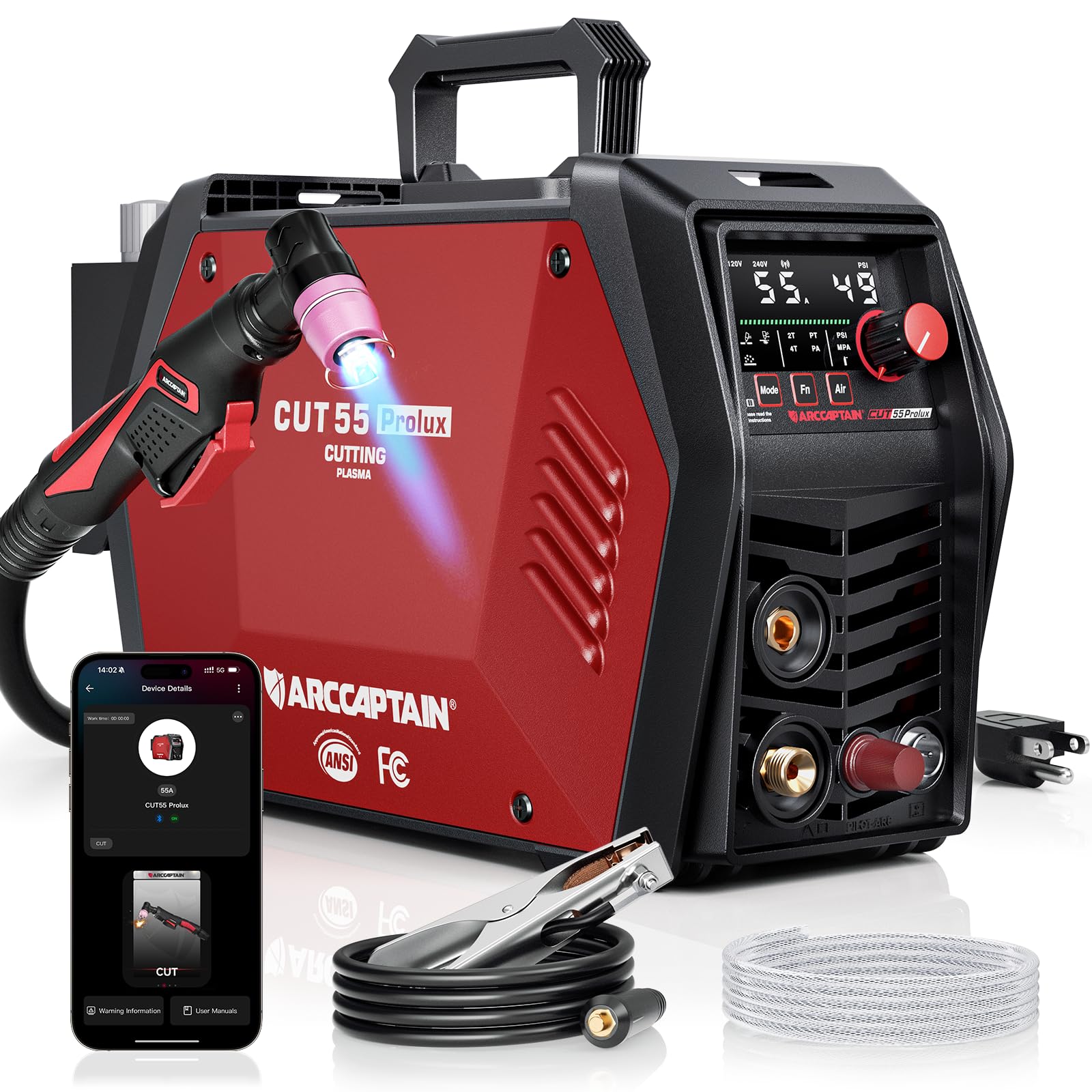
This unit sits between shop power and on-the-road convenience. You can run it on 120V for quick trailer fixes and switch to 240V when you need deeper cuts through thicker frame or plate.
The non-touch pilot arc helps with painted or slightly rusty panels, while app control and smart air pressure detection make setup easier to monitor. Expanded metal and rust-removal modes are useful when fabricating brackets, mesh panels or cleanup areas before welding.
What People Say
Buyers often like the strong feature set, app control and large LED readout. Common annoyances include the air fitting style and occasional setup issues, so a quick arrival inspection is recommended.
Overall Sentiment: Positive

DIY Guide
Use 120V for light trailer repairs and 240V for thicker frame or plate. Check air pressure before cutting, use dry filtered air and make scrap cuts before tackling the final part.
Use pilot-arc modes for painted or rusty surfaces, set post-flow to protect the torch, and choose 2T or 4T based on cut length. Keep spare nozzles and electrodes in your kit.
Durability
The sheet-metal chassis, cooling and built-in protections support regular DIY use. Consumables remain the highest-wear items, so plan replacements if you cut frequently.
Bench test the cutter when it arrives, check fittings and keep basic hose parts nearby.
Key Benefits
- Non-touch pilot arc for painted or slightly rusty panels
- Dual 120/240V capability for light or heavier cuts
- App control plus clear LED display
- Smart air pressure detection for setup checks
- Expanded metal and rust-removal modes reduce prep work
Who Should Buy This
Buy this if you want the most feature-rich ARCCAPTAIN-style option in this list. Avoid it if you want a lower-cost cutter with manual-only controls.

This is the all-in-one unit to consider when a trailer job needs more than cutting. It combines plasma cutting with MIG, TIG and stick welding, so it can help with brackets, patch panels and basic fabrication without multiple machines.
The tradeoff is complexity. A combo machine asks you to manage more settings, accessories and consumables than a dedicated plasma cutter. It is most attractive if you truly need both cutting and welding.
What People Say
Feedback tends to praise the versatility, included accessories and compact format. Common cautions include checking the accessory kit on arrival, using the correct circuit for heavier work and expecting a learning curve.
Overall Sentiment: Positive

DIY Guide
Use 110V for small field fixes and 220V when you need stronger cutting or welding performance. Bench test the machine when it arrives and confirm all torches, leads and hoses are included.
Run scrap cuts and test welds before working on the trailer. Keep extra nozzles, electrodes, tips and the correct welding consumables for the process you plan to use.
Durability
The mixed plastic and metal housing is practical for a multi-process unit, and cooling protections help during longer sessions. Plasma and welding consumables will need regular replacement.
Inspect for shipping damage or missing parts on arrival and keep basic spares and hose fittings nearby.
Key Benefits
- Multi-process setup: plasma cutting plus MIG, TIG and stick welding
- Dual voltage support for light work or heavier shop tasks
- Compact format reduces the need for separate machines
- Accessory kit helps you get closer to a usable setup
- Useful for trailer repairs that involve both cutting and joining metal
Who Should Buy This
Buy this if you need one machine for cutting and basic welding. Avoid it if you only need clean plasma cuts, because a dedicated cutter will be simpler to set up and troubleshoot.
How to Choose a Plasma Cutter for Trailer Work
Start Type
A pilot arc is useful for trailer work because trailers often have paint, rust, old welds and imperfect surfaces. Non-touch pilot arc machines are easier to start on rough material, but you should still clean heavy rust and paint when possible for better grounding and cleaner cuts.
Power Source
Dual-voltage machines are useful because you can use 120V for quick, lighter tasks and 240V when you need better performance on thicker steel. Before buying, confirm your outlet, breaker and extension cord are suitable for the machine.
Air Supply
Clean, dry air is essential. A plasma cutter can have strong output on paper and still cut poorly if the compressor cannot maintain airflow or the air line carries moisture. Use a dryer or moisture trap and drain your compressor regularly.
Cut Rating
Look at the clean-cut rating first. Max-cut numbers are helpful for occasional upper-limit work, but clean-cut ratings are more useful for routine trailer brackets, rail tabs, flooring and patch panels.
Portability
If you often work around a trailer in the driveway or at a yard, weight, handle design and hose routing matter. A compact cutter that is easy to move may save more time than a heavier model with specs you rarely use.
FAQ
How Do These Plasma Cutters Handle Typical Trailer Projects?
These cutters are suited to common trailer tasks such as trimming brackets, cutting patch panels, removing damaged tabs, shaping floor plates and preparing small fabrication parts. For thicker frame work, use a 240V setup when available and choose a model with enough clean-cut capacity.
Do I Need 240V for Trailer Repairs?
You do not always need 240V. A 120V setup can work for thinner sheet metal and light brackets. For thicker mounting plates, frame tabs and cleaner cuts at higher amperage, 240V is usually the better choice.
What Size Air Compressor Works Best?
Check the cutter’s stated airflow requirement first. For short trailer repairs, many DIY users can work with a mid-size compressor if it maintains steady pressure and dry air. For long cuts or repeated cuts, a larger compressor and good moisture control are much more important.
Can a Plasma Cutter Cut Painted or Rusty Trailer Metal?
Yes, especially if the machine has a pilot arc, but heavy rust, paint and coatings can still affect cut quality and grounding. Clean the cut line when possible, keep a strong ground connection and use fresh consumables.
What Safety Steps Matter Most?
Wear eye, face, hand and skin protection. Keep sparks away from fuel, wiring, tires, wood decking and flammable debris. Support the workpiece, disconnect trailer batteries when appropriate and never cut near pressurized or fuel-contaminated parts.
Customers Favorites
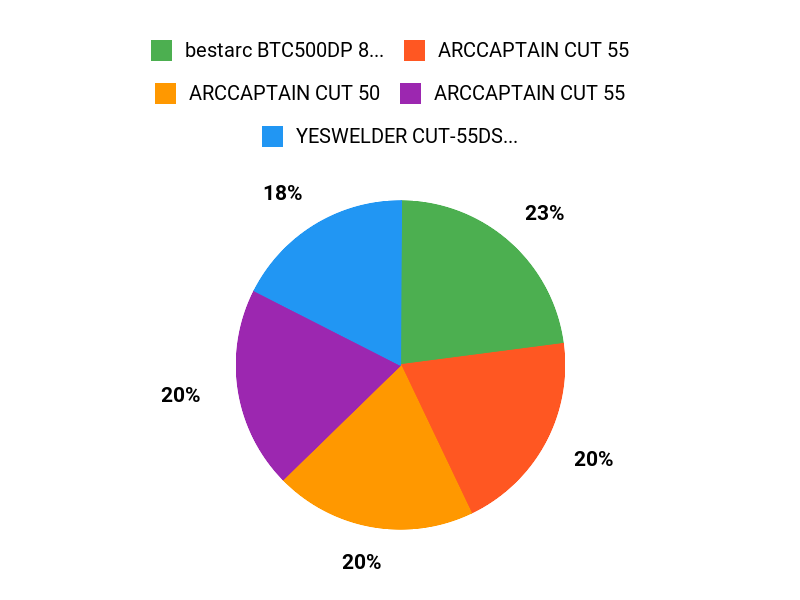
When choosing between the ARCCAPTAIN CUT50, CUT55 and CUT55 Pro, focus on cutting capacity, pilot arc needs, portability and whether app control is worth the extra complexity. Pick the CUT50 if you want the lightest basic setup, the CUT55 if you want a stronger all-around pilot-arc choice, or the CUT55 Pro if remote adjustments and upgraded controls matter to your workflow.
Wrapping Up
Choose the cutter that fits how you work on trailers. If you need mobility and simple setup, a compact 50A unit can be enough for light repairs. If you often cut painted metal, rusty panels or thicker brackets, a pilot-arc 55A or 60A model will usually be more forgiving. If your projects involve both cutting and welding, the PUWU combo unit may reduce how many machines you need, though it adds setup complexity.
Before you buy, check your compressor capacity, confirm whether you have access to 240V, and budget for spare consumables. That small planning step can make the difference between clean progress and a stalled trailer project.
| Product | Image | Best For | Cutting Focus | Weight / Portability Note | Unique Highlights | CTA |
|---|---|---|---|---|---|---|
| ARCCAPTAIN CUT55 |
 |
Best overall | 1/2 inch clean-cut class | Portable shoulder-strap style |
|
Check Details |
| ARCCAPTAIN CUT50 |
 |
Best portable | 1/2 inch clean-cut class | Light 13 lb-style design |
|
Check Details |
| bestarc BTC500DP 8GEN |
 |
Best value | 1/2 inch clean-cut class | Portable shop-friendly build |
|
Check Details |
| ARCCAPTAIN CUT55 Pro |
 |
Best app control | Up to 3/4 inch max-cut class | Portable advanced-control unit |
|
Check Details |
| YESWELDER CUT-55DS PRO |
 |
Best jobsite pick | 1/2 inch clean-cut class | Portable but not ultra-light |
|
Check Details |
| ARCCAPTAIN CUT55 LED |
 |
Best beginner friendly | 1/2 inch clean-cut class | Compact LED-display cutter |
|
Check Details |
| YESWELDER CUT-60DS PRO |
 |
Best power | 1 inch max-cut class | Heavier, stronger-output pick |
|
Check Details |
| ARCCAPTAIN iControl CUT55 Prolux |
 |
Best advanced features | Up to 7/8 inch max-cut class | Advanced feature set, portable shop use |
|
Check Details |
| PUWU CT-418 PRO |
 |
Best all-in-one | Cutting plus welding support | Most complex setup in this list |
|
Check Details |
This Roundup is reader-supported. When you click through links we may earn a referral commission on qualifying purchases.
