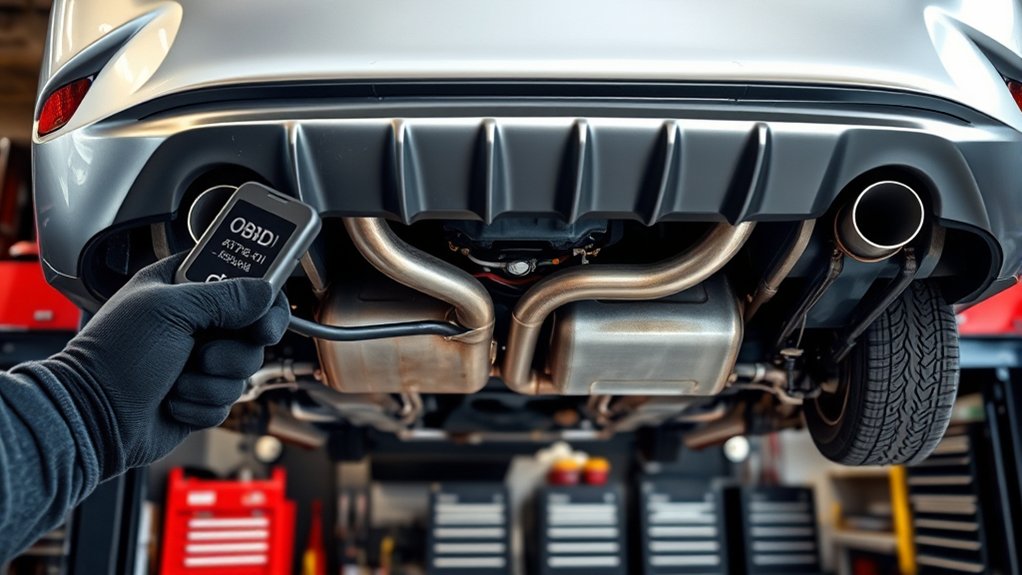
The P0420 code on a Toyota Camry means the engine control module (ECM) has detected catalyst system efficiency below threshold on Bank 1. It does not, by itself, prove that the catalytic converter is bad. An exhaust leak, a biased air-fuel or oxygen sensor, a rich/lean condition, or an engine problem that damaged the catalyst can produce the same result. Start with the stored codes and freeze-frame data, inspect for leaks, verify sensor behavior using the specifications for your exact Camry year and engine, and replace the catalytic converter only after the other causes have been ruled out.
Quick Answer
Toyota Camry code P0420 means the ECM believes the Bank 1 catalytic converter is not storing oxygen efficiently enough. Check for other trouble codes, exhaust leaks, fuel-control problems, and faulty sensors before replacing the converter. A confirmed weak catalyst usually requires replacement with the correct emissions-compliant part.
Key Takeaways
- P0420 means “Catalyst System Efficiency Below Threshold (Bank 1).” It is a catalyst-monitor result, not an automatic parts-replacement instruction.
- Many Camrys use an air-fuel ratio (A/F) sensor upstream and a heated oxygen sensor downstream, so generic “0.1–0.9 V for both sensors” advice can be wrong.
- Diagnose other engine codes, exhaust leaks, fuel-trim problems, and sensor faults before condemning the catalytic converter.
- If the catalyst is confirmed bad, correct the condition that damaged it before installing a replacement.
- Check federal or state emissions warranty coverage and local catalytic-converter rules before paying for replacement.
At a Glance
| Time Required | About 30–90 minutes for a basic scan, visual leak inspection, and live-data check; deeper testing may take longer. |
| Difficulty | Moderate. Basic scanning is DIY-friendly; Toyota-specific active tests and converter confirmation are better suited to an experienced technician. |
| Tools Needed | OBD-II scan tool with live data, flashlight, basic hand tools, and ideally a smoke machine or other safe exhaust-leak test equipment. |
| Cost | Diagnosis can be inexpensive if you already own a scan tool. Repair cost varies widely depending on whether the cause is a leak, sensor, engine fault, or catalytic converter. |
Understanding the P0420 Code: What It Means for Your Toyota Camry
The official description of P0420 is Catalyst System Efficiency Below Threshold (Bank 1). Toyota’s catalyst monitor compares information from sensors before and after the three-way catalytic converter and evaluates how well the converter stores oxygen. If the calculated catalyst performance falls below the calibrated threshold, the ECM stores P0420 and can turn on the malfunction indicator lamp.
P0420 tells you what the ECM detected—low catalyst efficiency on Bank 1—not which part must be replaced.
On many Camry engines, the sensor before the catalyst is an air-fuel ratio (A/F) sensor, while the sensor after the catalyst is a conventional heated oxygen sensor. That distinction matters because their normal scan-tool values and response patterns are not the same. Use the Toyota Technical Information System (TIS) for the exact model year, engine, and emissions package rather than applying one generic voltage rule to every Camry.
Potential causes include a deteriorated catalytic converter, an exhaust leak, a biased or slow A/F or oxygen sensor, wiring problems, or an engine condition that has pushed the mixture too rich or too lean. Misfires, excessive oil consumption, or coolant entering the combustion chamber can also damage a converter over time.
Note: “Bank 1” means the side of the engine that contains cylinder No. 1. On an inline four-cylinder Camry there is only one bank. V6 Camrys have two banks, so engine-specific service information matters.
Common Symptoms of the P0420 Code You Shouldn’t Ignore
The most consistent symptom is a check engine light. Some vehicles otherwise drive normally. Reduced power, rough running, poor fuel economy, or unusual exhaust odor can occur, but those symptoms are not specific to P0420 and may point to a separate engine, fuel-control, misfire, or restricted-exhaust problem.
Check Engine Light Activation
A steady check engine light with P0420 means the catalyst monitor has failed its threshold test. Scan for all stored, pending, and permanent codes instead of focusing on P0420 alone. Misfire codes, rich/lean codes, or sensor-circuit codes can change the diagnostic path and may need to be repaired first.
A rotten-egg or sulfur-like odor can occur when the exhaust chemistry is abnormal, but odor alone does not prove that the converter is defective. Fuel quality, rich running, and other engine conditions can also change exhaust smell.
Decreased Engine Performance
P0420 by itself does not normally command a fixed 30–40 mph speed limit. If your Camry has major power loss, poor acceleration, stalling, or rough running, look for other codes and test for a restricted converter, active misfire, fuel-delivery problem, or another engine fault.
A physically damaged or melted converter can create excessive exhaust backpressure and reduce power. If that happens, replacing the converter without fixing the cause of overheating or contamination can lead to another failure.
Unusual Exhaust Odors
A strong sulfur smell, raw-fuel odor, or unusually hot exhaust deserves attention, especially when combined with a check engine light or poor running. These signs can indicate rich combustion, misfire, catalyst overheating, or another emissions-system fault rather than P0420 alone.
Warning: If the check engine light is flashing, the engine is misfiring badly, the catalytic converter is glowing, or the car suddenly loses substantial power, stop driving as soon as it is safe. Severe misfire can overheat and damage the converter and can create a fire risk.
How to Diagnose the P0420 Code
Use a diagnosis-first approach. Toyota repair procedures vary by model year and engine, but the general sequence is to confirm the code, look for related faults, check the exhaust for leaks, evaluate the A/F and oxygen sensors, and condemn the converter only after those checks pass.
- Scan every module-relevant engine code and save freeze-frame data. Note coolant temperature, engine load, RPM, fuel trims, and the conditions when P0420 set. If misfire, sensor-circuit, or rich/lean codes are present, diagnose them first.
- Verify the exact Camry configuration. Record model year, engine, emissions label/test group, and whether the car is a hybrid. Sensor type, catalyst layout, and test values can differ.
- Inspect for exhaust leaks. Check the exhaust manifold, gaskets, flex sections, flanges, and piping around the catalyst and sensors. A leak can introduce oxygen and distort the rear-sensor signal.
- Review fuel trims and engine operation. A persistent rich or lean condition, misfire, oil burning, or coolant consumption can damage a converter or make catalyst data misleading.
- Check sensor response with live data. Compare the upstream A/F sensor and downstream heated oxygen sensor using Toyota’s specifications for your engine. Do not assume both sensors should swing from 0.1 to 0.9 volts.
- Evaluate catalyst behavior. On Toyota systems, a deteriorated catalyst tends to allow the rear oxygen-sensor signal to vary more rapidly because the catalyst has lost oxygen-storage capacity. A Toyota-capable scan tool can make this test more conclusive.
- Repair the confirmed cause, clear codes, and verify the repair. Complete the required drive cycle or normal driving until the catalyst monitor runs again. Recheck for pending or permanent codes and readiness status.
Pro Tip: Save the freeze-frame and live-data screenshots before clearing codes. Once the memory is erased, you can lose useful clues about the temperature, load, and fuel-control conditions present when P0420 set.
Causes of the P0420 Code and Their Effects
P0420 can be caused by a failed catalyst, but the diagnostic goal is to find why the catalyst monitor failed. Replacing expensive parts by guesswork can leave the code unchanged or damage the new converter.
Common Catalytic Converter Failures
A catalytic converter can lose efficiency as its washcoat ages, becomes contaminated, overheats, melts, or physically breaks apart. Common contributors include prolonged rich running, repeated misfire, oil consumption, coolant contamination, impact damage, or use of fuel or additives that are not appropriate for the vehicle.
Exhaust leaks can also mislead the catalyst monitor by allowing outside oxygen into the exhaust stream. That is why Toyota diagnostic procedures include an exhaust-leak check before converter replacement.
Do not rely on a single “before and after” infrared-temperature number such as 450–499°F before the converter and 350°F after it. Catalyst temperature changes with load, mixture, airflow, and test conditions, and Toyota’s model-specific procedures rely primarily on sensor response and active-test data rather than that fixed temperature rule.
Oxygen Sensor Malfunctions
A biased, slow, contaminated, or electrically faulty sensor can distort catalyst-monitor data. Wiring damage, connector corrosion, heater-circuit faults, or incorrect replacement sensors can also cause misleading readings.
Many Camrys use an A/F ratio sensor for Bank 1 Sensor 1 and a conventional heated oxygen sensor for Bank 1 Sensor 2. The upstream A/F sensor does not behave like a traditional narrowband 0.1–0.9 V oxygen sensor, so diagnosis should use the correct Toyota data list and specifications.
Engine Conditions That Can Damage the Catalytic Converter
A new converter can fail again if the root cause remains. Before replacement, check for active or historical misfires, excessive positive or negative fuel trim, leaking injectors, ignition faults, abnormal oil consumption, or coolant loss. These problems can overheat or contaminate the catalyst.
How to Test Oxygen Sensors and Evaluate Their Performance
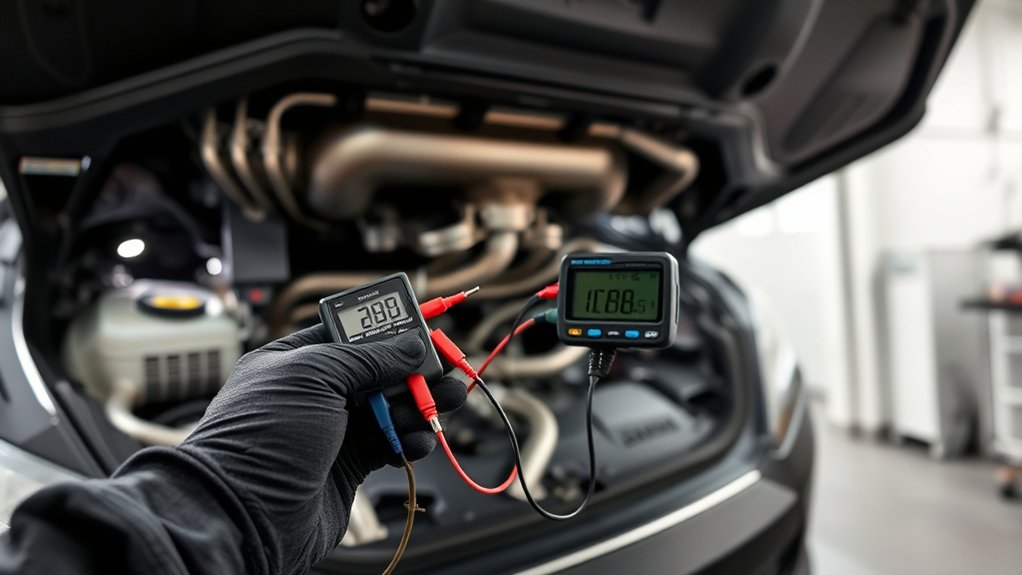
Start with a scan tool that can display Toyota live data. Identify whether the upstream device is an A/F sensor or a conventional oxygen sensor before interpreting voltage. On many Toyota applications, the A/F sensor is centered near a different voltage range than a narrowband O2 sensor, while the downstream heated oxygen sensor uses a more conventional rich/lean voltage response.
Use the sensor type and specifications for your exact Camry. Generic O2-voltage rules can misdiagnose Toyota A/F sensors.
- Check for sensor-specific DTCs first. Heater, circuit, response, or range codes can identify a problem that P0420 alone does not.
- Inspect the harness and connectors. Look for melted insulation, exhaust contact, water intrusion, corrosion, loose terminals, or previous repair damage.
- Warm the engine fully and view live data. Compare commanded mixture changes, fuel trims, and the response of the upstream A/F sensor and downstream O2 sensor.
- Use Toyota-specific active testing when available. Toyota repair procedures can command richer and leaner operation so the technician can verify that each sensor responds in the expected direction.
- Check for exhaust leaks before judging the rear sensor. Extra oxygen entering near the sensor can create a false lean or rapidly changing signal.
- Use resistance or heater-current tests only when the repair manual calls for them. A generic 3–30 ohm heater-resistance rule is not a universal specification for every Camry sensor.
Note: Avoid spraying flammable brake or carburetor cleaner around a running hot engine as a leak-finding shortcut. A smoke test and proper scan-tool data are safer, more controlled ways to locate intake or exhaust leaks.
Repair Options for the P0420 Code
The correct repair depends on what testing proves. Do not replace oxygen sensors simply because P0420 is present, and do not replace the converter until leaks, sensor response, and engine operation have been checked.
- Exhaust leak found: Repair the leaking manifold, gasket, flange, pipe, or flex section, then rerun the catalyst monitor.
- A/F or O2 sensor fault confirmed: Repair the wiring or replace the failed sensor with the correct part for the vehicle.
- Rich/lean or misfire problem found: Fix that engine fault first. Recheck catalyst efficiency afterward.
- Catalyst efficiency confirmed below threshold: Replace the affected converter with a part that is correct for the Camry’s year, engine, emissions certification, and jurisdiction.
Toyota also issued model-specific service bulletins for some older Camrys. For example, bulletin EG024-04 applied to certain 2002–2004 Camry 2AZ-FE non-PZEV vehicles and involved revised ECM calibration and catalyst hardware. That bulletin does not apply to every Camry with P0420. Check your VIN and model-specific Toyota service information before assuming a bulletin applies.
For U.S. vehicles, the EPA states that specified major emissions components—including catalytic converters—receive federal emissions warranty coverage for 8 years or 80,000 miles, whichever comes first, subject to the warranty terms. Check the vehicle’s warranty booklet before authorizing an expensive converter replacement.
Warning: Replacement-converter rules vary by jurisdiction. California requires an aftermarket converter to have the correct CARB Executive Order approval for the specific vehicle application. Never remove a functioning emissions device or install a converter that is not legal for the vehicle where it is registered.
Preventative Maintenance Tips to Avoid Future P0420 Codes
You cannot prevent every catalyst failure, but you can reduce avoidable damage by keeping the engine and fuel-control system healthy.
- Repair misfires promptly. Unburned fuel can overheat the catalytic converter.
- Investigate persistent rich or lean operation. Do not ignore fuel-trim, injector, ignition, or sensor faults.
- Address abnormal oil or coolant consumption. Burning oil or coolant can contaminate the catalyst.
- Follow Toyota’s maintenance schedule for your exact model year. Replace filters, spark plugs, fluids, and other service items when specified.
- Use the fuel grade and type required by the owner’s manual. Do not use leaded fuel in a vehicle designed for unleaded gasoline.
- Inspect the exhaust system when noises or leaks appear. Repairing a leak early can prevent misleading sensor data and further damage.
Do not replace oxygen sensors automatically at 60,000–100,000 miles unless the maintenance information for your exact vehicle specifies it or diagnosis shows a sensor has failed. Toyota maintenance schedules differ by model year and powertrain.
When to Seek Professional Help for Your P0420 Code Troubles
If P0420 returns after basic checks, or if you do not have live-data and leak-testing tools, a qualified technician can perform Toyota-specific active tests and verify whether the converter or a related system is at fault.
| Signs to Seek Help | What to Expect |
|---|---|
| P0420 repeatedly returns | Freeze-frame review, exhaust-leak testing, live-data analysis, and catalyst-monitor verification |
| Misfire, rich/lean, or sensor codes are also present | Root-cause diagnosis before any converter decision |
| Major power loss, rough running, or stalling | Checks for restricted exhaust and other engine faults |
| Flashing check engine light or overheating catalyst | Immediate misfire and safety diagnosis; towing may be appropriate |
| Converter replacement is being recommended | Verification of warranty coverage, emissions certification, and the correct legal replacement part |
A steady P0420 with normal drivability is usually not the same emergency as a flashing check engine light, but it should still be diagnosed because the vehicle may fail an emissions inspection and an unresolved engine problem can damage the converter further.
Frequently Asked Questions
What is the most common cause of a P0420 code on a Toyota Camry?
There is no reliable one-size-fits-all percentage for every Camry year and engine. A deteriorated catalytic converter is a major possibility, but Toyota diagnostic procedures also require checking exhaust leaks and the upstream A/F and downstream oxygen sensors. Related misfire or fuel-control problems should be repaired first.
What does code P0420 mean on a Toyota Camry?
P0420 means “Catalyst System Efficiency Below Threshold (Bank 1).” The ECM has determined that the Bank 1 catalyst’s oxygen-storage performance is below its calibrated limit. The code identifies the failed monitor, not the exact failed component.
How serious is a P0420 code on a Toyota?
Treat it as a problem that needs diagnosis, but judge urgency by the symptoms. A steady light with normal running is usually less urgent than a flashing light, severe misfire, major power loss, or an overheating converter. Those severe symptoms call for immediate attention.
How do you fix P0420 Catalyst System Efficiency Below Threshold Bank 1?
Read all codes and freeze-frame data, repair any misfire or rich/lean condition, inspect for exhaust leaks, verify the A/F and O2 sensors, and then test catalyst performance. Replace the converter only if diagnosis confirms that it cannot meet the efficiency threshold.
Can I drive a Toyota Camry with a P0420 code?
If the check engine light is steady and the car runs normally, a short trip for diagnosis is generally different from driving with a flashing light or severe power loss. Stop driving and seek help if the engine misfires badly, the converter overheats, or performance drops sharply.
Will replacing an oxygen sensor fix P0420?
Only if testing shows that the sensor or its circuit is actually faulty. Replacing sensors by guesswork can waste money and leave the code unchanged. Toyota’s diagnostic process checks sensor response and exhaust leaks before a converter is condemned.
Conclusion
A Toyota Camry P0420 code means the ECM has measured Bank 1 catalyst efficiency below its expected threshold. The best repair is not to guess at an oxygen sensor or converter. Check all codes and freeze-frame data, rule out exhaust leaks and engine-control problems, test the correct A/F and O2 sensors for your model, and replace the catalyst only when the evidence supports it. That approach protects the new converter, avoids unnecessary parts, and gives you the best chance of clearing the code for good.
Sources
- Toyota Technical Information System (TIS) — model-specific Toyota repair manuals, service bulletins, wiring diagrams, and diagnostic procedures.
- Toyota Owners — Manuals and Warranties — model-year owner, warranty, and maintenance information.
- U.S. Environmental Protection Agency — Transportation Air Pollution FAQs — federal emissions-warranty information, including 8-year/80,000-mile coverage for specified major emissions components.
- California Air Resources Board — Aftermarket Catalytic Converters — California legality and Executive Order requirements for replacement converters.

