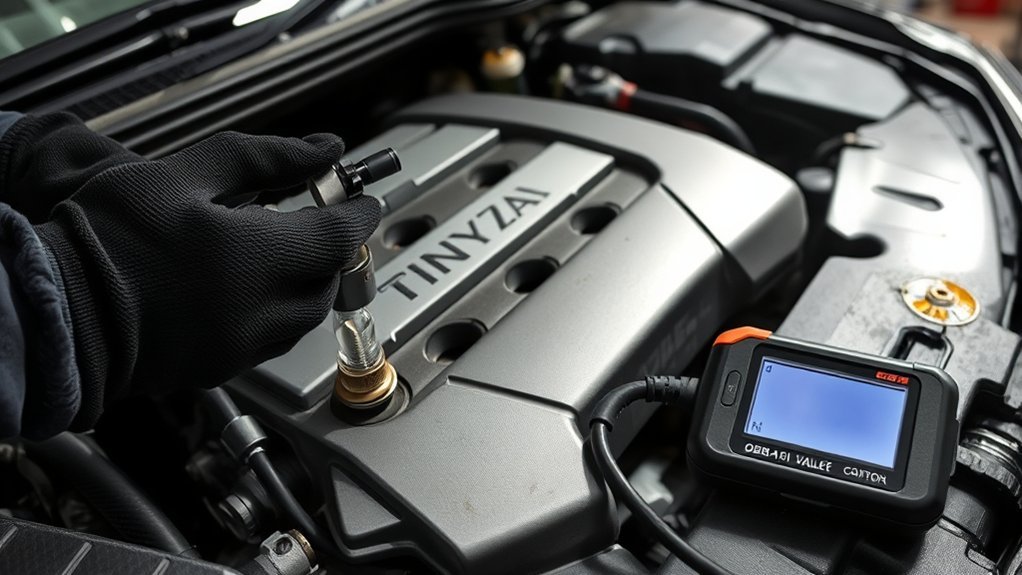
A P0012 code on a Toyota Camry means the engine computer sees the Bank 1 intake camshaft staying more retarded than commanded. The fault often starts with an oil-flow problem, but the code alone does not prove that the VVT solenoid, camshaft sensor, or timing chain has failed. A careful diagnosis can prevent unnecessary parts replacement.
Quick Answer
Check the engine-oil level, condition, and correct viscosity first. Then scan for related codes and freeze-frame data, inspect the VVT oil-control valve and wiring, and compare commanded cam timing with actual timing. If oil flow and electrical tests pass, inspect the cam phaser, oil pressure, and mechanical timing.
Key Takeaways
- P0012 describes a cam-timing performance problem. It does not identify the failed part by itself.
- Low, dirty, incorrect, or poorly flowing oil is a common first check because Toyota VVT systems depend on controlled oil pressure.
- Do not replace the camshaft sensor or VVT solenoid until testing supports that repair.
- A red oil-pressure warning, loud timing rattle, flashing check-engine light, stalling, or severe power loss calls for immediate professional help.
- Use the repair information for your exact model year, engine, and VIN because specifications and procedures vary across Camry generations.
At a Glance
| Time Required | Under an hour for basic checks; longer for electrical, oil-pressure, cam-correlation, or mechanical-timing tests |
| Difficulty | Beginner for oil and visual checks; intermediate to advanced for circuit, active-test, and timing diagnosis |
| Tools Needed | OBD-II scan tool, basic hand tools, good lighting, and the correct Toyota service information; advanced testing may require a multimeter, bidirectional scan tool, oil-pressure gauge, and oscilloscope |
| Cost | Low for an oil service or simple wiring repair, moderate for an oil-control valve, and potentially high for cam-phaser or timing-component work |
Understanding the P0012 Code in Your Toyota Camry
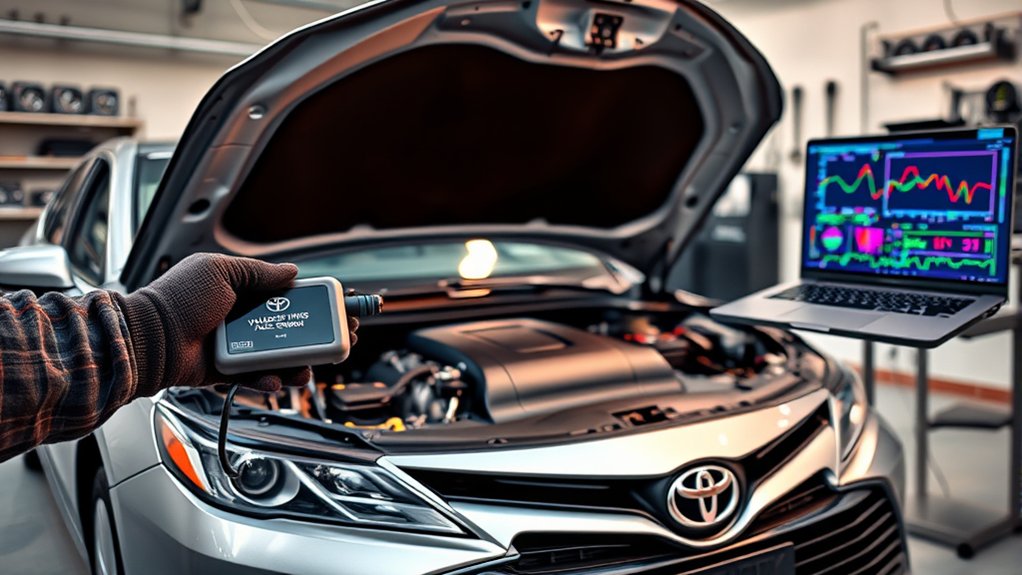
P0012 is a generic powertrain diagnostic trouble code commonly described as “A” camshaft position timing over-retarded, Bank 1. “A” normally refers to the intake camshaft. On an inline-four Camry, there is only one cylinder bank. On a V6, Bank 1 is the side containing cylinder number 1, and its physical location depends on the engine.
The engine control module commands the variable valve timing system to move the intake camshaft. It then compares the requested position with feedback from the camshaft and crankshaft signals. P0012 sets when the actual cam position remains too retarded for the monitored operating conditions.
The California Air Resources Board’s OBD program explains that onboard diagnostics monitor emissions-related systems, illuminate a warning lamp when a fault is detected, and store information that helps a technician diagnose the problem. The stored code is a starting point, not a complete diagnosis.
Note: The exact enabling conditions, test values, connector pinouts, and component locations depend on the Camry’s model year and engine. Use the correct Toyota repair manual rather than a generic resistance value or wiring diagram.
Common Causes of the P0012 Code and Their Effects on Performance
P0012 can come from hydraulic, electrical, or mechanical problems. Start with the causes that are easiest to verify and most closely tied to oil flow.
- Low engine-oil level: Insufficient oil can reduce the pressure and flow available to the VVT system. Find and repair the reason for the low level instead of only topping it off.
- Dirty, degraded, or incorrect-viscosity oil: Contaminated oil or the wrong grade can slow oil-control-valve and cam-phaser operation.
- Restricted oil passage or filter screen: Sludge or debris can limit flow to the VVT oil-control valve or cam phaser.
- Sticking or electrically faulty VVT oil-control valve: The valve may bind, clog, short, open electrically, or fail to respond correctly to commands.
- Damaged connector or wiring: Loose terminals, corrosion, oil intrusion, rubbed-through wiring, or poor grounds can interrupt control of the valve or distort sensor signals.
- Sticking or worn camshaft timing gear or phaser: Internal wear or a locking-pin problem can keep the camshaft from reaching its commanded position.
- Low engine oil pressure: A worn pump, excessive bearing clearance, a restriction, or another lubrication-system fault can affect VVT operation.
- Mechanical timing error: A stretched chain, weak tensioner, damaged guide, jumped timing, or incorrect installation after engine work can create a persistent correlation problem.
- Camshaft or crankshaft signal fault: A failed sensor, damaged reluctor, wiring issue, or poor signal can confuse position feedback, although related circuit or correlation codes are often present.
- Model-specific calibration or service issue: A technical service bulletin or updated procedure may apply to a particular year, engine, or VIN.
Any of these faults can reduce low-speed torque, make the idle unstable, increase emissions, or lower fuel economy. The exact effect depends on how far the actual cam timing differs from the commanded position.
P0012 tells you what the engine computer observed. Testing is still required to determine why the camshaft did not reach its commanded position.
Effective Diagnosis of the P0012 Code
A good diagnosis follows evidence instead of replacing the most commonly mentioned part. Perform the checks in a logical order.
1. Record All Codes and Freeze-Frame Data
Connect an OBD-II scan tool and record stored, pending, and permanent codes before clearing anything. Save the freeze-frame values, including engine speed, coolant temperature, load, and vehicle speed. Related oil-pressure, camshaft-sensor, crankshaft-sensor, misfire, or cam-correlation codes can change the diagnostic path.
Pro Tip: Photograph the scan-tool screens before disconnecting the battery or clearing codes. Freeze-frame data may show whether the fault appeared during a cold start, at idle, or under load.
2. Check the Engine Oil Correctly
Park on level ground, follow the owner’s manual procedure, and verify the oil level. Inspect the oil for heavy contamination, fuel dilution, metallic debris, or an obviously incorrect consistency. Confirm that the installed oil grade and filter match the requirements for your exact engine.
If the red oil-pressure warning is on, the engine rattles loudly, or the dipstick shows no oil, shut the engine off. Do not continue running it merely to complete code checks.
3. Inspect Wiring and Connectors
Inspect the VVT oil-control-valve connector, camshaft-sensor connector, nearby harness, grounds, and any areas recently disturbed during service. Look for backed-out terminals, corrosion, broken locks, oil-soaked connectors, and wires rubbing against brackets or the cylinder head.
4. Compare Commanded and Actual Cam Timing
A capable scan tool may display commanded VVT angle and actual cam timing. A bidirectional tool may also command the oil-control valve while the technician watches engine response and cam-angle data. If the command changes but the actual angle does not follow, the next step is to separate an oil-flow or mechanical problem from an electrical problem.
5. Test the VVT Oil-Control Valve
Use the Toyota procedure for the exact engine to test the valve’s circuit, resistance, power supply, ground or control side, and mechanical movement. Inspect a serviceable filter screen or oil passage for debris. Do not apply battery voltage or solvents without the correct procedure because duty-cycle limits and cleaning guidance vary.
6. Verify Oil Pressure and Mechanical Timing
If oil condition, wiring, and valve operation are acceptable, check engine oil pressure against the model-specific specification. Advanced diagnosis may include camshaft-to-crankshaft waveform comparison, inspection of the cam phaser, and verification of chain alignment, tensioner operation, and guide condition.
7. Verify the Repair
After completing the confirmed repair, clear the codes and operate the vehicle under the conditions needed for the monitor to run. Recheck pending and permanent codes, confirm that commanded and actual cam timing agree, and inspect for leaks. A code that immediately returns needs more diagnosis rather than another round of guesswork.
What to Look For: Symptoms of a P0012 Code
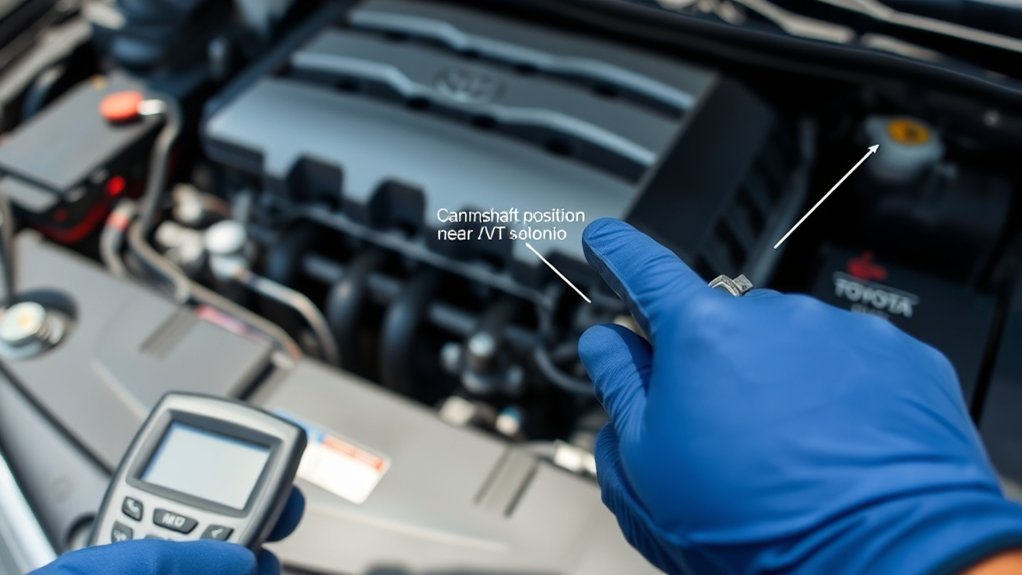
Some Camrys show only a check-engine light. Others develop clear drivability symptoms, especially during cold starts or when the VVT system is commanded to change timing.
Check Engine Light Activation
The malfunction indicator lamp may be the first sign. P0012 can appear alone or with codes for the opposite bank, exhaust camshaft, cam/crank correlation, oil-control-valve circuit, or misfire. Those companion codes are important clues.
Poor Engine Performance
You may notice a rough idle, hesitation, weak acceleration, hard starting, stalling, or reduced power. A brief rattle at startup can point toward oil drain-back, a phaser issue, a tensioner problem, or chain wear, but the sound must be diagnosed rather than assumed.
Increased Fuel Consumption
Incorrect cam timing can reduce combustion efficiency and make the driver use more throttle, so fuel economy may fall. However, a change in miles per gallon is not guaranteed and can have many unrelated causes.
When You Should Not Keep Driving
Warning: Stop the engine and arrange a tow if the red oil-pressure warning appears, the check-engine light flashes, the engine makes a loud timing rattle or knocking sound, the vehicle stalls repeatedly, or power loss makes driving unsafe. Continuing to run an engine with an oil-pressure or mechanical-timing fault can cause major damage.
If the check-engine light is steady, the oil-pressure warning is off, the oil level is correct, and the engine runs normally, a short, gentle trip to a repair facility may be reasonable. Avoid hard acceleration, high engine speed, towing, and long-distance driving until the cause is known.
Fixing the P0012 Code: A Step-by-Step Guide
The correct repair is the one supported by the diagnosis. Use this sequence as a decision guide.
| Finding | Corrective Action | Verification |
|---|---|---|
| Oil is low | Correct the level with the specified oil, then locate and repair leaks or abnormal consumption | Recheck the level and cam-timing data after operation |
| Oil or filter is overdue, contaminated, or incorrect | Change the oil and filter using the exact specification for the engine | Confirm the code does not return and actual timing follows the command |
| VVT valve or screen is restricted | Service the screen or replace the valve only as permitted by the Toyota procedure | Run an active test and compare commanded with actual timing |
| Valve circuit fails electrical testing | Repair the connector or wiring, or replace the failed valve | Repeat circuit tests and check for an immediate code reset |
| Cam or crank signal is faulty | Repair the circuit, reluctor, or confirmed failed sensor | Verify a clean signal and normal cam/crank correlation |
| Oil pressure is below specification | Diagnose the lubrication system before replacing VVT parts | Confirm pressure meets the factory specification |
| Phaser sticks or mechanical timing is incorrect | Repair the cam phaser, chain, tensioner, guides, or installation error as confirmed | Verify timing marks or waveforms, then complete a road test |
Avoid clearing the code and replacing the oil-control valve solely because it is the most common online suggestion. A restricted passage, low pressure, damaged harness, or mechanical timing problem can produce the same code.
Importance of Regular Engine Oil Maintenance
Toyota’s VVT system relies on clean oil of the correct viscosity reaching small control passages. Check the oil level regularly, address leaks or abnormal consumption, and use an oil and filter that meet the requirements for your engine.
Do not apply one universal mileage interval to every Camry. Oil-change schedules differ by model year, engine, oil specification, market, and operating conditions. Use the Toyota owner’s manual and Warranty & Maintenance Guide for your exact vehicle. Severe-service use, repeated short trips, extensive idling, dusty conditions, or other listed conditions may require more frequent service.
Avoid unapproved engine-flush chemicals or thick oil additives as a shortcut for sludge or low pressure. They can change oil behavior or move debris into small passages. Diagnose the underlying maintenance or mechanical problem and follow Toyota’s service procedure.
When to Call a Pro for P0012 Code Problems
Professional diagnosis is the safest choice when basic oil and visual checks do not identify the cause, or when the repair requires active tests, oil-pressure measurement, waveform analysis, or timing-cover removal.
Seek help promptly when:
- The red oil-pressure warning appears or oil pressure is unknown.
- The engine rattles, knocks, stalls, or has severe power loss.
- P0012 returns immediately after an oil service or verified valve repair.
- Multiple cam-timing, correlation, sensor-circuit, or misfire codes are stored.
- Commanded and actual cam timing do not match during a scan-tool test.
- The chain, phaser, tensioner, or internal oil passages may require inspection.
- The vehicle recently had cylinder-head, timing, or engine work.
A technician should use factory information for your exact configuration. Toyota’s Technical Information System provides repair manuals, service bulletins, wiring diagrams, and diagnostic resources for North American Toyota vehicles. You can also check the Toyota VIN recall and service-campaign lookup for model-specific programs.
Preventative Measures to Avoid Future P0012 Codes
- Follow the correct maintenance guide: Use the oil grade, capacity, filter, and interval listed for your model year and engine.
- Check the level between services: A leak or oil consumption can lower the level before the next scheduled change.
- Repair leaks and warning lights early: Oil loss, pressure warnings, and related timing codes should not be postponed.
- Keep connectors dry and secure: Inspect harnesses after engine work and repair broken locks or damaged loom.
- Use quality, correct-fit parts: An incorrect filter, valve, sensor, or connector can create new oil-flow or electrical problems.
- Verify work after repairs: Check live data, pending codes, leaks, and oil level instead of assuming that a cleared light means the fault is gone.
- Keep service records: Document oil specifications, mileage, parts, and diagnostic results to help identify recurring patterns.
Frequently Asked Questions
What is the main cause of a P0012 code?
There is no single cause. Low, dirty, or incorrect oil; a restricted oil passage; a sticking VVT oil-control valve; wiring faults; low oil pressure; a sticking cam phaser; and incorrect mechanical timing can all cause P0012. Test the system before replacing parts.
How do you fix P0012 on a Toyota Camry?
Record all codes and freeze-frame data, verify the oil level and specification, inspect wiring, test the VVT oil-control valve, and compare commanded with actual cam timing. If those checks pass, test oil pressure and inspect the cam phaser and mechanical timing. Repair only the confirmed fault.
Can an oil change fix a P0012 code?
It can help when the code was caused by low, contaminated, overdue, or incorrect-viscosity oil. It will not repair damaged wiring, a failed valve, low oil pressure, a sticking phaser, or incorrect mechanical timing. Verify the result with scan data and a road test.
Can a camshaft position sensor cause P0012?
A faulty sensor, reluctor, connector, or signal circuit can contribute to incorrect position feedback, but P0012 does not prove the sensor is bad. Check for related circuit or correlation codes and test the signal before replacement.
Is it safe to drive with a P0012 code?
A short, gentle trip for diagnosis may be reasonable if the oil level is correct, the oil-pressure warning is off, the check-engine light is steady, and the engine runs normally. Stop and tow the vehicle if there is a red oil-pressure warning, flashing check-engine light, loud rattle, repeated stalling, or severe power loss.
How much does it cost to fix P0012?
The cost depends on the confirmed cause, engine, labor rate, and region. An oil service or connector repair is usually far less expensive than replacing a cam phaser or timing components. Ask for an itemized diagnosis showing the failed test before approving major work.
Conclusion
P0012 on a Toyota Camry means the Bank 1 intake camshaft is not reaching the timing position the engine computer expects. Begin with oil level, oil condition, code data, wiring, and VVT valve testing. Move to oil-pressure, cam-phaser, and mechanical-timing checks only when the earlier evidence points there. This order reduces guesswork, protects the engine, and helps you avoid paying for parts that were never faulty.
Sources
- Toyota Manuals and Warranties — model-specific owner’s manuals, maintenance guides, and warranty information
- Toyota Technical Information System — factory repair manuals, service bulletins, wiring diagrams, and diagnostic resources
- California Air Resources Board OBD Program — purpose of onboard diagnostics, warning lamps, and stored malfunction information
- Toyota Safety Recall and Service Campaign Lookup — VIN-specific recall and campaign information

