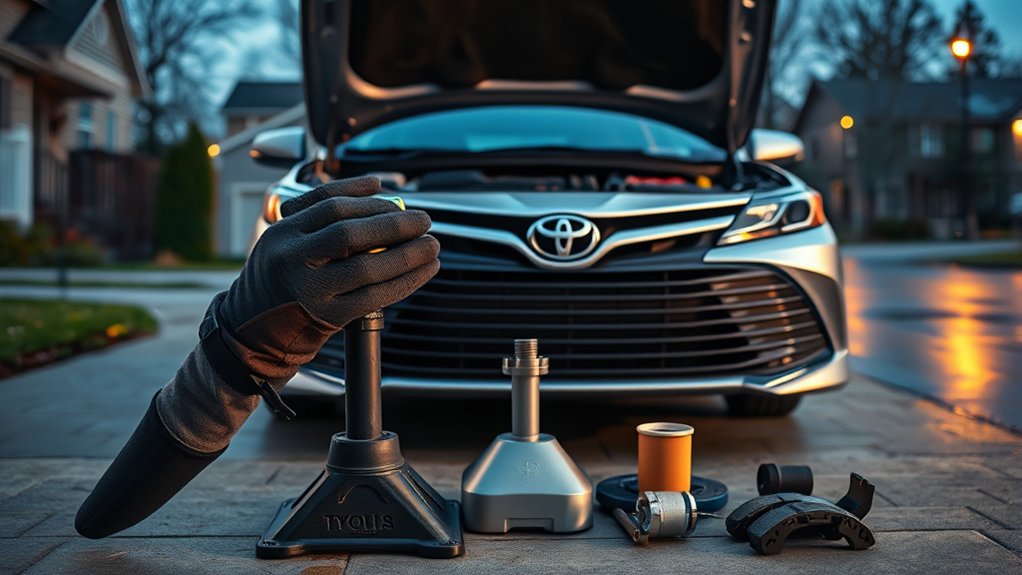
A Toyota Camry severe driving maintenance schedule is model-year specific. Toyota schedules maintenance every 5,000 miles or six months on recent U.S. Camrys, but the extra work depends on the special operating condition tied to each maintenance item. For the 2026 U.S. Camry, normal engine-oil and filter service is due by 10,000 miles or 12 months, while Toyota shortens it to 5,000 miles or six months when the vehicle is mainly driven on dirt or dusty roads or repeatedly makes trips of less than five miles below 32°F or 0°C. Other special conditions can trigger different inspections or drivetrain-fluid service rather than an earlier oil change.
Last updated: September 11, 2026
Quick Answer
Many recent Toyota Camrys receive routine maintenance every 5,000 miles or six months. For the 2026 U.S. Camry, oil and filter replacement is normally due by 10,000 miles or 12 months, but moves to 5,000 miles or six months when the car is mainly driven on dirt or dusty roads or repeatedly makes sub-five-mile trips below freezing. Towing, car-top-carrier use, or heavy loading can trigger other special-condition items, so match each service to the exact model-year chart.
Key Takeaways
- Use the maintenance guide for your Camry’s exact model year, powertrain, drivetrain, and market.
- Additional special-condition service generally applies only when most of your driving occurs under the condition tied to that maintenance item.
- A 5,000-mile service visit does not always mean that the engine oil or every fluid must be replaced.
- The 2024, 2025, and 2026 U.S. Camry guides do not use identical severe-use rules, so do not copy one model year’s checklist to another.
- Do not use universal two-year brake-fluid, 60,000-mile coolant, or 30,000-mile transmission-flush rules.
- Keep dated receipts and mileage records regardless of whether a dealer, independent shop, or qualified owner performs the work.
Toyota Camry Severe Driving Maintenance Schedule by Model Year

Toyota generally uses the term special operating conditions rather than treating every difficult trip as severe service. The important detail is that the conditions and the maintenance items attached to them have changed between Camry generations.
The clearest example is the oil interval. The 2024 U.S. Camry Warranty & Maintenance Guide, 2025 U.S. Camry guide, and 2026 U.S. Camry guide do not assign the same oil-change triggers to every special condition.
| U.S. model year | Conditions that can trigger 5,000-mile / 6-month oil service | Important distinction |
|---|---|---|
| 2024 Camry | Primarily dirt or dusty roads; permitted towing, car-top-carrier use, or heavy loading; repeated trips under five miles below 32°F/0°C; or extensive idling/prolonged low-speed use such as taxi, police, or delivery operation. | The 2024 lineup included gasoline, V6, hybrid, FWD, and mechanical-AWD configurations, so other maintenance items also vary by powertrain. |
| 2025 Camry | Primarily dirt, dusty, muddy, or melted-snow-road use in the special-condition chart, plus repeated sub-five-mile trips below freezing under the oil footnote. | Towing, car-top-carrier use, or heavy loading is tied to other additional work, including applicable drivetrain-fluid service, rather than automatically shortening every maintenance item. |
| 2026 Camry | Primarily dirt or dusty roads, or repeated trips of less than five miles below 32°F/0°C. | Heavy loading, a car-top carrier, or towing where permitted can trigger other items such as 60,000-mile transmission and applicable rear-differential service; it does not automatically create the 2026 5,000-mile oil interval. |
This model-year difference is why broad phrases such as “mountain driving,” “hot weather,” “city driving,” or “extreme temperatures” should not automatically trigger a generic severe-duty schedule. Match your actual use to the exact words and footnotes in the maintenance guide issued for your vehicle.
Note: Toyota says additional special-condition services are intended for vehicles driven primarily under the specified condition. Occasional exposure does not automatically make every extra service item due.
Confirm Your Exact Camry Maintenance Guide
Before choosing an interval, identify your Camry’s:
- Model year and sales market
- Gasoline or hybrid powertrain
- Engine code or engine size
- Front-wheel-drive or all-wheel-drive configuration
- Current mileage and months since the last service
- Driving conditions during most of that interval
Use Toyota’s Manuals and Warranties portal to locate the owner’s manual and Warranty & Maintenance Guide. The VIN, registration, driver-door certification label, and prior service records can help confirm the exact configuration.
The 2025 and 2026 U.S. Camry lineups are hybrid-only, with available Electronic On-Demand AWD. Earlier Camrys may instead use gasoline-only engines, a V6, mechanical AWD, different oil grades, accessory belts, different coolant schedules, or different transmission designs. That is why a schedule for a 2024 V6 or mechanical-AWD Camry should not be copied to a 2026 hybrid.
Pro Tip: When comparing a shop estimate with the factory schedule, ask which line and footnote in your model-year maintenance guide supports each recommended service. An inspection result may justify extra work, but it should be explained separately from factory-scheduled maintenance.
Essential Maintenance Tasks for Your Toyota Camry at Severe Driving Intervals
The following table is a planning guide, not a replacement for your vehicle’s maintenance log. It separates common routine service from work that may be added under specific conditions.
| Service category | Typical recent-model example | Important qualification |
|---|---|---|
| Routine visit | Every 5,000 miles or six months | Often includes tire rotation, fluid-level checks, wiper inspection, brake inspection, and reminder reset. |
| Normal oil service | Up to 10,000 miles or 12 months on many modern applications | Only when the correct oil is used and no shorter model-specific special-condition interval applies. |
| Special-condition oil service | Often 5,000 miles or six months when the oil-specific condition applies | Do not assume every special operating condition shortens the oil interval. Check the footnote attached to the engine-oil row. |
| Dusty-road inspections | Engine air filter, ball joints, boots, steering linkage, and fasteners | The exact road-condition wording, components, and intervals vary by model year. |
| Heavy-loading drivetrain service | For 2025–2026 examples, automatic-transmission fluid and applicable rear-differential oil are replaced at 60,000 miles under the specified towing, car-top-carrier, or heavy-loading condition. | Use only the requirements for the installed drivetrain. Do not substitute a universal 30,000-mile flush rule. |
| Hybrid and AWD items | Hybrid-battery cooling intake filter, drive-shaft hardware, coolant circuits, and applicable rear differential | Only service components installed on the vehicle and at the interval assigned to that component. |
Inspection does not automatically mean replacement. A technician may inspect a filter, fluid, belt, boot, or brake component and find that no corrective work is needed. Conversely, contamination, leakage, physical damage, or measurable wear may justify service before a listed replacement milestone.
Oil Change Frequency for Severe Driving Conditions: What You Need to Know
Oil intervals should be stated in both miles and months. Use whichever limit comes first. A low-mileage Camry can still become due by time, and the model-year guide—not a generic oil-change sticker—determines whether a special-condition interval applies. For a deeper oil-only explanation, see the Toyota Camry oil-change interval guide.
What Counts as Severe Driving for a Toyota Camry?
Toyota’s answer depends on the model year. On a 2024 U.S. Camry, the oil interval may shorten for primarily dirt or dusty roads, permitted towing or heavy loading, qualifying cold short trips, or extensive idling and prolonged low-speed use. On the 2026 U.S. Camry, the oil-specific 5,000-mile/6-month rule is tied to primarily dirt or dusty roads or repeated trips of less than five miles below freezing.
Do not assume ordinary city commuting, summer heat, mountain roads, or occasional stop-and-go traffic automatically place every Camry on a factory severe-service oil schedule. Match your use to the wording and footnote in the exact guide.
Recommended Oil Change Intervals
The oil viscosity also changes by engine and model year. The following entries illustrate why one blanket oil-grade statement is unsafe:
| Example application | Oil information | Interval guidance |
|---|---|---|
| 2022 Camry 2.5L A25A-FKS | The 2022 guide references 0W-16 | Use the model-year guide for normal and special-condition service. |
| 2022 Camry 3.5L 2GR-FKS V6 | The 2022 guide references 0W-20 | Do not apply the V6 specification to other Camry engines. |
| 2025–2026 U.S. Camry hybrid | Check the exact owner’s manual and oil-cap requirements before selecting oil | Normal oil service is by 10,000 miles/12 months. For 2026, the 5,000-mile/6-month exception specifically includes primarily dirt/dusty-road use and repeated sub-five-mile trips below freezing. |
Use oil that meets the viscosity, quality, and certification listed in the owner’s manual. Do not choose a grade solely because another Camry owner uses it or because the engine displacement appears similar.
The Maintenance Required or oil-maintenance message is useful, but it is not a laboratory oil-condition test. Record the date and mileage of each oil change and follow the time or mileage limit even if a message has not appeared.
Impact on Engine Longevity
Correct oil level, specification, and replacement timing support lubrication, cooling, deposit control, and variable-valve-timing operation. Check the oil level regularly, especially before long trips or after sustained high-load operation. Investigate repeated oil loss rather than repeatedly topping up without finding the cause.
A 5,000-mile maintenance visit and a 5,000-mile oil change are not always the same thing. The oil-specific footnote in the exact model-year guide determines whether replacement is due.
The Importance of Tire Maintenance Under Harsh Conditions

Tires are affected by load, temperature, road damage, alignment, inflation, and rotation history. Recent Camry maintenance schedules commonly call for rotation every 5,000 miles or six months, but the tire manufacturer’s instructions and the vehicle’s exact rotation pattern also matter.
- Check pressure monthly: Measure cold tire pressure with an accurate gauge and use the value on the driver-door placard, not the maximum pressure molded into the tire sidewall. Toyota recommends checking pressure at least monthly and before long trips or heavy loading.
- Inspect tread and sidewalls: Look for uneven wear, cuts, bulges, punctures, exposed cords, and embedded objects. The National Highway Traffic Safety Administration says tires should be replaced when tread reaches 2/32 inch.
- Address abnormal wear: Feathering, one-sided wear, cupping, or repeated pressure loss can point to alignment, balance, suspension, wheel, or tire damage.
- Consider the conditions: Wet, icy, snowy, or unpaved driving may require more tread and a tire type suited to the climate rather than waiting for the minimum replacement threshold.
Brake Inspections: Why They Matter More for Severe Driving
Stop-and-go traffic, repeated downhill braking, road salt, moisture, abrasive dust, and heavy loading can increase brake wear or corrosion. Recent Camry schedules include a visual inspection of brake linings, pads, drums, or discs at routine 5,000-mile maintenance visits, with more detailed measurements at selected milestones.
A proper inspection may include pad or shoe thickness, rotor or drum condition, leaks, hose damage, caliper movement, parking-brake operation, and uneven wear. Replacement is based on measurements, damage, symptoms, and service limits—not on a universal mileage figure.
Warning: Stop driving and arrange an inspection if the brake pedal suddenly sinks, braking becomes weak or uneven, the vehicle pulls sharply, a wheel appears loose, brake fluid is leaking, or severe grinding continues. Do not rely on a future maintenance interval when braking safety has changed.
Fluid Checks: Essential for Smooth Operation
Fluid service is one of the most overgeneralized parts of Camry maintenance. Some fluids are inspected frequently but replaced only at a model-specific milestone, under a particular special operating condition, after contamination is found, or during a related repair.
Fluid Types and Functions
- Engine oil: Lubricates and helps cool the gasoline engine. Use the exact viscosity and specification in the owner’s manual.
- Engine, inverter, or intercooler coolant: Controls temperature and protects compatible cooling-system materials. Hybrid models can have separate cooling circuits with different initial replacement milestones.
- Brake fluid: Transfers hydraulic pressure. Inspect its level and condition and investigate any unexplained drop. For a focused explanation, see the Toyota Camry brake-fluid replacement interval guide.
- Transmission or transaxle fluid: Lubricates and supports operation of the installed transmission or hybrid transaxle. Do not assume every design uses the same service procedure. Hybrid owners can also review the Camry hybrid transmission-fluid guide.
- Rear differential or transfer-case lubricant: Applies only to equipped AWD systems and may receive extra service under specified heavy-loading conditions.
- Power-steering fluid: Applies only if the vehicle has a hydraulic power-steering system. Many later Camrys use electric power steering and have no hydraulic reservoir.
- Windshield-washer fluid: Supports visibility and should be kept at a usable level with a climate-appropriate product.
Recommended Fluid Change Intervals
| Fluid | Safe guidance |
|---|---|
| Engine oil and filter | Follow the exact normal or oil-specific special-condition interval. The 2026 U.S. Camry uses 10,000 miles/12 months normally and 5,000 miles/6 months for primarily dirt/dusty-road use or repeated sub-five-mile trips below freezing. |
| Engine/intercooler coolant | For the 2025–2026 U.S. Camry example, initial replacement is at 100,000 miles/120 months, then every 50,000 miles/60 months. Confirm the exact vehicle and circuit. |
| Inverter/intercooler coolant | For the 2025–2026 U.S. Camry example, initial replacement is at 150,000 miles/180 months, then every 50,000 miles/60 months. Do not substitute the engine-coolant milestone. |
| Brake fluid | Inspect level and condition. Replace when required by the exact guide, verified condition, contamination, opened hydraulic work, or an applicable repair procedure—not by a universal 15,000-mile or two-year rule. |
| Transmission or transaxle fluid | Inspect or replace at the milestones and operating conditions listed for the installed unit. In the 2025–2026 U.S. charts, replacement appears at 60,000 miles under the specified towing, car-top-carrier, or heavy-loading condition. A generic 30,000–60,000-mile flush is not a universal Toyota requirement. |
| AWD lubricants | Service the applicable rear differential or other equipped unit only at its assigned inspection or replacement interval. Current 2025–2026 charts include a 60,000-mile rear-differential-oil replacement under the specified heavy-loading condition where applicable. |
Warning: Never remove a radiator or pressurized coolant cap while the system is hot. Escaping coolant and steam can cause severe burns. Hybrid high-voltage components and orange cables should be serviced only by properly trained personnel.
Signs of Low Fluids
- Engine oil: Low level on the dipstick, an oil-pressure warning, visible leakage, burning odor, or abnormal engine noise.
- Coolant: Falling reservoir level when cold, overheating, a sweet odor, colored residue, leakage, or repeated cooling-fan operation.
- Brake fluid: A low reservoir, external leakage, a changing pedal feel, or a brake warning. Low fluid may accompany worn pads or a hydraulic leak and should not be dismissed.
- Transmission or drivetrain fluid: Leakage, delayed engagement, abnormal noises, shudder, harsh operation, or a warning message.
- Washer fluid: Weak or absent spray despite an operating pump.
Do not add an unidentified “universal” fluid merely because a reservoir is low. Confirm the correct product and find the cause of repeated loss.
How Engine Air Filters Impact Your Toyota Camry’s Maintenance
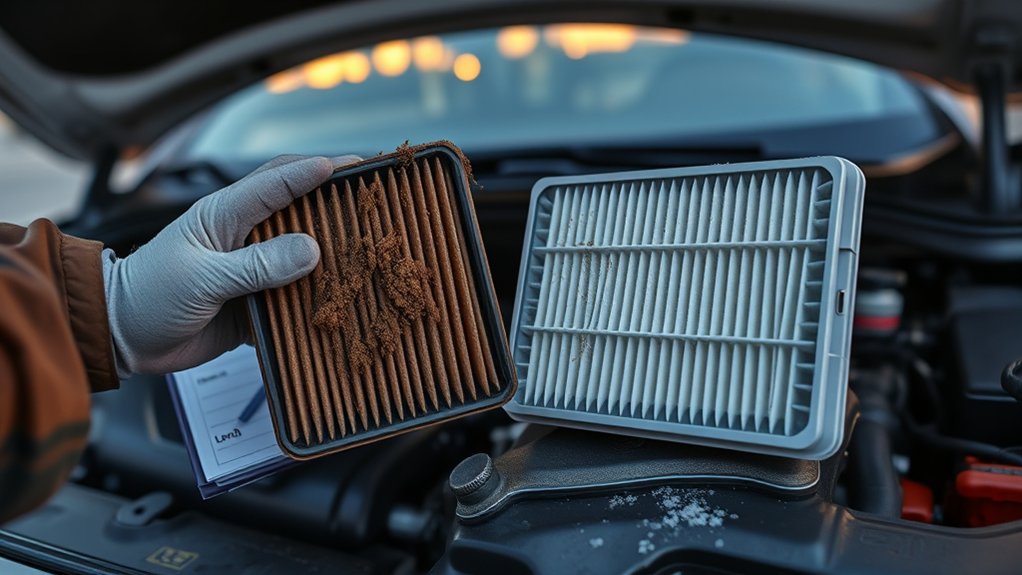
The engine air filter keeps abrasive dirt and debris out of the engine. A damaged or heavily restricted filter can reduce airflow, but mileage alone does not reveal its condition.
In the 2025 U.S. Camry guide, the engine air filter is replaced at 30,000-mile intervals during normal use and inspected more frequently when the vehicle is driven primarily on dirt, dusty, muddy, or melted-snow roads. The 2026 special-condition wording is narrower and identifies dirt or dusty roads. Other model years may use different wording or intervals.
During inspection, check for:
- Heavy dust loading or embedded debris
- Tears, deformation, or poor sealing
- Oil or moisture contamination
- An incorrectly fitted housing or loose clips
Do not clean a disposable filter with high-pressure air unless the filter manufacturer specifically permits it. Excess pressure can damage the media or drive dirt deeper into it.
Hybrid Camrys may also have a separate hybrid-battery cooling intake filter or vent. Keep that intake unobstructed and follow the owner’s manual cleaning procedure. It is not the same component as the engine air filter.
Seasonal Maintenance Tips for Your Toyota Camry
Seasonal checks supplement the factory schedule. They do not automatically shorten every replacement interval, but they can reveal weather-related wear before it becomes a breakdown or safety issue.
Winter Preparation Essentials
- Tires: Check cold inflation, tread, sidewall condition, and whether the tire type is suitable for expected snow and ice.
- Brakes: Inspect for wear, corrosion, dragging, or imbalance before steep or slippery travel.
- Coolant: Confirm the level when cold and use the specified coolant mixture. Have protection level tested when condition is uncertain.
- Battery: Inspect the 12-volt battery, terminals, and starting performance. Hybrid vehicles still depend on a 12-volt electrical system.
- Wipers and washers: Replace damaged blades and use washer fluid suitable for expected freezing temperatures.
- Undercarriage: Wash accumulated road salt from the body and underbody when conditions permit.
Summer Readiness Checks
- Cooling system: Look for leakage, damaged hoses, blocked radiator or condenser fins, and abnormal temperature indications.
- Air conditioning: Have weak cooling, unusual odor, or abnormal compressor noise diagnosed rather than repeatedly adding refrigerant.
- Tires: Check pressure when cold. Do not bleed pressure from a hot tire simply because the reading increased after driving.
- 12-volt battery: Heat can accelerate deterioration, so test an aging or slow-performing battery.
- Emergency supplies: Carry water, a phone charger, basic first-aid supplies, and the correct tire-repair or spare-tire equipment for the vehicle.
Signs You Need Urgent Vehicle Maintenance
A scheduled interval should never delay diagnosis of a new safety or reliability problem. Arrange prompt service when you notice:
- Warning lights or messages: Especially oil pressure, overheating, brake, charging, hybrid-system, or flashing check-engine warnings.
- Unusual noises: Grinding brakes, persistent knocking, severe wheel-bearing growl, belt squeal, or drivetrain clunks.
- Fluid leaks: Oil, coolant, brake fluid, fuel, or unidentified fluid under the vehicle.
- Handling changes: Pulling, steering looseness, vibration, instability, or a wheel that feels loose.
- Performance loss: Misfires, stalling, overheating, delayed transmission engagement, or sudden fuel-economy decline.
- Tire damage: A bulge, exposed cords, rapid pressure loss, deep cuts, or severe uneven wear.
A Maintenance Required reminder usually indicates scheduled service rather than an immediate mechanical failure. Red warning lights, overheating, weak braking, fuel leakage, and serious handling changes require a different and more urgent response.
Finding the Right Service Center for Your Camry’s Needs
A Toyota dealer can provide factory information, Toyota-trained technicians, software access, recall work, and vehicle-specific parts. However, routine maintenance may also be performed by a qualified independent shop or by an owner who has the tools, information, and ability to complete the procedure correctly.
Choose a provider that will:
- Identify the vehicle by VIN, model year, engine, hybrid system, and drivetrain
- Separate factory-scheduled work from recommendations based on inspection
- Use fluids and parts that meet the required specifications
- Provide measurements for brakes, tires, batteries, and other wear items
- Explain whether a service is an inspection, drain-and-fill, exchange, repair, or replacement
- Document the date, mileage, parts, fluids, and work performed
- Use appropriate safety procedures for hybrid, brake, cooling-system, and raised-vehicle work
Toyota recommends keeping detailed maintenance records. Lack of a dealer stamp alone does not make maintenance invalid, but damage caused by neglected or improper service may not be covered. Before authorizing additional work, compare it with the factory maintenance chart and ask which condition, footnote, or inspection result supports the recommendation.
Also check the vehicle’s VIN through the NHTSA recall lookup. Recall repairs are separate from routine maintenance and are generally completed by the manufacturer’s dealer network at no charge when the vehicle is affected.
Frequently Asked Questions
What are the major service intervals for a Toyota Camry?
Many recent U.S. Camrys receive routine maintenance every 5,000 miles or six months. Oil, filters, coolant, spark plugs, transmission fluid, AWD lubricants, and other components have separate model-specific milestones. Use the Warranty & Maintenance Guide for the exact model year rather than a universal 30,000-, 60,000-, or 100,000-mile checklist.
Does idling count as severe driving for a Toyota Camry?
It can on model years whose Toyota guide specifically lists extensive idling or prolonged low-speed operation. The 2024 U.S. Camry guide includes that condition for additional oil service, but you should not automatically transfer the same rule to a 2025 or 2026 Camry. Use the special-condition wording in the guide for your exact model year.
Can you go 10,000 miles with synthetic oil in a Toyota Camry?
Yes, but only when the exact engine and model-year schedule permits 10,000 miles or 12 months, the specified oil is used, the oil level remains correct, and no shorter oil-specific special-condition interval applies. Some older Camrys and some operating conditions require shorter service.
At what mileage does Toyota recommend a transmission flush?
Toyota does not publish one universal Camry transmission-flush mileage. Depending on the year and drivetrain, the guide may call for inspection or replacement at a particular milestone. For example, the 2025–2026 U.S. charts include a 60,000-mile transmission-fluid replacement under the specified towing, car-top-carrier, or heavy-loading condition. Follow the exact procedure and fluid specification rather than assuming a generic flush is required.
What counts as severe driving for a Toyota Camry?
It depends on the model year and maintenance item. Examples across Toyota guides include driving primarily on dirt or dusty roads, qualifying cold short trips, extensive idling or prolonged low-speed commercial use, heavy vehicle loading, a car-top carrier, and towing where the vehicle is approved for it. Do not assume every condition applies to every service item.
Does a 5,000-mile maintenance reminder always mean the oil must be changed?
No. On many recent Camrys, the 5,000-mile visit includes tire rotation and inspections, while normal oil replacement may occur at 10,000 miles. Oil can still be due at 5,000 miles when an oil-specific special operating condition applies. Check the engine-oil row and its footnotes instead of relying on the reminder alone.
Conclusion
A Toyota Camry severe driving maintenance schedule should be built from the vehicle’s exact factory guide, not from a universal list of shortened intervals. Start with the routine 5,000-mile or six-month maintenance cycle used by many recent Camrys, then add only the services tied to the special operating conditions and footnotes that apply to your model year.
For a 2026 U.S. Camry, that means distinguishing the normal 10,000-mile/12-month oil interval from the specific 5,000-mile/6-month dirt/dust and sub-freezing short-trip exceptions, while treating heavy-loading drivetrain service separately. Use the specified fluids, distinguish inspection from replacement, keep complete records, and address safety symptoms immediately.
Sources
- Toyota Manuals and Warranties — model-year owner’s manuals and maintenance guides
- 2026 Toyota Camry Warranty & Maintenance Guide — current U.S. scheduled maintenance, oil intervals, and special-condition examples
- 2025 Toyota Camry Warranty & Maintenance Guide — routine and special-condition maintenance examples and separate cooling-system milestones
- 2024 Toyota Camry Warranty & Maintenance Guide — earlier gasoline, hybrid, AWD, and special-condition examples
- 2022 Toyota Camry Warranty & Maintenance Guide — gasoline, hybrid, AWD, oil-grade, and special-condition examples
- Toyota Tire Pressure Guidance — regular tire-pressure inspection guidance
- NHTSA TireWise — tire inspection and 2/32-inch tread replacement guidance
- NHTSA Recall Lookup — VIN-based safety recall checks
