
Your Toyota Camry maintenance log tells you what service is due, when it should be completed, and how to document the work. To read it correctly, use the warranty and maintenance guide for your Camry’s exact model year, compare both mileage and time, check every chart footnote, and record each completed service.
Quick Answer
Open the warranty and maintenance guide for your Camry’s exact model year. Match the current mileage or time column, read each symbol and footnote, check whether special operating conditions apply, then record the service date, mileage, work performed, parts or fluids used, provider, and receipt number.
Key Takeaways
- Use the guide for your exact model year because service items and intervals can change between Camry generations.
- Follow whichever limit comes first, mileage or time.
- Do not assume every 5,000-mile visit requires an oil change.
- Read chart symbols, numbered footnotes, and special-condition instructions together.
- Keep receipts and detailed records, including work performed outside a Toyota dealership.
- You may use a qualified independent provider and suitable non-Toyota parts without automatically voiding your warranty.
Last updated: July 11, 2026.
At a Glance
| Time Required | 10 to 15 minutes |
| Difficulty | Easy |
| Tools Needed | Correct maintenance guide, odometer reading, service receipts, and a pen or digital record |
| Cost | Free to review and update; actual service costs vary |
Why Keeping a Maintenance Log Is Crucial for Your Toyota Camry

A maintenance log creates a clear history of inspections, fluid services, part replacements, and repairs. It helps you see what has already been completed and what is due next, reducing the risk of missed or duplicated work.
Records can also support a warranty claim or future vehicle sale. Toyota recommends keeping the service date, mileage, work performed, and parts installed. Its current guide also says a warranty claim will not be denied solely because records are missing, although damage caused by inadequate maintenance may not be covered.
You can keep the original paper chart, use the Toyota owner portal, save digital invoices, or maintain your own spreadsheet. The format matters less than keeping the entries complete, accurate, and easy to retrieve.
Think of the maintenance chart as a map: the column tells you when, the row tells you what, and the footnote tells you under which conditions.
Essential Sections of Your Maintenance Log You Should Monitor
Each service entry should contain enough information to show what happened and identify the vehicle, provider, and parts involved. Use the same fields for dealership, independent-shop, and do-it-yourself work.
| Log Field | What to Record | Why It Matters |
|---|---|---|
| Service date | The date the work was completed | Helps you track time-based intervals |
| Mileage | The odometer reading at service | Shows where the service falls in the mileage chart |
| Work performed | Every inspection, replacement, adjustment, or fluid service | Prevents vague entries such as “regular service” |
| Parts and fluids | Brand, part number, fluid type, grade, and viscosity when available | Shows whether the correct specifications were used |
| Service provider | Dealer, independent shop, technician, or owner | Makes follow-up questions easier |
| Receipt or invoice | Invoice number, receipt image, or file name | Provides supporting documentation |
| Next service | Next mileage and date based on the guide | Creates a clear reminder |
Pro Tip: Photograph every receipt before the ink fades. Name the file with the date, mileage, and service, such as “2026-07-11_30000-miles_cabin-filter.pdf.”
Tracking Your Toyota Camry Maintenance Log
Start by finding the warranty and maintenance guide for your Camry’s exact model year. Toyota provides manuals and warranty documents through its official manuals and warranties page.
1. Confirm the Model Year and Vehicle Configuration
Do not rely on a generic Camry interval chart. Confirm the model year, drivetrain, engine or hybrid configuration, and any applicable equipment. A service item shown for one generation may not apply to another.
2. Compare Mileage and Time
Find your current mileage at the top of the maintenance chart. Then check the corresponding time limit in the guide. Follow whichever limit comes first.
For example, the 2026 Toyota Camry Warranty & Maintenance Guide recommends scheduled maintenance every 5,000 miles or six months. That does not mean every item in the chart is performed at every visit.
3. Read Across the Correct Mileage Column
Move down the column and note every row containing a maintenance symbol. A blank cell normally means the listed action is not scheduled at that interval under the conditions represented by that chart.
4. Check Every Footnote
A numbered footnote can change the meaning of a chart entry. It may limit a service to specific driving conditions, explain what an inspection includes, or provide a separate time limit.
5. Record the Completed Work
After service, update the paper chart or digital log. Do not simply write “30,000-mile service.” List each inspection, replacement, fluid, and adjustment separately.
How to Read Toyota Maintenance Chart Symbols
Toyota maintenance charts use letters to show the action required at a specific interval. Read the letter together with the row description and any numbered footnote.
| Symbol | Meaning | What It Usually Requires |
|---|---|---|
| C | Clean | Clean the named component using the approved procedure |
| I | Inspect | Check condition, operation, leakage, wear, or adjustment and correct the issue if needed |
| P | Perform | Complete the named action, such as rotating tires or resetting the reminder |
| R | Replace | Remove and replace the listed part or fluid |
| T | Torque | Check and tighten the specified fastener to the approved torque value |
Warning: Never copy intervals from a different model year or attempt hybrid high-voltage service unless you have the required training and equipment. Do not touch orange high-voltage cables, connectors, or the hybrid battery service plug.
Common Maintenance Tasks and Their Importance
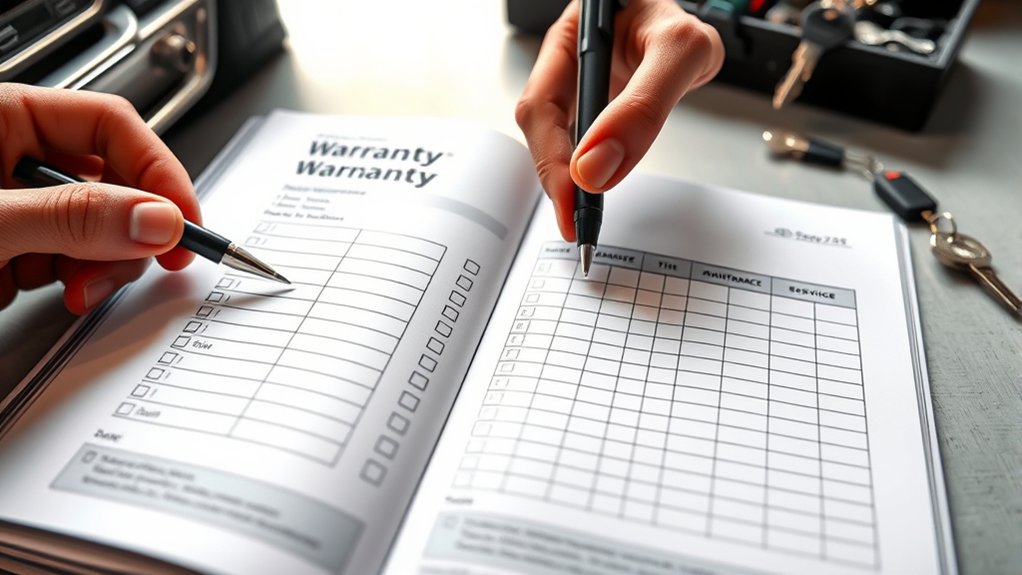
The exact service interval depends on the model year and operating conditions. Use the following table to understand how common tasks appear in a maintenance guide rather than treating the examples as universal intervals.
| Task | How to Read It | Why It Matters |
|---|---|---|
| Engine oil and filter | Follow the R symbols and oil-service footnotes. The 2026 guide allows up to 10,000 miles or 12 months under stated normal conditions but shortens service under qualifying special conditions. | Maintains lubrication and helps prevent oil-related engine damage |
| Tire rotation | Look for P in the tire-rotation row. The 2026 chart lists it at each 5,000-mile service interval. | Promotes more even tread wear |
| Brake inspection | Read both the chart entry and footnote because a visual inspection and a measured inspection may use different intervals. | Identifies wear, leakage, and braking-system concerns |
| Cabin and engine air filters | Follow each filter’s separate row. Dusty conditions may add inspections or shorten replacement timing. | Supports airflow, HVAC performance, and engine protection |
| Coolant | Use the exact engine, inverter, or intercooler coolant row. Initial and later replacements may differ. | Supports temperature control and corrosion protection |
| Transmission or differential fluid | Check whether the chart calls for inspection or replacement and whether the action applies only under special operating conditions. | Helps identify leakage, contamination, or fluid deterioration |
| Spark plugs | Use the interval listed for your exact model year and powertrain. Do not apply an older V6 or four-cylinder rule to every Camry. | Supports proper ignition and engine operation |
Why Maintenance Is Key for Warranty Coverage
Your warranty covers qualifying defects under its written terms. It normally does not pay for routine maintenance, normal wear, or damage caused by neglected or improper maintenance.
Keeping a detailed log can help show that you followed the applicable schedule. However, a missing receipt does not automatically cancel the entire warranty or prove that a failure resulted from poor maintenance.
Importance of Scheduled Maintenance
Use the published maintenance chart as your starting point. Toyota’s guide may list a scheduled visit every 5,000 miles or six months while assigning different actions to different visits.
For example, a 5,000-mile visit may include inspections, a tire rotation, and a maintenance-reminder reset without requiring every filter or fluid to be replaced. Always read down the entire mileage column.
Note: A dealer may suggest services that do not appear in the manufacturer’s scheduled maintenance chart. Ask whether the recommendation is based on an inspection result, local conditions, a service bulletin, or an optional maintenance package.
Documentation for Warranty Claims
Useful documentation includes invoices, parts receipts, fluid specifications, mileage records, photographs, and notes describing the work. For do-it-yourself service, keep the purchase receipt and write down the date, mileage, procedure, and products used.
Toyota’s current guide allows maintenance by the owner or another automotive service provider. The Federal Trade Commission’s auto-warranty guidance also explains that routine service at an independent facility does not automatically void a warranty.
Warranty coverage is not dependent on one replacement-parts brand. Toyota may recommend Toyota Genuine Parts, but suitable aftermarket parts can be used. Damage caused by an unsuitable, defective, or incorrectly installed part may not be covered.
Note: This section summarizes general U.S. warranty information and is not legal advice. Read the warranty supplied with your vehicle because coverage and state-law rights can differ.
Customizing Your Toyota Camry Maintenance Schedule
You should not invent your own intervals, but you may need to follow additional chart items when your driving pattern meets Toyota’s definition of special operating conditions.
Recommended Maintenance Intervals
Start with the standard chart for your model year. Compare both mileage and months, then review each footnote. If the guide says “whichever comes first,” low-mileage drivers must still follow the time limit.
Do not combine intervals from different Camry generations. Oil type, hybrid equipment, drivetrain components, spark plugs, coolant systems, and filter schedules may differ.
Tracking Service History
Review your log before authorizing service. Compare the current odometer reading with the most recent completed entry and the next applicable chart column.
When a shop completes several items, ask for an itemized invoice. “Major service completed” is less useful than a list showing the tire rotation, brake inspection, fluid checks, filter replacement, and other specific actions.
Adjusting for Driving Conditions
Special operating conditions may include frequent driving on dirt or dusty roads, repeated short trips in freezing weather, towing where permitted, use of a car-top carrier, or heavy loading. The exact conditions and added services vary by model year.
Apply the additional schedule only when your guide says the condition matches your normal use. Toyota’s 2026 guide explains that occasional exposure does not necessarily require every special-condition service.
What to Do When Records Are Missing or Conflict
A missing entry does not mean you should guess or restart every maintenance interval. Rebuild the history using reliable evidence.
- Check dealership and independent-shop invoices.
- Review the service history in your Toyota owner account.
- Search email, bank, and credit-card records for service purchases.
- Check stickers or tags showing the last oil, tire, battery, or filter service.
- Ask the previous owner for records if you recently purchased the car.
- Have a qualified technician inspect uncertain items before replacing them.
If two records conflict, give more weight to an itemized invoice that includes the VIN, date, mileage, parts, and work performed. Keep both records and add a note explaining how you resolved the difference.
How Often to Perform Essential Maintenance Tasks?
No single interval applies to every Toyota Camry maintenance task. The correct timing comes from the guide for your model year, the mileage or month limit that arrives first, the chart symbol, and any attached footnote.
- At each scheduled interval: Read the full mileage column instead of assuming the same work repeats every time.
- For oil service: Follow the engine-oil row and its footnotes, not the general visit interval alone.
- For inspections: Record the result, including measured wear or a recommendation for future service.
- For fluids: Distinguish between inspecting the level or condition and replacing the fluid.
- For filters and spark plugs: Use the exact replacement row for your model year and powertrain.
- For severe use: Apply only the special-condition rows that match your normal driving.
Maintenance Logs, Warning Lights, and Recalls Are Different
The maintenance log records scheduled care. A maintenance reminder usually tells you that a scheduled interval has arrived, but it does not identify every required task and does not always mean the engine oil is due.
A red or amber warning light can indicate a separate operating or safety concern. Read the owner’s manual and address urgent warnings before continuing to drive.
Safety recalls are also separate from routine maintenance. Check your vehicle by VIN through the National Highway Traffic Safety Administration recall lookup. Recall repairs are not a substitute for scheduled maintenance entries.
Frequently Asked Questions
How do I tell what maintenance my Toyota Camry needs?
Find the guide for your exact model year, locate the column matching your current mileage, compare the time limit, and read every marked row and footnote. Also check whether your normal driving meets any listed special operating condition.
What is the maintenance schedule for a Toyota Camry?
The schedule depends on the model year and vehicle configuration. Recent Toyota guides commonly organize scheduled visits in 5,000-mile or six-month steps, but individual items such as oil, filters, coolant, fluids, and spark plugs follow their own chart rows and footnotes.
What does “Maintenance Required” mean on a Toyota Camry?
It normally indicates that a scheduled maintenance interval has arrived. It is not a diagnosis and does not automatically mean an oil change is required. Check the applicable mileage column in your maintenance guide to identify the work due.
Can an independent mechanic service my Camry without voiding the warranty?
Yes. Toyota’s current warranty guide says paid maintenance may be performed by the owner or another automotive service provider. Keep detailed records and use parts, fluids, and procedures that meet the vehicle’s requirements.
Does a missing maintenance receipt automatically void my warranty?
No. Toyota states that it will not deny a claim solely because you lack records. However, damage caused by inadequate or improper maintenance may not be covered, so receipts and detailed log entries remain valuable.
Conclusion
To use your Toyota Camry maintenance log correctly, begin with the guide for your exact model year. Match mileage and time, decode every chart symbol, read the footnotes, and apply special-condition service only when it fits your normal driving.
After each visit, record the date, mileage, completed work, parts or fluids, provider, and receipt. This gives you a practical maintenance history, helps you plan the next service, and provides useful documentation if a warranty or resale question arises.
Sources
- Toyota 2026 Camry Warranty & Maintenance Guide — maintenance intervals, chart symbols, records, service providers, replacement parts, and special operating conditions
- Toyota Manuals and Warranties — model-specific owner manuals and warranty-guide access
- Federal Trade Commission: Auto Warranties and Auto Service Contracts — independent repairs, aftermarket parts, maintenance records, and warranty rights
- National Highway Traffic Safety Administration Recall Lookup — VIN-based safety-recall information

